
Podcast
Agency Intelligence: The Insurance Podcast Network
Hosted by Agency Intelligence · EN
The Agency Intelligence Podcast Network is the top insurance podcast network with many unique series that let you hear from both insurance agency owners and insurance industry influencers. Learn from real insurance agents in real insurance agencies, get the latest and greatest that thought leaders in the insurance industry have to offer, and more!
57episodes
Episodes
Newest firstAll episodes

Stuff About Money: Episode 105: Beyond the Salary: Real Money Decisions for New Pharmacists
Mar 2600:44:00Tap to summarizeLanding that first job feels like the finish line, but for most young professionals, it is really just the beginning. In this episode, Xavier Angel, CFP®, ChFC®, CLTC®, sits down with Christopher Bland, PharmD, FCCP, FIDSA, BCPS, Albert W. Jowdy Professor in Pharmacy Care at the University of Georgia College of Pharmacy, to unpack the real-world financial questions that pharmacists and other graduates face early in their careers. From understanding compensation packages to negotiating pay, evaluating retirement benefits, and using side income strategically, this conversation helps listeners look beyond the headline salary number and make more informed financial decisions from day one. The episode also dives into one of the biggest mindset shifts young earners need to make: high income does not equal wealth. Chris and Xavier discuss how lifestyle inflation, student debt, and poor planning can quietly eat away at even a strong paycheck, while time, discipline, and consistent investing can build real financial freedom over time. It’s a practical, honest conversation designed to help young professionals turn early career income into long-term opportunity. Episode Highlights: Christopher shares the one financial lesson he wished he had fully embraced coming out of school: the more time money has to compound, the more profound the long-term impact. (04:00) Christopher breaks down salary versus hourly pay for new pharmacists, noting how hourly work creates flexibility to earn overtime, shift differentials, and supplemental income. (09:07) Christopher recounts landing his first job at the lowest pay tier and explains why the beginning of a career is the most powerful moment to negotiate compensation. (14:54) Christopher encourages students to lean on faculty and mentors for career opportunities, sharing how he connects students with prospects through his own network. (20:09) Xavier explains the difference between Traditional and Roth 401k contributions and stresses the importance of adding a beneficiary to retirement accounts from day one. (25:52) Christopher uses his son's first paycheck experience to illustrate why new earners need an automated plan for their money from the start. (31:32) Christopher outlines three practical steps for young pharmacists: leverage time for investing, negotiate confidently, and evaluate every aspect of a job beyond salary. (38:26) Key Quotes: “As you are young in your career, be developing skills. Seek out these opportunities, network, because then things will begin to flow to you, especially in years, like three to five.” - Christopher Bland, PharmD, FCCP, FIDSA, BCPS “No matter what degree of money you're making, if you have a plan, you're automatically giving yourself a raise.” - Christopher Bland, PharmD, FCCP, FIDSA, BCPS “I want healthcare professionals, pharmacists, to really take ownership of this topic. We work too hard. You've gone to school for too long, to not have a plan for financial freedom and wealth long term.” - Christopher Bland, PharmD, FCCP, FIDSA, BCPS Resources Mentioned: Christopher Bland, PharmD, FCCP, FIDSA, BCPS University of Georgia College of Pharmacy Erik Garcia, CFP®, BFA Xavier Angel, CFP®, ChFC, CLTC Plan Wisely Wealth Advisors
Transcribe →
Momentum And The Next Phase Of IndieTech
Mar 2401:05:57Tap to summarizeJason welcomes Michael Lebor and Peter Germanov to talk about the future of agency technology and how the IndieTech movement is reshaping the insurance industry. From the rebrand of NowCerts into Momentum AMP to the growing need for a truly connected ecosystem, the conversation explores how vendors, data providers, and agencies are coming together to build the next generation of insurance technology. If you want to understand where agency tech is going and how IndieTech is driving that change, this episode is for you. Key Topics: How Momentum AMP evolved from a certificate system to a full agency management platform Why calling it a "platform" instead of a "system" changes everything for independent agents Michael giving out his personal cell phone number for direct customer support Momentum AMP’s growth to 1,800-plus agencies managing over $10 billion in premium The open API philosophy and why Momentum welcomes competitors to integrate Momentum AMP becoming the presenting sponsor of IndieTech 2026 in Fort Lauderdale Jason announcing his agency is switching from AMS 360 to Momentum AMP AMS truth or lie: is the AMS as a SaaS dying, or evolving into something bigger Why 95 out of 100 agents raised their hands for AI but weren't actually using it in their workflows Momentum AMP's mission to future-proof AI for independent agents and remove the anxiety of missing out on tech White-labeled versions of Momentum AMP and what true open customization looks like Peter's vision for running an agency without being locked into any closed system Chris Voss of the Black Swan Group announced as keynote speaker for IndieTech Reach out to: Michael Lebor Peter Germanov Jason Cass Visit Website: Momentum AMP IndieTech Agency Intelligence Produced by PodSquad.fm
Transcribe →
Millionaire Insurance Producer: Your Fizzle Rate Is Making You Poor (Here's How to Fix It)
Mar 1900:26:28Tap to summarizeYou're losing – literally – tens of thousands of dollars in new business commission each year because your Fizzle Rate is way too high. What's a Fizzle Rate? A Fizzle Rate represents the number of prospects who agree to meet with you and have you quote, but they just don't get you the information you need to put together a submission to go to the marketplace to gather quotes. The prospect simply "fizzles out" and you lose. My estimates for the Fizzle Rate is somewhere between 10% - 40% of all the prospects you meet with. Seriously, the Fizzle Rate is costing you – and your agency – tens/hundreds of thousands of dollars each year in new business revenue. In this podcast episode, host Charles Specht teaches you two things you need to start doing in order to reduce the Fizzle Rate and win more new clients. Also, if your agency is looking for a way to increase new business sales, consider hiring Charles as your agency's fractional Chief Sales Officer. Go here to learn more: https://permissiongroup.com/chief-sales-officer/ And, did you know you can watch the video of these podcast episodes as well? Visit our YouTube page as well at: https://www.youtube.com/c/permissionsales Key Topics: The fizzle out ratio and why 10-40% of prospects never deliver the data you need Becoming high maintenance with a 25-item request list kills your submission rate Cutting your Fizzle Rate by 50% adds tens of thousands in revenue without changing anything else Collecting prospect data in three waves to keep momentum alive Stop asking prospects to pull their own loss runs - it tips off the incumbent and tanks your close ratio Handle supplemental applications by phone yourself - insureds will answer them incorrectly Prospects fizzle because they forget the goal - your tagline must remind them of the reward Reinforcing your one-liner in follow-up emails re-anchors prospects and drives them to act Tracking fizzle ratio, close ratio, and submissions won is non-negotiable for serious producers The revenue math: agents writing $100K in new business could be leaving $25K on the table every year Reach out to Charles Specht Visit: Permission Network Produced by PodSquad.fm
Transcribe →
Millionaire Insurance Producer: Should You Lead with "Price" or "Service" When Prospecting?
Mar 1200:27:25Tap to summarizeDo you find it difficult to set new business appointments? Most agents struggle with this as well. Usually it has a lot to do with what you're saying (or not saying) to your prospects. Is your script focused on "Price" or is it focused on "Service" or even something else? Because it matters. In this episode, host Charles Specht will explain which script variation tends to work better for which types of prospects. Frankly, the answer may surprise you. And, if you can make the necessary adjustments it should result in more set appointments with your prospects! For more information on the insurance sales training services or even the Fractional Chief Sales Officer offerings by Charles Specht, visit: www.permissiongroup.com. Key Topics: Price and service are two sides of the same coin - prospect with both, not one or the other Insurance buyers understand price instinctively but not coverage nuances - speak to their level Nearly every pricing problem traces back to a missing or inadequate service from the wrong agent Most agents skip renegotiating with underwriters, leaving prospects paying 5 to 15% more than necessary Attaching price pain to a specific missing service is what earns the prospect's agreement to meet A sample renegotiation strategy script that ties premium savings to a unique underwriter approach Scripting and messaging must target problems the prospect already feels - not gaps only you can see Avoid leading with EPLI or cyber liability - prospects don't feel the pain of those coverage gaps Price plus service prospecting sets more first appointments and ultimately wins more signed broker of record letters Reach out to Charles Specht Visit: Permission Network Produced by PodSquad.fm
Transcribe →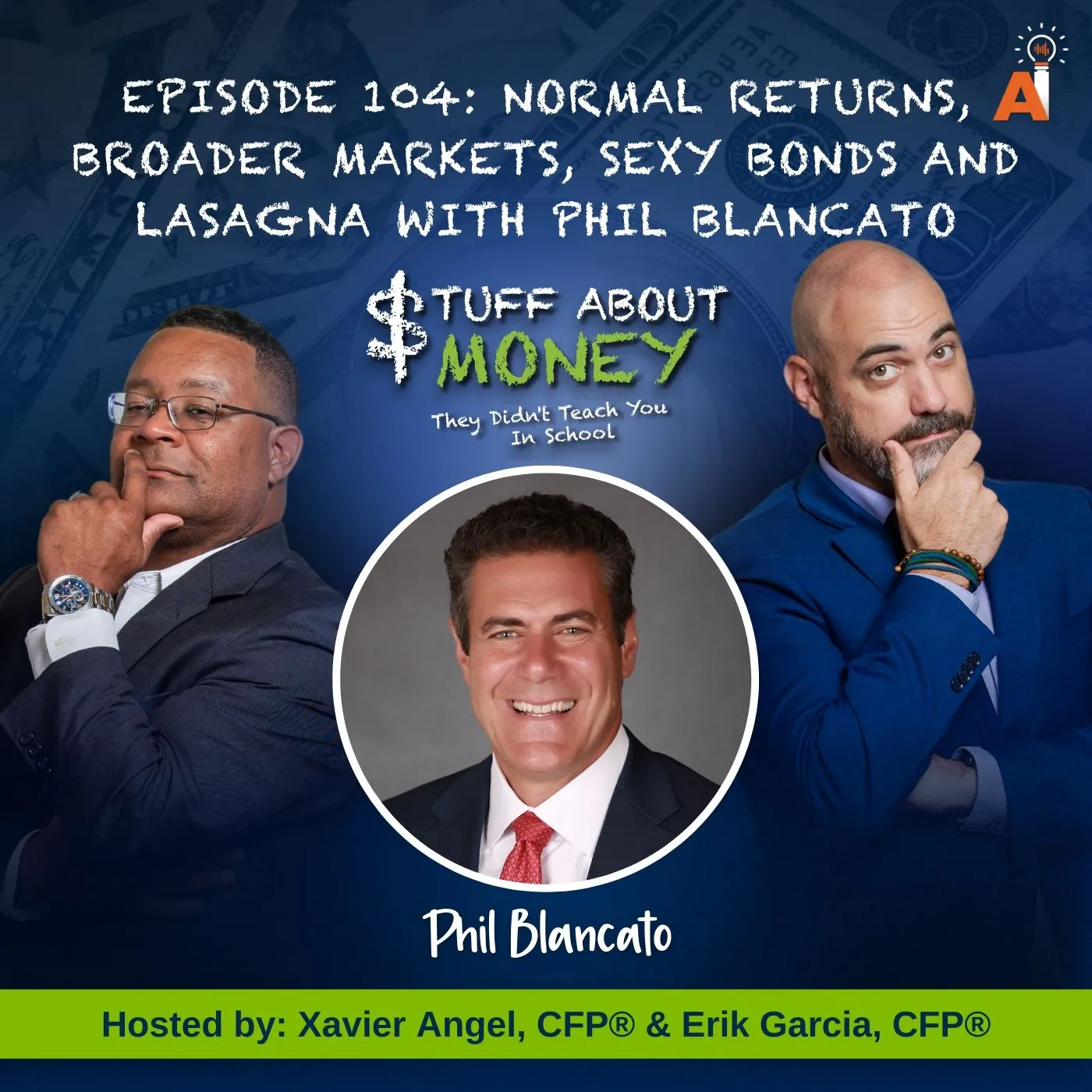
Stuff About Money: Episode 104: Normal Returns, Broader Markets, Sexy Bonds and Lasagna With Phil Blancato
Mar 1100:49:37Tap to summarizeErik Garcia, CFP®, ChFC®, BFA™, welcomes back Phil Blancato for their annual market conversation, now a tradition on Stuff About Money They Didn't Teach You In School. Phil is Chief Market Strategist at Osaic Wealth, a regular on Fox Business, and an experienced portfolio manager who brings equal parts insight and humor, including a lightning round that somehow turns the 2026 market into a lasagna and ends with a debate on why pasta made in Italy is superior. Phil’s core headline for 2026 is a return to more normal market behavior: broader participation beyond a handful of mega-cap names and more average equity returns than the outsized gains investors have gotten used to. They unpack what a "defining year" for AI actually means, including winners, losers, and the infrastructure and energy needed to power the buildout, plus how productivity gains could change work and life. The conversation also hits international’s resurgence, why bonds are "sexy" again, and the discipline of staying invested through scary headlines. Phil closes with what keeps him up at night, with debt and renewed inflation risk at the top, and a reminder that diversification is the plan when market leadership shifts. Episode Highlights: Phil explains how treating colleagues and clients as friends and family has made a 35-year career feel like he's never worked a day in his life. (02:05) Phil's one headline for 2026: a return to normal market returns with broader participation across sectors. (08:00) Phil uses "Flippy the fryer," an AI arm completing 200,000 man hours at White Castle, to illustrate real-world AI productivity gains. (15:05) Phil emphasizes Finance 101: never panic based on headlines, as US economic fundamentals remain strong beneath the noise. (20:00) Erik highlights his favorite chart showing intra-year drawdowns versus final returns, making the case for staying invested through volatility. (26:28) Phil believes that AI overdependence is dangerous, pointing to GPS reliance and the Pope's ban on AI-written sermons as cautionary examples. (31:00) Phil identifies rising inflation and the US debt burden as his top black swan risks for markets. (39:25) Erik reflects on using AI-driven productivity for leisure, coaching basketball, and spending more time doing what matters most. (45:45) Key Quotes: “It's a defining year for AI. What companies can either continue to grow revenue or use AI to be more productive.” - Phil Blancato “I would say I've always been a big fan of why people like me are successful. We take advantage of when there's a panic in markets, and there's a panic in a software market right now.” - Phil Blancato “Being paid to wait around. You're getting real return, real income in your portfolio. It gives you safety and security and maybe a chance to see them go up as much as 7% or 8% this year.” - Phil Blancato Resources Mentioned: Phil Blancato Osaic Wealth Erik Garcia, CFP®, BFA Xavier Angel, CFP®, ChFC, CLTC Plan Wisely Wealth Advisors
Transcribe →
Rough Notes Front Cover, March 2026: Diane Keil-Hipp, Knight Insurance Group
Mar 100:32:54Tap to summarizeIn this episode of Front Cover: A Rough Notes Podcast on the Agency Intelligence Podcast Network, Jason Cass sits down with Diane Keil-Hipp, Chief Operations Officer at Knight Insurance Group, the agency featured on the March 2026 front cover of Rough Notes Magazine. Key Topics: Landing on the front cover of Rough Notes Magazine, a goal Knight set five years in advance How a 165-year history shapes Knight Insurance's identity and culture Revitalizing Toledo's Warehouse District and leading the Warehouse District Association Why private equity's impact on a local competitor pushed Knight toward employee ownership How Knight's ESOP rewards both salary and tenure for long-term staff The five stakeholders Knight serves and why no decision can benefit one at another's expense Maintaining three levels of carrier relationships and a formal Carrier of the Year award Why live phone answers and relationship-first practices still drive Knight's growth Diane's PhD dissertation on the three internal factors that cause organizations to decline Knight's three core values: enduring relationships, relentless focus, and exceptional standards Reach out to: Diane Keil-Hipp Jason Cass Visit Website: Knight Insurance Group Rough Notes Magazine Produced by PodSquad.fm
Transcribe →
Stuff About Money: Episode 103: 3 Myths About Building Wealth (Part 1)
Feb 2500:34:36Tap to summarizeIn this episode of Stuff About Money They Didn’t Teach You in School, Erik Garcia, CFP®, ChFC®, BFA™ and Xavier Angel, CFP®, ChFC®, CLTC® begin a two-part series on how wealth is actually built and why it often looks boring in real life. In Part 1, they tackle three common myths that derail people before wealth ever has a chance to compound. From the belief that wealth is built by luck or big breaks, to the assumption that it is reserved for the privileged few, to the misconception that a high income guarantees financial success, Erik and Xavier unpack the cultural narratives that cause people to quit too early. Drawing on research, real-life stories, and years of experience in financial planning, they explain why wealth is more accessible than most people believe but slower than most people expect. They emphasize that financial success is less about flashy wins and more about mindset, discipline, and intentional decision-making over time. If you have ever felt behind, discouraged, or tempted to chase the next big move, this episode reframes what real wealth-building looks like and sets the stage for Part 2, where they reveal the three ingredients that consistently build lasting wealth. Episode Highlights: Erik mentions that the episode was inspired by conversations at a business conference about what leads people to grow wealth and the myths they tell themselves along the way. (01:30) Erik discusses the idea that wealthy people made their money overnight through one big deal or a viral moment, noting these are exceptions rather than the rule. (06:40) Xavier shares that the average age of a successful business founder is 45, and how that statistic brought visible relief to a business owner who feared she was too late. (10:55) Erik mentions that eight out of ten wealthy people are first-generation, meaning wealth is more accessible than most believe, but requires patience and consistency. (16:20) Erik defines wealth as optionality: having low debt, financial margin, and the freedom to use money for what is most important rather than being backed into a corner. (21:35) Xavier discusses the discouragement that comes when progress feels invisible, reminding listeners that wealth is forming beneath the surface long before the outside world sees it. (26:10) Xavier shares the bonus myth that a high income is required to build wealth, and Erik shares the story of a woman who built a five-million-dollar estate while never earning much money. (29:30) Key Quotes: “Experience and industry familiarity were more important than just pure intelligence when it comes to building wealth. It's a slow grind sometimes to build wealth. It's not overnight.” - Erik Garcia, CFP®, ChFC®, BFA™ “If you're following the right processes, if you're taking the right steps of what it leads to be successful, then it's going to come with time.” - Erik Garcia, CFP®, ChFC®, BFA™ “ Wealth is built in the gaps between what you make and what you keep, and the behavior matters more than the income alone.” - Xavier Angel, CFP®, ChFC®, CLTC® Resources Mentioned: Erik Garcia, CFP®, ChFC®, BFA™ Xavier Angel, CFP®, ChFC®, CLTC® Plan Wisely Wealth Advisors
Transcribe →
The Future Of Communication: AI And Voice Technology Revolutionizing Customer Service With AI
Feb 2400:38:35Tap to summarizeIn this episode, Jason Cass and Joel Poythress discuss the evolution of telecommunications, the impact of AI on customer interactions, and the future of communication technology. They explore how AI is transforming the industry, the importance of sentiment analysis, and the potential for voice prints in authentication. The conversation also touches on security concerns, the decline of voicemail, and the role of AI in enhancing business reputation and efficiency. Key Topics: The Evolution of Telecommunications and AI The Future of Communication: AI and Transcription AI's Role in Customer Interaction and Sentiment Analysis The Importance of AI in Business Reputation Innovations in Call Technology and Features The Future of Voicemail and Communication Security Concerns in Data and Voice Technology Voice Prints and Authentication The Future of Human Interaction in Business Calls Lightning Round: Quickfire Questions on AI and Communication Reach out to: Joel Poythress Jason Cass Visit Website: Lightspeed Voice Agency Intelligence Produced by PodSquad.fm
Transcribe →
Insurance Shoptalk: New Revenue Stream for P&C Agents: Inside the ICHRA Opportunity
Feb 2300:39:05Tap to summarizeHealthcare costs are no longer just a line item — they’re a growing liability for employers. In this episode of Insurance Shoptalk, host Eric Stein sits down with Brandy Thompson, CEO of BenefitBay, to explore how ICHRA (Individual Coverage Health Reimbursement Arrangements) is reshaping the way larger employers approach employee benefits. With renewal volatility, self-funded risk exposure, fiduciary pressure, and increasing administrative burden, many CFOs and HR teams are feeling squeezed from every direction. Brandy breaks down how a defined contribution model can restore budget control, preserve pre-tax advantages, and give employees true plan choice across multiple carriers — all while significantly reducing internal administration. The conversation covers: • How ICHRA works for groups 200+ lives • Why large employers are moving away from traditional self-funded models • How employees can shop plans based on their own doctors and prescriptions • The role of technology in simplifying enrollment and payroll coordination • How brokers and P&C agents can expand advisory value in the benefits space If you work with CFOs, HR leaders, or growing organizations facing healthcare cost pressure, this episode offers a fresh perspective on a rapidly evolving market. Watch now and learn how this model is changing the benefits conversation. #InsuranceShopTalk #EmployeeBenefits #ICHRA #HealthcareStrategy #CFOInsights #AgencyGrowth #InsuranceIndustry
Transcribe →
Insurance Shoptalk: Scaling P&C Agencies Without Adding Headcount
Feb 1900:44:14Tap to summarizeInsurance agencies don’t just need more people — they need smarter operations. In this episode of Insurance Shoptalk, Eric Stein sits down with Travis MacMillian of Xceedance to unpack how automation, AI, and strategic back-office support can completely transform the way property & casualty agencies operate. From policy checking and COI management to remarketing, loss runs, endorsements, accounting reconciliation, and even claims coordination — Travis explains how agencies can eliminate repetitive portal work, reduce manual data entry, and create 30%+ more operational capacity without stacking on more headcount. This isn’t about replacing people. It’s about removing friction — so principals can put more in their pocket, pay producers and CSRs more, and build a modern digital footprint that supports real growth. If you’re tired of adding bodies just to keep up with volume, this conversation will shift your thinking. #InsuranceShopTalk #AgencyAutomation #InsurTech #InsuranceOperations #AgencyGrowth #DigitalInsurance #PAndC New boost
Transcribe →