← Ahead of the Curve with Coco Mocoe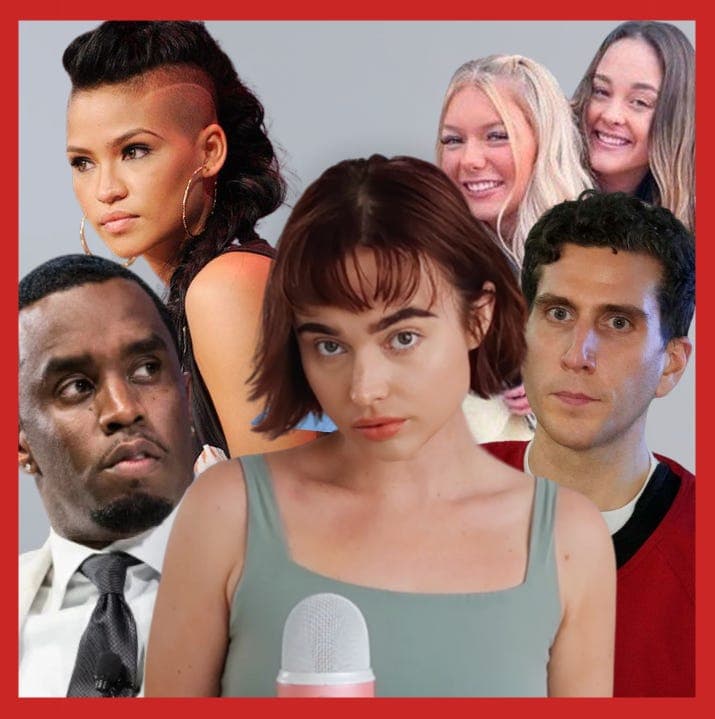
Ahead of the Curve with Coco Mocoe
From Diddy to the Idaho 4: Are we wrong for consuming true crime content?
00:24:22
Loading summary
Transcript1 lines
- [00:00]
Unknown Host
In October of 2014, a new podcast began to go viral in a way that no other podcast had before. It began to shift the medium of how we listen to audio entertainment from radio to streaming on our phones. The podcast you might have heard of it was called Serial. The journalist and host Sarah Koenig dove into the 1999 murder of Hae Min Lee. The case had already been solved, at least in the eyes of the justice system. But instead, the investigative journalism blew open the possibility that maybe the wrong man was in jail for her murder. That man was Adnan Syed. Syed was released from prison in 2022, so now the murder technically goes back to being unsolved. But Lee's family have expressed discomfort around the popularity of this podcast. In 2016, they released a statement saying that the podcast reopened wounds that few can imagine. And they criticized the public for defending someone that they believed committed a horrible crime. When Adnan Syed was released from prison in 2022, Hae Min Lee's brother, Young Lee, expressed shock, disappointment, and a betrayal from the justice system. He stated that Hae's voice was being overshadowed by the narrative of Syed's innocence. This 2014 podcast opened up a Pandora's box of true crime podcasts and content, rising to the forefront of the charts and changing the way that we consume media forever. In America, everything is entertainment. And what fascinates me, but breaks my heart is how in America, you can be the victim of a brutal crime or even a freak accident, and your privacy is forever revoked. People can pick apart every text that you sent, every clothing item that you ever wore, every place that you drove, and every partner or friend or enemy that you've ever had. Even after the crime is solved and justice is brought, your story is forever up for grabs in the land of the free. The brutal details of your death are sprinkled in in between and influencers ad reads for better help and hellofresh. They don't need to ask permission to discuss your story from your family or loved ones. No, you are up for grabs and you are monetizable if you've been brutally murdered. And I know that if it bleeds, it leads has been a thing forever. It's. And I actually learned about it when I studied journalism in college before I couldn't pass the grammar, spelling and punctuation test and I had switched marketing, but I remember learning, I think it was maybe in a sociology class that the reason it bleeds, it leads, and that humans have always been fascinated at violence or freak accidents, and learning about them is because it's part of our survival. We want to know, like if, you know, someone in our tribe got mauled by a bear when we were cavemen, we want to go back and retrace their steps and learn every single thing that they did. Because it gives us the illusion that we can control it and that we can prevent it from happening to us. Maybe we can learn things from it to better ourselves, but it's so it is that human instinct to learn about it. And so this whole podcast is going to be a gray area. I don't want to approach this topic from a high horse because I myself am guilty of being a consumer of true crime, of hearing about the details of someone's worst day of their life, all because of my own morbid curiosity. The cases that are holding up a mirror to my own moral code and what I deem appropriate for the public to know right now are the Diddy case and also the Idaho four. In today's episode of Ahead of the Curve of Kokomoco, we will be diving into the history of true crime in the public eye. The ways in which it can be maybe seen as a positive and helpful to the family or those affected. The ways in which it can be seen as a negative and harmful more than helping. And then laws and customs in different countries and how they approach true crime or reporting on freak accidents and then kind of the overall navigation of ethical consumption and my predictions for the future of true crime and where I see it going in the future. So the first two parts of this podcast are available for all to listen on Spotify, Apple, wherever you get your podcasts. But the more insightful parts of the podcast where I really dive in and analyze different laws, different customs, different cases, different ways that we approach true crime. Well, that's going to be on my sub stack@cocomoco.substack.com and keep in mind that there's really no right or wrong answer to this touchy subject, and I recognize the gray area that I exist in as well. But if you have a strong belief one way or the other, and you want that belief to be seen and heard, then you can do so in the comment section of my substack or in the reviews on Apple and Spotify. If you aren't a part of the substack, I really want this to be a safe place to leave respectful comments. So I will be sure to monitor those. And before I dive into the arguments for public true crime content versus against, I want to talk about the two cases that triggered this Week's discussion for me, Diddy and the Idaho 4. And I want to add, everything is alleged. I'm not a journalist. Always do your own research. Let's discuss coconuts. The first one that really triggered this kind of discussion for me is the Diddy federal case that is happening right now. Cassie took the stand all last week and it was all over multiple of my feeds and on the news. Cassie. Although it's not a case of Cassie vs. Diddy, instead it seems that they already settled that in like civil court, not criminal court. She's a main witness that the federal government is using in this RICO charge against Diddy. So that is why she was one of the first ones on the stand. She is having to relive the worst days of what seems to be a horrifically abusive relationship from someone who seems potentially capable of homicidal violence. Look at the club shooting that he was involved in. Look at the stampede that he was involved in that killed people and just other witnesses and what they've been saying about him. You can come to your own conclusions, but he seems like a very dangerous person. The amount of comments on these videos joking that they wish that there were live stream cameras in the courtroom is scary. Why would we, as the public need a live stream? Unless you are relishing in the most vile details of this sexual and physical abuse, Live streaming and cameras in a courtroom are often what seem to be the final act of public humiliation from a horribly abusive person. Usually the victim doesn't want the cameras in the courtroom. The only people who truly need to know the details of a case are the judge and the jury. But I also can't look down on these comments because I myself am consuming all of the videos that come up on my feed of people recapping the trial. It's the closest thing we have to a live stream and I'm watching it. Some of these people are lawyers, some are journalists, and some are influencers. There is one influencer named Stephanie Hsu who used to do what I kind of thought. I mean, I've listened to her and I do think she's sensitive when she reports on true crime. She has her show, Rotten Mango, I think it's called. But she would do these like mukbangs while talking about, like a kid being decapitated or something. And I'm like, damn. Like, that's actually kind of crazy if you think about it. It's so black mirror that there's been kind of this monetizable entertainment way to talk about the most horrific crimes that can happen to a person. So it's no surprise to me that she's also covering the Diddy case. And she does seem to be taking it from a serious tone, at least more than some tiktokers I've but in between she's kind of joking about like eating an uncrustable or I know it's really kind of supposed to provide this comedic relief for a serious case, but it does feel very jarring and I'm only using her as an example because she's one of the ones going the most viral. I can't imagine like being a loved one of a victim or victim myself and seeing kind of this like strategic humor placed in between the story of what happened to me and also that person having monetized it and scaled it. You can tell what people are there to report on the crime in a matter of fact way and the people who are there for adsense money and fame. Journalists also have a code of ethics that they must follow when reporting on crimes, and your average influencer might not even know what that code is or that it even exists. While Cassie has not directly addressed the public and its consumption of the Diddy case in which she plays a pivotal role, she did express a desire for privacy at this time after spending four days on the witness stand. While we can't speak for anyone and everyone processes trauma differently, I can see how this playing out publicly could potentially help a victim feel justified. Maybe, maybe they want it to play out publicly because now the world sees their abuser as they saw them once the mask was gone. So you never know. But what I'm trying to say is that there's no right or wrong answer when it does come to the consumption of true crime. Except maybe if a loved one of the person hurt or the person hurt comes forward and sets that boundary. But even then, which we'll get in later in this podcast, those boundaries are often not respected. A similar case to something playing out in the public eye that's really horrific and awful would be the Idaho 4. This is the case where four college students were murdered in their multi story house just off the campus of University of Idaho in Moscow. Their names are Zanna, Madison, Kaylee and Ethan. The way that their different families have reacted to the press does show that this gray area does exist. Kaylee's parents and family have done a lot of interviews disclosing very specific information to the public in an attempt to keep the case alive and at that time track down the killer. But now that the police believe they have the killer bring justice. So there's motives for all of it and all are justified. But Ethan, Madison and Zanna's families have remained especially private. I can only imagine the pain all of these families must feel, not only when they learned of the deaths of their loved ones, but the re traumatization that happens with every new expose in media or even the trial being drawn out for years. And now anytime there's any slight update, it is all over their for you page, their Facebook feeds. It's just you can't avoid the coverage. It must be so jarring. And especially now that the police have circled in on the person that they believe through their evidence has committed this crime. My question to you guys, and then I ask myself, because I don't know is does the public really need to know the details of their deaths? What does us knowing the order in which they were killed, the way in which they were killed, the ones who fought and the ones who were asleep when it happened, what do those details provide the public? They already seem to know the person who committed the crime. So why are we as the public now entitled to those awful details? And I'm someone who obsessively consumed every detail of the Idaho 4 case as it was unraveling, so I cannot say that I am any better than anyone else. I did not need to know the details because the person was caught and the odds of me ever coming in contact with him are zero to none. But I still wanted to know, what does that make me? That's why I'm saying there's a gray area. And so I don't want this episode to come off as judgmental. If anything, it's me processing my own consumption of true crime media. To me, this case became a 30 minute deep dive of morbid entertainment. But for the victims, this was the worst moment of their lives that then ended as a result. And their families have to relive the trauma of what happened to their loved ones at the drop of a viral TikTok or new Dateline NBC episode. Is that fair to them? And who is it helping? Now I want to make sure the case. Now I want to make the case for maybe why true crime content can be ethical or even helpful. One may argue that our culture's obsession with true crime is what can reignite cold cases and get the necessary resources to solve those cases. For instance, the podcast Missing and Murdered Indigenous Women by Connie Walker focuses on stories that mainstream media has historically ignored. By platforming these narratives, true crime content can challenge racial and gender disparities in media coverage and law enforcement response. Walker's reporting helped renew national dialogue around the epidemic of violence against Indigenous women in Canada, contributing to public pressure that led to a national inquiry. In this way, true crime storytelling can not only inform but also mobilize public action. We also saw the Gabby Petito case unfold in real time. Because of the public interest in her missing persons case, people were able to track down footage of a GoPro from a family's van that put Gabby Petito's car in a remote area of Wyoming's Teton National Park. If it wasn't for public interest in her case, they may have never found her body. Her family has since gone on to create the Gabby Petito foundation, which provides resources to help locate the missing and provide aid to those who are in domestic violence situations. They often partner with the Aware foundation, which provides resources to those whose cases often go overlooked, like POC and Indigenous women. One could argue the media attention on Gabby Petito's case led to her being found and the case being solved in a quicker manner than if it was overlooked. So again, I want to make the case for true crime being a positive in helping move the needle with these cases. Another case that comes to mind for me is the West Memphis Three. Instead of this public coverage helping find justice for those three boys who were killed, it did help exonerate the three men who were falsely imprisoned for the crime. The West Memphis Three. It was a docu series that followed the case of three 8 year old boys who were murdered and left in a creek. Their names were Stevie, Christopher and Michael. Three high school boys were tried for the murders and convicted mainly under the basis of satanic pain, panic and coerced confessions. In 2011, after nearly two decades behind bars, the West Memphis Three were released through an Alford plea, a legal agreement that allowed them to assert their innocence while acknowledging that prosecutors did have enough to convict. Though not a full exoneration, the plea marked a dramatic turn in a case that symbolized the dangers of moral panic and media fueled bias in the justice system. The sustained media attention didn't just entertain, it galvanized a movement ultimately helping to free three men who had been wrongfully imprisoned. The media attention helped exonerate three innocent men after 20 years, but most importantly, the victims still have yet to get justice. The details of their deaths are being talked about over and over again and it was quite gruesome. Retraumatizing their families and their loved ones. You even see in one of the sequel documentaries about the West Memphis three that one of their dads seemingly kind of goes crazy to the point where he was even considered a suspect and then rolled out. The toll of the media attention on an already horrific crime can compound the pain for the loved ones of those affected. True crime coverage can be a force for good when it brings attention to overlooked cases, exposes flaws in the justice system, and empowers the public with knowledge by shining a spotlight on wrongful convictions, as seen in the case of The West Memphis 3. True crime media can catalyze legal reviews, mobilize advocacy, and ultimately lead to justice. It can also raise awareness for missing persons and victims from marginalized communities who often receive less mainstream coverage. When done ethically, true crime storytelling has the potential to educate, humanize, and drive reform, proving that it can be more than just entertainment, but it can also help with accountability. Key phrase here when done ethically now let's get into the negatives of true crime content the first time that I began to question my own consumption of true crime content was when I began seeing videos pop up on my for you page during the rise of TikTok. I would say it was like maybe 2021 and it was women discussing the moral dilemmas of consuming true crime content. Up until that point, I had never questioned that it could be addictive and also that it could be morally wrong to the victims. It just never occurred to me. Which that sounds awful to say, but I'm just being honest. Why are we as an audience entitled to the most gruesome details of someone's death, especially if the killer is already caught? The transformation of personal tragedies into entertainment can lead to a sense of exploitation and loss of agency for victims and their families. One of the biggest cases in America when you think true Crime is the O.J. simpson case, it was not only publicly televised when he was going to trial, but it has since been the subject of countless documentaries and even a scripted series starring Sarah Paulson and Cuba Gooding Jr. But Kim Goldman, sister of one of the victims, Ron Goldman, who was murdered alongside Nicole Brown Simpson, has criticized true crime dramatizations like FX's the People versus O.J. simpson for proceeding without consulting the victims families. She expressed that such portrayals can be insensitive and re traumatizing, emphasizing the need for creators to consider the perspectives of those directly affected by the crimes that they depict. Moreover, the families of victims in the Jeffrey Dahmer case have voiced their discomfort with Netflix's Dahmer Monster, the Jeffrey Dahmer Story by Ryan Murphy stating that they were not consulted and found the dramatization to be deeply disturbing. I remember also there was a lot of conversations around that Netflix show romanticizing Jeffrey Dahmer, especially because he was played by heartthrob I believe his name is Evan Peters. They argue that such portrayals prioritize entertainment over empathy, often neglecting the real life pain and suffering endured by the victims and their loved ones. Shirley Hughes, the mother of Tony Hughes, a deaf man murdered by Dahmer, expressed her disapproval, stating, I don't see how they can use our names and put stuff out like that. Similarly, Rita Isbell sister victim Erol Lindsay was disturbed by the reenactment of her emotional and courtroom outbursts, noting that she was never contacted about the show and found the betrayal to be re traumatizing. The series creator Ryan Murphy claimed that his team attempted to reach out to approximately 20 of the victim's families and friends during the show's development, but received no responses. However, some family members have disputed this, asserting that they were not contacted or consulted. The lack of communication has led to feelings of exploitation and distress among the families who argue that their loved ones stories were used without consent or for entertainment purposes. And one thing I wonder is do the families of these victims get a kickback from the millions of dollars made from these high budget shows? Probably not. Same goes for the true crime podcasts. I know some donate to foundations or so they say, but do they reach out to the families of the victims for every single case that they cover every week? Do those families and loved ones get a say in what ad reads they run and where that money goes? To me, it is always so jarring to be listening to a true crime podcast. This is why I don't listen to them anymore where they might be describing a horrific crime and then they switch the tone immediately mid crime to talk about hellofresh or betterhelp. That is when I really stopped listening to true crime podcasts when I realized that pattern. And I know one can argue that the news has advertisements and commercials when discussing brutal crimes. And yes, I agree. I do believe that the news can have moments where they might report on things unethically. However, the whole point of the news is the root word of the word. News is literally new. They only talk about a story if they have new information to give to the public. That's the whole point. You watch the news because they're giving you new information that they got that day. But a true crime podcast rehashing a case and its most brutal details, especially if it's been solved without disclosing any new information, what is the point? Especially if the case has been solved, what is the point of discussing the brutal details of the case other than for entertainment value, which leads to monetary compensation? And for the last half of this episode, which is available on my substack, we will be discussing different laws and customs in other countries when dealing with true crime or even freak accidents like what happened in Korea with the Crowd Crush, the overall ethical consumption of true crime, and then my personal predictions for the future of true crime and where it's headed, for better or for worse. If you made it this far, thank you so much for having an open mind when listening to this. I wanted to present both sides because I didn't come into this podcast with an answer and I was going to argue for that answer instead. For this podcast, I don't know where I stand. I don't know what's right or wrong. I don't know if there's a right or wrong. So I just hope to open the discussion and have you guys think about the way you consume true crime content. Because it's something that I've been thinking about a lot lately, especially with the Diddy case and the Idaho four. So I'll continue it over on my sub stack. But I hope that even if you don't go over there, that you appreciated this episode and the gray area that I tried to explore carefully. Thank you so much for being here. And to the other coconuts. I'll see you on the other side. In South Korea, the.