← Ahead of the Curve with Coco Mocoe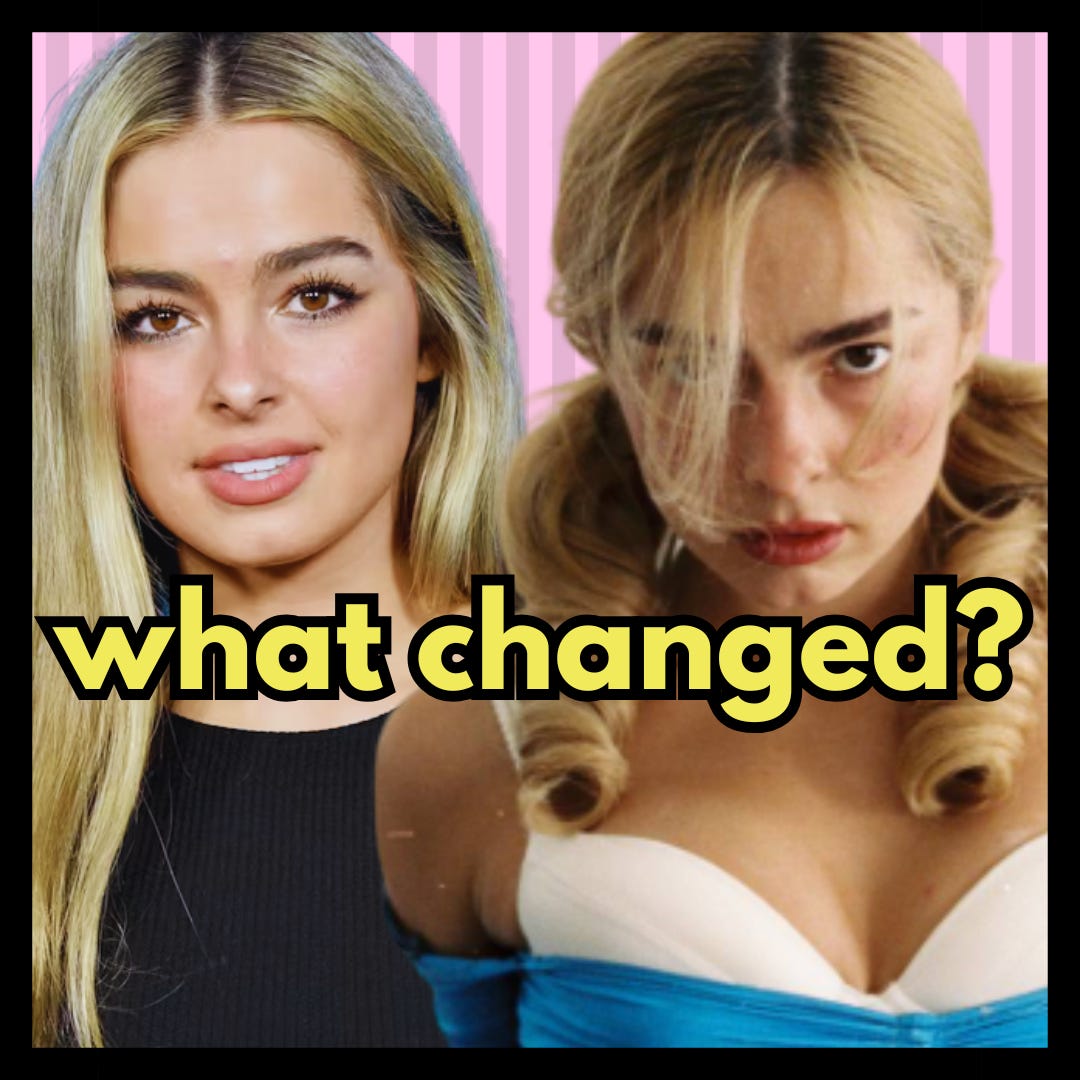
Loading summary
Transcript1 lines
- [00:00]
Host
Did you know that Addison Rae's first solo song, Obsessed, performed so poorly that it didn't even crack the top 100 charts? This is despite the song being produced by hitmaker Benny Blanco and having a huge PR push for the song, such as Addison Rae performing it on the Tonight show starring Jimmy Fallon, an opportunity that no tiktoker to that point had been given. Now we must look at this comparatively because the first solo song for a new artist getting 28 million view views on YouTube should never be considered a flop. And I personally loved this song. I think it was a look into Addison Rae's future artistry, one with lyrics that remind us music can also be for fun and for escapism. You don't always have to give a deep TED Talk and have a million Easter eggs or Pulitzer Prize winning lyrics for the art to be considered good. But what I didn't know is that the low performance of Obsessed, at least by industry standards, made Addison Rae almost radioactive to record labels. I never knew of this fact until I read about it in the Rolling Stones cover story about her written by Brittany Spanos. In fact, this deep dive interview with Addison Rae inspired this episode. I always assumed that Addison Rae purposefully maneuvered off social media and into a somewhat of a mysterious figure intentionally when I began toying with the idea of doing an episode about her four Ahead of the curve. But the interview with Rolling Stone confirms some of my theories I had about her and her rise to prominence. So that is what we will be talking about today. And if you have any thoughts you want to leave about Addison Rae, you can do so only on the substack. The comments are turned off on YouTube and Spotify, so the conversation will take place over on substack. Today's episode is about what I call the rubber band effect in marketing. How does one become more famous by pulling away from public life and the platforms that gave them their audience instead of fading into irrelevancy, which does often happen when people stop posting. And this is especially hard to pull off as the Internet becomes more and more fast paced and the supply of videos much outweighs the demand. In the free portion of this podcast, I'm going to break down some of the most telling parts from her Rolling Stone interview, but I'm only going to brush the surface. You guys know how much I love collecting physical media to keep the art alive physical. So I encourage you to buy a physical copy of the magazine if you are left wanting more when the episode ends. Why do some fan bases become even more rabid and obsessed with their favorite creators or artists even after they pull away? Why do some lose interest in them and they fade into irrelevancy? And what is the difference between a tiktoker or influencer who can pull off the rubber band effect versus those who cannot? And then in the paid portion of this podcast, exclusively on my bestselling substack@cocomoco substack.com I will talk about how you can implement the rubber band effects without fading into irrelevancy. And I will also discuss other examples of creators and artists who have done this successfully. Going from TikToker or YouTuber to a Lister when drafting this episode, I asked the coconuts in the substack chat what you thought of Addison Rae's successful shift into music and pull away from TikTok. Ali said, I don't know who she is, but there's a lot of tiktokers who I've never seen or heard of. I look forward to your episode. I've been on TikTok since the beginning and have basically seen seen her entire rise. Honestly, I feel like in recent years she started surrounding herself with different people who weren't chasing social media fame but were creative in different ways. She probably found an environment where she felt more free to be experimental instead of cookie cutter. I also think she natively has a sort of carefree attitude about everything, so she isn't trying so hard. I definitely agree with this. I think that it's who she surrounds herself with that seems to be the biggest difference between your average TikToker or YouTuber and then someone who breaks mainstream. And then Morgan said, I was late to discovering Addison. It was actually her campaign for I'm Sorry by Petra Collins that first got my attention. I think one of the most fascinating things about her is how her talent and creativity carries over into her image, style. It feels natural for her, even when the fashion leans avant garde. Even before her Rolling Stone feature, she still channeled that energy. It feels like she's the embodiment of acting as if and effortlessly becoming, albeit with a lot of hard work and dedication behind the scenes. And that makes me think of the last quote in her Rolling Stone article. It's her and Britney Spanos. They're sitting on a beach in Malibu and they're eating some food that they got from Erewhon and talking. And it ends with Addison saying about her fame and wanting to build out this music career that I'm not going to beg for it. I'm going to work for it that's like the last sentence. And I thought that was. That really stood out to me. So with that being said, I want to get into some takeaways from the Rolling Stone article that I really enjoyed. It starts out with Addison Rae picking up journalist Spanos at LAX in a black Range Rover with a pink glitter license plate cover. The article then spans over the course of two full days in Los Angeles. Espanos shadows Ray to start out, Ray goes to multiple workout classes in one day, one including Barry's boot camp with Rosalia. That was funny to me because she mentions that before that Addison went to a invite only workout club. So you would think that her going to a workout class with an international pop star after that would be more so at another invite only and not like a chain fitness place. But I just thought that was really cool. Then she eats at Jones on third, which is a West Hollywood hotspot, and fans come up to her. And then she also meets up with fellow dancer and creative director Lexi Smith. I'm fascinated by Lexi Smith by the way I wrote about her on this substack once. But she is a fellow dancer and best friend to Addison, who seems to be one of the huge pushes behind Addison's rise into this sort of avant garde, boundary pushing creative. If you think about the paparazzi photos of Addison Rae on the night that Aquamarine came out and she was leaving some like Italian restaurant in Santa Monica and wearing these tights and that was the girl next to her in a similar outfit was Lexi Smith. Spanos describes Ray as strange, campy, but most importantly fun. Spanos poses the question, how did the popular girl with a Southern charm get invited to the cool kids table? And this little sentence right here can kind of just slip by. It did when I first read it, but when I went back and was scripting this episode, it actually defines really this whole interview and this whole episode. For me, I always associated the word popular as an adjective that aligns with cool. In fact, they could be used in replacement of each other. But maybe that isn't actually true and I'm challenging that belief when drafting this episode. Maybe those two words are more of an antithesis to each other. To be cool is to reject the mainstream. To reject what is popular. Cool's true meaning is to cool down the temperature. We might think of something becoming popular as heating up or on fire, but to be cool is to reject the chance at attention for your work. Instead turn to possible rejection or fading into irrelevance in the pursuit of being different. And unpredictable in the pursuit of cooling down. In the article, they touch on how dismal the reception to her song Obsessed was by critics and fans alike. Ray says, it almost wasn't even about the song, it was about me doing it. If you think about it like if Ariana Grande put out Obsessed, it probably would have been like number one on the Billboard. So it is interesting to think about. But the lightning rod moment that gave Rey a new wind when it came to transitioning from TikToker to celebrity was when she appeared in Netflix's He's all that movie. Despite the actual script being seen as weak from critics, they did agree that Rey seemed to be doing the best with what she was given. Even more notably, the movie was a streaming hit. It was the most streamed movie on Netflix the week that it was released. As a result, Netflix signed Addison Rae to a multi million dollar multi picture deal. She will start filming her second Netflix movie later this year. Ray tells Spanos that it was the financial flexibility of this new Netflix movie deal that allowed her to pull back from TikTok and not post on social media as much. And this is where I want to interject with one thought that did not come up in the interview. I personally believe one of the most pivotal moments for Addison Rae, including the financial freedom of this Netflix deal, was when she released Item Beauty. I believe that the failure of Item Beauty is when she really began to consciously transition from influencer and becoming more mysterious. Item Beauty was a beauty brand that launched in August of 2020 at the height of the TikTok craze and the height of the celebrity makeup brand craze. To me the launch didn't ever make sense as Addison Rae was known for being more bare faced. To this day I always say it would have been made, it would have made more sense if she released a hair care line instead since she's known for her hair and it would have made more sense because it is less competitive, there's less celebrity hair care lines. Even the name Item Beauty didn't make much sense or seem to have any full circle moment for Ray. Even though some people loved the lip oils. I think it seemed like an empty pursuit for her. It felt similar to when Emma Chamberlain launched Bad Habit Skincare with Morphe I believe in 2020 as well. And then we never heard of it again a year later. Sephora discontinued Ray's beauty line in 2023 along with fellow TikTok star Skin by Haram skincare line called Selfless. Beauty brands come and go all the time. But I do think this was a turning point for Addison. Specifically, she realized she had become one of the few faces of TikTok and Gen Z social media. But that comes at a cost. You will never be taken seriously as an A list talent. If you are a cookie cutter tiktoker, not only will you not be taken seriously, but it is also seen as something that is somewhat replaceable. You become a dime a dozen and with social media supply is always more than demand. Around this time we see Ray take a dramatic left turn off social media. Of her eight videos posted this year in 2025, six were either advertisements for big name brands or videos promoting her own music video. At one point in 2020 she was posting multiple if not dozens of videos a day, sometimes dancing to the same songs over and over. By 2024 she was only posting once every few weeks with the majority of them being ads. Despite her pulling back from posting, she still actively watches the platform, which is something they mention in the article and that is just like any other Gen Z young adult. She also reposted my own video about the Rolling Stone article within a few minutes of me posting it last Friday. I mentioned in the video wanting to have her on as a guest for middle row when the time is right and she has a perfect music video to promote and she wants to break it down. So fingers crossed, that actually happens. But back to her pulling back from posting on the platform that made her I actually think that this was a brilliant but risky move. Other tiktokers who crossed over into more A list fame have followed a similar formula, like Britney Broski, but I will get more into that in the paid portion. Now. This leads me to what I call the rubber band method in marketing. The rubber band method is this phenomenon that happens where audiences become more obsessed with you as you pull away and begin posting less. The mystery is something that I believe separates the A listers from the influencers, the artists from the content creators. Let's think about the way a rubber band works. If it is sitting idly in your hand, it will not be in motion. It will be stagnant. If you try to push two ends closer together, it's not going to stay in that position for long. The only way to get a rubber band to snap back closer together is to pull two sides away from each other. The harder and further that you pull, the quicker, faster and louder the snap will be once you release it. If your audience pulls away from you or loses interest and you constantly chase them, the rubber band will Never have enough tension to snap back into place. The chasing of the rubber band in the context of influencers is when their views drop, which is totally normal, by the way, and then they begin chasing the trends in a way that feels empty to their audience. This is their attempt to push the two ends of a rubber band together forcefully. Audiences are wicked smart and they can catch on to this behavior. They can sense when you are doing something because it's what you genuinely want to do, and when you are doing something out of fear. Across all niches, the one thing that audiences want from their creators is to be fearless. Even if you make a mistake or a creative misstep or it flops, they actually respect you a lot more if you own it. Instead of cowering away from taking a creative risk and instead just leaning into the trends. Because even though it might bring some views, it leads to boredom. And if you yourself can't tell if you're making a creative decision based on fear or authenticity, what you can do is ask yourself, would I be doing this whether a camera was filming me or not? If the answer is no, then you're probably just doing this video to maintain relevancy out of fear, which ironically leads to irrelevancy. The thing that keeps you relevant as a creator is constantly offering a new and fresh perspective to your audience. If you become a copycat, you can no longer do that. And a little advice, something that helps me. If you are posting and you get discouraged because it's not getting a ton of views in the beginning and it's like a new format, just tell yourself it's an exclusive drop. That's what I tell myself. I'm like, you know what? This is not the Nike Air Force ones. This is not the van slip ons that everyone's supposed to have. This is like a really unique pair of shoes that they only manufactured 100 of and only a few people are going to be able to get their hands on it. And over time, the less amount of quantity there is, the more people want something, the more value it has. So it's kind of like a funny thing. But yeah, just tell yourself if you're ever stressed about your views, that it's an exclusive drop. If you ever feel that your videos and perspective have become redundant, then it might be a good time to pull back. I use this example a lot, but I started out by doing tarot and astrology videos. No captions, no hashtags, no coincidences. Some of you guys will remember that. And it was something I was passionate about. I still love astrology and tarot. It's like my little side thing that I do with friends. But I grew tired of doing it in content because the genre had become oversaturated. I felt like there were a lot of brilliant people making videos that were doing a much better job than I could provide, and I just felt like I'd said all that there was to say. I really didn't have anything new to add to the genre. As a result, I told my audience that I was going to be taking a break from content and that I'd be back on the Internet in a new way, but I didn't really know what that would be yet. I promised myself I would only post a TikTok if I really, really wanted to, not because I felt like I had to. Putting myself on a self imposed TikTok sabbatical actually gave me the itch to post even more because it was fun again and it didn't feel like a requirement or like I was chasing a carrot to stay relevant in the niche. My videos started going much more viral and I was able to jump out of the tarot niche and into a niche that I think I pioneered on the platform, which was digital trend predictions. If I'd never taken that break, I would still be doing tarot content to this day. I might have millions of more followers, but I would have never gotten the chance to travel multiple times a year to speak at conventions and meet clients, to work with a list artists that I really admire and even interview some really big artists that I admire to film in Spotify's theater and so much more. While my audience didn't snap back to me in full force when I pulled away, I think I snapped back to them. I snapped back to enjoying the art of creating in a way that I had lost the year prior. And I also unintentionally stepped towards a new audience that never even heard of me before. The Rubber Band Method, in my case, had become more of a slingshot method. Now, in the paid portion of Ahead of the Curve, we are going to discuss more about the Rubber Band Method. Specifically, who are some other influencers who have catapulted to a list fame by pulling back from their usual social media platforms and instead of fading into irrelevancy, they were able to use this mystery to become household names instead. And how can you yourself implement the Rubber Band Method no matter what niche you are in or how small you might be? And this is especially a great video for you if you're feeling stale about your content right now, so that will be exclusively@cocomoco.substack.com and if you made it this far and you find that my show brings you a unique value that no other show on Apple or Spotify does, and you appreciate that I do not run ads on this show, so that way it's more enjoyable for you as an audience. Then you can let me know by leaving a review on Spotify and Apple podcasts that helps the show grow and reach more coconuts who love marketing and pop culture as much as we do. Thank you so much and paying coconuts. I'll see you at sunset.