← Ahead of the Curve with Coco Mocoe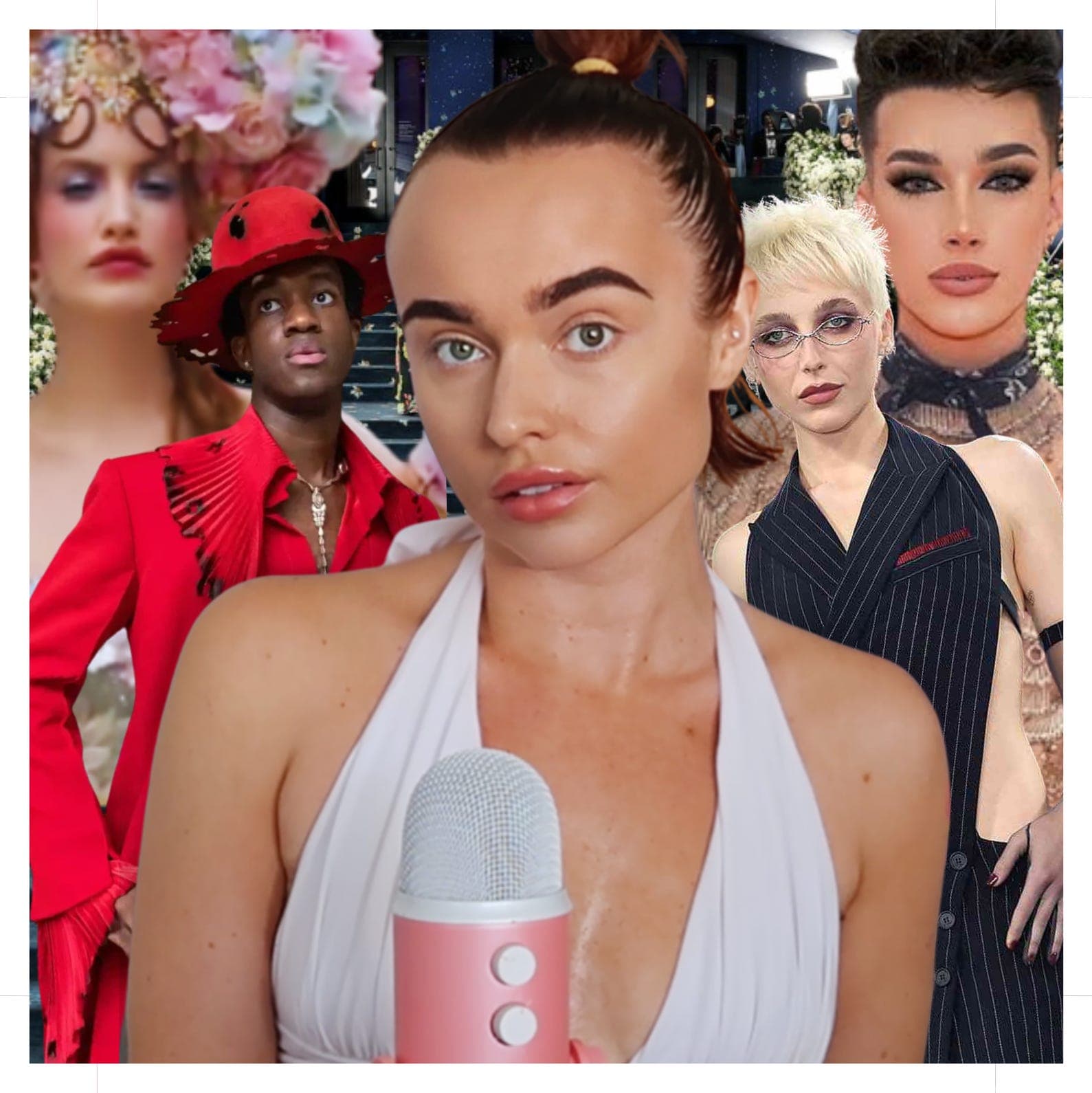
Loading summary
Transcript1 lines
- [00:00]
Unknown Influencer or Podcaster
Each may, as the stars ascend the Metropolitan Museum's iconic steps, a subtle tension kind of builds on fashion's biggest night. The Met Gala. Once the exclusive domain of Hollywood royalty, fashion elite and old money socialites, now finds itself in a complicated dance with social media personalities. Kind of tap dancing between wanting to hold the prestige of the event and the elusiveness while also bringing in viewership and talk. Influencers armed with millions of followers and cultural capital, a new type that we haven't seen have disrupted the events. Carefully kill. Have disrupted the events. Guys, it's not an episode unless I. I can't pronounce a word. And we got, we got one out early this time. Influencers armed with millions of followers and unprecedented cultural capital have disrupted the events. Carefully curated. Carefully cultivated exclusivity. Holy. You guys. This is what happens when you have dyslexia. You can type something out and you can be reading it, but similar words will be like flipped. If anyone else has dyslexia, let me know if this makes sense. But like, anyways, okay, okay. Boom. Let's drive. Let's get back in. Anna Wintour's tight lipped guest list at one point included YouTube sensations alongside Oscar winners TikTok stars beside fashion legends. This evolution has sparked both fierce criticism from traditionalists lamenting kind of this dilution of the Gallus prestige, and also passionate defense from those who see influencers as legitimate new vanguard of cultural relevance. Just as video killed the radio star, will creators one day kill the celebrity? And what will be the trend in 30 years that kills the creator? The Met Gala's uneasy relationship with digital creators reflects a broader struggle within legacy institutions. How to maintain mystique and tradition while acknowledging the undeniable power shift in who shapes modern culture. And in 2025, it seems the Gala has made the biggest and most deliberate push away from creators since they began walking the carpet about 10 years ago. Why could this be? And in what other ways might creators be pushing back on the gatekeepers of traditional media? Lets discuss coconut and if you are listening to this on Apple or Spotify, if you could leave a review and let me know what kinds of brilliant branding episodes you would want in the future. And if you're listening on Substack to let me know that you're listening on Substack. We get thousands of listeners over on Substack, but I know it's a newer platform and it's kind of hard to figure out the buttons and how to engage. If you guys could give this episode a like so that I know you are listening on Substack because that's where the majority of you guys are now. This is why I struggle to get an episode up this week. I just want to be transparent with you guys. They usually come up Monday mornings. This is why, number one, I was in Mexico for a wedding with my college friends. So friends of 10 plus years, and I was working on my laptop for, like, three hours every single morning. I became friends with the people that worked at, like, the breakfast restaurant because I worked on my laptop there. I got my trend report up last last week, which I spent hours working, and I was already kind of struggling to figure out when I was going to film the podcast. I filmed a podcast for a different, like, not my show, but this one called Beyond Influence, which I filmed for, like, an hour while in Mexico. I even packed this microphone. It was really great. They, like, interviewed me. It was so thought out. They had the best questions about me and my advice to creators and how to grow, etc. So that was me in Mexico. And then I was like, okay, cool. So I booked my flight so that I would have enough time on Sunday to get home to finish this episode and have it up by Monday. Right? That was the plan. Because you guys deserve that. You guys deserve that. I'm flying home on Sunday, and I am sitting at a, like, little pizza shop in the. In an airport in Mexico. Okay? I see a bedbug on my bag, on my work bag. I was like, is that a bedbug? So I, like, looked it up, like, on TikTok. I'm like, what do bed bugs look like? Baby? It was a bedbug. Baby. There was a plane. Mommy, can we go on our plane again? Baby, there was a plane. There is still a plane. It was 100. A bed bug. I was like, dude. And then I saw a couple walking by that I'd met at the bar at the hotel with my friends. And I'm like, hey, like, da, da, da, da, da. Like, like, how are you guys doing? Like, what's going on? I'm like, hey. So just so you know, like, boots on the ground, reporting from the scene, I just saw a bed bug on my bag. And then the guy goes, dude, I swear I had bed bug bites on my leg while I was in that hotel. So then I'm like, okay, f us. Like, dude, is there a bedbug infestation? So then. Because bed bug infestation is the one thing that's, like, such a bad infestation that, like, one some exterminators Won't even touch it. And you have to basically throw away all your clothes, all your furniture. You have to start fresh. I've never had one, but that is what I've read. If you've had a bedbug infestation, let me know what you did in the comments so I can, like, know if I'm doing the right thing. So I had to set aside my entire Sunday, Monday and Tuesday when I got home. I haven't answered one email. If my talent manager's listening to this podcast, I've been texting him. I'm so sorry. I will get back to you on all of those emails you've been sending me, I promise. Um, I wasn't. I didn't even open my laptop for the first three days that I was home from Mexico because I was industrial power washing all of my stuff, high heat. I have things in, like, trash bags tied up in my parents backyard because they have a big backyard. And I'm like, trying so hard to do all the right steps to make sure I don't bring any bedbugs into anywhere. I'm kind of freaking out about it. And then just like the cherry on top, that kind of, I think, emotionally exhausted me is I had my dad pick me up from the airport and we're driving home and he's like, hey, like, just so you know, like, angel died. And Angel's our family dog that we've had for maybe 12, 13 years. I got her in high school and she died from just old age while I was on my trip. And my dad was the one that had to take her to the vet. And then they decided to put her down. And I just felt so bad because my dad's the one that had to drive home with a leash and no dog in the car. So, yeah, it was hard. It was a tough couple days dealing with that. And this is the easiest job in the world. Being an influencer, by the way, it's literally the easiest job ever. I will never complain about it, but it's also the type of job where you can't call out sick because no one can do what you're doing, if that makes sense. Like, you are the one that has to be there. You don't have a boss that can pick up where you left off. You don't have a co worker that can pick up where you left off. If you need to take a few days off work, like, you are the only one. And that comes with a lot of freedom, but it also comes with a lot of responsibility and so that was what was happening the last couple days. Now this also leads me into what I'm going to be doing next month. So I am so lucky. I will be speaking at Tribeca Film Festival in New York City. And then I'm going straight from Tribeca Film Festival to speak as a creator at Cannes lion in the south of France. That's June. And then I'm going to just spend a couple weeks traveling Europe. I'm flying my sister out with me and then my friend is coming as well. So there's going to be three of us traveling New York City and Europe together for a couple of weeks. I'm so codependent. I'm like, I don't want to go alone and bringing people with me. And so because of that, I was like, you know what? Like, everyone kind of usually has a break when they do things. I didn't really take a winter break this year because it was in the Blake Lively stuff was happening. I was like putting out two hour episodes around that time. And I realized I haven't. I've now been doing substack for an entire year and I haven't taken a break. So I while I'm letting you guys know this, I know this is a lot of housekeeping for this episode, but I just need to get out while I'm in Europe. So in June and then, then maybe the first few weeks of July, I am going to pause the sub stack and so you guys don't have to press anything, I can hit a button where they will not charge you for that month. You guys will not be charged the $9 a month for my substack because I will not be putting out content that month unless I'm able to. But it's going to be free content. If you guys are paying for a product from me, I want to make sure I'm doing it right. And it would not be fair if I kept charging you guys in June, but was putting my full effort that you guys deserve that. I think like I put into every episode. So hopefully also I come back from that trip refreshed, excited that I have more ideas for the podcast that I'm really. I think it's important to sometimes take a break from your content, to not get burnt out and so that the audience enjoys it still. So I will be pausing the sub stack in June. You do not have to hit any buttons. It will not charge you until I begin again in July. So that is for you guys to know. I appreciate my audience that is subscribed to My sub stack in the thousands of you. I think we have 10,000 subscribers now. So thank you, guys. Now. Okay. Boom. So now we are heading into the table of contents for this episode. I did an episode on the Met Gala last week, but it was like the history of the Met Gala. And then I was interested that since then the Met Gala happened and this was the first Met gala since, like 2018, 2019, that, like, almost no influencers were invited. I thought that was so interesting. So I was like, wow. Like, is the Met Gala breaking up with influencers? But it also kind of made me want to dive into, like, why do. Maybe I'll do an episode on this in. If you guys want, let me know in the comments on Substack or the reviews. If I do an episode on, like, what is the moment that a creator, like an Emma Chamberlain and Amelia Dimms, a Quinta Brunson. What is the moment that a creator becomes an A list celebrity? And what do they do differently from 99% of other creators that kind of like shift that energy? I have a few theories on, like, what it is exactly that they do. So if that's an episode that you guys want, let me know in the comments and I will do that next week. But today's table of contents is more about the Met Gala and traditional media and gatekeepers. So it's going to be the rise of influencers, especially at the Met Gala, that just the history of influencers at the Met Gala and their relationship with Vogue. The peak of influencers that the Met Gala, which I would say was around 2019. The schism of influencers at the Met Gala, which would have been like 2024 and then this 2025 Met Gala and then in the paid portion for the paying coconuts over at Substack, it is going to be about the other ways in which influencers are kind of pushing past gatekeepers. Not at the Met Gala, but there's other ways in which they are. And then what differentiates a creator from influencer to traditional? So I'll kind of dabble in that. But I'm happy to also do like a deep dive, 30 minute, 45 minute hour episode next week about that. And then what I'm referring to is like the Halo effect and also its opposite. So that is going to be the episode today. If you listen to me talk for the first half and you can listen to me talk more, you guys can go over to the sub stack, $9 a month to become a paying member. And you'll also get the Friday Trend report. But if not, that's so exciting that you're even just listening to me. Anyways, thank you again for being patient with me on this late episode. Just, it was that one law that's like, everything that can go wrong will go wrong at the worst possible time. That's kind of how this beginning of the week felt. But I love doing this podcast. It's like the highlight of my week, so I'm glad that I'm back in it. This episode will be going up Wednesday afternoon. Now we are going to dive on in. Let's discuss coconuts. That's the new little word that I'm going to start using. Okay, let's go in. So before I really get into the gatekeepers that kind of either decide if influencers are allowed in or not, I want to talk about the first ever, because I think people think of influencers and then the traditional media is separate. However, they're actually way more intertwined than you might think. So the first ever influencer to break mainstream was actually created by the traditional media gatekeepers that you would think are the ones holding them back. So this is the story of lonelygirl15. I actually interviewed the guy who created her, Greg Goodfried, on this podcast. So if you look up ahead of the Greg Goodfried, he is so fascinating. He's just like someone I look up to so much. He now manages the d' Amelios. He's just. He's brilliant. So he was a. I believe he was like, a lawyer, but he worked in the talent agency side at caa. Now CAA is like the biggest. One of the biggest talent agencies in the world. It's like caa, WME and uta. They manage a lot of, like, traditional media people. So this is early 2000s. Greg and his wife are at a bar and they meet a guy who also really wants to kind of start, like, screenwriting. And they kind of have this idea for, like, a horror movie, but it was hard to just go through and, like, get funding. But there was this new website that had just launched called YouTube, and they were like, what if we use this new website, YouTube, to build up a fan base so then we can bring this story to life? So they're like, okay, let's do it. So what they do is they go on Craigslist. They hire an actress to basically play this character that's like filming on a webcam in a room that's not even hers. It was like a set. They film. They batch film a bunch of videos as if she's like a vlogger talking on YouTube. She becomes the first ever, like, influencer on YouTube. And then they start, like, having her, like, move her camera slightly, like move her laptop slightly. And then people can see that there's like, religious, like, memorabilia in her room. And they're leaving enough clues in these videos that her family and like, through the way she describes her family is that she's basically this girl who's like a part of a cult. Like, her family's a part of a cult. So the audience watching on YouTube is slowly starting to like, piece it together. Like, wait, this influencer that we watch on YouTube every day is maybe a part of a cult? They don't know that she's like an actress. And it's basically a social experiment yet. So they use this, like, they kind of use this. It's almost like pre, like Paranormal Activity, Clover Field, but then like, somewhat inspired by like, Blair Witch Project kind of vibes and fun fact. Also, lonelygirl15 was the first ever influencer brand deal because she got a brand deal with neutrogena on her YouTube channel. So if you ever want to know who is the first influencer brand deal, it was only Girl15 on YouTube. Neutrogena. I think that's so fascinating. So anyways, lonelygirl15 then they use this to like, basically launch this story that they always, like, were trying to get funding for because OnlyGirl15 becomes super famous and everyone's invested now. They were revealed to be kind of like a social experiment actress before they were ready to reveal it. Because he talks about this in my podcast. Guys, this is like the most interesting thing ever. What happened is they. They would have like, her, like, this is when MySpace was big. So sometimes she would like, message People on MySpace, like fans that would reach out or like, leave comments on her MySpace profile and she would reply. So fans are so smart. Even back then someone messaged her and then she basically left like a reply to them. But then someone tracked the IP address of who left that reply. They thought that she was a girl who lived in like a small town in Ohio or something. But the fans tracked the IP address of the reply to the Beverly Hills CAA office. And it was because it was his wife who left that they get doxed. Their family gets docs. It's like this whole thing. And so then they had to basically own it. Like, yes, this was a social experiment the whole time. Anyways, I'm botching the story. Go read Taylor Lorenz's book extremely online because she talks about lonelygirl15 and then also listen to my interview with Greg Goodfried because he talks about it in depth. This was like over a year ago. That's why I'm like, fascinated. I might just be getting the story slightly off. So when you think about influencers, and I do think that, it's kind of. It's a gray area, there's no right or wrong answer. But sometimes people will be like, the traditional media, like, hates influencers, like, fuck them, blah, blah, blah. That's not true. Actually. Traditional media is way more intertwined and early adopters of the influencer space than you would think. And that's an example of it. So I tell this story as a way to keep your mind open when it comes to discussing the rise of creators in the celebrity world. When measuring success of a collective industry, things are all subjective. One creator might feel that they're super accepted by traditional media. One creator might feel like it's them against the machine. And both can be completely correct. Gatekeepers in the industry don't often try to separate creators from traditional celebrities in a malicious way, but they're often what I think happens and what this episode is about is traditional media. So what I mean by that in this example would be like Anna Wintour, Vogue and the Met Gala, they often are measuring the risk versus reward from the eyeballs that come with working with creators. Is the viewership always worth the cost? Not always. That is what today's episode is about. The ahead of the curve with Cocomoco. And it's kind of through the lens of establishment like the MET Gala. In 2024, the MET Gala and the satellite events had more tiktokers present than any other year. Yet it was almost the opposite the following year. So last Monday, 2025. So let's discuss why that might have been. But first we must go back. The late 2010s marked the rise of influencers at the Met Gala. And again, if you want a more deep dive on the history of the Met Gala, go to my episode last week, if you haven't already. Creators like James Charles, Emma Chamberlain and Lilly Singh were some of the first to attend. Why? The reason one TikTok wasn't around. So there wasn't as many other competing ways to become an influencer. You kind of had to do it through YouTube or maybe at the time Twitch was slightly rising, but YouTube in 2019 and a few years after that was the official was the official sponsor of the Met Gala with Vogue. Liza Koshy, before Emma Chamberlain was actually the first YouTuber to host the red carpet interviews. And this was during the camp theme, which I think was like one of the best Met Gala themes. Not only was Liza Koshy a darling of YouTube at the time, and I mean still, but she was also the first ever YouTuber to secure a 73 questions with Vogue, that series that they do with a list stars. The reason she was able to secure this is because she started out by doing a parody video of the 73 Questions format on her own YouTube channel dressed as her character Jett. That video has over 30 million views at the time of me filming this. Because of its virality, Vogue asked Liza Koshy to film her own version of 73 questions, not as one of her characters, but as herself and for it to live on the Vogue channel. Her interview with Vogue sits at 18 million views, which is more views than some even a list stars under the same series. This may have been what pushed the needle for Anna Wintour when it came to being open minded to having creators at the Met gala and allowing YouTube to be an official sponsor. The success of Liza Koshy's video may have been the first time that longtime gatekeeper Vogue began to kind of jimmy the key to a new wave of celebrities to this kind of gate. You know, you see them as the gatekeepers. They started to like open it slightly. The importance of them inviting creators like Koshy and then Chamberlain and Lilly Singh was that they were safe bet but viral, their content didn't hinge on controversy, borderline criminal activity or chaos. Rather, they were entertaining, but never at the expense of others. And that is one thing that I think traditional media looks for when they have movies and projects worth millions of dollars plus stakeholders, they have to keep happy. They cannot tie themselves to creatives who are beloved one minute and controversial the next. But with creators, they are more nimble. They're able to slide from controversy to controversy because they have much less to lose. They might have to scrap a few weeks worth of videos to lay low while drama blows over, but a production company would have much more to lose if they had to scrap years worth of a project and multi millions of dollars. So when you wonder why gatekeepers still exist, it's often because they are protecting their assets. One good example of how nuts the creator world can be is one. I was offline for like a week when I was in Mexico. I was like maybe like sending emails and like posting brand deals and stuff. But then I came back to my for you page. Okay. And I see that like there's an OnlyFans creator that's part of a collaboration house that also stabbed a girl to death. And like, I was like, wait, what? Like, what is going on here? That wouldn't happen in traditional media? Because they're kind of vetting these people. Like, if you are an actress and you're about to get booked for like the next euphoria, they're typically looking into your background to make sure that you're a safe bet. Like, you would not find out that someone just got cast as like the live action Cinderella. And then you also found out that she stabbed a girl seven times in the neck to death at a Walmart. Like, rest in peace, that girl. I think her name's Malia. Like, what the. Like, what? Wait, I was just like, wait, what? Like, that's what I mean. Like, that's why gatekeepers exist, you guys, because some of these creators are nuts. Like, I would want gatekeepers too. I'm like, what are you guys doing? Like, why are you out here? Like, you just killed someone. Like, hello, Hello. It's just. It's insane. Anyways, the creators who get the cosign from traditional media are often the ones who are seen as entertaining enough to get viewership without the expense of criminality or controversy. And I do want to say, though, like, on that note, traditional media still has its flaws. The gatekeepers still sometimes turn a blind eye to nefarious people. A great example of this is look at Diddy, who was invited to the Met Gala multiple times, but is now on trial for sex trafficking and racketeering. Is it possible that the curators of these events were aware of what was happening to Cassie and others, but turned out turned a blind eye? Potentially. So I'm saying this to say that, like, also, yes, traditional media and celebrities can also be nuts. Just want to say that. And then another creator example of Vogue flying too close to the sun to the gravitational pull that is creator's orbit would be, for example, James Charles attending the 2019 MET Gala. This was around the time of By Sisters, but then he had come out of that on top. However, a few years later, allegations of him talking to minors would surface, throwing him back into the fire of kind of this world of creator criminality and controversy. He also faced some backlash during that Met Gala for claiming that his attendance was a step in the right direction for influencer representation. I have to laugh because, like, like, it's us creators have it so easy. Like, we are not an unrepresented group. We are not like a minority. Obviously there are intersectional there are PoC creators, there are women creators that are targeted in ways male creators aren't. So it does exist, but just like influencers as a whole one, it's a job that we choose. Like we decide this job. Usually I think that if you're a minority group that's being targeted or underrepresented, that's usually something you don't have control over. You can't control. Control what race you're born into. You can't control if you're a refugee, you can't control if you're a woman or if you're trans. You. Like, there's things you can't control. Influencers. Like we decide to be an influencer. We can like stop at any time and like become a dental hygienist in Ohio. Like, we are not, you know, a group that's like, struggling, I guess, if that makes sense. Anyways, it was just funny that he, he had to. That he described it that way. But I'm also not following it too closely because I don't really follow pop culture commentary on TikTok as closely anymore because it's just like right wing propaganda now. But it does seem that James Charles is involved in another controversy once again. So imagine if he was then invited to this Met Gal in 2025 and was also part of another controversy. It just wouldn't. Again, it's just too much. Also, I'm not as well versed as an outsider looking into this, but to me, to me, what it seems is a bunch of men making a case of domestic violence against a woman somehow about themselves, genuinely curious, like how they were able to spin it. But like men making violence against women about themselves is why I am not in the pop culture commentary space anymore. Like that it is just a bunch of men that profit off of and talk about female celebrities for the most part, but then not under. Not all of them. There are 99% are great men and women that report on pop culture, but the ones that are like haywire, unhinged are the ones that profit off of female celebrities or even like report on Bravo, which is like, primarily like women being vulnerable, like putting their lives out there. It is men that report on this, but then do not have the nuance or understanding of female issues to not use violent language, misogynistic language. Like, how did these men trivialize domestic violence against a woman and make it about themselves? That is what I mean. That's why I'm not in the pop culture space anymore. Like, I don't want to be seen as that anymore. Because it's like this space is male dominated by men that like do not know the pain and suffering that like one POC celebrities go through, but also female celebrities. And sometimes that's intersectional. So anyways, that's, that's why, that's why the Met Gala and other traditional media does not invite influencers to these things anymore. Because the 1% that ruin it for everyone else because they're so unhinged, irrational and like loose cannons. So that is what, that's why I'm like, I get why there's gatekeepers because influencers are nuts, only 1% of them. But like they're usually the loudest. I just can't. Also, you are equal to who you surround yourself with. And I'm sure that it was a very strategic but also probably emotional decision for like Emma Chamberlain when she stopped aligning herself with the Sister Squad and Hype house. Like, she went to a few Hype house parties and then like was never seen with them again. Also she was part of this Dote Squad thing. Never like hung out with them again. I really think that this was a decision to differentiate herself from YouTubers and instead be seen as an A lister. It was a risky move as her views could have tanked, but they didn't. And that's kind of like, even though in some ways I've been critical of Emma Chamberlain, I also think that what I love about her is she's not one to follow trends or be a victim to trends and platforms. Like, she kind of does her own thing, similar to Liza Koshy. And when she left the vlog squad when she broke up with David Dobrik, even though David Dobrik in those next couple years went on to find so much fame and success with YouTube after his breakup with Liza, he ended up struggling to really break out of the influencer mold and even faced self inflicted setbacks when women came forward about victimization that they face involved with his crew and videos. So if Liza Koshy had stayed with David Dobrik, she could have been at that apartment when things happened. She could have been there when David Dobrik was like hiding in a hotel closet when like Trisha was like naked showering or something. I don't know. Liza Koshy probably saw the writing on the wall and was like, I cannot be associated with, associated with this. So you are who you hang out with. You are who you're associated with. And I'm going to talk later in the episode in the paid portion about like the PR tactic of, like, you are equal to your enemies. But I'll get to that later. So with the Met Gala, vogue really began to open the door to influencers, especially when YouTube became an official sponsor. But this all came to a head in 2024, when TikTok became the official sponsor and not YouTube. And this is kind of what caused the great schism that I'm calling this. I do think that there's an even bigger difference in risk versus reward with YouTubers and TikTokers and kind of the way that fame is acquired and attained with YouTubers, even though you have these kinds of loose cannons like James Charles, YouTube is a slower burn, and it takes place more to get famous. So you do have to be smarter and have this kind of longevity that TikTokers don't always have to have. With TikTok, fame is so much more immediate, but you can also. Because of that, you can also be replaced much quicker. And so at TikTok, you kind of have to become a lot more extreme to stand out on an app where anyone can post and get famous. In 2024, TikTok was the official sponsor, which meant that there were even more TikTokers than before who were flown out to New York City to either walk the red carpet, do press on the red carpet, and or attend sort of these, like, satellite parties. A few that walked the carpet were fashion creator Wisdom K, who I love, movie creator Reese Feldman, who I love, Addison Rae. And then I also saw that hello. Tuffy was there, but I don't think she walked the carpet. I think she was, like, part of the press suite on the side. However, still an amazing achievement. That's awesome. And then, of course, you had Emma Chamberlain at the top of the stairs, who was the host and attendee. Kind of like talking to celebrities as they went in. But the real controversy came from someone invited by TikTok to hang around the Mark Hotel, which is kind of like a tier below getting invited to the Met Gala. And that was. Drumroll, please. Haley Bailey, the redhead. Not the. Also the redhead Ariel, but no, the redhead creator. Not the princess. She was dressed up as Marie Antoinette in a floral crown, which was a nod to the Sleeping Beauty theme. And she recorded a video on the street of her voicing the audio. Let them eat cake. Let's examine everything that went wrong here. I think that that was, like, the beginning of the end for influencers being invited to the Met Galilee temporarily. So as most creators do to build their social leverage. She wasn't clear in this video that she was not even invited to the actual Met Gala. She ended up admitting that later in, like, an apology video, she was invited to an adjacent event, which is not uncommon. Like, I went to a adjacent event to the Oscars this year, and I was jokingly calling it my Fosters, like, my fake Oscars. And I had much so, so many friends that were like, how was the Oscars? I was like, oh, I wasn't invited. Like, I was like, at an adjacent event to the Oscars. Still fancy, still exciting, but, like, people don't always know the difference. And like, a lot of creators, I think, lean into that on purpose, though. So the distinction muddied the waters and it kind of put the actual Met Gala in the crossfire of her controversy that was about to explode, despite her nodding, even being invited to the actual event. So when she did the Let Them Eat Cake video, this came at a time where tensions were very high, are still currently very high, due to many things. One, a growing despair within the American economy, people just struggling to put food on the table and pay rent. And also it came at a time when the world was watching, which is still happening. But the atrocities happening in Gaza, there's a genocide of the Palestinian people before our eyes being streamed on Instagram stories and TikTok. So to be scrolling on your feed, to be seeing these awful things happening, a genocide before our eyes, and then to have a video interrupt that scrolling of a creator brazenly saying let them eat cake, while it's already a historically inaccurate account of what Marie Antoinette said in the lead up to her death, that still kind of became a saying that was symbolic for out of touch wealth and aristocracy. So this event can seem gaudy, yes, but it's still an important fundraiser for the Costume Institute, something that I still deem worthy of protecting. And it became more about the backlash against the celebrities because of this girl that wasn't even invited who said let them eat cake than it being about the actual fundraiser. And again, it was all because of one TikToker who wasn't even invited to the actual event. I'm sure TikTok got an earful from Anna Wintour and Vogue in the days following the event. Haley Bailey's TikTok 100% overshadowed the entire fundraising that actually went down. I believe in that moment that Vogue felt that the risk versus the reward of working with creators was no longer. Longer worth it. The pearly gates of the gala were locked, were locked shut once more. Besides Kaby Lame and Emma Chamberlain, I do not see any other big creators present on the Met gala carpet in 2025. While Kaby Lame is the world's biggest tick tocker, I do think it's interesting he doesn't speak in his videos, making him a safe bet for Vogue. I was shocked that Wisdom K was not invited despite the theme being Black Dandyism, but I do wonder if it's because he fell under the umbrella of being a TikToker and TikToker was no longer the sponsor. It seems that not even regular Met Gala attendee Addison Rae was there this year. She could have declined the invite. I don't know if it was because of who was invited or who declined, but the Met Gala is also not the be all end all of a creator's career or like a celebrity's career. So it's not a big deal if someone doesn't attend, but I just find it so interesting as kind of a litmus mistest of who is where. And I do think that the lack of influencer inclusion at the Met Gala was felt online. This is not based on any data, but rather my own kind of instinct and observance of how the event was reported about. But dare I say that this Met Gala was not talked about very much? Did the lack of Met Gala controversy lead to a lack of of coverage? Maybe that's what they wanted. Maybe they wanted to lay low this year. Maybe the influencers present is something that gets people talking. But again, is it worth the risk versus reward? Let me know what you guys think. Was this kind of a lackluster Met Gala in terms of online coverage? Or do you think that it was very talked about? Let me know. There's no right or wrong answer. Now for the second half of this podcast we will be discussing other ways in which influencers are inching into acceptance by traditional media, what differentiates a creator from influencer status to traditional status, and the halo effect and its opposite. So if you made it this far and you don't intend to unlock the rest of the episode, that is totally okay. I appreciate you for being a coconut and making it this far, but if you can hear me talk about this this topic then for longer then go over to CocoMoco substack.com and you can be a paying member for $9 a month. The paying coconuts in my bestselling substack get access to every extended episode of the podcast for the past year plus unlock my Friday Trend reports. Thank you all so much and as always, share this with a friend who loves marketing and pop culture as much as we do. And for paying coconuts, I'll see you on the other.