
Transcript
A (0:00)
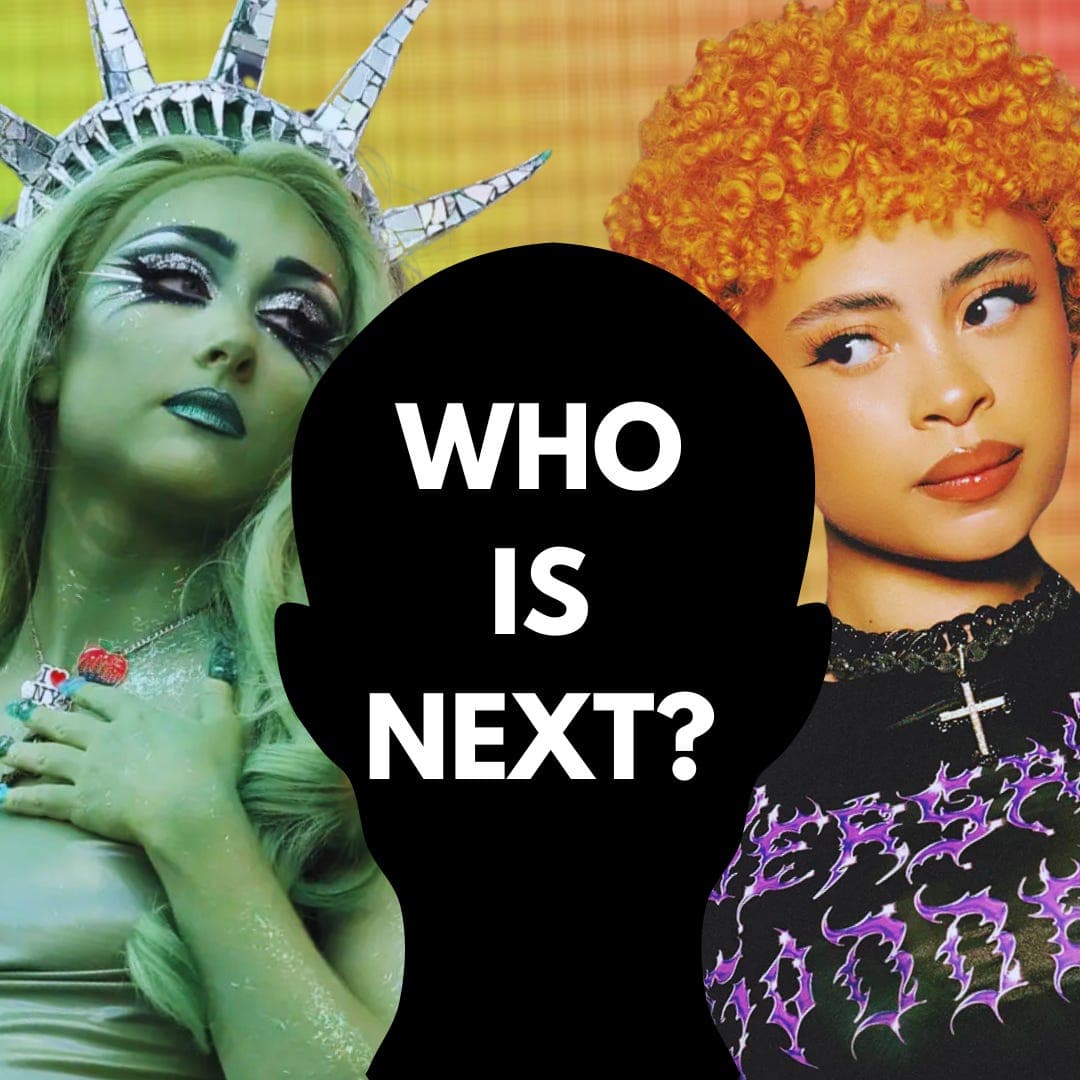
Sabrina Carpenter, Dochi Chapel, Roan, Gracie Abrams and Tate McCrae, all artists with different backgrounds, from a dad who produced the famous Lost series and Star wars movies to a girl growing up in a small town in Missouri and working at a donut shop as recently as 2020. All different styles of music, different aesthetics and different journeys. But they all share one thing in common, the rumors that swirl of them being an industry plant. This seems to be what happens the moment that you have made it. But what really is an industry plant? It is a term that is thrown around in YouTube thumbnails and Reddit threads, but no one ever really defines who and what an industry plant is. There is no universal definition or formula to follow in this episode of Ahead of the Curve with Kokomoco, I will talk in detail about what I believe an industry plan actually is as someone who works on the back end of marketing in the entertainment industry and how you can use the tools of what some would call an industry plant to get more attention and visibility on your art, content or brand. Of course, this is just my singular opinion. And this is an industry that is ever changing, made of thousands of people, so I don't represent everyone. The timeline for this episode will be determining our definition of an industry plant for the episode as a framework examples of artists who the Internet have claimed are industry plants versus someone that I actually think is an industry plant but has never been accused why I don't believe it's actually a bad or nefarious thing to be if this even exists. How to spot the next industry plant. And then in the extended episode exclusively on my best selling substack, we will discuss how to build the right team around you so that people think that you're an industry plant because you truly haven't made it unless that rumor swirls. And then ways to be seen by the right people and specific examples. And then a specific analogy for success that I believe every creative should know before they start to show up online or if they feel like they're hitting a dead end. Thank you all so much for making my show a substack bestseller. You can watch the video on Spotify and YouTube, but comments are only available to the paying substack. So if you want to add extra insight or perspectives to this conversation, you can do so by becoming a member at cocomoco Substack. Com. As you all know, my biggest pet peeve is the epidemic of commercials that have overtaken the podcasting space. I almost exclusively listen to audiobooks now and not podcasts because of the amount of ad reads. I have kept this podcast completely ad free for two years so that you can enjoy a full episode every week without interruptions. If I ever do run an ad on this podcast because I don't want to say never. It will only be if I'm really die hard about the brand and that I truly love. But I have turned down ads for this podcast before because I want it to remain so valuable for you. All the Coconuts Making this show a Substack bestseller has made this mission even more possible for me. So thank you for supporting my creator Journey. If you appreciate this show and you think that it brings a unique perspective from other shows, then you can help me out by leaving a review on Spotify and Apple Podcasts. Thank you so much to the Coconuts. Whether you're watching for free on Spotify or YouTube or you're over at Substack now for the show. I wrote a Paywall free article about this. If you want to read it, I'll link it out in the show notes and it was really just the inspiration for this episode. The article was titled maybe Being an Industry Plant Isn't all that Bad. In the article, I shared out a Reddit post that I found that said I hate industry plants like Chapel Roan, Sabrina Carpenter and Olivia Rodriguez. And then they said that I know a lot of the music industry nowadays is artificial and it's basically a project made by multiple different people. I mean that's how all music has been like forever. Unless someone's like abandoned in the woods and they're writing like songs by themselves. Like usually multiple people come together for that. But the they then say that an industry plant is an artist who appears to be self made or independent but is actually backed by a label I wrote. The irony is the part where they start the post by mentioning Chapel Roan's name spelled wrong and then they define industry plant as artists who appear self made but is actually backed by a label. Chapel Roan is anything but an industry plant. She was dropped by Atlantic Records and had to work at a donut shop in Hollywood before finding success as an artist. Even after winning a Grammy this past week, Chapel Roan had a guest column written about her by an Atlantic record label exec for the Hollywood Reporter. It originally was titled Chapel Grown, I believe, if my memory served me correctly, but I think the title has since been updated. The music exec writes, it seems Chapelrone wants to turn labels into landlords, bosses and insurance providers. This was an exec at the same record label that signed her as a teenager and then dropped her in 2020 after she released the sleeper hit song Pink Pony Club. It is very likely that the label people who made the decision to sign and then drop her were in the very same room at the Grammys as she performed Pink Pony Club on stage and then shortly after won the highly competitive category of Best New Artist. So when people say that Chapel Roan is an industry plant, I think that if anything, she's the opposite. She was actually dropped by the industry and had to make it on her own. But I will get to that later in this podcast episode. The Reddit post I mentioned above, which started out by saying I hate industry plants like Chapel Roan is a great example of misconceptions about the industry and how artists find fame. If anything, Chapel Roan had everything going against her an industry. She continued to call out during her speech for not providing their artists with basic worker protections like health insurance. A true industry plant, by definition of these conspirators online, would have stuck to a strict script provided to them by their handlers. They would not have had a hit piece written about them the following day from an industry leader. Instead, they tried to pull the roots of Chapo Ron's plant straight from the ground. But her talent, vision and mission is much more grounded than any of them could have predicted. And that leads me to a specific point that I want to make about the term industry plant. I personally believe that the term industry plant is often thrown more at women and POC who find success in the entertainment industry much more often than men. It is as if people do not believe that these artists are able to find success based on their own merit and drive. It had to be because some people in a mysterious boardroom created the perfect human in a lab and used their powers to push them onto the masses. It's kind of like how people believe that the ancient civilizations in Middle and South America or in Egypt were only able to build pyramids because aliens help them. Like like they truly cannot fathom that it was the brilliance of the people living there. Look up the word industry plant on YouTube and you will see that the majority of the videos about this topic are thrown mostly at rappers or female pop stars. No one ever will accuse someone like Harry Styles or Travis Kelce of being an industry plant. And if these mysterious people in boardrooms could manufacture fame for their biggest budget products and artists, why did Katy Perry's recent album flop? And I say that as someone who is a fan of Katy Perry, so don't come for me if you see me at the Lifetimes tour, I'm just saying, if there were really these mysterious people in a boardroom that the conspiracy people believe can just press a button and make someone famous, why don't they make their biggest artists more famous or have their products perform better? I personally believe that Travis Kelce would be a great example of a hypothetical industry plant, if that term even exists outside of Twitter and the depths of Reddit. As I wrote in my Substack article, I don't actually think the term industry plant should have such a negative connotation. In 2016, Travis Kelce was given a bachelor style dating show on E. Network called Catching Kelsey. In the show, he dated 50 women from 50 states. This was almost 10 years ago. It seems that he's always wanted fame outside of what football could provide him, and that is totally okay. Fame is a resource that allows more doors and opportunities to open. But his fame really rose after he competed in the super bowl for the Chiefs against his brother Jason Kelsey for The Eagles in 2022. Their family became the face of healthy rivalry pushed by the NFL during this super bowl game. Their New Heights podcast the year prior, and it rose to prominence as a result. Their podcast is now owned by Wondery, which, fun fact, is owned now by the biggest company in the world, Amazon. Travis Kelsey used this podcast to shoot his shot at the biggest star in the world, Taylor Swift, and it worked. She told Time magazine that their romance started because he brought her up on his podcast, which happens to be owned by Amazon. This man knows how to get attention and that is totally okay by all definitions. To me, Kelsey is what one should consider an industry plant, except they throw the term at female pop stars or rappers instead, who have 1/10 of his fame reach and backing by the industry. He has had huge corporations like Amazon, E. Network and the NFL prop him up and help him find new heights of fame that football could no longer provide. And that's okay. It is just smart business. Yet there are no trending Reddit threads or YouTube commentary videos diving into how sinister of a ploy it was for these huge corporations to back Travis Kelce or accusing him of being a sinister industry plant that you see with female artists like Chapel, Roan, Ice Spice and Gracie Abrams. Look up the word Travis Kelce industry plant on Google. The only thing that comes up is one a Reddit thread asking if him and Taylor Swift are a PR stunt, followed by surprisingly to myself, my own sub stock article is the second thing down where I use those keywords in an article I wrote about industry plants and why I was comparing how people say it about like Sabrina and Chapel and Dochi. Yet Travis Kelsey by all definitions should be what someone considers an industry plant. But there's no sort of accusation. Why do we only use this word when describing the success of women and POC who find fame? Is it an unconscious bias that these people did not earn their own fame but were rather provided it to them by a mysterious man behind a curtain? Another example of someone who has the word industry plant thrown at them as a way to discredit their rise to stardom would be Ice Spice. Ice Spice grew to fame after she put out her song Munch and began using TikTok to market it. Once she changed her hair to the iconic orange bob, she became that much more memorable and identifiable. She was then invited to the Met Gala and appeared on a song with Taylor Swift at the heights of her era's tour fandomonium. I love Ice Spice. In fact we are mutuals but for example, her recent album Y2K only sold 28,000 copies its first week. While I think that there are many layers to why that is and that's still such a huge accomplishment, I personally do think just physical media sales in general are seeing a decline for decades outside of K pop and some business savvy artists like Taylor Swift, I do think that it is proof that she is and never was an industry plant. In fact, the term might not actually exist, at least how you see it. If her success was because of some mysterious man in a suit behind a curtain that pushed a magical button, then why didn't he also press the magical button to make her album sales break records? Or could it be that this magical person never existed and she was able to achieve these heights of fame on her own hard work, merit and vision? When we take away the negative connotation of the word industry plant, I would simply describe it as great artist development. Yes, there are thousands of hard working people behind the scenes at labels, production companies and agencies whose job it is to find new creative ways to get more eyes on their clients work. Most artists move through various teams and labels before they land on the team. That helps them find the right visibility that their art deserves. We'll get more into the switching of labels and teams and how that kind of applies to artists finally finding success later in this podcast. So how can you spot a good industry plant who is about to break big? Of course, making genuinely good art, content or products is the most important part of success. I was on a panel at Cannes lion once and and the guy who sold AOL for like billions of dollars was on it with me and he said, don't make people want to buy products. Make products people want to buy. And that always stuck with me as a creator. I always say to myself, don't make people want to watch my videos. I just have to make videos that people want to watch. It's so simple, yet forgotten. As a marketer, I think people believe that our job is much more important than it actually is. The art and creation is the most important part. There is no best marketing strategy category at the Grammys because what we do is meant to be invisible. We work hard so that the content's viewership can look effortless. But with that being said, let's dive into the marketing side since it is my specialty. So much of someone being accused of being an industry plant is just that they became really good at marketing or or they got a really good marketing team behind them. New visibility to their work that seems to come out of nowhere even though it was years in the making. As Mark Cuban said, it takes 10 years to be an overnight success. I think you can tell a new artist is about to break big when they are niching down their look. Aesthetics are a huge part of being memorable. Think about the biggest artists when they began to find huge success. With Ice Spice, it is when she switched to an orange bob. Amy Winehouse had the memorable winged eyeliner and beehive hair. Chapel Roan took her strawberry blonde hair and amped it up a thousand notches to this bright blood red and she began painting her face white like a clown. The Dare who I found when he had a thousand followers on Instagram two years ago and made videos about just performed on stage with Charli XCX at the Grammys and produced one of the most streamed songs from the Brat album, which is Guess with Billie Eilish. He began growing in popularity when he started wearing the black suit with sunglasses over and over and over and over and over again. Prior to that aesthetic, he was a substitute teacher in the Pacific Northwest that kind of just looked like any other guy. But now he has a memorable look because he repeats it time and time again. Another artist that I believe is on the verge of breaking big is Remy Bond. I wrote an article about her on Substack about how she looks and sounds like Lana Del Rey and Sabrina Carpenter had a love child. But she is her own artist. The more she leans into the huge blonde hair and nostalgic tropical look, the more she grows. Like many Artists, their success is done when no one is looking through their work ethic, their vision and their grit. But the moment that they start to spark to a bigger audience is often when they lock in a clear and distinct aesthetic. She began leaning into the big blonde hair and old Hollywood look, the tropical flower in her hair, the pink color scheme on her socials and in her music videos. And fun fact, she was on MasterChef as a kid. She may or may not be an upcoming guest on season two of the Middle Row, so make sure you subscribe if you want to see that episode. If we are able to sync up our schedules and get in a theater at the same time, fingers crossed. But if not, I'm like so die hard fans. So happy to see that she's continuing to find so much success. I would not be surprised if people begin to throw the Industry Plant accusation at Remy Bond like they do for all women who find massive fame after working invisibly behind the scenes for years. The moment she skyrockets to overnight fame, you are going to see YouTube videos that are like Remy Bond, industry Plant confirmed. But you can say that you were here first as a coconut. Because I never stray you guys wrong when it comes to artists that are about to break big, do I? I do not. And you guys can also follow my Middle Row playlist on Spotify where I post the playlist of like songs and artists that I think are going to be big. Another way to tell if someone is about to be massive is if you hear about them from a third party perspective. What I mean by that is someone can have 10 million followers, but if you never hear about them from an outside perspective, they will never be seen as having broke through the snow globe of their own audience. Most people don't want to break out of the safe corner of their Internet and that can still lead to a very successful and long career. But when someone wants to become more of a household name or they want to break out of the barrier that they currently are in, they must break out of their snow globe first. One decently sized Gen Z artist who had a hit song last year, her team told a journalist that I then spoke to that part of her going viral online was when she started anonymous accounts and began posting hate about herself. Secretly, she would say things like this blank doesn't even have good music. Why is she getting all the hype? Up until that point no one had heard of her, but they began searching her up online to see if this artist with all of these haters on Twitter really did deserve the hype or not because her art was actually good. It also helped her with the Google SEO and people would listen to the music and then go back to those trolls that were actually her in disguise and start defending her. And with Google SEO people began searching for her music which helps boost you in the feeds versus an artist just linking it out in their bio. Sometimes I will intentionally tell people to search for my substack versus linking it out so that I can get a boost in search results. A metric that lots of social platforms use to determine if they are going to push out a creator or not is if people are typing in their name. Another example of a third perspective when it comes to marketing that worked kind of accidentally would be TikTok live streamer. Astrovino and I made a video about this a while back. She has made very questionable decisions, especially ones that affect her children, which I do not condone. But if we break down her rapid rise from a marketing perspective, she began to go massively viral When a Hater Start I hate the word hater, but like that, I just don't know what else to say. Started a TikTok account called Ash Updates. This person would post clip moments from her live streams the night before. I would have never heard of Astrovino organically because I don't watch TikTok live streamers. I don't watch battles. Like that's just not my thing. I would love to know like the prototype of someone who does and why they do. That's like the eighth wonder of the world for me. But I found out about Astrovino because of the Ash Updates account posting clips and then them coming on my for you page. And because it was coming from a third party, even though it was a hater, I was very intrigued. It didn't feel like an artist, creator or brand pushing their content on me and begging for viewership. If anything it was almost like reverse psychology because it was coming from someone that didn't like her and those were clips that I assumed she didn't want people to see. So if you want more visibility for your work, just remember the quote New levels, new devils. You will get massive amounts of pushback whenever you are being pushed out to new people who have never seen you before. And that's okay as long as you stay true to your message and your values and apologize when you do make genuine mistakes. The haters will always be there and that is okay. We also see the third party perspective happen in a positive way. You might be shocked to find out that some of the biggest record labels are the ones running copycat Pop crave accounts. I'm actually friends with the Pop Crave people. I love them so much. I'm seeing one of them today and they are not bought by record labels. They're like so their story is fascinating to me. I can't wait for them to like write a book one day if they ever reveal who they are. But the record labels are sometimes one running these like copycat pop crave accounts and they do it so that it looks like this account is posting updates about music artists. But really they every few posts start slipping in updates and positive news about the artists that they secretly want to push out. They will also be the ones who launch fan accounts for their pop stars until it begins to happen organically. So much of the waves of virality online for new artists are often manufactured at first, and that's okay as long as it's not used for evil against others who do not consent. Cough cough. What's happening to Blake Lively right now? Allegedly. And all the creators falling so easily for a misogynistic smear campaign. Anyways, anyways. How sad it's going to be when they realize that most of their new followers on TikTok are actually just bot armies and empty accounts that aren't going to support any of their other projects. So if you want to spot the next industry plant, look for an artist or creator who who has tapped into an iconic and memorable look. Almost like a cartoon character. As I always say, branding is just a fancy corporate word for repetition. And then look to see if this person is beginning to break out of their snow globe. Whether it's through hate or positivity, I don't care if someone has a thousand followers or if they have a million followers. The moment that I see them being reported on from a third party account, I know that it means they are about to break big soon. If you enjoyed this first half of the episode of Ahead of the Curve with Kokomoko and you found my insights and discussions unique from other shows, please consider leaving me a review on Spotify and Apple podcasts that helped my podcast grow and reach more coconuts who love marketing as much as we do. And if you want to leave a comment about other artists that you think have had industry plant allegations or any other ways that you can kind of spot someone who's about to break big, then you can leave a comment only on this episode at the substack, which I will link below in the show notes and YouTube description. And for those of you coconuts who are members of my bestselling substack. I will now talk about specific marketing strategy you can use to grow invisibility and have to fend off your own industry plant allegations this year. As you guys know, one of my biggest dreams is for my audience to start a rumor that I'm an industry plant. And I There's, like, a trend going around right now where people do the Daily Mail thing, but then they edit in, like, their own rumor about themselves that's, like, so fake, it's funny. And I did that. Breaking the illusion right now. I did that and I posted a video that I'm the secret child of Kelly Catrone, the PR maven. And, like, that's why all my trend predictions about fashion and celebrities are accurate. Because, like, she's just feeding me info from her clients. And so many people actually believed it. I was like, wait, am I actually about to have Nepo baby? Like, accusations? Like, the moment that I have a thread on Reddit about me being an industry plant or Nepo baby, I'm framing it, you guys. I'm gonna frame it, and it'll be in my pop culture museum one day. So if one of you guys wants to start that, let me know. Anyways, okay. Boom. So I'm going to be talking about how you can have your own industry plan allegations, and then examples of marketing tactics in use, and then also a specific analogy that can help you keep going in moments of feeling discouraged or unseen. As a creator, if you are hitting a rut right now, if you're hitting a dead end, I'm glad this video found you, because I think that the analogy I'm going to use will really, really help. But either way, thank you so much for making it this far. Whether you're free or you're paid, and just for being a coconut and opening your mind to what I had to say, I hope I gave you new perspective or taught you something new in this episode and paying coconuts, I will see you on the other side.