← Middle Row w Coco Mocoe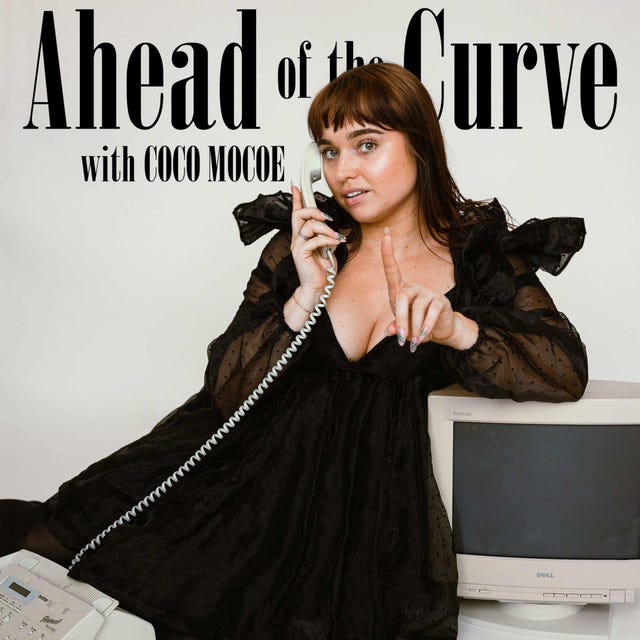
Middle Row w Coco Mocoe
"Start now when no one is looking & you'll be 10 steps ahead when they are"
00:29:01
Loading summary
Transcript2 lines
- [00:00]
A
You don't have to have a ton of followers, but do something interesting that makes someone repost it. Now it's like uncool to have like a ton of followers. What's always cool to me I know there's something great if it's like low key, right? Very cryptic. Speaking in a coded language or your own language is good. Just do alternative things be act like you're talking to no one.
- [00:21]
B
Basically. If you could go back in time and start any social media platform before it got bigger, or invest in a new startup, what one would you want to be a part of? I always wish that I went back and I started a podcast in 2017 or 2018. That way I could have maybe been lucky enough to build it up to the level of a Call Her Daddy today who she just sold the Unwell Network, licensed it to Sirius XM for I believe $125 million. Despite me having mixed feelings about that podcast, I do think that Alex Cooper opened a ton of doors in the podcast world for women with her deals to Spotify and Sirius and for that I will always commend her. And you can listen to my two part deep dive into Call Her Daddy that I go into on this podcast, which I will link the first episode down below if you are curious. But I would always go back to starting a podcast in the late 2010s because now they are a gold mine. So many times when we discuss social media strategy or creating artists, we obviously speak about the importance of making genuinely good content or at least trying your best to I'm a firm believer that everyone is trying their best and no one intentionally tries to put out a bad piece of content or art. But regardless, two huge ignored aspects to success in the digital age. Whether you run a brand, you make content or you want to be known for your art is timing and more specifically persistence when no one is looking. We will be talking about those two aspects in this episode of Ahead of the Curve with Coco Moco. Thank you for joining me on this Monday. Thank you for being a coconut and thank you so much for all of the support the past few weeks. If you are a new listener. Hi, we just had a bunch of new people subscribing to the sub stock and tuning in and I It's been a whirlwind. I truly don't really know what the tipping point was but but I'm very, very grateful. I even got an email this past weekend that I became one of the top earners on Substack and I believe that that is in huge part because of those of you who listen to my podcast either on Spotify, Apple or whatever platforms and then you come over and you subscribe to be a paid member so you can unlock the extended versions of the episodes. So thank you guys so much. And in today's extended portion of the episode at the very end for the paying members, I am going to be speaking candidly importance on candidly about my thoughts on Joker 2 and briefly about the new season of Love Is Blind. So you guys, I made a few videos about why I did not like the new Joker 2 movie on my TikTok and Instagram and I am getting blasted in the comments by Lady Gaga fans. Mind you, I love Lady Gaga, but the Internet has gotten to a place where even if you love an artist, but if you are critical of one piece of their work or art that they have put out, then it means that you are the worst human in existence and deserve to die according to their stand. I hate that online. It feels like you have to literally lick the bottom of the shoes of these artists so that you can avoid ever getting a hate comment. This also happened to me last year when I made a video that I still stand by that I didn't like one of Lana Del Rey's songs that she put out over seven years ago. It was for the Charlie's angel movie, despite me being a huge fan of Lana myself. And I almost had to delete the TikTok app from my phone for like two weeks because of the mental turmoil of reading the comments that I was getting because of that and the messages I was getting. They were making me question my own opinion. But I know that I always try to be kind and never dogpile. But I also see it as my job to be honest and stand by my opinion, especially if it's a piece of art that someone got paid millions of dollars to put out. I think part of that paycheck is being okay with criticism, and that is why I'm excited to really get candid on my thoughts about the Joker movie in the extended version of this episode Behind a Paywall because I feel like you guys will give me that grace and allow me to be honest and not really hold back. Not that I'm going to like go in or be mean. I'm just going to be honest. So that is why I'm going to be talking about it candidly. I'm going to call maybe that portion of this podcast like the Candid Coco Moco, so it'll be the moments behind the paywall where I am able to finally say the things that I'm scared to maybe say publicly. Like I'll admit online. And I also made a video about this. I'd love to know your guys thoughts either in the comments or the reviews of this podcast if you have felt something similarly, which is that I am someone who makes a lot of like pop culture media and marketing videos. That's probably how you found me or this podcast. And as a female creator, the amount of hoops that we have to jump through to prove that we are worthy of having an opinion online is so different often from our male counterparts. And yes, everyone gets hate and it takes a toll on everyone. And there's intersectionalism here. Some people get hate for different reasons and they aren't a woman. So I completely understand that. But what I've noticed is that whenever I put out an opinion about a movie or music or I give even just marketing advice, I give a trend prediction. I constantly get comments that are asking me to prove my credentials, what is her background or if I'm critical of something then I am a gossip. I'm a hater. I'm jealous. I have no place giving this opinion. I say like a lot, I sound dumb, whatever it is. But my male counterparts who make pop culture videos or marketing videos that are brilliant and amazing and I love everyone's content that does that and puts themselves out there, they never are in a place where they have to prove their credentials to give an opinion. They are never asked what their background is. And I remember this happening to me when I first started blowing up for doing trend prediction videos. And I made a TikTok about this too where there was a I believe she was a writer, a freelance writer for Vogue at the time or something. And my videos started blowing up and I had seen a few of her videos and I enjoyed them like I was a fan of her videos. And then I started getting tagged in the comments of a video where she was like don't ever associate me with that girl doing trend predictions. Like she is not qualified. She is just really going in on me and asking what my background was discrediting me. Which mind you, it hurts more when it comes from another woman because like I feel like we're we understand how it feels and it just hurts extra. But the funny thing is like I1 I wasn't making videos about fashion so I don't know why she wanted to know what my credentials were in fashion. I since day one have been making videos in the trend prediction space about digital media. That's my background. I have a marketing degree. I worked for two huge massive media companies, starting from the bottom, building up their first ever TikTok accounts for both of them. When TikTok was early to over millions of followers. I produce YouTube videos with 45 million views, but I never linked out my resume or even said my real name. When I make videos on TikTok or in this podcast, I'm very, very protective of my privacy. I've turned down huge, you know, articles in big publications because they have a rule that they have to say every source's full, like government name. And I don't want to do that because I just want my privacy. And I felt that my videos would speak for themselves. And I think that they have. I think that my videos have withstood the test of time, time and time again. And even still, though I really felt like, okay, I'm just going to give it time. You know, I don't have to say my resume, don't have to prove my credentials, but time and time again, I still feel that I have these comments that are asking who I am or, you know, if a woman makes a video about a piece of media and she's critical, she's seen as jealous or a hater or gossiping. But if a man makes a critical video about a piece of media, he's seen as enlightened and opening their eyes and not a sellout. So it's just this give and take. And ultimately the reason I do this, though, is I hope that I give silent permission to other female creators to still show up. Like, we are not, you know, doctors claiming to, like, you know, perform open heart surgery. Like, we're talking about trends in media and all of it's subjective and everyone is allowed to seat at this table as long as you're not being mean or malicious. The only time I've ever seen male creators called out or their credentials questioned online is when they've made a repeated pattern of very malicious videos towards other creators. And it's only at that point that they then get called out. So it's just something I've noticed and it kind of. That pain point for me was pressed again this week when I made videos critiquing the Joker 2. And I stand by them. So that is now my full thoughts are going to be behind a paywall where I feel safe at the end of this episode on the extended version. So if you're interested and you're not already paying a member, you can do that on Cocomoco Substack. Com. But if not, if you're just here to hear the encouragement and advice of this episode, then I'm glad, I'm glad to have you. And we're going to dive into that. Here we go. One of the most underrated aspects of creating and being celebrated for your creations is timing. And while, yes, this is out of your control and it can be very frustrating, I also think of it as a blessing because it means that you might find sex. Oh my God. Sex. It means that you might find success if you just keep going. I watched this clip online from the founder of SetActive, and her name is Lindsey Carter. The interview was on the Female Founders World podcast. It's actually a podcast I've been on and I'm obsessed with. It's kind of like how I built this by Forbes, but mainly focuses on female founders. But back to Lindsey and so active in what she said. If you're watching the video version on Substack, you can see, like the little thing I'm doing with my hands to explain this. But she said that one of the best pieces of advice that she ever got was from a mentor when starting her athletic apparel brand. And he said to follow your own path because it is like a straight line. So here is your straight line, okay? And that the path of trends will swerve back and forth. They'll always swerve back and forth. So if you're chasing the trends, you're always going to be making an S pattern like this on your journey, and you're always going to be a few steps behind the trends. But if you don't pay attention to them and you just do your own path like this, and you just stay in a straight line, then that means that the path of the trends every now and then is going to cross your path. It's going to go back and forth like a pendulum over your own path. And I really, really loved that piece of advice. I think about this with content creation and timing as well. The timing of success will cross your path and then it's going to stray away. Platforms try new features, they launch a TikTok shop and you're not doing TikTok shop. Whatever it is, it goes back and forth and that is okay. Don't always run towards the success because you will always be five steps behind. Instead, stay on your own path. Even when it feels like no one is watching and you've lost the addictive dopamine rush of notifications and maybe orders for your business coming in, stay on that Straight line. And back to the question above about people who started on platforms before everyone and they found success as a big result. Right. If you could go back to any platform, mine would be starting a podcast. Or maybe it's people who start a company or they invest before it's popular. What do you think is one trait that all of these people have in common? I think that they are early adopters and they are okay with being invisible. The trait of being an early adopter online is one of being okay with not knowing if it's going to pay off or if anyone is going to be watching after you put in all of that hard work, but doing it anyways because you genuinely love whatever the medium is. And maybe you're curious. The people who started podcasts before they were popular and everyone, their cousin has a podcast now, I say for my own popular. No, not popular. Sorry. I say for my own podcast. Sorry. My brain flips words around that look similarly, but they are the ones who are now reaping the rewards in the long run because they did it before it was popular, which means they were doing it because they genuinely loved the process. So let's go back to Call Her Daddy. They, I believe, launched the podcast in 2017 or 2018. And this is when really the podcast world was about true crime, right? The biggest podcast that put podcasting on the map was serial. So you had true crime, you had male dominated podcasts like Joe Rogan and Howard Stern, and you had maybe like some business podcasts. But there really wasn't this lane for female creators in the podcast world. But they took a chance and they did it. Controversy aside, that was something that I felt was really brave. And as a result, they got in early and they got the biggest piece of the piece. And this takes me back to the title of this podcast episode, which is start while no one is looking. And you'll be 10 steps ahead when they are. Whether you're an early adopter or maybe you're doing a platform that is now the biggest in the world. Right? You're just listening to my podcast because you want encouragement on TikTok and YouTube, whatever it is, you have to be okay with not only being invisible at first, but then again being invisible at times because it comes in waves. That is how you find success. The best creators are made in the moments when no one is watching them or no one seems to care what they're doing. I was listening to one of my favorite podcasts, the Colin and Samir show, and they were talking to youtuber Preston goes in the video. They were bonding over the fact that with YouTube, it is the type of platform where you have to love it full heartedly before it even knows you exists. And then maybe YouTube will know you exist, but it doesn't even care about you and you have to love it no matter what you It's a relationship that you have to keep showing up for even when it stands you up on a date that you booked, you paid for, you got dressed up for. It's not going to. It's going to stand you up time and time again, but you have to love it anyways. I truly think that TikTok in one way is obviously a blessing, but it's also ruined a lot of people's perception of being a creator. People get frustrated now when they don't go viral the first few weeks because they assume that they are entitled to it, because that is how the TikTok algorithm works. But with longer form and higher quality platforms like podcasting, YouTubing, or even making art making music, you have to be willing to be invisible for years before you find an audience. And sometimes you're going to find an audience, but if you want to rebrand or you want to evolve, you have to be okay with being invisible again. An example of this would be Amelia Dims. She was working on her show Chicken Shop Date for seven years before it really went viral. And this creator obviously has some issues that are bubbling up now. But I always use this example and it keeps me going on, you know, late nights working when I don't know if YouTube is going to show up to my date or not. Mr. Beast it took him five years before he got his first 100,000 subscribers. The true career creators are the ones who love the art of creating even when no one is showing up to watch what they've made, but they keep showing up anyways. And if no one is watching your creations to begin, then it probably means that you're doing something that isn't popular, which means you are doing something that is different. An example of this invisibility cloak to popularity due to timing pipeline would be Kate Bush. While she found success at the age of 19 and in the 80s with her song Withering Heights, it wasn't until the 2000 and 20s that her song Running up that Hill became one of the most streamed songs in the world after appearing in the show Stranger things. This was 37 years after the song was released. I see this not just with early podcasters that are now signing 100 million dollar podcasting deals but also with TikTokers who got in early in terms of showing up when you're not sure if anyone's going to be watching, if the platform is going to be seen as legitimate, but doing it anyways. The way corporate America works is a wheel that spins slow, but it is also a sticky wheel. Once a marketing team finds a creator, especially early on of that platform, they kind of crown this creator as like the face of a genre. And it's really hard to knock that title away, even if new creators rise in the genre who are more popular or they're doing something unique. So the creators that really got in early on TikTok in 2020 and 2021, they are the ones that are at the top of the Excel sheets when these brands are sending people to red carpets or wanting them to do marketing campaigns. And obviously it takes a lot of work to maintain this popularity and to keep going, but if you can get in early, you get the biggest piece of the pie. But in order to be an early adopter again, you have to be willing to be invisible, to be trying the thing that no one else is watching because you genuinely love it and you're genuinely so curious about it. The way that these creators that now, you know, I think think of Tinks, who again, like I was critical of in a podcast last year when I was talking about the Forbes list. But she has made millions. Did I question how many millions was actually reported? Yes, but I do believe that she is successful and she's made millions. And part of that is she was one of the first millennial creators to really get on TikTok and own it. And that opened so many doors for her. So getting in early on these platforms, or whatever it is, not only does it give you the biggest piece of the pie, but when popularity starts turning in your favor and your competitors, people in your niche, whatever it is, they start jumping on the bandwagon. You are always going to be 10 steps ahead of them if you got in early when no one was looking. Getting in early means that you are willing to try a new app before it is embraced and seen as mainstream or cool. I always have a soft spot for the creators who were teenagers and found fame on TikTok early, when it was still known as musical ly. And partly they were bullied to smithereens by grown men on YouTube and it was awful. But I really feel that they are the reason that TikTok had enough momentum to rebrand and then become successful. So those creators still have tens of millions of followers because they not only did they get an early, and I wouldn't say that they were suffering like that invisibility cloak. Instead it was almost something worse where they were being bullied for being early adopters, but they did it anyways because they love their audience and they loved the platform. I don't want to turn this specific podcast into a podcast about Substack because I've made the last few episodes, I've been referencing it and I wrote an article about it. It's just something that's on top of my mind and I'm really grateful the way that it's taken off recently for me. Wow. But I do see parallels right now between Substack and the early days of TikTok, which I was working on the corporate side at a company when TikTok rebranded for musical ly. So I really feel that I was there and I saw the evolution happening. I don't want Substack to get overrun by advertisers the way most platforms do, but I do think that Substack will have a similar trajectory as more specifically Podcasting than maybe the growth of TikTok, where the people who get in early are the ones who will make big money or strike big licensing deals with the shows and the blog posts that they launch on Substack, which once that begins to happen, news is going to start spreading and it's going to lead to more and more creators jumping on the bandwagon and launching Substack, if not Substacks, some sort of subscription or like written long form based media platform. A few days after I posted my last episode about Substack, a famous Internet reporter, journalist and friend of mine, Taylor Lorenzo, she announced that she was leaving Legacy Media and starting her own substack called User Mag. And in the first day of launching her substack, she gained 33,000 subscribers. That is insane. Especially because on Substack, everything you have their email. So, like, an email newsletter with 33,000 people is so valuable, especially if you consider how many of those 33,000 could potentially be paying monthly subscription fees. So let's just do a hypothesis. Okay, so let's say 5% of the 30,000 people decided to become paying subscribers, and not just free, that if I did the math correctly on the laptop calculator, that puts it at about 1650 people. Now let's say that the average subscription price is $10. That means that a substacker is now with 33,000 followers, is now making $16,500 a month. I could never imagine having 33,000 followers on Instagram or TikTok and solely making $16,000 a month from that one platform. Substack, I would not say is like a popular app yet. I think it's getting some buzz. I definitely think that it's built for a more niche community. It's kind of like Tumblr where it's more hyper niche communities that also not being more anonymous is kind of seen as cool versus like TikTok putting your face in every video. But it does mean that the people getting in now and the people that are building out archives of content. Let's say you have no one watching your either your TikToks or your YouTubes or your Substack, but people that are building out these archives when no one is looking, they are going to be the ones who really take off when the curving path of trends does come in their direction. The beauty of making art or content when no one is looking is that you are building out an archive. Think about how good it feels when you discover a new show that you like and you realize that there are five seasons available to binge watch. This just happened with me with Girls on hbo. It means that you dive deeper and you fall faster in love with a show versus when you have to wait once a week to watch new episodes. And I believe it is why so many streamers will upload all of their episodes at once or batches of episodes, because they know that that archive effect is real. The only time that you'll see a slow release of new episodes is when they are putting out a show that already comes from a successful franchise like House of the Dragons, the Penguin, which comes from the Batman franchise. Or like a Real Housewives on Bravo. If no one is watching your content right now, don't get discouraged. Still put so much effort into it because you are building out your archive for when you do catch lightning in a bottle. Which means that it is going to be even more potent when it does strike. Building out an archive of content, right? It is so having a short viral moment that you don't know what to do with. That is like a firework, right? It gets, it's up in the sky, it's above everyone. Everyone looks at it, it makes a big noise, we hear it, it's like, whoa, it's beautiful, right? Everyone's looking at you and it's a fun moment, but then it fades. But I honestly believe that making slow paced archived content that doesn't strike right away, that is kind of like you're just Pouring gasoline on something, you're just slowly, every video that you put out is another pour of gasoline. And eventually one day something lucky is going to happen and a match is going to strike and that fire is going to burn bigger and brighter and longer than a firework, right? So that is that archive content. That is the oil you're putting in your engine, you're putting in your car for a road trip. Once you finally have a destination, you can drive as far as you can. It's not just, you know, a short firework moment. And be okay with being a small fan bases little secret right now because that is when the cult like following is formed. There is nothing the Internet loves more than an underdog. It is why some of the biggest artists in the world will still speak in ways that sound like they are the underdog fighting against the machine as they're literally winning like Grammy for Album of the year. I love Harry Styles, but when he won his Grammy for Album of the Year a few years ago, he said something to the extent of people like me don't win. And while I think he genuinely meant what he was saying, maybe it was more like I came from a talent show like, and I agree. But he's been the big dog for a long time now. He is the people you know, like he is the people that are supposed to win. So I don't think that it was malicious, but I do think that it's a good juxtaposition that happens with big artists where they find their true fans in the moments where they are small and they realize that when they become big they kind of lose that cool factor that got them there. And it's that one thing that they can never buy or go back to once they reach a certain level. And I almost think they become resentful of artists that kind of have that small cult like following because they know that that is the most precious moment when the true fandom is built. As Virgil Abloh said in the intro that I have in this video, it is cool to be low key, speak encoded language with your audience. I can do a whole other video on that. And why speaking encoded language actually builds more virality than trying to appeal to everyone. So let me know in the reviews of this podcast or in the comments on Substack if you are interested in me diving more into that with examples. Enjoy the process of being a small artist right now or a small content creator. The biggest artists and the creators in the world spend millions trying to capture that cool secret factor that you are holding in this moment, the Internet loves an underdog, so lean into it while you still have it. Put in the work of your craft while no one is looking. That way, when popularity and timing, which is something you can't control, you don't know when it's going to happen, but you just want to be ready when it does. When that hits you, you are 10 steps ahead of your competitors. You've honed the craft of maybe editing your videos. You've honed the craft of building a network of people that can come on as guests. You've honed the craft of producing your music. If you're a solo artist and you're not signed to a label and you're doing the production, hone that craft while no one is looking. So then you'll have more momentum when the tides turn in your favor and everyone starts trying to swim over to catch the fish that your net has already been built to catch. Right? I love speaking in analogies. Just how my brain works. Anyways, speaking of being too big for your own good. Okay, we are gonna now get into my review of the new Joker movie and this is gonna be the paid portion of the podcast. And I'm also gonna talk briefly about the new Love is Blind Season if you're interested. Because I have a theory about why they sent the most talked about couple home. So if you want to hear me ramble honestly about pop culture without the fear of getting hate comments from Stans, then keep listening. If you're not a paid subscriber and you want to be, you can do that on my website, cocomoco.substack.com and if you do become one, it's gonna unlock all of my extended episodes on podcast platforms. Or you can watch just the video versions on my sub stack as well. Maybe I'll call this paid portion of the podcast the Candid Cocomoco section, which I mentioned earlier. Let me know if you guys would like that for the paid portion. We've been having really cool chat discussions on the paid substack about people who have thoughts on things happening in pop culture right now. So if you don't want to go any further, but you made it this far, let me just say thank you so much. I appreciate every one of you. Every one of you. Coconuts. Whether you're free or paid, I hope that this gave you the encouragement to keep going. If you feel like no one is watching, do it now. So you're 10 steps ahead when people are watching. Okay? And every single listen and review it means so much to me. So thank you. I really, really appreciate it. And let me know if you guys are enjoying these overarching creator advice episodes because they've been getting the most listens and downloads. So I take that as a good sign. So thank you guys. And for those of you who are sticking around for the Joker segment and you're a paying member, I will see you on the other side.