← AI + a16z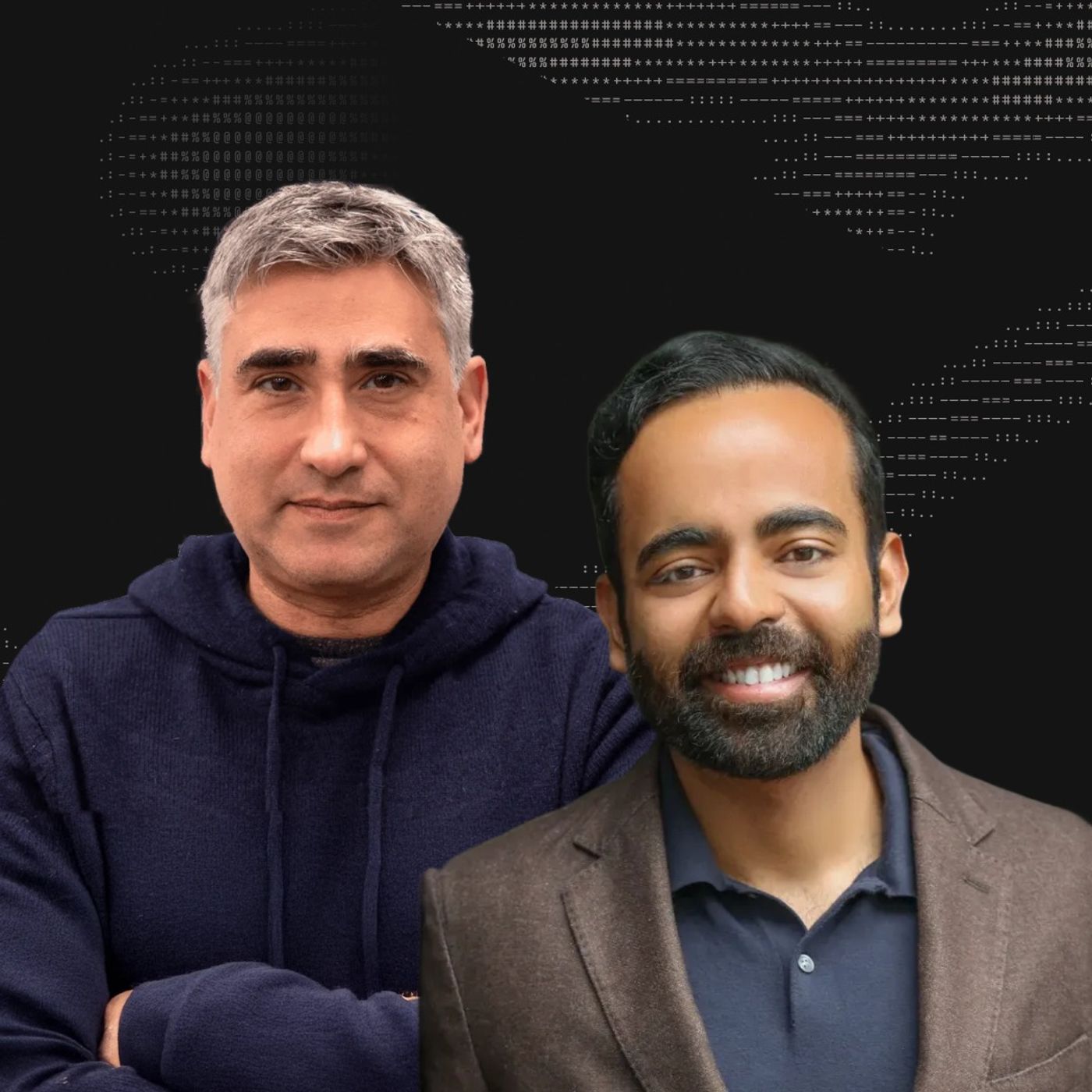
AI + a16z
Building the “See Something, Say Something” AI for Every Camera
00:39:25
a16z's Martin Casado sits down with Shikhar Shrestha, CEO and cofounder of Ambient, the company bringing agentic AI to physical security. Shikhar shares how a traumatic armed robbery at age 12—and a security camera that no one was watching—sparked his mission to make every camera intelligent. They discuss how Ambient's AI monitors camera feeds in real-time to detect threats and prevent incidents before they happen, navigating COVID as a physical security company, building their own reasoning VLM called Pulsar, and why the future of security is AI not just detecting threats but automatically responding to them.
Loading summary
Transcript99 lines
- [00:00]
Shikhar Shrestha
An incident just doesn't happen spontaneously out of nowhere. There's always like suspicious precursor behavior that's going on. The whole idea is to turn every kind of camera that you have deployed today into a see something, say something note where it becomes smart. It sees the bad thing happening and just tells you. And if it tells you, you can respond. It's a vision language model. So basically the model that takes a image and then uses a language model to understand everything that's happening in that image or a video itself. I was actually a victim of an armed robbery when I was 12 years old. Crazy incident was at the school bus stop with my mom. Guy walks up to me, puts a gun on my head. One of the memories I had from that was there was like this old school kind of closed circuit camera. And I'm just staring at the camera and I'm just hoping that someone's watching and will come and help us. Nobody's watching and, you know, nobody helped us. Now what you can do with AI forensics is you kind of build a whole trail of what actually happened during the incident for you and then extending that to also automated response. So almost like a real time assistant where it tells the operator, hey, I just saw a weapon brandished outside the building. First step I'll do is lock down the building. Second step I'll do is lock down the elevator. Third step I'll do is call law enforcement. A person jumps over the fence, goes inside, breaks into multiple of their buildings. They got an alert, and within I think five minutes of them getting the alert, everybody, their entire security leadership is on site. The police department is on site. And they actually ended up apprehending the perpetrator.
- [01:29]
Podcast Host
When Sheikha Shrestha was just 12 years old, a man put a gun to his head during a robbery. He stared at a nearby security camera, hoping someone was watching. No one was. That moment led him to Found Ambient, a company making every camera intelligent. But Shiger's real vision, AI that doesn't just detect threats, but responds to them in real time, automatically unlocking doors, calling the police. Full agentic security. In this conversation, Sheikha sits down with a 16Z's Martin Casado to talk about building on hard mode and how the $100 billion security industry is about to transform Shaker.
- [02:04]
Martin Casado
It's great to have you.
- [02:05]
Shikhar Shrestha
Yeah, great to be here.
- [02:06]
Martin Casado
Shikhar is the CEO and founder of Ambient, has been doing physical security with AI even before this latest AI wave. And now that's all being disrupted. So we're here to talk about AI and physical security. So welcome.
- [02:19]
Shikhar Shrestha
Thank you.
- [02:20]
Martin Casado
Maybe just give a very quick background on the company. Just very, very quick as far as what it does. And then the founding story.
- [02:27]
Shikhar Shrestha
Basically, as you said, we're bringing AI to physical security. The mission of the company really is to prevent physical security incidents from happening. And we target large enterprise as kind of our customer segment. So the idea is today, when you go to these organizations, they have cameras, access control, all these different systems to prevent incidents. But it's very reactive. There's no intelligence. And so they deploy ambient. We watch what's happening on the camera feeds in real time. Using AI, we analyze alarm events coming in and then basically find out what's suspicious, help them respond to it in real time so they can actually prevent incidents from happening instead of the current status quo, which is reactive. Then the founding story. So I was actually a victim of an armed robbery when I was 12 years old.
- [03:14]
Martin Casado
Wow.
- [03:14]
Shikhar Shrestha
Yeah. Crazy incident was at the school bus stop with my mom. Guy walks up to me, puts a gun on my head. My mom had a gold chain on, grabs the chain and, you know, I think it lasted.
- [03:26]
Martin Casado
Wait, where was this?
- [03:27]
Shikhar Shrestha
This was at back in India where I grew up.
- [03:30]
Martin Casado
I didn't know there were guns in India.
- [03:32]
Shikhar Shrestha
Yeah, it was like a homemade or homegrown kind of like a gun which can only fire like one bullet.
- [03:39]
Martin Casado
Oh, my God. That is crazy. Yeah, yeah, yeah.
- [03:41]
Shikhar Shrestha
And in the town, we were like, you know, they had access to those super scary. And I think it lasted maybe like not more than 20, 30 seconds or so. It felt like, you know, lasted forever. But one of the memories I had from that was there was like this old school kind of closed circuit camera hanging from the pharmacy near this bus stop, pointed at us. And I'm just staring at the camera and I'm just hoping that someone's watching and will come and help us. Nobody's watching and, you know, nobody helped us. But I just kind of grew very. Grew up very paranoid. I always thought, you know, incidents can happen. And I was interested in building security systems and alarm systems. And fast forward many years, started working in computer vision. And kind of late 2016, this is when the first sort of image captioning models were happening. Me and Vikesh were, you know, playing around with computer vision. We thought, wow, in the next five, 10 years, it'll be probably better than a human in terms of understanding images and videos. And the first idea that came to my mind is, wow, if we deploy that on every camera and it just tells you if something Bad is happening will prevent incidents from happening. And that's kind of how we got started.
- [04:54]
Martin Casado
And Vikesh is the cto.
- [04:56]
Shikhar Shrestha
Vikesh is. Yeah, our cto.
- [04:57]
Martin Casado
So maybe just pencil out quickly because it's not obvious to everybody why having AI in a camera improves physical security.
- [05:07]
Shikhar Shrestha
Yeah. So when you walk into a shopping mall or any kind of public space, you'll often see that they have this big sign that says see something, say something. And the whole idea is an incident just doesn't happen spontaneously out of nowhere. There's always suspicious precursor behavior that's going on. And one of the best ways to do security is by raising awareness where if you notice something suspicious and you tell the security team and they can see that pre incident precursor behavior happening that they can go respond to, that would be a very, very effective way for them to just cut the chain of that incident itself and prevent the bad thing from happening. The problem has been cameras are everywhere. So a large site may have hundreds of these cameras deployed. And the idea was always you can have a person sit in a room and on a giant screen watch these camera feeds instead of having 100 people stand outside and observe suspicious things. But cameras became cheap. We have too many of them, and then humans just couldn't keep up. So the whole idea is to turn every kind of, every camera that you have deployed today into a see something, say something note where it becomes smart. It sees the bad thing happening and just tells you. And if it tells you, you can respond. And if you respond, you generally end up preventing the incident.
- [06:23]
Martin Casado
I don't know if you remember, but when we first met, what really struck me is I also had been the victim of an incident, but it's quite different. Right. So in my startup. Remember this?
- [06:34]
Shikhar Shrestha
Yes.
- [06:34]
Martin Casado
Like in my, in my startup. So we were a pipsqueak startup of maybe 50 people and we had a server missing and we're like, you know, what happened to this server? And like, honestly, just for kicks, we're like, why don't we just go ahead and look through the, the, the, the security camera video. And so there just happened to be like one of the front desk guards and I would have lunch together. So we spent a couple of weeks at lunch just going through the video. Like I never thought we were going to find anything. I thought maybe somebody misplaced it. It was weeks of doing this and it just happened to be that we would kind of eat lunch together. And we ended up finding about a two minute clip of somebody breaking in. Super professional in and out and stole the server. And I thought to myself, it's absolutely crazy. Like, A, it was just totally a coincidence that we decided to look. And B, I mean, this is like, there was so much, like, we didn't know what time it showed. I mean, we didn't know it was gone within a matter of three days. Like, how do you even find these types of things? And so, you know, I was very aware, like, you know, something like this would really help in these incidents for forensics. So to turn this into a question, it seems like you can use AI to prevent, to respond, and then to do forensics after something's happened. Like, how do you view these different segments? Is it all three that you focus on? Is it one?
- [07:56]
Shikhar Shrestha
Yeah, so we do all three. So. And I think just barring the inspiration from the incident you mentioned, because super interesting, you know, I think you showed me the video sometime after we met. But, you know, the prevention aspect would have been when you see somebody with a hoodie and a mask outside the front door that's like trying to kind of shut up with a lock pick.
- [08:15]
Martin Casado
Remember, he had a lockpick set coming in. Yeah, that's right.
- [08:17]
Shikhar Shrestha
So it's suspicious enough where a camera sees that and it tells you, you know, there's no question you're calling law enforcement, they're going to arrive on site and likely, you know, they may end up apprehending the guy. But then the forensics problems you mentioned is a big one, too. Like in your case, I think you had just a few cameras. But imagine this like a larger site with 500 cameras. They have incidents, they have no idea where it happened, how the perpetrator got in, where they are. And I think now what you can do with AI forensics is even for something simple like, you know, let's say a laptop was stolen. You can just tell the AI a laptop is stolen and it'll go and say, okay, I'm going to go look for everybody that tailgated anybody that suspiciously entered, anybody that's walking with a laptop around the site and kind of build a whole trail of what actually happened during the incident for you. And so you can almost instantly do what took, you know, in your case, weeks. And out there in the real world with like the larger accounts, we see like months before they can close out an actual investigation.
- [09:14]
Martin Casado
Let's go to Jenny. I like the current AI wave. So, I mean, you were doing this before, like the current wave. Now the wave is happening. So maybe talk about, you know, a navigating this as a CEO, but Then B, how like the wave actually helps physical security and improves capabilities.
- [09:33]
Shikhar Shrestha
Yeah. So before going to Jenny, I. And because we can go a little technical in our discussion, so I want to talk a little bit about so what we saw in 2016 and why we started the company on the technology side.
- [09:45]
Martin Casado
Yeah, great.
- [09:46]
Shikhar Shrestha
So there was this model at the time, it was called Deep Captioning. Uh, so you know, CNNs had come out, you could understand images and then basically people figured out how to take a convnet that can tokenize an image and then connect it to a sequence model which at that time was a RNN or like a LSTM type model and basically generate like a one sentence description for an image which tries to explain what happens. Right. So when I saw it, Vikesh saw it, we started working with these models, playing with them like that was a light bulb moment because this, that was the first time you connected a language model and an image model and kind of did like conjoint inference all the way from an image to the language space itself. So the thesis always was that that kind of model will eventually be able to explain an image or what happens in a video better than a human. For the first five years though, the progress was like glacial, like nothing was happening. Right. So we had to basically wield our way into sort of like just figuring out what kind of models to use and glue them together to make these detections work. With Gen AI, I think if you look at how a vision language model really works, it's actually exactly the same paradigm. You basically tokenize the image with a transformer based sort of backbone model and then you connect it to a large language model on the language side. And just because of the breakthrough of the LLM itself, it understands everything that happens in that image.
- [11:08]
Martin Casado
Right.
- [11:09]
Shikhar Shrestha
So today it's so obvious that these reasoning vision language models or reasoning VLMs think are better than humans. Like we've hit that milestone which we always wanted to, and I think we really benefited from having like the foresight that that's the kind of understanding that we want to build a company towards, you know, that kind of technology will exist. And so a lot of the stuff we did in the product, you know, the kinds of detections we do, the automation to the incidents sort of forensics didn't really change. I think what changed is we just got a really, really more powerful engine that we could just plug into with the backbone of the product itself. And then everything we always wanted to make suddenly started working. So I think that was the biggest Thing for us on the journey, I transition.
- [11:52]
Martin Casado
Can, can you give an example of either the most sophisticated rule you've seen or the most sophisticated thing you've caught? Just to give a sense of like. Because for me, I grew up. Listen, I, I've, I've been watching the physical security industry for a long time. So for me it's like tailgating, you know, person falls down brandishing, like a really basic stuff. But like, you know, things have evolved so much.
- [12:14]
Shikhar Shrestha
Yeah. So I think it's more than the sophistication, it's just the deep reasoning ability. So I'll give you an example. So let's say we have a threat signature to detect somebody falling, falling down. Right. So somebody falls on the floor, could be a medical issue, could be a security issue, whatever security team wants to know. But then you deploy it in a manufacturing facility where they're making cars and you realize that people are like bending down on the floor all the time to like repair cars. Or you deploy it in a camera that's inside a gym and people are on the floor all the time. They're doing push ups or something like that. And it triggers the same alert because the older generation AI had no understanding of how to separate somebody on the floor repairing a vehicle versus someone having a seizure and falling down on the floor itself. I think these newer VLMs can do that. They have that reasoning, the cause, effect, understanding where they see the whole scene. They'll say, okay, this one's suspicious and this one's not. Another difference is like somebody drawing on a whiteboard versus somebody like tagging the wall of, you know, the exterior of a building with graffiti or vandalizing. It looks exactly the same. And as to us, like when we watch it, we know, okay, one is bad and one is okay.
- [13:24]
Martin Casado
So it's like almost like the context.
- [13:26]
Shikhar Shrestha
That's right.
- [13:27]
Martin Casado
Actually consider the context. So you just use the acronym vlm. What is that?
- [13:30]
Shikhar Shrestha
It's a vision language model. So basically the model that takes an image and then uses a language model to understand everything that's happening in that image or a video itself.
- [13:40]
Martin Casado
And then for you, do you do your own models? Do you post train models? Do you use other models? How do you think about it?
- [13:46]
Shikhar Shrestha
Yeah, so we kind of started on this journey about two, two and a half years ago when the first vlms came on the scene. And we started by using kind of the open source VLMs in some parts of our pipeline. I think the most exciting thing recently is we just announced our own VLM called Pulsar. So we actually call it a reasoning VLM because it has some built in reasoning ability with a vision language model. And the motivation to build our own model was that these large models now probably have 100 billion plus parameters. If you run a model that capable on a security camera feed, a single camera can cost you five to $10,000 a month for doing continuous inference. So the technology is great, but it's just not accessible to be able to watch a camera feed continuously. And then we realized that a lot of these larger models that are publicly available are actually trained on Internet data from like social media and stuff like that. And those images just don't look how a security camera image looks. Often warped, low resolution, the incident is not salient. It may be happening in the background itself. It's not like super foreground into the scene. So because we've been doing this for a while and we've deployed tens of thousands of cameras in the field, we have a ton of proprietary data and we really leverage that to build our own VLM which is, you know, about 50 times compute efficient and beats the performance of any publicly available reasoning VLM on this very specific problem of detecting threats in security camera video feeds.
- [15:18]
Martin Casado
And can you talk through like any sensitivity issues a user might have to like data or anonymity or privacy? Yeah, so that must come up a lot in these.
- [15:31]
Shikhar Shrestha
It does. Especially in the segment we go after, which is, you know, the enterprise segment most sophisticated. They really care about it. So we've taken like a privacy of our approach by design in our product. So we don't actually do any facial recognition. And our approach is that, you know, people do suspicious things in the environment. And so we want to look for that suspicious thing happening, the precursor thing to the incident happening, and respond to that to prevent the incident instead of trying to identify who they actually are. And so that combined with, you know, the way we've built our models, you know, we don't ask the model to take a scene and say what's suspicious. We actually ask it very specific questions like is there somebody brandishing a weapon? Is there somebody trying to take pictures or surveil this site? You know, is there somebody that's holding the door open and trying to tailgate? Is there, you know, things that are very specific indicators of compromise? And by doing that, we have a very large library of those. But by doing that, you kind of go past some of these issues with bias or just sensitivity around privacy and how that data is being used, because there's very Specific, predictable behavior you can get from the software if you just structure and build it the right way.
- [16:43]
Martin Casado
Another interesting thing about watching you build out this company is like, okay, so you're selling software to a traditionally non software buyer. You went through Covid, you know, you're going to the gene, which I think that's been just a massive tailwind, which has been great. But also there's actually a real operations component to something like that. Like you got to have people like, I don't know, integrating on sites, you know, you probably have people watching alerts or at least training them to watch alerts. So how do you think about the actual operations side of this?
- [17:09]
Shikhar Shrestha
Very, very important. So you know, we have a team that 247 operation that basically reviews any alert that the AI has low confidence on before it goes to the customer itself. And the reason we did that when we did it, actually it was very contrarian because people didn't like it and they were like, wow, this is operations built in, human in the loop. Now every company that does this at scale uses a human in the loop component. And not only that, the technology has gotten so good, we haven't basically grown that team in the last four years really, even though our deployment footprint is maybe 3 or 4x. So you have to kind of have a very well managed team to be able to do that. But then it becomes an asset because we collect so much training data from the feedback from those human operators on where the AI is actually failing. And in machine learning we call this like hard negative mining. So you want the examples where the AI really fails to be able to take the footprint of a model and progress it on the performance itself. I think the other side of it, which you mentioned, which is, you know, we have an edge GPU server that gets deployed to a lot of our large sites on premises. So it's there some hardware component, we don't make it, it's off the shelf. But you know, to be able to deploy and like operate something like this, like you just need that operating muscle in the company itself, which we've built and it's taken time, but we really think it's a moat around the business now because it lets us go and take a very large complex organization, truly retrofit them end to end and like take them to this proactive agent of physical security and almost immediately and start showing value. And it's just hard to do that from a cold start.
- [18:45]
Martin Casado
What do you think the feature looks like in this? Is it, is it, you know, detection gets way Better, but existing type of footprint or do like you monitor different verticals or like different types of devices or.
- [18:58]
Shikhar Shrestha
So we think the future is a very large library of detections which is very accurate. Then it progresses to also doing the assessment of those detections. So not just saying that, oh, I see a person with a weapon or somebody trying to break in, but why does that matter at this site in the context right now and the AI being able to do that and then extending that to also automated response. So almost like a real time assistant where it tells the operator, hey, I just saw a weapon brandished outside the building. First step I'll do is lock down the building. Second step I'll do is lock down, the elevator. Third step I'll do is call law enforcement. Fourth step I'll do is wait, what.
- [19:38]
Martin Casado
Do you think we'll actually do? Like the AI will take the action we'll do.
- [19:41]
Shikhar Shrestha
That's right.
- [19:42]
Martin Casado
Remediation or mitigation.
- [19:45]
Shikhar Shrestha
Yeah, the automated response, remediation. Run the whole workflow. Wow. And I think the way it'll happen is it'll show the operator that these are the steps.
- [19:53]
Martin Casado
Do customers say that they want this or.
- [19:55]
Shikhar Shrestha
So I think there is no other way for customers to actually prevent incidents because seconds really matter. Often the operators, the guards are not, you know, they're trained, but not well trained enough where if it's a moment of crisis, they'll be able to exactly carry out the right SOP that they need to. And I think a lot of here depends on like how you design these products. So you know, if you have like an ability where the operator can see what the steps are going to be and then they can override it if they need to.
- [20:24]
Martin Casado
Right.
- [20:24]
Shikhar Shrestha
But if they let it go through it, it'll just take those four steps. We do think like that's the future. And I think the amount of human versus how automated it goes or how agentic, I think that's kind of the surface area we have to sort of like figure out what that right balance of that approach is in the near term and long term.
- [20:42]
Martin Casado
Do you think that you'll ever kind of move to like license plate detection or any of like the other like physical security use cases or so we do that already.
- [20:50]
Shikhar Shrestha
So. So, you know, when our customers have cameras deployed exterior, you know, outside the building itself, you know, we can actually do ambient license plate detection. So any camera that, you know, any vehicle that passes by, you know, if they have that threat signature deployed, we'll catch the license plate. I think the biggest value Driver for us is because we can detect so many things. When you have an investigation that you need to do specifically that centers around an incident inside or around a building, you can just say, you know, something suspicious happened and then the AI can automatically say these are the suspicious people, this is the car they entered, that's the license plate, follow the license plate, you know, look at where that person badged in. And we have all the tools where you can connect all of them to almost like end to end run these investigations, forensics, and so almost agentically detect threats which you just can't do with one siloed detection alone.
- [21:43]
Martin Casado
Let's talk a bit about market segments. So you know, in the history of the company you've actually explored multiple market segments. And it's very interesting because you both protect some of the largest companies in the world and the most forward thinking companies in the world. But at the same time you also protect a number of like the most high profile individuals rules in the world. Right. And a lot in between. So maybe talk a bit about how you think about different market segments and then how you decided which ones to focus primarily on.
- [22:09]
Shikhar Shrestha
Yeah, so you know, we always thought that we wanted to go after the largest, you know, most complex organizations where the security need is, you know, complex. They need lots of guards, they need cameras, they have many entry exit portals. And that segment of the market happened to be kind of the large enterprise. So corporate campuses, hospitals, school districts, critical infrastructure sites, data centers, stuff like that. And we realized everything AI can do for you, which is watch all your camera feeds, automate the monitoring of these alarm events, speed up investigations and even automate workflows for response. Those are the problems. That segment of the market, it's the most magnified in that particular large complex segment of the market. So I think our earliest first vertical was corporate campuses. So we got some of the largest corporate campuses in the world, deploy this globally and run a global scale security operation with it. Today we have customers in all these segments that I mentioned. Critical infrastructure, data center, healthcare, securing. I think high net worth individuals was more accidental where we would get a deployment in. And then I realized that the security leadership often for a large company is responsible for executive protection. And they would say, hey, why don't we also deploy this at the CEO's house and the rest of the executive leadership's house. We started doing that and then some of our investors were interested and you know, I always thought that would be like a very small part, but it's actually become, you know, seven figure multiple Seven figure year business for us at this point.
- [23:40]
Martin Casado
I mean, I gotta say I'm a very happy customer of ambient. So it protects my house. I don't know how many cameras I have, maybe 10, 15 cameras, something like that, you know, like, so it's not, it's not huge. But here's the thing. I love it and I love it both for the security angle, it's great. But I also love it to like watch wildlife, you know, like it does a great job and I can kind of tune it to the things I want. And so it just kind of makes me think like, how much work do you have to do as a company to cater to like the Martins of the world versus, you know, these large corporate offices? You know, is it, is it, is it the same product? Do you have like sub teams within there?
- [24:17]
Shikhar Shrestha
So it's exactly the same product. I would say like our go to market proactively is very focused on the larger price. Right. So we're tooled to be able to win there and build a product and deploy there. What's become really good with AI is I think the implementation is a lot simpler. The value you can get out of the box of the product has become a lot easier to achieve. So it's a little bit easier now to serve that prosumer segment as well. And so we enable it. But I wouldn't say like that's the focus of the company or the segment we're trying to win.
- [24:47]
Martin Casado
So I, so I know this, this next topic is very sensitive, so only talk about what you can. But I, you know, listen that again, being a privilege to be on the board, we've dealt with a number of pretty high profile incidents and pretty serious incidents. And so maybe you can talk about maybe not the specific incidents of specific companies, but the natures of the types of incidents that, that we've dealt with as a company.
- [25:07]
Shikhar Shrestha
Yeah. So you know, as you mentioned over the years, multiple major things that we've been able to catch, prevent, you know, help with response to. I think I'll share like a few that are coming to mind right now. So you know, large aerospace company, which is one of our customers, you know, they had a pretty major battery related outdoor fire in one of their manufacturing facilities. You know, this is a company that's very critical to the country. This production site uptime is very, very important. And it was a spontaneous fire that happened because of, you know, improper dumping of the battery itself. And outdoor fire detection is a very hard problem. We think that's solved indoors, but thankfully they had a camera deployed which was running. We have over 200 different detections. We do. One of those is detecting smoke and fire. And so ambient was running. We detected that, they got an alert. Within a minute, everybody arrived there, the team arrived, they had the fire department respond to the incident. And it basically prevented kind of what could have been a pretty severe plant shutdown or something worse in terms of the damage that could have escalated from it. You know, multiple incidents of break ins. I'll just give one more example.
- [26:17]
Martin Casado
No, no, please. Yeah, please. I love it.
- [26:18]
Shikhar Shrestha
Yeah, yeah. So one of our early customers, you know, major publicly traded, you know, e commerce company, has physical sites around the world. They rolled us out globally and you know, initially when we were just doing the pilot with them, they had deployed us on like 50 cameras or so in one of their HQ sites. And their security director deployed us and said, hey, we've just put up this fence line and we would love to get an alert every time somebody breaches or crosses over the fence. They just spent millions to set up this fence line to secure the perimeter. And that wasn't a threat signature or something we could detect in the product at the time. But we'd always architected our product to be able to immediately build new threat signatures on it. So anything new you would want to detect, we can just add it into the system, configure that and deploy it. So we did that, gave them a over the air update, shipped it, and you know, just out of nowhere, basically two days after, at night, a person jumps over the fence, goes inside, breaks into multiple of their buildings, you know, stole laptops, like the whole thing. And this time the outcome was so different because they got an alert and within I think five minutes of them getting the alert, it's like 12:30 or so at night and everybody, their entire security leadership is on site, you know, the police department is on site and they actually ended up apprehending the perpetrator. So that was very satisfying to see that when you have that, you know, correct, real time intervention, the outcome in these incidents can be very, very different. Right?
- [27:47]
Martin Casado
Totally. You know, I mean, just to be frank, it's been a real pleasure working with you as CEO. You know, I would say physical security has had two very major disruptions in the last seven years and you've navigated it so well. One of those was Covid, which totally changed the landscape. And the other one is Gen AI. So I'd like to talk about both of those, but first be awesome just to hear your thoughts about how you navigated like a shutdown globally, you know, while running a physical security business.
- [28:17]
Shikhar Shrestha
Yeah. So, you know, I think like people talk about like crucible moments, and I think that was a crucible moment for our company because, you know, pre Covid, we were very dominant in securing corporate campuses and suddenly nobody's on site, so there's no traffic and incident count went down. The biggest thing we did was just kind of repositioning the same product and technology into different verticals. So verticals that still were active, you know, museums, for example, you know, very kind of smallish vertical. But we realized like they're still adopting technology before they were planning to reopen. We actually acquired some of those museums as customers at the time. You know, data centers still had essential workers on site. We acquired those customers. So a lot of it was just like repositioning to verticals where there was some activity. And then we just kind of hunkered down and kept the company together and I just think muscle our way through that period, essentially.
- [29:14]
Martin Casado
Do you feel from a physical security the pre Covid world is equivalent to the post Covid world, or did the post Covid world shift in any way? Is it kind of back to business as usual or things change?
- [29:24]
Shikhar Shrestha
I would say in the last 18 months or so it feels like it's back to business as usual because like everybody's back on site and people have almost like forgotten the memory of it. The one difference I will say is physical security teams themselves always used to be on site. So you always had like a room, a global security operations center, you know, command center room inside the building, and like people sitting there securing the site out of necessity during the pandemic, because the security teams also were working from home, they realized that they needed to be able to monitor sites remotely and still protect them. And so there was this kind of realization they had that having a cloud based product where you can secure a site in a different part of the world, sitting somewhere else, still be able to review alerts, grant access, do response activities, I think kind of heightened a little bit. So I think that was a great change and I think just moved. I think it accelerated the trend from on prem products to more cloud based products which are more federated, you can secure any site and things like that.
- [30:22]
Martin Casado
Yeah, so a lot of the people listening to this myself are enterprise software folks. Right. This kind of. A lot of the industry has been enterprise software, which is a very specific motion. You have a centralized buyer and you know, that buyer has a lot of budget. It does a Lot of stuff. But you're having to figure out how to sell effectively software into what's historically been kind of a physical goods, you know, physical systems businesses. So would love to, you know, hear your journey in figuring out the go to market, you know, what you've learned, maybe even advice to people that are looking at this.
- [30:55]
Shikhar Shrestha
Yeah, so a lot of pieces to that. So.
- [30:58]
Martin Casado
Yeah, a ton. Yeah.
- [30:59]
Shikhar Shrestha
So you know, on the outset, if you look at it. So physical security spend is around, you know, more than 100 billion or so. Just in the US it's all manual labor. So it's guards, operators on the technology side, which is like less than 10% of that spend. It's mostly hardware.
- [31:16]
Martin Casado
Right.
- [31:17]
Shikhar Shrestha
So the entire channel even for the industry is built to distribute, you know, there's tiered distribution actually maybe just, just.
- [31:24]
Martin Casado
To prep people for this, talk, maybe talk a bit about like what specifically you sell as. Just so that it'll put in the context of this discussion.
- [31:33]
Shikhar Shrestha
Yeah, so we basically sell subscription software, right. So our software, we sell it based on the number of licenses, the number of cameras you have to monitor. And what the product does or what the platform does is it monitors the cameras for threats and suspicious events that are happening on it and then helps you do automated response to those incidents so you can prevent incidents. We kind of call this category of product or this approach to security agentic physical security. And then our core bread and butter is a threat detection. As you mentioned, we also have products for forensics to search video. We have products to manage access control events. We call that access intelligence. Sort of like a suite of products on that shared platform helps you automate your entire physical security.
- [32:15]
Martin Casado
But it is software that works with existing infrastructure. Like you don't do the cameras like those already exist or somebody else does it.
- [32:21]
Shikhar Shrestha
That's right. So existing cameras, existing access systems, software retrofit, plug and play, automate and prevent incidents.
- [32:27]
Martin Casado
So how does, how does somebody sell software into something like this?
- [32:30]
Shikhar Shrestha
Yeah, so it's very hard.
- [32:32]
Martin Casado
So it's really tough.
- [32:34]
Shikhar Shrestha
I think the biggest lesson for us, you know, it's very true category creation because not only there is limited budget for software, there's no budget for AI and physical security, you know, until we arrived on the scene. And so a lot of it is very evangelical and educational. So essentially the sales motion, you know, is to show them what the current state is, which is this is how physical security runs today, and then talk about the future state, which is when you make your physical security operation agentic. What does it look like and then what are the outcomes from that future state, which is you have more automation, you can prevent incidents, you respond faster. But a lot of that art is you have to be out there in front of these prospects, you know, people who are running these security operations. And you have to show them this vision for what the future of their operation can look like.
- [33:20]
Martin Casado
What about things like channel partnerships, routes to market, system integration, like is all that also consideration?
- [33:28]
Shikhar Shrestha
Yeah, so it's very useful. But the traditional physical security channel is, you know, not that sophisticated. In fact, there's a reason to it. It was built to distribute hardware like cameras, and so it goes through tiered distribution. The manufacturer has no connection to the end user. You know, if a customer needs support with their security products, they have to go through multiple VARs or a reseller to then get support hours with the manufacturer itself. And those were all the issues that I think have blocked kind of innovation because most of the manufacturers in the industry don't even know what the end users actually want. I think I will say that over the last two years or so, as our go to market matured, we started getting larger customers and more repeatability. In the go to market itself. We've seen the channel become more receptive to a point where 20, 30% of our pipeline now comes from the channel. And I think there's the overall macro where everybody knows they have to adopt AI and physical security, which is contributing to it. And I think over time we do think that'll be a big way to go to market for us as well. But still evolving along with figuring out.
- [34:34]
Martin Casado
Go to market, you also have to figure out how to raise money. And you've done a great job of that. But again, this is a non standard space and you were doing basically this, you know, physical defense tech before it was cool. And so you kind of were one of the pioneers in figuring that out. So how is the funding market's opinion or changed, you know, the last 10 years in this?
- [34:56]
Shikhar Shrestha
Yeah. So, you know, early on I think it was very, very hard to raise money in our first round. And what I realized that happened is, you know, there had been kind of this whole generation of companies that went after physical security. They were doing video analytics, that was the traditional way to do computer vision, line crossing, motion detection. And most of them just didn't work out. And so there was a lot of scar tissue. And so people were very, very hesitant and they just didn't believe that big meaningful company can be built in physical security. I think what worked for us personally early on was just finding investors who already had a prepared mind for the idea. You had one from your incident story and a few people that did became our early backers and support. The way I look at it now and like I think now it's way more consensus because multiple people have built large companies in physical security. The success we've had, it's become more obvious. And I think the TAM is first of all very, very big, large addressable market. You know, you think about where to apply, apply AI and you see everything we do with physical security today is manual. It's just human labor. And you know, the third thing is there's a ton of data. You have cameras, you have access control. All this data is just sitting there with no analysis on top of it. And so just out in the ether, if you think about where you can apply AI and like unlock like billions in productivity value, like physical security is just such a great space to do it. And I think as we've proven that with deployments and like, you know, success in the field itself, you know, now I see like very, very like large funds have like sector coverage teams that are covering physical security, which was just not the case, you know, five, 10 years ago. So I think like people are seeing that, that this will be one of the most ripe areas to deploy AI, you know, to get that automation value and build a big agentic company. And I think that's kind of changed the tone of the investor market as well for us.
- [36:46]
Martin Casado
I just want to get a little bit personal here as we end up. So listen, you've actually been tremendously successful in hard mode and so congratulations, you're the leader in this space. You've got the best customers, you know, you've done a great job. And I just think that even while we're talking, I'm thinking about it, you did category creation, you weathered Covid, you know, you're going through a platform shift right now. You're selling software to like a non software when you've got an operations component, you know, and, and, and right. And so like, and yet you've actually also maintained your health. Like maybe just a few words of wisdom to people listening on, on how you kind of take care of yourself and kind of manage through like this much complexity in a business.
- [37:26]
Shikhar Shrestha
I'm glad you said hard mode because that's how we always talk about it.
- [37:29]
Martin Casado
Super hard mode. Yeah.
- [37:31]
Shikhar Shrestha
So there's like a couple of these levers you turn on. If you turn on all of them, you know, you're just building the company company in hard mode. You know, it's really funny. Before I started the company, so I always so hard things about hard things. Ben's book was one of my favorite books at all time. And I think he has this page on like the struggle. He talks about, like what the struggle means and it gets really hard and very difficult. And I think people have different reactions when they read it. When I read that page, I was like, I want this.
- [37:59]
Martin Casado
Oh, you were for it.
- [38:01]
Shikhar Shrestha
You're in it.
- [38:02]
Martin Casado
Okay.
- [38:02]
Shikhar Shrestha
You know, how hard could it be?
- [38:03]
Martin Casado
You ran towards it. The battle.
- [38:05]
Shikhar Shrestha
Exactly. But it spoke to me that, wow, this is something that's so hard to do that not everybody can. And so why not try making something that hard happen in the world? And you know, some hills are easy to climb, some are really difficult. I think my number one advice is like, just don't expect it to be easy. Just pick a problem that is worth enough. Like it's just valuable enough to solve where the summit. You know, that shiny thing on the top of the hill is meaningful in the world. And if it is, and you just expect it to just be hard all the way, I think that's just a great mindset to be able to just weather all the storms and just keep marching.
- [38:41]
Martin Casado
I love it. Well, congratulations on the success. It's been great to have you.
- [38:45]
Shikhar Shrestha
Thank you.
- [38:48]
Podcast Host
Thanks for listening. If you enjoyed the episode, let us know by leaving a review@ratethispodcast.com a16z we've got more great conversations coming your way. See you next time. As a reminder, the content here is for informational purposes only, should not be taken as legal, business, tax, or investment advice, or be used to evaluate any investment or security, and is not directed at any investors or potential investors in any A16Z fund. Please note that A16Z and its affiliates may also maintain investments in the companies discussed in this podcast. For more details, including a link to our investments, please see a16z.com disclosures.