Podcast
AI First with Adam and Andy
Hosted by Forum3 · EN
AI First with Adam and Andy: Inspiring Business Leaders to Make AI First Moves is a dynamic podcast focused on the unprecedented potential of AI and how business leaders can harness it to transform their companies. Each episode dives into real-world examples of AI deployments, the "holy shit" moments where AI changes everything, and the steps leaders need to take to stay ahead. It’s bold, actionable, and emphasizes the exponential acceleration of AI, inspiring CEOs to make AI-first moves before they fall behind.
16episodes
Episodes
Newest firstAll episodes
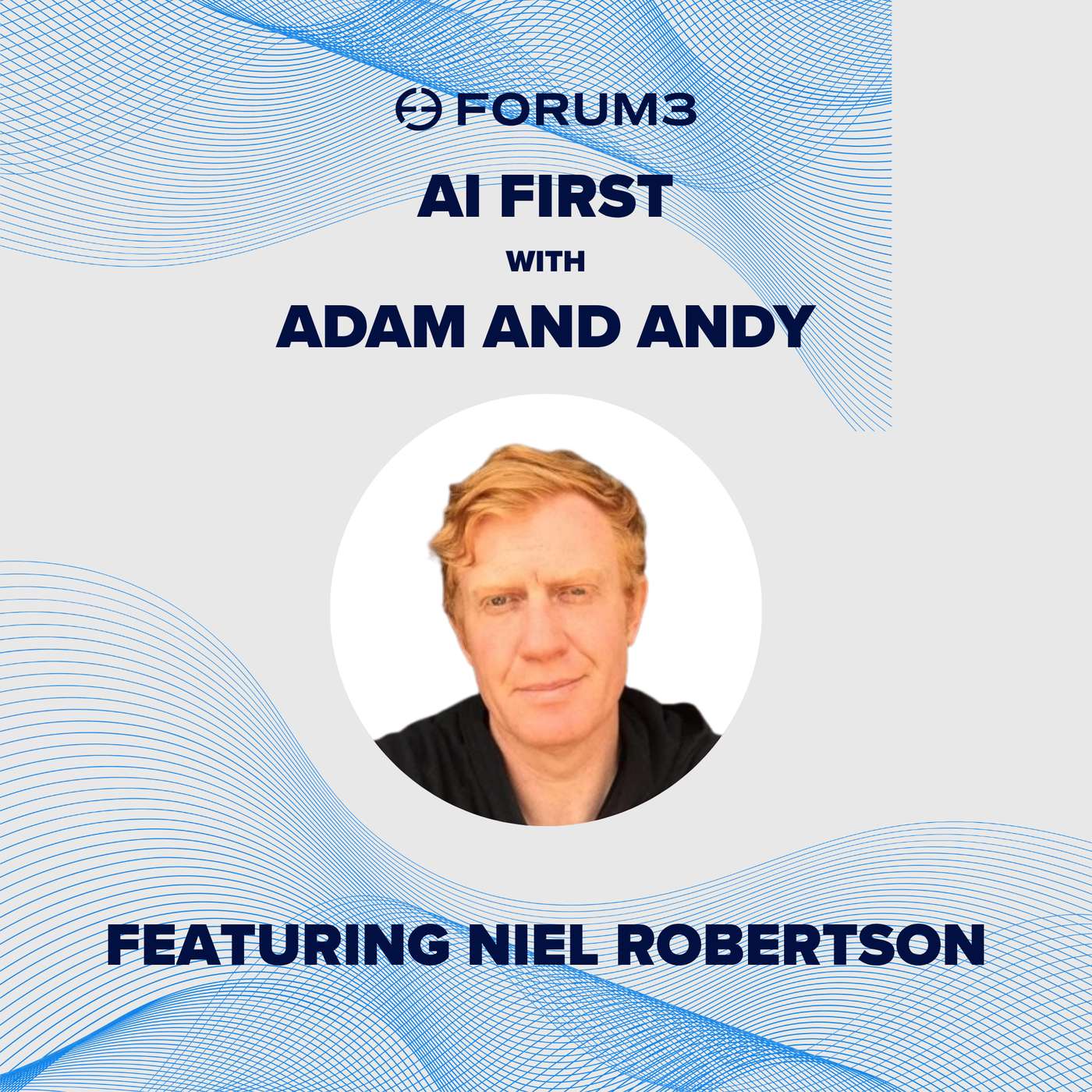
The End of Software as We Know It: How AI Agents Are Rewriting HR, SaaS, and Organizational Design
5d ago00:37:43Tap to summarizeWhat happens when executives no longer need to navigate complex software interfaces, or rely on specialists to retrieve the information they need? Winslow co-founder Niel Robertson joins Adam Brotman and Andy Sack to explore how AI agents and conversational interfaces are reshaping HR technology, SaaS platforms, and systems of record.Robertson explains how agentic software can combine operational tools with domain knowledge, enabling leaders to manage payroll, employee data, onboarding, reporting, and compliance through natural-language requests. The conversation also examines the growing importance of operations roles as AI absorbs more clerical and execution-focused work across HR, sales, marketing, and other functions.For executives, the implications extend beyond productivity. Organizations must reconsider data architecture, software investments, workforce design, employee privacy, and the role of human expertise. The result is a new operating model in which AI handles more routine work while people focus on judgment, strategy, change management, and organizational growth.
Transcribe →
The Risk-Reward Calculation: Mapping the Agentic Spectrum for Business Leaders
2w ago00:11:32Tap to summarizeAs AI moves from simple chatbots to autonomous digital teammates, business leaders face a new strategic question: how much risk are you willing to take for how much reward? In this episode of AI First with Adam and Andy, hosts Adam Brotman and Andy Sack introduce the agentic spectrum, a framework for understanding where an organization sits between assisted intelligence, agentic workflows, and full digital teammates.Adam and Andy walk through real examples from their AI services practice, including connecting an AI system to email and confidential documents to review a contract red-line, and deploying a financial analyst agent that delivered a full 15-location restaurant analysis in under an hour, work that would typically take a human employee one to two weeks. Each example illustrates how expanding an agent's access to data and systems increases both its usefulness and the organization's exposure.The takeaway for executives: moving down the agentic spectrum requires deliberate governance, including read-only access, enterprise-grade confidentiality, and human verification of outputs, not blind trust. Leaders who make this calculation thoughtfully can unlock significant time savings and faster decision-making.
Transcribe →
The 50 Percent Rule: How AI Is Reshaping the Future of Labor
3w ago00:12:00Tap to summarizeEvery leadership team weighing AI investment eventually runs into the same question: does automation mostly displace workers, or does it unlock new productivity and new roles. Adam Brotman and Andy Sack take on that debate directly, building on research from their book, Agents Inc.They walk through the reasoning behind their central estimate: most businesses today could run with at least 50 percent fewer people if fully agent-enabled, and share early evidence suggesting the real number may run closer to 70 or 80 percent in some functions. The conversation also surfaces a counterpoint: companies that lean into growth rather than standing still can use the same efficiency gains to do more work with the same headcount, and rising AI proficiency often makes teams busier rather than smaller.For executives, the takeaway is practical: headcount impact depends heavily on whether a company treats AI as a cost-cutting tool or a growth lever. The episode also previews a future conversation on solopreneurship and a framework called Swarm, relevant for any leader planning workforce strategy around agentic AI.
Transcribe →
The Book That Never Stops Learning: Inside the AI Agent Behind Agents Inc
4w ago00:18:40Tap to summarizeAdam Brotman and Andy Sack sit down to talk about the launch of their new book, Agents Inc: How to Rebuild Your Company in the Age of AI, and the living book concept built around it. Rather than a static text, the book is co-authored and now embodied by an AI agent named Vera Brown, who stays active after publication to answer reader questions and keep the content current.The conversation covers how the living book works: Vera can build a custom mini book tailored to a reader's background, hold ongoing chats about the material, and update her thinking as the agent landscape shifts. Adam and Andy also walk through the book's speed order aim framework, and reflect on how the project itself, built in three months without a designer, was an iterative customer experience unlock rather than a plan they had from day one.For executives, the episode is a working example of what agentic AI makes possible beyond a single use case: compressed timelines, ongoing personalization, and content that keeps working long after it ships.
Transcribe →Speed, Order, Aim, Unlock: Inside the Launch of Agents Inc.
Jul 1600:18:21Tap to summarizeAdam Brotman and Andy Sack mark the launch of their new book, Agents Inc., in a mini episode facilitated by Forum3's Rose Kelly. The conversation picks up where last week's origin-story episode left off, moving from why the book exists to what it actually argues.At the center of the book is a framework: speed, order, aim, and the unlock. Brotman defines an agent against a chatbot, emphasizing persistence, memory, and the ability to act on a leader's behalf, then walks through what changes when work shifts from doing tasks to managing systems that do them. Sack adds a blunt data point from the book's fifteen leader interviews: most organizations, in their view, can eventually run with roughly half their current headcount once agents are deployed well.For executives, the takeaway is sequencing. Where you aim an agent determines whether it becomes a genuine unlock, like a dedicated store manager agent, or just another underused tool. The episode also previews the living book experience launching alongside Agents Inc., built with an agentic co-author that keeps the book current after publication.
Transcribe →
The Living Book: How Adam Brotman and Andy Sack Co-Authored Agents Inc. with an AI Agent
Jul 800:18:46Tap to summarizeAhead of next week's launch of Agents Inc., Adam Brotman and Andy Sack invite Forum3 Chief Strategy Officer Rose Kelly onto AI First with Adam and Andy for a special preview episode. The hosts walk through the origin of their second book: a shift in how they were advising clients on agentic organizations that turned into an idea to write the book itself with the help of an AI agent.Adam and Andy detail how the project evolved from a one hour first draft into a twelve to fifteen version manuscript, built using more than 30 Claude skills and informed by roughly a dozen interviews with business leaders deploying agents as digital teammates. They introduce Vera Brown, the AI agent credited as a co-author, and explain how the same agent will keep the book current after publication rather than treating it as a finished, static product.For executives, the episode is a real-world case study in compressing a 20-month content production cycle into three months using agentic workflows, and a preview of what it looks like when a published book continues to learn and personalize itself for readers after launch.
Transcribe →
Stop Measuring Your AI ROI: A Better Framework for the Age of Agents
Jul 100:18:09Tap to summarizeThe media narrative around token maxing and CFO anxiety is creating confusion at the executive level, just as AI is becoming genuinely transformative. Stories about companies blowing through annual token budgets in a quarter have leaders reaching for the brakes. Adam and Andy argue this is exactly backward.The core reframe: AI isn't a line item in your tech stack. It's intelligence as a service. The cost of fully deploying AI across a 100-person company runs close to one headcount. If your employees are hitting usage limits and asking for more, that is your ROI signal, with or without a spreadsheet to prove it. When you aim AI at growth and differentiation rather than cost savings, the returns become clearer and more meaningful.Andy's unsolicited advice: stop measuring ROI altogether for now. The obsession with proving returns is impeding the experimentation that would actually teach you where to aim the AI machine. Aim it at growth. The returns will follow. And if you want to know what AI can really do, try token maxing for a week.
Transcribe →
The Agent Unlock: How a Managed Agent Became a Sales Team's Secret Weapon
Jun 2400:12:38Tap to summarizeMost companies approach AI agents as efficiency tools, ways to do the same work faster and cheaper. This episode presents a different model. Forum3 recently deployed a managed agent for a client's independent sales force, and the results challenge that assumption.The agent, delivered entirely through email, acts as a personalized CRM, business analyst, and chief of staff for each sales rep. It prioritizes targets, customizes product recommendations using real data, drafts personalized outreach, and proactively delivers a daily action plan. The sales reps, many of whom are in their 40s and 50s with minimal AI experience, interact with it the way they'd interact with a human assistant.The key insight: this isn't an efficiency play. The workflow didn't exist before the agent. It's a revenue growth tool that gives independent workers the equivalent of a functional team they could never afford to hire, with built-in data security guardrails that protect the business from agent errors.
Transcribe →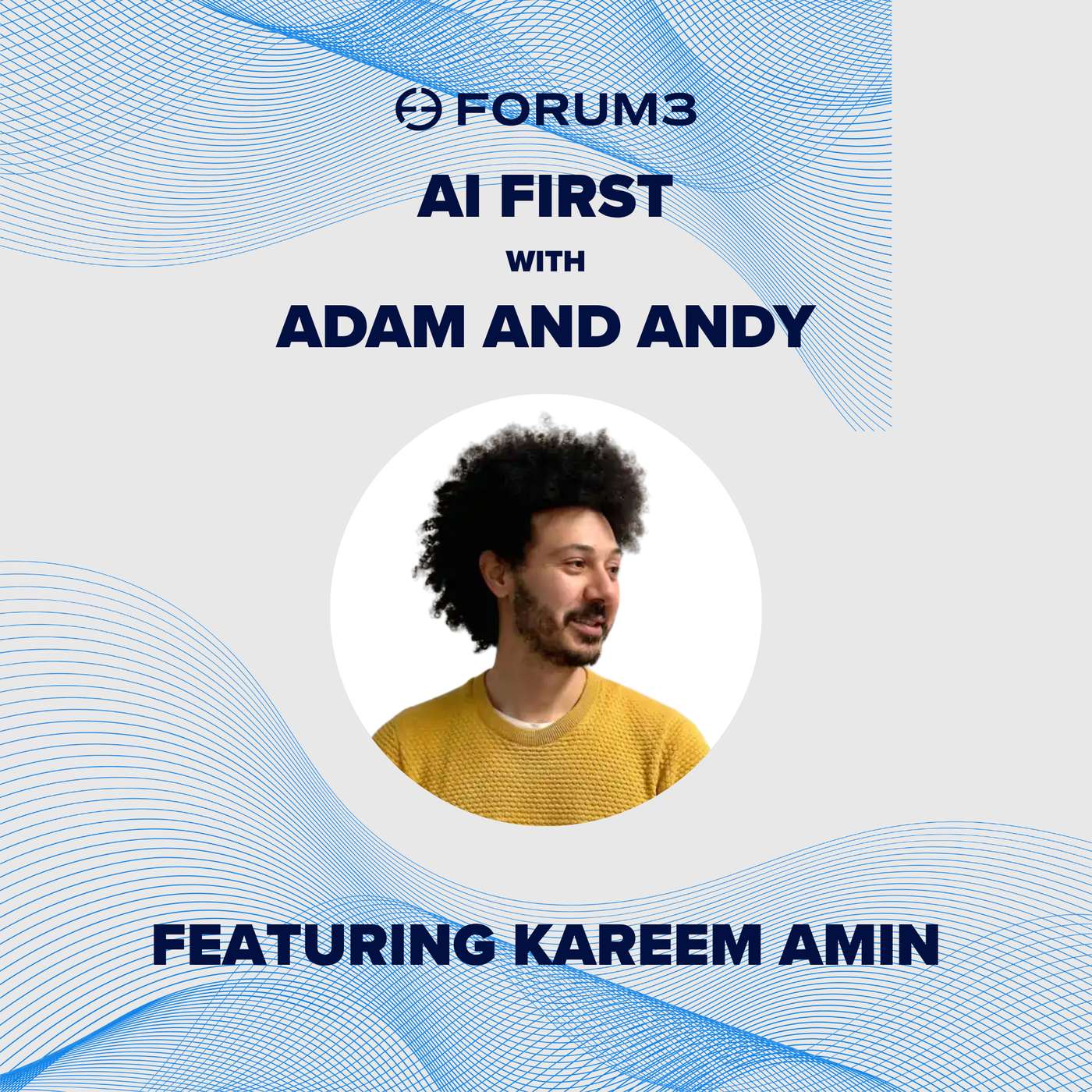
The AI-Native Growth Engine: How Clay Created the Go-to-Market Engineer
Jun 1700:37:18Tap to summarizeClay CEO Kareem Amin joins AI First to discuss how Clay evolved from a no-code productivity platform into one of the fastest-growing AI-powered go-to-market companies. He shares the origin of the go-to-market engineer role, how AI transformed sales and customer intelligence workflows, and why Clay was uniquely positioned to capitalize on the rise of large language models.The conversation explores the future of SaaS in an AI-driven world, including the growing build-versus-buy debate, the impact of AI on software development, and why proprietary data, customer insights, and network effects remain critical competitive advantages. Kareem also explains why AI has been overwhelmingly positive for Clay’s business and how AI enables teams to turn unstructured data into actionable growth opportunities.The discussion concludes with a thoughtful debate on AI leadership. While Kareem embraces AI throughout Clay’s products and operations, he takes a more measured approach to using AI for executive decision-making, arguing that CEOs must remain close to customers, employees, and strategic context. The episode offers valuable insights for executives navigating AI adoption, organizational design, and the future of growth.
Transcribe →
The AI Hiring Paradox: What Managers Really Want When They Post "AI Skills Required"
Jun 1000:12:09Tap to summarizeAcross industries, job postings increasingly require AI experience, but a fundamental mismatch exists between what employers are asking for and how they evaluate it. Adam and Andy tackle this head-on, starting with the hiring manager who knows AI matters but isn't deeply fluent themselves. How do you assess a skill you don't fully possess?The answer, they argue, comes down to asking candidates about real projects, not tool lists. Can they explain what they built, why AI was the unlock, and what they struggled with? The level of someone's challenges reveals their level of sophistication. For candidates, the advice is equally direct: build something with AI before you walk into the interview. A prompt workflow, a research project, a personal tool. The ability to narrate that process, including what failed, is what separates genuine fluency from buzzword familiarity.For managers still unsure, Andy offers a practical hack: transcribe the interview and ask an LLM to assess the candidate's AI proficiency. Let the technology help evaluate the technology skills.
Transcribe →