
Podcast
AI Made Simple
Hosted by Valeriya Pilkevich · EN
AI Made Simple: The Transformation Series explores how AI is reshaping how organisations work, lead, and scale. Hosted by international AI trainer and speaker Valeriya Pilkevich, the show features conversations with senior leaders, innovators, and practitioners driving real-world AI transformation. Each episode reveals what it really takes to make AI work — from leadership and culture to data, governance, and everyday workflows.
11episodes
Episodes
Newest firstAll episodes

Shamane Tan on Where Cybersecurity and AI Literacy meet
Jul 300:20:33Tap to summarizeAI literacy and cybersecurity used to be two separate skills. Not anymore. The biggest AI risks inside most companies today don't come from hackers. They come from how employees use AI every day: what they paste, what they upload, which ungoverned tools they reach for to get work done faster. In this episode of AI Made Simple: The Transformation Series, I'm joined by Shamane Tan, founder at AMBA, best-selling author of three executive cybersecurity books including Cyber Risk Leaders and Building a Cyber Resilient Business, and the newly appointed Singapore Governor for the Global Council for Responsible AI. We discuss:Why AI literacy and cybersecurity have become the same skillThe two extremes most companies fall into when adopting AI, and why both failWhy AI magnifies every weakness your organization already hasThe one question every business leader should ask their team this weekConnect with Shamane Tan: LinkedIn: https://www.linkedin.com/in/shamane Connect with Valeriya: LinkedIn: https://www.linkedin.com/in/valeriya-pilkevich YouTube: https://www.youtube.com/@aimadesimpletalks Podcast: https://aimadesimple.buzzsprout.comNeed help building AI capability in your organization? Book a call.
Transcribe →
Dr. Wendy Rasmussen on Why Upskilling Alone Won't Fix AI Adoption
Apr 1700:28:58Tap to summarizeMost organizations invest heavily in AI upskilling - and then wonder why adoption stays flat. The missing piece isn't more training. It's understanding whether your workforce is psychologically ready to change how they work. In this episode, I'm joined by Dr. Wendy Rasmussen - licensed clinical psychologist, U.S. Navy veteran, and founder of Alpenglow Insights - who developed a diagnostic that measures the hidden psychological barriers blocking AI adoption across organizations. We discuss: Why "I don't have time" often masks deeper fears about identity and job securityThe four conditions that must be in place before any AI upskilling can stickHow mandatory training programs can actually activate resistance instead of adoptionWhat two types of AI champions your organization needs - and how to deploy them differently Connect with Dr. Wendy Rasmussen:LinkedIn: https://www.linkedin.com/in/wendyrasmussenWebsite: https://alpenglowinsights.com/Connect with Valeriya:LinkedIn: https://www.linkedin.com/in/valeriya-pilkevichYouTube: https://www.youtube.com/@aimadesimpletalksPodcast: https://aimadesimple.buzzsprout.com/Need help building AI capability in your organization? Book a call.
Transcribe →
Sarah Mathews on why AI governance fails without a shared language (lessons from the Adecco group)
Apr 1000:37:52Tap to summarizeMost companies treat AI governance as a compliance exercise. But if your teams can't even agree on what counts as AI, your governance framework is built on sand. In this episode, I'm joined by Sarah Mathews - Global Responsible AI Manager at the Adecco Group - who leads AI governance, ethics, and literacy across 60 countries and millions of hiring decisions. We discuss: Why AI governance must start with a shared definition, not an inventory of toolsHow Adecco built role-based AI literacy training that reached 44,000 employees voluntarilyWhy distributed governance ownership beats putting one team in chargeThe hidden danger of making AI too human-like and what it means for trust Connect with Sarah: LinkedIn: https://www.linkedin.com/in/sarah-mathews-87b481122/ Connect with Valeriya: LinkedIn: https://www.linkedin.com/in/valeriya-pilkevich YouTube: https://www.youtube.com/@aimadesimpletalks Podcast: https://aimadesimple.buzzsprout.comNeed help building AI capability in your organization? Book a call.
Transcribe →
Dave Drodge on Why Imagination Beats Efficiency in AI Adoption
Mar 2700:28:26Tap to summarizeMost companies treat AI as an efficiency play. Cut costs, save time, do more with less. But what if that mindset is exactly what's holding them back? In this episode, I'm joined by Dave Drodge - digital transformation and AI strategist with 25+ years across Roche, Novartis, Sony, and Amadeus - who argues the real AI opportunity isn't about doing things faster, it's about reimagining what your people and business can become. We discuss: Why "human in the loop" often means "person who takes the blame"How IKEA turned AI-displaced customer service roles into $1.3M in new revenue The difference between experiment, exploit, and enlightenment in AI adoption What the EPOCH framework reveals about the skills AI still can't replace Connect with Dave Drodge: https://www.linkedin.com/in/davedrodge/ Connect with Valeriya:LinkedIn: https://www.linkedin.com/in/valeriya-pilkevichYouTube: https://www.youtube.com/@aimadesimpletalksNeed help building AI capability in your organization? Book a call.
Transcribe →
Tris Papakonstantinou on Why People Distrust AI and What Leaders Can Do
Mar 2000:30:42Tap to summarizeMost organizations treat AI trust as a compliance exercise. Check the box, file the documentation, avoid the fine. But compliance and trustworthiness are not the same thing. In this episode, I'm joined by Tris Papakonstantinou - cognitive scientist, co-founder of the Digital Trust Council, and PhD researcher at UCL - who studies why people trust or distrust AI and what it actually takes to shift those beliefs. We discuss: Why people judge AI on outcomes but judge humans on intentions - and what that means for leadersThe difference between regulatory compliance and genuine AI trustworthinessHow cognitive offloading is quietly eroding critical thinking and decision-making skillsWhy the best AI adoption strategies start with framing, transparency, and long-term thinking Need help building AI capability in your organization? Book a call.
Transcribe →
Shakil Awan on Building a 17000-Member Learning Community at Deutsche Telekom
Mar 1300:21:08Tap to summarizeMost companies invest millions in learning platforms - but the best learning communities are often built with zero budget and no permission.In this episode of AI Made Simple: The Transformation Series, I'm joined by Shakil Awan - Squad Lead and Product Manager for LEX at Deutsche Telekom - who transformed a simple idea into a 17,000-member peer-to-peer learning community with over 6,500 sessions per year.We discuss:Why self-organized communities fail without people given charge to lead themThe counterintuitive reason LEX started with yoga sessions, not business topicsWhat it actually takes to motivate employees to share knowledge voluntarilyHow to build learning culture when you have no budget, no project, and no management supportConnect with Shakil Awan:LinkedIn: https://www.linkedin.com/in/shakilawan/LEX: https://www.linkedin.com/groups/8754712/?highlightedUpdateUrn=urn%3Ali%3AgroupPost%3A8754712-7422684981958688768&q=highlightedFeedForGroupsConnect with Valeriya:LinkedIn: https://www.linkedin.com/in/valeriya-pilkevichYouTube: https://www.youtube.com/@aimadesimpletalksPodcast: https://aimadesimple.buzzsprout.com/Need help building AI capability in your organization? Book a call.
Transcribe →
Dr. Elisa Konya-Baumbach on the Psychology of AI Acceptance
Mar 600:28:34Tap to summarizeAI adoption is failing in most organisations - not because of technology, but because of psychology. Even when AI demonstrably outperforms humans, people resist it. The question is: why?In this episode, I'm joined by Dr. Elisa Konya-Baumbach - Professor of Consumer Psychology at Bern University of Applied Sciences and Co-Founder of humest - who has spent years researching the irrational human reactions that block AI adoption.In this conversation, we explore:The psychology behind AI resistance - including "uniqueness neglect" and why rational arguments don't workWhy most AI training programs fail - and how to design literacy programs that actually drive adoptionHow reframing "AI" as "smart technologies" or giving AI assistants names changes employee behaviourThe four levels of AI acceptance - individual, organisational, societal, and technological - and what to fix firstNeed help building AI capability in your organization? Book a call.
Transcribe →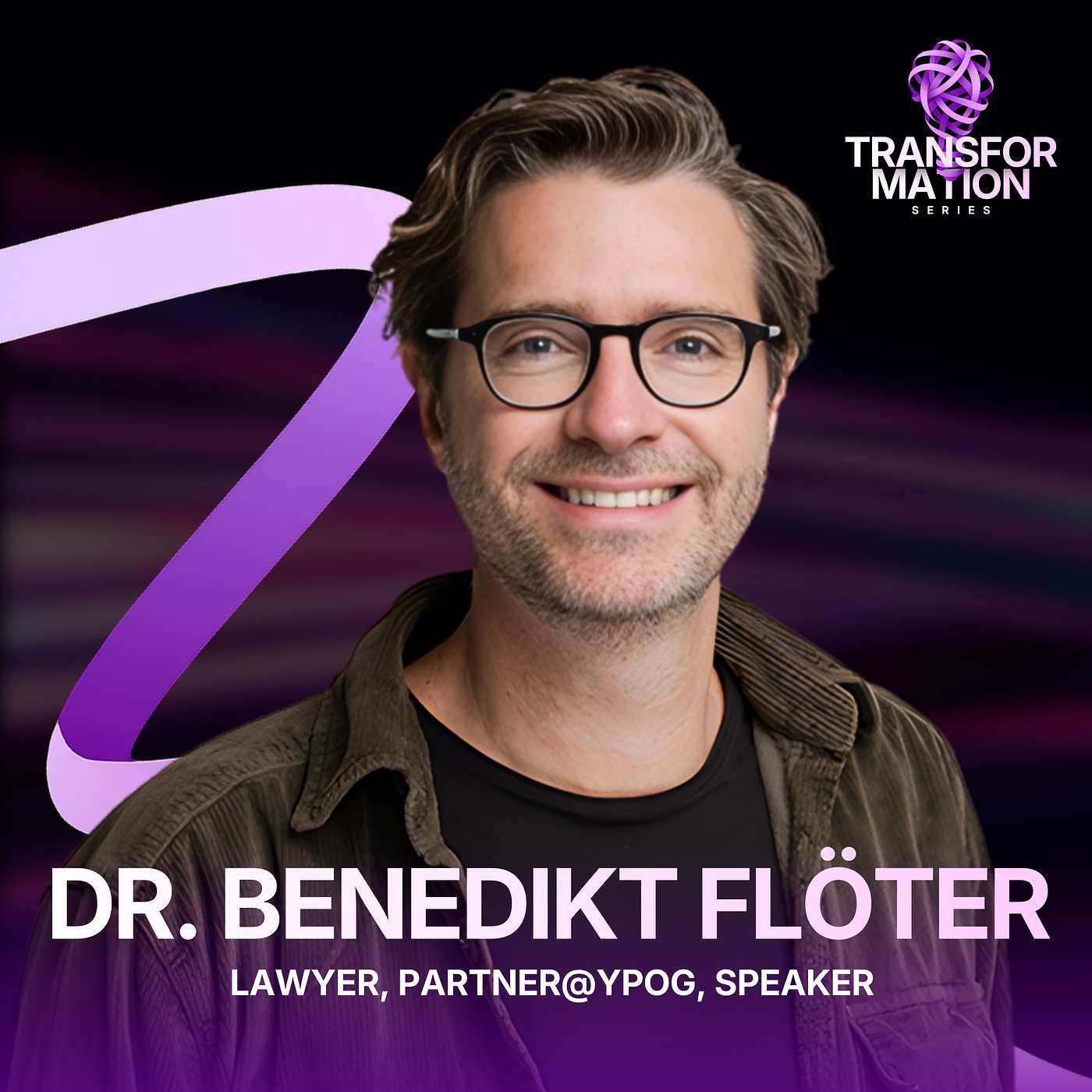
Dr. Benedikt Flöter on Turning AI Regulation Into a Business Advantage
Feb 2700:33:32Tap to summarizeThe EU AI Act is live, but most companies are still treating it like another GDPR. It's not. It's a fundamentally different kind of regulation, one that's tied to how your business operates, not just how it stores data. In this episode, I'm joined by Dr. Benedikt Flöter - Partner at YPOG and head of their AI and Emerging Technologies practice - who advises leadership teams on building legally compliant, scalable AI governance that actually drives business value. We discuss: Why two-thirds of companies overestimate their AI risk classification The governance foundations every organization needs before scaling AIHow a recent German court ruling means your AI-generated content may not be copyright protected Why AI literacy is now a legal requirement and what "sufficient" actually looks like Check your company’s AI risk category and compliance obligations here: https://ai-act-service-desk.ec.europa.eu/en/eu-ai-act-compliance-checker Connect with Dr. Benedikt Flöter: LinkedIn: https://www.linkedin.com/in/benedikt-floeter/ Website: https://www.ypog.law Connect with Valeriya: LinkedIn: https://www.linkedin.com/in/valeriya-pilkevich YouTube: https://www.youtube.com/@aimadesimpletalks Podcast: https://aimadesimple.buzzsprout.comNeed help building AI capability in your organization? Book a call.
Transcribe →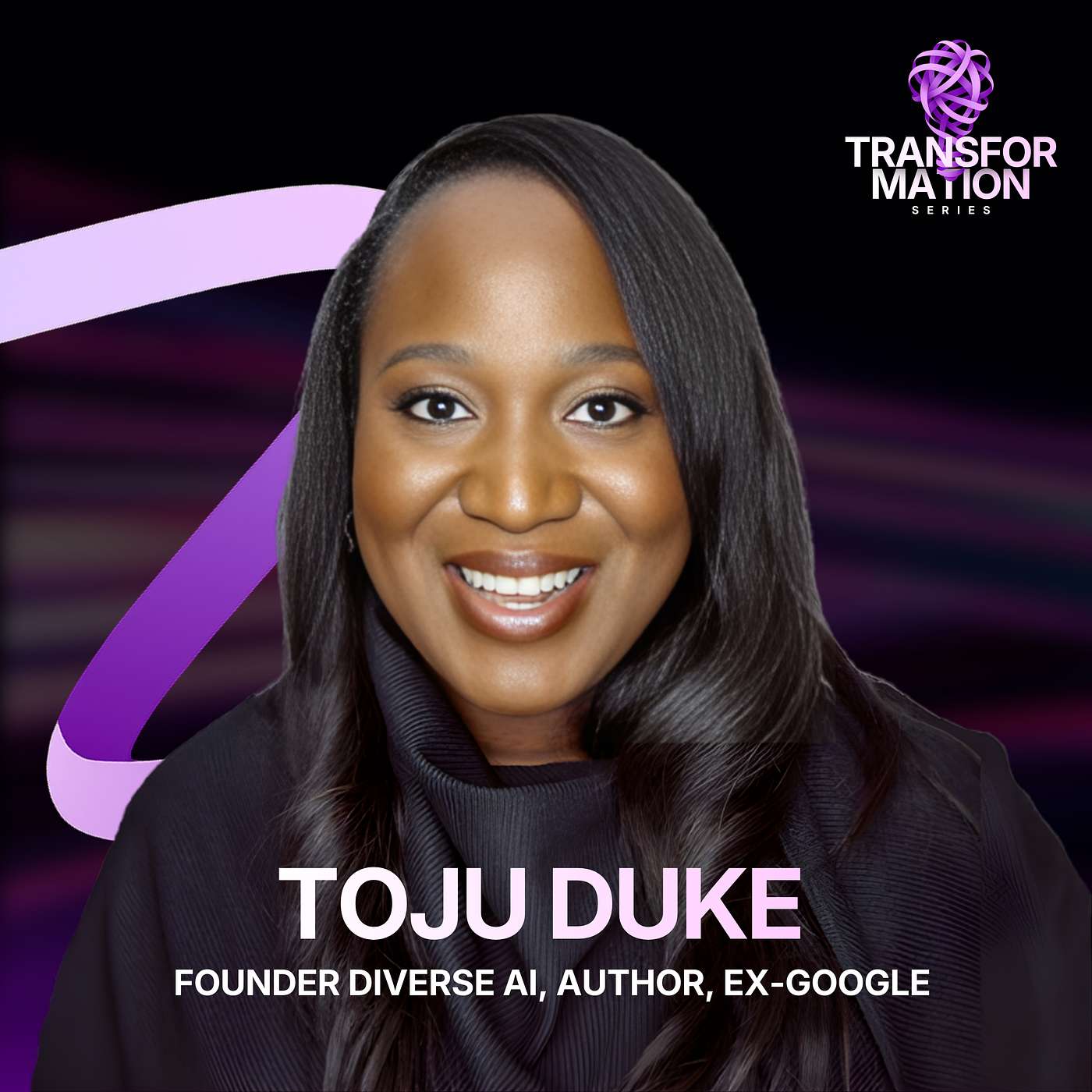
Toju Duke on Why Responsible AI Is a Business Strategy, Not a Checkbox
Feb 2000:30:30Tap to summarizeAI is being rolled out at scale across industries - but the safeguards haven't kept up. Bias in AI has improved less than 5% despite years of awareness, agentic AI is amplifying risks faster than companies can manage them, and most organizations still treat responsible AI as a compliance checkbox rather than a strategic advantage. In this episode of AI Made Simple: The Transformation Series, I'm joined by Toju Duke - AI advisor, author, and former Google Responsible AI lead - who spent a decade at Google before founding Diverse AI, an organization building a 5-million-image dataset to represent communities invisible to current AI systems. We discuss: Why AI bias hasn't meaningfully improved and what's blocking progress The security and accountability risks of deploying AI agents without safeguards How underrepresented data creates real business risk, from recruitment failures to reputational damage Why responsible AI should be part of your AI strategy, not a separate initiative Connect with Toju Duke:LinkedIn: https://www.linkedin.com/in/tojuduke/Website: https://www.tojuduke.com/Her Books: Responsible AI Building Responsible Algorithms Connect with Valeriya:LinkedIn: https://www.linkedin.com/in/valeriya-pilkevichYouTube: https://www.youtube.com/@aimadesimpletalksPodcast: https://aimadesimple.buzzsprout.com/Need help building AI capability in your organization? Book a call.
Transcribe →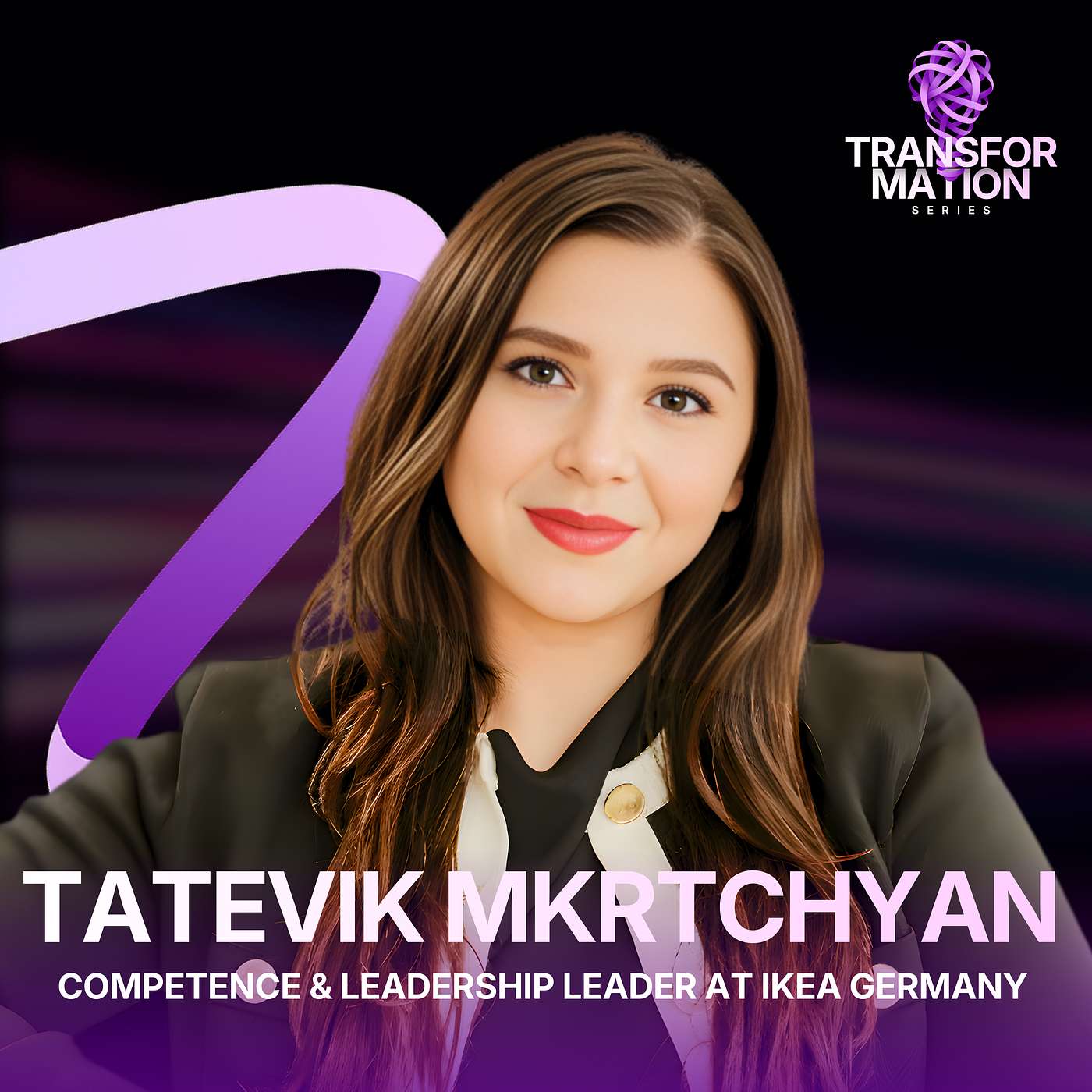
Tatevik Mkrtchyan on Building Learning Culture at Scale: IKEA's Skills-Based Approach
Feb 1300:22:17Tap to summarizeMost AI training programs fail not because of content, but because they ignore how people actually work. Shop floor employees, scheduled workers, and frontline teams need something radically different from desk-based learning. In this episode, I'm joined by Tatevik Mkrtchyan, Competence and Leadership Leader at IKEA Germany, who oversees learning strategy for 20,000 coworkers across 54 stores. We discuss: • Why AI training fails when it ignores frontline workers and shop floor realities• How to build AI communities that create movement instead of temporary change projects• The difference between skills-based organizations and traditional capability models• When AI avatars and conversational AI make sense for L&D - and when they don'tConnect with Tatevik:LinkedIn: https://www.linkedin.com/in/tatevik-mkrtchyan-8a59b777/Connect with Valeriya:LinkedIn: https://www.linkedin.com/in/valeriya-pilkevich/YouTube: https://www.youtube.com/@aimadesimpletalksPodcast: https://www.buzzsprout.com/2558906Need help building AI capability in your organization? Book a call.
Transcribe →