Podcast
AI-Powered Bot : Chatgpt
Hosted by Mukesh · EN
It is more about the new technology "The Artificial Intelligence"Using this the great bot is created called the Chatgpt-generative pre training.By open AI San Francisco.
17episodes
Episodes
Newest firstAll episodes

Inside Instacart's AI-Powered Smart Shopping Cart | NVIDIA AI Podcast Ep. 302
Jun 2400:39:56Tap to summarizeInstacart has 1.6 billion lifetime grocery orders—and is now using that data flywheel to digitize the physical store itself. In this episode, David McIntosh, Chief Connected Stores Officer at Instacart, explains how the Caper Cart—powered by an NVIDIA Jetson™ board and a sensor fusion system combining cameras, weight sensors, and location data—is bringing edge AI to the grocery aisle. He shares what's driving double-digit sales lift for retailers, how AI agents are beginning to automate store operations, and why in-store and online shopping will merge into a single unified experience within the decade. 🔬Topics covered: How Caper Carts use NVIDIA Jetson and sensor fusion to identify items in real time Why edge AI matters: hundreds-of-milliseconds response vs. seconds in the cloud Double-digit sales lift from personalized in-cart recommendations Building a grocery foundation model from 1.6B orders and live in-store data AI agents for store ops: proactive out-of-stock alerts and CPG shelf optimization Chapters: 00:00 – Introduction and the Connected Store vision 04:00 – Caper Cart: NVIDIA Jetson, sensor fusion, and edge AI 08:06 – How basket recognition and recommendations work 15:53 – Double-digit sales lift and what shoppers actually want 22:25 – Store ops, employees, and the real-time data flywheel 28:26 – AI agents, the grocery foundation model, and what's next
Transcribe →
How Mistral Is Building Frontier AI for the Enterprise | NVIDIA AI Podcast Ep. 301
Jun 1000:21:34Tap to summarizeOpen-weight models are closing the gap with proprietary AI — and Timothée Lacroix, cofounder and CTO of Mistral, has been betting on that since day one. In this episode, he explains why open weights accelerate enterprise adoption, how Mistral is bringing model customization into production, and what a 2.5x training speed improvement on GB200s means for the next generation of large sparse mixture-of-experts models. He also shares the open problem keeping him up at night: getting AI agent permission systems right before write access becomes the norm. 🔬Topics covered: How open models and weights accelerate research Mistral Forge: bringing enterprise-grade model customization to production The Nemotron Coalition—what Mistral and NVIDIA are building together 2.5x training gains on GB200s for large sparse mixture-of-experts models Why AI agent permissions—especially write access—is important to solve Chapters: 00:00 – Introduction and Mistral’s origin story 04:05 – The case for open weights and why the community builds faster 09:34 – Mistral Forge: enterprise model customization in production 14:21 – What enterprise customers actually want from AI right now 18:46 – The hardest open problem: AI agent permissions and write access
Transcribe →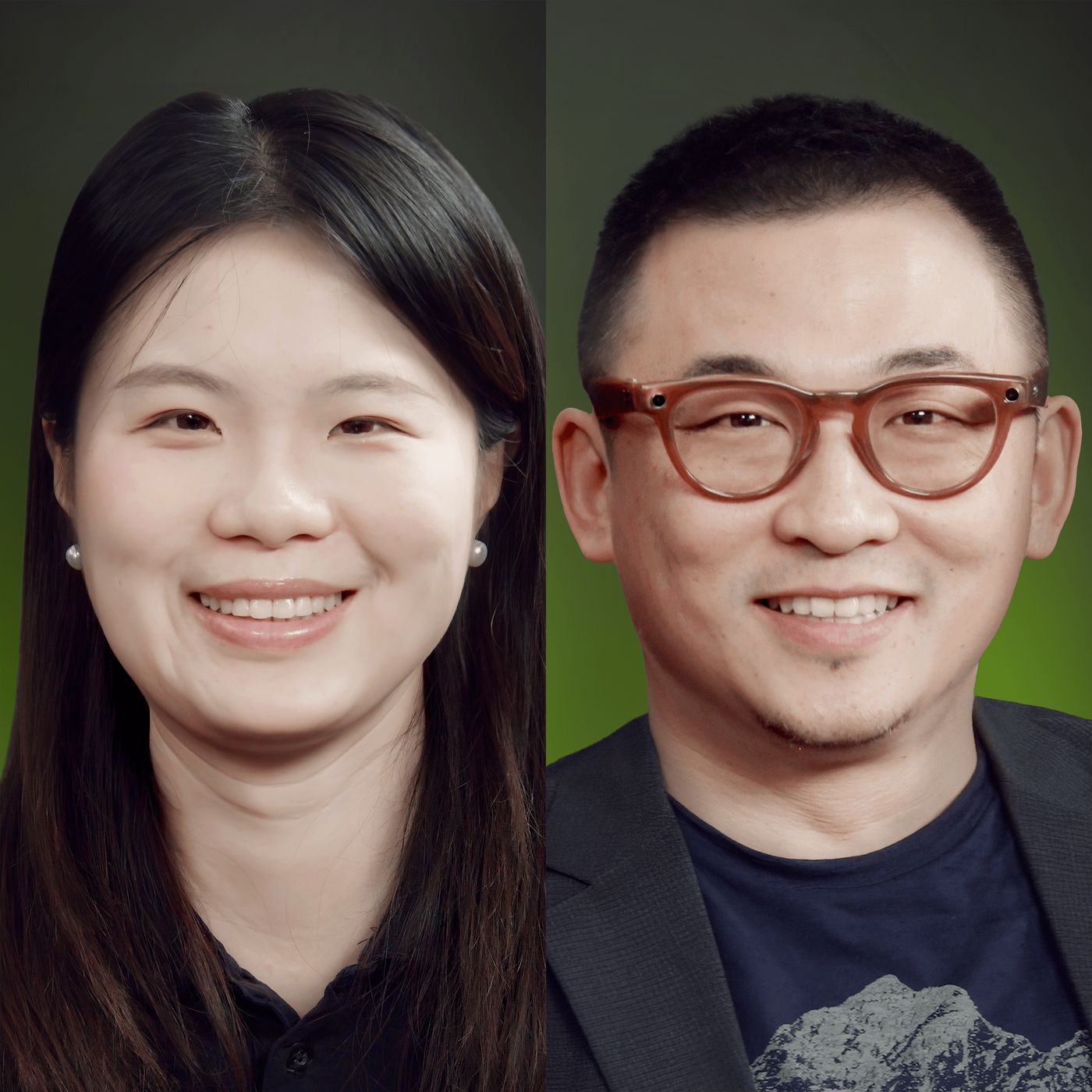
Everyone Can Build a Robot: Open Source Embodied AI With Seeed Studio | NVIDIA AI Podcast Ep. 300
May 2700:29:05Tap to summarizeSeeed Studio is a leader in open source robotics, delivering affordable NVIDIA Jetson‑powered arms that put embodied AI into the hands of millions of makers, students, and small businesses. In this episode, Seeed Studio CEO Eric Pan and Head of Robotics Elaine Wu explain how open hardware, the OpenClaw agentic framework, and NVIDIA Isaac Sim are turning robot arms into controllable, teachable agents—and what it takes to bring these physical AI tools into real‑world settings responsibly. 🔬Topics covered: Why open source is the fastest path to accessible robotics How the $200 SOR arm (with Hugging Face) lowers the barrier to embodied AI Training robot arms like a dog: from months of coding to intuitive hand‑guided learning OpenClaw on Jetson: turning natural‑language commands into robot skills Using NVIDIA Isaac Sim and digital twins to bridge simulation and real‑world deployment Building modular robot parts (heads, arms, wheels) instead of monolithic humanoids Chapters: 00:00 – Welcome and introductions 02:00 – From open hardware modules to robotics and edge AI 05:00 – Why open source drives adoption and trust in robotics 09:00 – The $200 SOR arm: open source with Hugging Face 12:00 – Training robot arms like a dog: intuitive, hand‑guided learning 15:00 – OpenClaw on Jetson: text‑to‑robot control 20:00 – Isaac Sim and digital twins: bridging simulation and reality 27:00 – Modular design: heads, arms, wheels instead of humanoids 32:00 – Everyone can participate in physical AI: closing thoughts
Transcribe →
Inside AI Tokenomics: How to Profitably Turn Tokens Into Business Value | NVIDIA AI Podcast Ep. 299
May 2000:33:26Tap to summarizeAs AI factories scale and token costs become a defining competitive variable, the way businesses measure infrastructure ROI needs to change. In this episode, Shruti Koparkar from NVIDIA's Accelerated Computing team breaks down tokenomics—the four-pillar framework of token utility, supply, demand, and monetization—and reveals why NVIDIA Blackwell's architecture delivers 50x more tokens per watt than NVIDIA Hopper, translating to a 35x reduction in token cost. 🔬Topics covered: The four pillars of tokenomics: utility, supply, demand, and monetization Why cost per token beats FLOPS per dollar as an infrastructure metric NVIDIA Blackwell vs. Hopper: 50x more tokens per watt, 35x lower token cost How extreme co-design turns spec-sheet numbers into real-world output Jevons paradox: why lower token cost always drives more GPU demand, not less The four business models for turning tokens into revenue Chapters: 00:00 – Introduction and the four pillars of tokenomics 02:09 – Token value: intelligence, interactivity, and use case mapping 06:32 – Estimating token demand: users, reasoning, and agentic multipliers 10:00 – Token supply and why cost per token is the right infrastructure metric 13:12 – NVIDIA Blackwell vs. Hopper: 50x more tokens, 35x lower cost 14:52 – Extreme co-design for lowest token cost and the NVIDIA Vera Rubin platform 21:10 – How software multiplies hardware performance (8x gains in six months) 23:56 – Token monetization: pricing and business models 26:52 – Jevons paradox and the future of GPU demand
Transcribe →
Snap’s Secret to Processing 10 Petabytes a Day: GPU-Accelerated Spark | NVIDIA AI Podcast Ep. 298
May 1300:23:36Tap to summarizeSnap processes more than 10 petabytes of experimentation data every single morning—and with NVIDIA GPU-accelerated Apache Spark on Google Cloud, Snap cut job costs by 76%, reduced memory usage by 80%, and eliminated 120 terabytes of disk spill from its pipelines. Prudhvi Vatala, head of engineering platforms at Snap, joins the NVIDIA AI Podcast to break down how he and his team completely modernized data infrastructure for a social platform serving nearly a billion monthly active users—using NVIDIA cuDF plugin (formerly referred to as NVIDIA RAPIDS plugin) for Apache Spark on Google Kubernetes Engine, with zero application code changes. 🔬Topics covered: How Snap runs A/B tests at planetary scale using rigorous statistical methods like heterogeneous treatment effect detection and variance reduction Why Snap reuses idle inference GPUs between 1–5 a.m. for batch data processing—and how it built a Kubernetes-based platform to do it How NVIDIA cuDF delivered 3x+ speedups on join-heavy Spark jobs with no code rewrites The full business impact: 76% cost reduction, 62% fewer cores, 80% less memory, 120 TB of spill eliminated How a three-way partnership between Snap, NVIDIA, and Google Cloud made it possible in just 8–9 months Chapters: 0:00 Introduction and Snap overview 3:35 What is Snap’s experimentation platform? 4:05 Why experimentation, safety, and privacy are core at Snap 4:52 How A/B testing works at billion-user scale 8:14 Discovering NVIDIA cuDF plugin 9:06 Benchmarking results: join, union, and aggregation jobs 12:00 Reusing idle GPUs overnight via GKE 13:24 Building a bottom-up GPU data platform at Snap 17:48 Results: 76% cost reduction and partnership impact 20:56 Snap’s evolution and what’s next Learn more: NVIDIA cuDF: https://developer.nvidia.com/topics/ai/data-science/cuda-x-data-science-libraries/cudf#accel-apache
Transcribe →
Harrison Chase of LangChain on Deep Agents, LangSmith, and Earning Trust | NVIDIA AI Podcast Ep. 297
May 600:24:55Tap to summarizeLangChain has surpassed 1 billion downloads—and the framework that started as a weekend project is now the harness powering the next generation of production-grade AI agents. In this episode, Harrison Chase, co-founder & CEO of LangChain, breaks down the architecture behind deep agents, explains why systems like Claude Code, Manus, and Deep Research all share the same foundational pattern, and lays out what it actually takes to deploy autonomous agents responsibly in the enterprise. 🔬Topics covered: What is a "deep agent," and why does architecture matter more than ever? How enterprises are (and aren't) embracing autonomous agents LangSmith: observability, tracing, and evaluation-driven development Mixing frontier and open models (NVIDIA Nemotron) in multi-agent systems What's next: async subagents, proactive/always-on agents, agent memory, and agent identity Chapters: 00:00 – LangChain origin story and the deep agent architecture 01:46 – What is a deep agent? 03:31 – Enterprise trust: risk, autonomy, and iteration 04:38 – LangSmith: observability and evaluation-driven development 13:30 – Frontier vs. open models and the Nemotron Coalition 18:10 – What's next: async subagents, agent memory, and agent identity
Transcribe →
How Dassault Systèmes Is Building AI That Understands Physics - Ep. 296
Apr 2900:23:05Tap to summarizeGenerative AI can predict whether a plane takes off—but does it know why? Nicolas Cerisier, VP of 3DEXPERIENCE Platform R&D at Dassault Systèmes, explains how industrial world models go beyond pattern recognition to embed the actual laws of physics, chemistry, and engineering. In this episode of the NVIDIA AI Podcast, he also breaks down Dassault's three virtual companions (AURA, LEO, and MARIE), their 25-year collaboration with NVIDIA, and a stunning real-world use case: helping NIAR rebuild aircraft designs part by part, using AI.
Transcribe →One Brain, Any Robot: Skild AI's Skild Brain Explained - Ep. 295
Apr 2200:29:48Tap to summarizeWhat if one AI brain could run every robot on the planet—a humanoid, a warehouse arm, and a dog-like inspection bot—all at once? That's not a thought experiment. That's what Skild AI is building right now. Deepak Pathak (CEO and Co-Founder) and Abhinav Gupta (President and Co-Founder) of Skild AI join the pod to break down Skild Brain—a universal, general-purpose AI model designed to power robots of any form factor, tackling any task, from a single shared intelligence.
Transcribe →
How AI Will Change Quantum Computing - Ep. 294
Apr 1400:31:29Tap to summarizeWhat happens when you combine AI with quantum computing? NVIDIA's Nic Harrigan joins the AI Podcast to break down the state of quantum, explain why error correction is the pivotal challenge, and reveal how NVIDIA Ising—the world's first open AI model family for quantum—is changing the game. 🔗 Resources mentioned: ► Read our NVIDIA Ising announcement ► Learn more about NVIDIA Ising ► Learn more about NVIDIA Quantum Computing
Transcribe →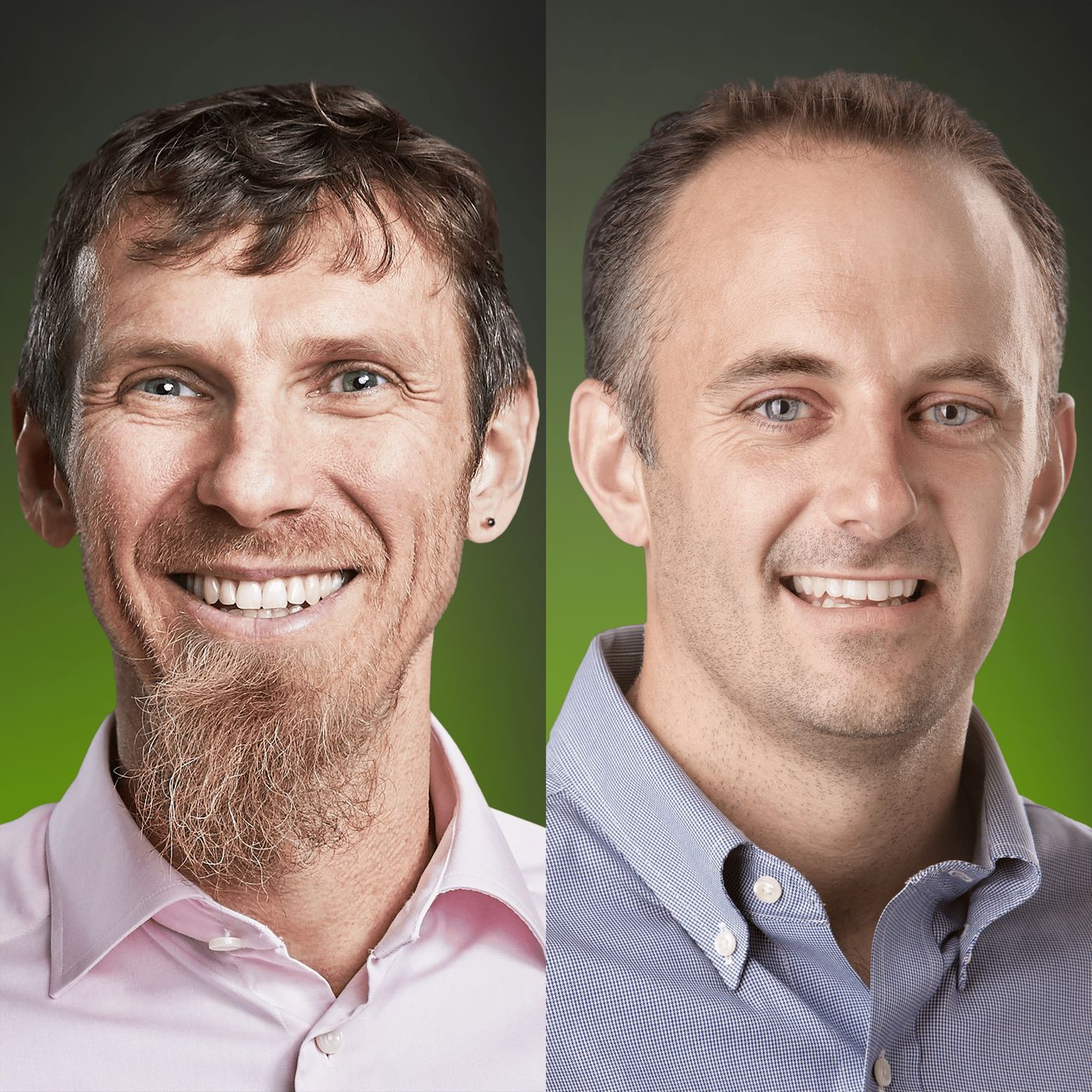
Building AI Factories: How Red Hat and NVIDIA Turn Enterprise Data Into Intelligence - Ep. 293
Mar 1200:38:44Tap to summarizeEnterprises are moving from AI pilots to full‑scale AI factories that turn data into trusted digital intelligence. Red Hat CTO Chris Wright and NVIDIA’s Justin Boitano unpack the "five‑layer cake" AI factory stack, from accelerated hardware and hybrid cloud infrastructure to models, agents, and production‑grade governance.
Transcribe →