Podcast
AI Thoughtmakers
Hosted by GeekyAnts · EN
AI ThoughtMakers is a leadership-driven podcast featuring conversations with CTOs, founders, engineering leaders, and AI experts discussing real-world AI adoption, scalable engineering, product innovation, and the future of technology.
12episodes
Episodes
Newest firstAll episodes
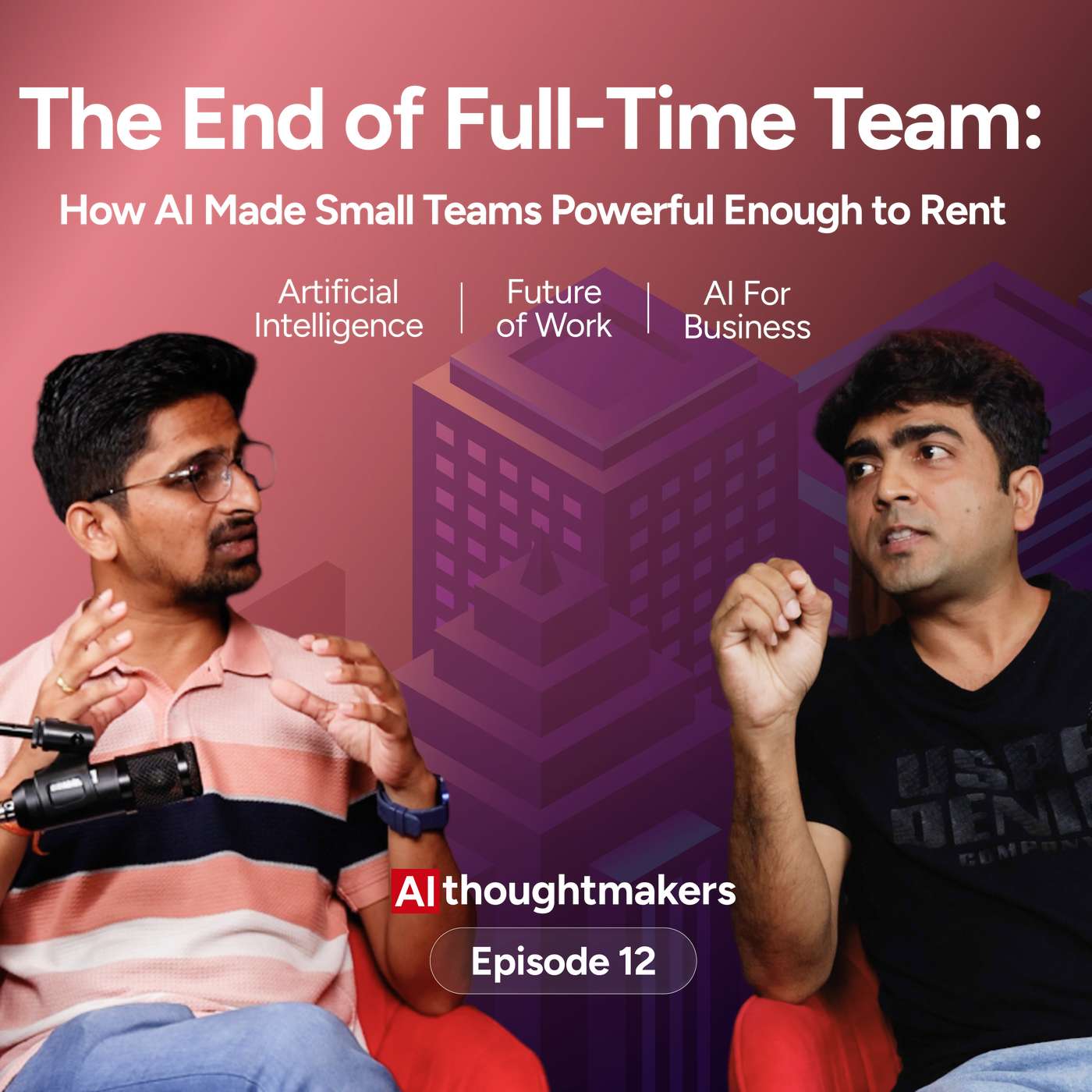
How AI Made Small Teams Powerful Enough to Rent
Jun 2600:25:10Tap to summarizeNo one can say traditional hiring will disappear, but there is a clear shift toward pods, contractors, and smaller AI-enabled teams.In this episode of AI ThoughtMakers, Prem sits down with Suresh, Solution Architect at GeekyAnts, to explore one of the biggest shifts happening in technology teams today: the move from traditional full-time engineering teams to expert pods.They discuss:• What an AI-native pod is and how it works• How pods operate differently from traditional outsourcing• Why startups and enterprises are embracing pod-based execution• The evolving role of engineering managers in the age of AI• How AI is changing hiring, team structures, and productivity• When to choose AI-native pods vs. full-time engineering teams• Situations where building an in-house team still makes more sense• How founders and CEOs can evaluate pod performance in the first 90 days• The risks, limitations, and decision-making boundaries of pod-based models• Whether the future of software development is shifting away from traditional hiringSubscribe for more conversations on AI, product engineering, software development, and the future of work.Connect with the SpeakersLinkedIn -SureshConnect with Prem: LinkedIn - / premgoswami
Transcribe →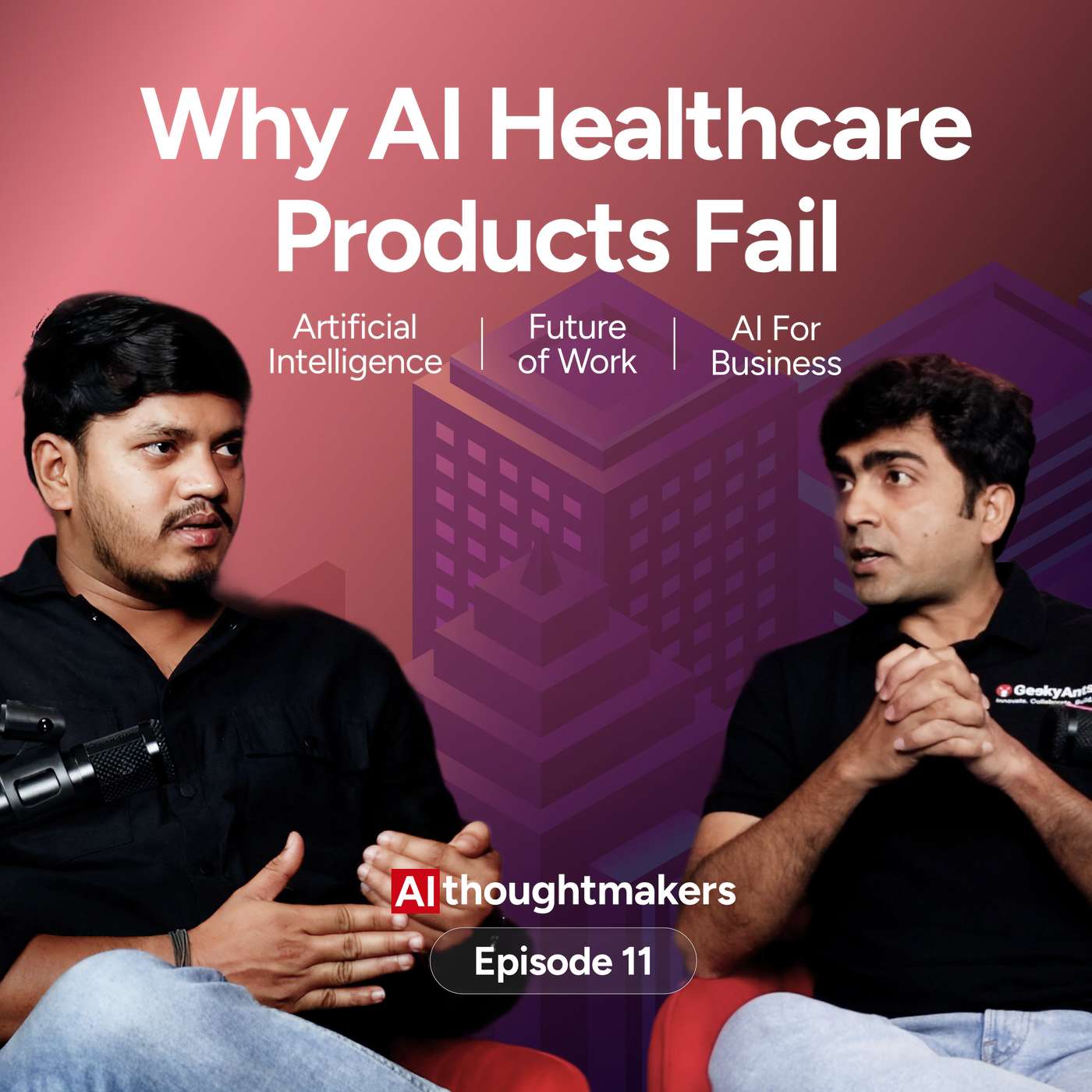
Why AI Healthcare products fail | AI thoughtmakers
Jun 2500:21:51Tap to summarizeAI can generate a healthcare app before your coffee gets cold. But when real users log in, the dashboard collapses, the APIs fail and patient data you can't trust.In this episode of AI Thoughtmakers, we sit down with Rakshith, Product Manager at GeekyAnts, to unpack why AI-generated healthcare products consistently fail in production and why the problem almost always starts long before the first line of code is written.From data standardization and architecture gaps to the dangerous overconfidence AI coding tools create in founders, we explore why healthcare is the hardest industry for AI-generated products to survive in, and what responsible AI product development actually looks like.Key topics covered:Why healthcare AI products that look great in demos collapse in productionHow visual completeness fools founders and product teams into shipping too earlyThe data standardization problem AI simply cannot solve on its ownWhy architecture, scalability, and security are always the first casualties of moving fastThe product manager's role in an AI-accelerated world — and why prioritization matters more than everWhy some AI-generated healthcare products should not go liveWhat "responsible AI" actually means in a high-stakes, data-sensitive industryHow AI is changing engineering velocity — and what will always remain a human decisionSubscribe for more conversations on AI, engineering, product development, and the future of software.Connect with the Speakers:LinkedIn - / rakshith-gowda-pm Connect with Prem: LinkedIn - / premgoswami
Transcribe →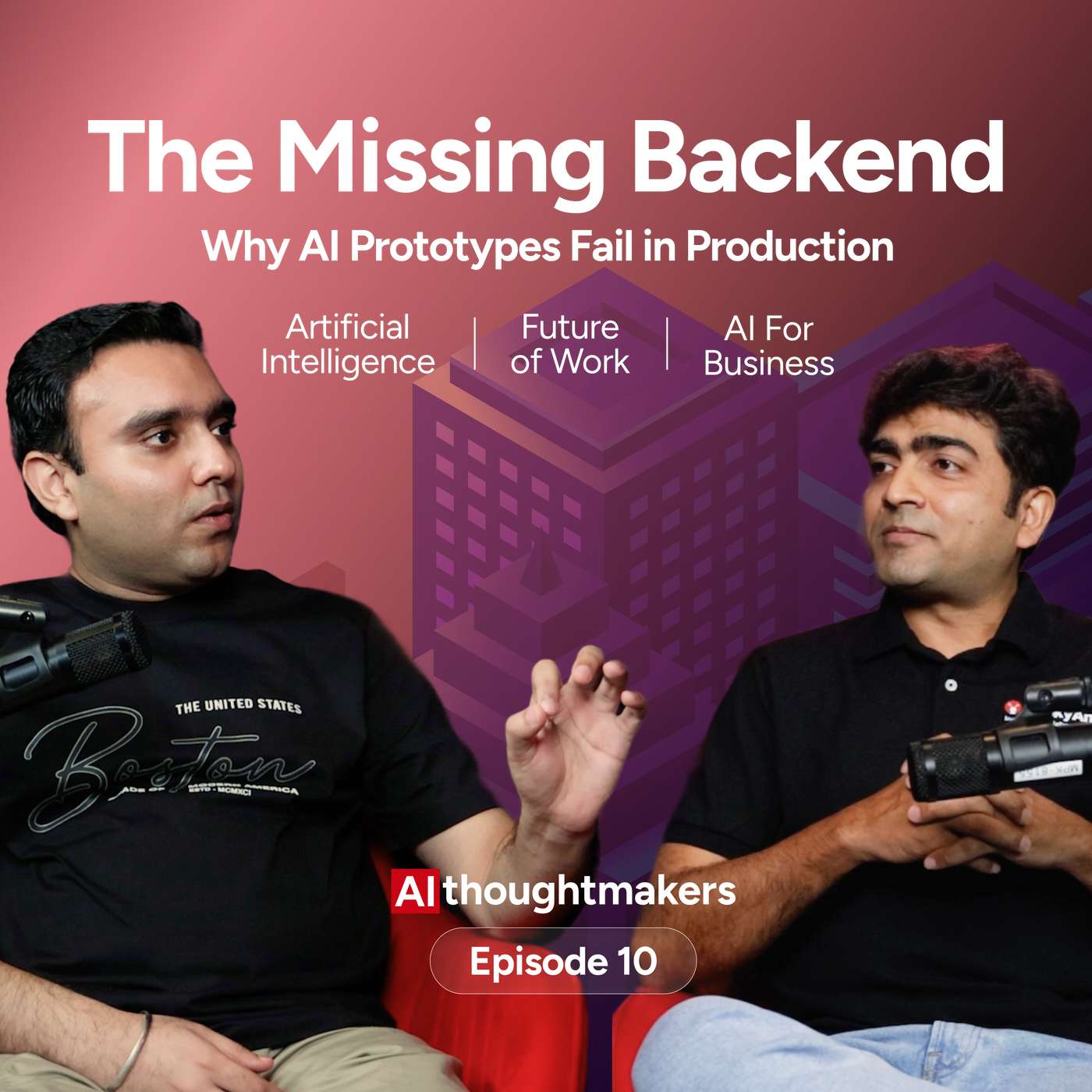
The Missing Backend : Why AI Prototypes Fail in Production
Jun 2500:17:08Tap to summarizeAI can generate impressive apps in minutes. But why do so many AI-powered prototypes fail when real users start using them?In this episode of AI Thoughtmakers, we sit down with Manuinder Sekhon, Tech Lead I at GeekyAnts, to discuss why many AI-generated applications struggle in production despite looking polished on the surface.From authentication gaps and database bottlenecks to observability, scalability, and backend reliability, we explore the invisible engineering work that separates a demo from a real product.Key topics covered: • Why AI-generated prototypes often collapse under real user traffic • The hidden 90% of engineering work founders don't see • Common backend issues in AI-generated applications • Why observability and monitoring are essential for production systems • The risks of shipping AI-built products too early • How AI coding tools are changing startup expectations • The difference between validating an idea and launching a product • What founders should do before building with AI toolsSubscribe for more conversations on AI, engineering, product development, and the future of software.Connect with the SpeakersLinkedIn - / manuindersekhon Connect with Prem:LinkedIn - / premgoswami
Transcribe →
Observability in AI: From Systems to Decision
Jun 2500:14:13Tap to summarizeIn this episode of AI ThoughtMakers, Aditya Prakash, Lead DevOps Engineer at GeekyAnts, breaks down one of the biggest gaps in modern AI system operations: why traditional monitoring tools fail when non-deterministic AI models enter the picture.Today’s monitoring dashboards can track standard infrastructure metrics in milliseconds. But modern AI systems are not judged by how healthy their CPU looks. They are judged by output quality, behavioral predictability, and correctness.This conversation explores why critical AI operational needs like smart data collection, failure classification, and automated guardrails remain extremely difficult to manage using traditional logs and dashboards.Using real-world engineering challenges, Aditya explains why AI observability succeeds not because it captures massive volumes of data, but because it focuses strictly on actionable signal.The discussion also uncovers the hidden risks and fundamental shifts teams often ignore while scaling AI-powered applications: • Why traditional "loud" failures are replaced by silent, incorrect outcomes • The high costs and privacy noise created by blindly logging all prompts and inputs • How intelligent agents can automate log analysis and eliminate manual debugging • Why managing behavioral predictability introduces entirely new operational overheads • The critical role of AI Gateways as a centralized control plane for request tracing • The difference between monitoring system health and evaluating decision quality • Why true AI observability requires a continuous evaluation feedback loopIf you’re building or scaling AI products today, this episode raises one important question: Are you just monitoring whether your system is up, or are you actually measuring the quality of its decisions?Connect with the speakersAditya - LinkedinPrem - Linkedin
Transcribe →
The AI Fraud War - The Future of AI Fraud Detection
Jun 1700:25:17Tap to summarizeAI is making fraud smarter. But it’s also making fraud detection faster, sharper, and more intelligent than ever before.In this episode of AI ThoughtMakers, we sit down with Gaurav Porwal, Principal Technical Consultant at GeekyAnts, to explore how AI is reshaping the future of fraud prevention in banking and financial systems.From deepfake-enabled KYC frauds to biometric authentication, liveness detection, AI-powered security systems, and the growing race between fraudsters and financial institutions — this conversation breaks down the real-world challenges enterprises face in the AI era.Key topics covered:• How deepfakes are changing financial fraud• Why traditional KYC systems are no longer enough• AI vs fraudsters: who is winning?• The future of passwords, biometrics, and digital identity• How financial institutions use AI to detect fake identities• Why human verification still matters in AI systems• The role of compliance, security, and trust in AI-powered finance“If attackers are evolving with AI, financial institutions are evolving faster with data.”Watch the full episode to understand where AI security is headed next.Connect with Gaurav Porwal & PremLinkedIn - / gaurav-porwal-811488118 LinkedIn - https://www.linkedin.com/in/premgoswami/
Transcribe →
Beyond AI Prototyping : SSO , Audit Logs , RBAC
Jun 1700:17:24Tap to summarizeIn this episode of AI ThoughtMakers, Sarika Gautam, Principal Technical Consultant, Geekyants, breaks down one of the biggest gaps in modern AI product development: why AI prototyping tools fail when enterprise-grade security and trust enter the picture.Today’s AI tools can generate polished applications in minutes. But enterprise systems are not judged by how good the demo looks. They are judged by security, scalability, auditability, and trust.This conversation explores why critical enterprise features like SSL, RBAC (Role-Based Access Control), and audit logs remain extremely difficult to generate reliably using AI-first prototyping tools.Using real-world examples from platforms like Slack and Okta, Sarika explains why enterprise products succeed not because they are flashy, but because they are secure, reliable, and trusted.The discussion also uncovers the hidden risks teams often ignore while moving fast with AI-generated products:Why SSL and RBAC are far more complex than they appearThe overlooked importance of audit logs in enterprise systemsWhy AI-generated demos create “false completeness”Security risks in AI-assisted product developmentTechnical debt created by fast AI-generated systemsThe difference between presentation-ready and production-ready productsWhy enterprise trust cannot be generated with prompts aloneIf you’re building AI products today, this episode raises one important question: Are you building something that only looks impressive, or something enterprises can actually trust?Connect with Sarika Gautham & PremLinkedIn - / sarika-gautam-047749238 LinkedIn - https://www.linkedin.com/in/premgoswami/
Transcribe →
The AI-powered future of Enterprise Quality & Transformation
May 2900:13:31Tap to summarizeAI won’t replace QA engineers. But QA engineers who use AI will redefine software quality.In this episode of AI ThoughtMakers, Jennifer Renita, Lead Software Engineer in Test-3 at GeekyAnts, explores how enterprise QA is evolving from traditional testing to AI-powered quality engineering — and why speed without quality is still one of the biggest risks in software development.From predictive testing and intelligent automation to production bugs, AI-generated code, and the future of manual testing, this conversation dives deep into what modern software quality really looks like in an AI-driven world.Key highlights from the episode:• Why digital transformation projects fail despite massive investments• The shift from manual QA to predictive, AI-assisted testing• Why a “quality mindset” matters more than tester count• The hidden risks of blindly trusting AI-generated test cases• How AI is transforming automation, testing strategies, and release cycles• Why QA should begin at the design phase — not before release• The future of QA engineers in an AI-first software industryWhether you're a QA engineer, developer, engineering leader, or building AI-powered products, this episode is packed with practical insights on balancing speed, automation, and software quality at scale.Connect with Jennifer RenitaLinkedIn - https://www.linkedin.com/in/jennifer-renita/Hosted by Prem Prakash GoswamiLinkedIn - https://www.linkedin.com/in/premgoswami/
Transcribe →
Prototype to Production: Turning AI Ideas into Real-World Impact
May 2900:20:57Tap to summarizeTitle: Prototype to Production: Turning AI Ideas into Real-World ImpactDescription:In this episode of AI ThoughtMakers, Manav Goel breaks down one of the biggest gaps in today’s AI landscape: why most prototypes never make it to production.Building AI demos has become easier than ever. But transforming those demos into reliable, scalable, and cost-effective systems is where the real challenge begins. What works perfectly in a controlled setup often struggles in the real world — from handling scale and token costs to maintaining data quality, observability, and trust.This episode explores the mindset shift teams need to make: moving from impressive AI experiments to production-ready systems that create measurable business impact.Key topics covered in this episode: The hidden complexity behind “plug-and-play” AI Token consumption and its impact on cost & ROI Why prototypes fail at production scale Security, compliance, and reliability challenges Task decomposition and spec-driven AI development The importance of observability, monitoring, and evaluation Why human-in-the-loop systems still matter Building AI systems that users can actually trust If you’re building AI products or planning to scale AI inside your organization, this conversation will make you rethink one critical question:Are you building fast, or are you building something that actually works in the real world?Connect with Manav: LinkedIn – Manav GoelConnect with Prem: LinkedIn – Prem Goswami
Transcribe →
Rebuild vs Refactor: A Spec-Driven Strategy for Growth & Modernization
May 2900:18:29Tap to summarizeIn this episode of AI ThoughtMakers, Suresh Konakanchi shares a hard truth many teams discover too late: AI prototypes rarely fail because of the model — they fail because they were never designed for production.Today, AI can generate polished demos in days. But behind impressive interfaces and fast-moving prototypes, most products still lack the foundations required for real-world reliability, scalability, and long-term growth.This conversation explores the critical gap between prototype and production — and why many organizations get trapped in endless rebuild cycles instead of sustainable progress.Suresh breaks down what actually makes AI systems production-ready, including: Spec-driven development and why clarity matters before coding The hidden risks behind “demo-ready” AI products Production checklists teams often ignore Scalability, observability, reliability, and edge-case handling Why poorly defined requirements lead to repeated refactors The importance of understanding AI limitations before deployment Building systems that can evolve without constant rebuilding If you’re building AI products today, this episode challenges one important question:Are you building something that only looks production-ready — or something truly built to scale?Connect with the SpeakersSuresh Konakanchi on LinkedInPrem Goswami on LinkedInAbout AI ThoughtMakersAI ThoughtMakers is a podcast series exploring how AI is transforming products, engineering, business strategy, and decision-making through conversations with industry leaders and technology experts.
Transcribe →
The Reality of Healthcare Transformation in the AI Era
May 2600:15:50Tap to summarizeAI in healthcare sounds complex, but the real challenge isn’t AI—it’s data, trust, and decision-making.In Episode 3 of AI Thoughtmakers, host Prem Goswami sits down with Rakshith Gowda, Product Manager at GeekyAnts, to discuss the realities of healthcare transformation in the AI era.The conversation explores why healthcare organizations often focus on AI before addressing their biggest challenge: data quality. Rakshith shares practical insights from healthcare consulting engagements, explaining how trust, accountability, and decision-making play a far bigger role in successful AI adoption than the AI models themselves.From messy healthcare datasets and system integration challenges to predictive healthcare and responsible AI implementation, this episode offers a grounded perspective on what it takes to build healthcare solutions that create real value.Whether you're a healthcare founder, product manager, technology leader, or someone exploring AI in healthcare, this episode provides actionable insights on building systems that are reliable, scalable, and trusted.What You'll Learn• Why data quality is the biggest challenge in healthcare AI • The myth that AI can solve every problem • How trust impacts healthcare technology adoption • The role of product managers in healthcare AI initiatives • AI consulting: solving business problems vs implementing tools • Why not every healthcare problem requires AI • The risks of poor-quality healthcare data • Accountability in AI-powered healthcare systems • Real-world examples of healthcare data validation • The future of predictive healthcare systemsConnect with the SpeakersRakshith Gowda LinkedIn: https://www.linkedin.com/in/rakshith-gowda-pm/Prem Goswami LinkedIn: https://www.linkedin.com/in/premgoswami/
Transcribe →