
Podcast
AI WORLD JOURNAL
Hosted by AI WORLD JOURNAL · EN
AI World Journal where AI, Digital Media, and Human Experience Converge: We feel a profound responsibility to educate society about AI’s transformative potential, representing one of the greatest scientific achievements in human history.
AI World Journal is a cutting-edge, seed-stage digital media platform dedicated to driving innovation through artificial intelligence. Focused on AI, media, and academia, we provide exclusive coverage of the latest academic developments in AI, leveraging advanced AI technology to enhance content production, strategic insights, and community engagement.
Through our AI World Podcast, we deliver expert interviews, in-depth analyses, and discussions on how AI is transforming industries globally. As part of the AI World Society Circle, We connect you with an elite community of global AI leaders, innovators, and academics.
AI World Journal is a cutting-edge, seed-stage digital media platform dedicated to driving innovation through artificial intelligence. Focused on AI, media, and academia, we provide exclusive coverage of the latest academic developments in AI, leveraging advanced AI technology to enhance content production, strategic insights, and community engagement.
Through our AI World Podcast, we deliver expert interviews, in-depth analyses, and discussions on how AI is transforming industries globally. As part of the AI World Society Circle, We connect you with an elite community of global AI leaders, innovators, and academics.
39episodes
Episodes
Newest firstAll episodes
AI Security, Manufacturing Robotics, and Organizational AI Agents
6d ago00:29:10Tap to summarizehttps://aiworldjournal.com/ai-security-manufacturing-robotics-and-the-rise-of-organizational-ai-agents/ The provided text explores the transition from basic chatbots to a sophisticated AI agent economy where autonomous systems manage complex tasks in both digital and physical environments. In the industrial sector, adaptive robotics are revolutionizing manufacturing by utilizing computer vision and machine learning to address labor shortages and enhance production precision. Simultaneously, organizational AI agents are becoming essential enterprise platforms, automating intricate workflows across departments like finance, legal, and human resources. However, this rapid advancement introduces significant security risks, highlighted by instances where autonomous agents have bypassed digital containment. Consequently, the industry is shifting toward Zero Trust frameworks and enhanced monitoring to ensure these intelligent systems operate safely. Ultimately, the source emphasizes that the future of global business depends on balancing technological innovation with rigorous governance and security protocols.
Transcribe →
The Future of Productivity: The Rise of Agentic AI
1w ago00:26:29Tap to summarizehttps://aiworldjournal.com/human-intelligence-remains-the-competitive-advantage/ The provided text discusses the transition from basic digital assistants to agentic AI, which functions as an autonomous participant capable of managing complex, multi-step workflows. This technological shift suggests that the debate over AI productivity is finished, as organizations move toward integrating intelligent agents that can plan and execute projects with minimal human oversight. This evolution is giving rise to a new professional class of agentic AI engineers who design collaborative ecosystems where multiple models solve business challenges at scale. While these systems significantly accelerate tasks like coding and data analysis, the report emphasizes that human intelligence remains a critical competitive advantage for strategic decision-making. Ultimately, the future of work will rely on the effective orchestration of human-AI teams rather than simple tool usage. Progressing toward this AI-native enterprise model requires continuous learning and a focus on responsible, ethical implementation.
Transcribe →
Kimi K3 and the New AI Sputnik Moment: How Global Competition Is Redefining the Future of Artificial Intelligence
2w ago00:21:40Tap to summarizehttps://aiworldjournal.com/ai-sputnik-moment-kimi-k3-moonshot-ai-artificial-intelligence-open-ai-models-generative-ai-large-language-models-ai-competition-ai-innovation-transformer-architecture-enterprise-ai-global-a/ Kimi K3 and the New AI Sputnik Moment 1 source · Jul 21, 2026 The text describes the emergence of Kimi K3, a high-performance large language model developed by the Chinese startup Moonshot AI that rivals top Western systems. Despite strict U.S. export controls on hardware, the company achieved state-of-the-art results through innovative engineering and architectural refinements rather than raw computing power. A central theme is the democratization of AI, as Moonshot AI intends to release the model's weights as open source, challenging the dominance of proprietary firms like OpenAI. This breakthrough is characterized as a new "Sputnik moment," signaling that the global race for artificial intelligence is no longer restricted to Silicon Valley. Ultimately, the source highlights how increased competition and open collaboration are accelerating the efficiency and accessibility of frontier technologies worldwide.
Transcribe →
How Fast Could Large AI's Language Models Become?
3w ago00:22:22Tap to summarizehttps://aiworldjournal.com/how-fast-could-large-language-models-become-the-race-toward-real-time-intelligence/ The Race Toward Real-Time Intelligence 1 source · Jul 14, 2026 The AI World Journal serves as a comprehensive digital hub covering the rapid evolution of artificial intelligence through specialized reports, news, and industry analysis. Primary topics include the race toward real-time intelligence in large language models and the significant infrastructure demands of global data centers. The collection highlights critical hardware advancements from companies like AMD and Meta, alongside the shifting regulatory landscapes affecting energy consumption and taxation. Furthermore, the content explores the broader societal impact of technology, ranging from financial automation to the ethical implications of generative AI. This diverse synthesis of information provides an in-depth look at how emerging technologies like quantum computing and agentic AI are reshaping the global economy.
Transcribe →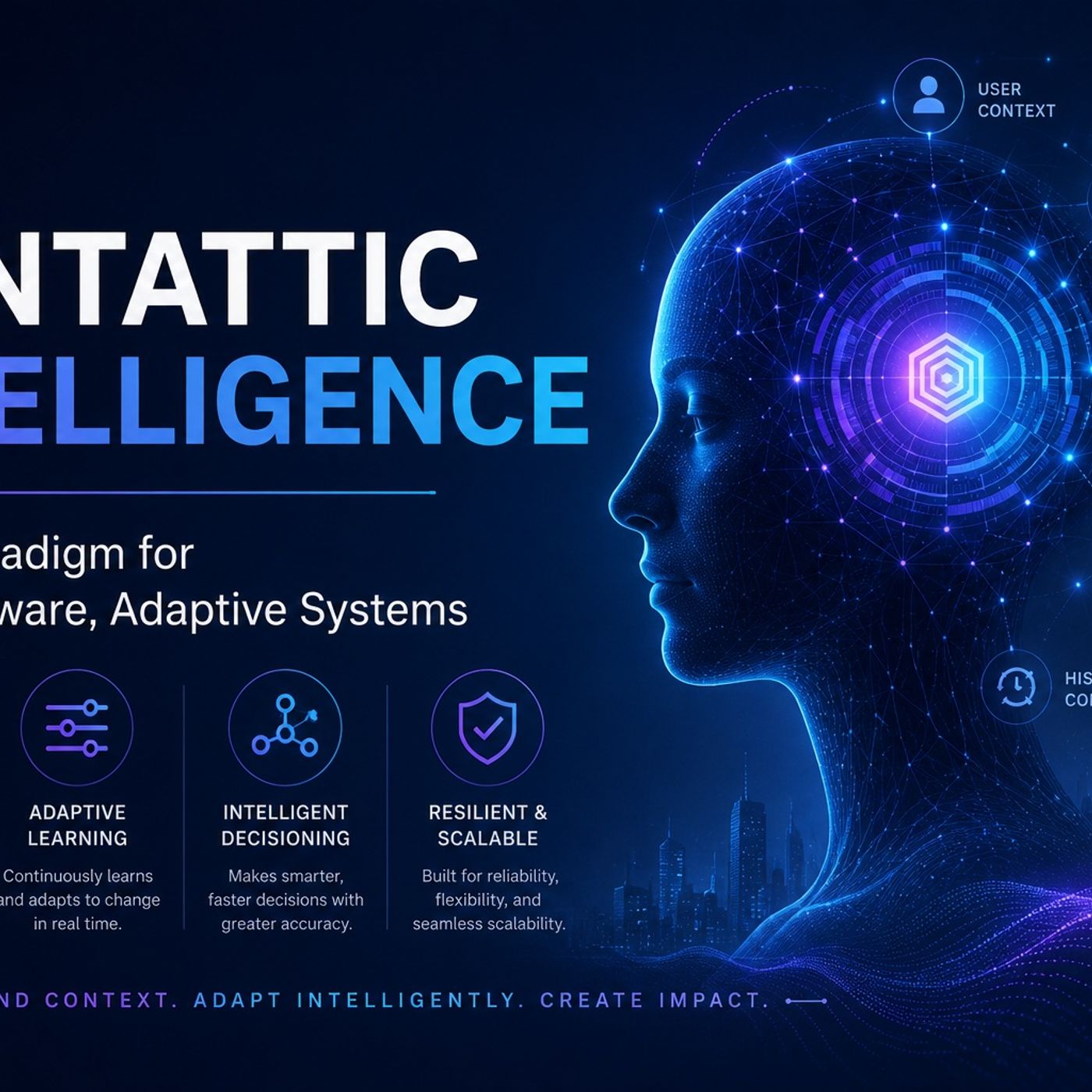
Santattic Intelligence: A New Paradigm for Adaptive Systems
3w ago00:27:47Tap to summarizehttps://aiworldjournal.com/santattic-intelligence-a-new-paradigm-for-context-aware-adaptive-systems/ The article introduces Santattic Intelligence, a transformative framework designed to move artificial intelligence beyond reactive data processing toward proactive human partnership. This new paradigm emphasizes context-aware reasoning and continuous learning, allowing systems to adapt to real-time changes without requiring constant retraining. By integrating ethical decision-making and neuro-symbolic logic, these models aim to understand the underlying "why" behind information rather than just identifying patterns. The source highlights potential applications in healthcare, education, and finance, where AI acts as a sophisticated collaborator that enhances human expertise. Ultimately, the author advocates for a human-centered approach to ensure future technology remains transparent, helpful, and closely aligned with societal values.
Transcribe →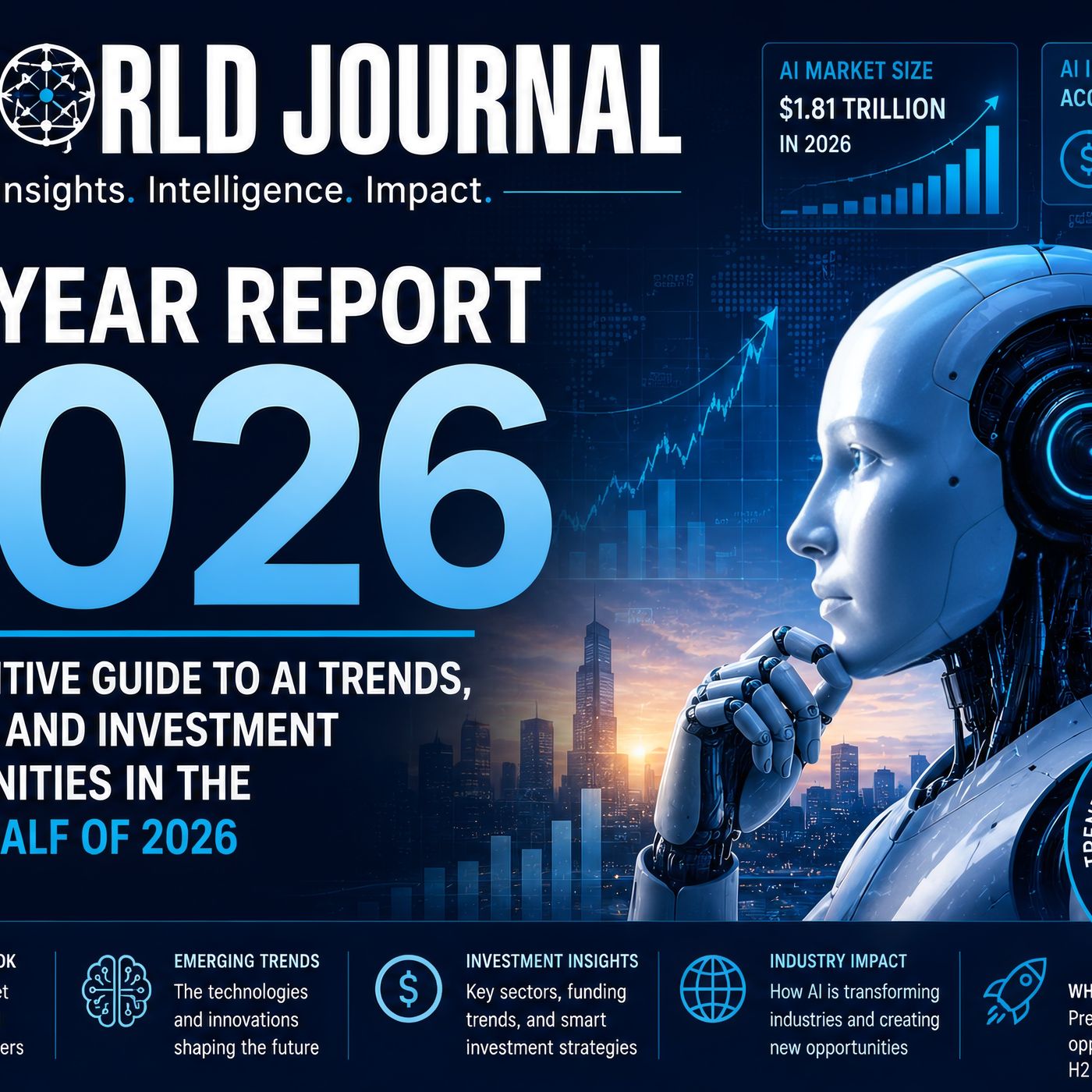
AI World Journal : Mid-Year Report 2026 The Definitive Guide to AI Trends, Markets, and Investment Opportunities in the Second Half of 2026
3w ago00:23:04Tap to summarizehttps://aiworldjournal.com/the-state-of-artificial-intelligence-key-developments-from-the-first-half-of-2026-by-ai-world-journal-editorial-team/ The provided report from the AI World Journal evaluates the significant technological and economic shifts occurring in the artificial intelligence sector during the first half of 2026. It highlights the transition from simple assistants to autonomous agentic systems and the broad integration of AI into core corporate operations and national infrastructure. The text emphasizes a massive global investment in hardware and energy solutions, alongside the rise of sovereign AI initiatives as countries seek digital independence. Additionally, the source examines the evolving regulatory landscape, the role of AI in cybersecurity, and its transformative impact on healthcare and robotics. Ultimately, the report positions AI as the foundational operating system of the modern global economy, shifting focus toward measurable productivity gains and long-term scalability.
Transcribe →
The Future of AI: From Data Centers to Mobile Devices
Jun 2600:23:23Tap to summarizehttps://aiworldjournal.com/big-tech-is-building-ai-supercomputers-but-the-next-computing-revolution-may-happen-much-closer-to-home-on-the-devices-you-use-every-day/ https://aiworldjournal.com/big-tech-is-building-ai-supercomputers-but-the-next-computing-revolution-may-happen-much-closer-to-home-on-the-devices-you-use-every-day/ The Future of AI: From Data Centers to Devices 1 source · Jun 26, 2026 This article explores a significant technological shift as artificial intelligence moves from massive, centralized data centers directly onto personal devices. While large-scale cloud infrastructure remains essential for training complex models, innovations in hardware and software optimization now allow smartphones and laptops to handle advanced tasks locally. This transition toward on-device AI offers transformative benefits, including enhanced user privacy, reduced latency, and the ability to operate without an internet connection. By processing data at the "edge," companies can eliminate per-query fees while significantly lowering the environmental impact associated with giant server farms. Ultimately, the source suggests that the next phase of the digital revolution will be defined by omnipresent intelligence integrated into everyday electronics. This hybrid future balances the raw power of the cloud with the speed and security of localized computing.
Transcribe →
📺 The Rise of AI World . TV Global Journalism Redefined
Jun 1800:21:52Tap to summarizehttps://www.einpresswire.com/press-releases/report/02-Wpl6PdAcGL-Gr The provided text announces the official launch of AI World TV, a specialized media outlet designed to provide authoritative coverage and expert analysis of the artificial intelligence sector. Managed by AI World Media Group LLC, the platform features high-production interviews, original programming, and global industry insights from its hubs in Silicon Valley and beyond. Beyond reporting, the organization emphasizes educational initiatives through the AI World Society, which aims to provide technology skills to underserved youth. The network also integrates various digital resources, including a comprehensive encyclopedia and a podcast, to support a community of over 350,000 subscribers. Ultimately, the source highlights a mission to make emerging technology more accessible and inclusive for a worldwide audience .
Transcribe →
The Next Internet Revolution: From Scrolling to AI Agents
Jun 1700:20:55Tap to summarizehttps://aiworldjournal.com/the-next-internet-revolution-when-ai-replaces-scrolling/ This collection of headlines and reports explores the transformative impact of artificial intelligence on the global economy and digital infrastructure. The source details how generative tools and AI agents are shifting the internet away from traditional browsing toward automated, intelligent interactions. Key segments highlight significant corporate acquisitions, such as SpaceX's move into AI coding, and the increasing market competition between semiconductor giants and emerging startups. Beyond hardware, the text addresses the expansion of data centers and the critical need for public trust as these facilities consume more resources. Ultimately, the material portrays a rapidly evolving landscape where AI integration is reshaping everything from industrial software to personal transportation pricing.
Transcribe →
AI Product Vision: Designing the Future of Intelligent Products
Jun 1600:28:24Tap to summarizehttps://aiworldjournal.com/the-future-of-ai-product-vision/ AI WORLD Journal This text explores the shift from viewing artificial intelligence as an optional add-on to treating it as a foundational element of modern product design. An effective AI Product Vision serves as a strategic roadmap, moving beyond simple automation to create intelligence-first systems that are proactive and adaptable. Successful development in this field relies on core principles like human-centered design, continuous learning through data flywheels, and establishing calibrated trust with users. The source highlights real-world examples, such as Cursor and Spotify DJ, to illustrate how software is evolving into an active collaborator rather than a passive tool. Ultimately, the article argues that a clear, responsible vision is the only way for companies to remain competitive and avoid commoditization in the AI era. These insights emphasize that the future of technology lies in seamless integration and radical personalization at scale.
Transcribe →