
Podcast
AIMinds
Hosted by Deepgram · EN
Welcome to the AI Minds podcast, where we explore how the companies of tomorrow are built with an AI-first approach.
This series of episodes are brought to you by Deepgram the number one Speech to Text, Text to Speech, and voice API on the internet trusted by the world’s top Enterprises, Conversational AI Leaders, & Startups like Spotify, Twilio, NASA and Citi Bank.
11episodes
Episodes
Newest firstAll episodes

AI Minds #077 | Ali Zahid, CEO & Co-Founder @ LegalMate
Mar 1200:23:16Tap to summarizeAli Zahid, CEO and Co-founder at LegalMate, has lived multiple founder lives already: YC-backed hardware, early-stage VC, neobank co-founder and now building AI-powered tools that quietly run in the background of legal practices.LegalMate helps small and midsize law firms automatically transcribe and structure client conversations happening over the phone, then pipes that context into their CRM and workflows for billing, compliance, and better client service.Episode Highlights:- Ali shares the story of Vanhawks, a “smart bike” startup out of YC with blind-spot detection, turn-by-turn navigation, and a mesh network for theft recovery—what many called “the Tesla of bikes”—and why he’d never do hardware again.- Ali and Demetrios dig into how listening to customers led them to legal automations, and how one thing stood out above all: a simple transcription service that logged phone calls into CRMs and why lawyers would call immediately when it stopped working.- Learn why most consumer-facing law firms still run on phone calls, not Zoom; how LegalMate integrates with VoIP platforms and Clio to capture conversations; and how features like automatic billing entries, summaries, and “CYA emails” (cover your ass) emerged from real lawyer workflows.Ali shares his perspective on practical AI in legal: why summarization and transcription matter more than sci-fi LLM stories, and how LegalMate is becoming a “context layer” that other AI tools can build on.Connect with Ali:https://www.linkedin.com/in/ali-zahid-/?originalSubdomain=caLearn more about LegalMate:https://www.legalmate.co/Connect with Demetrios:https://www.linkedin.com/in/dpbrinkm/Connect with Deepgram:https://deepgram.com/https://www.linkedin.com/company/deepgramhttps://x.com/deepgramaihttps://www.facebook.com/deepgram/Join the Deepgram Discord Server!https://discord.com/invite/xWRaCDBtW4
Transcribe →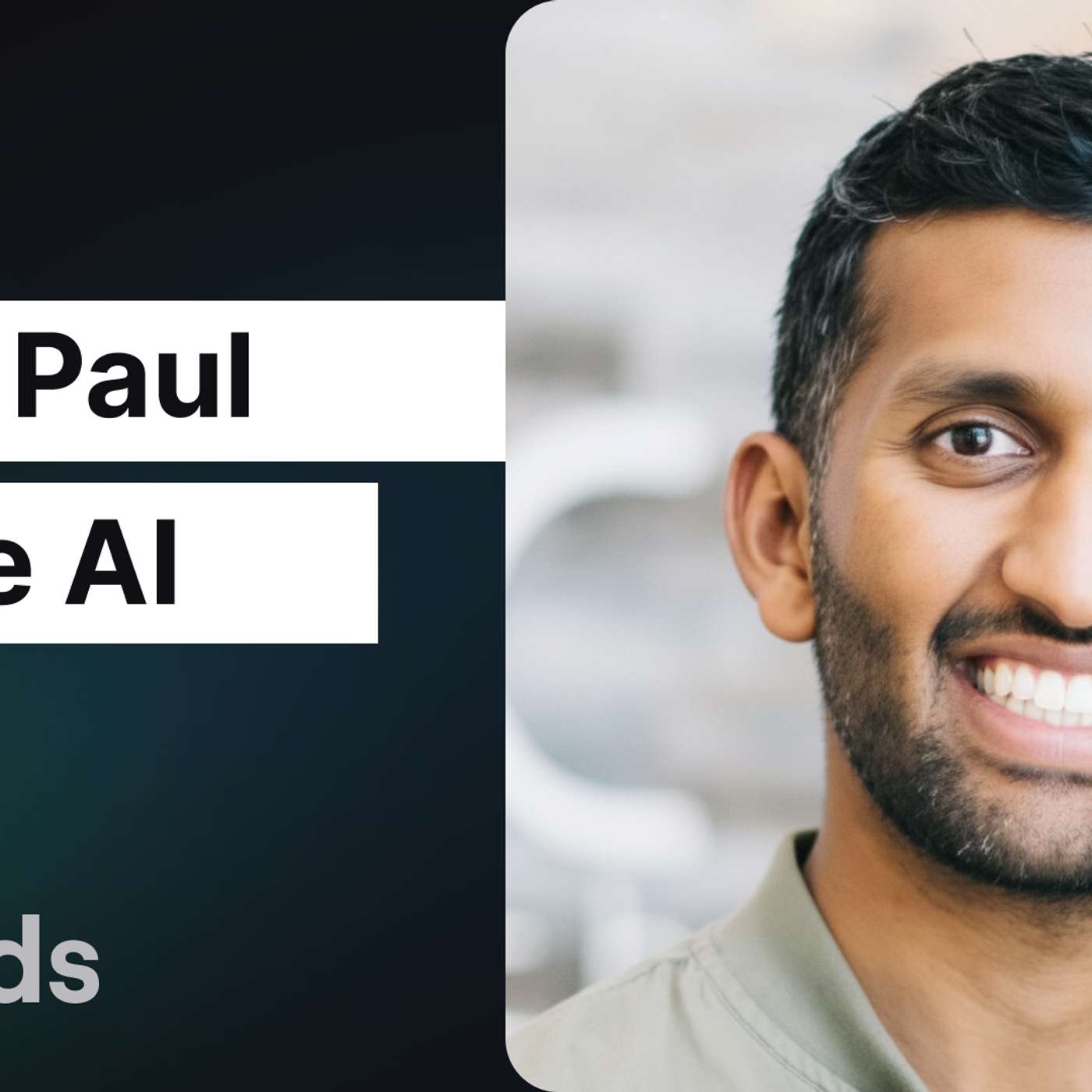
Andy Paul, Founder at Voyce AI | AI Minds #076
Dec 1600:19:39Tap to summarizeAndy Paul, Founder of Voyce AI, is building voice-native tools that turn everyday conversations into structured, searchable knowledge for teams. Voyce AI helps people capture, understand, and act on what’s said in calls and meetings—without adding extra workflow overhead.Episode Highlights:- Andy shares how his background in sales, product, and startups led him to the core problem behind Voyce AI: important information gets “lost in the air” during conversations, and traditional note-taking doesn’t scale.- He explains how Voyce AI uses voice AI to capture and structure conversations automatically, so teams can search, summarize, and repurpose what was said without relistening to hours of audio.- The discussion covers why voice is such a powerful interface for work, and how real-time transcription and understanding can unlock better decisions, clearer follow-ups, and less communication fatigue.- Andy talks through early product decisions, what it took to find real user pull, and how the team iterated on UX so that the AI quietly works in the background instead of getting in the way.- He dives into practical use cases—from customer calls and internal syncs to content creation—and how Voyce AI helps individuals and teams turn conversations into assets instead of fleeting moments.- Andy also reflects on the broader voice AI landscape, why accuracy and structure matter more than “flashy” demos, and what he’s excited about as models and infrastructure continue to improve.Connect with Andy Paul:https://www.linkedin.com/in/andy-paul-67765114/Check out Voyce AI:https://voyce.aiConnect with Demetrios:https://www.linkedin.com/in/dpbrinkm/Connect with Deepgram:https://deepgram.com/https://www.linkedin.com/company/deepgramhttps://x.com/deepgramaihttps://www.facebook.com/deepgram/Join the Deepgram Discord Server!https://discord.com/invite/xWRaCDBtW4
Transcribe →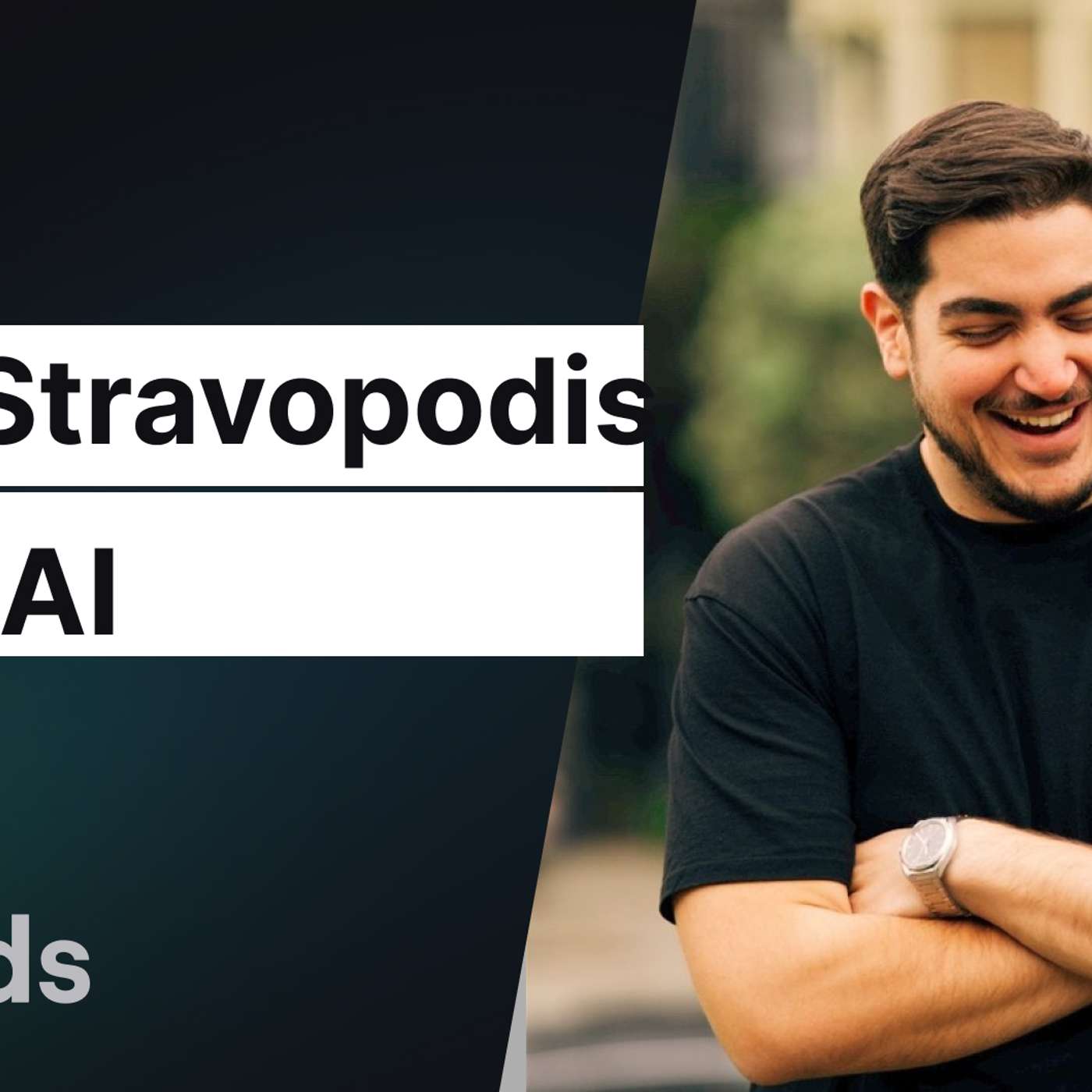
Panos Stravopodis, Founder at Elyos AI | AI Minds #075
Sep 2600:24:47Tap to summarizePanos Stravopodis, CTO and Co-founder at Elyos AI, is building cutting-edge AI agents to revolutionize how the energy sector and field services handle complex operational workflows. Elyos AI empowers teams installing solar panels, managing decarbonization projects, and coordinating demanding field operations - giving time back to business owners and accelerating the clean energy transition.Episode Highlights:- Panos shares his early software engineering journey, from building reservation systems for hotels to scaling tech in Amsterdam and London.- He walks through pivotal moments in Elyos AI’s founding story, including rapid acceptance into Y Combinator and the cross-continental team move to San Francisco.- Hear how the team discovered that slow and fragmented communication—often left to emails and phone calls—was the real barrier to delivering clean energy projects on time.The discussion covers the complexity and challenges of the energy sector, trust-building for high-stakes deployments, and why vertical focus trumps over-generalization in today’s AI landscape.-----------------------------------------------Connect with Panos Stravopodis:linkedin.com/in/pstravhttps://elyos.ai/Connect with Demetrios:https://www.linkedin.com/in/dpbrinkm/Connect with Deepgram:https://deepgram.com/https://www.linkedin.com/company/deepgramhttps://x.com/deepgramaihttps://www.facebook.com/deepgram/Join the Deepgram Discord Server!https://discord.com/invite/xWRaCDBtW4
Transcribe →Thibault Mardinli, Explorer at Voice AI Space | AI Minds #074
Aug 1500:24:01Tap to summarizeThibault Mardinli, Explorer at Voice AI Space. Voice AI Space is beacon to master voice tech's wild seas. They guide developers, entrepreneurs, and enthusiasts to top tools, news, knowledge, and careers, empowering everyone in the vast voice AI ocean.Episode Highlights:- Thibault Mardinli shares how his background in events management and the frustration of slow information access inspired his first project: a “smart walkie-talkie” for live translation and quick data retrieval, which eventually evolved into his platform, Voice AI Space.- The platform gathers news, tutorials, job boards, and event listings for developers, VCs, and anyone curious about voice AI, aiming to make the space more accessible and navigable for newcomers and professionals alike.- Thibault sees voice AI as a personal tutor in your pocket and as a tool for quick, accessible medical advice—especially in underserved areas—while also easing the workload of healthcare practitioners through transcription and information retrieval.- He warns about the rising misuse of voice agents for robocalls and scams, especially targeting older people, and calls for industry-wide action to prevent abuse before stricter regulations harm startups and innovation.- Thibault is particularly interested in on-device voice AI for cost-effective global deployment, and practical industry solutions like restaurant phone-answering agents to save time for busy staff and improve customer experience.-----------------------------------------------Connect with Thibault Mardinli:https://www.linkedin.com/in/thibault-voiceaispace/https://www.voiceaispace.com/Connect with Demetrios:https://www.linkedin.com/in/dpbrinkm/Connect with Deepgram:https://deepgram.com/https://www.linkedin.com/company/deepgramhttps://x.com/deepgramaihttps://www.facebook.com/deepgram/Join the Deepgram Discord Server!https://discord.com/invite/xWRaCDBtW4
Transcribe →Brooke Hopkins, Founder at Coval | AI Minds #073
Aug 400:28:43Tap to summarizeBrooke Hopkins, Founder at Coval. Coval accelerates AI agent development with automated testing for chat, voice, and other objective-oriented systems.Many engineering teams are racing to market with AI agents, but slow manual testing processes are holding them back. Teams currently play whack-a-mole just to discover that fixing one issue introduces another.At Coval, they use automated simulation and evaluation techniques inspired by the autonomous vehicle industry to boost test coverage, speed up development, and validate consistent performance.Episode Highlights:- Brooke draws a powerful parallel between autonomous vehicles and voice agents, explaining how both rely on simulation to model real-world complexities. She describes simulation as “real-time synthetic data,” allowing systems to interact with synthetic but realistic environments—be it a city street or a conversation with a frustrated customer.- Not all simulations are useful: some fail by being too unrealistic (e.g., users tolerating rude agents), while others miss edge cases found in real-world scenarios (e.g., unexpected language switches mid-call). Brooke emphasizes the challenge of simulating both the expected and unexpected to build resilient systems.- To address confusion around choosing speech models (e.g., STT, TTS, VAD), Coval builds public benchmarks measuring speed, consistency, cost, and audio quality. This helps teams make informed decisions, especially in a fast-moving field where new models launch constantly.- Brooke reframes evals not as brittle unit tests but as defining the product itself—like a living PRD (Product Requirements Document). She advocates for simulation-driven development, where agents are evaluated across scenarios to guide product design, model selection, and compliance (especially in regulated industries like healthcare and finance).- Coval supports CI/CD pipelines and scheduled evals, enabling teams to run simulations automatically on new releases. Importantly, human review remains essential—especially for subjective metrics like tone, naturalness, or prosody. Brooke calls for a blended system: automation where possible, human judgment where needed.-----------------------------------------------Connect with Brooke Hopkins:https://www.linkedin.com/in/bnhop/https://www.coval.dev/Connect with Demetrios:https://www.linkedin.com/in/dpbrinkm/Connect with Deepgram:https://deepgram.com/https://www.linkedin.com/company/deepgramhttps://x.com/deepgramaihttps://www.facebook.com/deepgram/Join the Deepgram Discord Server!https://discord.com/invite/xWRaCDBtW4
Transcribe →Vedant Dwivedi, Co-Founder & CEO at AndAIHub | AI Minds #072
Jul 18, 202500:19:33Tap to summarizeVedant Dwivedi, Co-Founder & CEO at AndAI Hub. AndAI Hub is a cutting-edge AI marketplace that connects businesses with the best AI plugins and solutions tailored to their specific needs. They cater their services to startups, MSMEs, and enterprises by understanding each client's unique business domain and recommending optimal AI integrations.Their platform showcases a curated selection of third-party AI products and services, alongside their own in-house developed plugins, agents, workflows, and solutions. At AndAI Hub, they pride themselves on delivering customized AI solutions for every use case, ensuring their clients harness the full potential of AI to drive innovation and growth in their respective industries.Episode Highlights:- Vedant emphasized that real-time AI applications require both pre- and post-processing guardrails to ensure safety, moderation, and compliance. It's not just about the LLM's intelligence — a logic layer is crucial to manage and filter input and output before and after model inference.- AndAI Hub solves enterprise AI problems through a three-step architecture:*Builder: Catalogs and processes scattered enterprise data (SharePoint, SQL, Excel, etc.).*Sigma: Builds real-time, narrow-focus AI agents from this clean data.*Flow: Creates workflows by connecting agents to collaborate and generate complex, real-time insights.- Despite adding guardrails for pre- and post-prompt moderation, and AI Hub uses distributed processing to deliver secure, real-time voice agent responses within 4 seconds. This makes their solution practical for use cases like industrial voice interfaces and e-commerce order management.- Vedant stressed that uncatalogued, messy data is the biggest reason many enterprises haven’t adopted real-time AI, even with the availability of advanced models like GPT. Builder helps solve this foundational issue by indexing, mapping, and understanding enterprise data before agents are deployed.- And AI Hub built an AI-driven hiring pipeline for a recruitment firm:*Resume analysis*Voice interviews (powered by Deepgram)*Video interviews with facial expression analysis*Live coding assessments with an AI copilot→ All stitched together in a workflow to automatically evaluate and shortlist candidates using multiple AI agents.-----------------------------------------------Connect with Vedant Dwivedi:https://www.linkedin.com/in/vedant-dwivedi-60286b10a/https://andaiplatforms.com/Connect with Demetrios:https://www.linkedin.com/in/dpbrinkm/Connect with Deepgram:https://deepgram.com/https://www.linkedin.com/company/deepgramhttps://x.com/deepgramaihttps://www.facebook.com/deepgram/Join the Deepgram Discord Server!https://discord.com/invite/xWRaCDBtW4
Transcribe →Building Deepgram Saga - Sharon Yeh, Product Manager | AI Minds #071
Jul 10, 202500:19:15Tap to summarizeDeepgram is a Voice AI platform for enterprise use cases – speech-to-text, text-to-speech, and speech-to-speech APIs for developers. Episode Highlights:- Sharon shared her transition from working on automated candidate sourcing at Dover, where she first explored AI/ML in recruiting, to now leading voice-first product development at Deepgram. Her journey showcases how early AI tooling evolved into today’s voice-native applications.- Sharon introduced Saga as a “Voice OS for developers,” a full Multimodal Conversational Program (MCP) client. It lets developers control their workflows through natural speech, connecting with multiple MCP servers and enabling Jarvis-like interactions with their systems.- Saga enhances vibe coding by turning vague voice inputs like “build a voice AI app” into high-quality, detailed prompts for agents like Cursor. This results in more accurate and useful code, shortening the iteration loop between developer and AI assistant.- Despite all the advancements, prompt design is still a bottleneck. Sharon likened LLMs to an intern in their first week — needing explicit, well-structured instructions to succeed. Chaining actions and mirroring tool names in prompts were some of the practical takeaways for boosting reliability.- A major insight came from the shift in user context. Systems designed for humans (like JIRA) often lack the structured context agents need. Sharon emphasized how building for agent comprehension — not just human convenience — is key to the future of AI-native workflows.-----------------------------------------Connect with Sharon Yeh:https://www.linkedin.com/in/sharonyehh/https://deepgram.com/https://deepgram.com/ai-apps/deepgram-sagaConnect with Demetrios:https://www.linkedin.com/in/dpbrinkm/Connect with Deepgram:https://deepgram.com/https://www.linkedin.com/company/deepgramhttps://x.com/deepgramaihttps://www.facebook.com/deepgram/Join the Deepgram Discord Server!https://discord.com/invite/xWRaCDBtW4
Transcribe →Scott McIsaac & Len Landale, Co-Founder's at Helios Core AI | AI Minds #070
Jun 27, 202500:26:46Tap to summarizeScott McIsaac & Len Landale, Co-Founders at Helios Core AI. Helios Core AI is a new, forward-thinking company offering a fresh take on driving outcomes with AI at scale. They focus on delivering practical, transformative AI solutions that simplify complexity, unlock insights, and optimize business performance. With a commitment to innovation and measurable results, they help organizations elevate their operations and achieve success in an AI-driven world.Episode Highlights:- Len Landale and Scott McIsaac left the corporate enterprise world to return to a startup environment focused on creativity, agility, and direct problem-solving. Their motivation lies in leveraging AI to transform the future of work, improve efficiency, and help businesses scale intelligently.- Initially positioned as AI consultants, they quickly evolved into building an AI-first managed services platform, offering not just tools but ongoing support to ensure successful implementation, adoption, and ROI. The platform is tightly coupled with services to guide clients through AI deployment and scale.- They emphasize a consultative approach to AI adoption—starting with data readiness and business problem identification. To avoid scope creep, they guide clients by organizing needs into:*Must-haves*Nice-to-haves*Future visionThis structure helps clients focus and prioritize effectively.- Contrary to their initial assumptions, small and mid-sized businesses (SMBs) have shown strong appetite for AI adoption. One notable example is an SMB using a voice agent to fully manage rental equipment calls, freeing up staff time and improving customer experience—demonstrating real-world ROI in efficiency.- They’re launching Kokoro, a voice AI product that helps people preserve and interact with the memories and personalities of loved ones. Inspired by grief and family separation, Kokoro allows users to hear loved ones' voices, share stories, or even read bedtime stories remotely, leveraging AI’s emotional and conversational capabilities in a deeply human way.-------------------------------------------------------------Connect with Scott & Len:https://www.linkedin.com/in/scmcisaac/https://www.linkedin.com/in/len-landale/https://www.helios-core.com/Connect with Demetrios:https://www.linkedin.com/in/dpbrinkm/Connect with Deepgram:https://deepgram.com/https://www.linkedin.com/company/deepgramhttps://x.com/deepgramaihttps://www.facebook.com/deepgram/Join the Deepgram Discord Server!https://discord.com/invite/xWRaCDBtW4
Transcribe →Anshuman Singh, Co-Founder at Think41 | AI Minds #069
Jun 19, 202500:25:42Tap to summarizeAnshuman Singh, Co-Founder at Think41. Think41 is a full-stack Generative AI consulting firm founded by the creators of HashedIn (acquired by Deloitte US), specializing in building secure, compliant, and human-like AI agents. We partner with enterprises and high-growth startups to co-engineer AI products spanning conversational AI, voice systems, and agentic platforms.Episode Highlights:- Anshuman breaks down the massive difference between flashy demos and production-ready voice agents. Latency, natural conversational flow, cultural nuance, and error handling are all critical pain points when deploying voice AI at enterprise scale—especially in a complex market like India.- To deal with latency and make interactions more natural, Anshuman shares a clever UX trick: adding verbal cues like "aha" or short acknowledgments. These subtle responses reassure users that the bot is listening and working, creating a smoother, more human-like experience.- From shortening bot responses to crafting open-ended questions, the team at Think 41 is rethinking UX for a voice-first world. Anshuman highlights how designing for audio interfaces demands empathy, brevity, and a deep understanding of human psychology.- Think 41 is building a system where voice interaction is paired with a visual interface—while users speak to the bot, the assistant generates clickable UI elements like decision cards and design specs in real time. Think Jarvis for product discovery and planning.- A fascinating insight: users treat voice agents differently than humans—often with less focus and more distraction. Anshuman predicts that companies will need new social contracts, even policies, around how voice AI is used in professional settings, especially as it takes on more meaningful work.---------------------------------------------------Connect with Anshuman Singh:https://think41.com/https://www.linkedin.com/company/think41/?originalSubdomain=inhttps://www.linkedin.com/in/anshum4n/Connect with Demetrios:https://www.linkedin.com/in/dpbrinkm/Connect with Deepgram:https://deepgram.com/https://www.linkedin.com/company/deepgramhttps://twitter.com/deepgramaihttps://www.facebook.com/deepgram/Join the Deepgram Discord Server!https://discord.com/invite/xWRaCDBtW4
Transcribe →Samuel Pearton, Chief Marketing Officer at Polyhedra | AI Minds #068
Jun 13, 202500:18:55Tap to summarizeSamuel Pearton, Chief Marketing Officer at Polyhedra. Polyhedra Network is building foundational infrastructure for trust and scalability in AI and blockchain systems to enable secure, verifiable, high-performance applications. Led by a world-class team of engineers, researchers and business leaders from institutions such as UC Berkeley, Stanford, and Tsinghua University, Polyhedra’s deep expertize in zero-knowledge proofs and distributed systems underpins the development of our technical solutions.Samuel Pearton is the Chief Marketing Officer at Polyhedra, driving the future of intelligence through its pioneering, high-performance technology. Drawing on decades of experience in tech, global marketing, and cross-cultural social commerce, Samuel understands that trust, scalability, and verifiability are essential to AI and blockchain.Before officially joining Polyhedra’s executive team in October 2024, he played a key advisory role as the company secured $20 million in strategic funding at a $1 billion valuation. Prior to Polyhedra, Samuel founded PressPlay, a social commerce and engagement platform that connected athletes and celebrities—including Stephen Curry—with China’s fan economy.Episode Highlights:- Samuel shares his unique journey—from being an out-of-work musician in Australia to launching a startup in China focused on monetizing celebrity IP through digital channels. His early work with high-profile names like Steph Curry and Cristiano Ronaldo laid the foundation for his pivot into tech innovation.- Samuel introduces Polyhedra and its mission to build infrastructure for verifiable AI using ZKML (Zero-Knowledge Machine Learning). The tech uses cryptographic proofs to ensure that AI models operate correctly and haven’t been tampered with—a critical guardrail as AI agents become more integrated into daily life.- Samuel compares their technology to a seatbelt for AI—not always visible, but absolutely essential. ZKML acts as a mathematical "truth layer" that ensures the outputs of an AI model are trustworthy, especially in high-risk sectors like finance, healthcare, and robotics.- Though many of the threats ZKML protects against haven’t materialized at scale yet, Samuel emphasizes the proactive nature of Polyhedra's mission. He highlights future use cases like AI agents making financial decisions or running household robots, where tamper-proof verification will be essential.- Samuel gives a shoutout to Deepgram, which is collaborating with Polyhedra to develop verifiable voice applications. They’re also integrating Deepgram’s API into a growing community of blockchain builders, pushing the boundaries of what’s possible at the intersection of AI, voice, and cryptography.---------------------------------------Connect with Samuel Pearton:https://www.linkedin.com/in/samuelpearton/?originalSubdomain=ukhttps://polyhedra.network/Connect with Demetrios:https://www.linkedin.com/in/dpbrinkm/Connect with Deepgram:https://deepgram.com/https://www.linkedin.com/company/deepgramhttps://twitter.com/deepgramaihttps://www.facebook.com/deepgram/Join the Deepgram Discord Server!https://discord.com/invite/xWRaCDBtW4
Transcribe →