← Alan Watts Being in the Way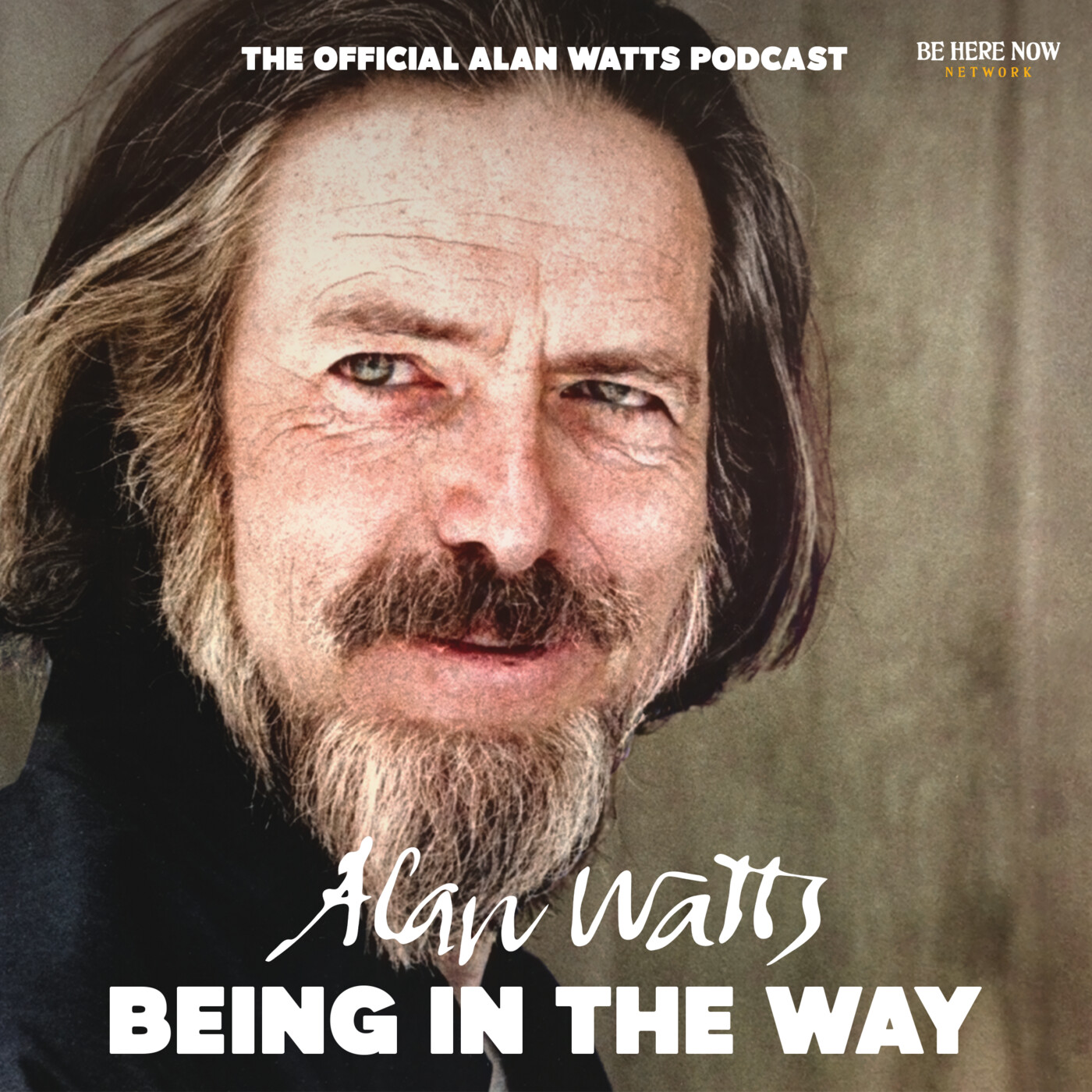
Loading summary
Transcript6 lines
- [00:03]
A
This episode is sponsored by BetterHelp. As the calendar turns to February, it's like love is in the air. The month is full of flowers, candy, stuffed animals, and of course, lots of talk about dating and relationships. Sometimes it can feel like everyone has their love lives together except for you. The truth is that almost everybody is still figuring it out. The path of love isn't easy. No matter if you're married, dating, single, or just focusing on yourself, therapy can help you find your way and see more clearly where you want to be. With over 30,000 therapists, BetterHelp is the world's largest online therapy platform, having served more than 6 million people globally. Plus, they do the initial matching work for you so you can focus on your therapy goals. If you aren't happy with your match, you can switch to a different therapist at any time. Sign up and get 10% off@betterhelp.com Alan that's better. H E L P.com Alan.
- [01:29]
B
Each one of us has a certain view of the world. We have a kind of a version of what life is, and our view of the world both delights us and horrifies us.
- [01:51]
C
Welcome to Being in the Way the Alan Watts Podcast. I'm your host Mark Watts and today we're going to hear one of the recordings that my father made at the First Unitarian Church in San Francisco, California. And on many Friday evenings in the early 70s he would give talks there. This talk Limits of Language, Landscape, Soundscape and Painting, Music and Mystical Vision and others that you will hear on this podcast and on the Allen Watts platform. Play Channel Play Channel has been set up as a place where you can hear these recordings without interruptions, without advertising or even the voice of an announcer. So to Visit go to play.Alan Watts.org or download the app on either the Apple or one of the Android podcast sources. And this is also a place where you can support the work that we do. Through a five dollar a month membership, you you'll be able to hear recordings as they're created and remastered for this series. Today's podcast was co produced with the Ram Dass Be Here Now Podcast network and our music is by Zakir Hussain, courtesy of Moment Records. And now here's Alan Watts in the Limits of Language.
- [03:12]
B
Unfortunately, when we understand something, most of us really mean that we've got it translated into words, although we understand an enormous number of things that we don't know about in words at all. We understand how to breathe because we do it, but we are not able to put it into words. But somehow We've got ourselves into the frame of mind where unless we can put something into words, especially the kind of things I'm being. I've been discussing, we have the feeling that we don't understand it. And all of us here are people who are really intellectuals. We are a literate crowd of people. We read books and are very much influenced by the literary aspect of our culture. In our education, we have cultivated three kinds of intelligence, principally verbal intelligence, mnemonic intelligence, which is memory, and computational intelligence. Rather incidentally and offhand we may, if we did some kind of physical education, have cultivated kinesthetic intelligence. But in addition to those, there would be social intelligence, aesthetic intelligence, And probably some others. And these are not developed. A professor at Harvard when I was there said once that nothing is intellectually respectable unless it can be put into words. And he was commenting on Timothy Leary's investigations into states of consciousness induced by psychedelic chemicals. And I thought, you know, if nothing is intellectually respectable unless it can be put into words. Alas, alas for the Department of Music, for the Department of Fine Arts, for the Department of Physical Education. And one of the great problems now going on in the academic world is, for example, that just to take an illustration, Traditional academics cannot understand what black studies are about. They think that there is no culture here. It's something. How could you possibly do that? It's like an old film where it was called A Yankee at Oxford, played by Robert Taylor. And he got a Rhodes Scholarship to Oxford. And it shows his first interview with his tutorial. And he says he's going to specialize in American history. And the tutor says, well, I don't think that will give you very much to occupy your time. How funny. But, you see, You can study anything, and depending on your intelligence, you can make a whole world out of it. Because you will always find in anything you look at an infinitude of subtlety. So I've maintained the theory that every living being whatsoever, whether it be a cat, dog, a giraffe or a microorganism, thinks that it's human with full justification. Because it feels, just as you and I do, that it's the center of a universe. And there are all kinds of complicated things going on. And it has the same sensation of being intelligent and of possessing a high culture that you and I possess. And I believe this to be true of the very vegetables. That they all are highly sensitive and intelligent. And that if we could learn somehow or other to speak their language, we would discover that their culture is quite as complex as Ours. And this is one of the great things that opens and blows one's mind to realize how the world would look from the point of view of another kind of consciousness altogether. And so that's why it's enormously important that we do have such things as Black Studies because they challenge us. With the possibility of putting in the academic world a point of view entirely different from our own. I've advocated for years that high schools teach Chinese not because simply that we've got to relate somehow to the Chinese people or not to be able to understand their language, but because the Chinese culture was an extremely complex and highly evolved culture with a language completely different from our own. And therefore, if you study that language. You begin to see that there are ways of thinking based on principles, based on a kind of logic that is not one's own common sense. And therefore by studying this very different thing, you get a perspective on what your own assumptions are. See, most of us don't know what our assumptions are. We operate on principles which we haven't really examined. And by studying a completely different culture you begin to understand what your principles are. And therefore it's tremendously important that we study the African world as well as the Far Eastern and the American Indian world which as Gary Snyder has said is almost further from us than the world of the Chinese. That's why I emphasized yesterday Carlos Castaneda's books where you read about Don Juan and Don Juan's fantastic laughter at this good academic anthropologists attitude to life. You know, he is so serious and he's trying to get everything categorized in a. In a nice academic way so that he can write a PhD thesis on the American Indian's use of mind transforming plants. It reminds me of a story which a great professor of Stanford told against himself, Frederick Spiegelberg, who's been a friend of mine for many years. He got a grant from the Rockefeller foundation to go to Asia, specifically India, to make a study of the present state and health of Indian spirituality. In other words, are the spiritual traditions of Asia well and truly alive? So he went and made all these studies and he got hooked on Sri Aurobindo. But when he was on his way back, he went through Hong Kong and he asked some friends there whether he could meet a Daoist sage. Are there any such people still alive? They said, well yes, there is a very famous Taoist sage and he lives a little way from Hong Kong on one of the islands. So they took a boat and went to this island, just a little rocky island and they had to anchor at a small harbor and climb up a mountain path until they came to a straw hut where this man lived. And this sage was exceedingly fat, enormous, like Hote, you know, the fat Buddha, Putai. And so the interpreter said, this is Professor Spiegelberg from Stanford University, who has come here to the east on a grant from the Rockefeller foundation to inquire about the vitality of Asian spirituality and wondered whether you could tell him something as to whether the Taoist tradition is still alive. And this man began very gently to chuckle, and it grew louder and louder and louder. And all his flesh vibrated with laughter, laugh, laugh, laugh, laugh, laugh, laugh. And he'd get to an utter complete bellow. And that was all. That was the end of the interview. So. There are things going on, in other words, There are whole ways of life. That cannot be contained within the networks that we regard as sensible or academically respectable. And this includes, of course, naturally, the ways of life, of the. Of the plants. We say of somebody who is hopelessly sick, terminal cancer case, that they've become a mere vegetable. But that's a very insulting thing to say about vegetables. No vegetable is a mere vegetable. And the more you know about botany and the more even beyond that you use your imagination and try to put yourself into the situation of a rose, the more you begin, it begins to penetrate your skull that this is a very important form of life. Emerson saw this in the famous passage where he said, these roses under my window do not worry about whether they are better than former roses or whether that succeeding roses will be better than they. There is simply the rose. It exists with God today. But human beings, heedless of the riches which surround them, are always on tiptoe to foresee a future. And they don't know how to live completely here and now. And that is the main thing that we don't see about certain other cultures and certain other species altogether. A lot of things that the African cultures have contributed to us, especially in the world of music, all have to do with. With being alive now as distinct from making plans for some other time. And what we describe as when we talk about various cultures, whether they be Australian or oceanic South Sea or African or whatever. We say these people are primitives. And what we really mean by that is. They are not following our culture plan of working for the future. There are people who've arrived and therefore are happy to be where they are. But we've come around bumbling and interfering with their way of life and telling them that because they are not progressive, they're not really cultivated. And all such peoples that are called primitive live in a non historical world, It has been said. Happy are the people who have no history. Because what does history consist of? History consists of a record of power games, of conquests, of battles, of disturbances, of people on the make. But where one has no history, you have culture, you have attention to full going with the regularly repeated, ordinary things that go on from day to day. And the things that go on from day to day are of course, cooking, cultivating plants, hunting, making love. And one's full attention goes into these things. And because one's full attention goes into these things, they are cultivated into very beautiful arts. And these, this way of non historical life is what we all in the west very much need to know. Do you realize. How our consciousness is affected by our being constantly exposed to what is called the news? We read newspapers, we hear news on the radio. And we are given the impression that the world is a kind of career. There is this thing going on which is history. And the newspapers tell us all about it. We get frantically excited about it. We hear of horrors, injustices, games are going on, political games, campaigns, all this terrifying news. And our glands respond to it. They secrete adrenaline and get us all ready to fight wickedness and injustice. And there's absolutely nothing you can do about it. Only very influential people can read the newspaper and something ghastly has gone on. And pick up the telephone and call a friend and say what the hell are you doing? And make some difference to it. Call a senator, call the president, call a justice of the Supreme Court. The ordinary person will never even get through, but will still have all this adrenal fury going on inside, which completely frustrates you, because there's nothing you can do. There's no way of disposing of this chemical. So. We are in a non functioning communicational nervous system, that is to say, all the radio, television, newspapers and so on. All the information everybody is being given is really useless, because nothing you can do about it. So that the electrical communication system in which we are living is to a very large extent not really functioning as a communication system. In the same way that our own nervous system does function as a communication system. For example, if you've ever been put in the embarrassing position of being a celebrity, you go on television, you go on radio, you write a book, and the radio, the television. The book gives the impression to the recipient of the message that you're addressing that person directly. And they feel that they've had a Personal communication from you, and they respond. They want to ask a question, maybe they want a complete psychoanalysis. They write you letters and you get an enormous bag of mail. There's absolutely nothing you can do about it. If you. If you answered your mail, you wouldn't be able to do any of your everyday work. So what do you do? You either throw it in the wastebasket or you have a form letter which says, explains what this situation is. Thank you very much. I'm so glad you liked what I said. But alas, it is logistically impossible to reply. And these people then get very offended. And they think, well, you must be high and mighty and so important that you don't deign to speak to the ordinary man. But what on earth is one to do? For example, I get asked by all kinds of interesting organizations. They may be struggling Unitarian churches or something of that kind, would I please come and talk to their people. I've got all kinds of high school students who would very, very interested, have read my books and would like a talk. But alas, we don't have any money and we could pay you, maybe your cab fare to come over. And I'm embarrassed by having to say, I'm sure that the work you're doing is extremely interesting and that I would find it interesting, but how am I to choose if I give my services free to you? Everybody else will say, why did you choose them rather than us? Aren't we equally interesting and worthwhile and what have you organization? And so I have to charge you money and say, if you really want me, you will have to pay so much, and you must trust me as to what I'm going to do with it, I may give it away to somebody else, but that's up to me. But if you really want, and you mean it, that you are sincere about wanting these services, you'll have to pay for it. In other words, you have to give me something that represents your own energy, known as money. Now you see that then one gets being accused of being commercial. So I'm saying this as an example of. The situation in which we live whereby. Communication doesn't communicate. We started out yesterday where I was trying to make the basic point that there is a vast, vast difference between the world which is and the world which is described. The world of the television, the newspaper, the movie, the novel, the book, the Review, a Time magazine, Life Magazine, Newsweek, etc. Etc. Etc. We take to be. If we have been acclimated to the literary culture of a Western industrial state, we take all this Information to be what is actually happening, whereas it is nothing of the kind. Just as your opinion of yourself is not yourself. The news is not what is happening, it is not what is going on. It is a particularly slanted view. It is the expression of the limited intellects of politicians and reporters. What is actually going on in the world is far, far different. I think everybody should read Hermann Hesse's book Steppenwolf, because in that book he gives you an insight into a culture which most of us despise. That is the culture of what we would call, What is the word, vapid people who play in jazz bands and who frequent certain kinds of restaurants and bars and have interest in clothes that are flashy. And we would say such people are quite superficial. But he shows you how there is a depth to that culture in an extremely interesting way. And we must realize that Hermann Hesse is also the author of the Last Balance, Spielberg, the book about the most incredibly sophisticated culture of the future. So what I'm saying is therefore, that every view that we take of the world, every selection we make of what it is that is important to notice, is simply one way of looking at things. And that there are an infinitude of other ways of looking. This is what great painters show us. The painters teach us to see. Many years ago, painters were primarily concerned with portrait painting. They painted human faces, human figures. Well, they felt that human figures, they gradually dawned on them, were not always to be looked at against white wall. So they began to put landscape in the background. Mountains and forests and distant cities. But at the time they were doing that, that background was regarded as what we now call in electronics, noise, static, that which you disregard. But after a while, some of these painters began to be completely fascinated by the landscape in the background. And they said to the human figure, hey, get out of the way, move over. I want to look at this other thing. And we began to get landscape painting. And when we first had landscape painting, Ordinary Joe's looked at it and said, that's not what I call a picture. And it was regarded as very avant garde art. See, landscape painting, what's significant about that? But after a while, people got used to it and began to see, because the artists had shown them that the landscape is beautiful. And people began to open their eyes and look at nature. And before they didn't do that, you would be amazed if you could put yourself in the state of mind of a cleric or scholar living in about 1300 and traveling through the Alps. Well, you would think, going through the Alps, that the mountains Are absolutely gorgeous. But this scholar only saw them as a threat and a perfect nuisance that he had to climb through. He didn't see anything beautiful about them until artists had shown him then. Now we think we go to a state park at, say, Yosemite or Jackson Hole or Yellowstone or wherever. And there's always a place called Inspiration Point. Where you go up a road to an outlook place. And all the tourists from Iowa come and stand there and say, oh, it's just like a picture anyway. These postcards of sunsets and all that kind of thing. And everybody says it's real pretty. Because the artists have shown them. Well, in the course of time, other artists began to do different things. People like Jackson Pollock experimented with drooling paint onto things. Because they thought, why does the artist always have to represent something which happens in nature in a natural way? Couldn't we originate a happening in the same way as nature does it? So after all these modern painters went to work. And increasingly have begun to convince people to look at their works and notice them. We will now be able to. To go down a Chicago street where there's an old building and there's a brick wall with bird droppings on it. And slightly torn off posters that were originally attached there. Scratches. We'll stand, look at that and say, oh, it's just like a pict. Now. Then we move on from there. Landscape was revealed to us by the painters. And later on, soundscape is revealed to us by the musicians. At a certain stage of its development. What is music? Music is a very formal statement. A very highly ordered, articulate sequence of sounds. And originally, of course, organized around words. The song to say something in a sonorous way. Then later, the song is accompanied with instruments. But then people began to notice that when you listen to the instruments. There is an enormous amount of background noise. Consider, for example, the merely mechanical noise of a symphony orchestra. Which we exclude in a certain time. And still today. When you record in a radio station, they try to have soundproof rooms. So that no noise that is not relevant can be heard. Although you, sitting in front of your own radio and listening to the broadcast which originated in this room. Hear traffic and airplanes and all kinds of jazz going on outside. They must not have that going on in that room. So we get what are called very hi fi recording processes. So that all that will be excluded. And this involves an enormous hassle. It's very expensive to construct all this equipment. When you realize that what's going to be the end product? Finally, there's nothing like what you broadcast because of all the incidental noise in the listener's home. So you make television and you put up these sets where you are following an ancient dramatic tradition that you're simulating life. But nobody must see. The props, as it were. You know, behind any scene, there's wires and tape and all kinds of things that hold it together like a scaffolding, so that there's a front. In the Chinese tradition of the theater, the prop man walks onto the stage, but he wears black, which means that he's technically invisible. In the Japanese puppet theater called bunraku, the people who work the puppets wear black. They're technically invisible, but there they are. But in television, especially educational television, which is one of the funniest things going, everybody has to sit at a desk with bookshelves behind them to look as if they're in a study or a classroom. Never blackboard. And no kid camera is visible. Some of the best television you can do is television in the round, where you have people discussing something, you know, in a group and cameras in every direction. Well, one camera will show another camera, but it doesn't matter. We're on television and everybody knows it. Why pretend that you're in the theater or that there isn't any camera present and that what you're looking at in an obviously artificial situation, something behind a flat, impenetrable screen, why pretend that it's real life? That's convention. And so why I'm talking about this is that considering such things makes you aware of how much your knowledge of the world is conventional knowledge, a selection of particular things to which you attend, to which you have been brainwashed to notice. And the rest is disregarded. So that it would be, as I've suggested, that the world is like a Rorschach blot. And there is an official interpretation of the blood, which we call the culture. And everybody agrees, of course, that's the way it is until some great artist, some great genius begins showing us that you can look at the world in an entirely different way. Everybody says he's crazy. Oh, things aren't like that. But if he insists and goes on long enough, we can now look back at Cezanne's paintings, say, yes, it does look like that. We can look at Van Gogh and say, oh, yes, he. He really did see how fields are. He's taught us to see. When I was child, I was exposed very early in life to Chinese art. And at first I thought, it's fantastic. Things don't look like that. Mountains don't look like that. Flowers don't look like that. They're all stylized. Weird. But when I got used to Chinese art, I suddenly saw they were looking at things with incredible accuracy. I once went to the Victoria and Albert Museum in London. I was very interested in Japanese woodblock prints. And there was a print of a tiger. And at first I thought, this tiger can never be unraveled. It is the most complicated, fantastic tiger I ever saw in my life. But I was interested in it just because it was so weird. So I got out my drawing block and I copied the print. And as I followed very carefully all the limbs of the tiger, I discovered that their arrangement was completely logical. The thing was not at all weird. It was simply a very, very clever, straight picture of a tiger. Beautifully. And so finally, when I went to the Far east, we immediately had a joke which was, isn't it strange how much Japan looks like Japan? And, I mean, here were all these paintings standing out right in front of you in everyday life, whereas we formerly thought they were weird. So. The moral is, each one of us has a certain view of the world. And our view of the world both delights us and horrifies us. We have a kind of a version of what life is. That it's this trip from the maternity ward to the crematorium or the cradle to the grave, and that, you know, there are certain things to be achieved that society approves of and that we feel very put out if we don't achieve them, and so on and so on. This is program set up, you see, and we think that this socially approved program, the social interpretation of the cosmic Rorschach blot, is what life is all about. Well, it's nothing of the kind. And the whole notion of, in Indian. Indian philosophy, moksha, liberation, or the Taoist philosophy, you see that the Taoist. The Taoist sage is a person who doesn't buy the official Chinese cultural interpretation what life's all about. And therefore he may or she may move off to the mountains and say, I've been fooled. I want to find out for myself without other people shouting at me all the time, what is really going on, what all this is. So in the same way in India, it's institutionalized, that when you've raised your family and can hand over the management to your son, you renounce your caste and become a sannyasin. You abandon your identity and take a new name. Instead of being Mr. Mukher Pajaya, you become Swami Kriyananda. You do you. You renounce your identity and what you are supposed to be doing, in a sense, is saying, now the game is over. The projection we have put on the Rorschach blot has worn out. Let us find what lay behind it. Let us find what's really going on. Well, of course, when that gets institutionalized, there is an institutionalized version of the real world behind the socially conventionalized world. You have to watch out for that. Be very careful of that. When swamis tell you that the world of Brahman is undifferentiated, all is one, and give you the impression, you know, we were discussing this yesterday, of that when you are awakened and have insight into everything being Brahman, all differentiations will vanish. And that's a conventional view of the universe in just the same measure as our ordinary, everyday view of the universe is conventional. Don't get hooked on that. So. What I'm talking about, and the trouble is that I can't. I can't give you any authority for this. You see, I can't say I represent some very authoritative group of people who really know what's what and that therefore I'm giving you the message about what it really is. And all these different social interpretations, cultural interpretations of the world are bunk. But there are those of us in the know who know what it's really all about, because that would just be another social convention. So that's why I don't accept disciples or found a religion. But obviously there is a way in which you can see the world for yourself. It may very well agree with what other people see, and you will be able to communicate that way of seeing to others. It may be by no more than a glint in the eye whereby you will understand that somebody else sees it just the way you do. So all our meditation exercises, all our practice, is to simply open our consciousness to what is going on. As distinct from what is said to be going on. So therefore, to do that, we must suspend our words, we must suspend descriptions, and be alert to the actual happening. It's as simple as that. Because if you really get to the place where you don't talk about it, it's all perfectly clear. All the problems vanish. The problem of survival, the problem of even the problems of pain. If you're in the nonverbal dimension of consciousness, Theology, philosophy, metaphysics, as we ordinarily talk about them, absolutely cease to be urgent problems. And you see the answer to all the questions the theologians and the metaphysicians asked. You see why their questions were absurd. And you see exactly how it can be. That this moment. Is what you were always looking for, the paradise, the far off divine event to which all creation moves. And it becomes absolutely clear if you will at least temporarily suspend description, comment, and experience life directly.
- [54:34]
C
You've been listening to the Limits of Language with Alan Watts. Limits of Language has been restored and remastered and is available here on the Being in the Way podcast and and also@play.Alan Watts.org the Alan Watts streaming channel. Our theme music is by Zakir Hussain, courtesy of Moment Records, and Corey Leonard is our sound engineer. Thank you for tuning in.
- [55:22]
A
What we now call mindfulness is rooted in a convergence of ancient disciplines, traditions refined and practiced for centuries before reaching modern Western audiences. On Tuesday, March 3, join Krishna Das, one of the most recognized voices of bhakti chanting in the west, and Buddhist teacher David Nichtern for a free online conversation about these spiritual paths, their shared roots, and how they intersect in contemporary spiritual practice. We'll also discuss the upcoming Dharma Moon Mindfulness Meditation Teacher Training Program, offering an overview of the training, a chance to meet the teachers, ask questions, and see if it might be the right fit for you. Visit dharmamoon.com heart for more info and to reserve your spot for the free online event with David Nichtern and Krishna Das.