Loading summary
Transcript91 lines
- [00:02]
Interviewer
Lemonada.
- [00:08]
Lemonada Media Announcer
Campsite Media.
- [00:12]
Steve Burns
Hi, you got a second.
- [00:16]
Narrator/Host Matthew Scher
In 2020, at the height of the pandemic, Steve Burns, the former host of the kids show Blue's Clues, released a short video on Twitter. Dressed in a striped shirt and hat and his trademark glasses, Burns explained that alth it had been a long time since he last saw his friends. He still thought about them a lot.
- [00:39]
Steve Burns
I'm super glad we're still friends. Thanks for listening. You look great, by the way.
- [00:45]
Narrator/Host Matthew Scher
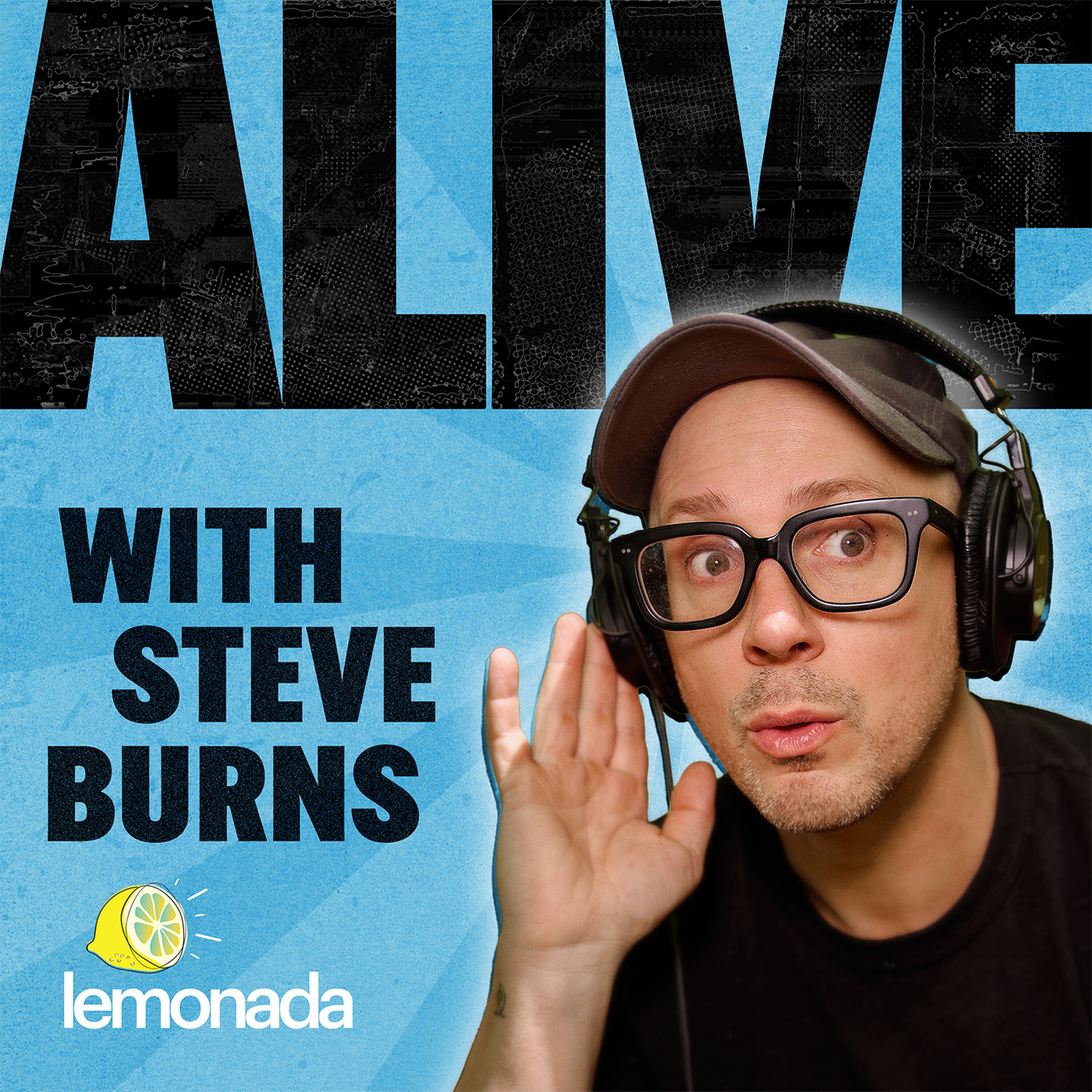
The clip rapidly went viral because of the unabashed sweetness of the message and also because of the nostalgia factor. Millions of people had grown up with Steve at a chaotic time. His voice was one of reassurance, of comfort. Five years after that clip was published, Steve is back again, this time with a new podcast called Alive with Steve Burns.
- [01:09]
Steve Burns
Today, I kind of want to talk about something kind of big, like real big. Can I ask you, do you ever think about death?
- [01:18]
Narrator/Host Matthew Scher
The show, in a lot of ways, is an extension of Blue's Clues and the viral video with a bunch of high profile guests thrown in. It's intimate, personal, as Steve likes to say. It's one of the first podcasts on earth that actually quote, listens back. That's this week on Origin Stories.
- [01:42]
Wise Sponsor
This podcast is brought to you by Wise, the app for international people using money around the globe. With WISE, you can send, spend and receive up to 40 currencies with only a few simple taps. Whether you're buying souvenirs with pesos and Puerto Vallarta or sending euros to a loved one in Paris, you know you're getting a fair exchange rate with no extra markups. That's what makes WISE the fast, affordable way to use your money around the globe. WISE offers 24.7live support and runs over 7 million daily checks to catch and prevent fraud. So you know your money is where it's supposed to be. Be Smart. Join the 15 million customers who choose WISE. Download the WISE app today or visit WISE.com Learn more by visiting WISE.com US Compare Ts and Cs apply.
- [02:44]
Narrator/Host Matthew Scher
Welcome back to Origin Stories. Our guest today is Steve Burns, who was for eight years the host of the groundbreaking kids TV show Blue's Clues. After leaving the show, Steve made an.
- [02:56]
Interviewer
Album with the Flaming Lips.
- [02:58]
Narrator/Host Matthew Scher
The first track became the Young Sheldon Theme. He's also spent more than 25 years.
- [03:03]
Interviewer
As a voiceover actor.
- [03:05]
Narrator/Host Matthew Scher
Snickers satisfies. Yeah, that's him. In this episode of Origin Stories, we're talking to Steve about his newest project, a podcast called Alive with Steve Burns debuted This fall. Steve Burns, welcome to Origin Stories.
- [03:22]
Steve Burns
Hey, thank you so much for having me. It's a pleasure to be here.
- [03:25]
Interviewer
I really, really enjoyed listening to these episodes. So there's three out as of the time we're recording it, and I want to talk about all of them, but I want to talk about one thing first, which is when you're talking to Jamie Lee Curtis, who is, I think, the first guest, you talk about this moment during COVID where you recorded a video where you were talking to people. You know, you recorded this message for people. What made you do that?
- [03:49]
Steve Burns
Well, Blue's Clues, which is a basic cable children's television show that I was on in the late 90s, had turned 25 unimaginably. There have been two hosts that have followed me, and we were doing some promo stuff, and there was a suggestion that we all kind of do shout outs for the kids for socials. I mean, you know, social media was just trying to maximize everything, as they always do. They were basically like, hey, how can we get, like, some free commercials out of you guys while you're here? And. And I was like, well, that sounds like a great idea, but the kids who watch Blue's clues now in 2021 have no idea who I am. Right? I'm just some weird old bald man. But. So I don't think I want to do that. But what I would love to do is shout out to the homie. You know, I would love to check in with my friend from 25 years ago who's now probably 30 years old. And there's a couple things that in the moment, I feel like I'd like to say, and I didn't write it. I just improv it. I think I needed that message at least as much as anyone else did. And 2021 sucked. It was a hard year for everyone. We were really going through it. And it felt to me at the time that the Internet was mean. It was a mean place to be, almost as a virtue. It almost felt like in that moment that we were just completely equating being a dick online with being a strong person. And that was being celebrated. Little did I know that 2025 would happen, and that was just the beginning. But at that time, I was alarmed, to be honest, and a little disturbed with all that. And I didn't have any big concept or big idea about what that message would be. It was just. Those were the feelings I was having. And I just kind of. Just kind of went with that and just said, hi, I've missed you. How have you been? You know, never. I never stopped thinking about you. And boy, this is hard. And it took off in a way that shocked all of us, especially me. I gotta think that it's more about what people brought to that message than it is about the message itself. Because what I did was very unremarkable. I did almost nothing. It points more toward what is missing in our conversation than it does with anything I said in particular. I think a care driven, respectful conversation is a missing thing on the Internet, and that's why it went bananas.
- [06:52]
Interviewer
It could also have been that you were talking directly to people, which is what I want to. What you do in this, in your new. Everybody does that.
- [06:58]
Steve Burns
But people do that. I mean, that's a trope. Everyone does that.
- [07:01]
Interviewer
You know, not in the same way. I'm really struck listening to the show and why I rewatched that video right before I got on this call, because I remember when it came out when you recorded that it was like, Steve from Blues Clues brings solace and joy to the world, you know, at a bad time. Or like. And it really did go viral in an amazing way. You're right that people talk to the camera all the time, but I don't think they talk to the camera in exactly the same way. And that, I think might be what people are reacting to. It's like there was a real into like an unfeigned intimacy to it.
- [07:41]
Steve Burns
Well, I guess if that's true, that that's. That's just because it's the. It's the one thing in this world that I have enough practice at to be any good at. Right. That that was a requisite of my job on Blue's Clues was that I had to viably create this relationship, this telepresence, parasocial, honestly, sort of relationship with a camera. And if that wasn't there, the show kind of didn't work. And all kids TV really talks to the camera. That's really every kid's TV show. But what Blue's Clues did that was radical was that we listened to the camera. And that's the only real way I know how to do this thing that we're currently doing right now is with a gear that includes listening. Again, I think it has as much to do with what people are ready to receive from the Internet. I think people are ready to feel legitimately seen and heard by this technology that tends to isolate somehow, even though the promise of it was about community and connecting and all this stuff. I think people want a more human experience and are open and ready for it.
- [08:56]
Interviewer
Is there a name for it in your head? I want to try to describe it myself because I was watching, I have two, two little kids. We watched an episode, an old episode of Blues Clues. They're probably going to barrel into this interview.
- [09:06]
Steve Burns
That'd be great later.
- [09:09]
Interviewer
So I'll explain it for anyone who hasn't seen it. But you can see this same approach. You can hear the same approach in the podcast and in this video we're discussing, which is that you talk as if the person is next to you, as if. And you are having a conversation. Of course you cannot hear what the other person is saying. You cannot see their reaction because you are wherever you are, in front of a green screen or in your podcast studio, but you are doing what you just said. You are listening. Like you are creating the illusion almost of a conversation. What is the name, what is the shorthand in your head for this kind of approach?
- [09:48]
Steve Burns
I don't have a shorthand for it. I'm listening. I was kind of trained as an actor. One of the things that they say is that you actually have to be doing something for people to believe it. And so when I'm doing that, when I say, what do you think? I then listen. I then listen to the silence. And that is deceptively simple. It's actually kind of a. It's actually kind of a worthy practice. You know, this idea of listening to. Listening deeply to a silence is actually not a bad thing to do and is kind of a radical act to. In an Internet that is really a fire hose of influence. Right. So I don't really have a shorthand for it. What I'm actually doing is listening. It's not a magic trick. It's just that I think I should caveat all this thing. I actually have no idea what I'm doing or why it works. These are just the observations that I make about it. But I think what it does is it creates the conditions for vulnerability on the other side, or at least it creates the opportunity to engage with your human self. Does that make sense?
- [11:21]
Interviewer
It makes perfect sense. When you were saying that and you left the silence, I found myself racing to fill it or to answer out.
- [11:27]
Narrator/Host Matthew Scher
Loud, which is exactly what my 6.
- [11:29]
Interviewer
Year old did this morning when we were watching. She's like, no, it's right there. It's right there. There it is over there. And there are shows that have done that since. Oh yeah, a lot of them, yeah. But what you're arguing essentially is that people are bringing their own Experience. And they're helping create the situation with you because they have in their minds, they're filling in the blanks and talking to you. And it's like you give them a space and they fill it with what's in their head.
- [12:06]
Steve Burns
Yeah, 100%, that's exactly right.
- [12:09]
Interviewer
And so in other words, it's like this. Your audience is participating in the creative process in some way.
- [12:15]
Steve Burns
Yeah, I hadn't really thought about it that way, but yes, I think that is what's going on. I also think that especially in audio, which everyone warned me about, but it's actually my favorite thing in the podcast is leaving awkward silences in an audio format. I'm like, yeah, I'm doing it. I'm doing that. I think you're right. I think there's an impulse because of conditioning, because of how we are conditioned to ingest and receive entertainment and media, that silence is suspect. Did something happen? Did something go wrong? What's going on? And there is an impulse to fill that silence with something. But if you don't, what happens? And yeah, you bring, you bring something of you to that moment.
- [13:04]
Interviewer
You haven't been a journalist, but you've been interviewed by a lot of journalists. And the silence thing is one of the first things I learned. I mean, when you're sitting down with someone, like, if you just sit there and stare at someone after your question is done, or even after they're done answering, people will race to fill the silence. They will race to fill it. And it's only when you jump in the middle and say, oh, maybe this is what you're thinking of, that they immediately shut up and stop talking to you.
- [13:35]
Steve Burns
Yeah, that's something I need to learn interviewing. I don't know how you do it, and you're obviously very good at it, but, you know, the, the parts of the podcast I feel comfortable with are the ones where I'm like, hey, how are you? Do you ever think about dying? Yeah, me too. Like, like, like, like those, those parts come very natural to me. But, but the part where I'm like, so, Congressman Khanna. Yeah, well, talk to me about wealth disparity. And you know, and that is difficult. You know, it's difficult to shape a conversation, but also allow it to grow organically. It's tricky. It's tricky stuff.
- [14:17]
Interviewer
What's the bridge between when you record this video during COVID and when you start to make this podcast?
- [14:24]
Steve Burns
When.
- [14:24]
Interviewer
What are you doing in between? Like, what's your full time gig from 2021 to today before you joined the ranks of podcasting, the podcast world.
- [14:36]
Steve Burns
After that video, the viral video, the world said, we need Blue's Clues for adults. And I said, that's not a bad idea, actually. And so what I wanted to do real bad was sort of Ted Lasso meets Fleabag, you know, sort of like this unassailable optimist in a really dark world who is the world's shittiest detective who still needs your help, right? And it's still direct address to the camera. It's like Columbo sort of, but he's talking to you and he needs your help figuring out not only, you know, arson and murders and stuff, but also his life, you know, which is proxy for yours. And it could. It really. I really thought that could have been a cool show, but unsurprisingly, no one made that show. So I was kind of ideating, like, what would that look like in terms of career stuff, what I was doing? I was doing a lot of public speaking. You know, I was talking a lot to universities and things and. And all of that very quickly became very vulnerable, which surprised me. That viral video has been a real gift to me. It's been a huge gift to me because it kind of cracked me open in a way that I really hadn't been before. And it allowed me to kind of put my arm around Steve, the character Steve, in a way that had been difficult for me before. And all of a sudden I found myself standing at Mizzou, you know, just kind of talking about how I was severely clinically depressed the entire time I was on children's television and how that totally messed me up because everyone thought I was dead for 20 years. And I was just sort of accessing these parts of myself that were honest in a way that required bravery, frankly, that I didn't know I had. And so I was dealing with that stuff. It did feel like a remarkable opportunity, an accidental remarkable opportunity where I could. Where people were listening to what I was saying when I said it that way through the camera and with those silences, it seemed that I had somehow. I somehow had some kind of special access to a generation and a half of people. And what could be done with that?
- [17:14]
Ratio Protein Sponsor
There are lots of people right now focusing on hitting their protein goals. Maybe they want to help build and maintain muscle or recover after a workout. At the same time, life can get pretty busy. That's why so many people are looking for easy, protein packed options. And this one actually delivers ratio protein. Yogurt has 25 grams of protein per. Per cup, making ratio the most protein per cup in the yogurt aisle. That's more protein than four whole eggs plus zero added sugar. You get a complete protein with all nine essential amino acids, zero grams of added sugar and real staying power. It's protein that can help your body build and repair tissues, making it an easy post workout snack or just a midday keep going moment. Not only is it packed with protein, but ratio Protein has a smooth and creamy texture, so there's no need to compromise great taste when hitting protein goals. It's the kind of thing that slips right into a chaotic day. No cooking, no cleanup. Just open, eat and you're on your way to hitting your protein goals without having to worry about baking yet another chicken breast. Ratio does the math so you don't have to head to ratiofood.com to find a retailer near you.
- [18:32]
Ana Zamora
What if the justice system wasn't just about punishment? What if it could support more productive lives, healthier families and stronger communities?
- [18:42]
Steve Burns
We changed the quality of life in the neighborhood homicides about 44% in the first couple of years.
- [18:47]
Ana Zamora
I'm your host Ana Zamora, and I'll show you what a better justice system actually looks like because it's already happening. Season two of When It Clicked from Lemonada Media is available December 10th. Wherever you get your podcasts.
- [19:06]
Narrator/Host Matthew Scher
Welcome back to Origin Stories. Today we're talking to Steve Burns, the host of the new podcast Alive with Steve Burns.
- [19:15]
Interviewer
Did you think podcast first, Steve, or did someone approach you about doing a podcast?
- [19:23]
Steve Burns
Podcast was always in my mind, but I was like, man, everybody has a podcast. There are simply too many podcasts. And I wanted the visual element because I felt that that's where my, whatever my little power is in the relation to the camera. And so I didn't really think of it as a podcast, to be honest. I thought of it as like a low budget public access cable show from the 90s. And that's still the way I see it where we strip the audio and but if I'm being really transparent, the audio portion is at least as exciting to me. The radio theater of it. I'm trying to do lots of I'm making tea in every episode just so you can hear that happening, so you can hear the ripping opening of a teabag. And I go outside at the end of every episode so you can hear the birds and the leaves. And I just want it to be as immersive as, as it can be.
- [20:32]
Interviewer
I want to describe the format, which is a really interesting format at the beginning you are doing A version of Adult Blues Clues where you're. You're sort of inviting somebody into your house and you're spitballing a little bit, you know, talking about the theme that you're going to address. Making tea and then the guest comes in. But it's foregrounded by this really lovely sort of cozy is the word that comes to mind. When I was listening to it, it's like, you know, hanging out with a friend. That format, did you have that at the beginning? Did you know that I want to do an interview, but I also need to welcome people in this way into this space.
- [21:19]
Steve Burns
Actually, now that I'm remembering it, the podcast format came from a conversation that I was having from a producer of late night television.
- [21:30]
Interviewer
Interesting.
- [21:31]
Steve Burns
And we were just sort of talking about late night and what the conventions of that. Of late night are. And I realized the conventions of late night TV are actually remarkably similar to the conventions of children's television in that there's always an invitational aspect to it. Hi, welcome to this space that you've anticipated and is always the same. I will be your guide. I exist here, and you've come to my space. And now you're anticipating every single segment. Now you're anticipating every single moment. And that is part of the fun, you know, that I'm going to do a monologue now, and then there's going to be a comedy bit and then a guest, then another comedy bit, then another guest. And at the end, it's gonna be a big celebration with music. Right? And I remember, I think I kind of pitched in the room, like, what if there was a podcast that did that backwards? You know, like where it's, hi, come on in, and I'm all stressed out about something, and this is like, aren't you stressed out about this? I'm stressed out about it, and blah, blah, blah, blah. And the podcast deliberately gets slower and more relaxed as it goes, until the end. Is really just a reflective, you know, kind of a bong rip before you go to bed kind of thing. You know, that's crudely where I started, you know, was kind of a late night show. Remember when Colbert did it during the. During the pandemic, and he was just like, hey, I'm just here in this little room. It's like, there's something there, you know, that would work if you could do a whole thing that way. So it is deliberately Blue's Clues. It's deliberately Fred Rogers. You know, I'm gonna wear this hat and a pair of glasses in every single one for that sweater kind of through line, and the tea will be there, you know, and there are deliberate conventions and contours that are anchor points that you will anticipate and stuff. And that's very much an homage and an echo to the kids TV thing, but in a way that, again, like I said before, just in a way that lets you feel like, oh, I'm going to speak to you now as an adult, but from a place of joy, from your childhood, you know, and that just kind of gets us in a specific posture that I think allows for a certain depth of conversation.
- [24:11]
Interviewer
How baked were the ingredients of the show before you talked to Solemonata, as the distributor and producer of this show, did you go through additional conversations with the folks at Lemonada? Were you thinking about what's available in the podcast market, where this could fit, how the format might change?
- [24:30]
Steve Burns
I. I shot three episodes on my own before I. Even before I even talked to Lemon on it, because I was like, man, this is a zero barrier world. Come on now, let's all go. Let's go. Let's make it. Let's make this a public access cable show, you know? But then I actually talked to a bunch of producers about what it is to make a podcast. And then I was like, I need a partner. And we talked to a bunch of people. But I loved Lemonada. Like, they. They got it. They just. They. They got what I was trying to do. But it was. It was fully baked. It was fully baked.
- [25:07]
Interviewer
You know, those three episodes are the ones that are out now. No. Right?
- [25:10]
Steve Burns
No. The death episode was where I started because I knew I wanted the show to be called Alive, and I wanted to talk about how I kind of wasn't for a while, you know, and then we did an episode about sex, and then we did an episode about taxes. I wanted to start death. Sex and taxes is where I wanted to start, you know, so we shot those three and showed. And I think we only really produced the death episode, but I had enough for a substantial teaser for the other two.
- [25:46]
Interviewer
You know, could you have seen a world in which you did? I understand you made the decision just in terms of the logistics to go with a distribution partner, but what would it have looked like to just put these out into the world in 2025 and just say, hey, I'm Steve. I'm back with my new show.
- [26:02]
Steve Burns
I think that also might have worked. You know, there's something about that that people want. We're deliberately using consumer prosumer gear. Half of it shot with iPhone, you know, I want it to look like a FaceTime. I am again. I think people want a more real human experience from this technology. And. And I think that at least what we're trying to do is benefiting from low production value. I think the idea that, hey, somebody made this in their basement and Threw it on YouTube is a feature, not a bug. Now, depending on what it is, I think it's bifurcated now, right? It's either Iron Man 15 that cost $275 million, or it's something that you baked in your own oven and put on the Internet.
- [26:57]
Interviewer
I think so, too. Yeah, I really do. I mean, I also think we're dealing with this. The best description I've still heard of why podcasting will endure is this is maybe five years ago, Bill Simmons, the sports guy, was talking about AirPods, Apple AirPods, and he was like, you know, this is the difference maker. It's like we have learned. We're learning as a society to walk around everywhere we go with these things in our ears and to just do all the things we normally do, listening to stuff. But you are right that a lot of what we're listening to is abrasive.
- [27:30]
Steve Burns
Or.
- [27:32]
Interviewer
Not healthy or not immersive in an interesting way, whereas you are consciously making a decision, especially at the beginning of this show, to like, really slow it down for people, right? It's like, this is not going to, you know, from the second you turn on alive, that it's not going to be what you're used to hearing. It is crazy how much we get bombarded, isn't it? I mean, listening to you talk about this, I'm just. I'm sort of, like, taking myself to task because I'm one of those people who just. I just do everything with headphones and.
- [28:04]
Steve Burns
Oh, my God, I'm so bad, dude. And I live up here on this mountain, and I'm technically off grid, and I'm outside a lot. I got stuff to do outside all the time, and I got my Apple headphones on, and I'm just, like, mainlining information, and it's not good.
- [28:27]
Interviewer
But I do think there's something that we clearly lose as we get older of being in touch with small moments of fascination or interest. That's like, again, watching my kid watch Blue's Clues this morning. She's just like, you know, there's no guile. There's no, like, here's a better way of describing it. She has not learned to disguise herself from the world.
- [28:51]
Steve Burns
That is a better way of. That's a Great way of describing it. Yeah. We lose that, right? We lose that. We're born with it, for sure. We're born with wonder the same way we're born with a grasping instinct because it is necessary for survival. I always say, you know, we did not learn to wonder. We wondered to learn. That's how that actually works. And we've. We unlearn it with school. School unlearns it. You know, we learn to value certainty for other reasons, but kids still have it, you know, and there is an aspect of that that I think is part of the wisdom that kids being around kids just teaches you.
- [29:34]
Gretchen Rubin
Hello, I'm Gretchen Rubin.
- [29:36]
Lori Gottlieb
And I'm Lori Gottlieb.
- [29:37]
Gretchen Rubin
We're two friends, one a happiness researcher.
- [29:40]
Lori Gottlieb
And the other a therapist.
- [29:41]
Gretchen Rubin
And we are here to tackle the problems of everyday life with all of.
- [29:45]
Lori Gottlieb
You, from big issues to small. We'll share advice and fresh perspectives, and we'll also highlight responses from you, our listeners, to the questions we discuss.
- [29:53]
Gretchen Rubin
Whether it's that pet peeve that's been bugging you for years, a tricky dilemma, or just something you've always wondered about.
- [29:59]
Lori Gottlieb
We'll talk it through the since you asked podcast from Lemonada media premieres on September 23rd. Wherever you get your podcasts, you can relearn it.
- [30:08]
Interviewer
I mean, I would argue they're listening to some. Some of the episodes of your show. If someone is really putting themselves in that headspace, they could. They could relearn it. But here, this brings up a. Something I'm curious about. This mix of these, these first three episodes, the Jamie Lee Curtis one was a really fun conversation. And then you've got a politician, which is a really different kind of conversation. So how do you choose this mix? Is it. Is it commercial? Like, are you thinking. You have to be thinking maybe a little commercially. Like, I want a mix of guests and the early episodes in some way.
- [30:40]
Steve Burns
Well, yeah, I mean, the, you know, the big giant, you know, resplendent celebrity, splashy interview. You know, this is a business, and those are important. And if you're gonna do those, I want those to be as human as possible. And I've known Jamie for a long time, and she is even more of a badass than you think she is. She is a loud heart, and there's something indomitable and fearless and so deeply human about how she chooses to show up as a giant famous person. That I think is instructive. And if she's listening to this, she's going to be like, Steve Burns, shut up. She's going to hate that. Right. But, but I do think it is. And she's a perfect example of a celebrity that I would want to interview. And that's how, you know, that's how I'm choosing. We're a subject driven podcast. Right. I'm better served speaking on a big subject than I am to a big person. I think, I think my favorite interview I've done so far, and it won't be out for a while, but it was with a millennial neurodivergent neuroscientist speaking about autism mostly, but in neurodiversity. Her name's Desi Jones. She was brilliant. And I just had a wonderful, wonderful conversation that felt dialed in to me. More so probably than, you know, if I interviewed, you know, Ben Affleck about something, you know, which I, which I would, I guess. But you see what I'm saying.
- [32:32]
Interviewer
How many interviews or how many episodes in this first season?
- [32:36]
Steve Burns
24. And then there's a bunch of premium content. I have this notion, and I don't know if it's, I don't know if it's valid, but I have this notion that all of them will Venn diagram and we will take information that we learned and scaffold them across the season. That's a very Blue's Clues idea, by the way. That comes from the kind of hardcore child development world that I happen to be in for a while. But we're talking about, about Death with Julie McFadden. Then I'm going to talk to someone about near death experiences. And then I'm going to talk to someone about end of life planning. And then I'm going to talk to my mom about that stuff. And we're talking. I talked to Bill Nye about, like, critical thinking and where did we go wrong? And why does half the world, why do half the people who grew up watching our shows believe that there are lizard people in the world? And, and we kind of isolated the idea that the scientific process should be fun and should be something that you do. So I'm going to talk to Adam Savage from mythbusters about, like, wonder and like, you know, how, how can we make that methodology an actual practice in our lives? And so you see, like, I'm trying to, I hope that, that, that thematically these things all dovetail and intersect.
- [34:00]
Interviewer
But then there's also the, there's you as connective tissue. So of course they're going to scaffold together. Right? Because there's that the center of that Venn diagram are the things that you're interested in, too, and that you feel passionately about.
- [34:12]
Steve Burns
Well, and I'm also trying to make the podcast about you, you know, as much as possible. Like, no, you are the celebrity guest in every episode. And so there is some role playing where, you know, where I talk about debt, for example, I'm more sort of becoming your avatar, like a millennial who's utterly besotten with absurd amounts of debt. So I'll sort of, like, take on the anxiety of the audience for certain episodes to start the conversation that way.
- [34:54]
Interviewer
Did you have to practice with interviewing? Did it get easier as you recorded more of them?
- [35:02]
Steve Burns
No, I don't know what I'm doing. What I did was I watched, like, 40 hours of Dick Cavett, and then I realized that was not useful to this form in any way and that I'd probably be better off taking some improv classes and understanding what journalism is. Right. It seems like it's improvisational journalism if, If. If it's anything.
- [35:30]
Ratio Protein Sponsor
But.
- [35:31]
Steve Burns
I'm still flailing around in a sea of fear.
- [35:37]
Interviewer
It doesn't sound like you're flailing around when you listen to the interviews, but I do think you're onto something with the improv. I always do go and listen to stuff before, but it's really hard to make a game plan to talk to someone that you haven't met before because there's something happening that's chemistry or situationally dependent as opposed to, you know, 10 questions that I must get through in a. In a given interview.
- [36:03]
Steve Burns
Do you do that? Do you write 10 questions that you must get through? Because I keep doing that, and it keeps being a problem.
- [36:10]
Interviewer
Yeah, they never were. It never works. It never works. I know where I want to start, like, usually, and I know a few things that I'm really curious about.
- [36:19]
Steve Burns
Well, I go out of my way in the beginning to kind of make a convention out of. I'm asking you a question at the top of the show, and this is what we're going to wonder about. And this is how I'm refining the question. And, yeah, let's talk about this. And then the interview really wants to reflect that. Right. So what I'm trying to do now is shoot the interview first and then shoot the beginning and end after and reverse engineer the beginning to what the interview was and just kind of let it be kind of what it is. I have a gear where I will do 600 takes of something, and it can never be done, and it can never be right. And I have to sort of protect this podcast from that side of myself because there's no time to be that way, and I don't know that it would be served by dysfunctional perfectionism anyway.
- [37:13]
Interviewer
How will you judge success for this, Steve, with the podcast, I mean, not just downloads.
- [37:21]
Steve Burns
I think I would judge success from this if if people are really responding to the listening of it, if people feel heard by it in a way that is different from the other media that they are ingesting, I feel like that would be special. I think it would be a success if people come back to the podcast with an expectation of examining their lives in a way that is joyful. And I think it would be a success if I somehow made good use of the connection that has somehow been indelible over 30 years.
- [38:15]
Interviewer
Steve, thanks so much for doing this.
- [38:17]
Steve Burns
Hey man, thank you. This was a lot of fun and good luck to you. I can't wait to hear the rest of your pod.
- [38:22]
Narrator/Host Matthew Scher
Thanks so much for listening. You can find a Live with Steve Burns wherever you get your podcasts. Origin Stories is a production of Campside Media. It's hosted by me, Matthew Scher and produced by Abakara Dahn. This episode was produced by Ben Goldberg. This episode was sound designed by Yurosh Jovanovich. Theme music by Doug Slaywin. Our studio engineer is Jimmy Guthrie at Arcade 160 Studios. Special thanks to Michael Canyon, Mayor at Campside and Chris McLeod at Blue Elevator Productions.
- [39:20]
Lemonada Media Announcer
Want to listen to your favorite Lemonada shows without the ads? Subscribe to Lemonada Premium on Apple Podcasts. You'll get ad free episodes and exclusive bonus content from shows like Wiser Than Me with Julia Louis Dreyfus, Fail Better with David Duchovny, the Sarah Silverman Podcast, and so many more. It's a great way to support the work we do and treat yourself to a smoother, uninterrupted listening experience. Just head to any Lemonada show feed on Apple Podcasts and hit subscribe Make Life Suck Less with Fewer Ads with Lemonada Premium.
- [39:53]
Gretchen Rubin
Are you looking for ways to make your everyday life happier, healthier, more productive, and more creative? I'm Gretchen Rubin, the number one best selling author of the Happiness Project, bringing you fresh insights and practical solutions in the Happier with Gretchen Rubin Podcast. My co host and happiness guinea pig is my sister, Elizabeth Craft.
- [40:11]
Steve Burns
That's me, Elizabeth Craft, a TV writer.
- [40:13]
Gretchen Rubin
And producer in Hollywood. Join us as we explore ideas and hacks about cultivating happiness and good habits. Check out Happier with Gretchen Rubin from Lemonada Media.