← All Ears English Podcast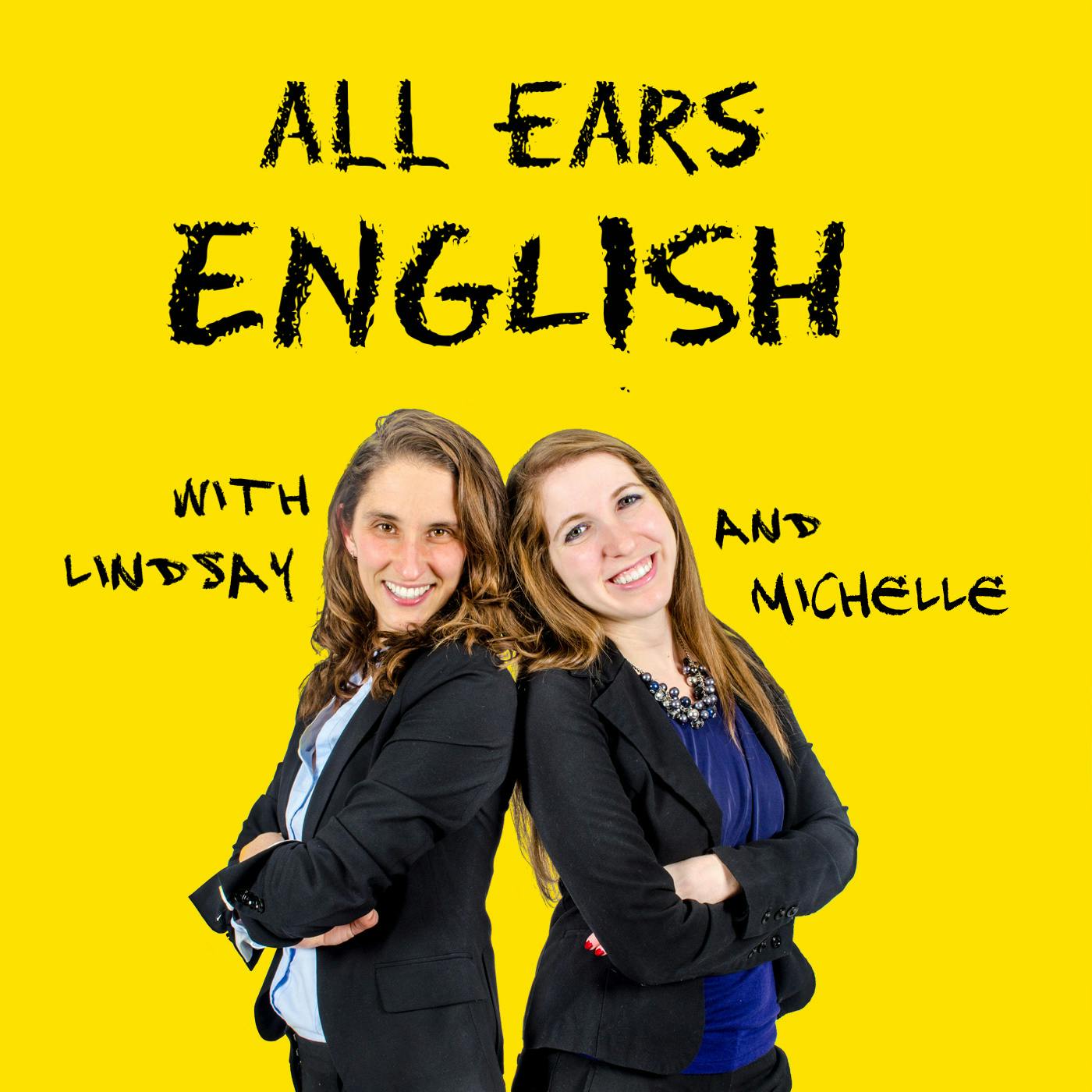
All Ears English Podcast
AEE 2336: What Excellent English You Have!
00:18:53
Learn a new and creative way to make a statement in English
Loading summary
Transcript120 lines
- [00:00]
A
This is an All Ears English podcast. Episode 2336. What excellent English you have.
- [00:09]
B
Welcome to the All Ears English podcast, downloaded more than 200 million times. Are you feeling stuck with your English? We'll show you how to become fearless and fluent by focusing on connection, not perfection, with your American hosts, Lindsay McMahon, the English adventurer, and Michelle Kaplan, the New York radio girl, coming to you from Colorado and New York City, usa. And to get your transcripts delivered by email every week, go to allearsenglish.com subscribe sometimes when you want to pay someone a compliment, it's a good idea to mix up the way you say it. Today, learn one construction in English that can be used in anything from fairy tales to complimenting someone on their home. Would you like to learn natural English for real work situations in 60 days? Even better. Would you like to do it without memorizing textbook phrases, struggling through generic language apps, or sitting in traditional classrooms? If so, then you can save up to $100 off our business English course, which when you join before January 12th at midnight, plus you get two free bonuses included. This week only, go to allearsenglish.com business before this offer expires January 12th at midnight, go to allearsenglish.comb s. Hey, Michelle, how are you doing today?
- [01:57]
A
Hi, Lindsay. I'm good. Lindsay, what beautiful hair you have.
- [02:01]
B
Oh, thank you.
- [02:02]
A
You're welcome. Is it, Is it a lot to take care of? I know we've talked about this before, but I just can't. I just can't get over what beautiful hair you have.
- [02:10]
B
Wow. What a statement. Oh, my gosh. Well, it's not too bad. It's not too bad. A very low maintenance little leave in conditioner and that's it. Yeah.
- [02:19]
A
Okay. Well, that's very good. So we're gonna have a lot of fun in this episode. Going to use a construction that came up naturally in a recent episode that we did. Guys, wait until the end of this episode because we will tell you which one inspired us. But we were, we were talking about this and it's one of those came up naturally on conversation and we decided to do a whole episode on it. So this is gonna be fun.
- [02:45]
B
Yeah, it's gonna be great. Guys, hit the follow button right now on All Ears English to make sure you get every single episode of the show. So, yes, we'll let you know what that is at the end. But let' get into it. Michelle, what did you say to me at the top? What did you say?
- [03:01]
A
I said, what beautiful hair you have.
- [03:05]
B
Yes, that Feels like a very, I don't know, unique construction. A different way. Not an everyday way of saying things. Don't you think?
- [03:13]
A
Right. Oh, yeah. It. It is a little bit unique. And I won't tell you the episode yet, but it was inspired by what we had said was what professional seating arrangements. So it's. It's what? Something, something. And we came up with. You have as well, because it reminded us of Little Red Riding Hood, Remember?
- [03:34]
B
That's why it feels kind of artsy or theatrical when you say that. Right.
- [03:38]
A
Yeah.
- [03:39]
B
What did they. What was said in. And was it with. Was it the wolf that said this about the girl or what was it?
- [03:45]
A
No, I think it's the girl because, I mean, Little Red Riding Hood, the girl. Because I think she said, what. What. What big eyes you have, what sharp teeth you have.
- [03:57]
B
Right. Yes.
- [03:59]
A
Right. So I think she's just. Because isn't the wolf dressed up as the grandmother or something?
- [04:03]
B
It was so long ago that I read.
- [04:05]
A
I know.
- [04:07]
B
They know, but probably that's what it was. Yeah.
- [04:09]
A
Yeah. So. But that's a very popular construction in that story, in that fairy tale, if it's a fairy tale considered. Well, whatever it is. Yeah, it's very popular. So we wanted to devote a whole episode to what, something, something, something. So it could be what, something, something, something you have, or just what? Something, something. Sounds so funny when I'm saying it. What, something, something.
- [04:32]
B
Right. So we'll give a lot of examples to make sure we're super clear. But what does this do? I mean, go back to Red Riding Hood, what was the scenario? Or go back to when we started the episode. I mean, what are we trying to emphasize here?
- [04:45]
A
Right. So when I said what beautiful hair you have, what I'm basically is saying, you have beautiful hair.
- [04:51]
B
Yeah. Right.
- [04:53]
A
And when I said what professional seating arrangements in that other episode, it was saying, these are really professional seating arrangements. Yes. Or with Little Red Riding Hood, she's saying, you have big eyes. Right. So really, that's what it means. So it's just a different structure to express yourself and. But, okay, so now what does it do? Why would we even use this?
- [05:18]
B
Yeah, I mean, I think it's more emphatic than just saying, you have great hair. Right. You have beautiful hair. It's more. Well, it's just if you want to say something a little bit differently one day.
- [05:28]
A
Right.
- [05:29]
B
Sometimes we just want to say something in a different way, and this gives us an option, you know?
- [05:34]
A
Yeah. Sometimes it's as simple as that. We just want lots of tools. Yeah, tools. Different ways that we can express ourselves. So really? Yeah, I. I like it. We don't need to make it too complicated.
- [05:47]
B
Exactly. It's really not that complicated.
- [05:48]
A
Right, Exactly.
- [05:50]
B
Just.
- [05:50]
A
It's a little expressive. It's kind of interesting sounding, something to use for fun. So let's give a few examples here. So this, one of the things this reminds me of is talking to a child. Right. So if you could say, like, what a good job you did, listening to directions.
- [06:08]
B
Yes.
- [06:09]
A
Right.
- [06:09]
B
And that would be common when you're talking to kids because maybe you're being a little bit more emphatic, right. A little more animated maybe.
- [06:16]
A
Yes, yes. Or what's another thing you could say?
- [06:20]
B
So maybe you go to a restaurant with a friend and you say, wow, what delicious pasta. Pasta. You have to try this. And of course you could also say, wow, this pasta is delicious. You have to try this. It would mean exactly the same thing, Michelle. Right?
- [06:35]
A
Yeah, exactly, same thing. Or let's say you go to somebody's house and you're there for the first time. You could say, wow, what a beautiful kitchen. You could also say, what a beautiful kitchen you have. But you don't, you don't need the you have. Exactly.
- [06:50]
B
Because we know that the kitchen belongs to that person. Right. So it's self explanatory. It's just a different way. Sometimes if, if you feel like changing the way you structure your sentences, you want to engage with the person in a way that you're not boring yourself because you're always using the same constructions. This gives you that option, right?
- [07:07]
A
Yeah. And I just want to point out because. Yeah. That Lindsay, that's a very good point with the you have. Because if I just said. It would be weird if, if I just said to you, lindsay, wow, what beautiful hair.
- [07:18]
B
Yes, right, right.
- [07:20]
A
Because you probably know I'm talking about your hair.
- [07:24]
B
But yeah.
- [07:25]
A
I don't know, it just sounds a little strange if I'm talking to you and I just say, what beautiful hair.
- [07:31]
B
Yeah. Sometimes the you have is required and sometimes it's not. It just depends on the situation. Although, with what a beautiful kitchen. That works too, without saying you have. And we know that that person owns that kitchen. Right.
- [07:44]
A
So it's so a little interesting. You gotta play with it a little.
- [07:48]
B
For sure. It's a new year and if you're in charge of hiring and you're faced with an open position, you need to hire the right person fast. As a business owner myself, I've learned that competing for great talent is no joke. You need the right tools when it comes to hiring. Indeed is all you need. Stop struggling to get your job post seen on other job sites. Indeed Sponsored Jobs helps you stand out and hire fast. With Sponsored Jobs, your post jumps to the top of the page for your relevant candidates so you can reach the people you want faster and it makes a huge difference. According to Indeed data, Sponsored Jobs posted directly on indeed have 45% more applications than non sponsored Jobs. I love that Indeed makes hiring fast because you're able to target your search to specific geographic locations. Just how fast is Indeed in the minute I've been talking to you. 23 hires were made on Indeed according to Indeed data worldwide. There's no need to wait any longer. Speed up your hiring right now with Indeed and listeners of this show will get a $75 sponsored job credit to get your jobs more visibility@ Indeed.com AEE just go to Indeed.com AEE right now and support our show by saying you heard about Indeed on this podcast. Indeed.com AEE terms and conditions apply. Hiring Indeed is all you need. Okay, Michelle, we are back. So do you say this yourself sometimes, Michelle, what are the scenarios that you hear yourself using this?
- [09:34]
A
Yeah, I think I do say it because I think in. In probably in the context I gave because I thought of the examples. I'm sure I say it to my kids. Like, what a beautiful picture. Right? If they come home with artwork and what a beautiful picture or something like that. Or yeah, going if I'm meeting. Yeah, I think these contexts are actually probably how I would say it. Maybe to describe food, to describe something I enjoy or even something I don't enjoy. Like what a what? Oh, what about something like this, Lindsay? What a ridiculous thing to say.
- [10:12]
B
Yeah, yeah. That follows the same pattern and 100%. So it could be used in a kind of an interaction. Right. Kind of a fight too. So it's not always just great things.
- [10:22]
A
Right.
- [10:22]
B
That we're highlighting. We can be creative with how we use this for sure.
- [10:26]
A
Right, Right, right, right. What about you, Lindsay? Would you say that you use it? I mean, it is pretty versatile.
- [10:31]
B
Yeah. And what I said, true. It's. It's when I just don't want. Sometimes when I use the same constructions over and over, I get bored hearing myself talk. I want to hear something different coming out of my mouth and engage with someone in a slightly different way, if that makes any sense. I think our listeners will resonate with that in their own language. If we're always saying, oh, your kitchen's so great. Oh, your hair is so great. It's kind of boring, right?
- [10:55]
A
Yeah. Oh, I love your hair.
- [10:57]
B
Oh, I love.
- [10:58]
A
Yeah, I love your hair.
- [10:58]
B
Right.
- [10:59]
A
This is great.
- [10:59]
B
I. Yeah, I love your kitchen. No, boring. Right. So something new, something different is the reason I use it, to be honest. Yeah.
- [11:07]
A
Yeah. Now, guys, whenever you want to say one of those, just imagine Lindsay popping out of the back going, no, boring. No, just kidding. Those are all necessary, obviously. It's just about. Guys, you are at this level where you really are able to mix things up. So, yes, we should do it 100%.
- [11:25]
B
We should. And if you're taking the IELTS exam, for example, you'll want to. You'll need to mix it up. You need that range of vocabulary. So this works in all aspects of life. What about in our business lives, in our professional lives? Michelle?
- [11:40]
A
Yeah, I think it can be used too. So, I mean, let's say you're looking over something with a co worker. Like what you could say, oh, what a. I'm trying to think of an example here.
- [11:55]
B
What a great presentation. You just.
- [11:57]
A
Yeah, what a great presentation. What great numbers we had this quarter. Yeah, something like that.
- [12:04]
B
Yeah. What an important observation. Let's say that co worker looked at the numbers and she realized something important. Oh, what a. What an important point. So it's. So. It's so diverse and versatile.
- [12:16]
A
Yeah, definitely. And you do want to use a certain, I mean, you, you don't always have to make it sound like a cartoon, like.
- [12:22]
B
Right.
- [12:22]
A
What. Amazing. Whatever. But yeah, you do have to show somewhat in your tone of voice, something a little different. Right. Not just you do. What, what great hair you have.
- [12:33]
B
Yeah. You should never speak like that anyways. Right. No matter what you're saying, we want to put life into our words for that connection that we want. Yeah.
- [12:41]
A
Yeah.
- [12:41]
B
Love it.
- [12:42]
A
And this also reminds me of when people say how. And we can do this on a. On a whole other episode. We can do a whole episode. How blank. Right. So sometimes you might hear somebody say, how sweet, how nice.
- [12:54]
B
Yes, Very, very similar. Right?
- [12:56]
A
Yeah. So we maybe guys, again hit follow. Maybe we'll do a whole episode about that so we can really dig into it. But yeah, this, I mean, to me, this is really good for connection. It's a little unique sounding and it shows you care about what you're saying. You're not just being. Saying the same old thing. You're putting a little extra thought, putting.
- [13:17]
B
A little bit of extra kind of spotlight on the person that you're the thing that you're highlighting, too. Do you know what I mean? You're kind of giving them a little bit more of a front. I don't know, a stage of like, oh, what a beautiful backsplash. Let's. Let's do a role play here, and let's take a look at how it looks. It looks like we are friends and you are. I am showing you around my new apartment. So you're looking at my home, which is a common scenario where you might hear this usage. Okay. Exactly.
- [13:44]
A
Exactly. All right. Thanks for showing me around.
- [13:47]
B
Oh, of course. So here's the kitchen.
- [13:50]
A
Wow. What a beautiful back. Sean. Splash.
- [13:52]
B
Oh, thank you. Oh, no. One tile fell off. What a mess.
- [13:57]
A
Oh, I think maintenance will fix that. But really, what big windows. This place has amazing natural light.
- [14:04]
B
Thanks. I love that, too. Yeah, no, this is really good. And the reason this. Especially in this scenario, actually, it kind of sounds like maybe this is a rental, but I was originally thinking this was a home that someone designed.
- [14:16]
A
I know. I kind of. I kind of made it a little bit.
- [14:19]
B
Well, maybe it's. You have maintenance and it's your own home. Who knows, right? Who knows? Yeah.
- [14:24]
A
Yeah, exactly.
- [14:25]
B
Yeah. Well, but someone. If it is a home that someone designed themselves and had built, they spent a lot of time on the details, Right. The backsplash, the windows, the layout, open floor, wood floor. It's a big deal. So that would be a great scenario where you would open this up and say, what a beautiful xyz. It just gives them a little more recognition, I feel. Yeah.
- [14:48]
A
And, Lindsay, what is a backsplash?
- [14:49]
B
Yeah, good question. Let's make sure we know that's going.
- [14:52]
A
To be one of our keywords for today in the app, for sure.
- [14:54]
B
This is kind of what I first, like, became aware of, like searching for homes and things. I learned this, too. I didn't know before. So a backsplash is just when you're in your kitchen and you're in front of the sink. It's the thing that's behind the sink. Kind of just the. The tile. Usually it's some form of tile. Some kind of artsy pattern.
- [15:11]
A
Yeah.
- [15:12]
B
That protects the wall from all the splash. The backsplash.
- [15:15]
A
Yeah. And. Oh, that's funny. I didn't even think of it like that, but yeah. And it doesn't just have to be behind the sink. Yeah, it can be. You know, it usually. Sometimes it extends then the full wall, like. Like a good part of the kitchen. And it's just. Yeah. Some sort of tile. Some sort of pretty thing. Yeah, exactly.
- [15:32]
B
Let's Go through what we said. Exactly. Because again, I think this is a good context for this kind of usage. So you said, of course. So here's the kitchen. Here's the kitchen.
- [15:41]
A
And then you got intonation on that.
- [15:43]
B
It's a good intonation. Yeah, it's very typical.
- [15:45]
A
Right. And said, what a beautiful backsplash. So I could have just said, oh, that backsplash is beautiful. And that would have been fine, too. But this is just different.
- [15:56]
B
Exactly. It's almost like you. Like your. Your jaws dropping kind of like.
- [16:00]
A
Right. Wow.
- [16:01]
B
What a beautiful. That's kind of the vibe you're getting with this phrase. What a something.
- [16:06]
A
And then.
- [16:07]
B
And then you say. I say, thank you. Oh, no. One tile fell off. What a mess. And again, it's not always for positive things.
- [16:15]
A
Right.
- [16:15]
B
It often is. But in this scenario, I'm just remarking, this is a total mess. I'm embarrassed that a tile fell off. That's probably not good. It's not good. And then craftsmanship here.
- [16:25]
A
Then for some reason I said, maintenance will fix it. I don't know, but who knows? Okay. And then I said, but really, what big windows this place has? So. Yeah. And then always amazing natural light. And there's a lot of interesting stuff going on there. Actually, the. But really, that's kind of interesting how we switched it there. We could do an episode on that. There's so much ye.
- [16:47]
B
We. We should. Michelle, we should do another episode on that. And I'm just imagining you're looking towards the windows, and again, like, your jaw is kind of dropping and you're making a gesture towards the windows. This is why this construction makes sense. It makes it a little bigger. Just a little bigger, right?
- [17:02]
A
It does. It does. Yeah. So, yeah, this has been great. And guys, to listen to the episode that inspired this, that was episode 2331, a conversation starter. How are kids seen around the world? That was a really interesting one, too, to do. Lindsay.
- [17:19]
B
That was a really good one. You know, we. We use the metaphor. I'm not sure if it was originally going to be a metaphor, but it became a metaphor of the kids table. You know, our children in your culture seen as little adults.
- [17:30]
A
Right.
- [17:30]
B
Or children.
- [17:31]
A
Right.
- [17:31]
B
So that's a really interesting and important question. So go over, listen to that episode and then vote in our poll. I believe that poll is still open, Michelle. So go check it out. Where should we leave our listeners today? What's the overall idea from today's episode?
- [17:46]
A
To me, the overall idea is keep mixing things up. Try. Try different things. We can dig into what the meaning is, and we can really try and analyze it as much as possible. And we gave you different contexts and ways to use it, but at the end of the day, a lot of this is just about variety.
- [18:03]
B
Yeah.
- [18:03]
A
And, you know, not sounding boring, not always saying the same old thing. And just so. So really try it. Sprinkle it in a little bit, because it's a very harmless construction. I don't think you're gonna. Yeah, it's. It's not something that, you know, Sometimes we have episodes where we say, oh, try this one. You know, and it's a little bit more tentative how to use it. And it could imply this or that, but this one is pretty harmless.
- [18:30]
B
Yeah, you really can't do any damage here. You can't go wrong, everyone. So go and throw it into your speech sometime in the next week. That is our challenge for you. All right, and don't forget to hit the follow button on All Ears English. All right, Michelle, well, I'll see you in the next one. Okay.
- [18:45]
A
All right. Bye, Lindsay.
- [18:46]
B
Take care. Bye.
- [18:47]
A
Bye.
- [18:52]
B
Thanks for listening to All Ears English. Would you like to know your English level? Take our two minute quiz, go to allearsenglish.com forward/fluency score. And if you believe in connection, not perfection, then hit subscribe now to make sure you don't miss anything. See you next time.