← All Ears English Podcast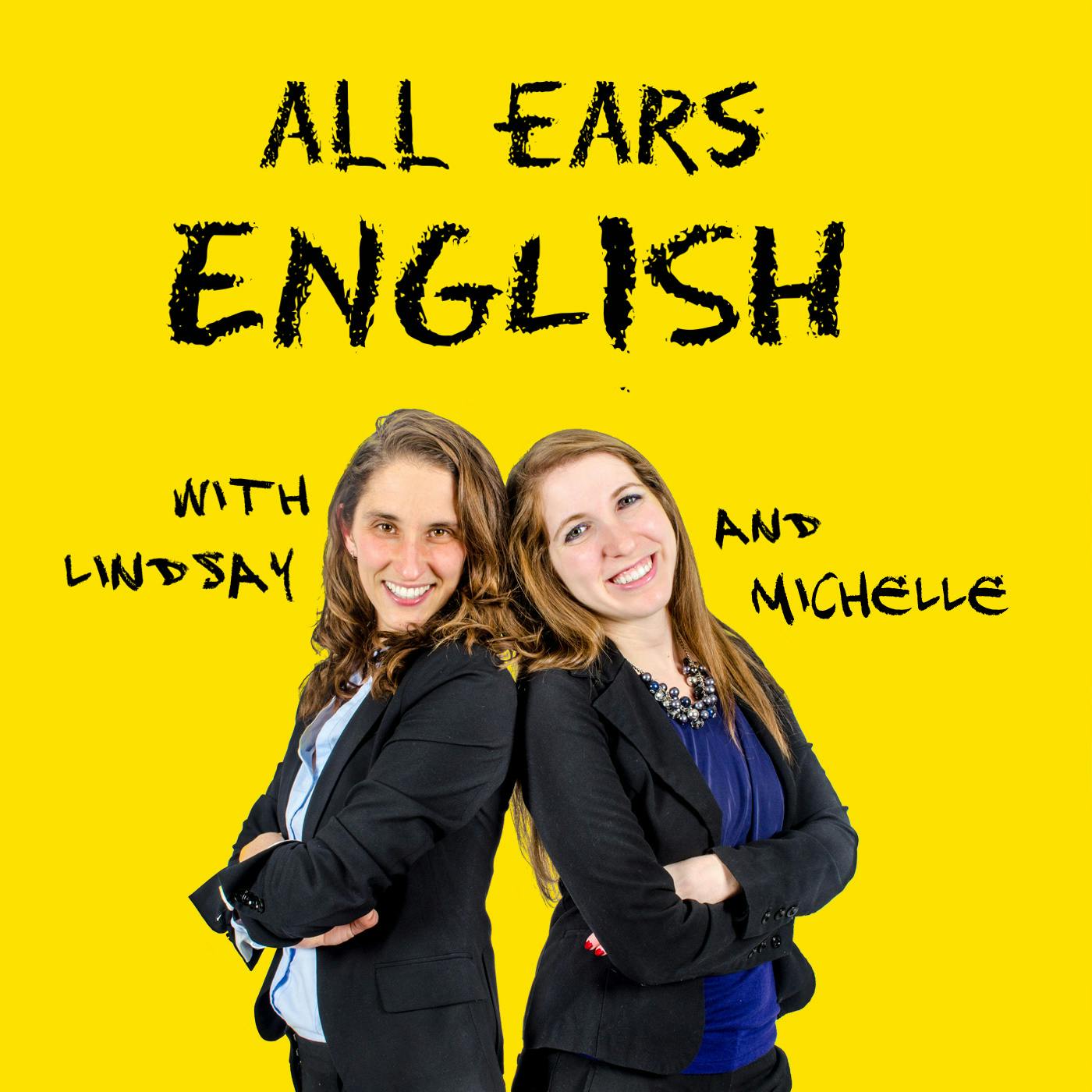
All Ears English Podcast
AEE 2543: Go Out of Your Way for these English Direction Phrases
00:17:50
Learn phrases to give directions in English
Loading summary
Transcript89 lines
- [00:00]
A
This is an All Ears English podcast. Episode 2543 go out of your way for these English direction phrases. Welcome to the All Ears English podcast, downloaded more than 200 million times. Are you feeling stuck with your English? We'll show you how to become fearless and fluent by focusing on connection, not perfection, with your American hosts, Lindsey McMahon, the English adventurer, and Michelle Kaplan, the New York radio girl, coming to you from Colorado and New York City, usa. To get real time transcripts right on your phone and create your personalized vocabulary list, try the Allears English app for iOS and Android. Start your 7 day free trial at allearsenglish.com forward slapp.
- [01:01]
B
Is the opposite of on the way, off the way today. Find out how to make sure you don't assume certain phrases are opposites and get key skills for giving directions Today.
- [01:17]
A
New Year, New you. But what about your business English? Are your emails too formal? Are you still saying could you kindly when native speakers just say can you? Do you hesitate in conversations because you're not sure what actually sounds natural? Do you feel awkward jumping into casual work conversations or even small talk? If you said yes to any of these, your English might be holding you back at work this new year, upgrade your confidence with the All Ears English Business English course. Sound natural, sound confident and see the results in your career. You can save up to $100 off the course, but this offer expires January 11th at midnight. Go to allearsenglish.com business to join. Now that's allearsenglish.com B U S I N E S S.
- [02:12]
B
Hey Lindsay, how are you?
- [02:14]
A
I'm feeling great today, Michelle. How's everything going for you? How are you?
- [02:17]
B
Everything? Yeah, everything's good. Lindsay. Are there any coffee places that you can go to on the way to the airport closest to you? I know we've been talking about airports recently.
- [02:28]
A
Way to the airport closest to me. Typically when I go to the airport, I'll just grab a coffee at the airport, you know, even though it's not the best. But you know, there are coffee shops on the way to the park, which I love to stop at, you know.
- [02:40]
B
Okay, yeah, that you can walk to.
- [02:42]
A
Yeah, yeah, for sure, for sure. Yeah, there's a number of them. There was a really cute one that just closed that was in the park. In the park, but it just closed, unfortunately. But what about you, Michelle? You have a lot of things on your way to other things, a lot of com in the way.
- [02:58]
B
Oh, but I just. That's one thing about like, you know, being in the Suburbs now is, you know, you really have to think about where everything. I mean, actually, this is really anywhere, not just in the suburbs. You know, sometimes I'll think, oh, I want a coffee on the way to something else. And then I realize, wait, there's not a. There's not a good one around here. And there must be a Starbucks somewhere. There must be, you know. You know that it's. It's somewhere. You just don't know where. So. Yeah. Yeah. But today we're going to be talking about an interesting expression and how the opposite of this expression doesn't work out. We've talked about opposites before, and sometimes they, they, they. You would think they work out, but they don't. So we're going to be talking about expression today.
- [03:39]
A
Yep. Sometimes they just don't work out. So we can't assume that we just can grab the opposite and that it will mean the opposite. So tell us where this came from, Michelle.
- [03:49]
B
Yeah. So my friends and I were on a little road trip, very little. Like. Like an hour. And my. My friend's son said to his dad, he was asking about. Because we were going to stop at a restaurant on the way. And so my friend's son said to him, is it on the way or is it off the way? Yeah, I know. And I thought that. And I'm like, oh, yeah, that's interesting. And I said, thank you. You just gave me an ide. They all know about the podcast, and they get very excited. And I. I said, you know that you just gave me a really good idea for an episode, so I thought we could talk about this today.
- [04:27]
A
Nice. I love that. I love when our episode ideas come from real life experience, because our listeners can know that this truly is real English. Right. And it. Also, listening to children speak is smart, too, because they make certain assumptions about grammar that maybe aren't true. Right. Because they're just learning, too. So really good stuff, guys. Hit the follow button if you love our style. Our style is connection, not perfection. That means we're going to find the connection moment in everything we're teaching you, and we're going to show you how to connect, how to build that relationship and what matters and what doesn't. So we don't get stuck in this perfectionism that we've maybe been working through when it comes to language learning our whole lives. We want a new perspective. Yeah. So hit follow, guys.
- [05:07]
B
Yes, go ahead and do that. So, all right, so what does it mean when you say, something is on the way, Lindsay?
- [05:14]
A
Yeah. So it means it is I, I'm going to encounter that place on. I'm trying not to use the same phrasing as I, As I go to the other place. So you asked about a coffee shop on the way to the airport. I'm going to run into the coffee shop as I go to the airport, if that makes sense.
- [05:33]
B
Right. So, yeah, one destination is in the same direction as the other. So you're.
- [05:38]
A
That's a much better way to. Much more concise.
- [05:41]
B
Not just in the same direction. It's like you're trying to. Okay, let's say you have point A and point B is your destination. Oh, no, no. Let's say you're trying to get from A to C. But then if something point B is in the middle or, you know, just in the same direction, then that's on the way.
- [05:58]
A
Yeah. And this is my big gripe right now with any kind of like Google Maps, because what I want to be able to do is I want to tell by voice in the car. I want to say, hey, I want to go. I'm trying to get to la. I'm in Las Vegas, but I want to stop for a, I don't know, turkey sandwich on the way to Las Vegas to be able to do that. I don't know if I can even do that yet. With technology, we should be able to do that. Right?
- [06:22]
B
Yeah, I know that it. There is where you could say, find something near me, but for some reason that never works on my phone. Right. Yeah, I don't know. I, I also have trouble with that. I'm never the one to, you know, if we're, if we're going on a long car ride, I'm never the one to be. Have to find the thing because I'm like, I don't know, I can't figure it out.
- [06:45]
A
Oh, geez, what are we gonna do? So let's give our listeners some here. Yeah.
- [06:50]
B
Okay, so here's an example. I can grab a soda before I get to you. The store is on the way to your house.
- [06:58]
A
Or of course I can drop you off. It's no problem. It's on the way. So I'm emphasizing that this would not be inconvenient to me to give you a ride.
- [07:06]
B
Right. Because you. The, the place, your destination is there. There's no. You're not going to have to drive extra to drop them off. You were going that way anyway.
- [07:17]
A
You got it. Yeah. So what is the big question here of the episode? What is the big.
- [07:21]
B
Yeah, so is the opposite of on the Way off the way. Because off is the opposite of on.
- [07:26]
A
Seems like it should be, Michelle. But no, the answer is no, it's not. It's not what you would think. It's not what Ethan thought.
- [07:32]
B
Right.
- [07:33]
A
He's still learning. I love that.
- [07:34]
B
Yep. Not what Ethan thought. Yep. So the opposite of on the way actually is out of the way. Yeah. Doesn't really seem like what you would think, but yeah, that's. That's the opposite. So out of the way means something is inconvenient to go to because the direction that you're headed in, it, it. It's not in a straight line. You would have to go somewhere else and then head back to where you were going. So it's not close by. So it could also just be. It's not. It's not nearby to you. It's out of the way, Right?
- [08:08]
A
Yeah. So, for example, I desperately need a coffee, but the shop is completely out of the way and I'd be too late.
- [08:15]
B
Or I don't want you to go out of the way. Only pick me up if I'm on the way. Yeah.
- [08:21]
A
We also say I don't want you to go out of your way.
- [08:26]
B
Yep.
- [08:26]
A
Don't go out of it. Which is interesting. Just a little bonus phrase for today that has a more broad meaning, metaphorical meaning. Don't go out of your way. It's not just physical, right? It's not just. What is it? What is come.
- [08:41]
B
If you say don't go out of your way, it's like, don't. Don't make trouble for yourself. Don't think. Make things inconvenient for you. And then I, I was also thinking. Yeah, it's interesting because if I say, oh, that's out of the way, I could just mean something's far away or just not inconvenient to get to. But if I say, I wouldn't say, oh, yeah, that restaurant is on the way. It's only about talking to. About it in relation to something else. Does that make sense?
- [09:07]
A
Yeah. Well, it has to be in relation to something else, right? Yeah, exactly. Exactly. These are referen points, right?
- [09:13]
B
Yes.
- [09:15]
A
Why do we think this is confusing, Michelle?
- [09:17]
B
Yeah, because these opposite words, I mean, we, you know, we want to get. Our listeners want to be able to make guesses about what expressions might mean. But it does. It's not really. Unfortunately, this one doesn't really work.
- [09:33]
A
It doesn't work. Yeah. Does anyone say the phrase off the way? Michelle, do you know anyone? No.
- [09:37]
B
No, there's no off the way. Right. No, yeah, but also there's in the way. So. Geez. Yeah, we could. Do we. I mean. Well, actually we have some more examples of this here that will help, but we might. Who knows, maybe we'll have to do a follow up because there really is a lot here. So if you, if someone is in the way, Right. They are blocking you basically. So you're in the way. Please move. Get out of the way.
- [10:05]
A
Right. So again, this is about directions and reference points. You're going in a certain direction and this person is maybe standing in the road. Right? Yes. Yeah, yeah, get out of the way.
- [10:15]
B
Right.
- [10:16]
A
Love it. Okay, so there are other things we could say. Let's just go. So again, this is invoking a little bit of grammar, a little bit of vocabulary, and we can do a follow up if any listeners have questions after today. Guys, Write into support allersenglish.com with your question. Let's go through these a little bit more, Michelle, on the way. What else do we need to know here?
- [10:37]
B
Yeah, so we're gonna talk about some other ways that you could say this. So convenient. So it's not necessarily exact, but yeah, you could say it's right by my office. It's so convenient. So again, I'm just realizing this in real time while we're planning it. On the way really does have to be in relation to somewhere else. It's on the way to somewhere else that I'm heading.
- [11:05]
A
Right.
- [11:05]
B
You're not just, you're not going to use it as a complete synonym to convenient because I wouldn't say.
- [11:11]
A
Right.
- [11:11]
B
Like, oh yeah, I have a coffee shop near my house on the. It's on the way. Like it has to be on the way to somewhere. Right?
- [11:19]
A
Yes. I love that. I love that. Or the word nearby. Now this one's tricky. I actually think we should do a follow up episode on the difference between near and nearby because you got auto corrected in the notes here, Michelle. There's. There is a grammatical difference that our listeners need to be aware of.
- [11:35]
B
I did. What did it say? What did I have?
- [11:38]
A
Well, maybe we'll bring this up in a different episode, but the sample sentence here is there's a supermarket nearby. Right. It means it's close to me, right? Yeah, yeah, yeah. So super interesting.
- [11:49]
B
Near and nearby. Yeah, like it's like the next song. Near, far.
- [11:57]
A
What else?
- [11:58]
B
All right, so let's talk about out of the way. So another way you could say out of the way is inconvenient. Right. These directions show this place is too inconvenient. To get to. Right. And again, out of the way isn't like, you don't have to use it in relation to something else. It could just mean inconvenient. Ah, that's out of the way. Right, Right.
- [12:18]
A
Right. Good. Or remote. We use the word remote. That apartment is too remote. It's not near any trains. So it's kind of in an irrelevant location. Right. Not centralized.
- [12:33]
B
Right. And then let's talk about how on the way can also mean you're coming to a place like, you might hear, I'm on the way. Right.
- [12:41]
A
Yeah. You could say en route. I'll be there in 10. I'm already en route. Meaning you're. Yeah, you're on the way. Right. And you have an eta. Your ETA is ten minutes.
- [12:52]
B
Yep, exactly. Or you could say that you're heading somewhere. So you could say, I'm heading over right now. Love it.
- [12:59]
A
Oh, my gosh. So many things we could say.
- [13:01]
B
Yeah, there's really a lot we could do. I. There's so much that we could do with this. So, guys, hit follow. We will be following up on this episode. There's much more to say.
- [13:10]
A
Yeah, we'll come back to this for sure. Directions matter. It matters because this is our orientation in space. Right In. In a place. Where are we going? What's on the way? We need this to communicate general, everyday things. But let's do a role play for now. Michelle, what's our scenario?
- [13:26]
B
All right, so here I am, lost. I am driving to your house, and I have to stop to call you, to have you help me out, help explain to me where your house is.
- [13:37]
A
Okay, here we go. I'm so sorry, Michelle. I know I'm super out of the way.
- [13:43]
B
Okay. It's totally fine, Lindsay. It's actually on the way to my physical therapist, so. Not too bad.
- [13:49]
A
Okay. Most people say it's a bit remote.
- [13:53]
B
And not too bad. It's not really nearby, but it's not too far.
- [13:57]
A
So at the corner, turn left, not right.
- [14:00]
B
Oh, okay, I'm en route.
- [14:03]
A
Oh, I think something got messed up with that role play there. I got a little.
- [14:06]
B
No, you didn't. You were. You were not asking me a question. You were saying, so at the corner, turn left, not right. Got it, got it, got it.
- [14:14]
A
So opening up the conversation here, I just was a little confused. So I'm saying my home is super out of the way. Right. So I know I'm super out of meaning I am. My location is super out the way.
- [14:24]
B
Right, Exactly. Exactly. So, yeah, let's go through this?
- [14:31]
A
Yeah.
- [14:31]
B
You said, I know, I'm super out of the way, so inconvenient here.
- [14:36]
A
Inconvenient, exactly. And then you said, it's totally fine. It's actually on the way to my physical therapist, so that's not too bad. So that's good. Then what did I say?
- [14:46]
B
You said, okay, most people say it's a bit remote, so. Yeah, isolated.
- [14:52]
A
Isolated, yeah. And then you said, oh, it's not too bad. It's not really nearby, but it's not too far, right?
- [15:00]
B
Yeah. And then you said, so at the corner, turn left, not right, so you're helping me out. And I said, oh, okay. And then I said, I'm en route, so I'm on the way.
- [15:09]
A
Nice. Nice. Yeah. And this is a very common conversation we might have with a friend. We're trying to make plans and you're trying to go to their house. I mean, super common, right, Michelle?
- [15:19]
B
Yeah. Yeah, exactly. Guys, if you like food, spicy food, definitely listen to episode 25, 29. This episode is spicy.
- [15:30]
A
Yes. I love it. And just the takeaway for today is how practical today's episode is. We'll come back to the near versus nearby in another episode. So hit the follow button so you don't miss that. All right.
- [15:43]
B
Excellent.
- [15:44]
A
All right.
- [15:44]
B
All right, Lindsay. Well, this is a fun one, guys. Again, these are really great. These are bad reference points. And also the other takeaways, don't assume that the opposite of one word and expression is going to mean what you think it is. So.
- [15:59]
A
Yeah, that. That's kind of the. That's. That's the point of the episode, right? I mean, we. It's okay to make mistakes. It's about connection. But anytime we can kind of gather more information about what the true opposite is, that just builds our fluency even more. All right.
- [16:12]
B
Exactly. All right, Lindsay, have a great day. Bye, guys.
- [16:17]
A
Bye. Thanks for listening. To all ears. English. Would you like to know your English level? Take our 2 minute quiz, go to allearsenglish.com fluencyscore and if you believe in connection, not perfection, then hit subscribe now to make sure you don't miss anything. See you next time.