← All-In with Chamath, Jason, Sacks & Friedberg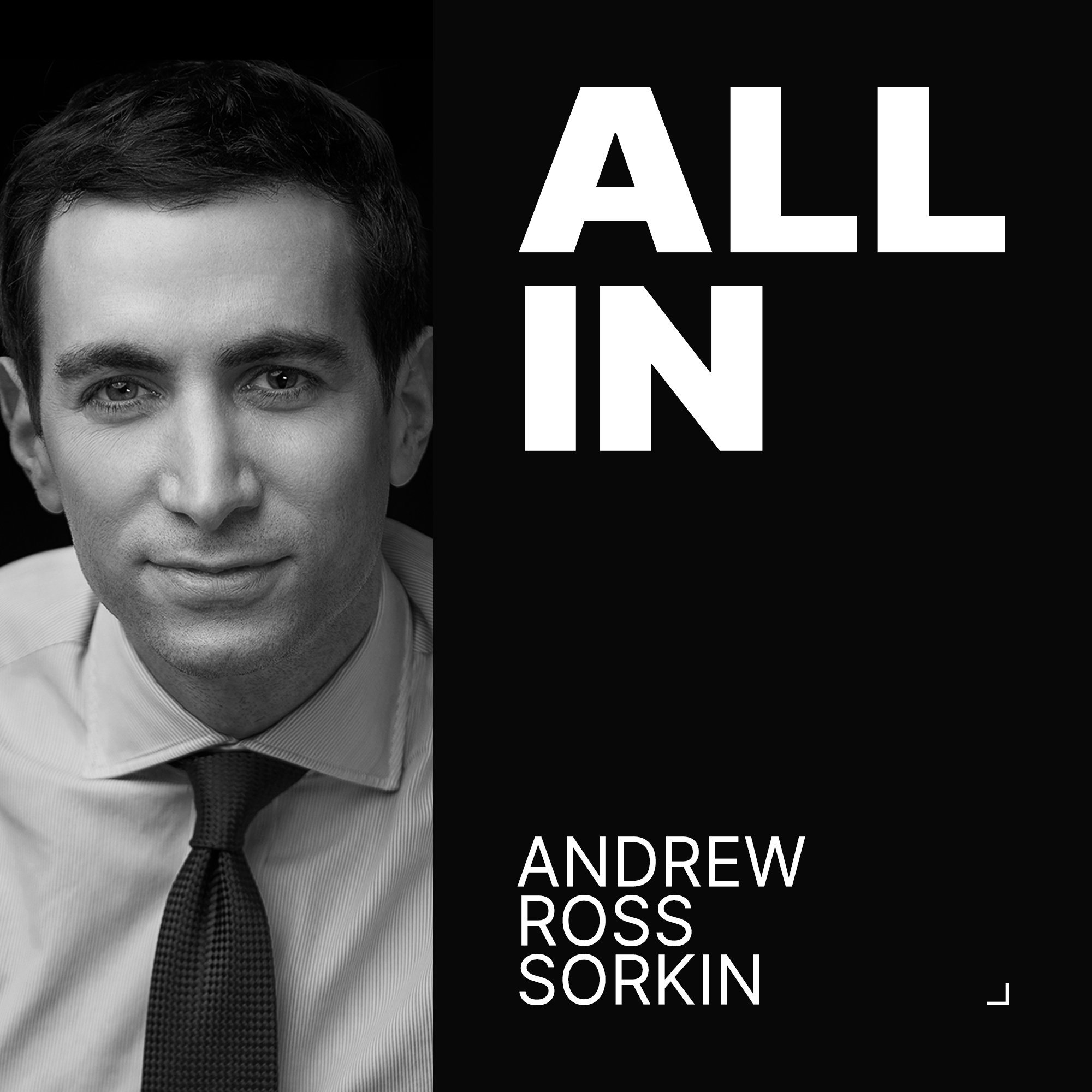
All-In with Chamath, Jason, Sacks & Friedberg
1929 vs 2025: Andrew Ross Sorkin on Crashes, Bubbles & Lessons Learned
00:50:49
(0:00) Chamath and Friedberg welcome Andrew Ross Sorkin to discuss his new book, "1929: Inside the Greatest Crash in Wall Street History--and How It Shattered a Nation" (0:38) Why he chose this time period (3:22) The setup: what led to the 1929 crash...
Loading summary
Transcript203 lines
- [00:00]
A
Hey, Sorkin, I just went through the comments. The one question keeps coming up over again. Why the are you writing this book? Jesus Christ. What a party pooper.
- [00:09]
B
What a party pooper. I don't know, man. I don't think. I think it's supposed to be. The book's supposed to be like a beach read.
- [00:15]
A
A beach read?
- [00:16]
B
Yes.
- [00:16]
C
Chamath, did you read it?
- [00:17]
A
My God, no. I saw the title. I was like, skip, Skip. All right, besties.
- [00:23]
C
I think that was another epic discussion.
- [00:26]
B
People love the interviews.
- [00:27]
A
I could hear him talk for hours.
- [00:29]
C
Absolutely.
- [00:30]
B
He crushed your questions.
- [00:31]
A
Admit it, we are giving people ground truth data to underwrite your own opinion.
- [00:35]
C
What'd you guys think? That was fun.
- [00:36]
A
That was great.
- [00:37]
B
I'm doing all in. Chamath, you're gonna love these characters. I kid you not. I kid you not. The people who are involved in this at that time, like the main character.
- [00:49]
A
I totally agree with you. I am a huge. To be honest, I've studied this period for a while actually. I think it's great that you wrote this book. I think it's incredibly fascinating.
- [00:57]
C
We're here with Andrew Ross Sorkin, Chamath and I with another all in interview. Riveting. Today we are gonna talk about Andrew's new book 19 and specifically cover why Andrew got into it, what the history teaches us. And are we looking at another 1929 or something different this day and age, as a lot of people may speculate. But Andrew, thanks for joining Chamath and I to talk about this.
- [01:22]
B
Thank you for having me and I love your background there.
- [01:27]
A
Thank you.
- [01:27]
B
A true image of what was actually happening in October of 1929, crazily enough.
- [01:33]
C
That's right. And it was colorized by some AI or something, I think. But yeah, great. How and why did you get into this era of 1929, the great stock market crash of 1929? Like you're a busy guy, you're on TV every day, we see you all over. You're at conferences. I saw you at a conference in Southern California this week. Then you're at another conference and you're back in New York. You're very busy. At what point did you say, hey, I want to sit down and write a book about this era?
- [02:00]
B
Okay, so here's what happened to me. So I'd written that book Too Big to fail about the 2008 financial crisis, right? And people used to always say to me, after that they'd get into these like very in depth conversations about 1929 or they'd want to know more about 1929. And most people know that something terrible happened in 1929. They know there was a crash in 1929. They oftentimes think it like is the Great Depression or leads to the Great Depression. But if you were to ever ask most people now chamath, and you are maybe in a different category and say, well, well, who were the people who actually were engaged in this? What were they saying to each other? Who was sleeping with who, who was trying to over who? What was actually happening here? And what were the incentives and what were the motivations that led to what clearly were some poor decisions? I couldn't find that. So I went on a vacation like 10 years ago with my wife, very nerdy. And I like downloaded all these books to my Kindle. And there's some great books, by the way, about this period, don't get me wrong. But they didn't have the sort of character driven story like I loved Den of Thieves. I loved Barbarians at the Gate. I loved stories about people.
- [03:07]
A
Fabulous books, fabulous books.
- [03:09]
C
What did your wife think when you ignored her the entire vacation you guys were on and were just reading books on your Kindle?
- [03:14]
B
I mean, I think she thought I was out of my mind, but no. So I read these books and I was like, okay, where's the story? Where are the people?
- [03:22]
A
Before you get to the people, can you give people a concise tick? Like I was going to ask you for a tick tock of the overarching economic issues before we get to the sort of the characters. Because I think. Yeah, because I think what to your point, which is an important one, people think it was like, okay, stocks went down, but the other things like the overproduction of the economy, tightening interest rates, the war debt, like all of this stuff was just commingled and nobody fully understands that. Can you maybe give folks a precise representation of the setup? The setup.
- [04:01]
B
So let's just go back even. Let's go back to 1919 because actually I think that's a critical year. So prior to 1919 in America, people did not really borrow money. It was like a moral sin to get credit. People didn't do it in 1919. General Motors says, you know what? We're going to start lending people money so that you can buy a car. And that was actually like a major inflection point in America because then Sears Roebuck clocks what's going on? And says, okay, we're going to do this too for appliances. And then a guy named Charlie Mitchell, who ran a bank called National City which becomes Citigroup says, you know what, we can do this for stocks. So we, you know, and all of a sudden brokerage houses are opening up on the corners of streets the way we see Starbucks today. It's like literally like that. And you could go into one of these places and you could put a buck down and they would literally loan you $10 off of your dollar. I mean, that's how insane things were. And at the time, there was no.
- [05:03]
A
Risk underwriting of any kind.
- [05:05]
B
Zero risk underwriting.
- [05:06]
A
Nobody understood what they were doing.
- [05:08]
B
By the way, there's no sec, there's, there's no regulations. Somebody who read this book early said, oh, in your research, did you get a chance to read any of the prospectuses for the companies? I was like, prospectuses, like if there was like a leaflet that they handed out on the street, you'd be lucky. So there's nothing. And it's just like a complete go go era. Forget about 1929. In 1928, the stock market went up 48%. So people are just. There's just sort of like this. It's a little bit of the Chuck Prince. When the music's playing, you're dancing and everybody's dancing and nobody's even thinking about the music stopping. Kind of like ever. Now, meanwhile, there's also these technological changes. I mean, huge generational technological changes. In the same way, I think we're probably talking about like AI today radio. So RCA was like the Nvidia of its time. Everybody wanted into rca. The stock ticker was radio because it was going to change the world. And the other big piece of this was also similar to today, this idea of democratizing finance. It was like, okay, the elites have had their way. They've made all the money. We're now going to let everybody in on the action. Now the difference between then and now though was there was also like crazy amounts of manipulation, insider trading. As I said, there were no rules. Like literally no rules. Nobody's going to jail for this stuff because there wasn't a rule against it.
- [06:36]
A
By the way, it wasn't just individuals that was investing and overextended with margin, but the banks would take depositors money and they were going along the stock.
- [06:44]
B
Market, the banks, the banks were doing it. By the way, the bank, not only the banks, regular old corporations.
- [06:50]
A
I mean, could you imagine, could you imagine if it turned out that like JP Morgan and Goldman was going long Nvidia with depositor funds? That's, that's the effective equivalent of what was happening Back then too, you had.
- [07:01]
B
Corporations taking their balance sheet and effectively then loaning it out so that people could go buy stocks. That was the other thing was happening. So there's this sort of like just the push towards investing and overproduction and all sorts of other things created this sort of frothy market. And you had a Fed. You mentioned the Fed, which is an interesting part of this. There was a Fed. It was new, started in 1913. They knew this was a mess. Like they kept saying to themselves, you read all the diaries and notes that I was in for the last eight years. They knew there was a problem, but they were scared out of their mind about doing what they probably should have done, which was raise interest rates, but they couldn't pull off like a Volcker kind of thing.
- [07:46]
A
Sorry, but can you double click into what you said about the fact that there was a social contagion around wealth creation, that people felt like the elites had had their way and now it was everybody else's turn. Just describe that, like what had caused that and what amplified that social containment.
- [08:02]
C
And who. And who was everyone else? Were these factory workers? Because we're kind of on the heels of a big industrial buildout. So like, was it. The folks were. Had savings for the first time? Like, where's this coming from?
- [08:13]
B
Well, so what's really happening is you have a lot of folks who are coming from the. From farms, frankly, and moving to the big cities for the first time. That's a huge part of what's happening. So most of the trading, I should say, is happening in the big cities. It's not happening, you know, out in small towns. It's happening in big cities for the most part. But, but that whole sort of scenario, once they're in the big city and they're seeing that there's sort of this wealthy group of people, talk about inequality, this wealthy group of people, and they want in on the action. And also, by the way, the people at the top, meaning the bankers and investors and entrepreneurs are like, we think there's this big opportunity to open this up for the little guy or the ordinary investor. We think this is like a huge opportunity. There's a guy named John Rascob who's sort of like the Elon Musk of his era. He actually ran General Motors, created the credit program there, then becomes hugely wealthy, then gets into politics, by the way, ends up building the Empire State Building. But he was trying to create almost like the first mutual fund because he thought that people should be able to get in on the Action. The way he did that was like, his whole conceit. And he talked about it pretty openly. There was a famous article called Everyone ought to be rich. That was his line. Everyone ought to be rich. And it also was a time where sort of the American dream shifted a little bit, I think, from sort of a Horatio Alger story a little bit to, like, a lottery. Can we get rich? Like, can. Like, the whole idea of capitalism is gonna give us this great opportunity. And I, you know, obviously, we're tapping that today.
- [09:50]
A
Do you think that radio played a role in that? Because it amplified these stories and made them go faster, and people would just, like, start to tell these tales and folks started to forget the Horatio Alger part. Like, I'm just still trying to understand. Like, you have. You have folks on the farms, right? They're getting educated. The industrial revolution is happening, so they're moving to the city. And the radio then is maybe what Instagram is like. Now you're seeing people with wealth. You're seeing this wealth that you don't have. You aspire to that.
- [10:19]
B
Yes.
- [10:19]
A
And then something comes in and fills the void. Is that kind of the mechanic?
- [10:24]
B
I think something fills the void, and all of a sudden you now have the opportunity because the bank or the brokerage houses are gonna lend you all this money. And it's not just radio being the communication device. It's really the media. So the other thing that was happening during this period, so Time magazine starts in 1923, Forbes, 1917. All of a sudden, Charlie Mitchell, the CEOs are now on the COVID of magazines the way Babe Ruth and Charles Lindbergh had been on the COVID So sort of the shift in how people even thought about business. None of these guys were famous before the 1920s, but they became famous, and everybody wanted to be them.
- [11:05]
C
This was what America was about, was this industrialization, right? And this was kind of like, hey, we're pioneering an entirely new world, and these are the leaders doing it, and these are the rock stars that are transforming this country. I mean, was that kind of a big part of what was going on at the time?
- [11:20]
B
Totally. And everybody wanted to be a rock star, by the way. It's the same way. Everybody wants to be you, David. Everybody wants to be Chamath, or they all want to be Elon. Like, I think there was a huge thing like, okay, and here's this opportunity, and they were being sold the opportunity and given the opportunity not just to invest, but again, I think that the margin piece of it was such a crucial, crucial Element.
- [11:42]
A
Do you think it's a coincidence, Andrew, that now you're publishing this book in 2025, but does it feel eerily similar to you? Way too similar, where you can almost map one to one, those boundary conditions then in some version of that today? Is that what you like?
- [12:00]
B
A little bit. But I would say that wasn't my intent when I got involved in this. I just wanted to retell the story and figure out who these guys were. I ended up, after that crazy vacation with my wife, I ended up going to a Baker Library. I happened to be giving a speech at Harvard, and I walk in there and I had some time and I asked the librarian, I said, can I see these boxes? This guy, Thomas Lamont, who ran JP Morgan at the time, and I said, can I look inside these boxes? And inside the boxes, his secretary is keeping transcripts of his phone calls with Hoover and Roosevelt. Like, by the way, same way, like, everybody's probably talking to Trump or Trump today. And I'm like, oh, my God, I haven't seen it yet. And you're seeing the conversation. And I thought, okay, if you could use those transcripts in an actual story and then you could figure out, I didn't know if other transcripts existed for all the other characters. Wow, you could recreate this whole crazy situation.
- [12:53]
C
Right.
- [12:53]
B
But I didn't go into it thinking, okay, this is all one to one. And I don't think it is one to one. I think there's a lot of leverage in the system today, but it's a different kind of leverage. I like to believe that there's now an sec. There's other regulations.
- [13:08]
A
You can believe it. There is one. Paul's doing a good job. He's there.
- [13:11]
B
So I'm not here to tell you that, like, we're going off a cliff tomorrow. I think there's probably some things that are happening, our economy today that do mirror that period. And I hope there's some lessons in here.
- [13:21]
C
But do you think. Do you think the regulations that have been put in place over the past hundred years, and there have been several cycles, one of which happened after a weight of trying to create new protective provisions around how we operate in our financial markets, have they actually changed things enough? Or does the human element always find its way? It always finds its way to frothiness, to frenzies, to these kind of moments of exuberance, easy money. And there'll always be a path. Whether some people might argue crypto tokens. There was an NFT moment a few years ago Wherever the regulation kind of path of least resistance is, that's where everyone goes.
- [14:00]
B
Totally.
- [14:01]
C
That's always gonna be the case.
- [14:02]
B
That's the human condition. We all want more. There's that great line in It's Wall street too, where I think Michael Douglas is to Shia LaBeouf. I thought the second Wall street was not as good as the first one, by the way. Says something like, what's your number? And he looks at him and he goes, more. And that's.
- [14:21]
C
That's humans. That's humans.
- [14:23]
B
And that's humans. And more means we're all trying to figure out how we're going to get to more. And I think that that was what was going on then to some degree. It's what's going on now.
- [14:33]
C
I think what's always going on, it never changes. It's not like there's some unique moment today. Maybe there's technology that's kind of unlocked this kind of news cycle.
- [14:42]
B
But look, the other piece of this, and it was actually a lesson for me that I still grapple with today. I think people think the word speculation is like a dirty word. And the truth is, having now written this book and too big to fail and just spending all this time reporting on all this, you need speculation. Speculation is the twin of innovation.
- [15:04]
C
It's putting your capital at risk.
- [15:06]
A
It's price discovery. It's risk discovery. It is the hard underbelly of innovation. I completely agree with you.
- [15:12]
B
There is no innovation without some speculation. Elon Musk would not have created Tesla and said somebody speculated on him early when it all seemed totally insane.
- [15:21]
A
And also he's probably speculated himself in 50 different ideas that never saw the light of day. That's what it means. It's like you're investing risk capital. That capital is not always money. It's a lot of time. It's time and reputation as well. It's convincing other people to come work on something and you're doing it speculatively. That's what Silicon Valley does. You're betting on the come.
- [15:42]
B
And so then the question becomes, how do you create an environment where you can have speculation? Not just have it, but encourage it, but not let it get out of control.
- [15:54]
A
Right.
- [15:55]
B
Like that is the sort of fundamental.
- [15:57]
C
Question, what ends up happening, Andrew, is like no one gives a. When a big fund manager or a big bank or some kind of dark pool of capital loses money. But when it hits the consumer, when it hits the individual, then there's this rush to protection. It's like, we need to protect the system. We need to kind of protect the consumer because they're always the ones that get taken advantage of. Is that kind of fair? And as you look at what happened coming out of 100% out of 08.
- [16:26]
B
Look, you can look at both of those things. You could look at, by the way, I think an interesting one because we're now dealing with it now, is the accredited investor rule. So, you know, by the way, that really goes back to the 19, late 1930s, 1940. You know, the idea was we only wanted the wealthy to be able to have opportunities to invest in private companies because they were the only ones that we thought should be prepared to lose the money. And we didn't want the little guy to lose the money. Here we are now in 2025 and there's a lot of folks saying, I want the access, I want the opportunity. And sometimes I remember, Chamath, you and I probably talked about this years ago. I remember I'd either talk about Gamestop or some of these other companies and tell people, oh, you gotta be careful, guys, this could go wrong. I said that a little bit about spacy stuff and some other things. And people are like, sorkin, stop it. You're not protecting me. You're protecting the man. You're protecting the man.
- [17:26]
C
And it was sort of regulatory capture.
- [17:27]
B
It's a very interesting concept. So anyway, I haven't come up with a neat answer about that, but I do think about it a lot.
- [17:35]
A
Well, to your point, I think the, the 40s Act, 1940 Act, I think it was, it's been a very complicated piece of legislation because if you fast forward to today, we're still trying to unwind and fit a square peg into a round hole, if you will. The entire crypto economy contorts itself around the 40 act, right? All these BDCs contort itself. Private credit contorts itself. And why. And while right now we don't have the regulatory will to just go and have a wholesale rip and replace of what is really old legislation, I think.
- [18:08]
C
Scott, talk about the 40s. Chamath, do you want to just describe the 40s Act? Like what's in it?
- [18:13]
A
Well, it was basically written as a way to sort of try to delineate what is a security, what is allowed to be traded, what kind of businesses can be public. And at the time, with the understanding that they had of the economy, it all made sense. There was a pretty bright line of, here's a commodity, here's a security, and here's what is allowed. The problem is, as we've seen is that businesses today in 2025 are way too dynamic and they don't map to the brittle definitions of 80 years ago. The problem is that when you try to go and rewrite those rules, there isn't the legislative will. Because what Andrew says comes up over and over again, which is the fear of what could go wrong stops people from doing what I think could go right. And that has pretty profound consequences, I think. I think in part, when you look at what happened in GFC, you can pull the string back to the 1940s and the 40 act and People's reaction to regulations. The savings and loan crisis. That's another one that was absolutely unnecessary, but happened because we tried to contort ourselves to expand the economy in ways that were brittle. Andrew, I want to ask you a question, which is, if we go back to the 29, so we have a good sense of the setup, can you explain the big characters and who they were and the roles that they were playing?
- [19:37]
B
Okay, so there's two. There's a whole bunch of characters, but I'd say there's two main characters in this book that really drive the storyline. One is Charlie Mitchell, this fellow who runs National City. He is the Jamie Dimon of his time. In terms of fame, he might actually be more like Michael Milken, because he. He really does develop sort of credit for the public. Michael, of course, did it. Businesses later.
- [20:01]
A
Yeah.
- [20:01]
B
But he. They used to call him Sunshine Charlie. And he was on the board of the New York Fed. He was constantly calling for lower interest rates. Interestingly, during all of this. And he was the guy who was not just loaning to speculators and stockholders, he was also loaning money to different brokerage houses across the country. On the other side of the story in Washington is a guy who you probably heard of or know, named Carter Glass. Yeah, Carter Glass was the Elizabeth Warren of his time, or maybe even like aoc.
- [20:35]
A
Aoc? Yeah.
- [20:37]
B
And he would. By the way, he was like a racist Elizabeth Warren, interestingly, given the weird things going on down there at the time. Anyway, he would rail for years about this thing that he described as Mitchellism. He believed that Charlie Mitchell and what Charlie Mitchell was doing was gonna upend the economy effectively. And as the story plays out, they are sort of pitted against each other. One of the things that Charlie does is he defies, or at least appears at one point to defy the Federal Reserve, which is trying to clamp down on speculation. They don't try to raise interest rates. What they weirdly do is they send a letter to all the banks saying please stop lending to speculators. And the banks don't know what that even means, so they stop lending basically to everybody. And Charlie says, we're not going to have that, so we're going to start lending ourselves. And that sort of creates this whole other dynamic which leads him to end up being in front of Congress. And I don't want to give away the story, but he does get arrested on the steps of his own home for doing some crazy things later in the story. But those two sort of play a big role. And then you get to see how Glass Steagall came about, which by the way is shocking because it is not what you would think at all. It almost has nothing to do, I don't wanna say it has nothing to do with breaking the banks apart for like political reasons, but it actually has to do with business reasons, meaning there was like some major bank money and lobbying going on behind the scenes to F over JP Morgan by the guys who were running Chase and the Rockefellers. So it's wild. The story is wild.
- [22:11]
A
Okay, so just the summary, but the Glass Steagall, I think, as I understand it, but tell me, basically separates commercial banks and investment banks.
- [22:20]
B
Separates commercial banks and investment banks.
- [22:22]
A
And then sets up the fdic, basically.
- [22:24]
B
And sets up the fdic.
- [22:25]
A
Right.
- [22:26]
B
Again, when you see how that all came together, the FDIC piece of it, the backstory of like these laws, it's.
- [22:34]
A
Not coming from consumer protection as much as you're saying lobbying to try to basically like marginalize the 800 pound gorilla.
- [22:42]
B
Exactly, exactly. And you'll see it, you will be in the room with these people literally going in there, sitting in the White House begging Roosevelt to do this. And by the way, Carter Glass is actually unhappy about it. I found letters where Carter Glass is like, this bill is getting taken away from me and is basically being taken over by the bankers. Which is almost hilarious because Elizabeth Warren loves to cite this bill as sort of some panacea.
- [23:09]
C
Andrew, as you look at markets today, just to come back to the modern era, I don't want to ask you the simple, like draw the parallels. But are we in. And I've heard you ask this question a lot lately, like are we in a monetary bubble? Are we in an inflationary bubble? Are we in a speculative bubble? Are we in no bubble?
- [23:33]
B
So I'm assuming we're in some bubbles and we just don't know when it's going to pop of some sort. And by the way, we don't know how big it's going to pop either. You don't. It doesn't have to be 1929. It could be 1999, could be 2008, could be smaller than that. I don't know. Do I think that there's leverage? I mean, you guys talk about this AI investment phenomenon that's taking place right now. And for the most part the big corporations are spending real cash. So that's not levered. But you look at a lot of the real estate plays, the energy plays that sort of on the periphery of this, there's a lot of leverage there. I think the private credit world, we don't really know where all the leverage lies right now. Now I don't think that any of that is as leveraged as what we were talking about. This like 10 to 1 situation in 1929 or maybe or even like the subprime situation in 2008. But I don't know. At some point you start to look at some of these like the Nvidia OpenAI deal or the AMD deal and there is a little bit of a circular kind of thing going on there for now and I just don't know. But that could be, we could still be years, we could still be years away from this. And by the way, it could work out on the other end.
- [24:43]
C
But what about like government, monetary, fiscal issues, the central bank monetary policy. Oh, interest rates. And then the fiscal issue, the government spending. Right now ultimately, if you have a devaluation of the dollar, we're seeing gold at 4,000 bucks an ounce. We're seeing the dollar basket trade down, I think worst years we've ever seen this year. Does that ultimately translate into a higher index on the stock market because the dollar is worth less? I mean, could this actually be more of a monetary or fiscal kind of problem than it is a speculative kind of problem?
- [25:16]
B
Well, so you would think it would be, but then explained. So yes, I think like the traditional, the classic economist would say this, you know, these things should not be happening at the same time. Meaning look at the price of equities, look at the price of gold, look at the price of U.S. treasuries right now. It doesn't, at least classically, it shouldn't line up the way it's lining up right now. So I just don't know. I would have thought that the investor class would have wanted to charge us a higher premium for our bonds these days for a whole bunch of reasons, but they don't. Maybe that's just like life is relative and other Countries are not doing as well. And so we're still the. The prettiest girl at the dance.
- [25:57]
A
I think that's exactly right.
- [25:58]
C
But we've never seen so much capital, so much printing happening as we see today. I mean, the 7% debt to GDP in peacetime with an expanding economy. Never seen that before.
- [26:09]
B
Totally. But then if that's the case, you'd think that we'd all have our money in bitcoin or gold, but we don't. Why is that? I don't know.
- [26:21]
C
How do you invest? Anyone ever ask you that?
- [26:25]
B
Most people don't ask me that. And the truth is I'm not allowed to invest in individual stocks. It's actually given what I do for a living, that's part of the deal, part of the nunnery that I have to live in.
- [26:37]
A
You're long the index.
- [26:38]
B
I'm long the index. I am long.
- [26:41]
C
Bitcoin, Bitcoin, gold.
- [26:42]
B
I'm long the indexes. And no, by the way, I wish I could. I thought for many, many years. It's probably shifted now, but for years upon years, I was always. I think Chamath and I have talked about this. I was always worried about buying bitcoin because I didn't know. I didn't want to be on TV or in the papers.
- [27:01]
A
I would do it. I came on cnbc. I know I get to buy it.
- [27:05]
B
And I would sit there, I would.
- [27:06]
A
Send her to coin 200 and sorkin would show me a clip of Charlie Munger telling me that it was poison. I know. And he would say, what do you think? And I said, I have tremendous respect for Charlie and Warren, but they're wrong.
- [27:17]
B
I remember those moments fondly and sadly because I should have. I should have listened. I should have listened.
- [27:24]
A
But. So, okay, so you have a very balanced kind of portfolio. Pretty vanilla down the middle.
- [27:29]
B
Super vanilla.
- [27:30]
A
I'm not going to get index funds.
- [27:31]
B
I'm not going to get rich, unfortunately.
- [27:33]
C
Do you regard being a journalist that restricts you from access to the markets? I mean, you seem to have a good pulse on what's going on, but really what matters in markets is having a pulse on what the actors in the markets are doing and you're not able to act on it?
- [27:49]
B
I have misgivings about it. How about that?
- [27:51]
C
But look, you're the character in your show that acts where you have all the inside info, but you can't do anything about it.
- [27:57]
B
Can't do anything about it. Exactly. But that's the point. I get it. I knew that's what I was signing up for, so I'm cool with it.
- [28:03]
C
I mean, do you like being a journalist? I mean, do you like sitting as a speculator or an observer versus being an actor? I mean, have you ever thought like, man, I really understand markets, I really understand the parallels to history. I've got a good sense of this. I feel like I should play a role. I want to play a role. I can make money.
- [28:19]
B
I think about that. I've thought about that for years, totally about, could I be an actor? Could I play a role? And I often go back to the idea, look, maybe this is not the right way to think about it, but I feel like I've managed to have hopefully some semblance of credibility with some people by doing it this way. And I'm. And I've been able to be hopefully a good part of a conversation and be engaged in a lot of things. Maybe I could do that as a sort of a direct actor, too. I don't know. I also think, by the way, journalism seems to be changing. Msm, legacy media. I mean, by the way, there's a lot of people.
- [28:56]
C
I mean, you could start a podcast and you could just do whatever you want to do.
- [29:00]
B
So I don't know. I don't know what the right answer is.
- [29:02]
A
Tell us, who are the characters in the play today? Who are the actors? Who are the main actors that you see in the.
- [29:08]
C
That's a good question. Yeah.
- [29:11]
B
The main actors. Well, I think you'd probably think about them in a couple different ways. You sort of think about on the financial side and probably the tech side and where they sort of come together. So I think, obviously. And then the government piece. So obviously the President, Scott Howard, on the sort of business end of things, inside the government. And then I think in the banking or classic banking world, you'd say that probably Jamie Dimon and Larry Fink are probably the most powerful players in the traditional legacy piece. But then you'd probably give a nod to Brian Armstrong at Coinbase as being one of those OGs in wherever you think crypto goes. By the way, I'd buy hats off to Vlad Tenev, who I think has been very outspoken. Sort of talk about democratizing finance.
- [30:00]
A
Right.
- [30:00]
B
Like he sort of represents that. But then you tell me, I mean, I think Sam Altman and Elon and wherever you think AI is headed next, and the Google guys.
- [30:10]
C
But it's interesting because you're playing. You're saying that technology, particularly AI, is playing a key role in. Yes, fundamentally, it seems like it is.
- [30:19]
B
Do you think, you think that's true?
- [30:20]
C
Well, I'm asking because you also, I mean, the capital that's moving through banks, there's a, there's a whole nother set of industries that generate trillions of dollars of revenue that seem to be largely ignored in the conversation about where the economy, where the global economy is, where it's headed, where markets are headed. It's all about AI. Right. I mean, and I think that's like, but that's because if you, and I guess the question is like, is that a media thing or is that like a real economy thing?
- [30:45]
B
I think it's a real economy thing because I think if you, if you X out the Mag 7.
- [30:50]
C
Yeah.
- [30:52]
B
All of a sudden the economy does not look nearly the same. I mean, I don't want to say we're levitating, but you know, we're either.
- [31:00]
C
I saw a data point yesterday that said the GDP quarterly GDP was like flat, excluding data center spending. Does that sound right to you? Did you see that?
- [31:07]
A
It's definitely 100 to 200 basis points of GDP.
- [31:10]
C
Yeah.
- [31:10]
B
So, sure. So, so let's say if you, if you X out it, if you X out the AI boom, where, you know, where do you really stand? I think that's a real, real life question. I think the reason why no one's focused on the rest of the economy, first of all, the AI story I think is the more exciting part. But it is what I think is, I don't want to say propping up the economy, but it's keeping the economy.
- [31:31]
A
Well, I would, I would flip it on its here. I don't. I think that those comparisons are kind of dumb because at every point in the economy there are these dynamic reallocation of resources and assets. Things are important at different times. I think the thing with the AI thing is like what is every company doing to figure out what they look like in a world of AI? And if they're not going to spend that amount of time, their productivity is probably going to, on the margin, shrink to a net new company that just does what they do just efficiently and better. That's just the cycle of creative destruction we've seen at every point of every meaningful technology.
- [32:07]
B
So you think we need to be talking about this much more outside of the sort of like tech and data centers and that investors.
- [32:13]
A
Yeah, I made this comment. All the private equity wives got their husbands to come in and rail at me in the comments. And I said, you know, the least success I've had at this software company, I Started has been selling into private equity. It's like, I have Fortune 500 and Fortune 1000 customers lining out the door. I couldn't sell to one single private equity company what is effectively a platform that uses AI to rewrite all your software. And I'm like, but this is the first company that should be in line. And what it goes to is that their heads are firmly in the sand. And I think that's not a decision on technology, it's a psychological decision. So I think the weird thing with AI is that it pushes people to a place of psychological insecurity. And I think that they think, I don't want this to be my problem. I need to just wait this out and somebody else will deal with it in the future. That's very different than other technology arcs. Like in the dot com bubble. That's not what we live through. In the social bubble or the mobile bubble. It was always like, okay, this seems interesting. Let's figure out how to embrace it, take advantage of it. This is the one where many people are like, nope, I'm just gonna.
- [33:23]
B
No, okay, but here's the question. So you know, 1932 comes around and we had unemployment in this country at 25%.
- [33:31]
A
25%, yeah.
- [33:32]
B
Okay. It was pretty crazy.
- [33:34]
A
Yeah.
- [33:34]
B
If the AI boom is as successful as I think we're all excited it could be. And it affects every industry in every way. And all the things we're discussing here, there need to be massive productivity gains. Like massive, like crazy. And invariably productivity gains are sort of a euphemism for cutting costs in some other way. And that ultimately probably is going to have an impact on employment in this country and twice or do more things. And the question is, which one is it? Or by the way, is it a combination of both? I would probably agree.
- [34:06]
A
Yeah, it's a combo. You high grade people so that they spend less time doing drudgery and you allow them to work on more important things. Like I'll give you an example. My wife runs a life sciences business. And what's funny is when she looks at AI, she's like, all of this stuff is trying to sell me speed. And she's like, speed? I don't want speed, I want quality. She's like, I'm not trying to make 500 molecules tomorrow. I'm trying to make the right molecule for the right disease. And I'm happy to take five or six years to do it. And right now I think we're still in the novelty slopware phase of AI where most of it is about speed. And you're spending a lot of money to try to get crappy outcomes out faster. Eventually we'll replace that with quality outcomes and they'll take a lot more time. And I think that that's when you'll have the real productivity improvements. Back to life science is like, these guys want to get drugs for every person, right? That's not a tomorrow thing. That's not like, type it in in English and all of a sudden pops out the other end. And so I think we're going to have to take a lot more time. That's when this stuff becomes really real. And that's going to be very exciting.
- [35:16]
C
Andrew, did we see coming out of The Crash of 1929, a big move towards socialism in this country, saying, hey, capitalism has failed us. And you know, how do you kind of speak to the rise of socialism today and the argument that capitalism's failed most Americans?
- [35:32]
B
Well, so, yes, sorry.
- [35:33]
A
And to add on to that, do you think the New Deal would have looked the same or would there have even been a New Deal if there hadn't been a crash in 2019?
- [35:42]
B
Okay, so two quick answers. Yes, that conversation happened, but not nearly as quickly as it happened, for example, after GFC of 2008. So I remember being down at Zuccotti Park, Occupy Wall Street. All of this conversation we're having now about socialism versus capitalism, that happened immediately in 1929. That conversation did not happen immediately. Part of the reason it didn't happen is because there was sort of like a slow roll on the economy and even the market. So there was sort of a disconnect between the economy and the market. People forget at the end of 29, the stock market actually was down only 17% by the end. And so people thought it was actually going to come back. There were times when it actually seemed to be coming back. And Hoover had this idea that he could. It was almost like a psychological problem and that the market and the economy were detached from each other. He then starts making all of these sort of frankly, mistakes. Obviously, the Fed doesn't flood the system. Hoover decides he wants to raise taxes. He does Smoot Hawley with tariffs. That's something he had pledged to do to try to get farmers to actually vote for him. And he thought that was like a pledge that he had to keep. And so there's a whole sort of set of policies that came into play. And the Hoovervilles don't show up, meaning these sort of like tented camps. Sort of think Zuccotti park that doesn't happen really until 1932. And when you go back and look at why Roosevelt won, it wasn't actually on the economy. If you go and look at the polls, it was over Prohibition crazily enough. And so it didn't have that sort of social effect. Having said that, famously, Roosevelt on his inauguration day goes after the bankers in the inaugural address. And then of course the New Deal shuts down the banks has equivalent of national holiday, 9,000 banks go out of business. And then that's sort of when the conversation about capitalism and socialism starts to rear its head.
- [37:43]
C
I think it's because at that point in American history, we had not yet made the promise to the average American that they have the right or the opportunity to buy a home, to get a college education, to have progressive income. Every year, as you point out, most folks were transitioning from an agrarian to an industrial economy. And so the big transition in life had been, wow, I can get an apartment, I don't have to work 12 hours a day, grueling physical labor in the fields. I can actually live and walk to a grocery store and get amazing food and meet people and socialize and live in this amazing city. And it was before we had made all of these promises that I think led to these expectations that folks then end up feeling disappointed by and they blame it all on the failure of capitalism. My personal opinion, as you know, is that it's fundamentally a function of overspending by the government and over promising rather than allowing natural market forces to bring everyone up, which fundamentally I think created and creates a lot of the distrust and the issues we face.
- [38:41]
B
But can I just add on top of that, because you're describing what I always think of as sort of the leave it to Beaver American dream that people sort of have in their mind, which is really more of like a 1950s style dream and actually was a function, I think of a post world war situation where, where the, where the country was, we were a monopoly power, everybody else was out of business. This is also the time like the reason why unions even worked I would argue for in large part was because there was this period of time where we were the only players in town. So we could, we could charge monopoly rents for a lot of things and people could buy a house with a white fence and have two kids and have an edge. All of those things that we now say are the dream. Look, there's some people who think that was an aberration in history. I hope it wasn't. But I'm saying there were a lot of forces at play that created that dream, but I don't think that was the Dream in 1929.
- [39:36]
C
Yeah. Do you buy into Ray Dalio's points of view that were at the end of an empire, end of a cycle?
- [39:43]
B
I hope we're not. I hope we're not. Look, I think you look at a lot of the things going on right now just with how much debt we have. I sort of look at the Neil Ferguson view of the world, which maybe lines up pretty directly with Dalia, which is that when you get gdp, you start to look at defense spending as a percentage of gdp. There is this point at which at least historically, you have like a real problem and that sort of has set it created the end of the empire. I think that happens in his view of the world in like 19, in 2040. So maybe there's still time to turn it around. I don't know what you. What about you?
- [40:21]
A
It's a very exact forecast. 2040.
- [40:25]
C
You ever read that? What's that series, the Asimov series on where they've got this like social forecasting capability? Sorry, totally forgotten.
- [40:35]
A
Sorkin, do you think that if you look at GDP going through the crash basically cratered and then, I mean, whatever we think of the New Deal, I think the reality is that it just created an enormous amount of investment that then just turned GDP around. Is there a version of the New Deal that America needs to do today? Is there a new compact we need to have with our citizenry today?
- [41:01]
B
Well, but so there's two things that happen though. There's the New Deal and then World War II. I mean, so, yeah, I think you have to sort of lump them in a way together in terms of the spending profile and why we were spending.
- [41:12]
A
Well even, I think Even in the mid-30s though, like really before we were engulfed in it, we were cranking like 8, 9, 10% GDP. My point is just more just that idea of a new social compact, a new set of like, agreements. I don't know, like, is we at a point?
- [41:31]
B
Maybe, maybe we do, but what does that look like? And where are we going to get the money to spend it? That's the real question. And how can we, I think Freeberg would say.
- [41:39]
A
I'm not going to put words in Friedberg's mouth, is that the agreement is actually not about spending more, but actually less and getting folks to understand that these trade offs need to happen.
- [41:50]
B
So I agree with you and I agree with David on that. Like, I think we have to cut spending in a Big way. But this goes back to the more issue, which is everybody, everybody wants more.
- [42:00]
C
The irony. Sorkin and I've shared this point of view many, many times. But I think when we made the promise, when the federal government and people who got elected to represent the population in the federal government got elected, they said, we're going to give you an education, and then we're going to use federal spending to do that. We're going to give you access to a home. We're going to create this federal home loan program. And in all these cases, when there was a promise made on giving you, the more, it was all about increasing government spending. We're going to give you access to health care. And then Medicare became kind of this ballooning spending line because in every case, because it's not actually a free market, the government doing the spending gets taken advantage of and all the costs underlying that spending line get inflated because there's no natural market force of buy and sell. There's only a market force of buy. And that's why education costs have ballooned. That's why housing has ballooned. That's why medical expenses, pharmaceutical drugs have all ballooned, because as soon as the government provides that as a service, it completely distorts the market, and you can never get out of that freefall. So the fundamental challenge is you have to have the more difficult conversation to your point of it's not more, it's less. And we're all going to have to kind of deal with that or you're going to do the same thing that everyone's done historically, which is wealth, taxes and, you know, growth slow, all this stuff that kind of we've seen many times before.
- [43:17]
B
So. But this is. Now you're talking about like a political. It's almost a paradox or a challenge, which is how do you get the public to buy into the idea of less?
- [43:25]
A
Right, Right.
- [43:25]
B
That is the fundamental question. We all know that we have to spend less. I agree with that. And by the way, I feel blessed that I could probably afford it, but to take less. But the question is, if you don't have it taking less, yeah.
- [43:42]
C
They'll say, yeah, rich assholes like you guys can say that. Good for you. Bull like, that's not fair to me. And I think that's the big issue is the people who would proclaim that would be immediately attacked. Like, you live with less. Tax the rich. And that becomes where Dalio and others have argued historically, you see these notions of civil unrest, of civic splits that happen. By the way, the book Is foundation, the foundation series. I don't know why it didn't come to my mind. The idea is called psychohistory, where the guy can actually predict all of these social trends because they're all predictable and they all happen in cycles.
- [44:13]
B
Okay, can I just throw one other thing in this, because I'm so curious about it. And I spent a lot of time thinking about Smoot Hawley in terms of tariffs. So there's a, I think a fair argument that tariffs were now tied to national security resilience today. And like we may decide philosophically, you want to have an automobile industry in the United States because if you let BYD sell cars in this country, we would not sell cars in this country and we wouldn't make cars in this country ever again. And you may think that that's a bad idea and you want that to be here. Having said that, if we do this, which we are, we will probably spend more to buy less technologically capable cars 10 years from now than the next time. We all, you know, if you go on vacation to Europe or Asia and get in the back of one of these other cars and how should we think about that? That, to me, is like a real fundamental question about capitalism and also about resilience and national security.
- [45:13]
A
What I would offer to you is the way that we should think about this is how do Americans in American society preserve maximum optionality in the face of very difficult decisions in the future? So if geopolitically we are induced into a war, all wars have tremendously bad consequences. How would we have the wherewithal to not have to be a part of it? If you look at the last number of wars, these are all ultimately over resources. Right?
- [45:44]
C
Right.
- [45:45]
A
And if you think about resource independence, there are many, many things today where America is just fundamentally instable because we don't have resource independence. But if we were to get that and then we had the building blocks, we wouldn't actually have to fight a war. Now, there may be other reasons and people may pull us into wars, and I get all of that, but I think that that's a really big question. Would I be okay with a less better car, but having a national transportation infrastructure that we control and cannot be turned off by somebody else on the margins? I would say, yeah, I'd be okay with that.
- [46:20]
B
And the interesting part, though is there's going to be a premium on that. Right. Like we're going to pay more for that. And that. That may just be the cost of doing business. Sure.
- [46:26]
A
And that may. That's that may be the cost of strategic flexibility and optionality. And I think if you just think about what the downstream consequences of not having that are.
- [46:37]
B
And by the way, maybe those costs are even higher and those costs don't get added and they don't get added into the model.
- [46:43]
A
Right? You're absolutely right. They're always higher because they're measured in human lives. It's always higher, it's always more costly.
- [46:52]
C
Andrew, who do you sell the movie rights to of your book and when's the movie coming out?
- [46:58]
B
Haven't sold them yet. We're talking to a couple people. Hopefully we'll have some news on that sometime soon because it sounds like it's.
- [47:04]
C
A very people driven story. So it should make for kind of great drama, right?
- [47:09]
B
Oh, totally. I mean, I tried to write it. I didn't try to write it for film per se, but I tried to write it in as cinematic a way as humanly possible, given that I was also constrained by, you know, I had to have archives and notes and diaries. You know, it looks like a long book, by the way, folks. It's a little bit shorter because there's a hundred some odd pages of endnotes at the end for those who want to. And by the way, some of the endnotes are kind of fun.
- [47:34]
A
Andrew, when you write these things, do you. And then when you license it, for example, like when they started to make billions.
- [47:39]
B
Yeah.
- [47:41]
A
Do you take a strong point of view in how the scripts in that case or the screenplay in this case will be written? Or do you kind of say, okay, here's my source material. You guys do the best you can and you kind of. Do you care who the actors are? Do you care about any of that stuff? Or do you think it's okay they're licensing it off on your merry way? Do the best you can.
- [48:00]
B
You know, I think actually in this day and age, just because it's probably.
- [48:03]
A
In your mind, right, you have a vision of what this whole thing looks like visually. You probably have faces, right? You probably, you probably have all of this. So how do you. Do you let go of that or.
- [48:12]
B
Well, I think you. First of all, I think you have to let go a little bit at some level because that's just the nature of the business. For better or worse. I think right now in this streaming environment, you know, there's sort of two ways you can go sell projects like this. One is you go to sell to a streamer and they go off and they try to develop it. They go find the team that does it, the other approach is, you know, find the actor, maybe a director, maybe the writer, all at one time and then walk in with it. So in that context you probably have more of a say in the future of it. You know, right now, just the way the business is, you know, Hollywood's buying a lot less stuff and I think is more interested in sort of the former version where you show up with the whole thing. Sort of prepackaged, pre planned, but you know, it almost changes by the month in terms of what they want.
- [49:03]
C
Are you doing the audiobook yourself? Are you reading the audiobook?
- [49:07]
B
I read it. You guys are in the audio business yourselves. So I will tell you, I went in, it's 13 hours, the book in total. You do it on, you know, double time and you'll be done in, you know, six and a half hours. But it probably took me like 30 hours. It takes a while. And they did.
- [49:25]
C
You did do it?
- [49:26]
B
I did do it, Yeah.
- [49:27]
C
I did it.
- [49:27]
B
It was fun.
- [49:28]
C
It was like your first time. Was it your first time reading the audiobook?
- [49:31]
B
I'd never read it before. When Too Big to Fill came out, we had a British actor do it and I enjoyed reading. I enjoyed listening to him. He added some gravitas to the, to the project because of that, you know, the Brits always sound smarter than us. British pretty much. Pretty much.
- [49:46]
A
Pretty much.
- [49:47]
C
Okay. Sounds smarter.
- [49:49]
A
Sounds smarter.
- [49:50]
B
I was going for sounding smarter.
- [49:51]
C
Smarter than us.
- [49:52]
B
They do, they do.
- [49:54]
C
Well, Andrew, thanks for joining us. This has been awesome. Congrats on the release of your book. Thanks for chatting. Good broad ranging topics.
- [50:00]
A
I'm buying, I'm buying.
- [50:01]
B
I appreciate guys, you know, I enjoy this so much and I listen to you guys so religiously. So this is a.
- [50:07]
A
You're the best, bro. Thank you for doing it. I mean it's an incredible period of, of American history that to your point, not enough people really understand.
- [50:14]
C
I'm glad you're so interesting. Yeah.
- [50:16]
A
So I find it so interesting that 20 year period, I would say 28 to 48.
- [50:23]
B
Well, thank you.
- [50:23]
A
Wow. It's got everything.
- [50:25]
B
Thank you guys. I appreciate it.
- [50:26]
C
We'll talk soon. Thanks, man.
- [50:27]
B
See you. Thanks, man. I'm going all.
- [50:33]
A
Sam.