← All-In with Chamath, Jason, Sacks & Friedberg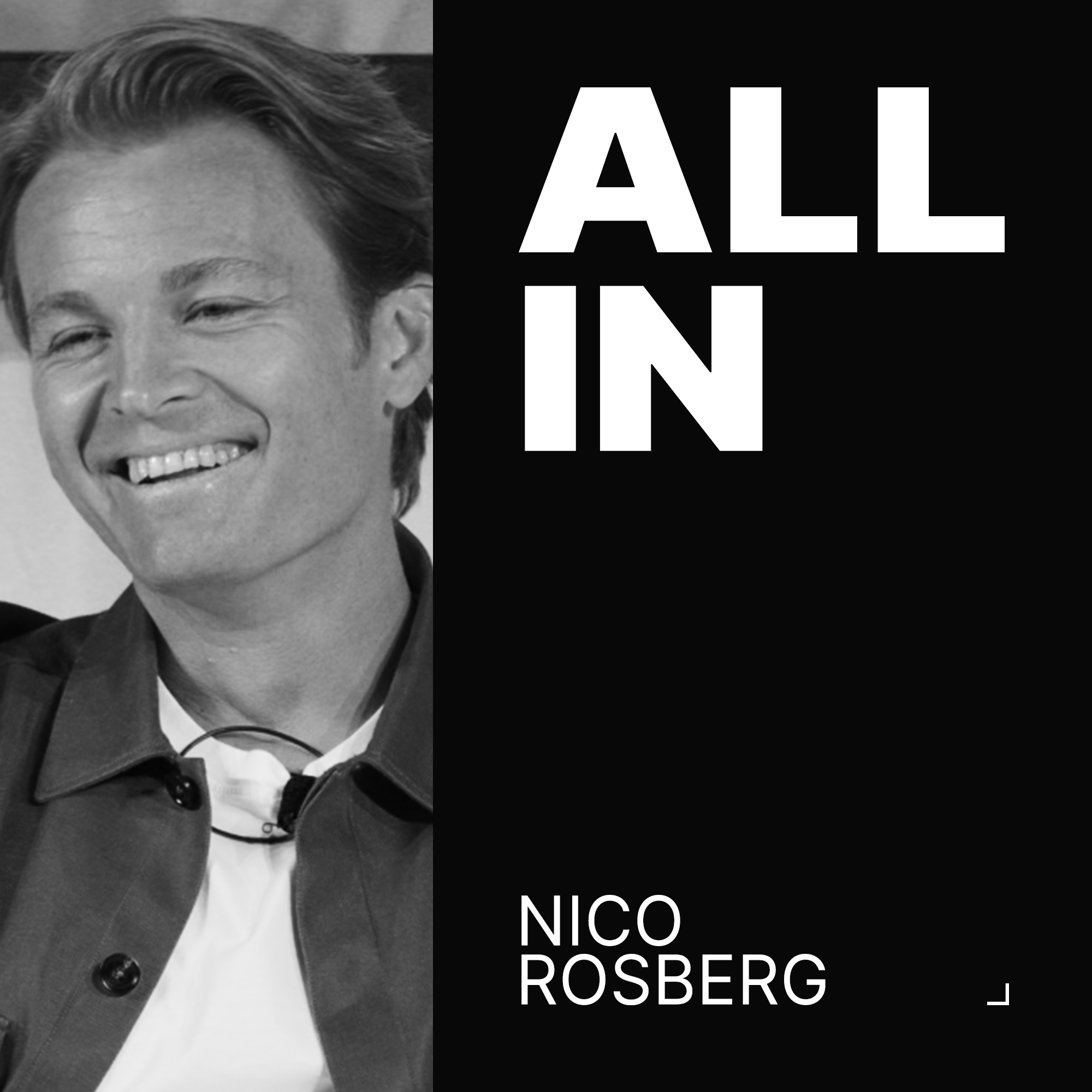
All-In with Chamath, Jason, Sacks & Friedberg
Nico Rosberg on the Booming Business of F1 | All-In Live from Miami
00:24:34
(0:00) The Besties welcome Nico Rosberg! (0:27) Nico's history with F1, what makes a great driver (6:24) The business of F1 (10:05) Teammate rivalries, why "Drive to Survive" works, future growth (16:48) Post-F1 career, best angel investments,...
Loading summary
Transcript220 lines
- [00:01]
Jason Calacanis
Former F1 driver champion in 2016, he's getting into the venture business. Please welcome Nico.
- [00:07]
Nico Rosberg
They started the season with 20 drivers, and they would end the season with only 18 of them left.
- [00:12]
Chamath Palihapitiya
Wow.
- [00:13]
Jason Calacanis
What was the craziest shit you've ever been involved in?
- [00:15]
Nico Rosberg
Well, my rival was my teammate, so unfortunately, it really becomes like an enemy in a way.
- [00:21]
David Sacks
What were your first few deals?
- [00:22]
Nico Rosberg
11 laps, for example.
- [00:23]
David Sacks
Holy. Good for you.
- [00:28]
Jason Calacanis
This used to be an extremely dangerous sport. You had people dying every year in these tiny little cars with no roll cages, et cetera. But over time, it's become incredibly safe. The number of people dying went from a couple dozen a year in the 50s, 60s, 70s, and now it's gotten incredibly safe. How scary is it to drive in those cars? And how do you get over that fear of death?
- [00:53]
Nico Rosberg
First of all, hello, everybody. That's a pretty intense start to the conversation.
- [00:59]
David Sacks
I'll just.
- [01:01]
Chamath Palihapitiya
Good job interviewing Jacob.
- [01:02]
Jason Calacanis
No, I gotta get right to it.
- [01:05]
Chamath Palihapitiya
How are you?
- [01:06]
David Sacks
Set the mood.
- [01:07]
Nico Rosberg
How are you still alive?
- [01:09]
Chamath Palihapitiya
How are you?
- [01:10]
David Sacks
Why haven't you died yet?
- [01:11]
Jason Calacanis
Nico, I looked at that car.
- [01:12]
David Sacks
Justify yourself.
- [01:14]
Jason Calacanis
Why is there no canopy on it? Why is your head exposed? It's so crazy what you're doing or what you did.
- [01:20]
Nico Rosberg
So. No, you're absolutely right. And I know better than most people also because my father actually was a Formula one racer.
- [01:28]
Unknown
Yeah.
- [01:28]
Nico Rosberg
And he was racing.
- [01:28]
David Sacks
And a world champion.
- [01:29]
Chamath Palihapitiya
And a champion.
- [01:30]
Nico Rosberg
I didn't want to say. But, yes, he was also world champion.
- [01:32]
Chamath Palihapitiya
But sorry I asked you backstage, you're one of only two father, son, world champions of all time.
- [01:38]
Nico Rosberg
Yeah, that's true. Yeah.
- [01:38]
Chamath Palihapitiya
Pretty incredible.
- [01:39]
Nico Rosberg
Which is very special.
- [01:41]
Jason Calacanis
So, I mean, your dad's out there racing, you're at home with mom, I assume. This has got to be terrifying to watch your dad do this.
- [01:50]
Nico Rosberg
So in his day, they started the season with 20 drivers and they would end the season with only 18 of them left. So it was a 10% chance, more or less, that you wouldn't make it through the season, which is just. That's crazy.
- [02:03]
David Sacks
Wow.
- [02:04]
Nico Rosberg
I mean, then if you do an eight year career, like, what are your odds? Like, that's not looking very good. So there to your point.
- [02:11]
Jason Calacanis
Yeah, it was a death of every hundred thousand miles. Now it's a death every 6, 7 million miles.
- [02:16]
Nico Rosberg
I was very lucky because by the time I came in, they had carbon fiber chassis. They have a roll hoop now, and this protection, this halo around your head, which recently saved a couple of lives in the last five years, because Max Verstappen, who's now the four time world champion at the moment. He landed on Lewis Hamilton's head in Italy with the full car and it was this halo that saved Lewis Hamilton's life. So we're very, very lucky how the sport has progressed with the safety.
- [02:49]
Chamath Palihapitiya
How did you start driving? How old were you? Because I didn't realize yesterday I go into the suite that we have and they say this kid is 18 years old. As a driver I had no idea that kids that young were driving. How old were you when you started and at what point did you start to become competitive?
- [03:04]
Nico Rosberg
So it's a bit like with every sport that you have to start very, very young. I started, I was six, started go karting, I was six and then racing, 10 years old. Now they start racing when they're eight years old. So Antonelli who was on pole position yesterday, the 18 year old, he started racing, he was eight. He was in my go karting team when he was 12. So I know him very, very well and he is a generational talent but it's very early for him because he's only 18 and he took over the car of the greatest of all time. Lewis Hamilton left Ferrari, left Mercedes to go to Ferrari and Antonelli left, took this car from Lewis Hamilton. That is insane pressure.
- [03:46]
David Sacks
Answer this question if you could. You said generation.
- [03:48]
Nico Rosberg
I'll try my best.
- [03:50]
David Sacks
So if we had to design some kind of a model, you could you define the features that he had when he was 6, 7 or 8 years old that could have predicted how good it was.
- [04:03]
Chamath Palihapitiya
Like is it the midi chlorian like.
- [04:05]
Nico Rosberg
So is it the.
- [04:07]
Chamath Palihapitiya
Well Anakin Skywalker was really good.
- [04:09]
Jason Calacanis
I don't know Nicole.
- [04:10]
Chamath Palihapitiya
And then they tested the midi chlorian.
- [04:12]
Jason Calacanis
Specialist on Star wars lore. But you, yeah, anyway, the meta chlorine defined the gym.
- [04:16]
David Sacks
Do you think that you could design something where people, kids could come and take some kind of test? You look at your reflexes or your, you know, your eye twitch speed or the way your brain works and is there a pattern do you think that is genetically predisposes some people to just be exceptional?
- [04:34]
Nico Rosberg
So we've not come to that point yet that we actually go through such tests. But I think there are a couple of things that would, that would kind of satisfy that and one is your speed of processing because in a race car you're going at 220 miles an hour and you have so many inputs flying at you and not only visual, also sensual everything and also sound with the engine and everything and you have to process that so rapidly.
- [05:00]
David Sacks
How did you train for that?
- [05:02]
Nico Rosberg
I even had a computer program which I developed just for myself, actually, where I would have all these different inputs. So audio, touch, tactile, had like a thing around here and even then visual on the computer and I would be catching these inputs and trying to break my record. And the faster I would go, the faster the program would go. So I was trying to develop these kind of things to train my brain to move faster and react to reaction.
- [05:28]
Jason Calacanis
So action time is the key skill set of a driver.
- [05:31]
Nico Rosberg
It's one of the ones.
- [05:32]
Jason Calacanis
Is it also being courageous and like something with your amygdala where, like, you don't have fear?
- [05:37]
Nico Rosberg
There's that, certainly. Yeah. I would say that I am actually someone who's quite fearful. But when you're in it, you kind of also get used to things. Yeah. And you start to feel quite safe in the car nowadays, because I'm not a crazy adrenaline junkie, unlike most other drivers, actually, out there.
- [05:55]
Chamath Palihapitiya
Like someone you find that they are adrenaline junkies.
- [05:58]
Nico Rosberg
Yeah. Like someone like Verstappen is fearless, like completely or even Hamilton. You know, they're proper, quite nut cases.
- [06:06]
Chamath Palihapitiya
The pads are a little different for everyone.
- [06:08]
Nico Rosberg
Yeah. There's different.
- [06:09]
Jason Calacanis
So there's a recluse to the personality type. There is a.
- [06:13]
Nico Rosberg
Then, of course, there's hand eye coordination. So, to your point, chamath for young kids, probably, there's a high chance that you put a tennis racket in their hand. They'll also be pretty good very quickly, and it's a similar set of skills.
- [06:25]
Chamath Palihapitiya
Can we shift and talk a little bit about the business of Formula one? I mean, we were talking backstage before the show a little bit and you shared some of the anecdotes about some of the valuations and what's happened over the last decade, decade and a half. Maybe you can just kind of paint a picture for us on how this has evolved as kind of a business and where things sit today, where they're headed and what's driven that?
- [06:47]
Nico Rosberg
Yeah. So I'm a venture capitalist myself, and that's why I'm very interested in the business side of sport. And F1 has gone through such an incredible inflection, and there's a couple of factors that have come into play. They brought in budget caps for the teams, so the teams were spending just on their car development, like north of 200 million a year, and now it's, like, limited to 130 million a year. Just for the chassis itself, not excluding engine drivers and top personnel.
- [07:17]
Jason Calacanis
$130 million just for that. On how many cars is that like, for.
- [07:20]
Nico Rosberg
Well, there's 10 teams.
- [07:22]
Jason Calacanis
Yeah.
- [07:22]
Unknown
No, but the 130 million.
- [07:24]
Nico Rosberg
Two race cars per year.
- [07:26]
Jason Calacanis
Per year.
- [07:26]
Nico Rosberg
But that's just the chassis. You then have the engine, which is another 70 million. You then have the top driver who takes 50 million a year.
- [07:34]
David Sacks
Or 100.
- [07:35]
Nico Rosberg
No, 100.
- [07:36]
David Sacks
No, that was the Verstappen rumor to go.
- [07:38]
Nico Rosberg
Yeah. Plus marketing. Plus. Plus you get to maybe 70, 80.
- [07:42]
Jason Calacanis
So fielding a team is how much.
- [07:44]
Nico Rosberg
Fielding a team is around. You get close to 300 million.
- [07:48]
Jason Calacanis
Wow.
- [07:49]
Nico Rosberg
Yeah.
- [07:49]
Chamath Palihapitiya
But you're saying that the budget cap allowed everything to kind of.
- [07:52]
Nico Rosberg
Yes. So the budget cap brought in this cap for developing the chassis to 130. Then suddenly Netflix also came in. And Netflix has just made the sport so much more popular. It's unbelievable.
- [08:06]
Chamath Palihapitiya
But that series really changed the landscape.
- [08:08]
Nico Rosberg
Just in the US you've gone from in the last couple of like six years, 20 million fans to like 50 million fans. It's more than doubled only in the US alone.
- [08:16]
David Sacks
What do you think Netflix did?
- [08:17]
Nico Rosberg
Right? So Netflix, the owners of F1 are Liberty, which is a US. Right. It's a US based company and they did very well. They opened up social media. The new generation of drivers are really social media savvy and are like, the fan base is 40% women in America. How many women here today are F1 fans? Loads. There we go. Okay, not too bad.
- [08:44]
Jason Calacanis
Are all the drivers as good looking as you or no?
- [08:47]
Nico Rosberg
No, I don't want to go into that kind of.
- [08:49]
David Sacks
Don't be to yourself in Miami.
- [08:51]
Chamath Palihapitiya
So the audience blew up.
- [08:53]
Nico Rosberg
The audience has blown up. And you asked me, what did they get right? So what did they get right? The Netflix show, for those of you who've seen it, it's like a reality TV show. It's not just a sports documentary, like, hey, this guy won here. But they managed to capture these Personas behind the scenes and you really get to see the human beings behind the sport. And that's very special. And they tried to replicate it in other sports, like I think golf and tennis. And it didn't work out as well because I think they got a little bit lucky also that here quite a few characters allowed them and completely opened up and allowed Netflix to capture the real intense behind the scenes moment. And it's just fascinating to follow. So that's what works so well.
- [09:35]
Chamath Palihapitiya
Because before, if you come in as an outsider, I had this experience, like, what team are you? You know, who you support? Like, I'm not really sure. But once you get to know the personalities, you have a vested interest, you have a history. There's something that you can contextualize.
- [09:48]
Nico Rosberg
Let me just end on the business part. So teams, like 10 years ago, F1 teams were like, worth $150 million. And they would lose 50 million a year. And now the top teams go for 5 to 6 billion dollars. 10 years later. It's like eye watering. It's incredible.
- [10:07]
Jason Calacanis
You see each other when you're driving the race. You try to, like. Yeah. Bump into each other, you know, 100%.
- [10:13]
Nico Rosberg
It's part of the game. You have to unfortunately, just explain.
- [10:16]
Jason Calacanis
Cause I'm a neophyte, I don't understand it. And I see, like, once in a while, these NASCAR guys pull over, they get out, they throw their helmets at each other. You know, they get really upset. They seem like. But they seem like hillbillies. You guys seem like a bunch of Europeans. And, like, you guys seem like you're fancy, like a little more elegant. What do you guys do? Do you guys, like, spray Veuve Clicquot on each other or something? How do you guys mess with each other?
- [10:41]
David Sacks
Nico wouldn't watch.
- [10:43]
Nico Rosberg
We had one guy push. It was Verstappen push the other guy. And he got like one week of community service. So shoved up. That was as far as it went.
- [10:50]
Jason Calacanis
That's as far as the physicality. But when you're in the car.
- [10:53]
Nico Rosberg
Yeah, it's fierce. It's fierce.
- [10:54]
Jason Calacanis
So take us through. Like, what was the craziest you've ever been involved in, altercation wise?
- [10:59]
Nico Rosberg
Well, my rival was my teammate. My rival was Lewis Hamilton. At the time we were both racing for Mercedes. Any Lewis Hamilton fans here today? A little bit. Okay, I'm here. Good.
- [11:12]
David Sacks
Actually. Nico, can you talk about that in that period? He's so dominant, but the car's so dominant, and then you win. What is it like, were your teammates with your biggest competitor? Like, what is that dynamic? Like, that psychological dynamic? Are you friends? Are you guys friends or.
- [11:30]
Nico Rosberg
So with Lewis Hamilton? We were actually best friends when we were 14 years old. We grew up racing together in the same team. Best friends. But when you get to F1, it's just so intense and so much is at stake. And if it's just the two of you racing for race wins, every single.
- [11:46]
Jason Calacanis
Time, you can't stand him, you hate him.
- [11:48]
Nico Rosberg
Yeah, it goes into hating.
- [11:50]
Jason Calacanis
Yeah, like real hate.
- [11:51]
Nico Rosberg
I can see the contempt.
- [11:52]
David Sacks
Do you talk during the week or you don't even really interact?
- [11:55]
Nico Rosberg
No, you don't interact much. So unfortunately, it really becomes an enemy in a way, you know, and internally in your own team, it's a horrible dynamic because also, even the rest of the team then need to start to be neutral. They can't take any sides. So even when you win, it's not like everybody's leaning in with you.
- [12:16]
Chamath Palihapitiya
Mixed emotions.
- [12:17]
Nico Rosberg
It's really a tough situation.
- [12:19]
Jason Calacanis
So it's like two people in the same project who can't stand each other. Friedberg, but you keep working together.
- [12:29]
Chamath Palihapitiya
I'm not going to say it.
- [12:30]
David Sacks
How much of that fed your decision to retire literally days after you won the. That was a little. I think that caught some people off guard. Can you just tell us what happened there?
- [12:39]
Jason Calacanis
Yeah, sure.
- [12:39]
Nico Rosberg
I was in my prime and I won that championship, which for me was my dream come true. And it was extremely intense. Thank you. It was extremely.
- [12:48]
Jason Calacanis
Thanks, mom.
- [12:49]
Nico Rosberg
I got one clap from my mom sitting in the auditor. Yeah.
- [12:52]
Jason Calacanis
Very big fan. Way to go, mom.
- [12:59]
Nico Rosberg
Yeah, it was extremely intense. And for me, it just felt like the right moment to. I had a young daughter at home, she was one year old. Family just felt like the right moment. I was in one piece. To your comment, it being dangerous and I just decided rationally, you know, I never wanted to exit on the way down. That's something I definitely wanted to avoid. I wanted to exit at the top. And that was my moment and I decided to pull the trigger.
- [13:22]
David Sacks
Has there been a good ROI for the car companies that have invested in F1 in that? All this money that they spend, other than the notoriety, are they inventing things that we all use and see and interact with day to day in our own daily driving experience or. Not really.
- [13:40]
Nico Rosberg
So you probably will be driving an AMG at some point.
- [13:43]
David Sacks
I had an AMG at one time.
- [13:44]
Nico Rosberg
There you go. And there is tech from the F1 team in there now for the hybrid.
- [13:50]
David Sacks
So for Mercedes. Yes.
- [13:54]
Nico Rosberg
Yeah. Every car company will be benefiting, but the return on investment is also in terms of marketing. Mercedes, there's a calculated return on investment, which is 2 billion worth for their brand annually. And they don't actually invest money anymore because the team is profitable now and highly profitable. Like, These teams make 200, $300 million in profit every year, so they now.
- [14:16]
Chamath Palihapitiya
Have $6 billion valuations. Have we kind of peaked from your point of view? Is the market and the valuation curve still being climbed?
- [14:26]
Nico Rosberg
There's still a lot of upside at the moment because this growth has just happened in the last five years. And there's still. I mean, even America, there's still Loads of growth potential, more races, there's licensing. The sport hasn't really even tapped into that yet.
- [14:39]
Chamath Palihapitiya
Do you think there's something about sports that are kind of more tuned to the way our brains now operate in a social media world, like a fast paced world? Like, you know, golf became liv. I mean, LIV really kind of changed the face of golf. There's now baseball's obviously dead. I mean, MLB's been on the decline for years in the United States. Not saying anything negative about baseball. I'm just saying that the viewership is going down.
- [15:04]
David Sacks
No, no, no, no.
- [15:05]
Jason Calacanis
There's a lot of games, but there's.
- [15:06]
Chamath Palihapitiya
Also these conversations about basketball, the NBA.
- [15:09]
David Sacks
I'll tell you this crazy anecdote. I was a co owner of the Warriors. I sold two years ago. A friend of mine, a friend of ours is in the market for a sports team and he went to Europe to look at a bunch of soccer teams. And then we were all having dinner and his bankers produced this study that showed exactly this problem, which is young people, their attention span is shrinking as it shrinks. There are certain sports they just cannot watch anymore.
- [15:35]
Chamath Palihapitiya
Cannot watch.
- [15:36]
David Sacks
And it's totally correlated. The negative viewership in baseball, the increase in the use of clips. So people are willing to watch baseball clips. They will not watch a baseball game to save their life. People will watch basketball clips. They won't watch basketball.
- [15:48]
Chamath Palihapitiya
The NBA is moving to clips. Yeah.
- [15:50]
David Sacks
And so it's this weird construction, but in some ways F1 is very set up for this already. Naturally.
- [15:55]
Nico Rosberg
Right?
- [15:55]
David Sacks
Do people don't really watch the whole sport as much as they want to watch clips? I'm guessing it's not that long.
- [16:04]
Nico Rosberg
What are you trying to say?
- [16:06]
Jason Calacanis
How long is this race on Sunday?
- [16:09]
Chamath Palihapitiya
It's never boring and it's not that long. I mean that's the thing.
- [16:12]
David Sacks
But you guys also have a lot of, a lot of data telemetry. Like you can feel feed that kind of anxious mind and there's no breaks.
- [16:17]
Chamath Palihapitiya
It just goes.
- [16:19]
Nico Rosberg
I'm not sure, I'm not sure if you have a point there, unfortunately, but.
- [16:25]
Jason Calacanis
Pretty diplomatic.
- [16:26]
David Sacks
I was just trying to make the conversation.
- [16:27]
Nico Rosberg
No, what I can say is that our sport has the highest engagement rates across all sports, even comparing to NBA and everything. But why is that? I think there's just a huge hype at the moment. And maybe, yes, maybe, okay, maybe a little bit. It is fast pacing. There's. There's incredible action scenes like thrilling action. There's huge crashes.
- [16:48]
Chamath Palihapitiya
Did you not want to get in the business given your Knowledge and your experience. You didn't want to be in the. Because you now have transitioned into venture capital. How did you make that decision versus working in the business of Formula One?
- [16:59]
Nico Rosberg
Oh, great question, because. Yeah, that's a good question. So in Formula one, what jobs would have been left for me now after driving would be, for example, running a team. But running a team is 24 7. Like, you need full commitment. You need to move to the uk. All the teams are in the uk. It's a full life, dedication. And I've done that, been there, done that. Now I want more freedom in my life to define my calendar and everything and be at home more. And so that job, for example, would not be a possibility and not something I want to do. And then beyond that, yeah, you can be a driver manager, but even there you need full commitment.
- [17:37]
David Sacks
So tell us about this transition then, to tech and investing and venture. And what was that journey and what attracted you to that?
- [17:45]
Nico Rosberg
I was always inspired by people like Elon Musk, who obviously you were talking about before, and those achievements that you have this idea and then you achieve something which has impacts like millions of lives. I just found that fascinating. So I always just wanted to pursue that path. So I started investing as an angel investor.
- [18:03]
David Sacks
Hold on a second.
- [18:03]
Jason Calacanis
Oh, take it easy. Angel investing. What are you doing after the show?
- [18:07]
Chamath Palihapitiya
Did you ever read the book Angel?
- [18:09]
David Sacks
Phenomenal.
- [18:11]
Jason Calacanis
I'll sign up for a book called Angel.
- [18:13]
Chamath Palihapitiya
It's 84 pages long.
- [18:15]
David Sacks
What were your first few deals?
- [18:17]
Nico Rosberg
11 labs, for example.
- [18:19]
David Sacks
Oh, good for you.
- [18:21]
Nico Rosberg
Yeah, that's gone really well. How did you find that?
- [18:26]
David Sacks
How did that come about?
- [18:27]
Nico Rosberg
I mean, I'm really putting an effort into this community as well. I'm spending a lot of time in Silicon Valley, meeting everybody and. And also connecting to the European corporate landscape. So I'm bringing customers, revenues, connecting, building bridges, because there's a unique angle that I can bring, you know, thanks to my sports past. So I've just built my way into it and built a reputation. And then. And then you start getting the opportunities.
- [18:50]
David Sacks
What themes, Nico, have you invested in that today? You would not invest knowing what you know today? Not the ones that have brought.
- [18:56]
Nico Rosberg
Yeah, that's the flying taxis, the vitals, for example. Germany was leading the way on those. You have Joby, for example, Joby Aviation, which is probably currently best position in the us But Germany was leading the way with two horses in the race and both of them have run into trouble. One is bankrupt, one was both bankrupt, I think. So that's something that then in Hindsight. You, of course, if you had read.
- [19:23]
Jason Calacanis
The book, you would have known hardware is hard, right?
- [19:27]
Nico Rosberg
I would have avoided that. You should have listened to it.
- [19:28]
Jason Calacanis
You should have gotten that chapter.
- [19:29]
Nico Rosberg
I should have listened to you get a highlighter out.
- [19:31]
Jason Calacanis
Hard hardware is.
- [19:32]
Nico Rosberg
Hardware is even harder now with the tariffs I'm hearing now, like, I have a. I invested also in a cyber e scooter here in New York called Infinite Machine. And now with the tariffs, because the supply chain is so concentrated in China, it's a complete mess.
- [19:50]
Chamath Palihapitiya
Yeah.
- [19:50]
David Sacks
Nico, what about the political landscape in Europe? There was a pretty important election in Germany. It seemed to kind of go down the middle. What goes of Europe, what's happening in Europe? The investability of Europe, the ability to do business in Europe. What do European industrial businesses do? There's a ton of skill, there's a ton of cash. When you talk to those folks, what do you tell them?
- [20:10]
Nico Rosberg
I know you're very, very bearish on Europe. You wouldn't put a dollar there, but is that correct?
- [20:16]
Jason Calacanis
Well, no, for sweaters and wine, he puts much more than a dollar.
- [20:20]
Nico Rosberg
That's true.
- [20:21]
Chamath Palihapitiya
Pretty prolific.
- [20:22]
David Sacks
It's a really good question. I actually think, I think industrials.
- [20:25]
Nico Rosberg
Yacht chargers, right?
- [20:26]
David Sacks
Yes, industrials. I would. Industrials. I think there's tremendous skill outside of industrials, I think it's hard.
- [20:33]
Nico Rosberg
Yeah. So we have the problems with regulatory frameworks being way too cumbersome. We have the geographic fragmentation in Europe, which is very different to the US politically. It's really, I mean, quite in a bad place at the moment. And so. Yeah, I understand. But at the same time, as you said, talent density is insane. The universities are some of the best in the world. So that's where our hope is in the next generation that's coming now. Stick to the Nordics and the Nordics are very powerful. Yes. But also Spotify in German.
- [21:09]
Jason Calacanis
Yeah, a little bit German.
- [21:10]
Nico Rosberg
So there's a lot of hope still.
- [21:12]
David Sacks
Yeah.
- [21:12]
Jason Calacanis
Hey, what's your daily driver?
- [21:14]
Nico Rosberg
Daily driver is a Porsche.
- [21:16]
Jason Calacanis
A Porsche. And then when you're with your, with your, with your daughter, I don't know how old she is, but you ever, like, pull some tricks and like, does she like, hey, dad.
- [21:23]
Nico Rosberg
No. SHE shouts Drive slowly, Daddy.
- [21:25]
Jason Calacanis
Really?
- [21:26]
Nico Rosberg
I'm not allowed to drive fast with her? No, terrified. Which is fine.
- [21:30]
Jason Calacanis
Which is fine. You don't want her to get into the family business?
- [21:32]
Nico Rosberg
No, no, no.
- [21:34]
David Sacks
What are some investments that you're really excited by Beyond11Labs?
- [21:39]
Nico Rosberg
They would be applied intuition. Another one. Oh, great business where I'm in that's.
- [21:44]
David Sacks
A really, really interesting company.
- [21:45]
Nico Rosberg
It's a company that supplies software primarily to all the legacy car manufacturers that have not managed this transition to being software first. Like Tesla has shown the way and this starts.
- [21:57]
David Sacks
It's like scale AI for automotive in some ways.
- [22:00]
Nico Rosberg
Right. For part of the business.
- [22:02]
David Sacks
Yeah.
- [22:03]
Jason Calacanis
Nico, you're going to fit right in. Have you learned to play poker yet?
- [22:05]
Nico Rosberg
I'm a good poker player.
- [22:06]
Jason Calacanis
You're a good poker player. We'll see you on Thursday.
- [22:08]
David Sacks
Excuse me. Hold on, Nico.
- [22:10]
Chamath Palihapitiya
Now you take his interest.
- [22:12]
Jason Calacanis
Give it up for Nico.
- [22:15]
Nico Rosberg
Great team.
- [22:16]
Jason Calacanis
Thanks for coming out.
- [22:18]
Unknown
Thanks to our new bestie, Nico Rosberg for joining us in Miami for F1 and thanks to you the audience for tuning in. If you want to come to our next event, it's the All In Summit in Los Angeles. Fourth year for All In Summit go to all in.comevents to apply. A very special thanks to our new partner, okx. The new money app. OKX was the sponsor of the McLaren F1 team which won race in Miami. Thanks to Hyder and his team. An amazing partner and an amazing team. We really enjoyed spending time with you. And OKX launched their new crypto exchange here in the us if you love all in, go check them out. And a special thanks to our friends at Circle. They're the team behind usdc. Yes, your favorite stablecoin in the world. USDC is a fully backed digital dollar redeemable one for one or USD. It's built for speed, safety and scale. They just announced the Circle Payments network. This is enterprise grade infrastructure that bridges the gap between the digital economy and outdated financial reality. Go check out USDC for all your stablecoin needs. And special thanks to my friends including Shane over at Polymarket, Google Cloud, Solana and bvnk. We couldn't have done it without y' all.
- [23:33]
Jason Calacanis
Thank you so much. Let your winner's ride Rain Man David Satch.
- [23:43]
Chamath Palihapitiya
And instead we open source it to.
- [23:44]
Jason Calacanis
The fans and they've just gone crazy with it. Love you Queen of Kin.
- [23:55]
Unknown
Besties are gone.
- [23:58]
Nico Rosberg
That is my dog taking a notice in your driveway.
- [24:00]
David Sacks
Syntax.
- [24:02]
Jason Calacanis
Oh man, oh man.
- [24:04]
David Sacks
My habit will meet me at. We should all just get a room and just have one big huge orgy cuz they're all just useless. It's like this like sexual tension that they just need to release somehow.
- [24:14]
Jason Calacanis
Wet your feet.
- [24:19]
Unknown
We need to get merch.
- [24:29]
Jason Calacanis
I'm going all in.