← All-In with Chamath, Jason, Sacks & Friedberg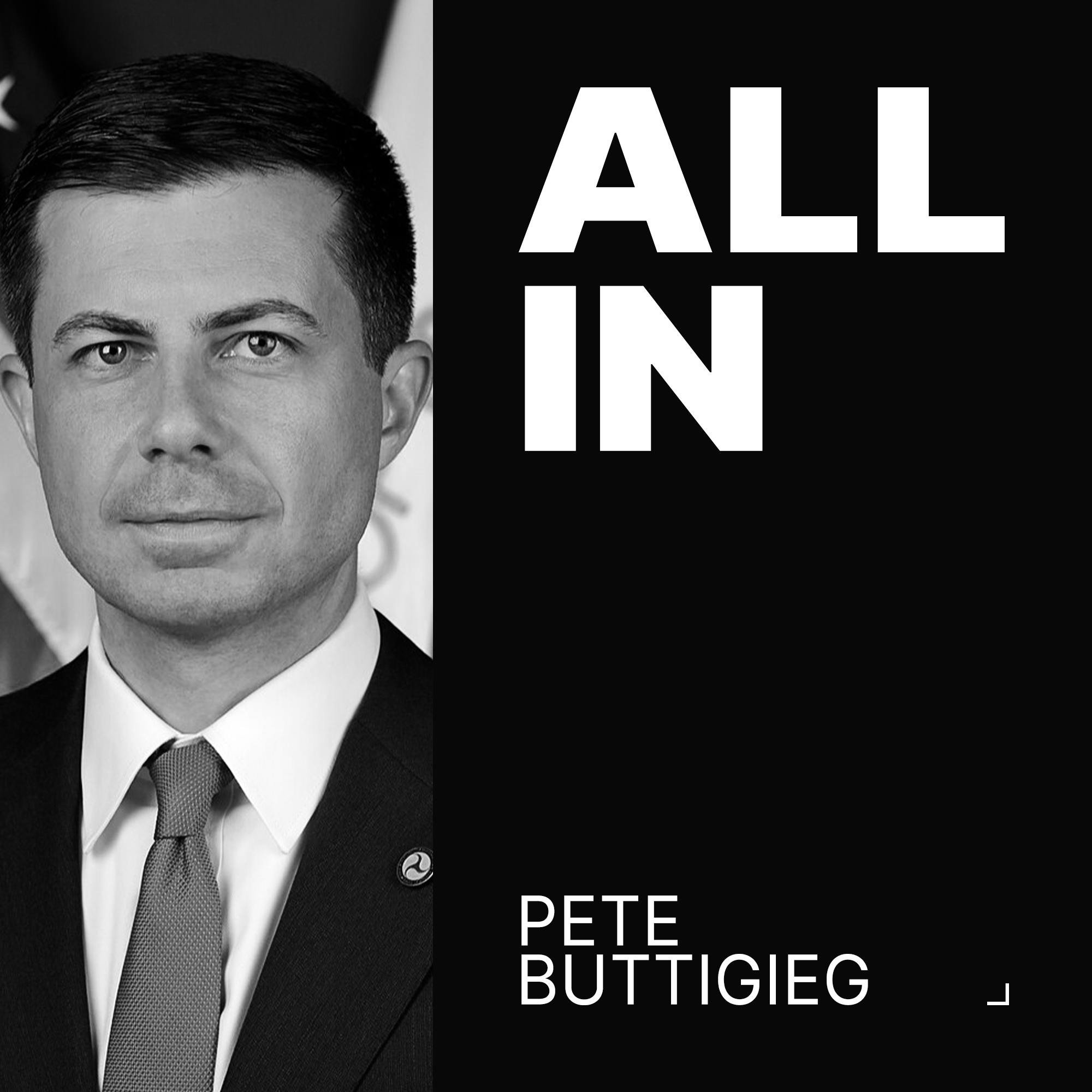
All-In with Chamath, Jason, Sacks & Friedberg
Pete Buttigieg: The Left's Identity Crisis, Wealth Tax, 2024 Mistakes, Plans for 2028
01:04:19
Loading summary
Transcript143 lines
- [00:00]
Pete Buttigieg
There are certain trillion dollar ideas that the private sector just won't do because it doesn't pencil or because of whatever market failure is there. That's where you need government. First of all, the debt path we're on is not sustainable that I think identity has become too central to how my party thinks. My big worry is that if we're already at a level of concentration of wealth and power that no republic has ever survived, is this going to be a development that just makes wealth and power even more concentrated in even fewer hand besties?
- [00:32]
Chamath Palihapitiya
I think that was another epic discussion.
- [00:35]
Pete Buttigieg
People love the interviews. I could hear him talk for hours.
- [00:38]
Chamath Palihapitiya
Absolutely.
- [00:39]
Pete Buttigieg
We crushed your questions in a minute. We are giving people ground truth data to underwrite your own opinion.
- [00:44]
Chamath Palihapitiya
What'd you guys think?
- [00:45]
Pete Buttigieg
That was fun.
- [00:45]
Chamath Palihapitiya
That was great.
- [00:46]
Pete Buttigieg
I'm doing all in.
- [00:48]
Chamath Palihapitiya
All right, everybody. Welcome back to the all in podcast interview series. Last week we had Joe Manchin on. This week, Pete Buttigieg is here. Everybody knows Mayor Pete, born in South Bend, Harvard, Rhodes Scholar, McKinsey, U.S. navy and of course ran for president and was the transportation secretary under Biden. Welcome to the program. Pete Buttigieg. How are you?
- [01:14]
Pete Buttigieg
Good, thanks for having me.
- [01:15]
Chamath Palihapitiya
Pleasure. Meet Chamath Palihapitiya, a former Democrat who re underwrite his support of your party and now is a Republican. And really the spirit of this program is to just have a candid discussion. We like to get into the details. And so I thought I wanted to start with your perception of entrepreneurs, technologists, et cetera. I was watching a clip of you on Bill Maher and you said, hey, you know these libertarian science based folks in Silicon Valley, they made a very practical decision. These are rich men who have decided to back the Republican Party. That tends to do good things for rich men. And these rich men include Tim Cook, Mark Zuckerberg, Elon Musk. These are people who have been part of the Democratic Party for a very long time, huge donors to the Democratic Party and they all made this sort of flip. Do you think it was just pragmatically based upon the desire to have less regulations, a better business environment, to personally make more money? Or do you think there were other things at work with the loss in 2024?
- [02:25]
Pete Buttigieg
Well, I don't think you can reduce it to any one thing, but I certainly think that's part of the story. Look, it's no secret that Republican policies tend to favor people who are wealthier. And a lot of the people who drifted away from the Democratic Party, at least the ones who were getting a Lot of attention. Like how could these business figures, investors, billionaires, have gotten away from Democrats and gone to Republicans? Might be kind of a dog bites man story. Like not something that's wildly complicated. If you look at the fact that Democrats have been extremely concerned about wealth and income inequality and you got a lot of very, very wealthy people, I don't think it was just that. I mean, I think there are a lot of things that kind of combined at once. But for a lot of my friends who are scratching their heads saying, wait a minute, these are folks who are from the tech and science world, how could they back a president or administration that's been deleting references to science and kind of censoring science, at least any time that climate is concerned? A lot of these guys are libertarian. How could they be on board with the administration that is sending troops into streets and has really let it crack down on freedom? That's kind of something out of the fever dreams of my conservative and libertarian friends back when we were arguing about politics over beers that I never thought I would see happen. Some of these folks are gay. And how can they be backing an administration that's really assaulted LGBT rights? And if you just go down the list, there's a lot of things that are counterintuitive about some of these Silicon Valley leaders who flipped, in many cases, flipped from being very, very active Democrats to backing Trump. And maybe there's an intuitive answer to that counterintuitive thing, which is that many of them feel their short term business interests and or personal financial interests are better served by Republicans. I get that. I would counter, as I think a lot of people in Silicon Valley who are still Democrats. Would that look a healthy business environment? You don't want to be over regulated, but you also want to make sure you're in an environment with rule of law. You want to be in a place where it's safe to say scientific truths out loud. You want to be in a place where somebody can't impose their interpretation of their religion on other people. I have a whole counter to that, but I think that's the kind of swirl that we got into. Definitely just in those short years between 2020 and 24.
- [04:51]
Jason
Do you think that there was censorship under the Biden administration for things like scientific truth? Let's just focus on Covid for a second. And the backdoors that it seemed that the Biden administration had to places like Facebook and places like Twitter to just suppress scientific thought and debate as you just talked about.
- [05:07]
Pete Buttigieg
So this is an amazing example of some of the false equivalencies that I've seen thrown around out there. So, yeah, I would acknowledge, I think a lot of folks would, that it came really close to the stove. Some of the times when the administration was trying to make sure that bad information or misinformation wasn't being pushed into the public health conversation and was engaging social media companies that were trying to be responsible and do the right thing. And there might be moments that they got that wrong or went too far. But right now, we're in a moment where the President of the United States doesn't like being criticized by a comedian and has the head of the fcc, which regulates corporations that are trying to buy TV networks, go out and threaten them and say, we can do this the easy way or the hard way. I mean, that is a whole different level of censorship. Not to mention just the way they've gone through every government website and deleted anything that could accidentally be a reference to climate change. So, you know, I'm worried about the false equivalencies here. You could definitely say there were moments under the last administration, or any administration where we could argue that having fidelity to free speech, you should have done this way instead of that way, or these edge cases should have been different. But I am nervous that anybody would equate a president trying to direct the destruction not only of journalists, but of comedians that he doesn't like with public health authorities in a public health emergency that killed a million Americans and doing their best to try to make sure that people got good public health information.
- [06:41]
Chamath Palihapitiya
Let's talk a little bit about where the rubber meets the road, which is tax policy. And I think a lot of what we've seen in this back and forth to add to why the Democrats lost all of these amazing entrepreneurs and capitalists who build these amazing companies that create all the jobs in the tax base for this country. Two tax proposals recently, New York City with Mondame, and I don't know if you've come out and publicly supported him yet, but he's proposing 54% tax for the top earners there. Here in California, we have the floating of a bill to charge a wealth tax of 5% on billionaires. At a recent Mondami rally, they were chanting, tax the rich. And Elizabeth Warren, Bernie Sanders, who I think are far left of you, and you can correct me if I'm wrong, are saying, hey, ban the billionaires. And we have this sort of movement that being a billionaire is in some way immoral or unethical. So let's start with some brass tacks here, would you support, and obviously you're going to run for President again in 2028 and you're one of the lead candidates, would you ever support a wealth tax?
- [07:48]
Pete Buttigieg
In principle, maybe, Yeah. I mean, you rightly said, you know, folks like Bernie are to my left. I don't know the details of the state and local proposals you just mentioned, but those sound on their face like they're further than I would go. But look, in reality, we tax across a variety of things, right? There's income tax, there's payroll tax, there's property tax. Wealth tax would be kind of along the lines of a property tax. And the thought, of course, is that you've got a lot of folks who have become incredibly wealthy. And importantly, the way taxation works now, less and less of the way the wealthiest people accumulate their income is actually booked as income. Right. And this is why you have these stories of multibillion dollar corporations or multi billion dollar individuals somehow paying an effective tax rate that's lower than a teacher or a firefighter. And I think most people get that that's wrong. So I guess my overall take is everything has a balance, everything has limits. But if you're asking me the question, are the wealthiest people in America right now paying too much tax or too little tax, I would say the wealthiest are paying too little tax. And whether you adjust that through income tax, whether you adjust that through, you know, something like a wealth tax, and there's a lot of ways to do it, I think what's important is that it's fair, that it makes sense, and that you do in a way that can make sure that the people who are spectacularly rewarded by our system are contributing to it without being so extreme that, you know, you're crushing wealth creation.
- [09:19]
Jason
What is the responsibility of, of the US Government in your eyes, with the tax receipts that they get, how do we understand that money is being spent appropriately and well versus pet projects or pork barrel spending, or frankly, just waste and grift. Where is that line? And give us some examples of how you would make sure that as tax receipts went up, accountability went up with it.
- [09:46]
Pete Buttigieg
Yeah, I think that's super important. And people's willingness to pay taxes depends on some level on their sense that they're getting good value for their money. So I cut my teeth as a mayor. We couldn't print more dollars if we wanted to. As the city of South Bend, we had a cash budget, had to balance it every year. If we took on debt, we really had to think hard about how we were going to pay on that debt. We made sure that anytime we're asking people to be paying revenue into the city, they know what they're getting for that, whether it's police service or parks or trash pickup. I don't think that's the worst metaphor to think about. How things should work at the national level, too, right? We should believe that we're getting good services, good infrastructure. That was obviously what. What I worked on when I was at the federal level as Secretary of Transportation. We should get good national defense and all the other things that we, you know, as a country are.
- [10:39]
Jason
But how do you make sure that it's not wasted? Like, I'll give you an example. You had billions and billions of dollars allocated to you from the Infrastructure and Jobs act to deploy charging infrastructure, right? And as of this year, there's only a few hundred of these charging stations. It's been pretty much an abject failure.
- [10:59]
Pete Buttigieg
That's not true, and I'm really glad you raised that, because it's actually one of the biggest red herrings we had to deal with. So this is a program to get EV chargers deployed by 2030. The thought was, you know, by 2030, we think about half of the sales, or we were hoping about half the sales of cars in the country would be EVs. Now, in order to have that work, well, we were going to need more chargers. The market does a good job of delivering chargers in a lot of places. But there are other places where we found it was lower income or it was more rural, it was more spread out, and it just wasn't in a pencil for the private sector to do it right. So we had a fund called nevi. I can't even remember what the acronym was. But the point was, it was, like you said, about $7 billion to buy down the difference to subsidize or just outright build those chargers in places where they were needed. And we made a couple of choices that we knew would mean that it would take longer, but we were okay with that. One of them was to have it led by the states. So instead of sitting there in Washington saying where all the chargers ought to be built, we send the funding to the states, we let them set up their own program, and importantly, we let them set up their own programs differently. So, you know, we were going to dictate what the optimal subsidy was in Wyoming compared to West Virginia, or whether you even do it through a subsidy or whether it's owned and operated by the state. We took a step back on that. Let the states innovate, even if that means it's going to take a while for them to polish the program. Knowing that that meant most of the chargers would go in in 2026, 2027, but well ahead of 2030. Now, the second thing, this is really important, too. We made a conscious decision to insist that the Chargers be made in America. Now, when you do that, you're deciding that it's going to take longer. I'll just admit that. Because just buy them off the shelf from China would be dramatically quicker. We thought that was worth it because we thought it was important to have a US Based industry with American workers, ideally union Electrical workers, making and installing these chargers. Again, we knew that if the goal was to get them all done by 2023 or 2024, we wouldn't have had the luxury of doing that. But since we thought most of the chargers would be needed by 2030, we were okay with that. Now here comes Washington politics, right? And somebody gets a hold of the numbers and they see it's a seven or $8 billion program, and then falsely trying to make it look like we spent the seven or eight billion dollars already on the handful of chargers that they already managed to build first, even though we never thought most of the chargers would be built even during our first term. And that's where the Washington game comes in, right? Take something that, I mean, the jury's still out, right? The program's not done. We'll see how the Trump administration does in completing the program. But, you know, you can't really say whether it was a success or a failure until the program's been run. But they move the goalposts. And I'm not challenging you that, like there's waste, that there's bad things that happen in. And what's your best government spending that I don't like.
- [13:48]
Jason
But what's your. What's your best guess? In general? For every dollar that gets given to the United States government by US Taxpayers, what actually lands in productive programs that benefit Americans versus what gets leaked away, what's your best guess? Is it 50 cents of every dollar? 10 cents of every dollar? A penny, 90 cents? What is your best guess? You've been in the bowels of these organizations.
- [14:12]
Pete Buttigieg
So my experience in transportation is that most of it goes to very good use. I mean, if you just break it down, it goes to things that keep the aviation sector operating safely. It goes to things like highways, roads and bridges. That was the biggest slug of funding that we had in the infrastructure package. And when the government Accountability Office or the Inspector general, by the way, institutions that Trump is demolishing right now. But the organizations that do the auditing and really dig in on a bipartisan basis, often in terms of outright fraud, you know, they're going to come in a number that's well below 1%. But, but, but, you know, I've also.
- [14:49]
Jason
Seen 99 cents is effective.
- [14:52]
Pete Buttigieg
No, this is, this comes to the other part of what I was going to say. I mean, I think about my time in the military, for example. You know, there was a building. I think it was leatherneck. Maybe it was Kandahar, but I think it was leatherneck. When I traveled out there, there was a building that had taken years to go up. I think it was like $30 million. And just before they were about to activate it, they tore it back down. I mean, it's just a complete boondoggle. And we see stuff like that happening, for sure. We see cost escalations on a lot of projects. So it's not, you know, it's not the same as fraud. I mean, that's the, like, under 1%. But it's still a huge waste if you have a project cost 1% or 10% or sometimes 100% more than it should. Right. I mean, by definition, every penny it takes to build something more than what it was actually required is wasted. And I do think there's a lot of that. I think government gets in its own way with procedure.
- [15:45]
Jason
Maybe just explain to us, as a secretary, how much control do you have in stopping that waste? So if you see it. So I'll give you a specific example in. In 2023, there were some pretty incredible outages in the FAA. We've all now learned that we have an incredibly brittle air safety infrastructure that needs to be upgraded. You saw that in 23, there was outages all the time. What do you do to stop that? And when you see the waste, how do you stop it?
- [16:14]
Pete Buttigieg
That was an example where we needed to invest, right? So it's that tough situation and needing to swallow hard and go before Congress to the taxpayer and say, look, we need more funding for this, but that's what we did. And by the way, this is one of the rare areas where I agree with my successor, who's done pretty much the same thing to make sure we got the funding to upgrade the technology. Now, this is one of the few audiences that might be nerdy enough that I can geek out a little bit and talk about the big upgrade to the communications backbone that we were doing. It was to Go from TDM to ip, from copper to fiber. And I think a lot of people would be astonished to know that, you know, something as important and theoretically modern as our aviation system is working on tdm. So that obviously had to be upgraded. We launched a contract, Verizon as a contractor, you know, obviously a multi year, multibillion dollar IT contract. When you have to have, you know, not even five nines, but like billion to one chance of anything going wrong. 24 by 7 by 365. You know, it's challenging and it takes a while, but, you know, that's one of the reasons why we felt a lot of urgency on that particular issue. But again, there's two ways of looking at this, right? Both of which are true. One thing is to look at the system and say, how can the system not be more modern? Like, we need to make better use of the dollars that go into the system to have more up to date communications infrastructure, to have more controllers who are both well equipped and well rested. And the FAA has got to do better on that. The other way to look at it is consider the civilizational achievement that is aviation safety in this country. So it's easy to grumble, and I grumble and more than grumble. I mean, I got pretty upset with a lot of things about how aviation works as a passenger, which is why we pushed airlines so hard on passenger protections. But just in the four years I was secretary, we had about 4 billion passenger implants. So 4 billion times somebody got on an airplane. Right. And zero commercial airline crash fatalities out of that 4 billion. In other words, what this kind of clunky, imperfect federal government has achieved is a standard of safety on a form of transportation that involves being propelled through the air almost at the speed of sound by flammable liquids miles above the ground. And frankly, you and I are. One of us is more likely not to be flip about it, but one of us is more likely to randomly die of natural causes during this taping than to be involved in a commercial airline fatality.
- [18:39]
Jason
Let's hope it's Jason.
- [18:41]
Chamath Palihapitiya
Well, well, I was saying, I mean, it is like in some places, in our. Some places in our infrastructure, we're incredibly blessed. And I'm wondering, as you know, now you're in your 40s, you've seen a lot of the world, whether it's your military service or just being a mayor of a small town and then obviously working in a cabinet position. How has your view of free market dynamics, solving problems versus the government solving problems, evolved, if at all? Because when we talk about these problems, you look at what's happening with space. We now can get to space for 5% of the cost than we used to thanks to elon, Musk and SpaceX. We have superchargers and chargers everywhere thanks to Tesla and a number of other folks putting them out there, ChargePoint, et cetera. When it comes to putting fiber into rural areas, which the FTC was trying to do, they were going to spend 5 to $25,000 per home. And now we have Starlink and their competitors. Again, back to Elon, which your party decided under Biden. You wouldn't even invite the guy to the EV summit.
- [19:49]
Pete Buttigieg
So let me talk about that, but I wanna park that to the side. Cause we should probably talk about what happened there. But by the way, let's forget that. Cause I wanna mention that because when you.
- [19:59]
Chamath Palihapitiya
When. You know, I'm a moderate but voted Democrat about 65% of the time and Republican a third of the time. When I look at it, I just can't understand how the Democratic Party hates us so much. Hates entrepreneurs. And that's how they feel, but that's how Silicon Valley feels.
- [20:15]
Pete Buttigieg
We'll talk about whether you want to.
- [20:16]
Chamath Palihapitiya
Deny it or not, but it feels like this.
- [20:19]
Pete Buttigieg
Hate answers. I don't think most Democrats do, but I know what you mean about the vibes. And we should get to the piece about Elon particularly. But on the piece, on the substance of the question you're raising. Yeah. I think it's really important to think of this as not like should it be government or should it be the private sector, but which parts should government do and which parts should the private sector do? So to me, like the classic example is just the smartphone, right? I cannot imagine that a smartphone designed by the federal government would be a pretty thing or that an app designed by matter of fact having been in the military and dealt with, I guess you could call them apps, like some of the kind of software that you have to deal with, even if it's done by contractors, it's kind of done in a way that you can tell those designed by the government and it's not pretty. On the other hand, when you talk about capital allocation, the federal government literally invented the Internet, right? So there's certain trillion dollar ideas that the private sector just won't do because it doesn't pencil or because of whatever market failure is there. That's where you need government. That's things like basic research, that's things like filling in gaps, especially on network effects like broadband EV charging Networks, that sort of thing, where the bulk of it can be done quite well by the private sector. But there are pieces that just don't click unless you have federal involvement. And that's the attitude we try to take on things like EVs. I never thought that we were going to create a government EV or that you even needed the government to make sure that a transition to electric happened. But we did believe that for it to be made in America, for it to happen as quickly as we wanted, and for it to reach people who maybe couldn't afford those, those initial buy in costs, who we really wanted to help out, that's where there's a role for policy, that's where there's a role for funding.
- [22:04]
Jason
What I get confused though, Pete, is on the one hand you're saying the government should set up these clear moonshot objectives that advance America for itself and relative to other countries. But then the other side is that if you do too well achieving those objectives, we want to go and take a bunch of that away from you. How do you reconcile that and how do you think it impacts the motivations of young men and women who want to learn and excel and put themselves at risk, but also want to believe that if they put themselves at risk and then they are rewarded, that they've earned those rewards?
- [22:38]
Pete Buttigieg
Look, I love people being entrepreneurial, creating something and doing well by it. I mean, that's. But to a certain basic idea, only.
- [22:46]
Jason
To a certain level, like beyond a.
- [22:47]
Pete Buttigieg
Certain point of entrepreneurship. If you create a monopoly. Yeah, if you create a monopoly, I might not like it. If you hurt other people, I might not like it. If you concentrate power into your hands to an extreme extent, I might not like it because that's just, it's just not American. But in general, if we're talking about taxation, I just want to make sure people who are really well off do their part to pay into a system that has helped them to thrive. Because, you know, that's what it takes for the next generation to do well. And that's what it took for all of us to do well.
- [23:17]
Jason
I mean, let's just assume you're a president, you get trillions of dollars of receipts. I'm going to guess the party line that you have to take is Doge was bad. Okay, fine. What is the version of Doge that you would implement? So that's great question. We could figure out what percentage of that dollar that we're giving you is wasted and stop it.
- [23:36]
Pete Buttigieg
Yeah. So I would love, in theory, a Department of Government efficiency that was actually about government efficiency. I think that would make tons of sense. It's what I tried to do again when I was mayor. We took apart the small government that I was in charge of, it's about a $300 million operation, and put it back together and found that it could be radically more efficient in many ways. And we need to do that at the federal level. We need to.
- [23:57]
Jason
How much money did you take out from that? 300.
- [24:00]
Pete Buttigieg
We used it better, I would put it that way. So, you know, we didn't. I mean, there were areas where we were able to kind of have, have a certain budget line item shrink. But in a city where the average per capita income was 18 or $19,000 per person when I came in, we weren't handing that over in tax breaks to wealthy residents. We were putting it to other use on public safety and fundamentals like that. But look, again, I agree that the Doge we could have, could do a lot of really good work. It could find duplicative regulations, it could find cases where we could move from input based to output based evaluation of our programs. In other words, instead of saying, like, this is a meaningful program because how many billions went into it, figure out how much value came out of it. But the Doge we got was one that couldn't even count, that put information sometimes that was wrong by three orders of magnitude on its own website, then erased its own information because they didn't believe in the transparency. The Doge we got sent an email to every air traffic controller in the country during an air traffic controller shortage and suggested they quit being an air traffic controller and get something, quote, more productive to do in the private sector, only later on to be told, actually that was a mistake. The Doge we got apparently wasn't supposed to send that information. All the air traffic controllers, whoops, the Doge we got fired. People in charge of making sure our nuclear weapons were safe and in charge of making sure that bird flu didn't spread, and then, whoops, you know, tried to hire him back in a hurry. So, yeah, there's a huge difference between the Doge we got and the Doge we could have had. But if you're talking about, in principle, should we unleash really smart, talented people with an outside in perspective and a free hand to evaluate what is working and where we're not getting value for our money in government, you and I would be in violent agreement that that's a good idea. And there's no better place to find some of those opportunities than the Things that the federal government does because it just does or because there was a good reason once upon a time, but that reason has expired. Or maybe the reason wasn't that good to begin with.
- [26:06]
Jason
Let me just.
- [26:06]
Chamath Palihapitiya
Debt, maybe as part of this. I don't know where you were going to go, Chamath, but I think maybe.
- [26:11]
Jason
I wanted to, I wanted to go to the inner workings of the Democratic Party, but go ahead to debt and then we can.
- [26:15]
Chamath Palihapitiya
Yeah, and then maybe that's a good segue. I was just going to point out, you know, we've, we've added about $2 trillion in debt over the last nine years now under Trump. 1, 45, 46 Biden and now again with Trump, we just hit 38 trillion. So it seems like we're adding 2 trillion a year. What's your take on the sustainability of this?
- [26:36]
Pete Buttigieg
First of all, the debt path we're on is not sustainable. And that's one area where you're right. Neither party has covered themselves in glory and it's an area where I would part with some in my own party. I think for too long you've heard the message from Democrats is basically debt doesn't matter or there's no such thing. And there was a moment when this felt a little more credible. Some of the evidence at as of a few years ago put a lot of wind in the sails of what was called modern monetary theory. I think a lot of that looks different now. And then you have the Republicans, right, who say that debt matters, but then act the exact opposite. Now, look, as a good Democrat, I could point out that I would argue there's a difference in terms of what history empirically has shown us in terms of the return on investment you get when you raise debt to fix roads and bridges and other productive infrastructure versus if you blow up the debt in order to give massive tax breaks to the wealthiest people in the country. Because that has just never generated the growth that. I mean, the Laffer curve has collapsed empirically and it just doesn't work that way. Right. So I could quibble over, if you're going to do debt, what's the best thing to do with it? And I would argue the best thing to do with it is education, health care, investing it makes sure kids don't get lead poisoned. Investing it in ports and roads and not investing it in tax cuts for extremely wealthy people who didn't need them and in some cases weren't really asking for it and were perfectly productive. In fact, history would say more productive at times in history when they were paying more taxes in the US but leaving that partisan fight aside, I do want to come back and agree with you again that where we are right now is not sustainable. That contrary to what some on the left would say, there is such a thing as the debt. It does matter. And we need to make sure that what we're doing going forward is more consistent with some basic fiscal responsibility.
- [28:31]
Chamath Palihapitiya
What is the fiscal responsibility? I mean, I hear all these political speak over and over again from you guys, but I never hear anybody say, you know what, we got to tighten our belts, folks. We're going to have to cut unemployment, we have to cut these, and we're going to have to raise taxes here and we have to make cuts here. I don't ever hear any of you come up with like a plan that actually would pass mustard with any of us in the business community who have to run companies and make sure they're solvent. This does not seem like you have a plan or anybody else has a plan. And is it because it's so unpopular that you can't just say, hey, there's going to be some austerity here and it's going to be painful and there's going to be more taxes and that's going to be painful and then you don't get elected? Is that the issue?
- [29:12]
Pete Buttigieg
I literally did put out a plan which I balanced every single spending back when I was running for president in 2020, which feels like another lifetime. Every single thing that I proposed spending on, I also proposed to pay for and explained what would have to happen tax wise in order to do it. And again, that's just. Those are the habits that I built as a mayor who had to do my budget in cash. So look, it's not like it's a completely unsolvable problem. There are measures that we got to take to reduce things like the cost of providing healthcare, which is one of the biggest sources of pressure on Medicare, Medicaid, you name it. Not just getting people insured, but the actual underlying cost. Same with pharmaceuticals. And then there are things you got to do on the revenue side. I'm sorry, but we can't just slash a trillion bucks from what the wealthiest people are paying again and again and then call this a sustainable budget.
- [30:01]
Jason
The trillion dollars of cuts, what is that specifically that's being cut?
- [30:04]
Pete Buttigieg
Oh, you mean on the tax side. Yeah, we'll start with obba, right, and then TCJA too. Like we know that the vast majority of the benefits of those tax cuts went to the wealthiest. We could say the Same about the broader pattern of cutting taxes going back to. I mean, I guess if you look back over the 50 years, I mean, why do you think that the American entrepreneurial class was more productive in terms of annual productivity growth back when taxes were higher?
- [30:30]
Jason
How do you measure that?
- [30:31]
Pete Buttigieg
Well, I don't know. Productivity growth and income taxes. I mean, those are two pretty simple measures you could use. And this is as I'm sure you.
- [30:38]
Jason
Know, like which era?
- [30:40]
Pete Buttigieg
Well, look at the 70s and 80s, right? 60s, 70s and 80s. Look at GDP growth, productivity growth and tax rates. I mean, I'm sure you're aware that those growth rates were higher and the tax rates were higher too. I'm not saying there's no correlation where if you overtax, you'll eventually get less productivity. But if you look at where we are on the spectrum between too far this way and too far that way, it's not like we're doing this in a vacuum. There's historical data, but I just want.
- [31:04]
Jason
To make sure you think the BBB was a giveaway to rich folks. Like no taxes on tips. Extending the Trump tax cuts that disproportionately affected middle income folks. Those are, those are giveaways to rich people.
- [31:16]
Pete Buttigieg
Do I think the majority of the OBBA tax cuts went to rich people? Yes.
- [31:21]
Jason
And how do you define majority? Like dollar tonnage of depreciation or actual dollars in pockets of humans?
- [31:28]
Pete Buttigieg
I mean, either way you look at it, right? I mean, there's a lot of questions.
- [31:31]
Jason
It's important how you look at it because it's not.
- [31:32]
Pete Buttigieg
Especially if you're low income, dollars in your pockets is going down when you account for what they've done with the subsidies. I mean, remember this is. I don't care which subsidies. Can you name me a measure? Can you name a measure by which it is not?
- [31:47]
Jason
I'm asking you, I'm asking the politician. I don't know.
- [31:49]
Pete Buttigieg
Yeah, I don't have a line item breakdown in front of me. What I'm telling you is that it is not terribly contested. Like if anybody listening to this podcast feels like opening up a window and looking it up for themselves just to figure out which one of us is right. It's not terribly contested that the majority of the benefit of TCGA and OBBA went to wealthy people. And it's definitely not contested, or I'd say generally not contested, that OBBA represents one of the largest transfers of wealth from lower income people to upper income people in global history.
- [32:22]
Jason
How do you measure that?
- [32:24]
Pete Buttigieg
You can measure it in terms of wealth before and after. You can measure it in terms of the incidence of the different forms of taxation. You can measure it in a total package that accounts for subsidy as well as benefit. I mean, any number of ways. But again, if you measure a different way, I'd love to hear it, because I don't regard this as something that's deeply contested, but it sounds like you have a measurement in mind that's different. And I'd love to run with it and look it up so I can see where you're coming from.
- [32:48]
Chamath Palihapitiya
And we definitely cut corporate taxes and personal taxes because of tcj. Yeah, right. I mean, that was to be clear.
- [32:56]
Pete Buttigieg
Again, because the Laffer curve turns out to be bullshit. We did not just grow our way out of the deficits that created. Right.
- [33:02]
Jason
Let me ask you a question about the inner workings of the Democratic Party. I'm sure you've been asked this a hundred times, so sorry for us being the 101st, but in Kamala Harris's memoir, she points in part to your identity as a reason why you weren't considered as her running mate. Can you explain to us the role of identity in democratic politics? Both, perhaps you on the way in when you were nominated for secretary, and then maybe on the way out when you were not considered as a credible VP candidate?
- [33:34]
Pete Buttigieg
Let's just say I would love for identity to play a less central role in the politics of our country and the politics of my party, and not just because I might have been passed over for an opportunity, but just because I think it has really dominated so many people's thinking in a way that makes it harder for us to build a message across identities. I mean, don't get me wrong, I don't think it makes sense to pretend that identity doesn't matter. I don't think it makes sense to pretend to be colorblind. I also don't think it makes sense to allow that to explain everything, which is one of the habits that's formed, I think, definitely on my party's far left that made it harder for us to get through. Especially when you have a lot of people whose interests are shared. I'm thinking about the economic interest of. Of poor people and low wealth people in this country, for example, who are black, white, and of every ethnicity and identity and gender, of course, who maybe didn't hear a unifying message that was speaking to them as a group. Because it felt like my party was. It was like a salad bar, like, here's something for your group and here's something for another group. And here's something for another group, and it didn't add up into a story. Now, I would argue that Trump practices a kind of identity politics, too, a sort of a white identity politics that makes people feel like they're encircled by the other, that immigrants are sort of an invasion. I mean, we can go down that road, and I often have. But the more straightforward way to answer your question about my party is that I think identity has become too central to how my party thinks.
- [35:02]
Jason
How have they reacted? You took a pretty firm line on Israel, Gaza. You took a pretty firm line on transgender folks in, in sports. Tell us about the dynamics of taking those positions inside the Democratic Party.
- [35:18]
Pete Buttigieg
Famously, our party has a lot of different voices within it. And so some folks, if you are not saying the leftmost thing, they're just done with you. But I think a lot of others believe in the idea of politics as building a coalition and pulling people into a bigger picture. And I'm going to say some things that, you know, won't be in conformity with what every activist group in my party wants to hear. That's okay. That's part of it.
- [35:46]
Jason
How do you navigate the necessary extremism? Maybe that's required then, to get out of a primary process?
- [35:52]
Pete Buttigieg
Well, this is the classic issue with going from primaries to generals, right? You are pressured to say one thing, to appeal to the base in your party, and then you wind up, if you're not careful, saying things that make it hard for you to have credibility in a general election, when you're trying to paint a picture that the broadest number of people possible can see themselves in, that's nothing new. But one thing that has happened more and more and more is that that's happening in more and more races. So the presidency is always a little bit like this. But the presidency is also the one that gets painted in the broadest strokes because it's a campaign for the whole country. And it's all the different jostling around all the issues and all the groups all boiled down into two people running for one office. But where I think this actually hurts us the most is in Congress. So we've got 435 seats in the House. Last time I checked, less than 1 out of 10 of them is considered to be seriously competitive at best, like less than 40 are actually competitive, which means in nine out of 10 races, the primary is pretty much it. So you never even have to bother thinking about whether some stance you took in the primary is going to make it harder for you to work across the aisle or harder to win people over or bring them together in the general because these districts are so gerrymandered. Right. That. That all you have to worry about is your right flank if you're a Republican or your left flank if you're a Democrat. That's where I think it hurts us.
- [37:16]
Chamath Palihapitiya
Is the Democratic Party really two parties right now? The classic Democratic Party, I'll call it the Clinton Obama Party. You know, hey, we're socially liberal, but we're not like, absolutely crazy and insane. We don't necessarily need to advocate to have trans kids get surgeries and when they're 12 years old or 14 years old and all the stuff that's now become, you know, illegal in most modern countries. Is it two parties now? Because I'm watching Mamdani and like that group go, hey, ban the billionaires, more taxes and socialism, and here's all the handouts. We're going for it. And then there's guys like you. And, you know, I would say the. The more Clinton era, Obama era, kind of moderate Democrats now is kind of how I'd frame it. And then can those two ever coexist in the same party?
- [38:08]
Pete Buttigieg
I think both parties have their contradictions, and that's definitely true for my party. I mean, the way I view it is one of the biggest problems we have as a society is this level of inequality. We've hit that. Like, historically, there's no evidence that any republic can reach this level of equality to hold onto it and continue to be a republic. And so the question is, what do you do about it? And you've got obviously a socialist left that says the answer is socialism. You've got Republicans who tend to say, this is not a problem at all. And then you got where I think of as the center, or at least what I would like to be the center of my party, which is saying, yeah, we've got to do things. We got to lean in. We got to use the tools of the state, not in a socialist way, but in a way to try to have things be more balanced in this country. Is there a contest between kind of the center left and the far left, or however you want to characterize it? Sure. But then today's Republican Party is a coalition of normal chamber of commerce business Republicans, more of the kind of tech Republicans, who to me are more libertarian, even though it puzzles me that they're for such dramatic government control over society right now in Trump. But whatever. My point is, you have normal business Republicans, you have techno libertarians, you've got Economic populists who are in many ways to the left of even left of center in some weird ways on trade and some issues like that. And then you got white nationalists, and I don't know that they can coexist for long if they're not held together by the awe of or fear of the personality of Donald Trump. And people, people keep imagining maybe, what if we had a third party? And I look at other countries that have. It's not unusual in a lot of other modern countries to have 4, 5, 6, 7 parties. In some ways it feels on its face like that would make more sense in the US But I think the reality in practice is anytime somebody tries to go off and start a third party, it just winds up screwing it up for one of the other two, and we're right back where it started.
- [40:08]
Jason
Pete, do you think that Donald Trump made the right decision to close the border? And if not, why not?
- [40:14]
Pete Buttigieg
I think that he is right to draw attention to the problem of the border and that it is important to have a secure border. I don't believe it was true that it was exactly open before. I think it is functionally closed now. But I would agree that the last administration didn't do enough and didn't do enough early enough on the border. Yeah.
- [40:33]
Jason
And why do you think Biden looked the other way?
- [40:36]
Chamath Palihapitiya
What was the strategy? Was there a strategy?
- [40:38]
Pete Buttigieg
Yeah, I think what happened was he was really looking to Congress to do it. He came out of Congress, he was a creature of Congress and thought Congress can forge a bipartisan, since there's actually a bipartisan agreement among the American people on what to do. Right. Which is what most people believe. What I believe, which is let's make it harder to come in illegally and easier to come in legally and to get legal if you're not. I mean, that's where most people are. That's the country.
- [41:02]
Chamath Palihapitiya
Yeah.
- [41:03]
Pete Buttigieg
And that's where most of the space for compromise has been on the Hill. And yet, you know, I think it was the 80s the last time we had an actual bill to fix it. So I think he, and this is speculating, I mean, I never really, you know, was in the middle of the immigration side of things, but I think he felt like the way to do this was to get things done in Congress. He felt that, you know, he'd managed to get the infrastructure bill done. Ira. But what's interesting is when he finally gave up on Congress, when it was clear that we just weren't going to get very far, and meanwhile you would had that set of executive orders that came late in the term that had a major effect on the number of illegal crossings. So you got to ask yourself, if that executive order that happened toward the end, if that had been done in year one, year two, would we be in a different place now? Of course, we're on the other extreme. I mean, we got citizens who just have an accent or look brown getting picked up, sometimes getting detained without access to a lawyer for a frighteningly long amount of time. And that's citizens, let alone other people who maybe they shouldn't be here, but they also shouldn't be brutalized. Right. And I think one reason you see the pendulum swinging on this is we're seeing just how extreme it's gotten at a time when, again, I think the only way forward really is a kind of a grand bargain where we bring together the people who believe in these simple realities, that we've got an economy and a society that exerts a pull, that actually needs more people, like for our demographics and our economy to work, then there is room in the kind of legal pipeline to come in just.
- [42:33]
Jason
To clean this up. Pete, like, if you, if it were up to you, would you reopen the border or would you maintain the Donald Trump position right now of, okay, now it's closed. Now let's figure out this grand bargain, as you say, keep the.
- [42:43]
Pete Buttigieg
Let's be more precise by what we mean. I mean, if you mean, like having it be difficult, at least as difficult as it is now to cross illegally, I think that's, it's a good thing for it to be difficult to cross illegally. But again, I think calling it open then or closed now, you're talking about a lot of different overlapping things. Obviously, there are a lot of things about Trump's immigration policy I think are wrong, destructive, and possibly illegal.
- [43:03]
Chamath Palihapitiya
We can go to the two. I mean, if everybody has consensus that the border should be closed and it should be orderly and legal, great. That's 80% of the country. And then the majority of the country doesn't like what we're seeing with ICE agents without badges, wearing masks. That's. The majority of the country is uncomfortable. This a large percentage of the moderates who voted for Trump. At least this is what the surveys are saying. People are not comfortable with this. So I'm curious about what you think the motivation is. And you can go into conspiracy corner if you want. It's allowed here on this program. We can speculate. But the conspiracy corner for Biden was he wanted to let a lot more people in in order to build the Democratic base, in order to get voters. Okay, that's one theory. Now, the theory here is Trump is doing these violent deportations, tackling people, spending a lot of money while doing it. Why? Why is Trump doing it this way? Why does Pete think he's doing it this way?
- [44:01]
Pete Buttigieg
I think he thrives on a politics of fear. I think chaos is good for him. I think he thrives on chaos. I think when you see images of people getting beaten up or what he used to call American carnage, anything that validates that, basically, the worse. It's a weird thing, but the worse it feels to be in this country, the better off Donald Trump is, whether he's running for president or whether he is president and sending troops marching into the streets.
- [44:30]
Jason
Can I just say, as the only immigrant right now on this podcast who immigrated here legally, I feel much safer and better under a Donald Trump presidency than I ever did under a Biden presidency. Just want you to hear from my mouth, for what that's worth.
- [44:43]
Pete Buttigieg
Do you feel safer about the fact that a Latino doctor crossing the street in Washington, D.C. is getting hassled or harassed because they're brown?
- [44:52]
Jason
I don't think that I've heard that now.
- [44:54]
Pete Buttigieg
Okay, so you're not aware of any case in which a US Citizen who is me. No, you're.
- [44:59]
Jason
But I will tell you, for example, after 9 11.
- [45:02]
Pete Buttigieg
Wait, you're on a podcast commenting about immigration. You have some level of awareness.
- [45:06]
Jason
Let me tell you, after 9 11, for example, for years I had SSS on my boarding passes and I was pulled over constantly, and people probably thought that I was a Muslim hijacker. So I know what it feels like to be harassed. And what I'm telling you categorically is I feel safer in this presidency than I have ever felt. And I'm just letting you know that this is just my lived experience.
- [45:26]
Pete Buttigieg
Yeah, Yeah. I mean, I think I'm glad you feel safer. I'm worried about how most Americans feel.
- [45:31]
Chamath Palihapitiya
Well, I mean, I think we're all aware that people are being picked up and they're being racially profiled and their Fourth Amendment rights are being suspended here.
- [45:40]
Pete Buttigieg
Let me put it a different way. Has it crossed your mind that if right now they started by going for people who are illegal, and then they've started roughing up people who are citizens but who are speaking up against the administration, that even if you feel safe now in a country where that sort of thing can be done, where people can, or even comedians could lose their jobs for criticizing the government, does any part of you wonder if that might ever come for you?
- [46:05]
Jason
Pete it did come for me. Here's what I'm trying to tell you. After the Patriot act passed, after 9 11, I had to come to terms with the fact that even as a legal immigrant into the United States, that I was going to get extra searches, I was going to get stopped. And it happened for six years. I came to terms with it. I put my head down and I kept working.
- [46:29]
Pete Buttigieg
But that didn't mean it was okay, right?
- [46:31]
Jason
It was a law that was passed and people felt, for whatever reason that there was an amount of racial profiling that could happen then. And what I'm telling you is every immigrant class at some point has felt this. My point is it made things safer in the aggregate. And what I'm telling you now is what is happening now. Make cities safer. It makes places safer. If you go to Washington, D.C. it is the safest it's ever been. And you hear this consistently from many, many brown and black people.
- [47:02]
Pete Buttigieg
I guess what I'm telling you is if you take the amount of money that it costs to do a full scale military deployment in an American city, and he just used it on improving funding for the police and mental health and a whole lot of other things, you probably get a pretty good result that way, too. But I know there are a lot of people, and I have heard, you know, personal, direct examples of people who are in some cases U.S. citizens or in other cases here illegally, who no longer think it's even okay to go outside, who ask people to run errands for them because of the atmosphere that has been created in Washington, D.C. so it's definitely not safer for them.
- [47:38]
Jason
Let me ask you a different question, which is I really want to get some insight into what it was like for you to work in the Biden administration. We've had the Sea of tell alls coming out Kamala Harris's book, KJP's book. We had Joe Manchin on last week. And one of the things that he said is that it was not that Joe Biden changed, but that the staff were nuts and that Ron Klain was effectively a gatekeeper and if you had reasonable proposals, they would go into some black hole and die. Can you give us a sense of what it was like to work under Biden and the, the positives, but also the negatives? Give us a fair representation.
- [48:18]
Pete Buttigieg
Yeah. And in the spirit of fairness, I should say this is the only time I've outside of military. It's the only time I've ever worked in the federal government. So I can't benchmark to compare one White House to another or one president to another. But I'll tell you what my experience was like. There's a high level of ambition trying to get big things done quickly, especially in the first two years when it felt like there was that opportunity to work with both houses, of course, Congress to make it happen, including just a ton of energy going into. Well, among other things, spending time with folks like Joe Manchin, trying to make sure that we held together that coalition to do things like the infrastructure law. There were calls I agree with. There were calls I disagreed with. There were also a lot of times when it looked like something wasn't going to happen, and then somehow it happened. And that was where I do think it helped to have a president who spent as much time as he did in the Senate because it really felt like the infrastructure bill was dead. We forget this now because it happened, and it's kind of hard to imagine it was any other way, but it was proclaimed dead many, many times in that summer of 2021 before it got done. So these moments of snatching victory from the jaws of defeat. The word gatekeeper gets used a lot for White House staff. I don't think that's unfair. I would also say, though, that I don't say that's new. You know, gatekeeper is often the kind of other word you use for a chief of staff.
- [49:42]
Chamath Palihapitiya
Was he into cognitive decline, or when did you first realize he was in cognitive decline? I guess would be the better question. Or suspect that he wasn't, you know, up for the job.
- [49:51]
Pete Buttigieg
You could feel that he was growing older. I mean, I think we all saw that. I think my experience and obviously, you know, I wasn't at the White House every day. Most of the time I was out in the field doing transportation work. But, you know, what I would see if I was at an event was the same as what you'd see, you know, watching tv. I think the debate was a real turning point. Yeah, I mean, the debate was a turning point, right. Where you just saw. I think everybody saw what everybody saw. On the other hand, you know, when.
- [50:18]
Chamath Palihapitiya
We were handling something like that happened, how does somebody who is so in cognitive decline get put up into that situation? Because it's clear that they knew many months before that this was not going to end well. How did they get to that point? How insular were they? And then I want to talk about the selection of Kamala without having a primary.
- [50:39]
Pete Buttigieg
So, yeah, yeah, I think the short answer is there's not really a they that makes that decision. Right. People give advice, but there's a he. Like one person decides if he's running again. One person decides at the end of the day on the campaign strategy and is accountable for that. So, you know, I think I. I can't imagine what exactly was going on in the inner circle. I wasn't part of those conversations. But, yeah, I do think that by the time it got to that debate, it was just very clear that it wasn't serving him well, wasn't serving the party well.
- [51:09]
Chamath Palihapitiya
Okay, so now you want to. But just as a last thing about the speedrun, there was no primary. And we were speculating on our podcast, like, why not run a speedrun, Just have the six or seven candidates, including yourself, just do three weeks. This would be like blockbuster television. Were you in favor of the speed run or not? Was there discussion of that? We're hearing that Obama and maybe some other people wanted to have a quick primary. And what do you think the outcome would have been? Would you have had a shot at winning?
- [51:38]
Pete Buttigieg
Yeah, there's a lot of chatter of that. And I think in hindsight, we've obviously got to ask, since the outcome of what did happen was not good, I think anyone serious in our party has to say, okay, what if we'd done that? And you could argue that it would have led to. I don't know, but you could argue it would have led to a different nominee. You could also argue it would have led to the same nominee, but that she would have been stronger. Right. I mean, if she had become the nominee by prevailing over another half dozen people who wanted a shot, presumably that kind of sharpening that happens would have served her well in the general. And let's remember, that's actually more normal. Right. Most countries don't drag out their presidential election process for more than a few weeks.
- [52:18]
Jason
Let's move to a different, more tactical question. This is my last question for you, Pete, which is there's some discussion about moving NASA under the Department of Transportation. Good idea, bad idea. Give us your reasoning.
- [52:31]
Pete Buttigieg
Well, let me think of it. To be honest, I haven't deeply reflected on this at a selfish and nerdy level. It would have been amazing as Secretary of Transportation, to be working NASA, too. I think generally, anytime you can have one box on an org chart where there's two, as long as it's justified. I think there are some benefits to that. I mean, definitely right now, the way that. Let me put it this way, if we think the future of space is going to be more and more about commercial space, which is clearly just as a matter of numbers. What's happening. The mishmash we have now where you've got NASA obviously leading government driven space missions, you got the Department of Transportation, which actually already had responsibility over some things, and we did commercial space licensing. We wound up having to radically accelerate how that worked because that actually comes under the faa, largely because you have to go through the national airspace to get to space.
- [53:26]
Jason
Right.
- [53:27]
Pete Buttigieg
And there's actually parts of it that sit with commerce. So it would make sense to disentangle that one way or the other, whether it's inside of DOT or whether you configure it a new way. I mean, I do think that Washington in general, my party's definitely guilty of this, is too attached to all of the structures that we have right now and the existing org charts and existing habits. And one message I'm trying to get my party to accept is if and when we get another chance, a lot of the things that he has burned down just aren't coming back the way they were. Why would we put them back the way they used to be if it was full of problems anyway? So I don't have a really deeply considered answer for you, but I wouldn't be hostile to a change just because it's a change or just because it came from this administration.
- [54:08]
Jason
This is my last question. There was a report that came out today. I think the amount of miles driven per day by Waymo is about to pass 250,000. We have Tesla with Cybercab and Robotaxi. These things have a material ability to prevent drunk driving and prevent vehicular deaths. What do you think should be done? Should we let this play out at this exact pace? Is there a responsibility from the federal government? Do you wish you had done more to accelerate this? Tell us about autonomous driving and its role in society.
- [54:41]
Pete Buttigieg
So I think that there's the potential to save a huge number of lives. We talked earlier about the incredible standard of aviation safety. Zero fatalities per billion. Better. It's the opposite. On roadway safety, nobody talks about it. We had a plug door blow out of an airplane and we reconsidered our whole oversight framework because somebody could have gotten hurt that day. Meanwhile, every day 100 to 150 people die on our roadways to car crashes and vehicles driven by humans. I mean, it's enough to fill a 737 every day. It's on par with gun violence. 30, 40,000 people a year. So human Drivers have a murderous track record. It's a little bit different when we talk about professional drivers who have incredible. I mean, I met truck drivers who'd have 2 million miles with no crashes or accidents. But just as a general rule, most of us, the average driver thinks they're safer than the average driver, and the average driver stands a shockingly high percentage chance of getting somebody killed. So I think we're at the point where at least some of these technologies right now already are safer than human beings. And that's only going to increase and improve. And the irony of it is, even if a handful of, of highly publicized negative incidents will really change public acceptance. So my approach was.
- [56:01]
Chamath Palihapitiya
And they have.
- [56:02]
Jason
Yeah, yeah.
- [56:03]
Pete Buttigieg
So my approach was we do need to be conservative as a safety regulator to make sure it's safe. Not because I don't believe in the technology, but because I do. Because I think if people see it unfolding safely, there's going to be more acceptance. But are there things we could or should do or could or should have done to accelerate AV adoption? I think the answer is yes. Like the simple reality is we can't tolerate, like, it's no big deal. Human drivers killing more than 100 people a day on our roads.
- [56:30]
Chamath Palihapitiya
This is a perfect segue for my final question. We've had a grand debate occurring in our industry about job displacement. Amazon announced yesterday, I'm sure you saw 30,000 white collar jobs to be eliminated. Ups today, something around 40,000 people. And there was a leak in the New York Times that Amazon was planning on eliminating 600,000 job wrecks for the future and not hiring them because they're so convinced that robotics will do that. We all know AI is going to be the biggest change of our lifetime. I don't think that's the debate. The question is what will job displacement and new job creation look like this time? What does Pete Buttigieg think? Do you think that we have a serious issue on our hands or do you think we'll be able to navigate it? And then what's the government's role in it? When you're president, what will it look like if you inherit this chaotic AI job displacement potential?
- [57:27]
Pete Buttigieg
Yeah, I'm seriously concerned about it. And part of that's from growing up in the industrial Midwest, we were told. I grew up in Northern Indiana. A lot of auto industry, supply chain companies there. And in the 90s and 2000s, a lot of trade and automation. But the truth is mostly automation came in and everybody was told, don't worry too much about what you're doing today, the pie is going to get so much bigger that everybody will be better off. And the thing is, the pie did get bigger, but the rest of that promise didn't come through. And people were pissed. People were pissed because they lost their income. But also, even after they got their income, if they went through a training program and got another job in a field that was growing, but it wasn't who they thought they were, it wasn't connected to their sense of identity or belonging, then you continue to have a displacement that's not just economic, but really deeper than that. And I actually think a lot of that kind of leads directly to the populism and the nationalism that you see in this administration, in this political moment. And the thing that really haunts me is as much as any auto worker or electrical worker, I know their sense of belonging and identity very much depends in many ways on being an autoworker or an electrical worker. That's even more true for most white collar workers. I know people who work in law or software or you see what's happening in radiology, just to take one example, what's happening in medicine that's really changing because of AI and the displacement that could come with that, I think is enormous. And I don't think we're prepared. I don't know. I don't want to get into prediction games about which things will happen in which order. But I think it's clear that it's big, it's clear that it's fast, it's coming, it's accelerating. And my big worry is that if we're already at a level of concentration of wealth and power that no republic has ever survived, is this going to be a development that just makes wealth and power even more concentrated in even fewer hands? I don't think it has to be. I think that's where good policy can make a difference. But I think if we just sleepwalk into it, that could happen. It's going to be even more destabilized.
- [59:42]
Jason
That's the thing that you just said is the key. It doesn't have to be. It requires very smart, thoughtful legislation. I think that we had some really idiotic legislation under Biden that President Trump and David Sachs have largely unwound these diffusion rules, the gatekeeper, all of those things Pete would have seen us lose to China. Just to be very clear, as a technologist who's in the middle of it, who is in the arena testing and building, what I'm telling you is those historic rules were terrible and dumb and they had one or two companies who would have basically had all the spoils and the rest of us would have been standing on the outside looking in. That's no longer the case. We can run the race now, but I think what you said there is very critical. It doesn't have have to be a winner take all or winner take most outcome well.
- [60:27]
Pete Buttigieg
And to me, that's not just a question of tech policy, that's a question.
- [60:30]
Jason
Of, well, this is by the way. And this is by the way. I just want to be clear. The reason why it was likely under Biden is because it was so difficult to actually talk to him. He wouldn't talk to anybody. The difference with Trump, just so it's clear, is that he'll talk to everybody, he'll make his own decision, but he gets the broad tapestry of everybody's feedback. The danger of that Biden approach is that when one or two people are allowed in and everybody else is shut out and you can't even find a way of just proposing ideas or explaining how it's going to be, you get things like the Biden diffusion rule. So just as something to think about, I think being open and being available to people is a really good way of running the country.
- [61:08]
Pete Buttigieg
That's one thing I definitely believe in.
- [61:10]
Chamath Palihapitiya
If you win, Pete, are you going to forget us and not come back on the pod and you won't invite us to the White House? Or if you win, can we still. Can I get an invite to the White House?
- [61:17]
Pete Buttigieg
I would love for this not to be our last conversation.
- [61:19]
Chamath Palihapitiya
Our friends at polymarket, I'm sure you know all about these prediction markets and how good they are. Looks like Gavin AOC oddly in second place and then yourself in third place. Right now, Gavin obviously is running up the hill. Who knows if he takes the arrows first, but it looks like you're in a pretty good position here. What are your thoughts here on the early indicators of who's connecting with the sharps over at polymarket?
- [61:49]
Pete Buttigieg
Well, you guys don't strike me as folks who'd be content with a 6% return, but.
- [61:55]
Chamath Palihapitiya
You gotta get those numbers up, Pete.
- [61:57]
Jason
Maybe a day, Pete. Maybe a day.
- [62:00]
Chamath Palihapitiya
Well, I mean, well, what do you think about Gavin coming out just strongly and saying, hey, I'm running, Obviously I'm running. He's been pretty clear about it.
- [62:07]
Pete Buttigieg
Do you think that's smart savvy move.
- [62:09]
Chamath Palihapitiya
Or is that a crazy move? Three years?
- [62:11]
Pete Buttigieg
I don't know. I mean, you know, one interesting thing about what the current president did is if I remember right. He didn't even wait for the midterms in order to announce. So, you know, it feels like the timelines keep shifting. I'll tell you. Like I'm in no hurry to be in the middle of presidential politics. Obviously, it's something I care about. It's something I have done already once before in 2020. But you know, this year, this is the first year in about 15 that I haven't been in office or running for office. And I'm kind of enjoying it. I mean, I'm working hard, supporting candidates I believe in. We have a pack and I travel a lot and speak a lot. But you know, there will be a time for those kinds of things and I'm not, I'm not going to try rushing.
- [62:52]
Chamath Palihapitiya
Mom. Dummy. Did you, did you support him? Did you come out publicly for him or you have concerns?
- [62:57]
Pete Buttigieg
I'm not getting directly involved in that race or endorsing or anything like that. You're going to, you're going to dump.
- [63:02]
Jason
The globalize the intifada bullet. I mean, that is the craziest.
- [63:06]
Pete Buttigieg
I mean obviously that's, that's, that's a, that's a problem. You know, he's got a lot of, he's got a. Views that, I mean, it's no surprise or secret that he is further left than I am in the Democratic coalition. That said, you know, I was a 29 year old mayor that a lot of people wrote off and didn't take seriously and was able to get big things done. So we're going to expect that he's going to win.
- [63:27]
Jason
Socialist experiment in the what was at least before the greatest city in American of the greatest cities in the world.
- [63:35]
Pete Buttigieg
Well, you know, the thing about winning is you get a chance to find out very quickly how good your ideas are and whether they'll have the results you have in mind. And you know, that's something that I expected. He'll win and then we'll all get to see.
- [63:48]
Chamath Palihapitiya
Yeah, I mean, it's going to be interesting to see when that 54% tax hits like if people are like, you know what, Miami and Texas look pretty great and maybe I'm going to bounce. All right, listen, Pete Buttigieg, thanks so much for taking the time. We'll have you on again. Great to talk with you and we appreciate you coming on the program. We'll see you all next time. Bye bye.
- [64:06]
Pete Buttigieg
Same here.
- [64:06]
Chamath Palihapitiya
Good to you.
- [64:07]
Pete Buttigieg
Great job.