← All Of It with Alison Stewart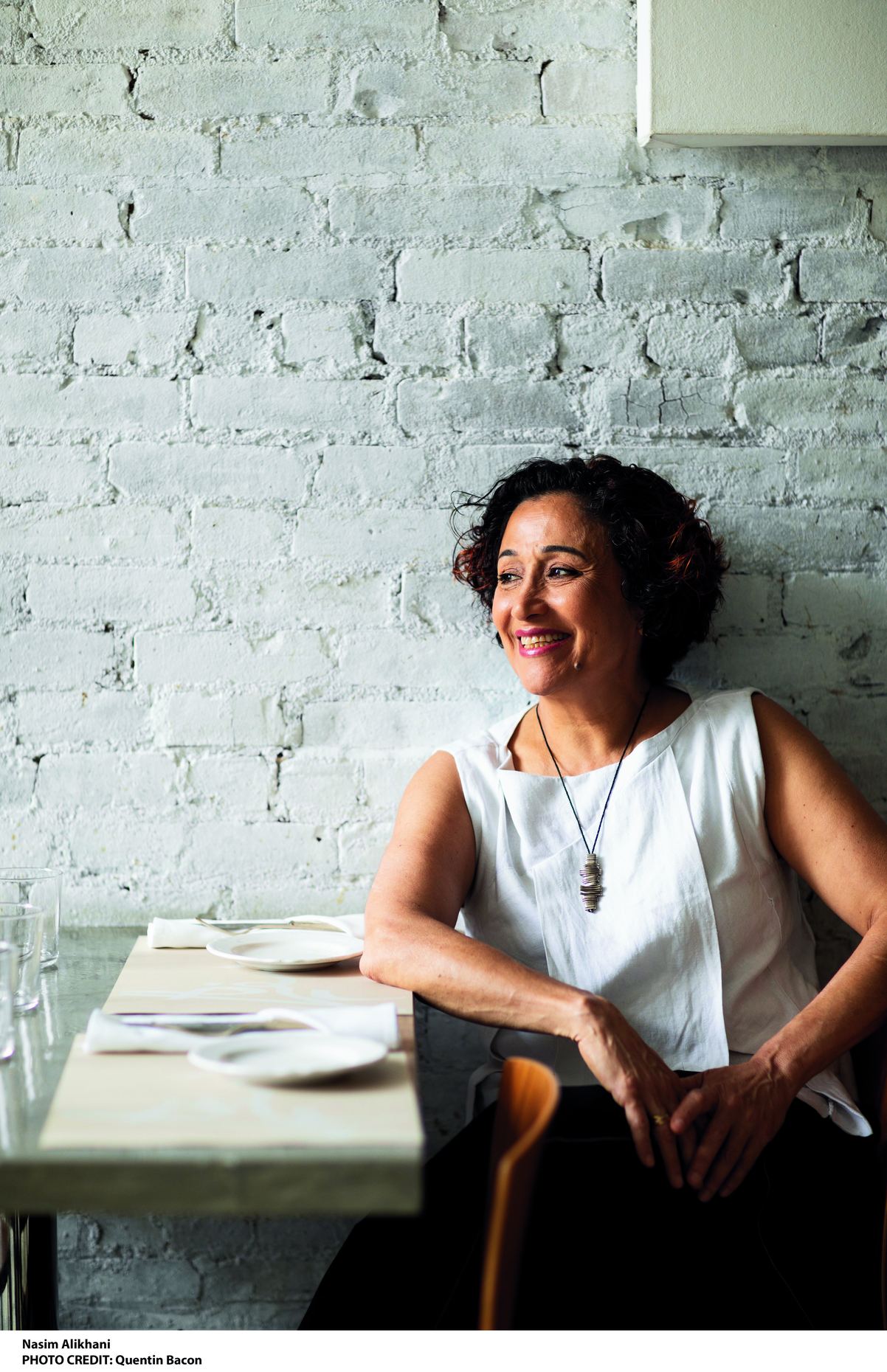
All Of It with Alison Stewart
A Cookbook from Sofreh's Executive Chef
00:29:02
Sofreh is one of Brooklyn's hottest restaurants. Now there's a new Sofreh cookbook!
Loading summary
Transcript40 lines
- [00:04]
A
Listener Supported WNYC Studios.
- [00:16]
B
This is all of it from wnyc. I'm Alison Stewart. Happy Thanksgiving to you and thanks for spending part of your day with us. Whether you're basting, baking or basking in the great smells coming from the kitchen, I am grateful you are here and thankful for your support. Let's continue with our food themed show today dedicated to some of our favorite cookbook conversations from this year, starting with the chef of one of Brooklyn's favorite restaurants. If you ask a foodie where to go for dinner in Brooklyn, there's a good chance Sofre may come up. Sofre serves modern Persian cuisine and since it first opened in 2018, it has been a wild ride for the past five years. For example, executive chef Nassim Alakani. She was nominated this year in the Best New York Chef category at the James Beard Awards and has also cooked the White House and the Met Gala. Alakani's story is a classic New York tale. She left Iran at 23 and when she came to our city, she didn't speak much English and she didn't have a lot of money. After building a life for herself here as a nanny, a mother and a caterer, she wanted to spread the family recipes of her Iranian roots so New Yorkers understood that Persian cooking was more than just kebab. The result? Sofre Alekhani has written a new cookbook called A Contemporary Approach to Classic Persian Cuisine, inspired by the dishes she serves every night and a reminder. You will hear calls throughout this conversation, but this is an encore presentation so we won't be taking calls today. I began by asking Nassim about her parents and if there were any life lessons they taught her that contributed to her success with the restaurant.
- [02:01]
A
Everything I do is because of my parents. But just to summarize it, my dad was a kind of man that when we had dinner parties he would before people even finished their meals, he was on hovering over them to my incredible like my mother's anger, he was hovering over them, collecting the leftover rice, the bones that, this and that because the rice belonged to the birds and the leftover bread were for the fish and the leftover bones for the dogs, the stray dogs. Nothing goes to waste. Everything is precious, everything has value. So that's the lesson that I have in restaurant. I am extremely frugal the way I cook, but also my mother another thing, the love of cooking. I enjoy cooking so much because I woke up as a 8 year old, 12 year old, 15 year old, whatever age I was. I woke up to the smell of onion simmering. My mother had been awake and before all of us maybe 5am and preparing our lunch. So when we come back, back home, you have warm meal. And it was just like I was sometimes dreaming in a school, like I was hoping the school, the class ends so I just can get to my mother's food. And when you grew up with all that sensation being awakened in you, I want to transport some of that. The sense of. I really meant it when I said just pay attention to who we are. I think every nation has a. Has an incredible history that maybe not everybody gets a chance to say it. I am just so honored to be able to just tell a little bit of it through food that I treasure so much. And my parents, my mother, thank God she is with me now, right now as we speak. She lives in the apartment above Sofre. But my dad passed away. But he's literally his lessons of preservation. Caring for every living being, extending love and joy to all beings and taking care of. And he always said, leave every place better than you found it. And all of it justice is in Sofre. At least I try. I hope I try.
- [04:11]
B
The other person you dedicate the book to is your husband who you said, who provided the safety and structure from which to realize my dreams.
- [04:19]
A
Yeah. My father always said he is a saint before even getting to know him. And I got a little bit annoyed at some point. You haven't even met him, he says, just for putting up with you, he's a saint. So. So he is. But he's so much more. He has been my truly my love life support since day one, since we met. I have put our family through crazy adventures and he is coming along. And then when the boat starts sinking, he comes and rescues. So he is. And especially that has been his role. Not just for me, for his company, for his family, but particularly for me because who would what kind of a rational person? And he's very rational and logical man. And he's a scientist. When they tell him we were. I was in my early 50s that I'm opening a restaurant and he just looked at me and he said, you know, you're crazy, but you have always been crazy. So it's just like. And he, of course, I don't think he was elated that at the age that everybody's retiring, we are going to go. I'm going to go to work 16 hours a day in one of the hardest industry. But he knew that he has to support me. I'm going to do it, and I'm going to probably collapse without him. So he better enjoys. He comes along and he did. He's there every day. He does plumbing, fixes electricity, pays our bills. He does so much Sofre wouldn't be sofre and I wouldn't be who I am without him.
- [05:55]
B
Someone has called in who knows you. Who wants to say hello, this is Lori calling in from Brooklyn. Hi, Laurie.
- [06:03]
A
Hi.
- [06:04]
C
I'm so surprised to be on the air. I love your show and I just want to say I don't know if you remember me, but we swam together at the Chinatown Y. Oh, yes, I do. All the time. You were planning the. And we talked about the twins and we talked about food and planning your restaurant. And I'm so thrilled for your success. I'm so thrilled for the James Beard nomination. I can't wait to see your book. And you gave me the best advice for another woman who works in the food industry was that to make sure to pamper myself and get a foot massage every week.
- [06:40]
A
Well, I wish I could have stated that advice myself. It's a really important advice for all the chefs and people who stand on their feet. Yeah. That once a week foot massage is crucial for nervous system.
- [06:53]
B
Well, let's talk about that. At 59, you decide you were going to enter one of the most rigorous businesses there can be. What question did you ask yourself before you started?
- [07:06]
A
Lots of. Lots of question. Am I fit to do this? And I didn't mean just cooking. Am I fit? Because I had a mission of representing my people and my food. Am I qualified to do this? Am I good enough to do this? Am I old, young enough to do this? And the answer to all of it was. Just filled me with a lot of fear. And every time I got filled with all that, I talked about it so much that I almost had to do it. There was no way backing down. Like when you invest everything you have in a brownstone to make a restaurant happening. No backing down. But that doesn't mean I was not walking night long filled with fear and anxiety with all these questions, am I good enough? Da, da, da. All that. I don't even have experience in the industry. How am I going to do it? But one thing I always quiet myself down, that as long as you do the best you can, and I know that I'm going to give everything I've got. That's all I've got. And I did. And I'm still doing it every single day. Yes, it's tasking on the body and in mind. And that's why we have amazing acupuncturists and foot massage and also therapists and lovely family members to vent. But yeah, you survive as long as I think you do everything in your capacity to the max. And you sleep knowing you've done it. All the rest is up to universe, how it receives it and how it gets back to you.
- [08:46]
B
What does sofre mean?
- [08:47]
A
Sofre means literally a piece of cloth that we spread before eating meal. But sofre, this is like such a common word, not just for Iranians, but our Middle Eastern neighbors have the same words. Turkish people, many people understand this word for me, and for Iranians, it's so much more than just that tablecloth. That of course, it's not just. It's everyday word that you hear in every Iranian home. Instead of set a table, you say sofraru bendas. And that's the word that commonly is heard at least two, three times a day in Iranian home. But in our culture, we also have a lot of traditional traditions that are associated with the sofreya. And they all have a special connotation. One is Persian New Year, we call it sofre, no, ruz hafsin. And one is a wedding ceremony that has sofre act, which is a special cloth with beautiful, ornate decorations that people put in front of bride and groom before getting married. There is one particular one. I'm a secular person, but I love this interpretation of sofre. It's called sofre Nazr is when someone makes a wish, and if their wish come true, they usually do a massive amount of cooking. And all the food goes out to neighbors, people who are in need. And usually this was a job of children. When we were young, my family, my mother and my aunts were cooking massive, massive pots of things. And we were the one who were donating. We were going around the neighborhood, running to people, knocking their doors and handing them over. And it was nothing more joyous for a child to open the door and then people greet you so warmly. And that is called sofrenaz. So what to summarize, all that words, for me, that sofre means for me, community gathering, food, and also a sense of belonging with all of it, like nazr act or hafsin is also tradition. And that's why I called sofre. Sofre encompasses all that bits and pieces of art, history and culture into one word.
- [10:57]
B
Before one begins to make anything in this cookbook or I'm gonna switch, cause People might not. I don't want to make people think they can't do this. If someone should walk into the average kitchen of a Persian cook or someone of Iranian descent, what will you find for sure, what are the staples that you will find?
- [11:16]
A
Onion, turmeric, garlic, if they are fancy, some saffron. And why, if you're fancy, it's expensive. There you go. It's expensive. And yeah, yeah, basically onion. I start every day, every day at my home. Onions are the biggest things I shop. I just go and buy like five pounds of onions. Sounds like a lot. I finish it in two days. So I go back again. So onions, onion, turmeric, some garlic, and that's what you begin. And by the time the aroma filled, you can add beans, you can add herbs, you can add your chicken or fish or lamb. And it's really approachable cuisine. It may have some of these recipes, may have a lot of ingredients and lot of, like, steps, but it isn't really, you start with onion, you add turmeric and you begin. And as simple as that, you write.
- [12:19]
B
Use this book as a springboard to dig deeper and ask questions about the Iranian people, our food, our culture. How is food a good springboard for conversation about culture?
- [12:31]
A
Food is amazing. I was just thinking this morning, I was talking to my doctor, I said, think about it. Instead of putting politicians in a boardroom to talk about like solving board problems, just gather them in a very simple place. Not those fancy dinners they go, just have them share each other's meal and converse over the meal. And I wonder if they are going to fight again over some nonsense. Food is the best ambassador to bring understanding. Even people who have no knowledge of outsiders, like we always, as human being, we scare of others. But then once we start tasting their food, sitting with them in a table, breaking bread, they're no longer outsiders. And I think food is the best ambassadors for diplomacy, for breaking even when families fight. Like sometimes I was angry at my kids once, we would sit down, we were shouting before. And then we sit down, time to eat, people quiet down, energy changes. And then it's just such a power into food, especially authentic food that is made with love. That's very important because nowadays food has become a state of art and is so fancy, and I have nothing against that. But a food that is cooked with love and authenticity and some knowledge of history and back to me tastes different, whether if it's cheese and bread and a humble bread, and that food can bring so much calmness to the room, to the environment, when I'm asking my readers to think about who these people are and I don't mean just Irans today on the media that here or the irans in the 80s when they heard as bunch of hostage takers or when they were presented in Hollywood stereotype of this angry bearded man killing, destroying. I just wanted them to see me, my grandmother, my great grandmother, the typical average woman who feeds her family with very basic means, onion, some rice, some lentils. That's about it. If they can see that then we are not hostage takers. We are not that this foreign element that we just came because those are the things that politics and media wants to say. But people are people all over the world and we need to pay attention to that. Not just the food we eat, what we think of those people. That's why I felt so freh my staff are going crazy by hearing the same playlist of the music. I try to change it but still it's more or less like Iranian music in their head all the time. Because I want my guests when they come in, not to just see the food, eat the food, hear our music. The smell of food fills the room. I just want them for even 10 minutes, half an hour, transport them to an unknown environment and hopefully make them think, oh, they're not what we were told they are. And if I can achieve that one guest at a time, my job is done.
- [15:38]
B
We got a Tex. We were lucky to be living just down the block when SoFre opened and enjoyed our meals there immensely. To their credit and success. We couldn't get a reservation for 20 days when we planned to visit it. That is the kind of problem to have. My guest is Nassim Alhani. She is the executive chef, chef and co owner of sofre. The name of the new book is A Contemporary Approach to Classic Persian Cuisine. It is out tomorrow. We'll talk about a few of the recipes after a quick break. This is ALL of it. You are listening to ALL of IT on wnyc. I'm Alison Stewart. My guest this hour is Chef Nassim Alahani. She is a co owner of her new book is A Contemporary Approach to Classic Persian Cuisine. It is out tomorrow. Before we get into the recipes you describe, you say in the book that you use Persian and Iranian interchangeably. Pernicious cooking Iranian food. Can you explain the context for using either Persian or Iranian? For people who might be confused, this.
- [16:43]
A
Is a loaded, loaded topic. Among other things, it's somewhat political. I don't want to get into the gist of it. But when we use. I use it interchangeably. But I mostly say Iranian because I personally feel I may get some flags for that. I personally think it's a more accurate interpretation of what at least I try to do in the book. Persia used to be like the entire Persian Empire. No longer the case. Iran is a country with borders. And. And when we say Persia, we only refer to the ethnic Persian food. Persian people, Parsi. Some live in India, some live in Tajikistan. They're living all over. Some are still in Iran. We are mix of lot of people in Iran. We have so many ethnic groups. And I am cooking some of their foods from north to south. So it's really unfair. I call it Persian when I'm like really cooking Iranian food from different ethnic groups who speak Farsi. And also they have their own language and their culture, but they speak Farsi. They are kind of forced to speak Farsi and go to schools and learn Farsi. They have their clear, distinctive cultural and cuisine practices. So I learned their food, I practice their food. I represent their food. So I want to call my book and myself an Iranian more than anything. I happen to speak only Farsi, unfortunately. I wish I did. I spoke different languages that is spoken throughout Iran. But I try to be very educated and conscious and respectful of that. So that's why I use it interchangeably. But mostly Iran is. And I am Iranian. I'm not Persian only I could be, but I'm Iranian and my book is Iranian cuisine representing different cultural practices.
- [18:41]
B
If you want to taste something delicious, there's many things, but the bread first. Can we just start with the bread? The sofre bread. Is this an original bread?
- [18:51]
A
It is. It is. And it's not like everything at Sofre. It is really based on a traditional bread called sangak, which I learned the recipe from a baker around the corner of my father. The man was gentle enough to let me in his kitchen, and it was a source of entertainment for the neighbors to come at 5am to see this woman dropping every loaf on the floor because it's such a hard bread to make, is a wet dough, extremely wet dough, and it's called sangak. The reason it's called sangak, it cooks over hot stone. And I wanted to bring that oven to Sofre. But then I realized it's impossible. So many, so many logistical issues, from health codes to the actual oven. So I brought that recipe and we practice it in a simple pita oven and it became a hybrid. It tastes like sangak. It looks like bharberi. And people say, what is it? And I'm like, it's sofra bread.
- [19:49]
B
The other thing that is important to your meal is rice. And you make a joke in the book, and maybe it's not a joke that if certain people order a dish and you don't see rice, that you or someone may come out of the kitchen and be like, hey, you gotta order rice.
- [20:02]
A
We definitely. No, we don't joke about it. This was the beginning issue, because people were like, no, I don't eat rice. I'm like, no, no, no, no. You cannot have a stew, watery stew. How are you gonna. Are you gonna slurp your bowl literally on a floor? Like, this is not happening. And when people were adamant about not getting it, I would tell my chef, send them a bowl of rice. And then, without exception, not a grain left. But now we don't have this issue anymore. The world is around that you come. And I was joking to some of them. I'm not so joking. Like, you go to Italian restaurant and you're not eating pasta. What the hell you're doing then? So it's just like, you're an Iranian restaurant. Rices are a stable, and stable food. Sometimes we call just a plain rice and a yogurt and a pickle. We call it a lunch or dinner, for God's sake. So anyway, no, that's not an issue anymore. But it used to be in the beginning. But I'm so glad also people understand that rice is not just this fluffy white thing. We do so much with rice. If I were allowed, I would have put another 20 rice variations in the book, but then it would become only a book about rice. Maybe I should do that.
- [21:11]
B
There's the super crispy rice.
- [21:13]
A
Yes.
- [21:13]
B
What is that?
- [21:14]
A
Tadik. Tadig. Yeah. Tadik has become from an unknown word now. I love Edmond. My guests, our guests, I hear they order Tadik. I just filled with joy. It has become almost a household name in Brooklyn. Not because of me. Thanks to TikTok and all these young people who are doing amazing, like, gimmicky work on Instagram. There's just so much. Many cultures have. Tadik. I realized that, like, entire South America, Koreans and Brazilians, they all have a variation of burned rice in the bottom. Iranians took it to a whole different level. We put everything in the bottom, from herbs to potato to even pasta, actual rice bread. And we make it crispy. And what makes it super delicious is not like, just fried potato. You can make French fries. But what goes in the bottom, it absorbs all the Starch from the rice, so it becomes almost buttery and sweet. Who doesn't like something cr. Buttery, Kind of caramelized? My God, it's incredible.
- [22:17]
B
Those are all good words in my book. Those are all good words. There's a lot of fruit recipes in this book, and this one I thought was so interesting. Prune and spinach stew, which you used to make for your kids when they were young. So it's a beef stew, but there's also, as well as the dried plums, there's also a citrus element, either lime or lemon. What goes into making this dish, and what is the role of fruit in Iranian food?
- [22:43]
A
Yeah, the Iranians, especially in the central part of Iran, which is where I come from, I'm from Isfahan, there's an abundance of incredible fruits. So we use them into both. Of course, we eat ton of fruits. Iranians love their fruits. But also when you have so much of it, we use them as when they're unripened, like grapes, for example. There are a lot of raisins in my cooking in the book, but also there is a use for them when they are just fresh in the the season and they're sour. Sour grape is a major food flavor enhancer in many of my stews. So I am actually going to some neighbors and steal their all their sour grapes and freeze them. And throughout the year, use them as a flavor enhancer. Same thing with plums. Plums, when they are green, we use them for food in the spring. They are amazing. They're green. They're so tart. So incredible. Add so much flavor to stews and as. But the season is short. Two weeks, three weeks. You need to dry. What are you gonna do with them? So we dry them and we use them as a stuffing. We use them in the case of a spinach, we use them as just another component to a beautiful herb dish. And it adds so much. If you just eat the spinach and all the flavoring. Yeah, it's good. Once you add the plum, they add the just perfect balance. And with the zest of a lemon and lime, with the perfect balance of sweet and sour, that dish comes to life. And it was so popular. I was serving at Sofretu when we opened, but then I switched it to another beloved herb. There's so much I can do, but it's super delicious. I hope people get to try that.
- [24:20]
B
You devote an entire chapter to eggplant.
- [24:24]
A
Yes.
- [24:24]
B
There are people for whom eggplant is the no go.
- [24:27]
A
I know.
- [24:27]
B
For people who don't Believe they might like eggplant. What is a recipe you think could change their mind?
- [24:34]
A
Eggplant Cashko Bademjun. It's eggplant way dip.
- [24:38]
B
I like the way it sounds.
- [24:40]
A
Badem June is eggplant. And the word jun in Farsi is a term of endearment. So think about how much Persian love that, to call that badem June. So it's like it's a beloved vegetable in our culture. And I hear this all the time at Sofre. I'm not for eggplant. And I have right now two items in a small menu. Two eggplant dish. One is appetizer, one is main. In a couple of weeks, when the farmer's market eggplants are out, I'm going to introduce daily specials of E. And one customer, one guest said, three eggplants, for God's sake. And I'm like, yeah, maybe James Beard one day invite me. And they allow me to run the entire dinner of six courses of food, plus the dessert. When people don't like eggplants, I tell them eggplant is understated vegetable that is like a sponge. You can absorb everything. You give it too much oil, like you fry, just all you taste is oil. But you give it attention and a care and love. It gives you back the same attention and love. So treat these eggplant recipes the way I ask you to, and then write to me if you're still thinking, oh, eggplant is not for me.
- [25:53]
B
You came to this country with very little English, very little money. You were young, 23 years old. If there's someone listening now who's in a similar situation or maybe just starting out and has a dream of a restaurant or has a dream of anything, what advice would you give them?
- [26:11]
A
Maybe if I look back to my old self, because that's. I don't know what. Who am I to give advice? But I'm looking at the despair that I felt those years, the sense of hopelessness that I felt. It was dark times. It was New York City, 1983. City was bankrupt. Prospect of job was limited. Crime, poverty, loneliness, all of. Of it. And life seems so dark. But then what, at least for me, got me out of that dark place, was cooking a meal for me and then sharing it with others. Because just eating by myself, I still was in a same dark place, except full stomach. But once I got that little food and I took it, maybe to school, and I sat in a cafeteria, and people like, what's that? And like, you want to try that took me out of my place. And I quickly realized that that is up to us to stay where we are or find ways and tools to get us out of what is not working. Because simply staying in a poor me situation, you know, I'm, you know, this and that, yeah, it's just good enough. But snap out of it. Just quickly snap out of it. Find ways, tools to get you out and never ever stop dreaming. Never. But have a just like dreams should never die. I'm still dreaming. I'm dreaming about what more I can do, what better things I can do. So I don't know if I answered, but I think never stop dreaming. Never stop dreaming. And also find tools to get you out of your dark place and they don't let you. When I was faced with so many rejections with sofre, with permits and all that, a wise friend gave me an advice which was incredible because I was like crying my heart out. Why city so unfair to a small people, blah, blah, blah, blah. She said, stop me on my track. And she said, don't you love to cook? I said, yeah. I said, what's stopping you from cooking for some shelters, some homeless shelters? Just cook. I said, what do you mean? Like, just go and sign up, just keep cooking and. And while you have nothing better to do, instead of waiting and ranting and complaining, do something about. And I did. And it brought so much joy, plus an amazing marketing research. Imagine you feed people, nobody's asking you what you're feeding them, and you watch in the background and watch how the food is being consumed. What is it they like? What is it they don't like? Who would have known? That became my menu. Basically those home, you know, volunteer cookings for various projects became my menu at Sofre and it was immediate hit. But we don't know these things when we are in our own dark zone. We just don't know that you have to break inertia. Exactly.
- [28:59]
B
That was the James Beard nominated Nassim Alahane, executive chef and co owner of the Brooklyn restaurant Sofre. We were speaking with her about her cookbook, a contemporary approach to classic Persian cuisine.