← All Of It with Alison Stewart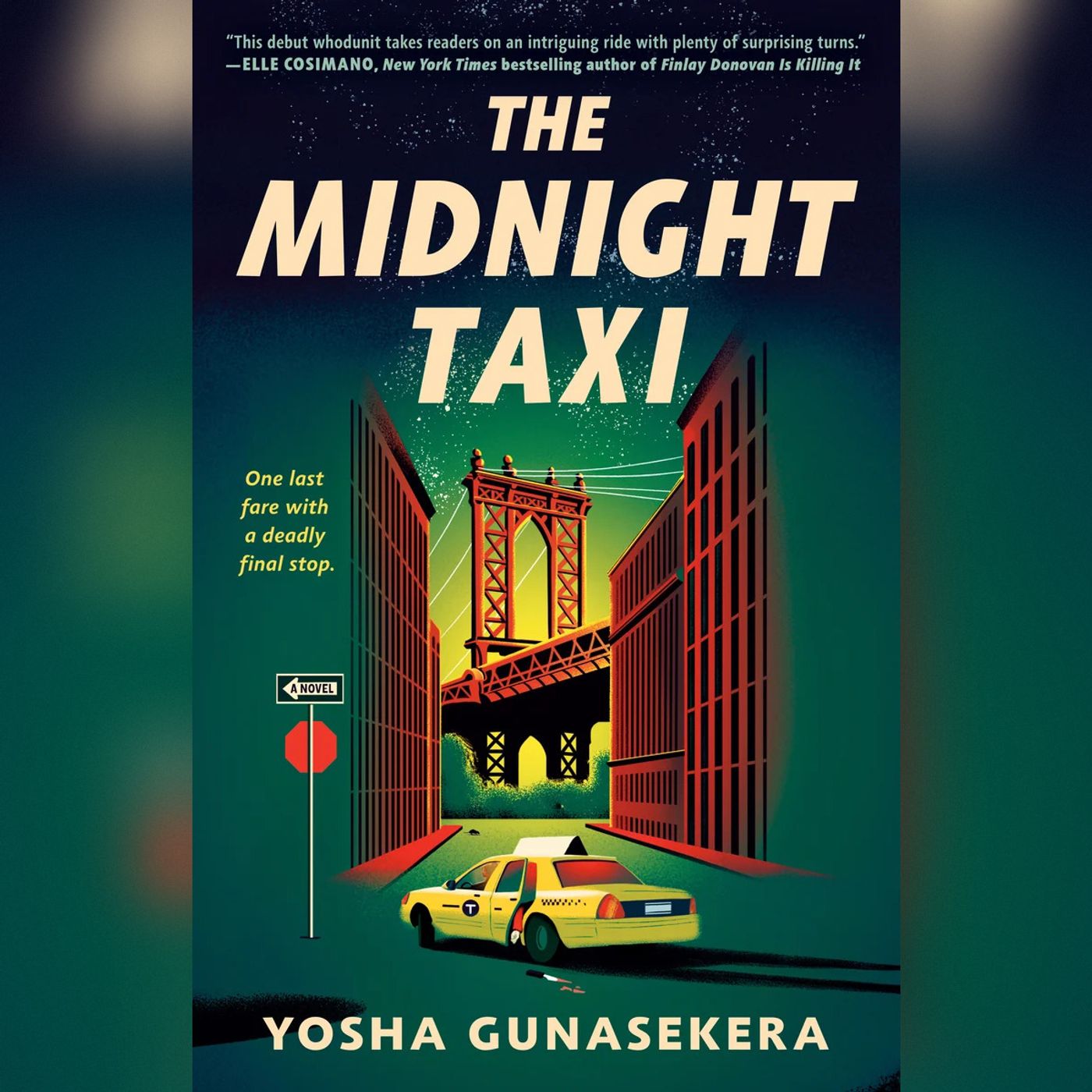
Loading summary
Transcript34 lines
- [00:09]
A
You're listening to all of it on wnyc. I'm Alison Stewart. According to the crime podcast Loving protagonist of a mystery novel, 90% of murders are committed by people the victims know. However, that fact isn't useful when she's the one on trial. The novel is titled the Midnight Taxi. Set in the backdrop of New York City's, the story follows a Sri Lankan American taxi driver named Siri. Let me get this right. Sriwathi. Yes. Who notices that a passenger she has picked up has a knife lodged in his chest. Fearful of what might happen to her, she reaches out to a public defender, Amaya Fernando. She was in her cab right before the guy with the knife. In the days that follow the murder, the two spring into action, investigating the crime to clear Siriwatha's name. The Midnight Taxi is a debut novel, and it's by attorney and author Yosha Gunasakira. Yosha, welcome to all of it.
- [01:07]
B
Thank you so much for having me.
- [01:09]
A
So in real life, you are a staff attorney with the Innocence Project, and for people who don't know, it's a nonprofit that works to free innocent people from prison and presents wrongful convictions. You've acknowledged that this happened after you had a conversation with a cab driver. Tell us a little bit about that.
- [01:28]
B
Yes. So it was back in the days when I was a public defender here in Manhattan, and I was leaving night Court after representing people, people accused of all sorts of different things at 1am and there was a waiting yellow cab. I got in, and the yellow cab driver intentionally picked up people from outside of night court because he wanted to hear about what attorneys were doing in night court. And so it really was very much like my protagonist, Ceciri. It was a true crime loving cab driver. And we just had this rare moment of human connection that you often have in New York City between two strangers. And it was just this fun moment where we were talking about both true crime and about my work as a public defender. And it really got me thinking about the plot of this book.
- [02:17]
A
It's so funny. We have to be careful when we say her name because people's phones will go off who are listening. Siriwathi will call her for this. Is that okay?
- [02:26]
B
Yes, absolutely. She goes by both, so it's perfect.
- [02:29]
A
You describe her as a Chatty Cathy in the book. Does she like her job?
- [02:35]
B
She has a complicated relationship with her job. I think she's really curious about the world around her, and so she loves to listen in on people's conversations. She loves to find it as a way to meet different types of New Yorkers. But then she also feels as if she might not be living to her full potential. So she's really stuck between two very different worlds.
- [02:55]
A
She really loves true crime podcasts. Why does she love true crime podcasts?
- [03:01]
B
What does she get out of them? I think she loves the mystery of it all. I think she loves the whodunit aspect of trying to figure out who committed the crime. I think it's a great way when she's sitting in the cab and her passengers don't want to talk to her despite her trying to talk to them. It gives her a sense of companionship in some ways. And so she really feels like when she does eventually get arrested, that she totally understands the criminal legal system because she listens to true crime.
- [03:33]
A
But you find out, I bet you found out in your work, that people think they know the legal system and they don't know very much at all.
- [03:41]
B
Absolutely. I think I could even be put in that boat. Prior to going to law school, prior to working at a public defender's office, I thought that 100 episodes of Law and SVU made me truly an expert on the criminal legal system. And then I went to law school and realized how different reality is. Is from what's presented on television.
- [04:04]
A
And one thing I do want to mention is you're married into a family of cab drivers.
- [04:09]
B
Yes. Yes. So my husband's father was a cab driver, and then his father. So my husband's grandfather actually was driving a cab when he got shot in the head, lived to tell the tale, and then went back to cab driving. So it's always been part of this family lore, and it's really driven me to want to learn more about these essentials. New York City service workers that we often don't. Don't talk about.
- [04:38]
A
I'm so happy to hear that as well. Thank you. Your great grandfather, or your grandfather, I should say. What's interesting about a taxi driver's perspective that you picked up?
- [04:50]
B
Yeah, I think that they really are quiet observers of the world around us. And I really wanted to make a commentary about the fact that they're such essential parts of New York City. When you think of New York City, you think of that yellow cab. But we so rarely wonder who is driving us, especially, you know, given Covid, given so many. Given rideshares, so many constraints on their jobs. And so I really find them to be these really interesting, quiet observers of the world that have a lot to say, but often we're not asking them what their thoughts are. And so I just thought that was such an interesting and rich character to explore.
- [05:31]
A
We're discussing a debut mystery novel which follows a Sri Lankan American taxi driver facing prison time after a passenger turns up dead in her backseat. Attorney and author Yosha Gunasakira is here with me to discuss her book, the Midnight Taxi. She ends up, before this all happens, she is driving around a woman whose name is Amaya, and Amaia's a lawyer, she's also Sri Lankan. What unique experience about Sri Lankan Americans did you want to experience between these two people meeting?
- [06:04]
B
Yeah, you know, I loved reading mysteries growing up, but I so rarely saw anybody who was a South Asian protagonist and even more rare, a Sri Lankan protagonist in these type of novels. So we really thought it would be special to have not just one, but two. And part of their bond is just over their shared heritage. They so rarely see other people who are Sri Lankan. And so the book, it was very important for me to explore, you know, our culture, our language, our food, and our rich history, because truly, New York City is all the better for our rich history of immigrant populations. And so I just thought it would be a fun way to explore my own culture in a way that I had never seen before.
- [06:49]
A
How would you describe Amaya, the lawyer?
- [06:52]
B
She is very hard headed because she is representing a really vulnerable population as a woman of color. And she knows how the system can really ensnare people and how, you know, oftentimes when someone's been arrested, we all conspire, you know, and by we, I mean like the police, prosecutors, and the world at large to find these people guilty instead of necessarily finding the true killer. And so she's fighting against so many systemic issues in the criminal legal system that she feels like she has to always have this kind of this, you know, shield up this armor against the world around her in order to do her job and to make sure that her clients are getting, you know, the fair representation that's often denied people of color and poor people in our criminal legal system.
- [07:47]
A
Well, it all starts out when Siriwatha is driving this person to the airport and she thinks he's fallen asleep in the back of the car. But when she goes to sort of wake him up, she realized that he is, first of all, why didn't she call the police right away? That was one of my big questions, why she should have called the police? Why didn't she?
- [08:05]
B
I know, and she realizes that it's only gonna make her look more guilty, but I think it is a True moment of panic. And oftentimes, in the cases that I've had, either as a public defender or even in the Innocence Project, sometimes people don't always act logically when they're so panicked, and she's so surprised. And I think she almost subconsciously understands that she is going to be the person that they point to for both, because she's the person in this locked cab, but also she's a woman of color, and she's been stopped before because of that. So I think she absolutely panics and does, you know, doesn't know what to do and does this out of just total, you know, her brain being in disarray. And that really is something that's used against her as the book progresses and she gets arrested. Yes.
- [09:00]
A
So walk us through the psychology of someone who is arrested for a crime, taken to the police station. What's often going through their minds.
- [09:10]
B
There is a lot of fear. You are oftentimes taken in handcuffs. You are separated from your lawyer. You're separated from your friends and family. Oftentimes, confessions, especially for very serious crimes like murder, can last hours. Sometimes you're without food and water. And there's a lot of coercive confession tactics that are still allowed to be used. Police officers are allowed to tell people that they have certain pieces of evidence that they might not have. And that's what happens in the book. They. They tell Siri at one point, Siriwathy, they tell her, you know, we. It's okay setting off everyone's phones. And they tell her, you know, we. We have video of you committing crime. And so it almost convinces people, especially in this vulnerable state, she's already been through this extremely traumatic event of having her passenger murdered in her own cab and just primed to say things that maybe you didn't do. And it's such an inconceivable thought. But we now know with advanced social science that often a lot of our wrongful convictions are premised on false confessions because it's just such a coercive environment.
- [10:29]
A
You have a job as an attorney. You worked on this book as an author. How did you keep track of everything? I mean, your life must be incredibly busy.
- [10:42]
B
It is very busy. And I also. I teach a class on wrongful convictions and documentary filmmaking at Princeton. So it has been busy. But they all have this very common theme of, you know, trying to discuss issues within the criminal legal system. So it definitely all lends itself to each other in a really beautiful way. And I think it's just finding pockets of Time when you can. When. When I started writing this book, I started writing it in, you know, courthouses, waiting for my cases to be called, in courtrooms and in jails and prisons, because you can't bring in your cell phone, you can't bring in any technology. You're there with just your legal files and a blank yellow pad. So sometimes I would just write short and then go home and type it out. But it was such a fun way for me to explore these issues that felt a little bit less serious than my day job. I was able to have write a novel that had a lot of humor. And the biggest difference between being a lawyer and being a novelist is that for a novel, I can just make things up, which was just so much fun and just really, really an enjoyable part versus my day job, where obviously everything is based on case law and evidence. And it was just fun to use a different part of my br.
- [11:59]
A
And you also said that you wanted to make sure you included all five boroughs in the novel. Why was that?
- [12:05]
B
I just. I think there's so much to enjoy in all of New York City, and I really wanted to highlight that. I think part of my job representing New Yorkers is having gone to all five boroughs and having done investigations in all five boroughs and just realizing that there's so much beautiful culture. So many people visit New York City and they stick to just, you know, midtown or time, Times Square, which is amazing for. For many reasons, but there's so much wonderful things to explore if you just go a little bit out of the city. And I really wanted to highlight, especially, like, an incredible food scene we have in all five boroughs. And it was just fun to relive some of my favorite restaurants while writing the book.
- [12:52]
A
Who was your. Your reader? The person who read it the first time and said, is that a mistake? Does this match up with that? Who was the person who kept you honest in this book? Because you have to.
- [13:03]
B
In a mystery, you do. And so my first reader always is my older sister, who is a much better writer than me. And people always say, never have your family read your work, because they're gonna say it's amazing. And to those people, I always say, you haven't met my older sister, who has been very honest since as long as I can remember. But that's exactly what you want, because first draft, I did not do an outline, and I thought I could just keep it all in my head and write a very clever murder mystery with twists and turns. And then she reads it, and she's like, well, there's 12 plot holes, five things go nowhere. And I was just like, think. You know, at first I was like, that's not true. And then I was like, oh, wait, it totally is true. It is true. And I, and I'm so grateful. And then you, as you become, you know, as you continue to write, you realize that, like, those critiques are such a gift. And anyone who's willing to spend time with your book to try to make it better is like, truly such a blessing. So now I really love to have as as many readers as I can.
- [14:09]
A
Do you want to find out if Siri is a murderer? You have to read the Midnight Taxi. My guest has been Yusha Gunasakiera. Thank you so much for being with us.
- [14:20]
B
Thank you so much for having me. It was so fun.
- [14:23]
C
It's tax season, and at LifeLock, we know you're tired of numbers, but here's a big one you need to billions. That's the amount of money and refunds the IRS has flagged for possible identity fraud. Now here's another big number. 100 million. That's how many data points LifeLock monitors every second. If your identity is stolen, we'll fix it. Guaranteed. One last big number. Save up to 40% your first year. Visit lifelock.com specialoffer for the threats you can't control. Terms apply.
- [14:53]
A
Since WNYC's first broadcast in 1924, we've been dedicated to creating the kind of content we know the world needs. In addition to this award winning reporting, your sponsorship also supports inspiring storytelling and extraordinary music that is free and accessible to all. To get in touch and find out more, visit sponsorship.wnyc.org.