← All Of It with Alison Stewart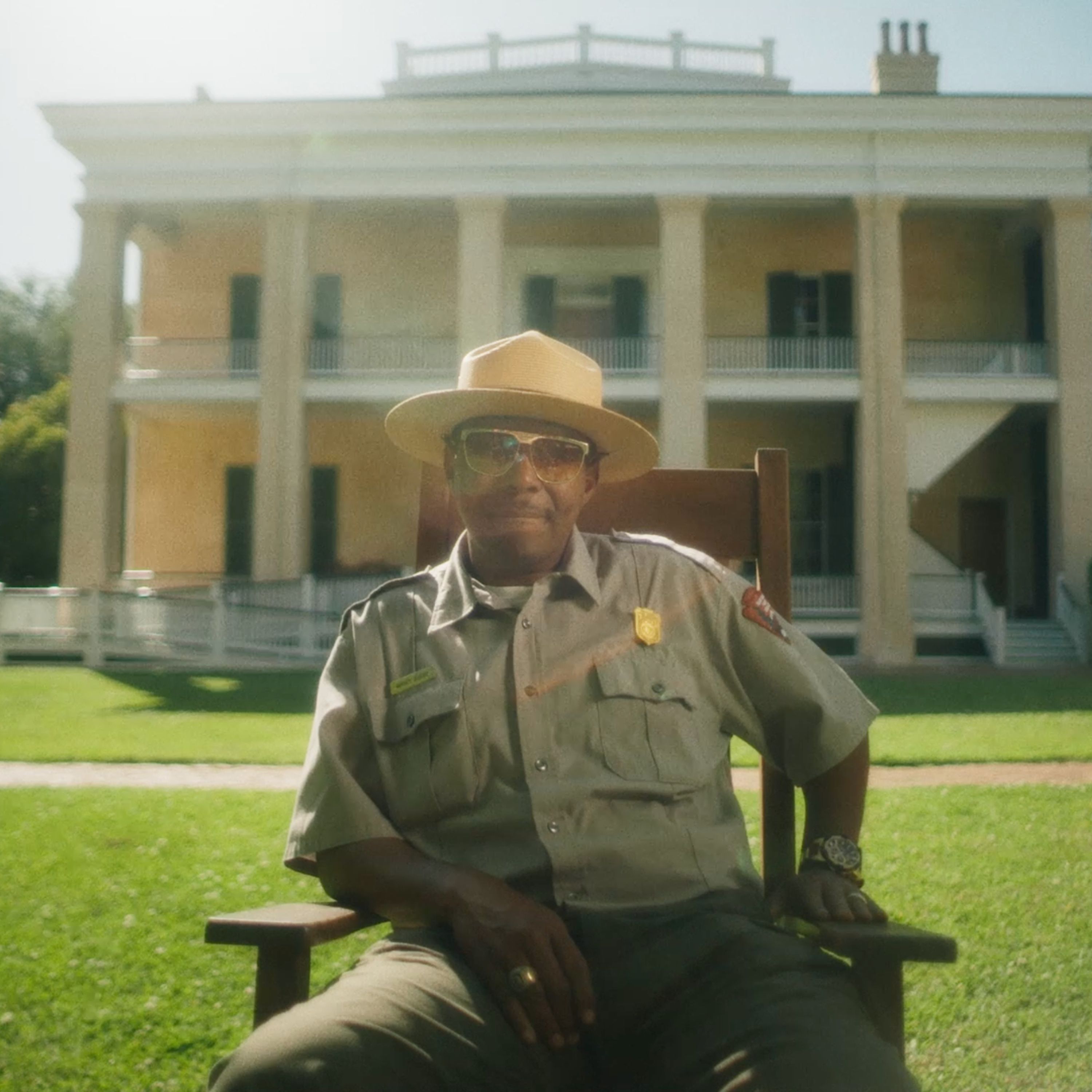
Loading summary
Transcript74 lines
- [00:00]
Progressive Insurance Announcer
All of it is supported by Progressive Insurance. Do you ever find yourself playing the budgeting game? Well, with the Name youe Price Tool from Progressive, you can find options that fit your budget and potentially lower your bills. Try it@progressive.com Progressive Casualty Insurance Company and affiliates Price and coverage match limited by state law. Not available in all states.
- [00:30]
Alison Stewart
This is all of it on wnyc. I'm Alison Stewart. Natchez, Mississippi, has weeping willows that line the streets, which are dotted with stately. Towering mansions. Lush lawns and colorful flowers are overseen by a local and discerning group called the Garden Club. Tourists come to tour the homes and gardens. It's part of something called the Pilgrimage, an annual event which is set to begin in March of this year. But like many places, this is just one of the many views of this picturesque place. One of the reasons why Natchez was such a a wealthy town was because of cotton fields and the enslaved people who picked the cotton and the enslaved people who built the mansions and worked inside them and outside of them, the enslaved people who tended to the gardens. On the outskirts of Natchez is an area that was once one of the biggest slave markets in the country. Filmmaker Susanna Herbert took her camera to examine how residents, both black and white, wrestle with this history for her film Natchez. Here's an example of how Rev, a black tour guide, does his tours, and the predominantly white garden club does theirs.
- [01:37]
Rev (Black Tour Guide)
So when you looking at these houses, you going through Natchez, understand that they were built by slaves. And that's the piece of the history that you don't get in the antebellum houses. They use the word servant or help, you know, but these are slaves.
- [01:53]
David Garner
Okay. This was Dr. Duncan's servant. That was their favorite servant. He became the overseer of this house. They taught him to read and write. Those are his actual writings right here. And back then, it was against the law.
- [02:09]
Interviewer
Yes, that's what I want.
- [02:12]
David Garner
So Dr. Duncan, he was good to his people.
- [02:15]
Alison Stewart
The film has won numerous awards on the festival circuit, including Best Documentary Feature at the Tribeca Festival, and it will premiere here in New York at the film forum on January 30th. And Susanna Herbert is with us in studio. Hi, Susanna.
- [02:28]
Susanna Herbert
Hi. Thanks for having me.
- [02:29]
Alison Stewart
So you grew up in the South? Yeah.
- [02:31]
Susanna Herbert
Yes, in Memphis.
- [02:32]
Alison Stewart
In Memphis. So how were you taught about the Civil War?
- [02:36]
Susanna Herbert
Well, I went to public schools and I actually was taught a pretty robust history of the south or of the Civil War we had facing history in ourselves in our schools. But, yeah, the mythology of the Lost Cause and the Civil War is just kind of everywhere. You can't help but kind of absorb it growing up. So as a white person, as I got older, I was really struck by that romanticization of the Civil War and of the antebellum times.
- [03:16]
Alison Stewart
Why did you decide to focus on Natchez, of all places?
- [03:20]
Susanna Herbert
Well, I first got interested in exploring these topics when I was invited to a wedding on a plantation. Yeah. And it was very unsettling.
- [03:32]
Alison Stewart
A family farm, you mean, as they.
- [03:34]
Susanna Herbert
Used to call them, and they still call them, unfortunately. And I wanted to explore how white people use plantations and historic sites today for their own enjoyment and profit and entertainment and how that affects us as a society and how it affects people on the individual level as well. So I started talking to friends and in Mississippi, and everyone told me to go to Natchez. And so I first went with my mom on a road trip, and I was. I had been reading a lot about the antebellum times and slavery, and I was just so struck by the beauty of Natchez, like you described at the beginning, but also this, like, pain and horror that was so right under the surface. And it was very unsettling. And I realized I needed to explore that in a film. And Natchez has been, for the past hundred years, telling the myths of the old south through tourism. And so they're grappling with these issues on an everyday, every day.
- [04:41]
Interviewer
One of the ways, as you said, is through tourism and through the pilgrimage. Explain to me what the pilgrimage is.
- [04:49]
Susanna Herbert
Yeah. So pilgrimage is this time in the spring and in the fall where the homeowners of antebellum homes open up their private homes to tourists, as they call pilgrims. So they receive the pilgrims and tell a version of history of their homes that is usually pretty one sided.
- [05:13]
Interviewer
What's an example of one sided?
- [05:16]
Susanna Herbert
So, you know, they don't. Houses don't talk about the enslaved and how the wealth was built. And if they do talk about slavery, they use the word servant or help or they say our slaves were happy. You know, they use a lot of language that dehumanizes people and the experiences of the enslaved.
- [05:40]
Interviewer
Usually. Who are the people on the tours?
- [05:42]
Susanna Herbert
It's a lot of white people, older retirees, who have been, you know, taught the grandeur of story of the old South. And, you know, it is. History is absorbed, I think, a lot through popular culture. And Gone with the Wind to this day is still the highest grossing film of all time. And so it's very much entrenched. In, you know, the ideas of the Old south are very much entrenched in the. In popular culture. So people seek that out. They seek to experience, you know, the beauty of that time. And Natchez has been selling that myth for decades.
- [06:26]
Interviewer
I'm speaking with Susanna Herbert, director of the documentary Natchez, about a small town in Mississippi reckoning with its vision of the past. It premieres at film forum on January 30th. Tickets are on sale now. There are so many characters in this. I want to just talk about a couple. The member of the garden club who helps take care of these beautiful places is a gay man named David Garner. He and his partner, they own one of the mansions, and he takes a lot of pride in the mansions, but he's also really problematic. What did you want to explore about racism with him in particular? Because by the end of the film, he's straight up racist.
- [07:07]
Susanna Herbert
Yeah. Yeah. I think part of the danger is. Part of the danger of telling these corrosive histories is that it's often hidden by. It often hides the racism. And it's so easy to be charmed by it and to excuse it. And I think that a lot of people in society and in this country, they're able to do that because it's so. It's so. It can be so welcoming. And there. It's like. It's very insidious, actually.
- [07:47]
Alison Stewart
And so, yeah, I wonder how. Just that, as a filmmaker, how long did it take him to let loose with his racism?
- [07:57]
Susanna Herbert
Actually, not that long. I think that. I mean, I used my. My Southern ness and my whiteness as a. As a way to expose the reality. And I think that saw themselves in me and felt very comfortable pretty immediately.
- [08:15]
Alison Stewart
Yeah. You know, it's so funny because if you speak Southern, my sister lived in Richmond for 30 years, so I speak a little bit of Southern. Natchez is described as a peculiar place. And peculiar often meant slavery. It could also mean gay as well. And it was interesting. I wondered if you felt that the people there, they were okay with David's gayness as long as he took care of the beautiful home and he kept the tourists coming. Considering so many people hold the same feeling about gay people as they do about black people. Right. You know what I'm saying?
- [08:50]
Susanna Herbert
Yeah. Yeah. There's an intersectionality of it, but I don't think that those two things are mutually exclusive. Just because you can be oppressed doesn't mean you're not an oppressor. And I think that David represents that in totality.
- [09:10]
Alison Stewart
Another subject in the film is Rev. He's self described the best tour guide in America. He's not a member of the garden club. He has a very different approach to Natchez. He's a black tour guide who talks about it, both the good side and the bad side. How did you find him?
- [09:28]
Susanna Herbert
I found him just by going to the visitor center. I was going to get some brochures and to find out information on tours. And he recruited me onto his van, just like he recruits everyone onto his van, you'll see in the film. And I was blown away by his tour and the history that he was telling because it was so different than other tours that I was taking in Natchez. And we kind of immediately connected.
- [09:54]
Interviewer
He takes visitors to a place called the Four Points Project.
- [09:57]
Alison Stewart
Would you explain that?
- [09:58]
Susanna Herbert
Yeah, it's called the Forks of the Road. Forks the Road, Yeah. And it was actually. It's the second largest slave market in the history of this country, and it's in Natchez. And it is a very. It's a forgotten part in site of American history. And the National Park Service is actually working really hard to buy up land around the site and to make it a memorial and a place of healing and history and.
- [10:29]
Interviewer
Yeah. How do residents feel about him bringing his Tories to the spot and telling them what happened there?
- [10:37]
Susanna Herbert
I mean, I think it's mixed. I think a lot of people not just support it, but then there are people like business owners across the street that you'll see in the film who. Who are not so happy with. With the work that's being done at the Forks of the Road.
- [10:51]
Interviewer
Why are they unhappy with it? That's what I was having trouble with.
- [10:54]
Susanna Herbert
Yeah. I think because a lot of people feel threatened and fearful in telling a full version of American history. I think that, yeah, it's. It's a lot of resentment and racism and fear.
- [11:13]
Interviewer
One guy just says, like, let's get over it.
- [11:14]
Susanna Herbert
Yeah.
- [11:15]
Interviewer
That's his answer.
- [11:17]
Susanna Herbert
Yeah. Why do we need to remember that? Because people don't want to acknowledge that it affects us today. The legacies of slavery, like, directly affect how we live today. And people don't want to think about that and acknowledge that.
- [11:33]
Interviewer
I'm speaking with Susanna Herbert, director of the documentary Natchez, about a small town in Mississippi reckoning with a vision of its past. It premieres at film forum on January 30th. It's so interesting as a filmmaker. It kind of has a gauzy, filtered look when you make the film. How intentional was that? What did you want the film to look like.
- [11:52]
Progressive Insurance Announcer
Like.
- [11:53]
Susanna Herbert
Yeah. Thank you. So, my cinematographer, Noah Collier, we talked a lot about the look of the film before starting to shoot. We wanted it to feel like a fiction film. We took a lot of cues from Gone with the Wind, you know, this, like, really vast, beautiful, rich, rich colors. And we shot the film on a tripod and with vintage prime lenses from the 60s.
- [12:23]
Alison Stewart
Oh, that must have been really cool.
- [12:24]
Susanna Herbert
Yeah, yeah. So it had this, like, really beautiful look because Natchez, it does pull you in with the beauty. But then in the film and, like on Rev's tour, we want to slowly peel away the layers and to show you the unvarnished version of it and the truth.
- [12:44]
Interviewer
Yeah.
- [12:45]
Alison Stewart
So there's also a subtle issue of class in the film as well. There's a woman who just loves getting dressed up in this antebellum clothing. She's a beautiful woman, and she's putting on the skirts, and she says she feels unbelievably beautiful when she's dressed like this. And then she gets sort of, I think. Did she get divorced? Separated from her husband, and she has to, like, put everything in her car and drive off? What does she go through in the making of this film?
- [13:17]
Susanna Herbert
Yeah, I think Tracy is a really beautiful character in that. She shows the transformation that is. That is possible, I think, when you understand a more complicated history of our country. And I think that, you know, she really aspired to be a part of this kind of, like, aristocracy or this, like, you know, Southern belle version of history. And then over the course of the film, she, you know, ultimately takes Rev's tour and realizes that what she had been taught is not the full picture.
- [13:59]
Interviewer
One of the other groups in the film you follow is the Garden Club. Why is the Garden Club such a big, big deal in Natchez?
- [14:07]
Susanna Herbert
I think because in the 1930s, Natchez was really struggling. You know, it was the Depression. The Bol Weevil had hit. Sharecropping was happening. A lot of the wealth from slavery was gone. And the matriarchs of these white homeowners, they. They came up with this idea of pilgrimage. And so they opened up their homes and across the country, not just in the south, but all over the country. You know, Gone with the Wind had come out, and they were, like, flocking to Natchez to tour these homes and to kind of escape, basically, escape to simpler agrarian times. And because they saved Natchez, essentially, and saved these homes, they were kind of given a lot of power in the town because, you know, they created this industry of tourism.
- [15:06]
Alison Stewart
How does one become a member of the garden club?
- [15:09]
Susanna Herbert
Oh, I think. I think you. That's a good question. I think you have to pay dues. You have to be invested in preservation and show up.
- [15:23]
Alison Stewart
There is one woman who is in the club who is black, and she's the first black member. Is that right?
- [15:30]
David Garner
Yes.
- [15:31]
Alison Stewart
Why did she want to become a member?
- [15:35]
Susanna Herbert
I think because she bought Concord Quarters, which was a slave quarter, and she restored it, and she was telling a very different version of history at her home. And the garden club asked her to be a part of their club because they wanted, I think, to also support her in that retelling. And, yeah, I think that she wanted that exposure and she wanted to reach people who might otherwise not go to a slave dwelling.
- [16:15]
Alison Stewart
How does she feel about living in.
- [16:17]
Interviewer
A former slave dwelling?
- [16:20]
Susanna Herbert
I think it takes a huge emotional toll on her. But when she is feeling like she says in the film, when she's feeling like she can't do it anymore and it's just too much, she goes out on the porch and she remembers and says the names of the enslaved who lived in her house, and she remembers everything that they worked against and fought for, and that. That gives her strength to keep going on.
- [16:47]
Alison Stewart
There's a little bit of struggle within.
- [16:49]
Interviewer
The garden club when they're both trying to explain the slave quarters to people.
- [16:55]
Alison Stewart
As you were watching that go down.
- [16:57]
Interviewer
Right, and you knew who the characters were, what were you thinking?
- [17:01]
Susanna Herbert
Oh, my gosh, that. That scene, that moment, I was just like, this is the. What I was thinking was, oh, this is the crystallization of the film and what I'm trying to say. And. And how. And not just in Natchez, but how in America, we are constantly fighting over how the story of this country is told. And they. They were talking about it as it relates to their everyday lives. But, yeah, so that's what I was thinking.
- [17:32]
Interviewer
You know, this film was done closer to 2020, especially after the reckoning of George Floyd. But now we have an administration that wants to focus on, quote, unquote, American pride and the 250th anniversary.
- [17:45]
Susanna Herbert
Exactly.
- [17:46]
Interviewer
How is that affecting Natchez and the quest to expand this national park, this place that was where slaves were sold.
- [17:58]
Susanna Herbert
Yeah. I think that the National Park Service in Natchez is doing incredible work, and they are telling the history of the enslaved, not just at Forks of the Road, but also at Melrose, which is an antebellum estate. And so far, they are. I was with them last week in Mississippi, the park rangers and the superintendent, and they're still going strong and doing all that they can to uplift those, those stories.
- [18:25]
Interviewer
The name of the film is Natchez. It's about a small town in Mississippi reckoning with its vision of the past. It premieres at film forum on January 30. I have been speaking with its director, Susanna Herbert. Thank you for sharing your film with us. I really appreciate it.
- [18:40]
Susanna Herbert
Yeah, thank you.
- [18:41]
Interviewer
There's more. All of it on Away, a new exhibition at Poster House, explores the connection between Italian fascism and futurism, how art aided authoritarianism and vice versa. Coming up, we'll speak with one of its curators. That's happening right after the news.
- [19:02]
NyQuil Commercial Announcer
When the flu is keeping you up at night, don't try to tough it out. Knock out your flu symptoms with NYQUIL Intense Flu. You got this. It provides powerful relief of your flu symptoms so you can sleep well through the night. NYQUIL Intense Flu the nighttime Sniffling, aching, aching fever. Best sleep with a flu medicine. Use as directed. Keep out of reach of children.
- [19:23]
Progressive Insurance Announcer
NYC now delivers breaking news, top headlines and in depth coverage from WNYC and Gothamist every morning, midday and evening. By sponsoring our programming, you'll reach a community of passionate listeners in an uncluttered audio experience. Visit sponsorship.wnyc.org to learn more.