← All Of It with Alison Stewart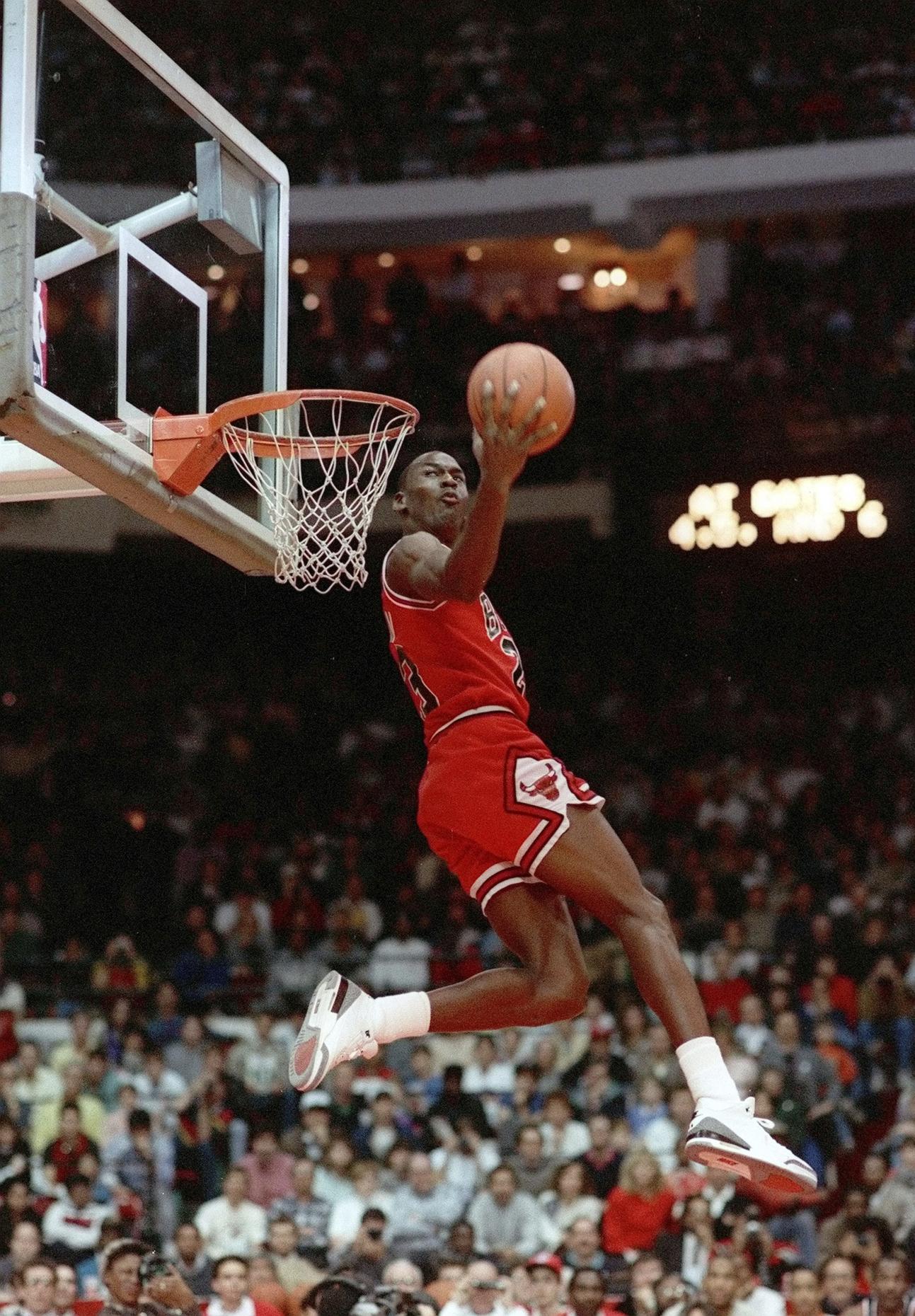
All Of It with Alison Stewart
'A History of Basketball in 15 Sneakers'
00:26:33
Russ Bengtson joins to discuss A History of Basketball in 15 Sneakers and take your calls.
Loading summary
Transcript54 lines
- [00:02]
Alison Stewart
Surprise beach day. No excuses. I'm in. Gimme five. With Bix Soleil Glide Razor, you'll have hydrated, smooth skin that's ready to go on the fly. No shave cream needed. You can prep, shave and hydrate all in one step thanks to moisture bars that hydrate your skin during and after shaving. 5 flexible blades hug your skin for a close shave. Glide into smooth. It's your time to shine with bixsolil. Buy now at Amazon and Walmart. Ready? Your skin looks amazing. So smooth and beach ready.
- [00:29]
Old Navy Advertiser
Let's go.
- [00:32]
Some days call for sleek and straight, others for slouchy and relaxed. Whatever your vibe, Old Navy has the denim fits to match from extra high rise to barrel. It's not just a mood, it's a whole style range. And with jeans Starting at just $22, you can collect them all. Snatched waist go extra high rise straight lived in staple vintage slim, low slung and laid back slouchy wide. You've got range. Your denim drawer should too. Premium Fabric Deluxe details your perfect pair or weights. Shop in store or online@oldnavy.com oh my gosh.
- [01:03]
Marshalls Advertiser
Have you been to Marshall's lately? They have all the brand name and designer pieces you love, but without the jaw dropping price tags. Alright, so here's the you should never have to compromise between quality and price. And at Marshall's you don't have to. Marshalls believes everyone deserves access to the good stuff and that's why their buyers hustle around the clock. To make it happen for you, visit a Marshalls store near you or shop online@marshalls.com.
- [01:34]
Russ Bengston
Listener support WNYC Studios.
- [01:47]
Alison Stewart
This is all of it from WNYC. I'm Alison Stewart live from the WNYC Studios in Soho. Thank you for sharing part of your day with us. A new book tells the history of basketball with the stories of 15 sneakers. Sneakers and basketball culture have been connected ever since the earliest days of Chuck Taylors, which were worn by legendary players like Wilt Chamberlain and Bill Russell. But those were the days of no. 3 pointers and short shorts. As the sport has evolved, so have the shoes on the players feet, both in style and technology. Brands like Adidas, Puma, Reebok, Under Armour and Nike throw millions of dollars in shoe deals at players and have created inst recognizable shoes worn around the world like Air Jordans, Steph Curry's, and for the lady Hooper, the Nike Air Swoops. This book is called A History of basketball and 15 sneakers. And with me now to talk sneakers and take your calls is Author Russ Bengston. Bankston. Did I get that right, Russ?
- [02:45]
Russ Bengston
Yeah, yeah. Close enough.
- [02:46]
Alison Stewart
Oh, no. Say it to me.
- [02:48]
Russ Bengston
No, Bankson. Bankson. Sun Banked. Yeah.
- [02:53]
Alison Stewart
Who has been writing about the subject since the 1980s for publications like Slam magazine and was the first sneaker editor for Complex. Hey, K. Sneakerheads, this segment's for you. What's your favorite pair of sneakers? Maybe they were worn by your favorite player. You have a sense of nostalgia for that one pair that came out when you were a kid. Could be Jordans, could be Reeboks. Call us. Text us. 2124-3396-9221-2433. WNYC. You can join us on air or you can text to us at that number. You can also reach out on social media. How did you get into sneakers? Maybe you're a collector. Do you have rules about when and where your sneakers and how do you keep them clean? Please. We want to hear how you participate in sneaker culture. 2124-3396-9221-2433. WNYC. As we wait for calls, let's get the conversation going. So this book makes the case that the history of basketball and the history of sneakers are intertwined. Why are the two so connected? Russ?
- [03:53]
Russ Bengston
You know, I think it's because basketball is one of the sports that's most identifiable with the shoes and obviously one that people can actually wear the shoes on the street. You know, I think, like, you look at something like football or baseball, obviously you're not going to school in cleats. So it kind of takes away that level of, you know, being able to wear what your favorite athlete wears. Even track and soccer, you know, it's like you're not wearing track spikes to class. So I think basketball was the one. Obviously tennis to an extent, too, but making clear that connection between the player and the shoe. And at least in the very earliest days, I mean, sneakers were a more accessible thing to get than, say, a jersey, certainly in the Chuck Taylor days, you know, even before the NBA really took off. So the sneaker was really the easiest way for you to feel like you were a part of everything.
- [04:50]
Alison Stewart
Let's go over a little bit of the anatomy of a sneaker. So if these words come up in conversation, everybody will be on the same page age. Toe box. What's the toe box?
- [05:00]
Russ Bengston
Toe box is just. It's what it sounds like. It's area over the toes, which is actually very important. There was a story when they were testing the Air Force One and someone decided the, the piece directly over the toe, which, to use another name, the vamp. Someone took that away figuring like, oh, that's not that important. But then when your toes come straight up through the front of the shoe, it just gets all floppy and doesn't really work. So it's an essential part of the shoe. I stays, I stays are just where the laces go. That's the simplest way to describe that. It's, you know, sometimes there's plastic there that holds them. Sometimes it's holes and leather. Sometimes, obviously in the Chuck Taylor, you have these metal eyelets, but it's just where those go.
- [05:49]
Alison Stewart
And what do you think is the most important part of a basketball shoe?
- [05:52]
Russ Bengston
Oh, that's a good question. Honestly, I would say it's the soul. And you know, we talk about it, I talk about it in the book where for a while there was this idea that a basketball shoe had to be this tall, high top, you know, lace it halfway up your leg kind of thing to support your ankle. But they've kind of realized through trial and error and through scientific study that if you build the sole right and if you have the right support under the foot, it doesn't really matter. I mean, you, it matters, but I mean, you can safely play in a low cut basketball shoe and still have the same level of support.
- [06:31]
Alison Stewart
We are discussing a history of basketball in 15 sneakers with its author Russ Bengston. We're taking your calls as well. What's your favorite pair of sneakers? Maybe they were worn by your favorite player or a pair that came out when you were a kid. You have a sense of nostalgia about 2124-339692-21243 NYC. You can text to us at that number or you can call in and join us on air. Explain to us maybe how you got into sneakers. If you're a sneaker head, are you a collector? Which brand makes the best shoes throughout history and why, in your opinion? 2124-3396-9221-2433. WNYC. Let me go to, I'm gonna go to a couple calls which are gonna take us into our first sneaker on your list. Let's talk to David from Layton, New Jersey. Hi, David.
- [07:23]
Callers
Hi.
- [07:26]
Alison Stewart
What'd you wear as a kid?
- [07:27]
Callers
Hello. Hi. I didn't wear them, but I wanted Converse, Chuck Taylor's. But they weren't in the budget. They weren't in my family's budget. So I have some horrible sneakers. But then the funniest part was when I got older. I was an adult. Yeah, I was married. And my mother says, david, I saw this beautiful pair of sneakers the other day. You have to get a parody sneakers. They're called Rebox.
- [08:01]
Alison Stewart
David, thank you for calling in. Brian calling in from Manhattan. Hi, Brian.
- [08:06]
Callers
Hi, how are you doing today? Thanks a lot for taking my call. Yeah, I was a basketball junkie when I was a kid. My grandfathers both were basketball coaches in the 20s and 30s, and my dad was a basketball coach. I was played in Chuck Taylor's. But then the sneaker that I was fond of when I first started was Pro Cats, Pistol Pete Maravich, Pro Cats. He was a outside shooting guard from LSU and played for his father, Press Maravich. So that was a sneaker I was really fond of. Was. And then I had Adidas and Pumas and so forth. But my first favorite kind of sneaker was Pro Heads, Pete Marovich's.
- [08:47]
Alison Stewart
Brian, thank you for calling in. All right, we've had two mentions of Chuck Taylor, so let's start there. Russ. It all begins with Converse, especially All Stars. There was actually a gentleman, Mr. Converse. Tell us a little bit about how the shoe was created and who Mr. Converse was.
- [09:03]
Russ Bengston
Well, that's it. I mean, Marquis Converse had a. Had a factory in, in Massachusetts, not too far from where Dr. James Naismith invented basketball. And, you know, started out making boots and then decided that with a lot of those same materials, you could make shoes for this new game. And the Converse All Star was the one that really stayed around it. I mean, it had incredible staying power. And part of that was due to Chuck Taylor, also a person. You know, you look at the name and obviously it's a name, but it's easy to forget that Chuck Taylor was someone who got hired by Converse as a salesman. You know, he grew up playing basketball. He was a, by all accounts, a talented basketball player, although one who may have embellished his resume a bit, which it happens, especially in those days when games obviously were not televised and not as big a deal as they are now, you know, but he spent a majority of his. His adult life as the Johnny Appleseed of basketball. You know, go touring the country, putting on clinics, selling people on Converse, but also spreading the actual game to all these far flung places. So, you know, I. Chuck's name is on that sneaker for a very good reason. And there's obviously a reason it's sold at this point. Billions of pairs. I mean, they're everywhere. And everyone, I feel like, has owned a pair of Chuck Taylor's at some point, you know, you look back into even players who played up until relatively recently. I mean, it feels recently, but into the 90s, you know, guys who started playing as kids started out in Chucks, and you had entire generations of NBA players playing in Chucks. So, you know, they really made such.
- [10:58]
Alison Stewart
A huge impact, Howard Chucks on people's health, their foot health.
- [11:04]
Russ Bengston
I mean, you know, it's obviously podiatrists look at those in horror now. And I think, you know, I've decided that some of it is if you're a modern person whose feet has been coddled in these highly cushioned, highly technologically built shoes. Yeah. If you switch back into a flat, not very cushioned, Chuck Taylor and go out and play basketball in it, your feet are not going to be happy. But I mean, if you go back into the 50s and into the 60s, if you grew up in that shoe, playing in that shoe, and just continued on playing in that shoe, it wasn't nearly as bad, I think, as it looks nowadays compared to a modern shoe. I mean, you look at someone like a Will Chamberlain who played his entire career in Chucks. He had a season where he averaged 48.5 minutes a game. He averaged more minutes per game than there are minutes in a basketball game. Like he just played every possible minute, including overtime. He never fouled out. And he did that wearing Chuck Taylor's and on worse floors. You know, I mean, NBA floors back then, NBA arenas back then clearly weren't up to the par they are now. So. And guys played in the summer on asphalt, and he somehow managed. So, you know, I don't think. I don't think it was a case that Chuck, that Wilt was a superhuman who could tolerate playing in Chuck Taylor's. I think it was more that that's what you played in back then.
- [12:40]
Alison Stewart
Let's take a couple more calls. Jed calling in from Montclair, New Jersey. Hi, Jed, thanks for calling, all of it. You're on the air.
- [12:46]
Callers
Hi, just following up on what your guest is saying. In the 50s, when everybody was wearing Chuck Taylors or everybody wanted to wear Chuck Taylors, a bunch of us who couldn't afford Chuck Taylors couldn't find them. The other ubiquitous shoe in that era was called a PF Flyer. And we developed our own, what we called PF cons, which was a PF wire, where we paint in the star on the ankles to emulate having Chuck Taylor.
- [13:13]
Russ Bengston
Whatever it took.
- [13:14]
Alison Stewart
Let's talk to John from the Bronx. Hi, John, thanks for calling in. You're on the air.
- [13:19]
Callers
Thanks for taking my call. I know there's stories about basketball and sneakers and basketball, but growing up in the Bronx, the one sneaker that I remember that changed everything for everyone was the shell top Adidas. Those were the sneakers that you didn't want to play basketball. When DMC came out with the Kazales, the tracksuits, the bucket hats, you know, the Kangos, and the Showtop Adidas with the fat laces, that just took over everything way before Jordan. So I think those were instrumental in changing sneaker culture and making it a style statement. But Showtop Adidas, for me, you wore them, they were basketball sneakers, but you didn't play basketball in them.
- [14:01]
Russ Bengston
Agreed.
- [14:01]
Alison Stewart
John, thanks for calling in. Well, the reason I took John is because Adidas superstars are on your timeline after Chuck Taylor's. Let's talk about how they became part of basketball culture.
- [14:15]
Russ Bengston
Absolutely. And you know, Adidas was and is a German company. They hadn't really done too much in basketball before. They focused primarily on soccer and on track and field. And when they eventually did move to get into basketball, through Adi's son, Horst Dassler, they ended up building that, making this leather basketball shoe, because leather was what they worked in. They built these as a low top. I mean, that was the idea. The pro model was just a high top version of the superstar for people who couldn't believe that you could play basketball on a low top because everyone at that point was so used to Chucks. And, you know, he's right. The sneaker did become this status symbol, and it actually even started out as one because it was substantially more expensive than the Chuck Taylor. You were paying nearly double that you would pay for a Chuck for a pair of superstars. So I think people did use that as something that, like, you didn't necessarily want to go wreck it on a basketball court if you paid that much for it. And it was hard to find. You know, you're talking about an era that there were no footlockers or athlete's foot yet. You know, you had to find a distributor to actually get them. So there was a case where even if you knew about it, that didn't necessarily mean you could go and find it right away.
- [15:41]
Alison Stewart
We're talking about a history of basketball and 15 sneakers with Russ Bengston. We're taking your calls as well. Next up on the list. Oh, gosh, I remember these. I remember really wanting these. Clyde Frazier's Pumas. And I was sub athletic. I just thought they were cool.
- [15:58]
Russ Bengston
But that was it. Right? I Mean, it wasn't even a matter of, of basketball at that point. You know, I think the Puma Clyde specifically was where you started to split off, where it's like, this is just a super cool suede shoe that you could wear anywhere. And it still is. I mean, that's. That shoe has had incredible staying power as well. Not just in New York, where Clyde Frazier remains a staple obviously at Madison Square Garden and as a fashion plate. You know, it's like, here's a guy in his late 70s who's taking more risks with his clothing than most of us would, and he has been for most of his life. I mean, I said in the book too that I doubt Clyde has paid for a drink in New York for the past like 50 years. And he probably hasn't.
- [16:42]
Alison Stewart
Was there something specific about those shoes in terms of how they, I mean, we talked about the fashion part of it. What about the basketball part of it?
- [16:50]
Russ Bengston
I mean, I think a big part of that shoe was just the way it made Help Clyde stand out. You know, I think from a performance perspective you did have. It was obviously a lightweight shoe, super flexible. You know, for someone coming like Clyde coming off playing in Chuck Taylor's, I think it was a better shoe. You know, I think if you look at it now as a basketball shoe, it's hard to even fathom that, oh my God, someone played basketball in this. But you flip it over and it's got these sort of square and diamond tread pattern which was multi directional. You know, for, for the early 70s. It was, it was a high tech thing, suede. Obviously, as anyone who's worn it, especially as a shoe, it stretches out, you know, it's probably not going to last you a long time. Clyde did manage to get a decent amount of wear out of them. You know, I think like, I think if Clyde were to play now, and if Clyde were to play in that original Clyde now, I think he, he'd take the Jordan route and play in a new pair every game. You know, back then I think it was a little more. Okay, we're gonna, we're gonna get a couple games out of these.
- [18:04]
Alison Stewart
Let's talk to Diane from Queens. Hi Diane, thanks for calling in.
- [18:08]
Russ Bengston
Hi.
- [18:09]
Old Navy Advertiser
Well, I have a little different perspective on this. I am a 70 year old mom of a 40 year old son who growing up was an avid sneaker person. And we spent many hours waiting online at stores, calling up Nike town, going places, looking at sneakers. And at the time I was living that life, I was like, is this crazy? I mean, Am I caving into the things that my child wants? Well, let me tell you something. Unbeknownst to me, I became a lover of sneakers. And to this day, when I meet someone, I look at what sneaker they're wearing. Right now, I'm sporting hokas, which are those sneakers for older people and when you want to have, you know, your feet be comfortable. And I get a lot of compliments on my hokas, I have to say. But now I realize what it must have been like for my son whenever he got a new pair of shoes and showing up somewhere and somebody saying, oh, you got the new Jordans. Oh, they're amazing. And only the other day, he treated himself to a pair of sneakers that are reissue, and he showed it to me, and I remembered when he wore those originally, maybe in the year 2000. And I never expected to get so much pride, pleasure out of what I thought was the most annoying thing at that time in my life. Now when I look at sneakers, I don't see sneakers. I see art.
- [19:51]
Alison Stewart
Diane from Queens is making the case for why you should care so much of sneakers.
- [19:57]
Russ Bengston
And that's so funny that she would get pulled into it like that. I would just add that I don't think hookahs are only for old people, only because I have a pair of hookahs, and I don't think I'm that old. But, yeah, it is funny seeing how brands now like HOKA and on running have kind of burst into this space. I mean, not basketball per se, but even just sneakers in general.
- [20:22]
Alison Stewart
Coming up after the break, we'll talk about Air Force ones, Air Jordans, Nike Air Swoops, and the modern basketball sneaker. My guest is Russ Bengston. We're talking about a history of basketball. And 15 sneakers will continue after the break. This is all of it on wnyc. I'm Alison Stewart. My guest is Russ Bankston. The name of his book is A History of basketball in 15 sneakers. All right, we've arrived at Nikes, Air Force ones, as well as Air Jordans. I want to get into that in a minute. But you note in the book that the modern NBA was born in 1979. Because I do want to talk about a little bit of basketball history as well. What was it about the era of the NBA that made this league modern? And how did style and tech evolve with in terms of sneakers evolve at this time?
- [21:21]
Russ Bengston
Yeah, I mean, I, I, I look at 1979 as being a big year for Magic Johnson and Larry Bird entering the league. You had they, those two guys played in the most widely watched NCAA final. They joined the NBA in Boston and Los Angeles, you know, two classic coastal teams. And it took a while for the NBA to catch up. Their TV deal wasn't great. They were still airing finals games on tape delay. You know, people considered the college game a more pure version of basketball, which, I mean, some people seem to still do that, don't understand it, but that's fine, you know, and I think you had this period from night for that five year period from 1979 to 1984 was really key in a lot of that. And as it turns out, you know, Nike did play a big role in that as well. Nike was a. They were a young company. They were fairly small. They were willing to take risks. You know, they started in 1972 in Portland. They started equipping trailblazers, players with shoes. But, you know, 1982, when they introduced the Air Force One, that really pushed the whole tech aspect of Sneakers forward. You know, the idea of putting air under the foot was just such a. Such a different thing and, and something that I think for consumers and fans alike, you could kind of understand it just off. You didn't need much to comprehend it. Like air underneath the foot, of course, that's gonna be softer.
- [23:01]
Alison Stewart
When we talk about Air Jordans, you know, obviously this movie Air came out about the signing of Michael Jordan to Nike when he really didn't want to. Sneakers play the pivotal role in the movie. The air Jordans do the right thing. What is the story of how Michael Jordan came to Nike?
- [23:20]
Russ Bengston
Now this is like, I. To preface this, I did not go see the Air movie. The book was still like, just at the end of the process. It was really getting close to coming out. And I didn't want to, like, I don't know, I didn't want to add that to all my thinking about it. Also, for the record, not that I was asked about this, but Sonny Vaccaro should have been played by Leonardo DiCaprio. I hate to make casting decisions, you know, after the fact, but Sonny, Sonny was a great help in writing this book. I've known Sonny forever. I want to say I met him for the first time probably in the mid-90s when he was working for Adidas. He kind of went from company to company. But I think, like, you know, as is discussed in the movie, you know, you had Sonny Vaccaro, who was working at Nike at the time, along with Phil Knight, obviously, who was the founder of the company, and Rob Strasser, who was One of the primary movers and shakers at Nike at the time. And then you had David Falk, who was Michael Jordan's agent, had worked for Pro Serve, which from the name began as a tennis operation and was one of the few agencies that did these big deals between tennis players and sneaker companies. And they were the one who really had the idea that Michael Jordan needed to have this tennis like dealing with, with his own clothing line, with his own sneaker. And at the time, as a rookie, this was unprecedented, at least at that level. So you know, Nike was the one willing to take this risk on a rookie. Jordan for his side was willing to take a risk with this lesser known company. You know, at that point Converse was still big, but if he signed with Converse, he would be just another guy. He would be behind Larry and Magic. Neither who have their own shoe either. So they kind of hedge their bets. Like if you, if you look at the way that shoe was marketed, you know, they were advertising it months before it came out. Michael Jordan was wearing it months before it came out. So by the time it did come out, they had built up this desire for it. And you know, you look at the numbers and that's what amazes me still. Where they signed him to a five year contract and part of the wording of the deal was if they don't sell $3 million worth of Air Jordan stuff in the first three years, Nike could void the last two years of the deal. They sold $126 million worth of Air Jordan product the first year. So they probably passed that three million dollar point in like, you know, a week. It ended up being, I think, as big as everyone needed it to be. It ended up exponentially even bigger than that. And it really just set off kind of what became this modern sneaker world.
- [26:23]
Alison Stewart
Oh yeah, my kid asked for my Stephs. He wants to go to the Kyries or he's always by the first. Name one. Before I let you go, I was really curious about when is a moment in modern basketball where the game changes in the game, the vibe of the game matches the technology in the sneaker?
- [26:45]
Russ Bengston
Huh? That's a good question. And you know, I, I think like, I like looking back to the Reebok pump and people stopping to pump up their shoe. Dominique Wilkins did it briefly in a dunk contest in 1990 and then D. Brown famously did it in 1991. And I look at something like that being like, okay, pumping up your shoe maybe doesn't provide you with that much more stability than you would have otherwise. But what I look at a lot of sneaker technology as providing you with actual confidence. Like that's real. You know, like I look at Michael Jordan lacing up a new pair of shoes every game and that just becomes part of your mindset before you go out there and play. And I think the pump kind of does that too in a more, I guess to use that word, technological fashion. Like you pump up, you're like, all right, that's what I needed. I'm good to go.
- [27:50]
Alison Stewart
I love this one text we got about sneakers Limousines for Duffet. That is how it is written.
- [27:57]
Russ Bengston
Indeed they are.
- [27:58]
Alison Stewart
The name of the book is A History of basketball and 15 sneakers. Thanks to everybody called in and shared their sneaker stories. And thanks to Russ Bankston. Thanks Russ.
- [28:09]
Russ Bengston
Thank you so much Alison. Really appreciate it.
- [28:12]
Old Navy Advertiser
Some days call for sleek and straight, others for slouchy and relaxed. Whatever your vibe, Old Navy has the denim fits to match. From extra high rise to barrel. It's not just a mood, it's a whole style range. And with jeans Starting at just $22, you can collect them all. Snatched waist go extra high rise, straight, lived in, staple, vintage slim, low slung and laid back, slouchy, wide. You've got range. Your denim drawer should too. Premium fabric deluxe details. Your perfect pair awaits. Shop in store or online@oldnavy.com oh my gosh.
- [28:44]
Marshalls Advertiser
Have you been to Marshalls lately? They have all the brand name and designer pieces you love, but without the jaw dropping price tags. Alright, so here's the truth. You should never have to compromise between quality and price. And at Marshall's, you don't have to. Marshall's believes everyone deserves access to the good stuff and that's why their buyers hustle around the clock. To make it happen for you, visit a Marshalls store near you or shop online@marshalls.com.