Loading summary
Transcript125 lines
- [00:00]
A
WNYC Studios is supported by Odoo. When you buy business software from lots of vendors, the costs add up and it gets complicated and confusing. Odoo solves this. It's a single company that sells a suite of enterprise apps that handles everything from accounting to inventory to sales. Odoo is all connected on a single platform in a simple and affordable way. You can save money without missing out on the features you need. Check out Odoo at O d O o dot com. That's o d o o dot com.
- [00:40]
B
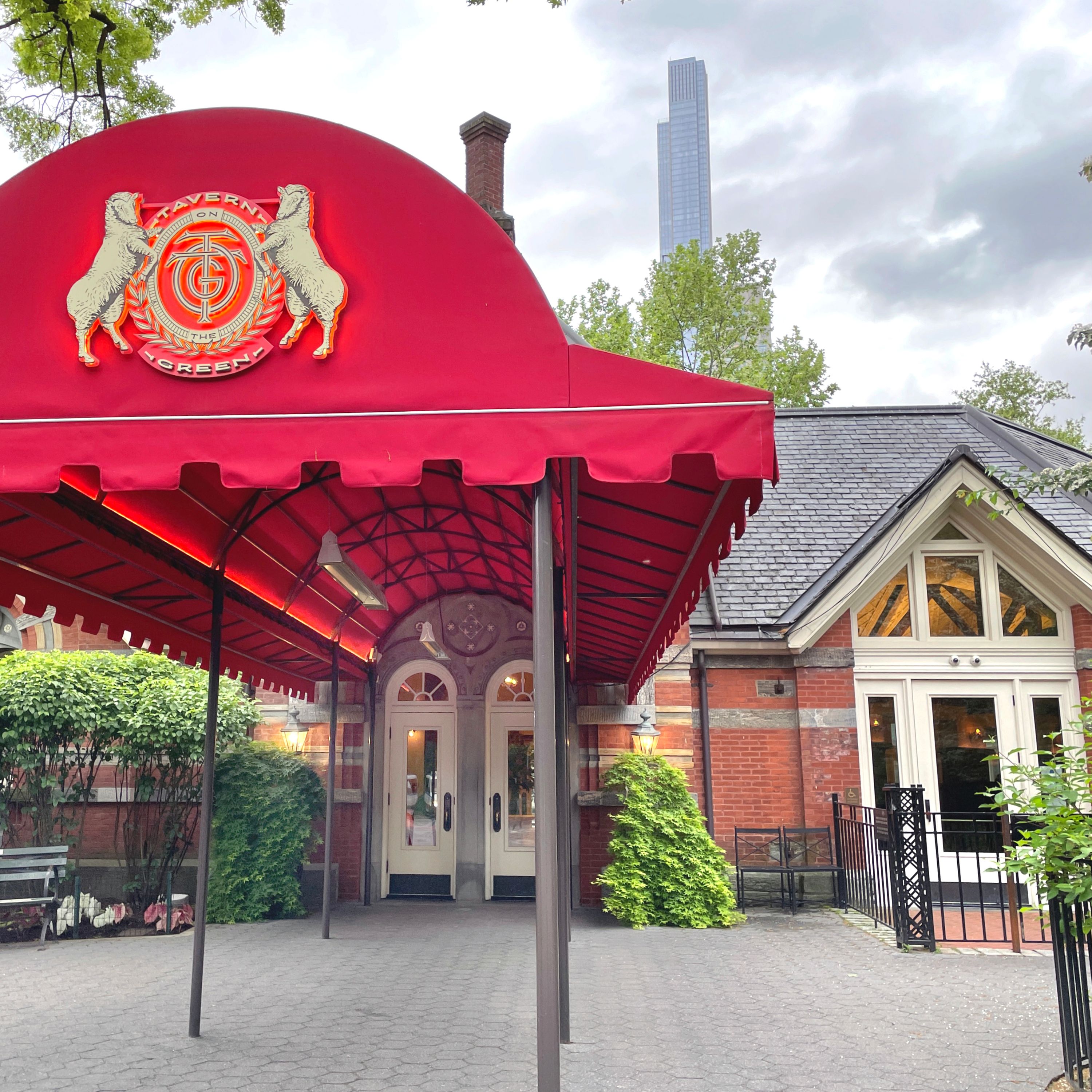
You're listening to all of it on WNYC. I'm Alison Stewart. In 1934, New York City power broker Robert Moses led the transformation and redesign of Central park, which included turning a holding pen for sheep into into a new restaurant, Tavern on the Green. The Central park restaurant has become an institution through Tavern on the green closed in 2019 in the wake of the financial crisis, new ownership and a new head chef took over. The restaurant reopened in 2014 and has remained a beloved spot to celebrate a birthday, a holiday, or just spend a beautiful day in Central Park. Now for those of you who want to create a little bit of that Tavern on Green magic at home, you are in luck. There's a brand new cookbook out from Executive Chef Bill Bill Peet titled Tavern on the Green Seasonal Recipes and Historical Treasures from New York City's Iconic restaurant. The cookbook is broken up by month featuring some of the beloved menu items featured during that time of the year. Plus, it offers stories and behind the scene tidbits about the historic restaurant. The cookbook is out now and I'm joined in studio by executive Chef Bill Peet. And your whites. You're ready to go?
- [01:49]
C
Absolutely.
- [01:51]
B
And along with Tavern on the Green co owner Jim Caiola. Jim, it's nice to meet you as well. Thank you listeners. We want to hear from you. What is your favorite memory of Tavern on the Green? Maybe you grew up going there or it's your favorite birthday spot. Maybe you saw somebody famous come out of Tavern on the Green. We want to hear your Tavern on the Green memories. Give us a call at 2124-3396-9221-2433. WNYC. So the cookbook actually starts with a history of Tavern on a Green. The building that houses Tavern on the Green was originally designed in 1880 to house sheep. Jim, how did it become a restaurant?
- [02:30]
D
Well, I think they retired the sheep and they got a lawnmower for the sheep meadow. So then it stood sort of empty for a couple Years. And then they had the great idea to turn it into a restaurant, which was a brilliant idea because it's a perfect sort of landmark there and a great respite in Central park to, you know, go to the bathroom or eat or whatever you. You know. So it's been a great run, almost 100 years.
- [02:58]
B
Bill, what was your impression of Tavern on the Green before you joined as chef?
- [03:02]
C
Well, I've been in New York City a long time, so Tavern on the Green was one of the places where you always wanted to go. I actually worked a party there in 1983. I knew the chef there, and then I was the chef at Cafe Desertiste years later, right across the street. And we would borrow back and forth.
- [03:22]
B
Nice. So, Jim, in 2009, it closed its doors. The parks department had to reissue its operating license. And then you and your partner, David Salama, got involved. Why did you want to own Tavern on the Green?
- [03:35]
D
When I was young, I was an actor, and I really, you know, I brought myself there one day, and I just was so in shock at how magical it was and what a. Just an awesome place of celebration it was. I was celebrating, and everybody around me was celebrating different things, and there were multiple languages I heard. And I just thought, God, this is, like, the center of the world right here, because it's in Central park, which is the center of Manhattan and New York, and it's just phenomenal. It just felt so magical. So I sort of kept in touch with it. You know, I would come visit it when I came to New York, and I just sort of kept in touch with what was happening with it, and that's what happened.
- [04:19]
B
Well, the legend goes that your partner was not as convinced.
- [04:22]
D
No, he did not. He was not interested in doing it whatsoever. But, you know, when we won the bid, he had no choice.
- [04:32]
B
And you had no choice. Right. And when you say you won the bid, what does that mean exactly?
- [04:37]
D
There's an RFP that the city puts out, and you have to respond to it, and we were by far the highest score in our response, and so we won. And then, you know, you had to find financing and all that stuff. So it was a hard road, but we did it, and it was very exciting, and the city was very committed to helping us, and it was great.
- [05:01]
B
Bill, why did you want to take this job when you got the call?
- [05:05]
C
It was the perfect opportunity. Like I said, I had known this place, and it was like, coming home. I'm there 10 years now, but you just get to touch so many people, you know, we're very busy, so it's exciting every day.
- [05:23]
B
When you walked in 10 years ago, what did you think your menu was going to be like?
- [05:29]
C
New York. Yeah. Yeah. New York. Classic New York. American food. Yeah. And that's what it still is, Jim.
- [05:37]
B
You know, you have an iconic restaurant, but you also have to deal with the reality of present day. How did you want to bring the restaurant into the 21st century while still honoring traditions?
- [05:49]
D
I wanted the menu to sort of follow the seasons of the year, and Bill's really great at that, and I wanted us to sort of progress every year. And lately we've been bringing vegetarian and vegan food in to the mix because that seems to be a very important thing in the culture of food right now. So I think we sort of check in with each other a lot to see where. How we can keep the menu more current and more future forward looking.
- [06:22]
B
You know, why was Bill the right guy to be your head chef?
- [06:25]
D
Bill has the best. He's such a gentleman, and that's very rare in the world of chefs. You know, I grew up working in restaurants where knives were being thrown across the room. So my number one criteria in a chef was to be not throwing knives in the kitchen. And so, you know, Bill does up to 1800 brunches on a Sunday. And, you know, orchestrating that and coordinating that is very special. It takes a special kind of person, and he has that personality.
- [07:01]
B
How do you have that personality, Bill?
- [07:03]
C
I have seven brothers and sisters. So you kind of get beat down a little bit. So. No, I just. I always found it easier to work with people than to yell at people, so. And it works.
- [07:21]
B
We're talking about the brand new cookbook, Tavern on the Green Cookbook. Seasonal recipes and historical treasures from New York City's iconic restaurants. My guests are executive chef Bill Peet and restaurant co owner Jim Kaiola. Listeners, we're taking your calls. What's your favorite memory of Tavern on the Green? Our number is 2124-3396-9221-2433. WNYC. We have calls lined up. Let's talk to Michael, who's calling in from Forest Hills. Hi, Michael. Thank you for taking the time to call. All of it. You're on the air.
- [07:52]
E
Hi. Yeah, I almost died at Tavern on the Green. I was working at Popular Science magazine, and they hold an annual event there called Best of what's New. So it's a product showcase, and I'm walking around with a camcorder, and one of the exhibits is a baseball Video game. And Keith Hernandez, formerly of the Mets, was there swinging a bat, demonstrating how the game works. And I'm paying more attention to the camcorder than to him. And I came within inches of him taking a swing, just missing me. So I'll never forget m my time at Tavern on the Green.
- [08:31]
B
Michael, thanks for the call. Let's talk to Emily is calling from New York. Hi Emily, thank you for calling all of it. Hi.
- [08:38]
F
Hi. Well, my seven year old daughter was asked what it means to be a feminist. And her answer was it means you get to go to meetings with a lot of women talking and they're always
- [08:52]
E
a Tavern on the Green. Wow.
- [08:55]
D
We invite that meeting again.
- [08:57]
B
I like that. Let's talk to Joe on Long Island. Hi, Joe, thanks for calling all of it.
- [09:04]
E
Hello. Hi. Thanks for having me. Yeah. What? It's an interesting experience for me in the sense that I'm a native New Yorker, grew up in basically all the boroughs to a certain extent. And when my parents split when I was just a little five year old, dad found a rent controlled apartment right down the block on 65th between Central Park west and Columbus for like $75 a month, five story walk up. Yeah. And after 30 plus years of 4% increase only every two years, it was only about costing 375 by the time he did leave in 2003. Anyway, so I growing up, we would visit dad, we would go to Central park and play our makeshift stickball games with the trees and then soccer. The trees were the goal posts, you know, and just lots of childhood memories of just walking right by it all the time. And then as an adult when I was socializing, I would go to different various social events and I've danced there and I've drank there and I've eaten there and I did not almost get killed there.
- [10:15]
F
Thank God.
- [10:17]
B
Thanks for calling in. All right. You are a chef, but this is really a cookbook for, for home cooks. What went into figuring out how to turn a restaurant sized recipe, restaurant geared recipe into something that people can make at home?
- [10:34]
C
Well, that was the hardest part, but we broke it down. It's step by step and at the end you're done, basically. Okay. You could think of it like ikea. When you're building something, when the last part is done, you're done. And that's how these recipes are laid out.
- [10:53]
B
What does a person need in their kitchen to try out one of these recipes? Three things that you think everybody should have in their kitchen?
- [11:02]
C
Well, we were very good setting up this cookbook. So even if you don't have a mixer, you could do it by hand. So you don't have to do dough with a mixer. You can. I've laid that all out in there. It's really nothing that you have to have good knives. Basic. Well, yes, A good knife. And it should be sharp, you know, because that's how you'll get cut when your knife is not sharp.
- [11:32]
B
Someone just sent us a text that says Ghostbusters.
- [11:35]
D
Yes.
- [11:35]
C
Y.
- [11:36]
B
A big one. This says, my favorite memory of Tavern on the Green is walking across Central park in the Stone with my very young nieces and arriving at tea on the G for lunch. The word is magical, especially for little girls on a snowy day.
- [11:49]
C
Wow. Absolutely.
- [11:51]
B
Let's talk to Jane on Roosevelt Island. Hi, Jane. Thanks for calling, all of it.
- [11:55]
F
Hi, thanks for having me. In the mid-80s, my mom took us to dinner there for her birthday, and her mother, my grandma Lulu, got caught stealing the silverware. She was putting them in her purse, and the waitress came over and said, excuse me, miss, we need those.
- [12:17]
B
That's a great story. Let's talk to Gail in Brooklyn. Hi, Gail. Thanks for calling, all of it.
- [12:23]
F
Hi, thanks for taking my call. My story is that my parents got engaged at Tavern on the green in the mid-50s, and they always sort of shared it in a very magical way. It was a beautiful photo of them together. And, you know, I grew up in New Jersey, and it was such a, you know, wonderful, aspirational, nice thing to, you know, go back to New York. And, of course, I live in New York now, so it's full circle and very lovely memory that they shared.
- [12:57]
D
That's awesome.
- [12:58]
B
That's an incredible story. Do you find that a lot that you have a lot of people making
- [13:02]
D
memories when they definitely have a lot of young people who grew up with a picture of something like that or their mother sweet 16 there or something, and they have such an amazing, you know, just. Just the experience of walking in for them is so magical because they've imagined it for however many years.
- [13:23]
C
You know, our son's baby shower was there.
- [13:25]
E
Aw.
- [13:26]
C
And we live in New Jersey.
- [13:28]
B
It's interesting because the restaurant caters to both locals and tourists. What's the key to keeping those customers happy? Locals and tourists?
- [13:38]
D
I think we always talk about how people's expectations are pretty high coming to Tavern, and so we try to meet them. I do think the idea that it's a tourist restaurant is kind of silly in the sense that every restaurant in New York, if you walk around, unless you're in the middle of Queens somewhere that isn't only a sort of neighborhood restaurant, but even those restaurants, if they get press. If you walk around a restaurant In New York, 70% of the people don't live in New York, no matter where you go. So people talk about Tavern being sort of a tourist restaurant, but I would say it's very average as far as the percentage of tourists and local people.
- [14:17]
B
Coming up next on all of it, we'll talk about some recipes on the new cookbook, Tavern on the Green. We'll be right back. You're listening to all of it on wnyc. I'm Alison Stewart. We're talking about the brand new Tavern on the Green cookbook, seasonal recipes and historical treasures from New York City's iconic restaurant. My guests are executive chef Bill Peat and restaurant co owner Jim Kiola. All right, we have a question for you. One of our listeners writes in. Would you please ask Bill what past restaurant chef experiences he brought to his menu on Tavern at Tavern on the Green?
- [15:02]
C
Well, like I said before, I'm in New York City a long time. So I was at Lutece for 15 years. I was at Patroon on 46th street for eight years. I opened a Belgian beer cafe. I was the chef at Asia de Cuba. So there are, there's so many diverse restaurant experiences there.
- [15:24]
B
All right. This cookbook goes by months. And since we're in April, we're going to start with April. Your April recipes are very vegetable forward, shall we say? What do you like about leaning into veggies this time of year?
- [15:36]
C
Well, we have a very good couple of vegetable purveyors and we have a little farmer's market down the block. A couple days a week we can go down there this time of year. It's morels ramps are starting. You know, it's spring.
- [16:00]
B
You know, you have a chopped vegetable salad which looks deceptively simple but has some sort of complex elements to it. What goes into that recipe?
- [16:09]
C
Well, it's 13 different vegetables. Okay. But it all started with I've worked in restaurants where the guests would send their salads back to the kitchen for us to chop and big leafy greens. So they didn't want to fuss with them. So it was, it got to be such a mess that I came up with this. And it's all little cuts of different vegetables. Some are raw, some are grilled, some are poached or sauteed. And we just build it to order so you can actually omit things from it. You don't need to have potatoes in it or, you know, and it's very quick. It's vegan, gluten free. It's great.
- [16:51]
B
What do you like to eat at Tavern on the Green in springtime, Jim?
- [16:55]
D
I like the lamb. It's really, really good.
- [16:59]
C
Yeah.
- [17:00]
B
You know what was interesting, as I was looking through the cookbook, there are a lot of different vinaigrettes in the cookbook. There's lemon truffle, roasted lemon, passion fruit. Why is the vinaigrette an important thing to consider?
- [17:13]
C
Well, you need acid. You need acid in everything, whether it's vinegar or lemon. But I don't like redundancy. So even on the menu, everything is a little different. You know, we don't. We don't use the same vinaigrette for everything.
- [17:32]
B
Let's take some more calls. Joe is calling in from Brooklyn. Hey, Joe, thanks for calling, all of it.
- [17:38]
E
Thank you for taking my call. My mother grew up in the Bronx and said that her one Christmas wish was to have a lunch at Tavern on the Green. And in the early 2000s, I was able to give her that Christmas gift, taking her to lunch. And it was magical with decorations and the food, and everybody was fantastic. And remember my mother saying she felt like a queen. She felt like she was royalty. And we continued that tradition, and my sister and I continue that.
- [18:14]
D
So great.
- [18:15]
B
Joe, thank you so much for calling in. Let's talk to David, who's calling from Manhattan. David, you're on the air.
- [18:22]
E
Hi. First, I just want to say to your guest, who worked at Lutece, that is probably one of the most singular dining experiences in New York, if not in the world. So congratulations. What a wonderful thing to have on your resume. I'm a documentary filmmaker, and a number of years ago, I did a documentary about Joe Baum, the greatest restaurateur of the 20th century. And up until September 11, 2001, the four highest grossing restaurants in the world were Windows on the World, Rainbow Room, Four Seasons, and Tavern on the Green, all of which our Joe Baum Creations.
- [19:08]
B
Thank you so much for calling in. And Pamela is calling us from Hoboken, New Jersey. Hi, Pamela, thanks for calling, all of it.
- [19:15]
F
Hi, thank you for taking my call.
- [19:19]
B
You're on the air.
- [19:20]
F
I remember. I remember in 1980, when I was 11 years old, my father married his second wife, Tavern on the Green.
- [19:35]
B
How you were you. How old you at the time?
- [19:38]
F
I was 11. I'm 57 now.
- [19:42]
D
Have you been back?
- [19:45]
F
You know, it's funny, I haven't gone back in, but I ended up going to college in New York City and living there for another nine or ten years after that. And I'm not that far away in Hoboken. But ever since that wedding day in 1980, every time I bike ride or walk through Central park and I look toward Tavern on the Green, it brings back such unbelievable memories.
- [20:08]
B
You should go. It's really. I went to an affair there. I'll say an affair. I went to an affair there, and it was beautiful inside. I hadn't been in a really long time. And I was like, wow, this is a really, really gorgeous space. This text says, our parents took a friend and I to Tavern on the Green at high school graduation in 1985. It was the first place I ever saw a miniature show cap of gauze over a lemon wedge to prevent pits from falling in one's teas. And the teacups felt perfectly balanced in my hand. It was super fancy schmancy. Would you just say it is still super fancy schmancy. Still.
- [20:45]
D
We still have the gauze on the lemons.
- [20:47]
F
Okay.
- [20:47]
B
That's a good thing. Hey, it's almost Mother's Day. You must have to prepare for Mother's Day.
- [20:52]
D
We do. It's a big day.
- [20:54]
B
So what goes into the preparation for Mother's Day?
- [20:58]
F
We.
- [20:59]
D
You know, we just. We have this little gift we give all the mothers. It's like, best mother of the year. And we have lots of. We have a photo booth you can take pictures with.
- [21:09]
C
Yeah, we just got the frames in.
- [21:11]
D
Yeah.
- [21:12]
B
Nice. Bill. One of the recipes you feature for May is chilled sweet pea soup, which you say is ideal for a spring or summer dinner party. Plus, you can make it ahead of time.
- [21:22]
C
Absolutely.
- [21:23]
B
What's important to remember when you're making this soup?
- [21:28]
C
Well, once you take the peas out of. Once you boil the peas, you have to shock them. So you drop them into ice water and then take them out. You just want to lock in that color, and then when you puree them, it'll stay nice and green.
- [21:43]
B
You also have something in here which looks kind of fun. It's called the confetti birthday cake. Okay. How do you decide who the cake will be dedicated to each day?
- [21:53]
C
I look it up every day. Absolutely. Yeah. We take a look at whose birthday it is out there and write it right on top.
- [22:06]
B
That's pretty funny.
- [22:07]
C
You know, and if we have. We have a lot of employees, so we find out whose birthday it is at home, too.
- [22:14]
B
Oh, that's so nice. You know, in the warmer months, can you get. Can you get Tavern on the green. To go.
- [22:21]
C
Yeah, yeah. But we have a to go window actually. You know, so it's open right to Central Park. We have a we. All the food comes right off the hotline, too.
- [22:32]
B
Nice. Let's look ahead to summer. Jim, what do you love about summertime at Tavern on the Green?
- [22:38]
D
You know, the outside. The greatest thing about this iteration of Tavern is we have so much outdoor space. We have a bar that is really sort of hip at happy hour, which is so fun to watch that build up every day. And it's just. It's a great place to be a part of the park. And, you know, we open up the gate into the restaurant from the park during the summer. So it's a much more sort of casual, fun place to be in the summer.
- [23:08]
B
Let's talk to Jarod in West New York. Hey, Jarrod. Thank you for calling all of it. You're on the air.
- [23:13]
E
Hi there. Thanks for taking my call. So my growing up in New Jersey, we had heard about Tavern on the Green. My first time there was as a performer so many years, many pounds ago. I was a dancer. We had a gig for a woman who had a production company. Tom Vaughan and I to be two of the Village People. I was the cop, he was the Indian. On the way to Tavern on the Green, driving through Manhattan, I got a flat tire. So we had to change the flat tire using the donut in my trunk, as in our costume. So as the cop and the Indian get there, perform at Tamaranda Green. It's a party. It was a great time. And then drive home on the donut. So that was my first Tavern experience.
- [23:56]
B
That was a good story. Gerard, thank you for holding on for that. Bill. Speaking to what Jim was talking about earlier in your summertime recipes, you have a veggie burger in here. What are your key ingredients for a good veggie burger? Because everybody's got a different one.
- [24:13]
C
Yeah. Well, there's beans. We have beans in there, but it's mushrooms. The mushrooms bring that umami to it, that deep flavor. Yeah. There's spinach, and there's a little oatmeal in there. Also, to hold it together.
- [24:33]
B
There's a recipe that looks so good for June called Blueberry Lemon crumble, which you say is really easy to make at. Also good if you like to go pick blueberries.
- [24:41]
C
Well, that's a season for blueberries.
- [24:43]
B
Absolutely. Why is lemon a good counterpoint for blueberries?
- [24:48]
C
Well, again, the acid, you know, it just makes it very bright.
- [24:53]
B
Jim, it seems like there are a lot of desserts in this particular book?
- [24:56]
D
Oh, yeah.
- [24:57]
B
Do you have favorites?
- [24:59]
D
I like the cheesecake. It's a really great New York cheesecake. It's phenomenal. And it's on the menu pretty much all year with different toppings throughout the year. And the birthday cake, you know, we all spend a lot of time on the birthday cake.
- [25:14]
C
That's why you love the strawberry shortcake, too.
- [25:16]
D
And the strawberry shortcake and the pecan tart.
- [25:19]
B
And we get going in terms of the strawberry shortcake. What's the key to making a really great shortcake?
- [25:28]
C
Not to overwork it. You know, we just get it together and we take scoops of it and we just bake it. The more you work it, the tougher it gets. We want it to just break apart when you hit it with a fork.
- [25:44]
B
Let's talk to Doris. Hey, Doris, thanks for calling, all of it. You're up in Tarrytown.
- [25:50]
F
Hey. Yes, I am, and I love your show. Thanks for having me. I'm calling as another performer as well. I was in St. Cecilia chorus for many years with David Randolph. It's now called St. Cecilia Azalea chorus of New York. And we had the privilege and honor of singing as choristers, greeting people as they entered the restaurant. And I've always thought of Tavern on the Green as such a magical old New York place. And I just felt like I was in the midst of that kind of a memory I had as a kid, and it was an honor to do that. So that's my story.
- [26:23]
B
Aw, that's a great story. Jim, what are you most proud of in this new 21st century iteration of Tavern on the Green?
- [26:31]
D
I think that it sort of reflects the original 1930s Tavern on the Green, and that it's sort of back to the basics of what it originally was, which was sort of a very accessible place for people in the park, for people that are visiting New York, and for people that live across the street. And I think we've really accomplished that, and I think we, you know, we keep growing with the times as far as the menu, and, you know, we keep upgrading the space as it needs to be. So it's been really fun to do it.
- [27:09]
B
What is the easiest. I know what you're gonna say, but what is the easiest recipe in this book? Bill?
- [27:14]
C
Easiest recipe? I would say the. I don't know. For me, it's the Irish cream, which I love, but that's more towards December. Tomato soup is great, and it's very easy. It's one pot.
- [27:32]
B
Love that. Yeah, we've been talking about Tavern on the Green Cookbook, seasonal recipes and historical treasures from New York City's iconic restaurant. My guests have been Executive Chef Bill Peet and the restaurant's co owner, Jim Caiola. Thank you so much for coming to the studio. This was fun.
- [27:48]
D
That was really fun.
- [27:49]
B
There's more. All of it on the way.
- [27:52]
A
WNYC Studios is supported by Odoo. When you buy business software from lots of vendors, the costs add up and it gets complicated and confusing. Odoo solves this. It's a single company that sells a suite of enterprise apps that handles everything from accounting to inventory to sales. Odoo is all connected on a single platform in a simple and affordable way. You can save money without missing out on the features you need. Check out Odoo at o d o o.com that's o d o o.com Having the right people in your corner for life's biggest milestones makes all the difference. Like a friend who's there when you're house hunting or checking out a new ride, State Farm is there too, helping you choose the coverage you need. With a State Farm agent, you know someone is there to help you along the way. And with so many coverage options, it's nice knowing you have help choosing a plan that fits your needs so you can continue selling. Celebrating all of life's milestones Like a good neighbor, State Farm is there.