← All Of It with Alison Stewart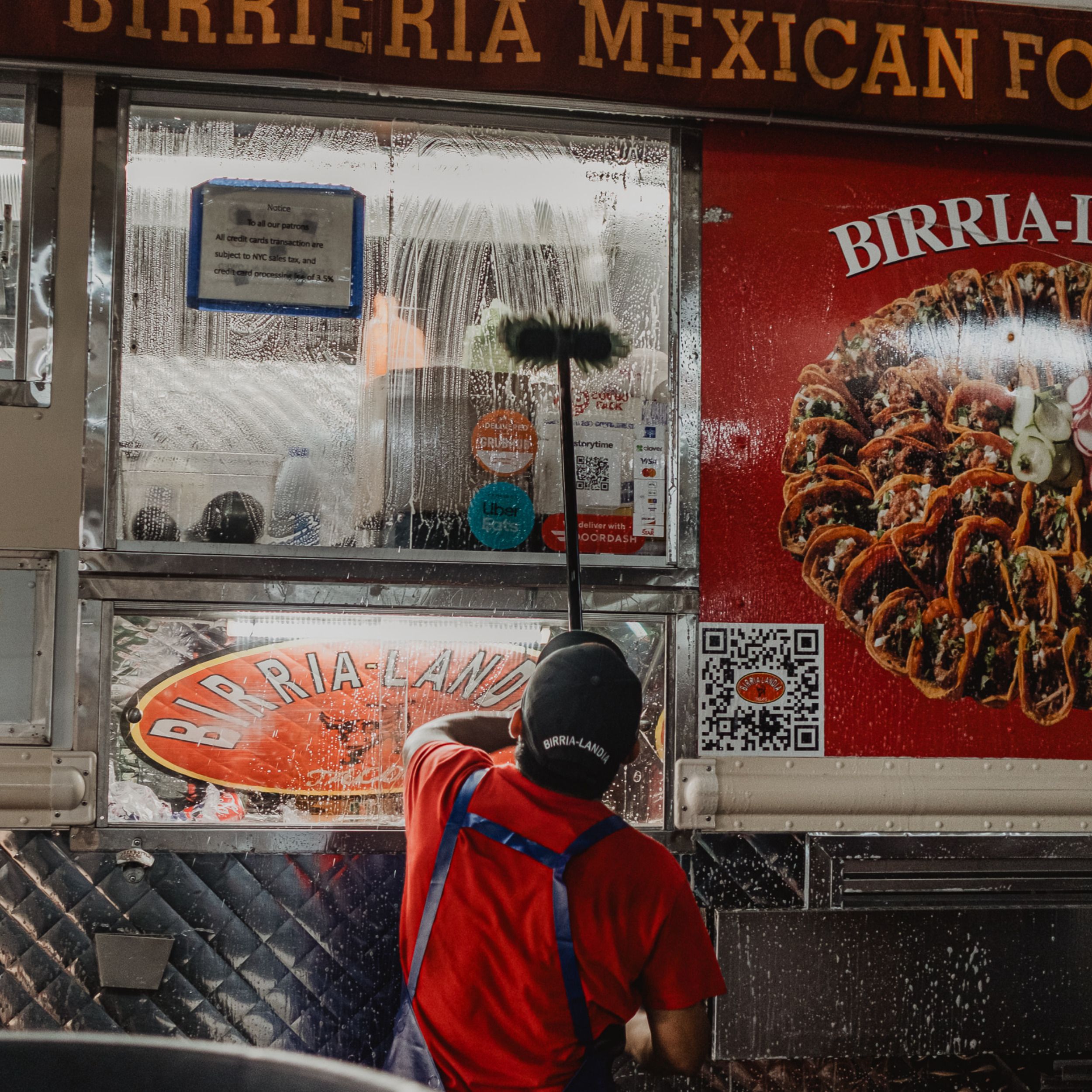
All Of It with Alison Stewart
A New Exhibition Celebrates New York City's Street Food Vendors
00:22:22
Loading summary
Transcript71 lines
- [00:09]
A
This is all of it on wnyc. I'm Alison Stewart. A new exhibition celebrates the entrepreneurs who shaped New York City's local culinary moments from across the world. It's called Street Food City, and it opens tomorrow at Brooklyn's Dumbo neighborhood. Throughout history, New York street food vendors have often been immigrants. And the exhibit traces the history of street vending from New Amsterdam in 1624 to present day, highlighting hot dogs, pretzels, roasted nuts, ice cream, halal plates, and many other foods that have helped define New York as an international food capital. But it also looks behind the food itself and asks, who are the people behind these carts? Where do they come from? What challenges do they face? And how have they shaped sights, sounds and flavors of a city for centuries? The exhibition opens tomorrow, Saturday, December 6th, at the Museum of Food and Drink, located at 55 Water street in Dumbo, Brooklyn. Joining us now is the museum's president, Nazli.
- [01:13]
B
Oh, you got it. No, no, no, you got it.
- [01:15]
A
I got it. Nazli Parvisi. Perfectly nice to speak to you. And also Catherine Piccolo.
- [01:22]
B
Piccolo, because you were practicing too much. I was saying first time.
- [01:26]
A
I was proud.
- [01:27]
B
You had it the first time.
- [01:28]
A
Perfect. The museum's curator, curatorial dictator. Thank you so much for being with us. Let's get to our call in listeners. We'd like to hear from you. Do you have a favorite street food vendor you can't live without? Are you a vendor yourself? Shout out to your favorite business. Tell it, would you tell us what inspired you to start a food venture in the first place? Give us a call. 212-433-969-2221, 2433. WNYC. Or you can hit us up on social at all of it. Wnyc. Nazli, what first inspired you to make an exhibition all about street food?
- [02:01]
B
I think it was a few things. I think one of the things that we realized two years ago, this was always on the list, but food is a really wonderful way about talking about issues that we care about. And it's such an approachable way about learning about ourselves, about the societies around us, and in our Republic of New York that we love and cherish. When we had a migrant crisis, we noticed the language around migrants being really vitriolic in a way that as a New Yorker, I'm not used to hearing us talk about immigrants that way. And street food is an immigrant phenomenon. When you get to the museum, you'll realize it didn't start that way. Maybe in the 16, 1700s, but for the last 200 years onwards, 250 years onwards. It is an immigrant phenomenon. And so I think that there is. It's so iconic. There's so much joy in street food. You're gonna get so many calls. It's such a great question to ask, and everybody has an answer to it. So I think for us, we just wanted to use this sort of joyful topic to talk about immigration and to sort of humanize this topic and these people that we really care about. This is the lowest rung on the economic ladder for new, and it deserves a deeper dive and a deeper look.
- [03:20]
A
Kathryn, did you want to add anything?
- [03:22]
C
I just. I agree. You know, we all eat street food, you know, and these entrepreneurs are part of the.
- [03:32]
Cultural and culinary landscape of the city. And I think so many times as New Yorkers, we're rushing around and maybe we're not paying attention to them. And they're here and they work really hard and they make delicious food that we do eat. And so to be able to give them their flowers honestly feels really lovely.
- [03:54]
A
How did you decide which stories from the past and the present to focus on?
- [04:02]
C
So this is a bit of a survey exhibition. You know, we are looking at all 400 plus ish years of new York City history and all of the people who have sold food on the streets of the city. So each of our sections, in our historical sections and even in our contemporary section, we're answering the questions, who are the people that were selling food on the street? What kind of foods were they selling? How did that whole ecosystem work, and who were they selling to? So you can really see how street food vending changes over time, historically, but also how so much of it stays the same. There's really this cyclical pattern of, you know, boom, immigration time that brings lots of people into the city. People start vending, and then there's regulation that sort of caps or limits that, and it maybe gets smaller, and then the cycle repeats itself.
- [04:59]
A
Nazli, was there something that you discovered about food vending that you didn't expect?
- [05:06]
B
Ooh, that's a great question.
- [05:10]
I think what's really interesting to me is in the early days with the first immigration waves in the 1830s to 1850s, is how much street vending answered the sort of problem that we still have today, which is last mile delivery of fresh food to neighborhoods that can't access fresh food.
- [05:30]
A
Right.
- [05:31]
B
We really keep coming up with that. We've heard Mayor Mamdani talk about bringing supermarkets the food that was sold by vendors in places like The Lower east side was often fresher than anything they can get in the markets because they were going directly to the farms in Brooklyn, you know, and getting the food themselves and bringing it to their own communities. And there's a lot to be learned there. And frankly, it's still a tool. You know, I ran Brooklyn recovery during Hurricane Sandy, and we used. Because I've always been a fan of street vendor, and I always had a relationship with street vendors. We used food trucks at a point where so many restaurants and businesses were shut down in Coney island to bring food and meals to people who just couldn't leave their neighborhoods or access anything. So they are part of the city fabric. They are a crucial part of the city fabric, but they're also were and should be considered a major part of our food delivery system.
- [06:30]
A
Let's take a call. Nick is calling in from Astoria. Hi, Nick. Thank you so much for taking the time to call. All of it. You're on the air.
- [06:39]
D
Oh, thanks so much. Yeah, I'm calling from Astoria. You know, and Queens is really the absolute Mecca of food. I mean, you got the best food everywhere. But the absolute best of the best is my halal cart on 30th Avenue, run by Ahmed. He named the cart Eat It. And this is the absolute. This is the pinnacle of halal food. His falafel is the absolute perfect. It's so crispy on the outside. It's so soft and fluffy on the inside. The flavors just explode. And I think the secret is he makes them in cubes. I asked him, I was like, how do you make the perfect falafel like this? He's like, look here. And he showed me instrument. He says, you make a cube like this, and it keeps the flavors intact. It keeps the structure of the falafel perfect. The crispy outer, soft inside. And it's.
- [07:30]
C
It's.
- [07:30]
D
And this is the kind of place when I just need a snack. I just go there just to get one falafel. I don't even need sauce. It's just the perfect snack. And on top of that, I even just. I just go daily for my platters. And he's got a following. He knows everyone in the neighborhood. He's the friendliest guy. And it's an institution of Queens.
- [07:50]
A
Thanks so much for calling. Hey, do you have a favorite street vendor you can't live without, or are you a vendor yourself? Call in. Shout out that business. Our number is 2124-339692-22433. WNYC, a new museum of Food and Drink exhibition celebrates generations of New York's mostly immigran entrepreneurs. Museum president Nazli Parvisi and curator director Catherine Piccoli join us to discuss Street Food City at the Museum of Food and Drink. It's in Dumbo in Brooklyn. There's an. In the, in the exhibition, you have advisors for the show, including representatives from the Street Vendor Project, the Smithsonian National History Museum. What are these scholars and historians you consulted with help you understand about street food culture?
- [08:44]
C
So we, for each exhibition that we put together, the first thing we do as we're starting our research is to find the experts in the field who can really help us, guide us, help shape our, the stories that we're telling and.
- [09:00]
Help ensure that we are telling stories respectfully, always right. And so this group of people, they were really, they are really phenomenal. You know, the folks at Street Vendor Project helped connect us with so many vendors and people working within the street food vending ecosystem, like commissary kitchen owners and food cart manufacturers. There are many people with historical backgrounds who have been studying street food not only in New York City, but in other places like New Orleans, like Singapore, who help give us some more depth and stories and help us to think about how the vending system in New York may or may not be different from the vending system in other places in the country and the world. So they've been, they're an incredible, incredible group.
- [09:49]
A
I'll just say that, yeah, there's a special exhibition, Nazli from the World Food Photography Awards. How did this partnership come about?
- [09:58]
B
You segued so perfectly. Because I was going to mention this. So we're telling a very distinctly New York story. I think one thing I should mention is we're a bite sized museum. We love our food puns, and I don't think there'll ever be enough space, no matter how large we are, to tell the full story we want to tell. But what we want to do is spark people's curiosity and get them out there. We think New York City is a museum of food and drink. So our point is to educate you.
- [10:26]
Give you some kernels of knowledge and guide you into the city to go explore it for yourself. Armed with this knowledge, but knowing that this was a New York City story, we, we were put in touch. They found us with a wonderful organization based out of the UK called the International Food Photography Awards. And what a wonderful partnership. When we got in touch, we were trying to figure out how we could partner. I'M a lover of art, but especially photography. And I said, well, we're doing this thing on street food. Do you happen to have. And the founder, Caroline, said, oh, that's an entire category for us.
- [11:01]
A
Wow.
- [11:01]
B
And so she gave us a whole bunch of photographs and we curated our favorites and picked about 30 or so and had them printed. And we're on the second floor of the Empire Stores building. This is on the first floor. And what I love about it is it gives you an international gallery of street vending from around the world. The pictures are so gorgeous. And, you know, there's a theme throughout of it, which is that this is something that people do for a living and have to do for a living oftentimes. The culture of the food itself is fascinating and incredible.
- [11:41]
It's just an incredible way of completing the entire exhibition and giving a look at the international story. We'll touch upon more of the New York story versus the international story in our programming, but it's really nice to get a look of both the New York story and the international story in the building.
- [11:57]
A
We got a great text here that says, when the migrant crisis started, my main response, other than worrying about the safety of our new neighbors, was being so thankful for the street vendors. As a former Angeleno, it's pleasant to be able to buy from a fruit cart on Broadway or grabbing a churro on the subway. Let's talk to Joy, who's calling in from Huntington. Hey, Joy, thanks for calling all of it. You're on the air.
- [12:22]
D
Hi.
- [12:23]
E
Thank you so much for taking my call. So my name is Joy Moy. My husband is John Moy. First of all, I married him just to have a rhyming name. Let's put that out there. But I seriously married my husband. I jokingly, not jokingly, because he's that.
- [12:35]
D
Good of a cook.
- [12:35]
E
So he started his side hustle making dumplings. I'm like, john, you have. You got to go with this, you know. So he purchased a trailer two years ago. He's been catering ever since. And we didn't. He didn't know what to name it. So I said, listen, I'm happy when I eat your dumplings, because they're that good and they're authentic. And he makes, like, customized dumplings. And he's like, what am I going to call it? I said, listen, I'm happy and I have a fat rear end because of your dumpling. So let's just call it. And I hope I can say it's on the air. His company is called Happy Fat ass dumplings.
- [13:09]
A
So good. Thanks for calling, Joy. Let's talk to Maxine, who's calling in from Manhattan. Hi, Maxine. Thank you for making the time to call all of it. You're on the air.
- [13:18]
E
Thank you. I'd like to tell you about Tabunya, which is an Israeli Drew's restaurant that's at the Grand Bazaar every Sunday. And it's more of a restaurant than a stand. The way the food is prepared. Fantastic specialties of the Drew's community, including Lebanon and Kika Lebanon. So whatever your taste buds want, from grape leaves to the most extraordinary exotic pizzas, it's at the Bunya.
- [13:49]
A
Thank you so much for calling. And let's talk to Harold, who's calling from Midtown.
- [13:54]
D
Hi, guys.
- [13:54]
A
Hi.
- [13:56]
D
Hi. Great segment. I live and work in Midtown town. We're so excited. Every year with the Rockefeller Center Christmas tree. But it wouldn't be as exciting without the layers of smells of the chestnut vendors, the hot pretzels. The smells are so important to add to the excitement of the holiday season in New York. It's Gershwin, it's Woody Allen. It's everything we love about New York. Thanks.
- [14:30]
A
You sound like a commercial, a great commercial.
- [14:34]
B
It's funny. This is not a city known for good smells. Like, we're not southern France. And, you know, you say nuts for nuts, and everybody's just like, ah. You say chestnuts and pretzels and you're like, thank God. Like, they're scenting our city in the best way possible.
- [14:51]
A
I want to ask you a little bit about history that we can learn in the show. You highlight the Hot Corn Girls. Will you please explain to us who the Hot Corn Girls were?
- [15:00]
C
Sure. So the first of all, corn has been sold on the streets of New York City since the earliest days. And originally, roasted corn was sold by African American women. And as you get into the mid to late 1800s and you have many more European immigrants coming into the city, you have a lot of women and children actually selling food on the street. And the Hot Corn Girls sold hot corn. I think it was boiled with a touch of salt in the. I don't know what it's called in the husk. And they were known for their beauty. They were known for their calls. They sung late into the night as people spoke about them. And their calls are really compelling. My favorite one is it's a short. It's short and sweet. But it's something like, you have money, I have none. Buy my corn so I can go home.
- [15:53]
A
Short and sweet right to the Point.
- [15:55]
C
Right to the point.
- [15:56]
A
Like you said, a lot of the vendors had jingles and songs they would sing. This is a street call by Clyde Kingfish Smith. It's called Tiscuit a Tasket. And it was interpreted and recreated by a local actor, Jared Kemp, for the museum show. Let's listen.
- [16:14]
F
A t a Tasket I shall fish by the basket if you folks don't buy some fish I'm gonna put you in a casket Gonna carry you down avenue and there's not a single thing you'll do I'm gonna dig, dig, dig all around A tisky to Tusky I sell fish by the basket.
- [16:39]
A
How did early vendors. How did they advertise their business?
- [16:42]
B
Nazli, New York was a much louder city. I know people think that New York is loud now, but it was a much louder city. And it's funny. I'm Iranian, and this is what Tehran sounds like today. Oh, yeah. And street corn is my favorite street food. Cause that's our street food over there. So it's interesting. Parts of the world still sound super loud, and there's still people going through the streets selling salt and fish and whatever on the back of their trucks and whatnot.
- [17:11]
It was a loud city, and you didn't have TikTok or phones or anything. And, you know, to Catherine's point, if you. Nothing's changed. If you are more attractive, if you had the best song, if you sung it well, you were gonna get the attention. And then I hope that people actually looked at the quality of the food and then judged it by that. But it was. We heard a lot. I think you had mentioned this, Catherine, your research, the loudness of the Lower east side. We have some bells for the Good Humor truck that we have at the museum. And people will get their bells personally tuned.
- [17:46]
A
Oh, really?
- [17:47]
B
So that you could recognize whose truck it was.
- [17:50]
C
And it really speaks to that creativity and ingenuity of. Of these street food entrepreneurs like Clyde Kingfish Smith. He took popular songs of the day, like Tiscuit a Tasket, like Stormy Weather, like Minnie the Moocher, and remixed them. And he had this really. They're funny, right? And they're joyful. And he tailored songs and sang different songs in different neighborhoods. So he's really thinking about, where am I going? How am I selling the most that I can wherever I am in the.
- [18:22]
A
Exhibit, how do you handle the challenges that food vendors have had to experience?
- [18:29]
B
It's a big part of the exhibit. Right? There's always been challenges, and that's part of what we wanted to show whether it was LaGuardia wanting to just rid the street vendors and push them inside.
- [18:44]
History repeats itself. That's why we have museums, so you can see that over and over. But you have two forces right now facing street vendors. One, you have the sort of regulatory morass of like 400 years of a patchwork of laws that make no sense. You know, waiting lists of 20 years. No one has a fair shot of getting a fair vending license right now in New York City.
- [19:09]
Truly, no one has a fair shot of getting it. Which is why the caller, who with the lovely dumplings or fat ass dumplings, you might have noticed, she said, my husband does a lot of catering. You can't vend in New York City right now. If you want to start today legally, you could never get a permit right now. You could cater, you could vend it on private property. And then the other part, which again, is not unfamiliar, is the fear of ICE and immigration. 97% of our vendors are immigrants. Half of them are women. That's another surprising fact most people don't think about.
- [19:42]
People were so generous with sharing their stories, but one of things I think we would both like to note is how many of them said, please don't share my photo or my name. We love to credit people as a museum. We want people to know who's telling the stories. We want them to see who's in the pictures. And that's where we're at today. And so to have that sort of double pressure for people who are literally just trying to feed their families. There's a particularly heartbreaking sign in Spanish in our exhibit. We have a bunch of protest signs that just says, feeding our families is not a crime. And that's what vendors are trying to do by feeding New Yorkers, which is so generous and wonderful. We all love to eat. What they're trying to do is just feed their own families, and there's a lot pressured against them. Again, Mayor Mamdani sort of went around talking about how expensive halal's gotten. And what you'll see through our exhibition is why it's so expensive now, why vendors have to charge so much, and how little of it they're actually taking home, despite the $11 halal.
- [20:44]
A
Catherine, is there any one part of the exhibit you'd like people to spend a little extra time looking at?
- [20:50]
C
Oh, goodness. I just want people to be in there the way that I've been in this space for the past year. I want to shout out a couple of the audio visual elements we worked with an amazing videographer and interviewed many, many street food entrepreneurs, people with carts and trucks and vendors at Smorgasbord and Ernie Wong who owns Shanghai mks which is a food cart maker. We have lots of great interviews. I love giving people the mic and letting them tell their own story. But also we created some virtual reality experiences so you can put on that headset, be in a cart, in a truck. I think so many New Yorkers have not ever been able to experience this and this is a cool way to do that.
- [21:38]
A
The name of the exhibition is Street Food City at the Museum of Food and Drink. It's in Dumbo in Manhattan. My guests have been Museum President Nazeel. I'm Nazeelizi.
- [21:52]
B
This is Kathryn Piccoli.
- [21:53]
A
Thank you to be with you much for being with us. It's Friday y'. All. Thank you very much.
- [21:59]
C
Thank you so much.
- [22:00]
B
Really appreciate it.
- [22:02]
A
Actor and singer Anya Gasteyer is back with a holiday spectacular. The show is called Sugar and Booze. She'll be at the Town hall coming up. Anya joins us to tell us more. Thank you for being with us.
- [22:23]
F
The holidays mean more travel, more shopping, more time online and more personal info in more places that could expose you more to identity theft. But LifeLock monitors millions of data points per second. If your identity is stolen, our US based restoration specialists will fix it, guaranteed or your money back. Don't face drained accounts, fraudulent loans or financial losses alone. Get more holiday fun and less holiday worry with LifeLock. Save up to 40% your first year. Visit LifeLock.com SpecialOffer Terms Apply NYC now.
- [22:53]
B
Delivers the most up to date local news from WNYC and Gothamist every morning, midday and evening with three updates a day. Listeners get breaking news, top headlines and in depth coverage from across New York City. By sponsoring programming like NYC now, you'll reach our community of dedicated listeners with premium messaging and an uncluttered audio experience. Visit sponsorship.wnyc.org to get in touch and find out more.