← All Of It with Alison Stewart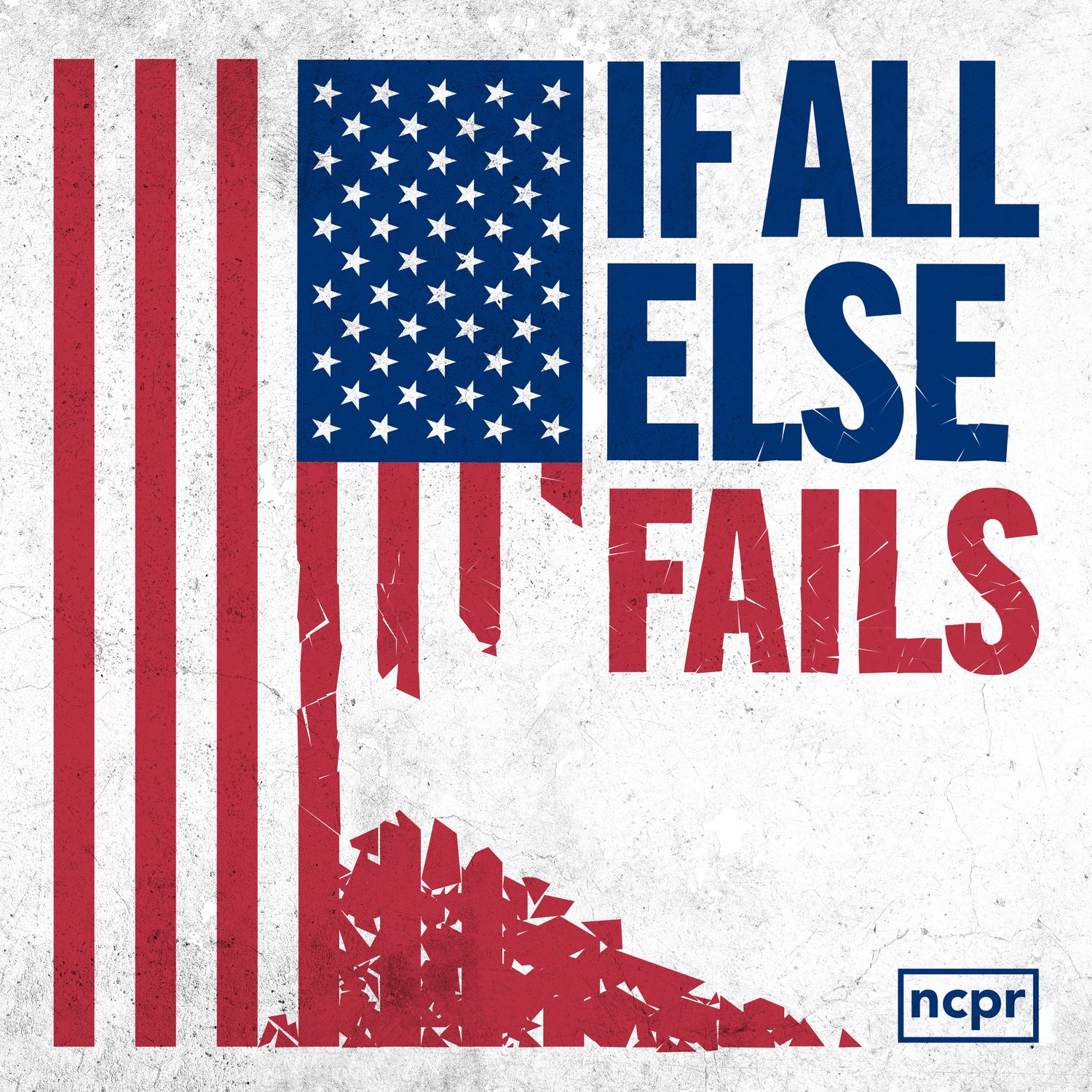
All Of It with Alison Stewart
A New Podcast Reports on Extremism in Upstate New York
00:21:51
North Country Public Radio reporters Emily Russell and Zach Hirsch discuss their podcast, If All Else Fails which investigates extremists movements in Upstate New York.
Loading summary
Transcript52 lines
- [00:00]
A
I' ma put you on, nephew. All right, unk.
- [00:02]
B
Welcome to McDonald's. Can I take your order, miss?
- [00:04]
A
I've been hitting up McDonald's for years. Now. It's back. We need snack wraps. What's a snack wrap? It's the return of something great. Snack wrap is back. It's not rocket science. Grayscale has been educating investors on crypto for over a decade. Grayscale Invest in your share of the future. Investing involves risk and possible loss of principle. Visit grayscale.com for more information. Suffering from dry, tired, irritated eyes. Don't let dry eyes win. Use Sustain Pro. It hydrates, restores and protects dry eyes for up to 12 hours. Sustain Pro Triple Action. Dry Eye Relief. Listener support WNYC Studios.
- [01:01]
B
This is all of it on wnyc. I'm Alison Stewart. Far right Extremism is thriving in many places across this country, especially in rural areas, and that includes upstate New York. Politically, the area was purple for a time, but in recent years, it has become bright red, with fringe militia groups actively recruit there, both online and in person. Flyers for groups like the Patriot Front and the KKK have been seen in some counties. And a data leak from the extremist group the Three Percenter shows that a sizable portion of its membership lives in upstate New York. Now a new podcast out of North Country Public Radio looks at far right extremism in that area and how it has flourished and what kind of threat it poses to our democracy. The podcast is called if All Else Fails. And you can get a sense of the stakes in the very first episode. Let's listen to a clip. The first voice you hear is James Bonet, a man from Glens Falls who was recently sentenced for his role in the January 6th in insurrection.
- [02:01]
A
There's a lot of people like me that we know the election was stolen, like being in January 6th and being there, there's a lot of Americans there that were like, we want answers on this.
- [02:12]
C
Bonet says he's still convinced Donald Trump won the 2020 election, that there's a deep state working against the former president and he's convinced the truth will come out.
- [02:22]
A
I think right now we're going through a process of a deep cleaning, and I think through the other side of it, it's going to be awesome.
- [02:30]
B
Joining me now are the reporters and co hosts of if All Else Fails, Emily Russell. Emily, welcome to the show.
- [02:36]
D
Hi. Thanks for having me.
- [02:37]
B
And Zach Hurst. Zach, nice to meet you.
- [02:40]
C
Thanks so much for having us. Allison.
- [02:41]
B
Emily, how do you define north country?
- [02:45]
D
Yeah, the north country is a huge part of upstate New York. It spans from the Vermont border in the east all the way west to Lake Ontario and then up to the Canadian border. It's the most rural part of New York State. There's only about 600,000 people that live here. Again, it's just a huge part of the state. As you mentioned, it's become a more conservative region. It's got the largest congressional district in New York. We're represented by the third ranking congresswoman in the House, Elise Stefanik. Yeah, very rural, pretty conservative. There's been an outmigration of people here, so not only do we have a small population, but it's been shrinking in the last decade.
- [03:27]
B
Zach, what prompted the investigation? The look at extremism.
- [03:32]
C
So as you mentioned in the intro, you know, we saw this photo from the sheriff of Lewis County, New York, who it was a years old photo from way back in 2016 of this sheriff receiving an award from the Oath Keepers. And you know, it's possible we might, we might not have seen that photo or it might have surfaced many years later, but, but the sheriff himself posted that photo in the summer after January 6th, and it got such a positive reaction from people in the north country. Hundreds of comments, more than a thousand likes. And we just really wanted to know who are all these people out there who like that and what are the connections between police and far right groups?
- [04:18]
B
Emily, when we're talking about right wing extremist group, is there a hard and fast definition?
- [04:26]
D
You know, there really isn't. It's really important to note that far right ideas and groups, they exist on a spectrum. And you know, one of the things we did for our reporting is we just kind of went around the region and looked at like the bumper stickers that people have, the flags people fly. You know, some people fly Confederate flags around here in this region. And so those ideas and those sentiments really exist on a spectrum. And particularly far right violent extremism is pretty rare here. We want to be very clear about that. But what we did find was that there are groups that are recruiting up here, including the infamous Ku Klux Klan, as you mentioned, lesser known groups like the Patriot Front, Proud Boys. We know those groups have been active up here and all across upstate New York. They have tried to recruit people, they have rallied in this region. Um, but again, like, you know, different groups rely on different ideologies and, and are on a spectrum of extremism.
- [05:31]
B
Zach, how did these groups recruit? What's the pitch?
- [05:36]
C
So, I mean, I, I think there's really this idea, at least in the Second Amendment crowd, you know, that the government is coming to take away your guns. What are you going to do about it? That's kind of what it boils down to. We really saw in the last decade there was a new gun law in New York State called the SAFE Act. And you know, it was one of the, it was touted as one of the strictest gun laws in the country at the time. And, and now it's, it's really continued to just be this, this catalyst, this sort of ongoing central factor in, you know, central motivating factor in recruiting and saying, look, this is evidence that the government is tyrannical. That was a really key thing we found for upstate New York.
- [06:27]
B
And Emily, I'm going to ask you to just kind of give us a one word sentence for each of these groups so people can understand what their sort of, for lack of a better word, vibe is. The NY watchmen, the 3 percenters and the Oath Keepers.
- [06:42]
D
Yeah, that's a challenging one. I gotta be honest, Alison, because we're not inside these people's heads. I think the New York Watchmen, they deny they're a militia. And I don't have the language in front of me, but they do say they're kind of out to protect certain rights and I forget the language, but it does kind of relate to a militia mentality. And the Oath Keepers as well, widely considered a kind of a national militia. And they became more of a militia group back in 2013 and then. And the last group you mentioned, 3 percenters.
- [07:23]
C
The 3 percenters, I can jump in on that one. So they're actually not, you know, the 3 percenters are actually not a group. It's sort of an ideology that's kind of part of the broader anti government militia movement. The right wing anti government militia movement. It's based on this kind of unproven claim that only 3% of American colonists fought the British during the American Revolution. And they draw a lot of parallels between the British government in the 1700s and the US government today. They see the government as trampling over their freedoms.
- [08:00]
B
And Emily, you can't speak for these people, but when they say the government's coming for you, the government wants to control control you, do they explain why they think the government wants to do this?
- [08:12]
D
Do they? Yeah. I mean, there are some people that believe in a deep state, this is a false conspiracy theory that particularly right now that the Democrats, that there's kind of some people behind the scenes pulling the strings and in our region, particularly, as Zach mentioned, guns are a big part of, kind of the inspiration for people joining these movements and these groups. They are fearful that people will come and take their guns whether or not, you know, that's, you know, there's no evidence to support that, but it has become a big rallying cry. And like Zach mentioned, that really became much more popular and mainstream when there was a new gun control measure passed in New York state back in 2013. And I think that's. That's a national trend that we've seen. You know, when they're our new gun control measures put in place that kind of does spur people to go out and buy more guns.
- [09:08]
B
It sort of.
- [09:09]
C
And I just want to. If I could just add to that. Yeah, yeah. And in episode three, we. We quote one far right figure, a sheriff from Arizona named Mark Lamb, who kind of sums it all up. He says our borders are overrun, crime is taking over our cities, and progressives want to take our guns. So that's really kind of. There's just this narrative of a liberal takeover and an overreaching government that just wants to make America less secure and less free. That's kind of a shortened version of his quote there. But, yeah, that's kind of a really common narrative in these circles.
- [09:48]
B
Did they ever explain why the government would want America to be less free? I just, I keep coming back to the why. Or maybe. Maybe you don't have that answered.
- [09:57]
C
Yeah, I don't know if I have that answer. It's a good question, I think. Yeah.
- [10:02]
B
I'm not sure we're talking about the podcast. If all else fails. From North Country Public Radio, I'm speaking with reporters and co hosts Emily Russell and Zach Hirsch. So the first three episodes feature, in part the discussion about local law enforcement's role in the conversation about right wing extremism. Some people spoke during the record, other wouldn't. Others wouldn't. Let's talk about the sheriff from Lewis county that you mentioned, Mike Carpinelli. He plays a big role. He's the sheriff of Lewis County. It's a rural county north of Syracuse. So, Emily, just for people who don't know what is technically the role of sheriff in New York State, can I.
- [10:41]
D
I'm going to pass this question, actually, over to Zach, who's kind of our sheriff expert. Okay, Zach, go for it.
- [10:46]
C
I love nerding out on the role of the sheriff in New York State. So sheriff's departments, you know, they're police, they're law enforcement, they run county jails. They do security at courthouses and county buildings and public events, traffic stops, arrests, serving warrants, things like that. What's different about sheriffs? They are kind of the only elected law enforcement in the country. So as a result, there's very little oversight outside of elections. There can be recalls. There are some rules under the state constitution, you know, if someone's kind of breaking the rules a little bit. But generally speaking, there just isn't anyone to hold sheriffs accountable during the times that they, you know, they choose not to enforce a particular law. And, and we're talking about, you know, the head of the department, the sheriff, not, not kind of an individual sheriff's deputy, which are the officers in that department. So, you know, many sheriffs around, a handful of sheriffs around New York state have openly said, you know, they're not going to enforce certain gun laws or Covid mandates. And you know, across the, in New York and across the country, we've seen the rise of this thing called the constitutional sheriff's movement, which maybe we can get into that.
- [12:06]
B
That was my next question. Yeah, what is that? Yeah, what is that?
- [12:12]
C
Yeah, so. So the basic thing there is, you know, constitutional sheriffs claim they can kind of decide what is and isn't constitutional. And even going beyond that many constitutional, it gets into kind of a complex in the weeds legal theory. But basically they think at the end of the day, the sheriff on the local level has the most power in the country, that on their home turf, they're even more powerful than a federal official. Even the President of the United States. And one of the subjects of our series says that almost verbatim he's asked, are you more powerful than the president? And he's like, in my county, yes. So it's kind of like a fringe legal theory and it's something experts are really worried about because it's authoritarian.
- [13:06]
B
Sure. Who enforces law on the law enforcement? You know, it's interesting, Emily, we hear two very different sides of Carpinelli in the podcast. There's a chipper voice message he leaves you like, hi, getting back to you, I just wanted to talk to you about what you want to talk to me about. And then he refus to talk to you and goes on sort of a much more like fire and brimstone Persona, even in describing how the left wing media reached out to him. Emily, can you share with us when he uses each of these Personas?
- [13:39]
D
Yeah, it's really unfortunate that we were never able to connect with him. Like you said, he left us that voice message and we tried so many different ways. We called him back, we left him voice messages, we emailed him, called his office, we really tried to connect with him but that voicemail was really the only time we heard from him. But we were able to connect with reporters who had talked to him in the past. And I can't read his mind and I don't know what he was thinking or feeling. But we do know that he understood that we were trying to reach him and he never did get back in touch with us. But instead like you say, he, he posted about us on his professional Facebook page, calling us the leftist leaning press and said he wouldn't talk to reporters who were. I forget the language so I'm not going to say it. But yeah, so it's, I mean I, again like, I've never, I've never had a chance to interview him so I don't know what he would be like in person. It is worth noting that, that there is another sheriff in our series that we were able to interview Fulton County Sheriff Richard Giordin because of his connection to another far right group. And he was, I'll say, very generous with his time. We, I think we had like more than a two hour interview with him in his office and, and multiple follow up conversations and, and I think that really made a difference. You know, it's, it's very helpful to, to really understand why these people believe, you know, that they have certain rights and, and where those beliefs come from and, and you know, more about their background. And we were able to tell that story about Sheriff Richard Giardino that we weren't, you know, we had to rely on different sources for that other story about Sheriff Mike Carbonelli.
- [15:23]
B
Yeah, he returned your calls, he sat with you. He even had a bit of an epiphany. We won't give that away. But he does say something I thought was really interesting. And Zach, this is probably your lane, that he interprets the law, but that is his job. He gets to interpret the law. Could you give us just a small example of one way that he does his job that where he would be interpreting the law.
- [15:50]
C
So there was a new gun law in New York State in 2022, the concealed carry. Sorry, I'm blanking on the exact name of it, but a strict new gun law that many people have heard about, about having guns in sensitive places. And you know, he, his sort of interpretation. Sorry, the Concealed Carry Improvement act, it came back to me. He has said that unfairly targets law abiding citizens and you know, he's he's not only a sheriff, he's a former prosecutor, he's a former judge. So he, he feels like he has even more kind of authority to interpret the law. And an example is, you know, he says, like, if we stopped you and you're at the supermarket and you have your gun on, and the new rule is the supermarket doesn't allow guns, we're not going to arrest you. We're going to say, look, the law changed. You can't bring your gun in there. It's got to be in a lockbox in your car. That's basically his quote. So that's an example of him interpreting the law. And he adds to that, hey, I have a tremendous amount of discretion. And he's basically right. The sheriffs are in this gray area where there isn't real accountability other than elections. And law enforcement uses discretion all the time. The thing where he's taking a little further is, and this is more unusual for law enforcement, is he's saying, oh, I've written decisions about constitutionality, so having written those kinds of decisions, I can take a position based on my opinions.
- [17:34]
B
My guests are Emily Russell and Zach Hirsch. They are the reporters and co hosts of the new podcast if All Else Fails from North Country Public Radio about far right extremism in upstate New York. Emily, does race come into play here?
- [17:51]
D
It's a really good, interesting question. And I think yes and no. I mean, what we found in upstate New York is that far right groups and ideologies, anti government movements, they're more centered publicly around gun rights and gun control and kind of a pushback against gun control. But as I mentioned earlier in our conversation, you know, people around here, some of them fly Confederate flags. And that's a flag that many people, you know, consider is, is has a racist mentality behind it. We see other, you know, far right stickers that are also connected to racist ideologies around here. But I think what we found, and again, like, I can't get in people's minds, I don't know how widespread racism is in upstate New York, but I think there is an element to it here. But it's just maybe not as overt as it is in other parts of.
- [18:49]
B
Of the U.S. zach, did you hear any dog whistles?
- [18:53]
C
I mean, I think there is, you know, it's, I think Emily's right that it's like less, less about overt racism most of the time. But there's sort of this, you know, a little more nuanced aspect to it where a lot of these groups and movements kind of overlap, and the lines just, like, aren't clear. And when you kind of think about the historical roots of some of these groups and movements, for example, talking again about the constitutional sheriffs that really kicked off with a white supremacist in the 70s who really felt county sheriffs should form posses and even lynch people, their enemies, federal officials. And now the CEO of the main group in the movement, the Constitutional Sheriffs and Peace Officers association, is a talk show host who his guests all the time are white nationalists and neo confederates. So I do think there's not so much overt racism most of the time, but there's kind of like a complex web of interconnection here.
- [20:02]
B
Emily, who is monitoring extremism in upstate New York?
- [20:07]
D
Yeah, well, the FBI is here. We spoke to one FBI agent who leads one of the Joint Terrorism Task forces up here. So the FBI is tracking online extremism in person. Extremism, extremism. We also spoke with the. The top security official in New York state, Jackie Bray. She's the commissioner of the Department of Homeland Security in New York State. So we know they're tracking it as well. But, you know, one of the things that we, we heard over and over again, specifically from experts and from our FBI source is that, like, a lot of extremism and the spread of these ideas is happening more online now. And it's just, I mean, you know, the Internet is a massive space. It's impossible to track all of that chatter and forum messaging. And so it's become much more, I think, difficult and complicated to track extremism now that the Internet is being used to spread those ideas.
- [21:07]
B
And Zach, in our last moments, Elise Stefanik was mentioned earlier, has represented the north country for almost 10 years. Is she involved with any extremist groups openly?
- [21:18]
C
Definitely not openly, no. She, you know, has sort of distanced herself from any sort of very big, obvious, you know, associations like that. But she has kind of, in smaller ways, kind of indicated sympathy or, you know, what. What might feel like an apparent nod to, say, the QAnon movement. She described Democrats as pedo grifters. Pedo as in pedophile. She denies that connection. You know, she's been criticized for that, and she denies that. But, you know, there. I think there is. And I was thinking again about your question about the why, you know, why do people feel this way? Well, part of it is because prominent figures like Elise Stefanik, one of the top ranking lawmakers in the country, are increasingly validating some of these ideas. So while she might not, you know, say, hey, I. I'm a member of the Oath Keepers, she's absolutely not, you know, there. There are all kinds of ways in which, you know, she has given legitimacy to. To some of this stuff.
- [22:30]
B
The name of the podcast is if All Else Fails. Thanks to reporters and co hosts Emily Russell and Zach Hirsch. Thank you so much.
- [22:38]
C
Thank you.
- [22:38]
D
Thanks, Allison.
- [22:39]
B
All five episodes are available now. Wherever you get your podcasts, I'm gonna.
- [22:43]
A
Put you on Nephew. All right.
- [22:45]
B
Welcome to McDonald's. Can I take your order, miss?
- [22:47]
A
I've been hitting up McDonald's for years now. It's back. We need snack wraps. What's a snack wrap? It's the return of something great. Snack wrap is back. Suffering from dry, tired, irritated eyes. Don't let dry eyes win. Use Sustain Pro. It hydrates, restores, and protects dry eyes for up to 12 hours. Sustain Pro Triple Action Dry Eye Relief.