← All Of It with Alison Stewart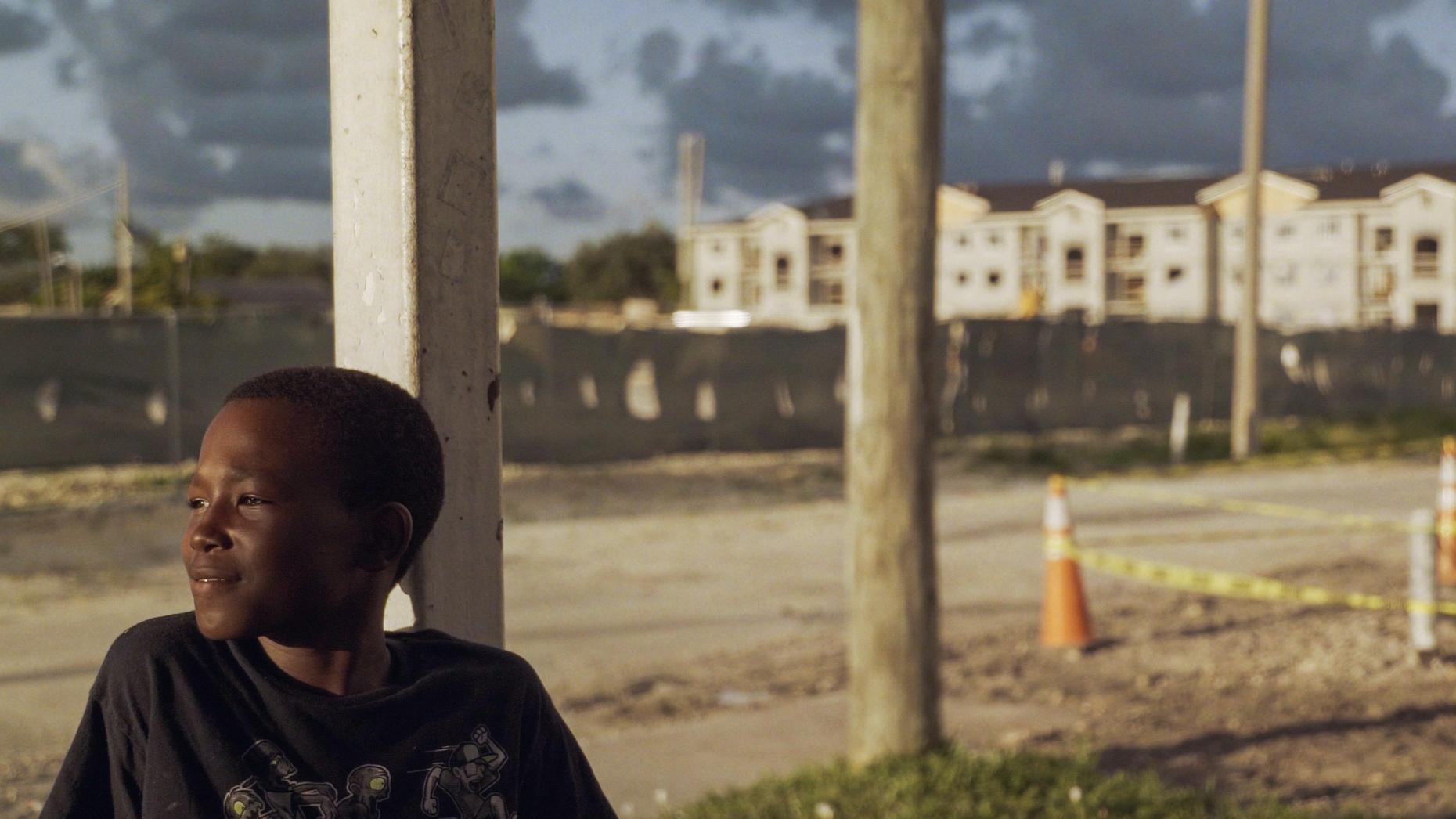
All Of It with Alison Stewart
A Public Housing Community in Miami Faces Climate Gentrification
00:22:58
A new PBS documentary looks at the efforts of one public housing community's fight against climate change.
Loading summary
Transcript64 lines
- [00:00]
A
Foreign.
- [00:09]
B
This is all of it from wnyc. I'm Tiffany Hansen in for Alison Stewart. A PBS documentary tells the story of residents at a public housing community in Miami who are fighting to save their neighborhood from climate gentrification. It's called Raising Liberty Square. Built in 1937, Liberty Square is home to one of the oldest housing projects in the United States. Today it's home to nearly 700 families. Here's a clip of the film this is just Climate justice organizer Valencia Gunder sharing a brief history of the historically black neighborhood.
- [00:46]
C
When they built Miami, they wanted it to be this beachfront paradise, but the people of color were forced through the middle of the city.
- [01:01]
B
Liberty Square is just 8 miles inland from Miami's beaches and roughly 10ft above sea level, making it more resilient to flooding than other neighborhoods along the coast. But in 2017, the City of Miami started redevelopment of the former housing projects. Raising Liberty Square premiered nationally last month on PBS. It's available to stream for free on PBS.org the PBS app and on YouTube. Joining us to talk about it is the film's director, Miami based filmmaker Katya Essen. Katya, welcome to all of it.
- [01:34]
A
Thank you.
- [01:35]
B
Also joining us is producer Ann Bennett. And welcome to all of it.
- [01:39]
D
Thank you very much.
- [01:41]
B
And last but not least, producer Corinna Sager. Corinna, welcome to all of it.
- [01:46]
E
Thank you.
- [01:46]
A
Welcome.
- [01:47]
B
All right, so Katya, let's start with you about the origin of this project. I'm curious how you got involved and at what point you realized that you really wanted to make a documentary about what was happening in Liberty City.
- [02:00]
A
Yeah, great question. I am originally from Germany and I came to Miami in the late 80s to study film. And my biggest claim to fame really is being a production assistant on many music videos of the two of the rap group 2 Live Crew which were all filmed in Liberty City. At that point I was a young film student, hardly spoke any English and did not really couldn't expect that I would more than 20 years later would come back and do this documentary in Liberty City. I left to New York for many years to work on documentaries all over the world and then came back in 2016 and that was the time moonlight came out and moonlight is playing. The story takes place in in Liberty Square. And I learned that this housing development now, now was supposed to was slated to be raised to the ground and replaced by a new community, by a mixed income community. And I have to say the European in me couldn't believe that something so historical. You said it before one of the oldest public housing projects in the country. One of the first segregated public housing projects would just be torn down. So my first interest was purely historical. And I picked up my camera and I wanted to just preserve something that I did not know much about and the rest of Miami also did not know much about, as I found out. And while I was there filming and meeting people and talking to residents, I was educated by the residents. By the way, we're sitting on some of the highest and driest ground in Miami. And next, I was educated about this term that I had never heard of before, climate gentrification. And at that point I knew that this would be a very different film. We still have a lot of history in it, but it's a very. It became a very, very different film. And yeah, it's kept, kept us going for six years. It took six years to make.
- [04:16]
B
And for people who aren't familiar with the Miami area, just describe for us Liberty Square, Just so we get a sense of what we're talking about, where it is, what it looks like when we get there.
- [04:29]
A
Yeah, it is a very. It was when it was built in the 30s. It is not what I, how I ever imagined public housing. It is a bungalow style, one story, maximum two story, a nine block area with garden apartments and laundry lines, Everything painted in, in pastels, you know, pink and, and green and blue and yellow. And I remember Terrell McCraney, the writer of moonlight, saying, yeah, in Miami, poverty is beautiful because it did look beautiful. But also when we started filming, people actually, they wanted to. People. Well, the film office insisted on, on giving us a police escort. That's how dangerous the area was considered to be. And it was, I think in 2014, 15, one of the dangerous zip codes in the United States. So it, it was, it's, it's a very, very challenged area. Yeah.
- [05:38]
B
Okay. Anne, or. Yeah, Anne and Corinna to you. Anne, I'm curious about your origin story with this project and also how you all decided what voices needed to be pulled in to tell the story of Liberty Square.
- [05:58]
D
Oh, that's a great question. Thank you. Well, I have known Corinna, I'm sorry, Katya now for almost 25 years. And we had met when Katya was working in New York City and she was editing her. Her short film Fairy Tales, that was Oscar nominated. And Corinna, I mean, sorry, Katya, had invited other filmmakers in to, to watch the film and give notes. And so that's how we got to know each other, because I was part of that screening And Katya was always very inclusive, you know, in her filmmaking process. So, you know, and we kept in touch over the years. And then when Katya started to work on this project, she had given me a call because she knew that my background is mostly in historical documentaries and I've specialized mostly in African American history projects. And when Katja called me, she said, well, you know, I've got this great project and this is amazing African American community and this amazing history. And I have to say I was a little embarrassed because I like to think that I know my African American history and I know all of my spots of history and culture and politics. Politics and whatnot. But I did not know all the things that had happened in Miami as far as black history and culture. Like, I did not know about Liberty Square and the Hampton House and how this community was a real hotspot for not only entertainers, but for political folks. People like Malcolm X actually, you know, came there and.
- [07:44]
B
And. And I'm curious. Yeah, I'm. Anne, is educating people about that history that you didn't even know about part of the mission of this?
- [07:52]
E
Yes.
- [07:53]
D
Oh, most definitely. And during the process, we were learning from all of the community members, from historians, and doing quite a bit of research as well. And I know that Corinna was working with us to get involved with the local archives and to find images, footage, people, stories. So it's been quite inclusive to make sure that we were thorough in our research and thorough in our journalism and our storytelling as well.
- [08:27]
B
So, Corinna, I'll throw the question to you. Then I asked, how did you decide what voices to pull into this?
- [08:34]
E
I think I have to hand that over to Katja because she really is the one.
- [08:40]
A
But we interviewed 40, 50 residents. We interviewed a lot of historians, experts, because the topic we decide. We realized at one point clearly that we had to bring these two. We had to bring housing justice and climate justice together, which is not an easy task, and then bring in history and structural racism. So we thought we had to rely on experts. But it became very clear very soon that the people that the residents are, they are the experts of their own stories. So we completely pivoted and we made it into a verite document documentary. There's not a single experts. And I'm making air quotes, you know, like. Because I say they are expert. Yes, everybody is an expert on their story. And yeah, we have in our film where we. We wanted to not do the. The usual David and Goliath story in a way. Bad, bad developer, poor, victimized, Community. It's much more nuanced. Nuanced than that. And so we have somebody from the development team. We have a resident. We have an organizer. We have an former resident. So we have. That's how then we chose the voices and we. One thing I have to say, Tiffany, that I'm really. I'm so happy about, and thank God to my editors, we. We managed to create this chorus of elders that keeps coming in and that fills the film with so much life and so much knowledge. But they keep. And it's like. And the reaction of the audience is always amazing because they're also funny. You know, these elders, they know a lot, but they're also really funny. So that we have that chorus also that comes in.
- [10:28]
B
Corinna, describe the opening of the film for us. What will we see when we sit down with this film?
- [10:34]
E
Just to start off, you'll see clouds and water reflecting Miami, but really, mostly you'll. You'll fly over Miami and Miami beach, but right then. And there comes Valencia Gundar, whose voice you were playing earlier, who was giving the history, and she says this famous line about they're going to come take Liberty City because we don't flood. So you have this contrast between this beautiful Miami and sound and the voiceover where you are that throws you off right then and there. Like, what?
- [11:12]
A
No, but also we're flying. We're seeing the usual Miami that everybody knows. And then we continue. We show what is behind the glitzy facade. We go inland, and then we land right smack in Liberty Square. So we see what everybody knows about Miami, the beaches and the glitz and the glamour, and then behind that.
- [11:30]
B
So, Ann, I'm curious if you can maybe give us a little bit of history about this plan for redevelopment. Because what happened, right, is the city moved in and said because it's on land that is less susceptible to the problems of climate change that are all facing most of Florida at this point. We're going to swoop in. Is that what happened? Is that an accurate.
- [12:00]
D
A little bit. But actually, I'm going to defer to Katya as well, because she can give us really the particulars because we want to get this story straight. So, Katya, if you could help, just give us sort of an outline of that timeline for when the development was starting.
- [12:17]
B
Yeah, just kind of like lay out the story, like the timeline for us here so we can understand what this is shaping up.
- [12:23]
A
Yeah, I mean, it's like Liberty Square is the heart of Liberty City, you know, the historical black neighborhood, which is a huge, huge area area. And developers will look at it and say it's underdeveloped because there are a lot of ones, you know, single family houses. So they have. I know that they have been circling that area for a while, but now with sea level rise threatening and insurance rates going up and people, like, really pushing inland, it has become like a feeding frenzy. So in 2015. So they tried before to redevelop Liberty Square, but residents actually stopped it. And in 2015, it was decided by the city to do it, by the county to do it. And 2017 is when the first bulldozers roll in and tear down the first building. And right now, we are still exactly where the film ends. Of the nine blocks, three are done. So they're incredibly behind. Yeah, that's in a nutshell, what it is.
- [13:25]
B
So we do hear from. In the film, we hear from Aaron McKinney, who grew up in Liberty City. He works for the related group, who, as I understand it, are developers overseeing this project. I just want to get a clip from him. We can take a listen to that and then talk about it.
- [13:44]
C
Generations of families have grew up in this particular site. It's understandable that folks are, you know, they have some kind of emotional attachment to this place. It's, for better or worse, somewhat of a staple in this community. Right. And so it's bittersweet. And I get that.
- [14:06]
B
Aaron has been. Has been present for a lot of meetings around the development of the property. Many of those meetings, I can imagine, were quite contentious. So, Katya, just talk to us about him, his relationship to the project, his presence in the film and how that relates to development, et cetera.
- [14:31]
A
Yeah. Aaron is the most vulnerable of all our protagonists. And even now that we started our impact campaign, or no, I should say, especially now that we're actually showing the film in community. And it's very. It's hard. He keeps saying his anxiety level is rising because he. Yeah, he is the most vulnerable. As I said, I kind of came. I went on this journey with him. I. He believed he could make a difference. He could have as a, you know, a place at the table and make sure that the development would do right by his community. And that's how he started out. That's how I started out. That's how the film starts out. And then he also had to see how promises were just chipped away and not kept. And then. I don't want to say to Vinny how. Because people who want to watch it, I just don't want to give away. What. What's happening. But yeah, he. He has been on a. On an extremely intense journey and probably.
- [15:33]
B
Not the only one.
- [15:36]
A
No.
- [15:37]
B
Yeah, I can imagine, you know, just from hearing what you've been saying, Anne and Katya, about how. How it's affecting residents.
- [15:46]
A
Right.
- [15:47]
D
And part of the goal of the film has been that, you know, we're filmmakers, we're storytellers, but we want to have this film be a tool for people to use and to share. And part of the sharing is that our protagonists, the people featured in the film, have been really active in sharing the film and discussing this in different communities. So you just asked about Aaron. Aaron has come to goodness, numerous screenings, screenings. And I have to say I really admire him because people oftentimes will have some comments. They'll say, well, didn't you know, or weren't you concerned and whatnot. And so he very bravely has addressed audiences when both they have applauded him and also questioned him. And so I've been really impressed by all of our protagonists who stepped up and been very open to. To share their stories, not only in the film, but with audiences in person as well.
- [16:55]
A
Right.
- [16:56]
E
And there's, you know, and. And there's also another aspect because the developer sent a letter just before broadcast, actually basically requesting that the film not be screened in at all. And so that was really quite something.
- [17:15]
A
Yes. You know, yes. Yeah. Yeah.
- [17:18]
E
No, but so there is. There's a lot really going on. And related is a very, very large, you know, gigantic real estate development company in the United States. It's even planning something in New York right now, so with public housing. So for sure, you know, the film touches on a lot of really important aspects.
- [17:43]
B
We did get a text. I've lived in Miami for 10 years. I lived in downtown Miami before the big boom. My sister went to the University of Miami. She was a teacher in Brownsville and Liberty City. I used to go with her to school to teach after school. I enjoyed the neighborhood and the people. I'm originally from Brooklyn and I know the feeling of gentrification and development by cooperation. Cooperations, cooperations. So there are a lot of feelings around gentrification and climate gentrification specifically. So I'm wondering what the. If you can just give us a sense of the pulse, not only in Liberty City, but in Miami generally. I'll toss it to any one of you. Generally around climate gentrification.
- [18:32]
A
Well, it's a. It's a huge fight, Tiffany. And. And the film, as I just mentioned before we started our impact Campaign. The film is being shown in all over. You know, and I'm. We're so happy about that. You know, Anne mentioned that too. You know, communities, residents, activists, organizers, everybody is. Is claiming them film this film for themselves and showing it, you know, as a cautionary tale because development, there is a. There is right now really rampant development also here in Miami of public housing properties, you know, and turn. And. And the push to turn them into mixed income. So that's, that's happening all over the place. And, and in our film, we, we, we show, you know, to approach promises very carefully, you know, that are done by local governments and the developers. So. And yeah, it is, you know, Corinna mentioned it now related. It just got the bid for the first full demolition of New York public housing. And our film arrived just at that critical time. So it is right now being shown all over public housing properties in New York as well, you know, which is. Yeah, it.
- [19:49]
B
Oh, I think Katya, frozen.
- [19:50]
A
I mean, it's also, you know, New York for me is just so crazy because it's the same developer.
- [19:55]
B
Yeah. So, Ann, did I freeze?
- [19:57]
A
Yeah, a little bit.
- [19:57]
B
That's all right. And I'm looking for a little bit more of sort of the feeling, though, the emotion around climate gentrification in Miami right now. What's the, what's the sort of palpable sense from folks in Liberty Square and outside Liberty City about climate gentrification for New Yorkers who are sitting here thinking, I don't understand what this is all about, or, you know.
- [20:24]
D
Well, I think there's. Well, Katya knows was best as being in Miami on and off for the past 30 years. But I can definitely say that people are feeling pushed and feeling displaced. And that's been happening in Miami, especially in the black neighborhoods, almost throughout Miami's history. When Miami was founded in 1896, a third of the people signing that original charter were people of African descent. And they're some of the first settlers in Miami, and they're first settlers along Miami beach, but they're also some of the first people to be pushed out of Miami beach once they realized how valuable that property was. So black communities have been pushed from the waterfront area. They've been pushed when the highway can't come through. They've been now pushed as sea level rises. So people are, you know, there's an old phrase, I remember my parents said, you know, back in the day that, you know, urban renewal is Negro removal. And that's something, you know, they would, you know, cynically joke about you know, back in the 70s and the 80s. But that's happening still now. And that's something that people have known historically. Their families know it, but they also are feeling it. So I think there's, you know, certainly a feeling of, you know, the more things change, the more they stay the same in, in, in, in many respects.
- [22:00]
B
Katya, I have a minute left here. If, if you could pull one quote from the film that you would like to have stick with folks after watching it, what would that be?
- [22:10]
A
Unfortunately, it's the one that couldn't already said it's like it's Valencia said it. You know, my grandfather always told me they're gonna come for Liberty City because we don't flood.
- [22:20]
B
Yeah, Corinna, same. Same for you.
- [22:24]
E
As a quote.
- [22:25]
A
Yeah, yeah.
- [22:26]
E
And there's another one, but I can't quote it. I always liked Valencia talking about how much money is invested in shoring up Miami's flood situation, but not investing to the people.
- [22:41]
B
Filmmaker Katja Essen, thank you so much for joining us. And producer Ann Bennett, producer Corinna Sager all worked on the film Raising Liberty Square. And we are very appreciative of your time today. Thank you so much.
- [22:56]
A
Thank you.
- [22:57]
D
Thank you for having us.
- [22:58]
E
For 140 years, MultiCare has been in Washington prioritizing long term solutions, partnering with local communities, and expanding access to care.
- [23:09]
B
Together, we're building a healthier future. Learn more@mycare.org Sometimes an identity threat is.
- [23:16]
C
A ring of professional hackers. And sometimes it's an overworked accountant who forgot to encrypt their connection while sending bank details.
- [23:23]
D
I need a coffee.
- [23:25]
C
And you need Lifelock. Because your info is in endless places. It only takes one mistake to expose you to identity theft. LifeLock monitors hundreds of millions of data points a second. If your identity is stolen, we'll fix it, guaranteed. Or your money back. Save up to 40% your first year@lifelock.com specialoffer terms apply.