← All Of It with Alison Stewart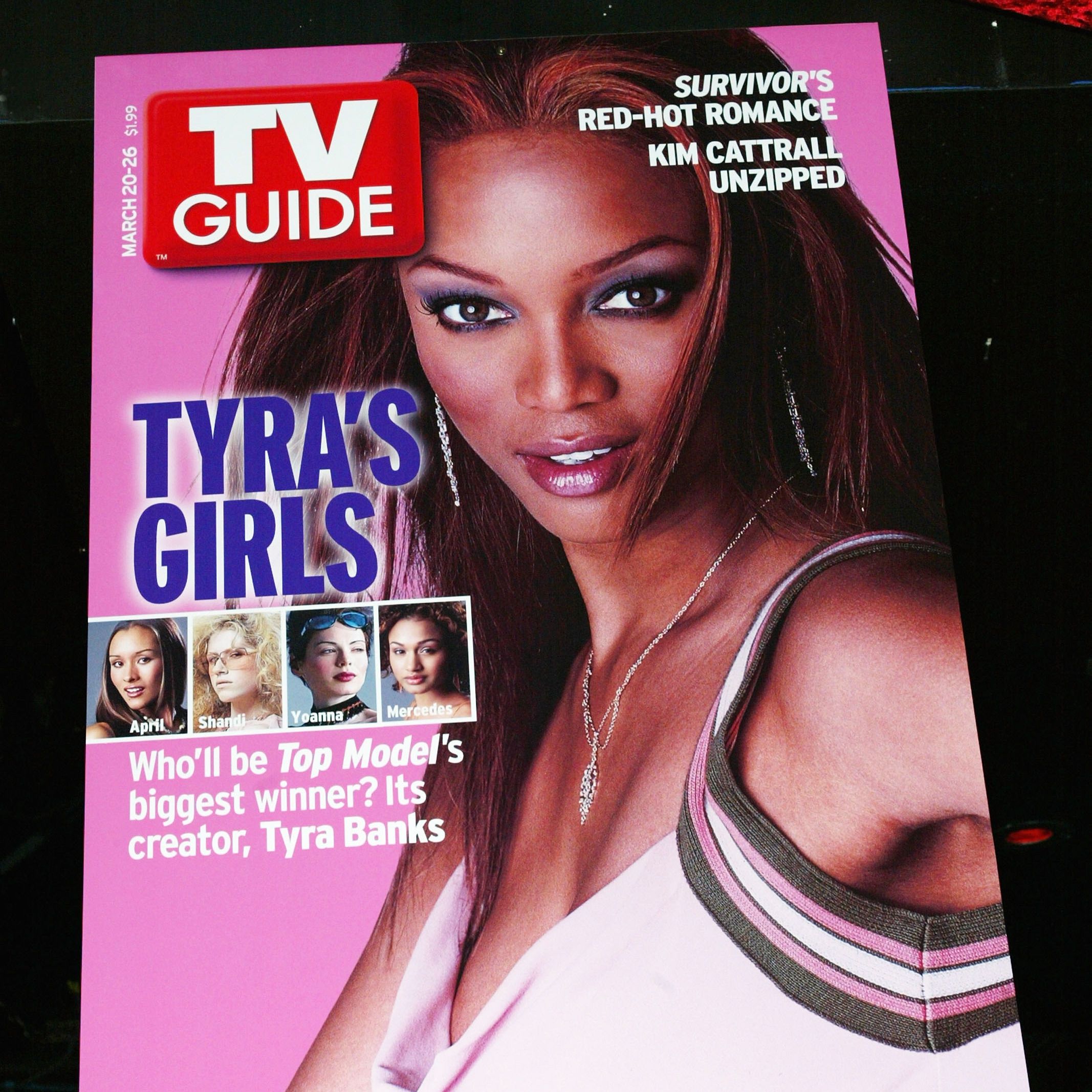
All Of It with Alison Stewart
A Reflection of the Fashion Industry Through 2000's Reality Television
00:20:44
Loading summary
Transcript53 lines
- [00:00]
LinkedIn Hiring Pro Advertiser
The new LinkedIn hiring pro can't undo your last hire, the lone wolf who you thought was a good collaborator because you didn't have the right candidate insights. But once you hired them, it was all hoarding info, declining meetings and howling at the full moon. But LinkedIn hiring pro can go deeper than just the resume to find you a perfect fit by using insights from the LinkedIn network to give you a short list of best fit candidates. Hire right the first time with LinkedIn Hiring Pro. Post your first job today and get $100 off@LinkedIn.com PandoraOffer terms and conditions apply.
- [00:31]
Redfin Advertiser
There's a difference between liking a house and actually getting it. Redfin is built to close that gap. Redfin agents close twice as many deals as other agents, so when you find a home you love, you're not a step behind when it's time to make an offer. That means less watching great homes disappear and more zeroing in on the one you'll actually end up calling home. Redfin helps turn saved listings into real addresses. Get started@redfin.com own the dream
- [01:01]
Nissan Pathfinder Advertiser
there's an SUV that turns the unthinkable into the unforgettable. The new Nissan Pathfinder. Built for big adventures in all that family chaos. It's powered by a strong V6 engine with a nine speed automatic transmission. Inside, it's rugged and capable, but still premium and tech forward with room for up to eight passengers. It's also available with seven passenger seating and second row captain's chairs with massive hauling capability. Now you can bring all the gear you and your family need for unforgettable Adventures. The new V6 Nissan Pathfinder. Power your adventure.
- [01:40]
Alison Stewart
This is all of it on wnyc. I'm Alison Stewart. A new documentary takes an important look at media, the judgment of women's bodies and the influence of people who had power. Starting in 2003, millions of viewers tuned in each work week to hear these words.
- [01:58]
Moore Loshi
Still in the running to become America's Next Top Model. Still in the running towards becoming America's they're still in the running to become
- [02:02]
Alison Stewart
America's Next America's Next Top Model, executive produced and hosted by Tyra Banks, was a reality television competition series that started as a behind the scenes look at what it was like to work in fashion. Banks said she had hoped to show inclusivity in a cutthroat industry. Here's Ty reflecting on the response the show heads received in revisiting the years
- [02:27]
Moore Loshi
Covid hit and the world was binging tv An Oklahoma man who goes by
- [02:34]
LinkedIn Hiring Pro Advertiser
the name Joe Exotic
- [02:38]
Moore Loshi
and started to binge Top Model. It got so big. My og my favorite things ever. Love, love, love that show. And it brought so much joy to so many people.
- [02:51]
Ebony Haight
These are my favorite America's Next Top Models and where they are now.
- [02:55]
Daniel Sivan
And so Tyra Banks should have been
- [02:58]
Nissan Pathfinder Advertiser
called out years ago.
- [03:03]
Alison Stewart
But as NPR critic Aisha Harris noted, quote, the docu series ultimately leaves us with a truth borne out time and again. Progress isn't linear, of course. It's foolish to think one woman alone has the power to undo decades of
- [03:17]
WNYC Host/Producer
deeply ingrained gatekeeping through a hit TV show.
- [03:20]
Alison Stewart
The show has really touched a nerve
- [03:22]
WNYC Host/Producer
with people, especially those who are now in their 40s and were teenagers when it came out and they were influenced. The good, it had a diverse cast. The bad, such as highlighting disordered eating. Reality Check Inside America's Next Top Model is streaming on Netflix. Director Moore Loshi and Daniel Sivan are here with me to discuss. Thank you for joining us.
- [03:44]
Daniel Sivan
Thanks for having us.
- [03:45]
WNYC Host/Producer
Hey, we'd like to hear from you listeners.
- [03:48]
Alison Stewart
What did you remember? What did you think when America's Next
- [03:51]
WNYC Host/Producer
Top Model first aired? What were your perceptions of models in the fashion industry? How did the show challenge ideas of Beauty in the 2000s? What are aspects of the show you've grown bit more critical of? Give us a call or Text us at 2124-3396-9221-2433. WNYC Moore and Daniel, for the last 20 years, the two of you have become known for working on political and historical documentaries such as Camp Confidential, America's Secret Nazis, and the Oslo Diaries. Moore what was interesting to you in revisiting this reality competition series, America's Next Top Model?
- [04:31]
Moore Loshi
So, of course, you know, we all grew up on this show. I'm 43, so I still remember vividly, you know, each season and how it evolved and how it reflected as me as a young woman and, you know, and a person that grew up in those years. And when the production companies approached us, you know, we thought, okay, wow, this is, this is great because it will allow us to really tell the story. And when we understood, you know, that the access was so great, I mean, the judges were already on board. And many of the models, we said, this is a real opportunity to really look into the story beginning to end and really take, you know, a deep look at what things happen, what, what was behind the scenes really. And, you know, how we can even reflect about that in our generation, in the next generation. So for us, it was you know, it was just an amazing opportunity to really take a deep look about our past that, you know, in many ways is our present today.
- [05:54]
WNYC Host/Producer
Daniel, this documentary is everywhere. People are commenting everywhere. Are you surprised at the reaction that this documentary has received?
- [06:04]
Daniel Sivan
We, we knew it will receive attention. I mean the show meant a lot for a lot of people and also shattering its image is something painful for a lot of people to watch and revisit. But honestly we were surprised. I mean, became much bigger than anyone expected.
- [06:26]
Alison Stewart
More.
- [06:27]
WNYC Host/Producer
Tyra Banks did not produce this documentary. And you work like filmmakers. You use a non judgmental lens when you're looking at a subject. How did you get Tyra to sit down with you and to give you so much time when you were going to ask her some pretty hard questions.
- [06:43]
Moore Loshi
So, you know, first of all, the production company really did an amazing work and I think that, you know, when we reached out to Tyra, it was already in the middle of, you know, of the making of the series. We already had interviews with most of the models and with most of the judges and we reached out to her, you know, and we told her this is really, you know, you can decide yes or not, this is happening with or without you. And we would definitely love to hear your story because I was. Me and Dani were both genuinely curious in her story. I mean this is, you know, it was a different era and she, she broke so many ceilings and she really did have, I think amazing intentions at the beginning and we, we really wanted to. To. I was curious, like genuinely curious when she sat down for this interview. I hope that she felt that. I'm curious to hear her comments. And how did this even idea came about and how did she start and how did it felt. Not only the controversial things, right, but also also the root story about the show. And she, and you know, she answered all the questions, even the hard ones. We asked everything and I think she came ready. I think that it's been a long time coming. Covid era. Tyra also says everybody rewatched it, everybody talked about it. You know, I think it was time for everyone for open this conversation. And you know, I think that part of the success of the show is that people were thirsty for it, you know, and it led the grounds of so many of so many things that are today in our pop culture. Image, beauty, weight, you know, these are all essential, essential subjects to us today as a society, as women. I mean, you know, it's still a very big deal. And I think that some of the things that happen in the show are very wrong then and are very wrong today. And, you know, Tyra sitting down to answer the questions was was, I think, important, important thing.
- [09:16]
WNYC Host/Producer
Daniel, what was your understanding of what Tyra Banks tried to accomplish with the making of America's Next Top Model in the early days?
- [09:27]
Daniel Sivan
I mean, I don't feel comfortable narrating Tyra, but I can tell you that, you know, what I found fascinating about this show is it really brought to light so many different people and persons than American television back then had. I mean, you had people from the LGBTQ community which were not running gags. They were not a joke like you would see them back then on, you know, a lot of American sitcoms, But they were actually the bosses judging fashion, talking about beauty concepts without having to apologize, downsize, or mediate their sexual orientation or how they define themselves. You had Ms. J, which, you know, presented a world of different pronouns that today we are only now coming to terms with. That was radical back then, you know, in the early 2000s and you had a woman of color which was hosting a show not as a contender but as an executive producer, as somebody that is calling the shots. She doesn't have a man above her. It's not Survivor's Amazing Race. She is a host and she is a boss. And obviously you have so many different types of beauty back then, which different ethnicities, different body types. It really started as something beautiful and it evolved into something pretty ugly. But the genesis of it, I think, came from a lot of good intentions.
- [11:22]
Alison Stewart
We got a text that says I was a viewer of ANTM back in the day, so I decided to check out the documentary. After one episode, I was sucked in and binge watched the whole series at three in the morning. Shocking. We're talking about a new documentary, America's Next Top Model, which explores the show's legacy in fashion and popular culture 20 years since it first aired. Directors Maura Loshi and Daniel Sivan are here with me to discuss their new three part series, Reality Check Inside America's Next Top Model. We'd like to hear from you what you remember about when America's Next Top Model first aired. What did you think of the show? Our number is 212-433-969-2212 4332. Or you can tell us about the three part series reality Check Inside America's Top Model as well. So Mort, Tyra Banks is sort of the architect of the series when it begins with TV producer Ken Mock and black ish creator Kenya Barris. However, networks really didn't go for it at first. What concepts that gave the networks pause when they first heard of America's Next Top Model.
- [12:34]
Moore Loshi
It's surprising, right? To think that she got so many no's. It's really surprising. I remember both she and Ken told the story and the judges and it's surprising that they didn't see the potential. But I think that back at the day, it was really the beginning of the era of reality. People didn't understand the concept of behind the scenes. You know what is interesting in seeing the everyday life of a model, you know, to see not only that success, not only the glossy page on a magazine, but to really see what they have to go through to get there. And she was one of the first people, you know to think about that concept. Obviously it was the real world and others, but it was really the beginning of this era. And you know, and I think that you see in the first season that everything is so raw. Although also in the first season there are moments that I, I now needed. Before we started, you know, working on the show, I re watched 24 seasons. I watched every episode in those 24 seasons. And you know, there's some, some things that I watch now even in the first season, you know, women are doing wax in front of the camera and things that you're like, whoa. But I think that the first season was very raw. It was still searching itself and slowly, slowly, slowly it became more bullying at, you know, the models and let's make great television and let's see where we can get and is it television or is it a model contest?
- [14:22]
WNYC Host/Producer
Recently, our colleague, NYC now host Jeanne Pierre sat down with Ebony Haight. And at the time of the shooting, at the time of the show, she was a 24 year old woman from Harlem and one of four black women in that first cycle of the show. Let's listen to a clip from that interview. And she talks about how poorly the show has aged and the cultural differences that affected her.
- [14:45]
Ebony Haight
I think for the time at 2003 wasn't acceptable. I think that's one of the things people are battling right now. We're revisiting the show and I think it's two different generations with two different opinions.
- [14:54]
Moore Loshi
Absolutely.
- [14:55]
Ebony Haight
And when I tell you 23 years later, I don't feel forgotten at all. It is an everyday thing on the train, the bus, it's constant conversation. So because you look the same. Thank you so much. But I also love that it's infusing the conversation that we are having right now. When I think about Being on a Murktop model 23 years ago, and today the big conversation is, did we know better? That is very important. So for me, there is no. It was 10 years ago. It was 20. That's ridiculous. We were conscious in 2000.
- [15:25]
WNYC Host/Producer
Daniel, what do you think about that fact? Were they conscious when the show first started?
- [15:30]
Daniel Sivan
I mean, I believe so. I think people, when you see stuff that's wrong, it's wrong. Seeing any person being humiliated is absolutely wrong. It was wrong back then. It is wrong now. I mean, you know, when you. When you look at the show and you see women being objectified, I think that that was the appeal of the show. People wanted to see beautiful women being humiliated on prime time. It's not a concept that we developed in recent years. I think everybody knew it's wrong, but it was acceptable at the time. And now it's less acceptable, so we criticize it. But back then it was, oh, yeah, obviously this is wrong, but it makes for great tv, which is a very poor excuse.
- [16:23]
Alison Stewart
This text says, tyra victim. Part of the problem. Complicated. I know, but she did not help. What do you make of that comment more?
- [16:36]
Moore Loshi
You know, I think obviously it's complicated and it was really important for us to see the complexity of it. Right. I mean, for me, there are things that are not complicated. Like Shandy's story, for example. For me, it's not complicated. For me, it's a red line that was crossed and that's it. You know, to me, there's many things that were red line. And. And I'm really sorry that, you know, that nobody stopped it.
- [17:07]
WNYC Host/Producer
Yeah.
- [17:07]
Alison Stewart
Shandy, for people who don't know, had a harrowing experience where she blacked out and she woke up with a man on top of her.
- [17:15]
WNYC Host/Producer
Just. We'll leave it there.
- [17:17]
Moore Loshi
Yes, but, you know, I think like Daniel said before, you know, Tyra, it was complicated because on the one hand, she really broke all the ceilings and she really gave opportunities to things that you. You couldn't watch on television these days, you know, like gender fluid. And, you know, she. She brought also really great discourse, but. But she also coined stereotypes. And obviously, she's not the only problem. You know, she's not the only one to blame. That would be, you know, it's. Obviously, it's more complicated. And I also think, you know, that this, what happened there, it's really reflective of us as a society then. And I. I'm even seeing it now on TikTok on Instagram, you know, of. Of what is the right body image of what is beauty of, you know, of. Of who is. Has the right. It. I mean, we're surrounded by it every day. And I really hope that with the documentary, you know, the conversation and the discourse wouldn't be only about the small, you know, only America, Next Top Model, but it would be a more broad, broad discussion about how are we making us better as a better society, how are we raising our kids, my girl, in, you know, in a world that will accept her as who she is with any beauty or any weight or any, you know, diversity. I really hope that at the end that kind of would be the message, the discourse that we can have.
- [19:07]
WNYC Host/Producer
This is an interesting text. It says, I remember talking about the show at the time with colleagues at work and how it was like a train wreck you couldn't look away from. I wanted it to be a good opportunity for the young women involved, but usually ended up feeling bad for them. Loved Ms. J, but hated how painful it was to see these girls put in this terrible catch 22 situations. Daniel, do you agree with that?
- [19:32]
Daniel Sivan
Definitely, yeah. I have nothing to add. It was perfect. I mean, yes, it's. You watch it and it's captivating and it's fun and you are drawn into the narrative and you are rooting for them. But yes, you are complicit in them going through a very painful journey. And yes, it is problematic. I mean, we look at it right now even at this documentary. Half of the appeal of the documentary is we can present in this documentary radical, radical things that happened. If they were only nice and creating a nice environment and a constructive educational environment for these models, they wouldn't have any ratings back then. And I don't think anybody would watch the documentary that we did right now.
- [20:30]
WNYC Host/Producer
I mean, that's interesting.
- [20:31]
Daniel Sivan
We are all watching these girls going, girls, women going through hell. And I really, really hope that it won't only raise debate as for reality TV show from 20 years ago, but as for reality TV shows today and for challenges that you can see now on TikTok. And obviously now we are much more educated and enlightened and we know how to use the right lingo. But do we really treat people on television with respect or do we still enjoy watching them fall down? And that's a big conversation we should all have.
- [21:14]
WNYC Host/Producer
Moore, did America's Next Top Model do anything for the careers of these women?
- [21:20]
Moore Loshi
Unfortunately, to very, very, very few, most of them, on the contrary, you know, Danny, even story in. In the series they were coined, some had successes, but very, very few. When you look at 24 seasons. In each season, you know, 12 or 13 girls. Very, very few.
- [21:45]
WNYC Host/Producer
The name of the new three part series is Reality Check. Inside America's Next Top Model. I've been speaking with its director Moraloshi and Daniel Sivan. Thank you so much for your time today. We really appreciate it.
- [21:59]
Moore Loshi
Thank you for having us. Thank you for watching.
- [22:04]
WNYC Host/Producer
And that is all of it for today. I'm Alison Stewart. I appreciate you listening and I appreciate you. I will meet you back here tomorrow.
- [22:15]
Redfin Advertiser
There's a difference between liking a house and actually getting it. Redfin is built to close that gap. Redfin agents close twice as many deals as other agents. So when you find a home you love, you're not a step behind when it's time to make an offer. That means less watching great homes disappear and more zeroing in on the one you'll actually end up calling home. Redfin helps turn saved listings into real addresses. Get started@redfin.com own the dream.
- [22:45]
Nissan Pathfinder Advertiser
There's an SUV that turns the unthinkable into the unforgettable. The new Nissan Pathfinder. Built for big adventures and all that family chaos. It's powered by a strong V6 engine with a nine speed automatic transmission. Inside, it's rugged and capable, but still premium and tech forward with room for up to eight passengers. It's also available with seven passenger seating and second row captain's chairs. With massive hauling capability. Now you can bring all the gear you and your family need for unforgettable adventures. The new V6 Nissan Pathfinder power your adventure.