Loading summary
Transcript35 lines
- [00:10]
A
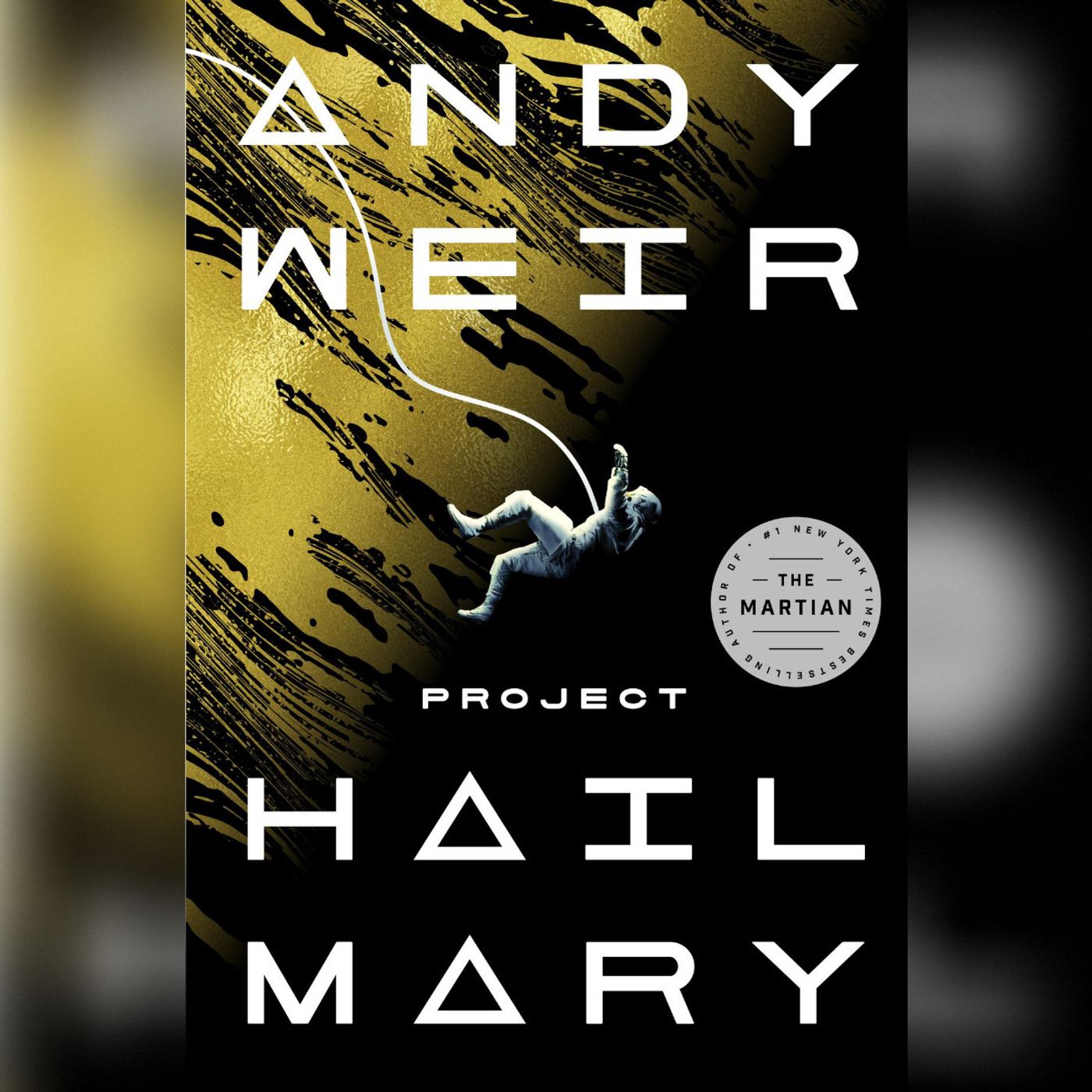
This is all of it on wnyc. I'm Alison Stewart. Happy Friday everyone. We hope you enjoyed our special presentation of our recent Broadway on the Radio event in the green space with the cast and creative team behind the musical Chess. And this hour we've got another special presentation for you in honor of Poetry Month. Turns out friend of the show, Nick Offerman, is a big fan of poetry and he wanted to share his love of poetry with us all. So for the next four Fridays, we'll hear him recite a poem of his choosing from his favorite poet, the nature writer Wendell Berry. So stick around until the end of the show to hear some verses read in the dulcet tones of Nick Offerman. Before that though, we'll hear about the paintings of Wifredo Lamb, which reimagine Afro Caribbean history. The MoMA exhibit of his work is called When I Don't Sleep, I Dream, and you've got until April 11th to check it out. And later on we'll talk with comedian Jeff Ross about his one man Broadway show Take a Banana for the Ride, which recently became available to stream on Netflix. But first, we'll hear from the science fiction author behind this year's biggest box office hit. After its second weekend in theaters, the new sci fi film project Hail Mary became the highest grossing film of the year so far. It's the biggest blockbuster success for Amazon MGM since the company merged in 2022. The film is the second hit movie to arise from the work of sci fi writer Andy Weir. He's also responsible for the 2011 novel that became Ridley Scott's critically acclaimed survival story the Martian, starring Matt Damon. In Project Hail Mary, the protagonist, Ryland Grace, wakes up on a spaceship all alone with no memory of how he got there. He doesn't remember his name or his mission. All he knows for sure is that his two fellow crew members are dead and that he is far, far away from Earth. Gradually, he pieces things back together. He's a schoolteacher and a molecular biologist. He remembers that there are alien microbes called astrophase that are feeding off the sun, dimming its power. And he he remembers that he has been sent on a mission to another solar system to figure out how to stop the astrophage before humanity is destroyed. The book saw as much critical success as the film adaptation is getting. It was a New York Times bestseller for months. It was a finalist for the Hugo Award for best novel and Kirkus Reviews called it nothing short of a science fiction masterwork. I talked with Andy Weir when the novel Project Hail Mary first came out and I started by asking him why he wanted to give his main character amnesia right off the bat.
- [03:02]
B
It's like the most tropey thing a writer can do, I admit. But in this story, like a whole bunch of stuff happens on Earth before the mission is launched. And then after that it would just be Ryland by himself. So if I told the story linearly, all these characters that you started to get to know and like would just vanish after the first act and you'd never see them again. So I figured flashbacks are a good way to have an unfolding mystery of what's going on back on Earth and lets me exposition it bit by bit.
- [03:35]
A
What came first? The mystery plot or this idea of this, you know, sun sucking mold? This astrophage, or the idea of, oh, I can use amnesia. What was sort of the first part of this particular book?
- [03:48]
B
Well, Project Hail Mary is really a collection of ideas from the junkyard of my mind. So I had a bunch of just. I think every writer has this. A bunch of ideas just lurking in the back of your head that none of them are themselves good enough to be a book. But I found a way to put them together to be a book. And so I had one idea about a guy who wakes up aboard a spaceship with amnesia, but that's all I had for that idea. I had another idea about an extremely efficient spacecraft fuel that could actually convert mass into energy in the form of light and use that as propulsion. I thought that would be cool and. But that was the standalone idea. Again, not enough to be a book. And bit by bit I kind of picked things up off the ground and glued them together. And I'm like, hey, this actually makes a decent linear narrative.
- [04:37]
A
Do you know how many writers you've just made happy who have ideas on post its and cocktail napkins?
- [04:42]
B
Oh, everybody does. Hey, if you're right, that's not failure, that's just the process.
- [04:48]
A
Now you just dropped some science on us. And I think people who know your work know that you are somebody who writes fiction but likes facts.
- [04:55]
B
Well, yeah.
- [04:56]
A
How long does your does research for something like this take? Because there's a lot of science. Shouldn't dissuade anybody from reading it, but there is a lot of science in this book.
- [05:05]
B
Yeah, well, I mean I. It's hard for me to tell for sure because, you know, I do the research as I'm working on it, so I don't do it all in one block. But I would say I spent about half of my time researching During a project. But that's okay because I really like it. I mean, I really enjoy the research part. It's that pesky writing that's no fun.
- [05:26]
A
My guest is Andy Weir. We're talking about his new bestseller project, Hail Mary. So at the center of the story is this. Am I saying it right? Astrophage.
- [05:35]
B
Astrophage. Perfect. Yep.
- [05:37]
A
Tell us about astrophage.
- [05:39]
B
Well, astrophage is, you know, fictional, obviously. It's an extraterrestrial microbe. It's not intelligent. It doesn't want you to take it to. To your leader. It's just a single celled organism, and it lives on the surface of stars, kind of like algae lives on the surface of the ocean. It collects energy from the stars and then uses that energy. It stores it up tremendously well, and then it uses that energy to propel itself out randomly. It spores, kind of like mold, just goes out in random directions, hoping that, like, some tiny percentage of it will end up finding somewhere else to seed. And that's what astrophage does. It spreads from star to star like that. It's basically a stellar mold and gets into r star in the story, which presents a problem because it reproduces by. It doubles its population every set interval. And so eventually, there's so much astrophage on our sun that it's absorbing a significant percentage of the solar output. The sun will be fine, but Earth would not be getting nearly as much energy as it used to, and our ecology would collapse.
- [06:46]
A
Enter our hero. Question mark. Not giving anything away just yet. He's, you know, Ryland Grace, you know, he's not some superstar scientist. He's. He's a schoolteacher. And he wrote this paper which people consider to be kind of wacky. So he kind of, you know, sort of skulked off and became, you know, a middle school teacher. Not there's anything wrong being middle school teacher. Why did you want him to be a. Not a working scientist or an astronaut?
- [07:17]
B
Well, it goes to his. I'm trying to. I consider my biggest weakness as a writer to be characters. I'm such a science and plot oriented writer. I feel like my characters kind of come off as flat two dimensional and maybe don't have much of an arc. So I really wanted to work to give some depth and complexity and growth to Ryland over the course of this novel. And so it kind of plays into his backstory that he's. One way to put it is, you know, conflict averse. He. He, like when he challenged the scientific community on exobiology, which is kind of an academic thing he was part of. And, and, and a lot of people pushed back on it. He just left the field rather than fight about it. And to be fair though, he really enjoys teaching junior high school. That was kind of his true calling. However, part of the reason is because he, you know, the kids are young, they're not teenagers yet. They aren't all full of contempt. They look up to him. He's popular, he's a, you know, and they don't challenge him much. And so that's kind of how he rolls. He likes these kind of safe environments. So I was trying to put some depth in my characters.
- [08:28]
A
He's got an interesting habit and it's even. You make a note on it that he doesn't swear. And on page 16, as he's trying to remember who he is, he says, what the fudge is going on? Fudge? Seriously? Maybe I have young kids. Maybe I'm deeply religious. As he's trying to figure out who he is. Now, the mar. Your character the Martian was pretty foul mouthed. Tell us about this choice to make Ryland someone who, you know, finds himself in a position where swearing would be probably okay.
- [08:57]
B
Yeah, well, it wasn't. It wasn't like me going, oh, I'm going to make him as opposite of Mark Watney as possible. You know, I just, I had already decided that he was. Once he got his memory back and stuff, he would realize that his career is. He's a junior high school science teacher. And everyone I know who works with kids functionally trains themselves out of swearing so that even in non child scenarios, when they're just hanging out with a bunch of adults, they still don't swear. And so that's basically what happened to Ryland. He. Yeah, he was never much of a swearer in the first place. And then once he became a teacher, he just stopped swearing entirely and it just kind of carried over and became part of his personality.
- [09:41]
A
Same is true for live public radio hosts.
- [09:44]
B
I don't doubt it.
- [09:45]
A
My guest is Andy Weir. The name of his novel is Project Hail Mary. So I'm not gonna give too much away. There's this, this global cooperation. Everyone starts to realize that we're all in this together. If the sun dims and you've made this really cool kind of tough character of Strat, would you describe her and what your thinking was she's sort of the person who is commanding this global enterprise and is just a boss?
- [10:17]
B
Yeah, Strat. She's a lot of fun to write. So Strat, the character is she's from the Netherlands, she's Dutch. She was before. Before Astrophage struck, she was an administrator at the European Space Agency. And she's just kind of just an absolutely no nonsense person. She will not put up with any sort of nonsense. And she has been put in charge by the. Has been put in charge of the entire effort to save Earth from Astrophage. And so she probably has more authority than any single human being has ever had in history. She can literally tell countries what to do. And she has a laser like focus on accomplishing this goal. She understands exactly what's at stake. It's literally the survival of every human being on the planet. So she doesn't have any time for nonsense. She just, like, overrides anything that would be bureaucratic or would slow down the mission. And she just, like, takes no prisoners. And she only ever uses this power for the mission. She never does a single selfish thing in the story. And I just really enjoyed writing her because I think we've all kind of had that fantasy where wouldn't it be cool if you could just say, no, shut up, we're doing it this way, and that's the end of the discussion. Like, wouldn't that be nice? And to have a clear moral goal, too, to be like, I think, you know, everybody. You know, in real life, morality is complicated. You don't know whether to, you know, keep hanging out with this friend after they broke up with your other friend or whatever. But if you're. If you're. If your objective is literally to save every human being on Earth, you don't have any qualms anymore. You're like, it doesn't matter what I do, as long as it doesn't involve 7 billion people dying. I'm doing the right thing.
- [12:11]
A
I don't know who's playing her in the movie yet, but I'm picturing Gillian Anderson just down.
- [12:15]
B
Oh, yeah, she'd do good. I was hoping. Yeah, I was hoping for an actress who's like, a little older to explain why she's been given so much trust and stuff like that. So I think immediately, like Helen Mirren, Dame Judi Dench, that sort of thing.
- [12:29]
A
I'm on board with both of those as well. Olivia Colman. Olivia Colman.
- [12:33]
B
Olivia Coleman. Yeah. Already doing the Queen, so why not?
- [12:37]
A
We've got about three minutes left, so this is why I've left this for the end. This is a slight spoiler. I'm going to count down if you don't want to know. 3, 2, 1. So Rylan's out there by himself in space, but he's not by himself. He encounters an alien spacecraft and a highly intelligent life form he nicknames Rocky. He and Rocky figure out how to communicate. He and Rocky figure out they're in this together. What characteristics did you want Rocky to have?
- [13:08]
B
Well, I wanted him to be likable for sure. He's in the same boat. Basically. His planet, his species is having the same problem. Astrophage is eating their sun. Well, consuming the energy from the sun. And they have the same kind of existential threat that the humans have. And the reason they end up meeting is because Tau Ceti, the star system, is the only star in the area that isn't dimming as a result of astrophage. So both species came up with the same idea. Hey, let's use Astrophage as a fuel source to go look at the star. And Rylan and Rocky, that's the big surprise for the reader is about a third of the way through that they discover this is a buddy comedy kind of it's a buddy cop movie maybe, I don't know. But these two work together and they get along right away. They're both scientists. And I guess for Rocky, I just kind of came up with his species, what his body looks like, and then a personality that was likable. And boy, has he been well received. I gotta say, like, I did my best to make him as likable as possible, but I had no idea that the absolute love that the readers were gonna have for him. People are, you know, tweeting things like, I would die for Rocky. So I'm glad, I'm glad he's had that effect. But yeah, well, the other thing is,
- [14:29]
A
you didn't make him human. Ish.
- [14:31]
B
At all. Not, not at all. No. I wanted. So I, I love Star Trek, I love Star Wars, I love Doctor who, but for hard science fiction, for, you know, this is supposed to be as realistic as possible. That's kind of how I do things. I figured the odds of an alien looking human resembling a human at all are just like really low. And also, why would they be comfortable in our atmosphere and atmospheric pressure? I mean, so he's completely incompatible. He looks like a sort of a half meter tall, five legged spider with rocky protrusions on his skin, hence the nickname. And he lives in an environment of 29 times Earth's atmosphere of like 400°, 450° Fahrenheit, pure ammonia. Like, we have completely incompatible environments. And that's, you know, that's what I wanted.
- [15:24]
A
That was author Andy Weir talking about his book project, Hail Mary. The film adaptation starring Ryan Gosling, is in theaters now. Coming up, curators Christophe Cherie and Beverly Adams will tell us about their exhibit Wilfredo Lamb, When I Don't Sleep, I Dream, which is running at MoMA through April 11th. This is all of it. History is yours to make.
- [16:04]
B
What would you like the power to do?
- [16:06]
A
Bank of America champions US Women's soccer legend Michelle Akers and everyone who dares
- [16:11]
B
to ask what's possible.
- [16:12]
A
Bank of America Proud to be the Official bank of U.S. soccer bank of America NA Member FDSE. Whether it's news from around the world or the latest from your neighborhood, New Yorkers, engage with WNYC studios for the information and connection they can only get from our programming. Be a part of that conversation through your business's support. Learn more at sponsorship wnyc. Org.