← All Of It with Alison Stewart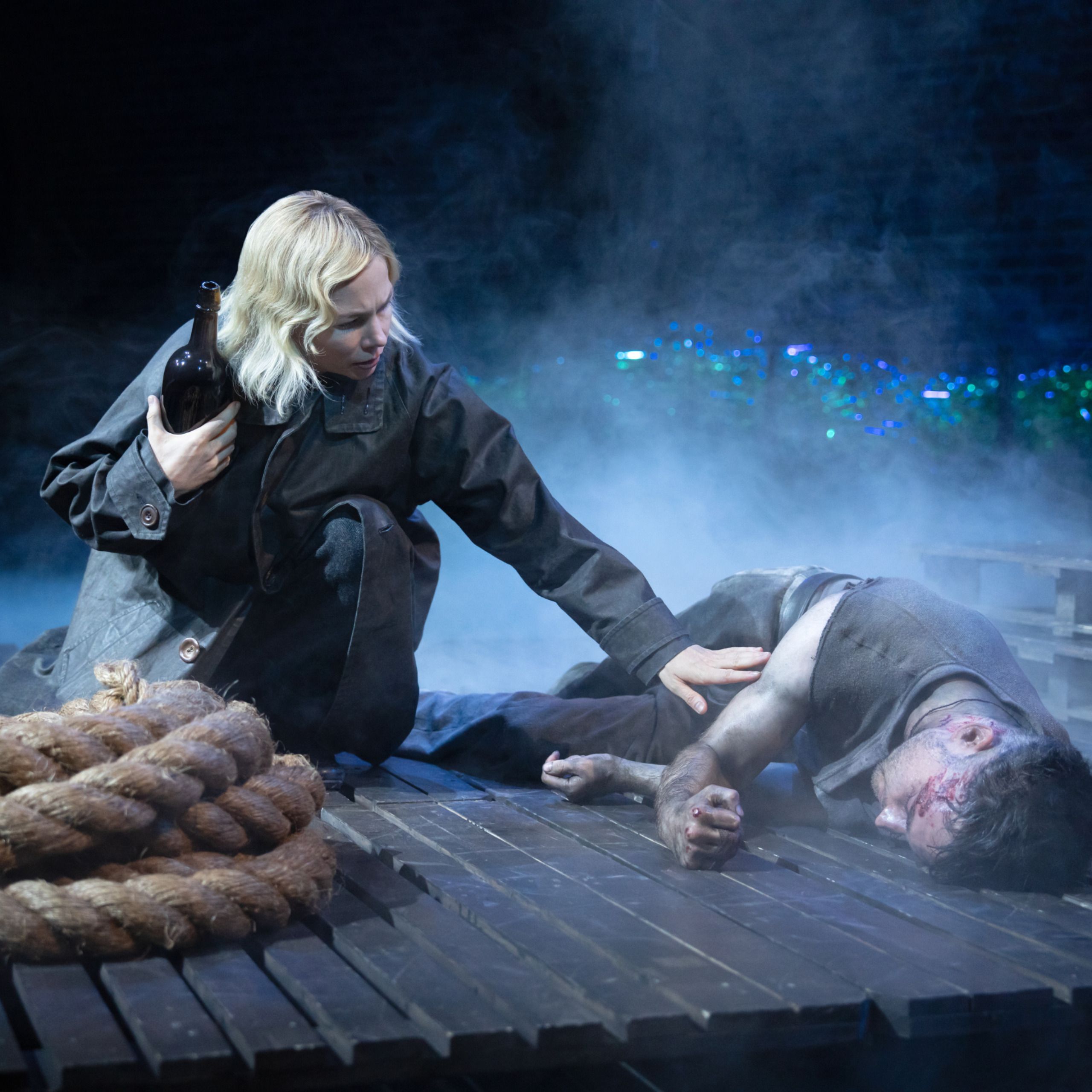
Loading summary
Transcript90 lines
- [00:00]
A
All of it is supported by Progressive Insurance. You chose to hit play on this podcast today. Smart Choice. Make another smart choice with Auto Quote Explorer to compare rates from multiple car insurance companies all at once. Try it@progressive.com Progressive Casualty Insurance Company and affiliates not available in all states or situations. Prices vary based on how you buy.
- [00:30]
B
This is all of it. Alison Stewart, live from the WNYC studios in soho. Thank you for spending part of your day with us. I'm really grateful that you're here. On today's show, we'll learn about the first woman to captain a merchant ship. We'll speak with the author of the book the Sea Captain's A True Story of Mutiny, Love and Adventure at the Bottom of the world. And 2026 is the year the US celebrates the 250th signing of the Declaration of Independence. The the director of programming from Fraunces Tavern, a building that was standing in 1776, will join us to discuss what New York looked like at that all important year. And we will fill you in on our January get lit with all of it book club. It's our partnership with the New York Public Library and we'll give you the details at the top of next hour. That's the plan. So let's get this started with the revival of play that won the Pulitzer in the twenties. A 100-year-old play finds new life at St. Ann's Warehouse in Brooklyn. Eugene Oneills drama Anna Christie is the tale of an abandoned daughter looking for a new life while being followed by her past. Her estranged father sees her as an innocent child. A barge captain named Chris left Anna in Minnesota. She tracks him down and hopes to he he does too. But along the way, she meets an attractive and raw sailor. That can't be good. Anna Christie is a return to the role, to the stage, to the stage for the star, Michelle Williams in the title role. Thomas Kail directed the play and if you didn't know, they're married, it's a cast filled with talent, including our guest, Brian d' Arcy James. He plays her father, Chris. Last time he was on the show was for the Days of Wine and Roses. And Mayor Winningham, she plays his wise lover, Martha Owen. Anna Christie is playing at St. Anne's Warehouse in Brooklyn until February 1st. Everybody, welcome to the show.
- [02:32]
C
Thank you.
- [02:33]
D
Thank you.
- [02:34]
B
So, Thomas, when people ask you what this version of Anna Christie is about, what do you say?
- [02:42]
C
It's about two and a half hours, that old chestnut, you know, it was a play that Michelle and I started talking about in 2019, and one of the things that we. We were struck by in reading it was the way that anything true, especially in the performing arts, feels like somehow a writer like o' Neill was looking into the future while he was grappling with his own present tense. And so this idea of what it means to bring your past with you into any environment or situation and what it means to try to remake yourself, can you remake yourself? Can you be loved for all the things that you were just really resonated with us. And we just wanted to get together down by the water at St. Ann's and pack the cast with as many talented and wonderful humans as possible. And I have two of them sitting next to me. What a delight.
- [03:36]
B
Mare, when did you read. When did you see Anna Christie the first time?
- [03:40]
D
I had never seen it, and I had never read it. So when I heard that I could possibly be in this, I read it for the first time. And I will say I subsequently focused on I'm only really in the first act. There's four acts. I'm only in the first. So I focused on that. And so, as rehearsals went, Acts 2 through 4 were reflectory for me. I felt like I was learning the play as rehearsals went on, because I hadn't studied those acts. So in some ways, I was a good audience in the rehearsal room because I was constantly fascinated and my eyes were opening to the layers and the depth of the play through the performances of Brian and Tom Sturridge and Michelle.
- [04:33]
B
What did you learn by observing the play?
- [04:40]
D
That the struggles for a woman in that time. Have companion struggles in this present time, and that the tragedy or the darkness inherent in the play is leavened with some wonderful. I mean, the language and the rhythms of the last two acts are just extraordinary. But I was left feeling unmoored, no pun intended, and hearts. And also, I think, kind of championing Anna and what she's grabbing at the end, what she chooses to look at and what she chooses not to look at.
- [05:45]
B
Brian, when did you read or see Anna Christie?
- [05:47]
E
I'd read it in college, but I just remembered vaguely, kind of how it sat in my mind. And so I obviously reread it again with this production coming into focus. And so, yeah, it was a reminder of just the language of o', Neill, which I had some familiarity with, just from working on different things along the way, along the road. But my familiarity was pretty limited with this particular play.
- [06:22]
B
How has that changed for you?
- [06:24]
E
Well, I think, like the great writers, I think of the one and only professional Shakespeare production I did, I didn't think it would be possible to do it just because of the intimidation factor of wanting to get honor the language and thinking that it might be impossible to do that. I had the same feeling and fear about this particular writer and doing this production.
- [06:46]
C
Right.
- [06:47]
E
And what I've learned is that once you get past that fear and you're inside of it and you inhabit it in a way that is different from reading it, which is a whole other level of appreciation, but when you're living it the way that o' Neill has designed and devised, it is a totally beautiful wave that you can surf. And so that was something that struck me and made me less intimidated and ultimately, hopefully able to do the job decently.
- [07:18]
B
Thomas, what did you want to honor about the original play and what was something that you wanted to change about it for a modern audience?
- [07:27]
C
You know, one of the things that I adore about the theater is that by doing a work that has existed, you stand shoulder to shoulder and in line with all of the productions that have already existed, and then all that will come after you. And so there's something about being a link in a chain that I found very moving. The last time the production was done was in the early 90s. Before that it was in the late 70s, and then there was one in the 50s, and then there was the original production in 1921. So it's not a play that's been done particularly frequently. It's one of our finest and deepest writers. It was the third of his 49 plays. So you're getting, you know, someone who's a real og, but you're getting the early work, you know, which I think is kind of fun to see. Like, oh, what was the early discography? You know, and so I found that there was something about, you know, the way that you have to sort of surrender to the work. Like the structure is the structure. It's a play that has basically four 30 minute scenes with an intermission. That's not the way most people write anymore. You know, most plays now, most new plays are 67 scenes and two people are talking at once and someone's on the computer while they're doing it. And there's 63 characters and everyone's, you know, and by the way, I love those, and I've made those as well, and I love to watch those. But there's something about this which is sort of forces you just to sit and be in real time to watch this play that in some ways, the first half Kind of sets up the back half, but doesn't really. You know, there's something about the structure of this that is surprising and shocking, you know, that you think the play that started in that place ends in this other place is quite remarkable to me. So I think what I want to do was trust the text, trust the company. We have an extraordinary company, you know, and group of designers to really try to strip it away. I mean, our production is done with great elegance from our design team. You know, Christine Jones and Brett Bianakis did our set, you know, and with the rest of the group, the way that Natasha Katz lit it and Devin Steinberg did the sound, Nick Britel wrote music for it, and Stephen Hoggett helped us move and create shapes throughout. You know, one of the things that we found was if you take that all away and trust the people on stage and the story that's being told, and there's a compression in oneills work, there's a sort of melodramatic energy that if someone says there's a letter, 10 seconds later, the person who's gonna get the letter is coming through the door. And so you sort of have to own that and accept that. And when you do that, you find that even with that compression, it is absolutely possible to get to the depth of human emotion and the bottom of things. And this company, you know, the people to my left and my right here, Marin, Bryan, are evidence of that, you know, from the way they bring us into, you know, they let us know also, you're allowed to laugh. We can open with that. And I think what that does is it lets everything else seep in. So those are the things that we were talking about early on.
- [10:23]
B
We're discussing Anna Christie, which is being performed at St. Anne's Warehouse through February 1st. My guests are actors Brian Darcy James and Mayor Winningham and director Thomas Kael. When we meet Chris Brian, what's important to him in his life? Alcohol. Alcohol, yes.
- [10:39]
E
Getting a drink. He's just come off the barge from a slow voyage from Norfolk and he's. He's hell bent on getting to the place where he has a little bit of family and the familiars that he finds there. And that's his respite, that's his go to. And so that's where we meet him in this pub, in this bar. Not long after, Marthy joins who mayor plays and we have our kind of session of drinking which is interrupted and disrupted by this letter of the return of my daughter, my long abandoned. Well, I was gonna say Long lost, but I. But basically, Kris Kristofferson has abandoned his daughter for reasons that he finds to be justifiable and noble. Maybe not noble, but he's definitely wrestling with the why of those decisions in his life. And they come to the forefront when she returns.
- [11:33]
B
What's important to him in terms of his life at sea? Is it important to him at this point?
- [11:38]
E
I think it's the thing that he. It's a love hate thing because he rails against it at every turn.
- [11:45]
B
The devil.
- [11:46]
C
The devil is sea.
- [11:46]
E
The old devil sea. And it is the thing that takes life, but in a strange, ironic way, gives him life. It is really his raison d'.
- [11:54]
D
Etre.
- [11:55]
E
The sea is his life. He can't escape it. He has a great little passage where he talks about how all the men in his village go to sea because there's nothing else for them to do. It's kind of a life that he's been resigned to. Fate has kind of resigned him to this life. And I think that he finds his definition and his lifeblood through it. But all at the. It has taken everything away from him. So he's constantly cursing it and very, very wary of it. And it's real. It's a real fear. Superstition exists in many places, but I think on board ships and among people who are working at sea, I think there's a real strong sense of being aware of the force of nature and how you have to be very respectful and also cautious and wary of it.
- [12:44]
B
So what's going on in Marthy's life?
- [12:46]
D
When we meet her, she's also coming off the barge where she's been staying with Chris. You get a lot of information from her about her life, about their life, and about. Really what it. Maybe what it's like to be houseless and itinerate and. And okay with that. She says at one point she's been camping with bargemen for the last 20 years. So I think she has found a way to make it work. And I think she's a. She's more comfortable with men, maybe, than she is with women.
- [13:28]
B
That was my next question. She seems to really hold her own with the men.
- [13:31]
D
Why is that? Which is fascinating, because when we were researching and looking at, and even reading O' Neill's accounts of it at that time in the 1910s, 1920s, you couldn't even. They separated. There had to be a women's entrance to a bar, and for a period you couldn't smoke. But she seems to be pushing through all those things. But I think you learn about. I think what's most important is that she's there when Anna enters and when. Sorry, when Anna. And when Anna comes in. That's a. That's a fascinating setup for the rest of the play, I think, for how she's the person who sees Anna as she is, because she's not putting anything on at that point. Ana isn't. And so their conversation is an amazing marker for then watching what happens to Ana as she meets up with her father and then meets the man that she will become desperately attracted to and everything that befalls the play after that.
- [14:38]
B
It's funny because when you come on, you're hysterical. Your faces are hysterical. Maren Thomas, if you could talk a little bit about the role of comedy in this play, which so many people think of as a dark play, is having a sadness to it. But in that first act, there's a good deal of comedy.
- [15:01]
D
Yes, there is. I think Tommy said it well, that it's a. It's a wonderful precursor for what it. It allows the audience right to. Into this world, which is a drunken. You know, it's a bar that they're carrying on.
- [15:16]
C
Yeah.
- [15:16]
D
And I think it's a great setup for. To relax the audience. And it's chock full of information. You find out so many things about what's in store from. I keep learning about it just from doing those first two scenes, first with Chris and then with Anna. There are many nuggets in there that tell us the trouble that's to come. And as you say, it uses.
- [15:48]
B
He's.
- [15:49]
D
He's. It's very funny what o' Neil has written. It's very. The pace of it. Tommy found a couple of new laughs for me. He knows I really.
- [15:58]
B
A couple of new laughs?
- [15:59]
D
Explain, please. Timing.
- [16:03]
C
You know, when you're working with the legend, you just gotta get out of her way, unlike everybody else.
- [16:09]
D
No, it's a. It's a. When I first met him on a zoom, I said, I really want to do this. I have no idea what to do or how to do it. And he said that I had that in common with the other. The leads, you know, with the three Great.
- [16:25]
C
And with the directors.
- [16:27]
D
We were all like, okay, here we go.
- [16:29]
C
And I think that role. You know, what Mare speaks to is when I think about directors who move me. Billy Wilder, the Apartment, I think, is one of the great examples of this, which is you are. When you are laughing, what you're saying is. I understand. What you're saying is. I see something in myself. Reflected back. What you're saying is, I'm listening. What you're saying is, I care. You're making investments. And it's a way to audibly understand investment, especially the way that I think the laugh evolves in our own production, which is not at, but is with and is in communion with. Yeah, that's the truth, Right? The truth is the truth. We have to vocalize. And so when I think about the first 20, 25 minutes of long Day's Journey, it's hysterical. And what he says is, we're gonna set up this family in that play, and we're gonna show you what they're fighting for over the next three hours of this evening as they descend into their darkness in his later work. And I think we really found with this, there's an opportunity in that bar with the looseness of it. And all of that looseness has been carefully calibrated by this company. I mean, these are, you know, people that, you know, make you want to be better at your job because. Because they care about everything. Everybody who's stepping on that stage, you know, that entire cast is investing in those moments. And I think what that does is it makes us, as an audience, invest, and it makes us wrapped up and held. And the other thing that, you know, we talked about a lot is because we're not doing Hamlet. This is not, as I would say to them, no, no one's wondering how we're going to do the soliloquy in the second. Like, that's not this play. It's effectively a new play. It's a play. We have a. We've heard the name. Yeah, we know that writer, but we don't really. Maybe we know the first line. Maybe we know the first line, but after that, we're having an experience that is brand new. And that's what we've really been, I think, so enamored by at St. Ann's you know, the audiences that find the play, they're seeking the play out. They're coming to be at a place which is known for its adventurous spirit, you know, for theatricality, for expressiveness. And we're sort of also, I think, in our attempt, you know, trying to honor o' Neill by lifting him out of naturalism and letting it live in a way that can have elevated sort of sensibility to it, which is why there's a stylization to some of the movement. Are there moments that feel like they're not quite in reality, even if what the company is playing is desperately true?
- [18:53]
B
Brian Mayer, How Does. How does Chris feel about giving old Marthy the heave ho so his daughter can come. Come to town?
- [19:04]
E
I think it's hard. I think it's. It's devastating in a way, because he loves her. I think they have a relationship that is. That is just, you know, they're pals and they have history and he doesn't. As he says, I don't. I don't want to make her feel bad. And yet, and yet he has this opportunity, he senses an opportunity to do something for his daughter that is kind of a miracle out of the blue. And so he immediately puts that into the. Into pole position. So it's devastating. And Marthy, Mara can speak to the character about this better than I can, but from my point of view, she's completely selfless about it. She lets him off the hook. She understands what this is, and off she goes in her kind of. I don't know how to describe it. She's just. She's. Well, as he says, oh, she's a good girl. She's good girl, Marty. So she lets me. She does a very gracious thing.
- [20:11]
B
Is she gracious?
- [20:13]
D
Yeah, I think there's, you know, once you protect your ego a little bit, that it was your idea. Yeah, I think. I mean, it's funny, I had a really close, close artistic friend who said she's not going to make it, you know, when she's going to die under a bridge somewhere after this. And I didn't. I didn't feel that. I felt like a survivor. So I don't know. I. I think. I'm not sure what o' Neil means by that because I. I really respect this person and that is what they get from it. So maybe that's a beautiful tension that we have to wonder about any of these people, are they gonna make it? And what happens when, you know, holding that lamp and leaving and Anna, you.
- [21:02]
E
Know, can I just say that there's some beautiful things in this production that have never existed in this play before, which are some transitional elements that continue the storytelling, which I found to be breathtaking, which I'm always fascinated and kind of in wonder when directors can say, well, this is what we're gonna do. And you think you can do that? That's possible. Of course, all of a sudden you're in this whole new dimension of the play that you never knew existed. And so things like Marthy's departure are. There's an additional element in the storytelling that Tommy and Steven have created to have echoes of other possibilities that maybe aren't necessarily in the writing per se, but exist because of this particular production.
- [21:49]
B
We're discussing Anna Christie at St. Anne's Warehouse. We'll have more after a quick break. This is all of it. You're listening to all of it on wnyc. I'm Alison Stewart. We're discussing Anna Christie, which is being performed at St. Ann's Warehouse through February 1st. My guests are actors Brian D' Arcy James and Mayor Winningham, as well as director Tommy Kail. Let's talk about the staging of it. You started to talk about this before the break. The set is manipulated by a group of men who are also in the play. These large platforms are moved about. They can be arranged to a variety of things. A dock, a bar. And they aren't kabuki, like, at all. It's not like you're supposed to not see them. They're like. They're there. They're dancers. And you moved with. You worked with movement director Stephen Hodgett, right?
- [22:46]
C
That's right.
- [22:47]
B
First of all, why did you want to do this and what was it like for you to work with a movement director? Let's start with you, Tommy Thomas.
- [22:54]
C
Well, you know what, Tommy, for you.
- [22:57]
B
I'm sorry.
- [22:58]
C
No, no. I've known you for a long time. Thomas is just what I type. That's just what I type. I thought, you know, for real, though, I'm going to tell this really breaking news. Tommy Tune is probably, you know, one of. Probably the most famous Tommy director, right? And he was Tommy Tune, right? Two syllables, one syllable. Like, I couldn't be Tommy Kail, so I made it. I was like, you know what? I'll be Thomas Kail. And no one has ever cared or asked that. But anyway, I can't wait to. Sorry for all the emails you're gonna get about that. So Stephen Hawgett and I had the chance to work together on Sweeney Todd, which we did a couple seasons ago on Broadway. But the first time I became aware of Stephen Hoggett and the first time I became aware of St. Anne's Warehouse was their production of Blackwatch in 2007, which was John Tiffany and Stephen Hoggett, who are a duo that have worked together to great effect and to great acclaim for many years now. And they did this production and it absolutely took the top of my head off. And I just said, who is he? Who is this person? And then he did a show called Beautiful Burnout a couple seasons later, also at St. Anne's that I went to see. And then I just started Watching anything I could that he would make. And, you know, he did Harry Potter, he did the Glass Menagerie a few seasons ago. He did Curious Incident, he did Rocky, he did the Neil diamond musical, he did American Idiots, he did Peter and the Starcatcher. Turns out he's good. So I've been wanting to work with him for a while. The Sondheim production gave us an opportunity to do that. And I just thought of him immediately with this, you know, the way that he was works with actors and talk to actors. He makes shapes, but he thinks and speaks like a poet. And darn it if you don't want to be better at your gig when you're around Stephen. And so I just. I just adored having him in the room. You know, Michelle and I had, again, as we started talking about this, when I saw the way that Steven, Annaleigh Ashford and Josh Groban worked together with Sweeney, I just said, michelle, you are going to flip for Steven. And they found each other, and that was like a house on fire. So it was a thrill to bring him into the room because I knew what we could do together collectively was going to be greater than, you know, than me standing there. And so I just, you know, it's one of those things where anybody that hasn't had a chance to work with him has probably wanted to. He actually had a. Steven had a deep affinity for the two people I'm sitting with now. And so I'm so keen to hear about how your experience was with Stephen and I. What was it like? I mean, nothing better than having him in the room.
- [25:30]
E
It was extraordinary. I'd seen probably of all the shows that Tommy just mentioned that Stephen has done, it's probably 75% of those shows I'd seen. So, in fact, I didn't even know that he did a couple of them. So my familiarity with him was. My regard for him was high. But what was it like? It was very nurturing in the sense that he created a physical world for all of us as actors to kind of become one unit of an organism that's working together and trust. All the kind of things that you hear about in acting class in college or wherever. You're starting to create community and create connection. He does that in a very highly elevated way, and as Tommy said, poetic almost way. So that, first and foremost, creates a family unit of actors who are really, really in tune with each other as physical occupiers of space. So that, to me, was amazing thing. And then the way that he would infuse his Perspective with suggestions of physicality, to accentuate certain moments or certain passages or certain beats was, I found to be always right. Kind of like we've talked about how anecdotally, some great actors in the past have always used o' Neill parentheses stage directions to always trust them as being the absolutely right thing to do. Likewise, I found that whatever Stephen said to kind of make a particular moment ring truer or louder or have more resonance, it was always the right thing to do.
- [27:13]
B
Mayor, what do you like about working in the round? It's three sides for the audience, and then.
- [27:20]
D
I don't like it, really.
- [27:23]
B
Well, I love it.
- [27:26]
D
I did one play in the round, and I was so frustrated, and I realize it's my problem, and I have this sense of, well, they didn't see that over there, and they're not gonna see that over there. And I think it's. I will give myself a little leeway that in a small role you might find your head exploding. It might take more emphasis than. It obviously shouldn't take any emphasis. But because you're on a limited amount of time, if you're in a play for two hours and you know that you will be moving around. But I was feeling it and had to let it go. And I've talked to my husband about it because he's come three or four times and he's just like, you gotta let it go. I've been all around the theater. It doesn't matter. You gotta trust your director.
- [28:25]
B
Have you been able to let it go?
- [28:27]
D
Yeah, I think so. But I just had to acknowledge that it was an issue starting out. I won't lie.
- [28:33]
B
I assume you like to work in the round.
- [28:36]
C
Thomas, I've had a chance to do it. I did a play at Circle in the square about 15 years ago, which was my first time doing that. And what I really was struck by is that there's an opportunity when you're working in the round, and we're sort of three quarter, but kind of play it as the round. So that's a lot of how we were thinking about it is, in a way, it sort of gets you out of anything presentational because there's no opening up because you're actually. And when you're playing in the round, you know, with the exception of the voms, where those stairs are, you try to find those angles. But sometimes someone's always on your back, someone's on your side, someone's on your front, which is a little bit like life. So I think that there's something that can be ultimately liberating if you sort of give in to that. And look, we also have a play where, as called for, there's two people sitting at a table. So when there's two people sitting at a table, as much as I would say, what if we were on a big turntable and it slowly turned and in five minutes you got everything. Which, by the way, I look forward to doing on our next production of Barge. But there is something about, again, that word just sort of like surrender. You kind of give over to it. Like that's what the play asked for. And we tried to serve and you know, and there are really fun ways that Mare and I, you know, were able to have conversations as I bounced around the theater to make sure that, you know, if you're not getting this part of Mayor, then you're getting this part of Michelle, if you're not getting this part of Brian, you know, so there's always something, you know, to eat for the audience in that regard.
- [29:59]
B
You have a full beard, Brian.
- [30:02]
E
I do.
- [30:03]
B
Very different look than Days of Wine and Roses, which is the last time you were on the show. Your choice.
- [30:09]
C
Yeah.
- [30:10]
E
Yeah. I definitely wanted to age Chris in a way. And there's so many great descriptors of him in the play. You know, barge rat, ape of a man. You know, I don't take these home with me, but maybe I do.
- [30:22]
B
I'm glad.
- [30:23]
C
Sounds like he kind of did.
- [30:24]
B
Kind of.
- [30:24]
E
But no, there's a particular kind of image that I had for a man who lives his life on the sea, has lived his life on the sea, and is not necessarily concerned about his outwardly image, let's put it that way. And particularly now in this stage of his life where now he's working on a slower paced barge life which doesn't require as much heft or as much peril. It's more of a. All of which to say, yeah, definitely intentional. I guess you could accuse me of working outward to inward. But I do find that there was something helpful in finding the contours of him through, you know, my physicality and through particularly, you know, what this beard can say, because it is. We're in weird beard territory. Let's. Let's face it. So. Which I love. I love because it is, it is. It makes him like, like the characters intended to be. Other than. There's a bit of otherness, I think, that comes with this beard, which I am packaging and marketing for 7.99 each. I can sell, sell them on 14th.
- [31:28]
C
Street, Brooklyn at 45 Water Street.
- [31:31]
B
Paul Tazewell did the costumes. They're beautiful. People know him from Wicked Fame, from Death Becomes. Right. I think he did as well.
- [31:37]
C
Correct. Yes.
- [31:38]
B
You have a very specific hat that you wear.
- [31:41]
D
I love my hat.
- [31:42]
B
Tell me about the hat.
- [31:43]
D
I honestly, I had one of the first fittings I went in and everything that I'm wearing, I'm wearing in the play. I just. He just put on the stuff, handed me the hat and yeah, that just worked. That was just a very successful costume.
- [31:59]
B
What does it do for you being able to wear that hat when you wear that hat?
- [32:04]
D
I don't know that I have. I don't know that I have words for it, but I feel like it. It. Yeah, it satisfies every marthy need that I had.
- [32:16]
B
Thomas, you've worked with Michelle Williams on stage, on tv. What's the difference of the way she performs on stage versus how she performs on TV that you had to sort of adjust being a director?
- [32:34]
C
Well, you know, I've spent more time with her offstage than I have with her making stuff. And the one thing about her that I find remarkably consistent is she only knows one way to do something which is completely and thoroughly, and that is. That's the same whether you're shooting three scenes that day or you're working on one scene or doing the play. She is, she's invested from top of her head to her toes. She loves acting, she loves actors. She, you know, I think, you know, she, in many ways, you know, she's. I don't know how maybe she's made 50 movies. I mean, she's. She had a 35 year career and she started working when she was 12 years old. And she's done more of that than she has been on stage. But her, her presence on stage and her, her ability to emanate. Truth is, you know, there is no distinction between those two things. And when she was. She was doing a television show with the wondrous Mary Beth Peel many years ago, about 25 years ago, and Mary Beth, who became like a mentor to her, Mary Beth obviously had spent a tremendous amount of time on stage and, you know, both in opera and theater, said, you know, there's a place for people like us and it's New York. And she would let her go and stay in her apartment and Michelle would drive up from North Carolina on the weekends and go see three plays and sleep on Mary Beth's couch and said, oh, there's others like me. And I think that in that way, you know, we all join the circus whether we're making theater or making tv, like we all ran away to the circus. And we hope that the people there understand something because we're there for, you know, a very distinct reason. But there is something that brings us there. And she's, you know, she's someone who makes me have a deep desire to be better at the thing that I've committed myself to. And so that is, you know, that's what I find to be most, you know, most remarkable and consistent about her.
- [34:32]
B
Anna Christie is being performed at St. Anne's Warehouse through February 1st. My guests have been actor Brian D' Arcy James and Mare Winningham and director Thomas Takeale. Thanks for being with us.
- [34:44]
E
Thank you, Alison.
- [34:45]
C
So happy to be here.
- [34:45]
D
Thank you.
- [34:46]
C
Thanks. Tommy Tune.
- [34:50]
A
NYC now delivers breaking news, top headlines and in depth coverage from WNYC and Gothamist every morning, midday and evening. By sponsoring our programming, you'll reach a community of passionate listeners in an uncluttered audio experience. Visit sponsorship.wnyc.org to learn more.