← All Of It with Alison Stewart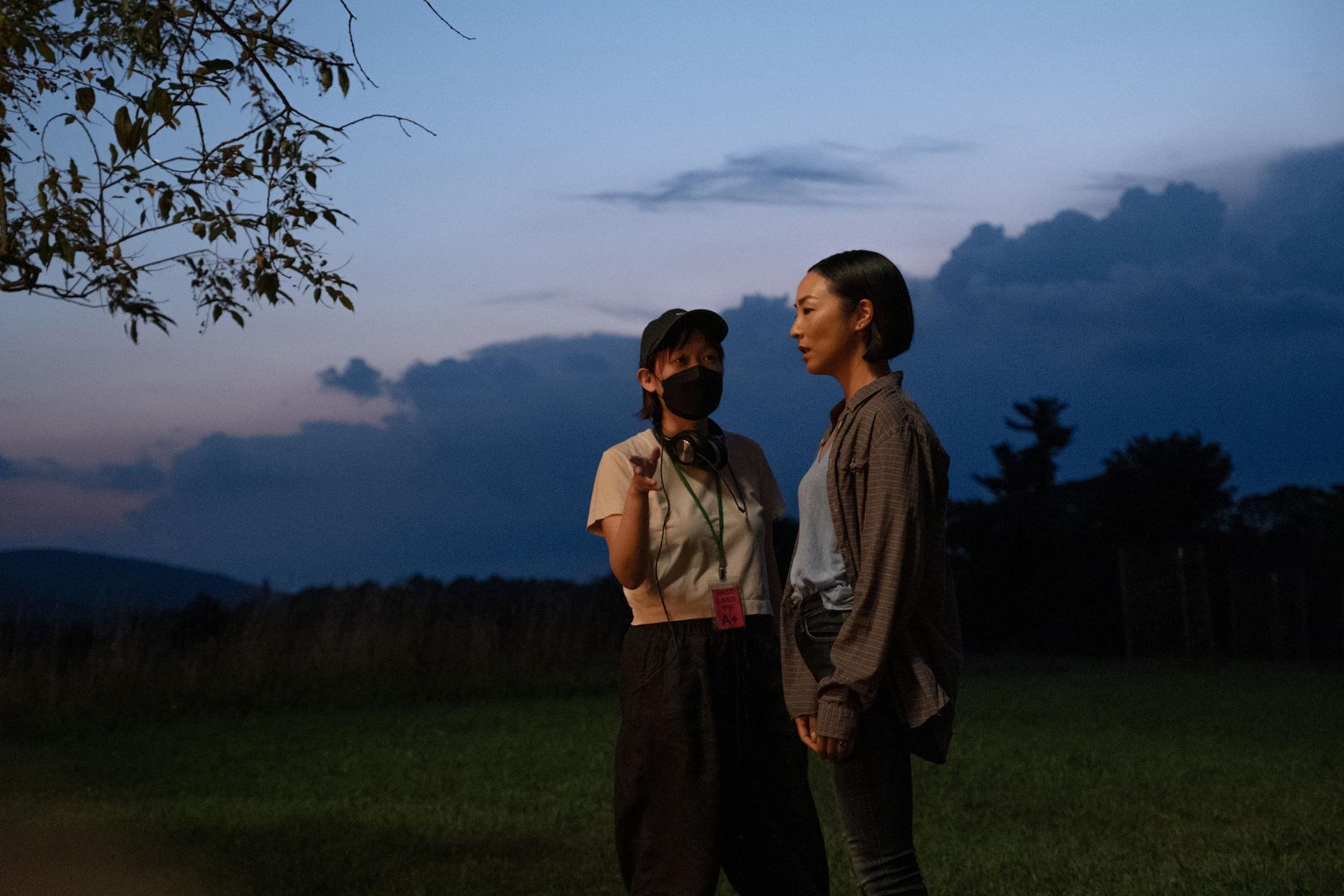
All Of It with Alison Stewart
Best Picture Nominee, 'Past Lives'
00:22:53
Director and writer Celine Song and actor Greta Lee join to discuss "Past Lives."
Loading summary
Transcript74 lines
- [00:00]
Alison Stewart
I' ma put you on, nephew.
- [00:01]
Celine Song
All right, unc.
- [00:02]
Alison Stewart
Welcome to McDonald's. Can I take your order, miss? I've been hitting up McDonald's for years. Now it's back.
- [00:07]
Celine Song
We need snack wraps.
- [00:09]
Alison Stewart
What's a snack wrap? It's the return of something great.
- [00:12]
Celine Song
Snack wrap is back.
- [00:15]
Alison Stewart
Our state has changed a lot in the last 140 years. We know because Multicare has been here guided by a single making our communities healthier. That comes from making courageous decisions, partnering with local communities to grow programs and services, and expanding healthcare access to those who need it most. Together, we're building a healthier future. Learn more@ multicare.org the biggest homeowner mistakes.
- [00:49]
Greta Lee
Do it yourself, lumberjack.
- [00:51]
Alison Stewart
Better leave it to the pros. Doing your own electrical work, the results could be shocking. But letting just anyone replace your windows? Biggest mistake ever. Be a happy homeowner and leave window replacement to the best, the certified master installers at Renewal by Andersen. For a limited time, buy one window or door and get the second 40% off plus $200 off your entire purchase with special financing. Minimum purchase of four. Visit renewalbyanderson.com today for this great offer. Listener supported WNYC Studios.
- [01:33]
Kushan Avadar
This is all of it. I'm Kushan Avadar filling in for Alison Stewart. Welcome back. The Oscars, AKA the Academy Awards will be held this Sunday. So today we're bringing you recent conversations we've had on the show with some of the nominees. So let's get back into it with a look at the film Past Lives, which is nominated for best Original screenplay and best Picture. Here's Alison's conversation with director and writer Celine Song and one of the film's stars, Greta Lee.
- [02:09]
Greta Lee
After wowing the film festival circuit, the new movie Past Lives follows Nora from early childhood in Korea to growing up in Canada to her adulthood in New York. She's played by our guest, Greta Lee. When Nora's family leaves Korea, she's just 12, but has already experienced a love story of sorts with her friend, a thoughtful, shy boy named Hae Seon. When they reconnect as 20 somethings over early social media, it becomes clear they never forgot each other. When their regular Skype sessions start to feel loaded, Nora suggests a break. One that lasts for 12 years until Hae Song visits New York for a week and Nora is faced with a few versions of her life. The one she's living in the East Village as a writer with her husband Arthur. The version of her past self. And then there's the version of what could have been and the version of what could be based on her next moves. She's grappling with the hazy distinctions between circumstance and destiny. Here's a clip from the film. Nora and her husband Arthur are lying in bed and talking after Nora has reunited with Hae Song.
- [03:15]
Alison Stewart
This is my life and I'm living it with you.
- [03:20]
Celine Song
Are you happy with it?
- [03:24]
Alison Stewart
Is this what you imagined for yourself when you left Seoul? When I was a 12 year old, yeah.
- [03:29]
Greta Lee
This is what you pictured for yourself.
- [03:33]
Celine Song
Laying in bed in some tiny apartment.
- [03:37]
Greta Lee
In the East Village with some Jewish.
- [03:39]
Alison Stewart
Guy who writes books?
- [03:41]
Celine Song
Is that what your parents wanted for you?
- [03:44]
Alison Stewart
You're asking me if you, Arthur Zadoransky, are the answer to my family's immigrant dream?
- [03:52]
Celine Song
Yeah.
- [03:53]
Alison Stewart
Wow. This is where I ended up. This is where I'm supposed to be.
- [04:06]
Greta Lee
Past Lives is the directorial debut of Celine Song, who also wrote the script, which shares some similarities with her own life. Hi, Celine.
- [04:13]
Alison Stewart
Hi.
- [04:15]
Greta Lee
Also joining us is Broadway TV and film actor, of course, you know, from Russian Dolls, Sweet Birthday Baby, High Maintenance and the Morning Show, Greta Lee. Hi, Greta.
- [04:24]
Alison Stewart
Hi. Hi.
- [04:26]
Greta Lee
So, Celine, this film opens with this moment that we come to later on, towards the end of the film, when Nora and her husband. Hey, Seongwa. They're all sitting at a bar and we overhear people trying to figure out what's going on over there. Are they siblings? This is a lover's spat. Is one the partner? What's going on? Why did you want to begin there with we, the audience, overhearing what people are thinking about your characters?
- [04:53]
Celine Song
I think that when I found myself in that place, in that bar in this village, I'm sitting between my travel sweetheart and my husband, which is really the sort of inciting incident that really made me think that maybe this could become a movie. I was looking around the bar and I saw people at the bar sort of looking at us because we look like such a strange trio. And my first thought was, of course, like, oh, man, you have no idea. You have no idea who we are to each other. And you're never going to figure it out just by looking at us. And then my second thought was, well, what if I really did take the time to tell you about it? What if I really made the effort to show you what it's been like, what it is like for somebody like me to live my life and be sitting here and end up sitting here with my child, sweetheart, and my husband? And I think that really was the initial impulse. And I think that that scene is about sort of welcoming the audience into the mystery of these three strangers. So it can really welcome the audience into the story and be like, okay, let's try to figure out what they are to each other. Let's try to really solve this mystery.
- [06:03]
Greta Lee
So you notice people actually looking at you and your husband and your childhood sweetheart. Do you ever do that in bars, Celine?
- [06:11]
Celine Song
I think I certainly do. I think I'm always trying to look around. I think any. Anywhere you go. That's one of the amazing things about living in New. There's people watching everywhere. And I think that. I think that anybody's lying if they say they haven't done that, you know, in some way.
- [06:25]
Greta Lee
So, Greta, in the scene, as the camera slowly zooms in to show just Nora's face, she looks.
- [06:30]
Celine Song
You.
- [06:30]
Greta Lee
She looks in the camera and gives us this sort of smile, a little bit of a grin. How did you and Celine talk about the meaning of that moment and that look?
- [06:39]
Alison Stewart
Well, it's exactly what Celine described. This invitation to the audience to. To join us in understanding the full scope of this experience and the beginning of this wild ride that we're hoping to take the audience on with us.
- [06:57]
Greta Lee
Selena, in an interview in Vanity Fair, you describe that shot as a moment where Nora is in a position of power, I think was the word that you used. What kind of power does she have in that moment, and has she had anything like it before?
- [07:09]
Celine Song
I think that maybe Nora has had that power always in her, but I think that she may be. I didn't really know until she was sitting there, because she's really, by sitting there between these two guys that are. That have no reason to really even know each other, let alone try to speak to each other. If it weren't for her, and she is. She hasn't had to do anything different. She just has to be there, and she sort of becomes a portal and a bridge between these two worlds. And I thought that that's actually a really powerful thing, being able to sort of. Just by existing people, to sort of collapse time and space almost.
- [07:48]
Greta Lee
Greta, if you were going to introduce Nora to a group of your friends, how would you describe her? Or you were describing her to a group of friends? Oh, you're gonna meet my friend Nora.
- [07:55]
Celine Song
She's.
- [07:56]
Greta Lee
How would you describe her?
- [07:58]
Alison Stewart
I would say she's an author living in New York City, that she's a real woman full of knowingness in terms of what she wants out of life. She's got this exceptional steadiness to her and an ambition that is, frankly, unburdened by anything outside of her Own just wants out of life, the kind of life that she envisions for herself. She. She's powerful. She's. I mean, I. Very inspired by her, just as this fictionalized person.
- [08:36]
Greta Lee
What. Like, what about her inspires? She just. She knows what she wants, and that's that.
- [08:41]
Alison Stewart
Yeah. I mean, I think from the jump, we had a lot of conversations about the type of movie this is and the type of movie that it's not. So often we see the woman at the center of a, let's say, more conventional love story. She's this type of woman who maybe is lost or is uncertain about not just her identity, but, I mean, you know, multiple aspects of her life. And in a more conventional love triangle scenario, she would maybe be looking to two men to fill in certain gaps in terms of, you know, her identity and her life and her life choices. And this is not that, which I think is such a flex, and it is so rad and actually so true in terms of the women most dear to me in my life in the way that I've lived my life. And I know that Celine feels this way, too. That was always the goal. I'm so appreciative to Celine in leading the charge in terms of telling that story from that place. And it's from that place we're able to investigate these larger ideas, these universal ideas about love and about living.
- [09:52]
Greta Lee
We're discussing the movie Past Lives. It opens on June 2nd in New York and nationwide on June 23rd. I'm speaking with its writer and director, Celine Song, and lead actor, Greta Lee. So Celine, the characters in the film, most of them are bilingual. Even Arthur, he gives it his best shot. Did you write the conversation specifically with Nora and Hae Song in English or in Korean?
- [10:16]
Celine Song
So I wrote it in both languages because I speak both languages. And I felt like, you know, on one hand, my collaborators, the crew, the folks who don't speak both languages, would have to understand the script. But on the other hand, I knew that I wanted to choose the words that the actors are actually going to be speaking on screen. So I think that it felt important to write in both languages.
- [10:38]
Greta Lee
Did you write the whole. The full script in both languages, except.
- [10:41]
Celine Song
For the parts that are written in English. So the conversation between Nora and Arthur, that's written in English only. But every time the Korean is speaking, I've written it twice.
- [10:50]
Greta Lee
Greta, you were smiling at that. What did you think when you first saw that?
- [10:55]
Alison Stewart
I mean, that's what was so radical to me and exceptional about this ridiculously gorgeous script. I Mean, I really just took my breath away and made me sob upon first read. But it is that specificity that can only be accomplished through. Yeah, in this case, dual languages. There's so much intentionality behind the choices that Celine made in the writing and the words these people are choosing to say in the language that they're choosing to speak in in that moment. And I have to add, I mean, having Celine not just write the script, obviously, but direct was crucial. I mean, she was directing us in Korean. When I was doing the scenes with Taeohoo, who plays Hae Sang, we were only directed in Korean, which was extremely helpful in terms of the dynamic between the two of us and also the scene work that we were trying to do. And then we would switch over to only English with John Magaro, who plays Arthur. And I can't even wrap my mind around what it would have been like if we didn't have Celine, who was able to navigate that duality that is, you know, again, so essential to the core of what the movie is.
- [12:10]
Greta Lee
You're both come from a theater background. Celine, what is something useful about coming from theater and stage? What was something useful for you in making this film?
- [12:20]
Celine Song
Well, I think the first and foremost, I think I learned that the experience that I had in theater and the skills that I had in theater and developing in theater, which is just connection to story and character and also scene work and dialogue and just. Just there's a kind of basic building blocks of storytelling and dramatic storytelling that I think I realized I had, you know, a decade worth of experience doing. And I think that I was so happy to learn that when I was making my film debut in past lives, I was just so all those skills and experience could just kind of like come right with me, and I could really find my footing. And even if technical things I had to learn, the thing that I didn't have to learn is how to work a scene or how to block or how to work with actors, how to work with great actor like Greta and achieve something great and transcendental. So I think those are the things that I really think was an easy kind of move from theater to film. Just story and character at the heart of it.
- [13:24]
Greta Lee
Greta, there is this. This theme that goes through as a child. Nora wants to win the Nobel Prize. When she becomes a writer, she wants to win the Pulitzer Prize. When she's a playwright, she sort of tosses up, I'm gonna be. I'm gonna win a Tony. What do these small moments tell us about Nora reveal to us about this Woman.
- [13:43]
Alison Stewart
I mean, it just really fully fleshes out the reality of a woman like this. And, you know, it's something that I can relate to deeply. That kind of unbridled, unabashed ambition is so central to who she is and really weaves itself into the dynamic of her relationships to these men. That she is that kind of a woman who is so incredibly self assured. It was so fun to access that. I mean, Celine and I both coming up in New York City and really feeling that the being drawn to this idea of, you know, chasing our dreams and at all costs, it was such a joy to embody that in her.
- [14:29]
Greta Lee
Let's talk about New York City. This film has so many New York moments, so many vistas. Whether it be looking at people through the subway car window and wondering what's going on with their lives or just the, you know, this expanse of Manhattan from Brooklyn. I mean, it's just, there's so much, there's so many visual cues for New Yorkers specifically. I'm curious, as a filmmaker, did you have like a notebook that you're like, if ever I make a movie, I'm getting this, or were these, you know, shots that you, you, you thought of as you were writing it? I was curious about some of those, those iconic shots you got.
- [15:04]
Celine Song
Well, I think that they really did come from because I feel like I've been to every, like, spectacular, amazing places in New York. But I think what really was important in choosing which, which parts of New York were sort of the best part of the New York for this movie is that it had to be connected to the story. So the part of the Statue of Liberty, for example, was so funny because when I was, when I was scouting it with my crew there, you know, because they're New Yorkers, they were like, oh God, are we going to shoot the Statue of Liberty? And I was like, no, you don't understand. Statue of Liberty is so romantic to tourists and immigrants and Haesong is a tourist to New York and Nora is an immigrant to New York. So for two of them, sexual liberty is a really special place. I don't think that sexual liberty should be in every movie, but I think that in this movie about an immigrant and a tourist, we actually need to see Statue of Liberty because that's what, you know, the spirit that we're talking about, that Greta's talking about, about the ambition and the kind of like New Yorkness of it. I think that amazingly, this kind of big symbol, sexual liberty is what it could be. And you know, I think that something that did matter to me, though, is that by shooting Sexual Liberty, it had to be shot like the way you see it on the boat. You know, I didn't want there to be a drone shot. I wanted it to feel like the way you can see it if you are a tourist and you are on a boat. So that's really. I wanted to feel organic.
- [16:32]
Greta Lee
So, Greta, in the story, Nora moves to New York in early 20s after her family has. Has moved to Canada. She's out to make her own way. She finds out that Hae Song, her childhood sweetheart, has been trying to find her, and she reconnects with him. What interests Nora about reconnecting with a song?
- [16:51]
Alison Stewart
Well, I love this idea that certain people in your life can serve as like a hologram or like a mirror to certain parts of yourself, certain parts of your identity, your past. And I think that's true of Haesung at that particular moment in her life. She. Some time has passed and she's immigrated. And, you know, we are painting a picture of that kind of diasporic longing that can. That is true of so many immigrants having this experience. And I think she is reconnecting to that part of herself through this person and then expands from there. It from being cultural or maybe, you know, racially specific, and it becomes so much more than that. Just this idea of two people who are so deeply connected, undeniably connected to each other, and what that can mean for someone. These were all things that we were discussing and trying to convey in those Skype scenes that they had together.
- [17:57]
Greta Lee
There's a concept in the film that's tied to the idea of destiny. It's called inyon. I hope I'm saying this right. Let's play a clip from. From the film Past Lives where Nora's talking about it, and then we can discuss this on the other side.
- [18:10]
Alison Stewart
There's a word in Korean, inyeon. It means bait. But it's specifically about relationships between people. It's an inyon if two strangers even walk by each other in the street and their clothes accidentally brush, because it means there must have been something between them in their past lives. If two people get married, they say it's because there have been 8,000 layers of yin yang over 8,000 lifetimes.
- [18:56]
Greta Lee
Greta, how familiar were you with this concept of inion?
- [19:00]
Alison Stewart
Not too familiar, I have to be honest. I think growing up, being Korean, American Indian was a concept that I was aware of, but I didn't really have a personal connection to it until making this movie and until meeting Celine. It felt like a kind of. Like a distant, highfalutin kind of like something so separate from my understanding of life. Um, and now I found, like, oh, now I can't not see everywhere.
- [19:32]
Greta Lee
How about for you, Celine? Was this something that was important to you growing up in your household?
- [19:38]
Celine Song
Well, I think that I am. I was as familiar with it as somebody who has a current culture as a part of their lives or any kind of Eastern philosophy as a part of their. Their lives. And I think that. But I think in making this movie and writing this movie and telling the story, I think that it did become something that became more clear or something that really felt was more vivid than I think it was before. I. So it was a discovery. The word was a discovery for me as well. But I knew that I need to introduce this word to the movie because it is describing something that I don't think there is a word for. Because there are some relationships that are. You can. That are easier to define. Like, you know, like, simple, as. Like friends or lovers or exes or something like that. But the central relationship in this movie can't really be described in another word. It can only be really described by this ineffable feeling that there is something deep going on, something really deep and something that spans time and space and endures through time and space. Somehow that I felt like I needed to introduce the word in yon just to describe who Hesung and Nora are to each other.
- [20:46]
Greta Lee
This. This film plays with expectation a lot and sort of the rhythms that we've all gotten used to about love stories and triangles, as you mentioned. And at one point, Nora's husband Arthur, says, what a good story this is. In this story, I'd be the evil American husband standing in the way of destiny. How did you want to play with the audience's expectations in this script, Celine?
- [21:10]
Celine Song
Well, I think that because this movie is about ordinary people and the people we know who's going through life the way that every audience member would be going through life. I think what was important to me is for this character to be as intelligent and as emotionally intelligent as an average. An average person. I think that it just had to feel like we needed the kind of connection and the kind of authenticity to what it is like to be a person just in general or period. So I thought that it was really important for, for example, Arthur to have a sense of the story or have a sense of where. What place he. He is in in the story, for example, because if you and I, we were talking to A friend, and they're telling us the story. I think that that is exactly how they would describe themselves if it was. You know, if they. If we're. I think there's a part of it where it is this. This commitment that I had to make the characters be as smart and as emotionally deep as just the people we know in our lives.
- [22:19]
Greta Lee
Greta, in this film, you are the lead. This is you. It's yours. What is something that you've learned that you maybe didn't know before this. This film?
- [22:32]
Alison Stewart
Oh, gosh, so much. I mean, it really has set the bar so incredibly, painfully high in terms of what I want creatively and artistically and. And that extends to process, too. I mean, it sounds cliche, but it just. It was such an incredible way of making this movie. There's so much trust, and that is so key to the final thing, to the final product that you see. And it's so. On so many levels, it's restored my faith in, well, fighting for making sure that there's space. There continues to be space for stories like this. You know, being Asian American, navigating this business. The truth is, it's been tricky, and there have been limited opportunities. And the fact that we still have to discuss representation, I mean, these things aren't lost on me. And to be able to do this with Celine and tell this story in this way exactly the way that we wanted to and not in any different way in service of any kind of, you know, gaze, whether it's like a white gaze or a male gaze. I mean, I don't know what's better than that to have this chance to do this.
- [23:44]
Kushan Avadar
The film is called Past Lives. That was Alison's conversation with director and writer Celine Song and actor Greta Lee. The film is up for Best Original Screenplay and Best Picture at the Academy Awards this Sunday. Up next, the iconic story the Color Purple was adapted this year into a movie musical. Hear about the film from director Blitz Basil Wule and Danielle Brooks, who is nominated for Best Supporting Actress for her role as Sophia in the new movie musical. This is all of it.
- [24:19]
Alison Stewart
I'mma put you on, nephew.
- [24:21]
Celine Song
All right, unc.
- [24:21]
Alison Stewart
Welcome to McDonald's. Can I take your order, miss? I've been hitting up McDonald's for years. Now it's back.
- [24:27]
Celine Song
We need snack wraps.
- [24:28]
Alison Stewart
What's a snack wrap? It's the return of something great.
- [24:31]
Celine Song
Snack wrap is back.
- [24:35]
Alison Stewart
At Capella University, we believe accessible education can make a difference in people's lives. That's why we offer scholarship opportunities to all eligible students, whether you're considering a bachelor's, master's, or doctoral degree. Our teams will walk you through the process and help you get the savings you are eligible for. Furthering your education is an investment in yourself. Entonces que estasperando un futuro diferente esta macerca de lo CAS con Capella University. Learn more at capella.edu.