← All Of It with Alison Stewart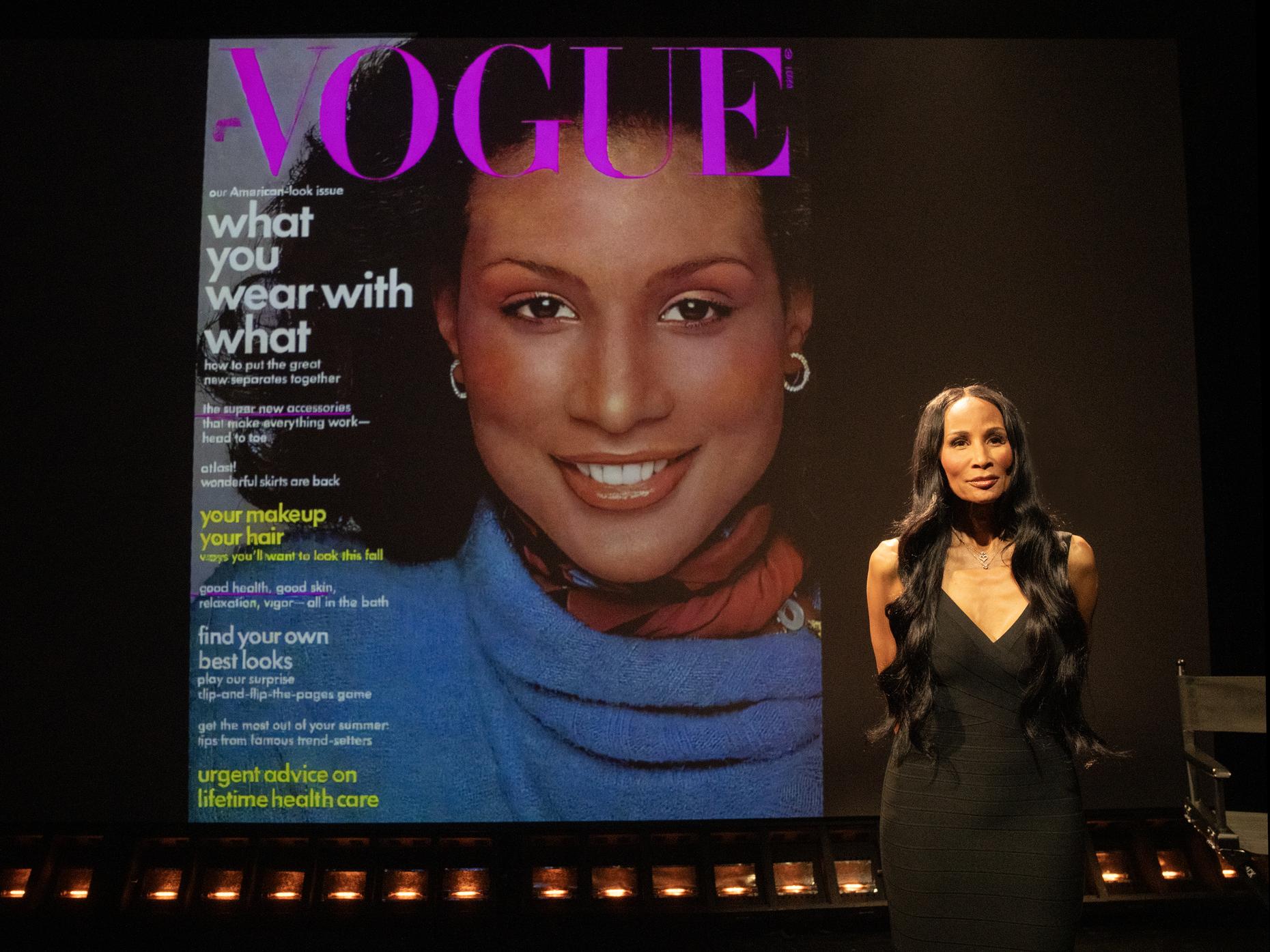
All Of It with Alison Stewart
'Beverly Johnson: IN VOGUE'
00:28:16
Groundbreaking supermodel Beverly Johnson joins us to discuss her new one-woman show, "Beverly Johnson: IN VOGUE."
Loading summary
Transcript131 lines
- [00:04]
Beverly Johnson
Listener support WNYC Studios.
- [00:16]
Alison Stewart
This is all of it. I'm Alison Stewart live from the WNYC studios in soho. Thank you for spending part of your Friday with us. I'm really grateful you're here. On today's show, we'll talk about the movie Poor Things with actor Rami Youssef and screenwriter Tony McNair. And we'll have a listening party with the folk duo the Milk Carton Kids, who are up for a Grammy for best folk album. That's the plan. So let's get this started with Beverly Johnson. A few historic events happened 50 years ago in August 1974, and my next guest is responsible for one of them. President Richard Nixon resigned. Philippe Petit walked tightrope between the twin towers and Beverly Johnson became the first black woman to grace the COVID of American Vogue, the fashion bible. It was a bold move given that American fashion magazines were dominated by blonde blue eyed models like Christie Brinkley and Cheryl Tiegs. But there was something about Beverly that made her stand out, not just her skin color. As she tells us in a new one woman show, it was her big mouth. Yep. She was called the model with the big mouth because she said what was on her mind. She left a hugely famous agent who didn't believe in her. She fought her way back from a low point of losing custody of her daughter, who she loves very much. And she was among the first women to speak out and let the world know that Bill Cosby had preyed on her during a meeting about an acting part. It's all in her memoir esque show titled Beverly Johnson in Vogue and it's playing at the Act 2 Playhouse at 59 East 59th street through February 4th. And joining me in studio now is the Beverly Johnson. It is very nice to meet you.
- [01:59]
Beverly Johnson
Very nice to meet you. Thank you for that introduction.
- [02:02]
Alison Stewart
When you were a little girl in Buffalo, New York, and someone asked you, Beverly, what do you want to be when you grow up? What did you say?
- [02:08]
Beverly Johnson
I said I want to be a lawyer or maybe a Supreme Court judge. I was very much affected by the civil rights movement. I remember watching a black and white television and I'm on the floor with my doing my flutter kicks with my dad watching. That was our bonding time watching the news. And I remember the civil rights movement on the news. I remember the hoes being put on the protesters and someone saying, yeah, we have to get some lawyers so we can get them out of jail. And at that moment is when I said I wanted to be a lawyer.
- [02:42]
Alison Stewart
And you said flutter Kicks people may not know this about you. You were a competitive swimmer.
- [02:46]
Beverly Johnson
Yes.
- [02:47]
Alison Stewart
Did you ever think about the Olympics?
- [02:48]
Beverly Johnson
Yes, yes, I did. And it was the all first black swim team in Buffalo, New York. We're talking about the 50s. And we traveled around to three state areas which I witnessed quite a bit of racism and discrimination, which was my first introduction to. To that. It was. But it really gave me, you know, the confidence. You know, competition is. Can be very, very healthy, I think. And I love to swim. I love being in the pool. Because you're in a kind of another world. And I still love swimming. I taught all my grandchildren how to swim.
- [03:28]
Alison Stewart
All six?
- [03:29]
Beverly Johnson
All six. No, four of them.
- [03:30]
Alison Stewart
Four.
- [03:31]
Beverly Johnson
Two are bonus.
- [03:32]
Alison Stewart
Okay, gotcha. When you think about your time as an athlete and as a swimmer, how did that help you in your professional career?
- [03:43]
Beverly Johnson
Oh, it helped me with everything. I mean, I had, you know, the same mindset in the way of being very disciplined. Also knowing that in a race you keep your head down, you can peek every now and then, but basically you want to touch the wall first. And I think that kind of training really helped me in the world of modeling. It seems kind of weird, but it did.
- [04:09]
Alison Stewart
Yeah. My guest is Beverly Johnson.
- [04:11]
Interviewer/Producer
The name of her show is Beverly Johnson in Vogue.
- [04:13]
Alison Stewart
So your mom was.
- [04:15]
Interviewer/Producer
Was a medical professional, a nurse, and your dad worked in a factory setting, is that right?
- [04:19]
Beverly Johnson
In the steel mill?
- [04:20]
Interviewer/Producer
Steel mill, yes. So good solid, middle class folks. I'm curious what values they instilled in you that helped you get through, especially the tough times. We'll talk about a little bit. The tough times during your. Your career.
- [04:34]
Beverly Johnson
Yes, I am a combination of my mother and my father. They were just tremendous people, hardworking people. They bought a home with my father's GI Bill in an all white neighborhood. And my father was working in a steel plant. And my mother eventually had to go to work. And I saw her studying, you know, all these really technical kind of books because she was a surgical technician. And it was. Everything was about discipline, behaving, honoring yourself, dignity. I mean, it was really. They were really just amazing parents. Of course they had their faults, but when you grow up, you realize those faults are things that helped you around them. Pointing out those faults helped me in my life.
- [05:29]
Interviewer/Producer
Who was the first person to suggest modeling to you?
- [05:33]
Beverly Johnson
Mimi. Mimi worked at the Ginny Shop on Main street in Buffalo, New York. And my mom said, you can't be the lifeguard at Beaver Island. You have to work. I don't want to do that. So I went there and Mimi, of Course, I was the number one sales clerk. But besides that, Mimi said, you should be a model. I said, a model? I'm going to be a lawyer, thank you very much. And she kept saying that. And then at the end, before I was going to go off to Northeastern, she wrote a number on a piece of paper. She said, if you ever in Manhattan call. This woman went to school. It was great. I got in the in crowd and I've never been on the in crowd because the girls there felt sorry for me because I was so homesick. I was crying every night on the phone. And they said, why don't you come with us, we'll teach you about the soaps, you know, and. And they did. And and so I, you know, had my part time job at the Roxbury YWC to get my half pint of McCarty rum, making $28 a week. And they said, why don't you become a model? I'm like, what is this modeling thing? You make $75 an hour. I said, my father makes $75 a week. So that is why I went into the modeling business.
- [06:49]
Alison Stewart
What was your first big shoot? Not the, not the Vogue cover, but your first shoot when you're like, oh, wait, I'm a professional model now.
- [06:57]
Beverly Johnson
They literally sent me over to a shoot the first day I was up at Glamour and they said, we want to use you and all that. It was Glamour and Vogue together. So it was a shoot of all of the famous models. I didn't know that at the time. We're standing on pedestals and things like that. Anyways, so the next shoot was a shoot for Vogue magazine. That was the first shoot. No, it was a Glamour magazine and then Vogue magazine.
- [07:24]
Alison Stewart
When you went out for these go sees, models go to go sees and they're getting looked up and down. How many other models of color did you see?
- [07:33]
Beverly Johnson
Oh, there were so many models of color in the 70s. There were black modeling agencies. I mean, it was, it was so welcoming. I had no idea. And because, you know, we got through the civil rights we had overcome. And then Essence magazine came along. So we were born at the same time, so to speak. And it was just a very exciting time in New York City.
- [07:59]
Alison Stewart
You're very clear in the show to shout out those who came before you. Yes, the models who were the women of color when they were the one and onlys in the room. Who are some of the people you'd like people to know about who deserve their flowers?
- [08:13]
Beverly Johnson
Naomi Sims was my predecessor. I remember her cover of Life Magazine, the most extraordinary looking woman in the world. I remember her. I seen her Walk down 57th Street. People literally came out of the shop. She stopped traffic. And when I was doing all these wonderful things with Glamour and Vogue, she came over to me and just welcomed me and said, I love what you're doing. Keep doing what. She was so gracious to me. And I said to myself at that moment, I'm going to welcome the girls that are coming up behind me the same way she welcomed me. Yeah.
- [08:51]
Alison Stewart
You talk about in the show this idea of competition and how it can kind of mess with your head a little bit. This idea that there's somebody behind waiting to take your spot, but you need to be present and do your job. And then to your point, you also want to reach back. How did you balance that? I need to look out for Beverly, but I also want to make sure I look out for other girls, too.
- [09:13]
Beverly Johnson
Well, you know, the competition is a fact, so. And the girls are coming is a fact. And you're not going to be where you are now forever. That's just a fact. So you might as well enjoy the ride. But I must say, for the first 10 years, I never had a vacation. I never. I never had Thanksgiving and Christmas and whatever with my family because I was out traveling the world and working as my only regret, and I don't have many regrets and because if I didn't go on that job, somebody else would have. So I was making sure that I was there. But I still had that welcoming feeling with the new girls coming up because of Naomi Sims.
- [10:00]
Alison Stewart
My guest is Beverly Johnson. The name of her one woman show is Beverly Johnson in Vogue. So the story is sort of famous, but I want you to tell it anyway. For people who don't know you walked away from a huge modeling agency when they didn't believe that you could get the COVID of Vogue. Will you share what happened?
- [10:18]
Beverly Johnson
Yes. So I was with Eileen Ford and once she found out I was freelancing for Vogue and Glamour, now there's no Twitter or anything, no text messages or whatever those things were. We send it over line. And she found out and she called me and I. I knew I had found out she was the biggest agent. That's where I wanted to be. And so when I was working in the. I realized that you needed the Vogue cover to be the top model. And that's where, you know, that's where you were going.
- [10:45]
Interviewer/Producer
That's what's in your mind.
- [10:47]
Beverly Johnson
Ton of focus. And she. I said, I'd like to be on the COVID of Vogue. She said, you'll never be on the COVID of Vogue magazine. Who do you think you are, Cleopatra? I know this woman well enough to know when she said that, she meant it, so. But what I did is I wrote a beautiful letter. You're like parents to me. I can't thank you and Jerry enough. I like to think that if I ever thought to return, that you would welcome me with open arms. And I went to Wilhelmina. We got the COVID I stayed with Wilhelmina about six months, and then I went back to Eileen Ford. She said, welcome home. And I was just like a little businesswoman at a very young age.
- [11:29]
Interviewer/Producer
That is such a good lesson. That you didn't burn a bridge.
- [11:32]
Beverly Johnson
No.
- [11:33]
Interviewer/Producer
You didn't turn on your heels and tell her who she was. You were very gracious about it.
- [11:37]
Beverly Johnson
Very.
- [11:38]
Interviewer/Producer
That's a really good lesson.
- [11:40]
Beverly Johnson
Stayed friends her entire life. Was at her 90th birthday party. And, you know, I told something that. Because she was a very rough kind of woman, and I told a story that everybody was laughing at, and I realized that she was getting offended. But she did leave me in New York with no money. But anyways.
- [11:59]
Interviewer/Producer
Oops.
- [12:00]
Beverly Johnson
Yeah. Yeah, but. Yeah, but she was the first woman I ever saw really wield power. I mean, she was. And I used to go up to the agency and just watched her. I just sat there, watched her all day.
- [12:17]
Interviewer/Producer
And what did you learn?
- [12:18]
Beverly Johnson
I learned that she was. She was. She was fierce. She wasn't afraid. I mean, she would be threatening. I'll never send a model over there to you ever again. Slamming the phone down, I was like, I like her. And then I realized that you're someplace and you can be there at the right time. Because she was looking for Naomi Sims. We couldn't find Naomi Sims. Go to this trip to Europe. And she looked. I was sitting there. She said, we'll take her.
- [12:50]
Interviewer/Producer
We'll send that girl.
- [12:51]
Beverly Johnson
Yes.
- [12:52]
Interviewer/Producer
Someone has just texted us out of the blue. Please tell Ms. Johnson Adriana and Chelsea loves her and was too young to ask her mommy to buy her first Vogue issue. Bought it years later on Etsy and started my 1970s Vogue collection.
- [13:07]
Beverly Johnson
Wow.
- [13:07]
Interviewer/Producer
That's pretty great.
- [13:09]
Beverly Johnson
That is wonderful.
- [13:10]
Interviewer/Producer
When did you first realize that you being on the COVID of Vogue meant something to people, to young girls like Adrienne and young people. Men, too.
- [13:20]
Beverly Johnson
Yes. Yes. No, it wasn't till I started doing interviews, and I. They said, how does it feel to be the first black woman on the COVID of Vogue? I was like, I am. Because that's not something people go around saying, you know, we don't allow any black people on the COVID Nobody said that. Nobody said there's never been a black person on the COVID You know, it's all secret. And so I initially, I got mad. You know, I'm like, hey, what? I couldn't believe it. And then I realized that I had been chosen for a particular. At a particular moment, and I had to woman up to be able to respect that. And I made a commitment to myself that I would do everything I can to respect that position that first that I got.
- [14:16]
Alison Stewart
And what does it mean, though, that, you know, you're beautiful, you're on the COVID but it had a bigger meaning.
- [14:23]
Beverly Johnson
Totally.
- [14:24]
Alison Stewart
I think about especially for young women who never saw someone who looked like them on a cover, maybe were told their skin color wasn't beautiful, the shape of their lips was not beautiful.
- [14:34]
Beverly Johnson
And this was globally. It was globally. And it gave Madison Avenue the opportunity to use black people because before, they didn't even see us. And so, I mean, it was. It was a pretty powerful cover and still is. And I just started celebrating the birthdays of the, you know, the anniversaries of this cover. Somebody said, you don't celebrate that. That's a big deal. They always called me to Jackie Robinson of the modeling industry. So I started celebrating that, and Now I'm celebrating 50 years. That's a half a century.
- [15:13]
Alison Stewart
It's amazing.
- [15:13]
Beverly Johnson
It is.
- [15:14]
Alison Stewart
Beverly Johnson is my guest. The name of her show is Beverly Johnson in vogue at the Act 2 Playhouse on 59th street until February 4th. You're very candid in the show that you start living a high flying life. Once you start becoming famous.
- [15:26]
Interviewer/Producer
You have funny stories about Elizabeth Taylor.
- [15:30]
Alison Stewart
Throne or diamond ring at you. What's a.
- [15:33]
Interviewer/Producer
And obviously it's a limited time. What's a story that didn't make it to the show that you wanted to have in there?
- [15:39]
Beverly Johnson
Oh, my goodness.
- [15:40]
Interviewer/Producer
That's good for radio.
- [15:41]
Beverly Johnson
Oh, my goodness. There were so many great stories. I mean, really, the story when I was left in Europe with no money and no passport and I had to get back to America.
- [15:57]
Interviewer/Producer
You were on a job and you ended up with no money, no passport.
- [16:00]
Beverly Johnson
Mm. It was with Eileen Ford and she did this competition and with my girlfriend and I, and we ran down to meet them at the dock because they had our passports and. And everything, and they were gone. Oh, boy. So anyways, I ran back to whatever to see if they maybe left the passports there. And by the time I got back, my girlfriend Was gone. So they didn't. That didn't get in.
- [16:26]
Alison Stewart
Oh, well, you made it back.
- [16:27]
Beverly Johnson
Yes, by the grace of God. No, it was very interesting trip back.
- [16:34]
Interviewer/Producer
We'll leave it there with Very interesting trip back.
- [16:37]
Alison Stewart
You are in the show.
- [16:38]
Interviewer/Producer
You talk about, you know, you're candid about your marriages and went to a man who turned out to be somewhat dangerous, was involved with illegal activity, and you. He wound up with custody of your daughter.
- [16:49]
Beverly Johnson
You fought for this for a long.
- [16:51]
Interviewer/Producer
Time, and you and your daughter have a great relationship, we should say, when you're at that low point in your life, why didn't you give up? What made you pick yourself up and say, I'm going to get. I'm going to get out of this?
- [17:04]
Beverly Johnson
Most certainly my daughter, without a doubt. Because it was so heavy and so dark and so dangerous. I'm from Buffalo, New York. I'm just a little nerd, a little introvert, you know, And I had gotten myself not in hot water water. I got myself in fire. I mean, it was. I used to be on my hands and knees at night just praying to God, God, I don't know how I'm going to get out of this. And once again, by the grace of God, I managed to get out of it.
- [17:37]
Alison Stewart
You went on to do stage work as part of your sort of healing process and what you wanted for yourself in the future. And there was a part that you really wanted to play, and it was a cleaning woman. And you really had to fight for this role. Why was this role, stage role, so important to you?
- [17:52]
Beverly Johnson
It was important to me because she owned the Louisville Hotel and she used to clean the Louisville Hotel because it was her property and she didn't have the money. So I love that woman, that she was, you know, a property owner and she was feisty and she saves this white guy's life because he's going to commit suicide. It just was a stunning play. And Joshua Ravitch, who created my show in Vogue, who also did Carrie Fisher's Wishful Dink, Wishful Drinking and a number of other shows. And we became friends ever since. But it was just really something I could, you know, get my teeth in. And it became really a great show and great reviews, and that was the acting bug.
- [18:46]
Alison Stewart
My guest is Beverly Johnson. We actually have a call from someone who was a photographer's assistant in the 70s. Bill, are you on?
- [18:55]
Bill (Photographer's Assistant)
I'm on, yeah. In 72 or 73, I was shooting Altman's Christmas catalog. I was a second assistant at Dick Litwin's studio.
- [19:04]
Beverly Johnson
Yes.
- [19:05]
Bill (Photographer's Assistant)
On Central Park South.
- [19:07]
Beverly Johnson
Of course.
- [19:08]
Bill (Photographer's Assistant)
You remember that.
- [19:09]
Beverly Johnson
I do, I do. Because that was a money job. You always remember the money job.
- [19:13]
Jennifer (Caller)
Yeah.
- [19:14]
Bill (Photographer's Assistant)
It was good pay at that time, right?
- [19:15]
Beverly Johnson
Yes, yes.
- [19:17]
Bill (Photographer's Assistant)
And, yeah. And I remember when you came in, I thought, wow, she's really beautiful. And you were so nice and so professional. And then on the way out, you gave me a hug, and it was like, oh, my God. No other model ever did that. So I'm really glad you turned out so good.
- [19:36]
Beverly Johnson
Oh, thank you so much, Bill.
- [19:38]
Alison Stewart
Thanks for calling.
- [19:39]
Beverly Johnson
So kind.
- [19:41]
Alison Stewart
What would you want people to understand about that relationship between the model and the photographer?
- [19:49]
Beverly Johnson
The relationship is not really a relationship. It's a creative process, and everyone has to working towards one goal. So it's very interesting. It's not really between the photographer and you. It's between what we're creating, what that photograph is going to look like.
- [20:17]
Alison Stewart
Yeah. I think people don't understand modeling is a skill set. Yes, it definitely is. I worked on. When I was at mtv, I worked on House of Style for several years as a producer with Cindy.
- [20:26]
Beverly Johnson
Yes. And you. When you see it up close, you.
- [20:29]
Alison Stewart
Realize it's performance, it is creative. It's. I mean, if you've ever seen someone not do it well, you realize, oh, modeling's a thing. It takes a skill set.
- [20:40]
Beverly Johnson
Yes, it does. It most certainly does. And for me, how I learned was going to the opera, the theater, and dance ballets and all of that to try to educate myself on the arts.
- [20:52]
Alison Stewart
I don't know how you move your body, too, I would bet.
- [20:54]
Beverly Johnson
Yes. Dance, everything.
- [20:57]
Alison Stewart
The first words in the show is something we can't say. We can't say on the air. It's a curse. It's one of the big ones, and it's in reference to Bill cosby. You shout MFer at the top of the show, and then you get back to it. It doesn't take over the show by any means, but it is. And you. You talk about how when you went public with a story where you said that Bill Cosby drugged you, many other women have claimed the same thing. People know he was convicted of aggravated indecent assault. In one case, the conviction was thrown out because of a mistake made by the prosecutors. Doesn't mean he didn't do it. Why did you feel that you had to say it out loud? What had happened to you?
- [21:36]
Beverly Johnson
I had to. I hear all these women coming forward and telling their story, and it was my story. And also, I wasn't raped. I made it out there alive to say I mean, I had an angel on my shoulder that day. I mean, who knows what I would have been like if I had been raped. Because it's devastating for women. I mean, totally destroyed their lives. So my conscience. I just. I couldn't sleep. I couldn't live with myself if I didn't say what happened to me. I didn't know it was going to be this big co. I knew the black community was. Black community was going to be mad because they want to believe that Bill Cosby is this. So did I. But he's not. It was a monster, and so I just had to do it. And it really changed my life. It totally changed my life in a way of every corner of my life, I felt my power.
- [22:48]
Alison Stewart
For people. I just want to make sure people know that you said. You said you weren't raped, but you were drugged.
- [22:52]
Beverly Johnson
I was drugged. I was drugged. And if I hadn't had that big mouth, I would have been raped. But I can remember his look when I called him that bad word. He was like. He was surprised, shocked.
- [23:09]
Alison Stewart
Yeah.
- [23:10]
Beverly Johnson
And just wanted to get me out of there because I was. I went off. Off. I don't know why, but I just went off. I was just so angry. And it saved my life. Exactly.
- [23:25]
Alison Stewart
You had the fight and the fight or flight.
- [23:27]
Beverly Johnson
Yes, I did.
- [23:27]
Alison Stewart
Even under the.
- [23:28]
Interviewer/Producer
Being drugged.
- [23:29]
Alison Stewart
Maybe that's back to your being a competitor and being somebody who's very aware of their body and what's happening. The night I went to your show, the audience was funny people. I talk back to you occasionally. You talk to people in the audience? I think there were some, like, former editors in the audience. What has it been like to have that kind of feedback? Because you work on a show and you work in the dark and you work with your edit, your director, and then you go out and bring it to the world.
- [23:58]
Beverly Johnson
Yes, this is a great experience. And I'm having the same experience doing speaking engagements, because, remember, I'm a model, and it's a flat page. You know, you don't see people. And so this is my way of, you know, you're really learning about people and connecting with people and hearing their stories and hearing this relationship you have with these people that you don't even know you had a relationship with. It's been very inspiring for me. I'm loving it. I really am.
- [24:30]
Alison Stewart
What's something about the current modeling industry that gives you hope, and then what's.
- [24:33]
Interviewer/Producer
Something that gives you pause or concern?
- [24:37]
Beverly Johnson
What gives me hope is the Model Alliance. The Model alliance is a Group of young models, and they are making a difference. They went to Congress and they got that bill passed where the statute of limitations were extended. And that's why Jean Carroll was able to bring her lawsuit against Mr. Trump. And they want to make modeling or the fashion industry a legitimate industry, just like SAG or any other industry that you have, you know, the waitresses, you. And we need structure because there is quite a bit of abuse in the industry. And not only that, there's no transparency as to. We don't know how much we're getting from them. You know, only the agent knows. And they give you what they say they're giving you. So they are doing that. And I'm, you know, I'm the big mouth that wants to help them.
- [25:35]
Alison Stewart
What's something that gives you a little.
- [25:37]
Interviewer/Producer
Concern that you maybe perhaps worry about the young men and women and non binary folks and modeling? What's something that gives you concern?
- [25:45]
Beverly Johnson
Well, I just want to live in a world where people can be themselves and that you respect people for who they are or who they want to be or who they think they are. And that's just the basics, you know, that's just step one. And then I think we can grow as this human community on the globe. Other than that, it's just going to be chaos.
- [26:13]
Interviewer/Producer
So respect is what you want to make sure that people are respecting one another.
- [26:16]
Beverly Johnson
Yes.
- [26:17]
Interviewer/Producer
Gotta call Jennifer from East Harlem calling in. Hi, Jennifer, you're on the air with Beverly Johnson.
- [26:23]
Jennifer (Caller)
Thanks so much for taking my call, Alison, for the great work that you and your staff do every day. Ms. Johnson, I'm a huge admirer and I just want to say, as somebody who has also come forward to expose and report predatory men, I think what you've done is so commendable and so important, and I so value that you felt this commitment. I also want to say that you so, you know, underscore the importance of valuing women and their beauty at every age, because I think you remain an incredibly beautiful woman and even more so because of your substance and your power and your willingness to make painful experience and such strengths and something to be admired and respected. So I think you're an enormous role model as well as being, as I say, still a very beautiful woman. And I very much look forward to seeing your performance. Thanks so much.
- [27:20]
Beverly Johnson
Thank you.
- [27:21]
Interviewer/Producer
A nice way. I know Beverly's gonna cry. Don't mess up your makeup. Your makeup's good.
- [27:26]
Alison Stewart
What have you, as we round up.
- [27:28]
Interviewer/Producer
What have you learned about yourself writing this show, throughout this show?
- [27:32]
Beverly Johnson
Yeah, is that I can revisit the good and great events and I, I can revisit some of the worst events in my life and be okay. I still have my therapist, but be okay and also share those with people. I want to share those with my daughter. I want her to know that the mistakes that you can rise up from the mistakes. I think people need to know that whatever it is, you know you can survive it. And if you don't survive it, you fought hard to survive it.
- [28:16]
Alison Stewart
Beverly Johnson in Vogue is at the Act 2 Playhouse at 59 East 59th street through February 4th. Beverly, thank you for giving us so much time today.
- [28:23]
Beverly Johnson
Wow. Thank you very much.
- [28:25]
WNYC Announcer
NYC now delivers breaking news, top headlines and in depth coverage from WNYC and Gothamist every morning, midday and evening. By sponsoring our programming, you'll reach a community of passionate listeners in an uncluttered audio experience. Visit sponsorship wnyc.org to learn more.