← All Of It with Alison Stewart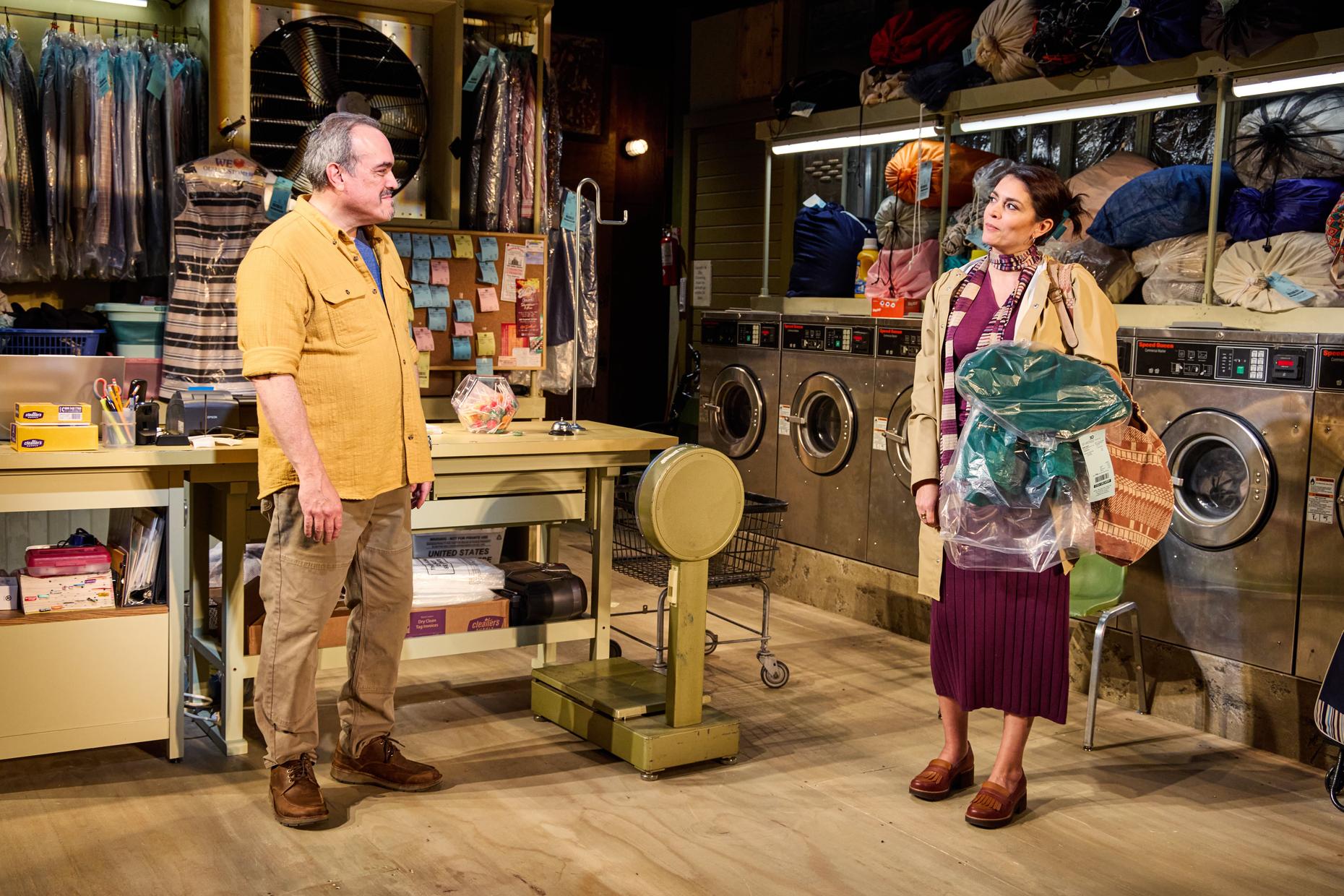
All Of It with Alison Stewart
"Brooklyn Laundry" Stars Cecily Strong and David Zayas and Playwright John Patrick Shanley
00:22:56
"Brooklyn Laundry" Stars Cecily Strong and David Zayas and Playwright John Patrick Shanley
Loading summary
Transcript63 lines
- [00:02]
Bix Soleil Advertiser
Surprise Beach Day. No excuses. I'm in. Gimme five. With Bix Soleil Glide Razor, you'll have hydrated, smooth skin that's ready to go on the fly. No shave cream needed. You can prep, shave and hydrate all in one step thanks to moisture bars that hydrate your skin during and after shaving. 5 flexible blades hug your skin for a close shave. Glide into smooth. It's your time to shine with bixsolil. Buy now at Amazon and Walmart. Ready? Your skin looks amazing. So smooth and beach ready.
- [00:29]
Cecily Strong
Let's go.
- [00:32]
Amica Insurance Announcer
They say if you want to go fast, go alone. But if you want to go far, go together. At Amica Insurance, we know what matters most to you and we work even harder to protect it. Together, as a mutual insurance company, we're built for our customers and prioritize your needs. Amica empathy is our best policy. Call 877-41-America and get a quote today.
- [01:03]
Marshall's Advertiser
Oh my gosh. Have you been to Marshall's lately? They have all the brand name and designer pieces you love, but without the jaw dropping price tags. Alright, so here's the you should never have to compromise between quality and price. And at Marshall's, you don't have to. Marshall's believes everyone deserves access to the good stuff and that's why their buyers hustle around the clock. To make it happen for you, visit a Marshalls store near you or shop online at marshalls.com@rxbar they believe in simple.
- [01:32]
Bix Soleil Advertiser
Nutrition without the BS. That's why they said NO to artificial ingredients and yes to deliver intentional transparent nutrition. Try their original 12 gram protein bar, the Nut Butter and Oat Bar or Minis. Rxbar the proud sponsor of no BS. Use code RXBAR on RXBAR.com for 25% off, subject to full terms and conditions and to change. Valid until September 30, 2025 and may not be combined with other offers. See rxbar.com for full details and limitations.
- [02:05]
John Patrick Shanley
Listener Support WNYC Studios.
- [02:18]
Matt Katz
This is all of it on Matt Katz filling in today for Alison Stewart. Welcome back to the show. Think of the characters you encounter at your local Laundromat. A new Off Broadway play from Pulitzer Prize winning playwright John Patrick Shanley begins in a Laundromat run by a guy named Owen, played by David Zayas. Soon a woman named Fran walks in, played by Cecily Strong, and the two get to talking about life, laundry and their respective problems. But they also have some chemistry and eventually Owen asks Fran out for dinner. The play is called Brooklyn Laundry, and it follows Fran and Owen through the start of a budding relationship. We also follow Fran deeper into her own family history and her struggles in helping out her two sisters who are facing their own troubles. Brooklyn Laundry just opened this week. It's running at New York City center through April 14th. And with me now is playwright John Patrick Shanley and actor Cecily Strong and David Zayas. John, Cecily, David, thank you so much for coming on, all of it. Nice to see you all.
- [03:18]
David Zayas
Thank you.
- [03:19]
Cecily Strong
Hi.
- [03:20]
Matt Katz
So the. The play doesn't only take place in the. In this Brooklyn laundromat. It's where a lot of Fran and Owens dialogue takes place. And obviously the laundry's in the title. I wanted to start with John. I want to know if the laundromat was a. Was a setting you chose, incidentally. Could it have been a coffee shop, say? Or was it very intentional?
- [03:44]
John Patrick Shanley
I'm deeply attached to drop off laundromats in New York City and always happen or have been since I was like 31 years old when I. That's when I first discovered that somebody was willing to do my laundry other than me and fold it up. And I have done it ever since. I have washer, dryer in my apartment, which I keep unplugged because I don't want to get dependent on it. I prefer to go out and see the people at the drop off laundry.
- [04:15]
Matt Katz
Is it the other customers that you're interested in seeing? Is it the people who work there? What is the pull?
- [04:20]
John Patrick Shanley
It's almost mythological situation where I walk in with a beg and put it on a scale. And a woman behind the counter basically judges my life based on the weight of what's in that. And I found it to be an ongoing provocation year after year and a source of strange joy to me.
- [04:42]
Matt Katz
Wow. When it becomes a very intriguing setting for this. For this show. Cecily, can you describe where your respective characters are emotionally when we meet them at the drop off laundromat?
- [04:58]
Cecily Strong
Sure. Fran is. She's a little bit. She's in a rut. She's not in a great mood. She's having the worst day of her life. The way I've been told to play it a couple times. She's just sort of. She's kind of, you know, it's Arrested Development in a bit where she just hasn't quite figured out what, what. Where her place is in life and she's the baby in her family and she's been taken care of and it hasn't led her to much she doesn't feel. And so that's where she starts off the show.
- [05:36]
Matt Katz
And that becomes apparent pretty quickly to. To Owen, played by David. So. So, David, there's a obvious repartee between Owen and Fran. And I'm curious how you create that sort of mildly flirty banter. I'm sure much of it is in the actual writing of John Patrick Shanley, but in watching the show last night, I noticed so much in the way, David, how you moved your hands and Cecily and the expressions on your face. Do you mind talking about the. How you create that sort of repartee night after night that feels so genuine and authentic, like you're watching real people do it in front of you?
- [06:16]
David Zayas
Well, I think you're right. A lot of it is in the writing, and then a lot of it is what I get off of Cecily when we're on stage. I think this guy's. Owen is a very hopeful person, but I think he's also a very broken person. And I think that he's constantly in search for a connection that can just lighten up whatever's going on in his life. And I think in that first scene, there's an immediate attraction there. And, you know, it's.
- [06:50]
Matt Katz
It's a.
- [06:50]
David Zayas
It's a moment where, like, he's trying to be impressive. He's trying to, like. Trying to, like, calm the situation. And I think there's something about people being attracted to a kind of a. A broken, you know, attitude that they may have or circumstances in their life.
- [07:11]
Matt Katz
David, in watching these two performers, are they bringing to life the characters that you had in your head when you were writing, initially writing this play.
- [07:22]
John Patrick Shanley
So I think. My name's John, but I'm sorry, my apologies.
- [07:27]
Matt Katz
Thank you for. Thank you for noticing my error there.
- [07:31]
John Patrick Shanley
You know, Cecily brings crankiness to a high, and David is from the next neighborhood over from me in the Bronx. So he. He brings a groundedness, a gen. A genuineness and a visceral understanding of sort of my point of view about things on a very basic level. And I have to confess that I am cracked up by people who are really difficult and really just not having it. Whatever kind of charm thing you're throwing at them, they can deflect and continue to it as a source of umbrage. So, I mean, I had great fun writing it, but then when I handed it over to. To these two, they. They really understood what I was doing, and they were able to take something that, you know, could be an exploration of, you know, People who were not particularly happy and turn it into something that actually causes joy in the people who are watching it.
- [08:34]
Matt Katz
Oh, I can, I can affirm that it caused joy in this person who was watching it. So you succeeded there. Cecily, what. What drew you to. You see the script? You want to do this project? Was there something specific in the story that. That intrigued you? Are you also a drop off laundromat fan? What, what brought you to it?
- [08:55]
Cecily Strong
Sure. I love having my laundry done. I could start there. I'm. I'm obviously a big fan of John Patrick Shanley. So that was, you know, a super exciting prospect to get to do world premiere and then just reading through the show. Yeah, I thought it was funny and devastating and surprising and so lovely and I think the women in particular are written so well and there's, there's just so much. It seems like this is going to be a lot of fun to, to figure this out and to get to do so. It was a very quick and easy. Yes.
- [09:34]
Matt Katz
For me there's a. I don't want to, I want to avoid spoilers, but I'm so curious about this. There's, there's. Let's call it a psychedelic experience. David, was that, was that excessly just brought up fun? Was that just very fun to try to challenge yourself in that way, to pursue that?
- [09:55]
David Zayas
Yes, it was. You know, underlying exactly what's going on in that scene, that extra added bonus of being in the psychedelics, it's is something that kind of brought it in a different. Like I didn't expect it to go that way when I was, when I was reading it the first time, as we worked on it, as we explored it, I realized, oh, this, this brings it to another level. And yeah, I had a lot of fun with it.
- [10:29]
Matt Katz
Cecily, I imagine you had fun with that.
- [10:32]
Cecily Strong
It's. I have fun with it every single night. I think it's such a. It's. It's a funny scene, but it's like. It's a magical scene. It's kind of lovely. There's just such a, you know, it's so, it's so sincere in a way that once you're on a drug, you can't help but be sincere and authentic. Which, you know, I guess the kids would say is cringe these days to just be so open and vulnerable and it's, it's such a treat to get to start a scene like that.
- [11:04]
Matt Katz
And John, why did you decide to go that route? It seemed very kind of. There's a moment. Yeah. What why. Why'd you include that way?
- [11:14]
John Patrick Shanley
Well, I. You know, my experience of interpersonal relationships is that a lot of conversations quickly turn into a prison and you find yourself saying all the things that you've always said before in answer to various questions and vice versa. And you can see that the other person. That there's some other whole conversation that the other person would like to have than the one they're actually having. And you too. And so, you know, in this scene. Yeah, they take psychedelics and they have that other conversation, the one that I think a lot of us want to have and don't know how to access or how to begin.
- [11:56]
Matt Katz
That's really interesting. John was. And there was a way for you to access, I guess, grief and. And coping with feelings of loneliness. I mean, these. Owen is just to give a little background here for. For our listeners. Owen is a hustling business owner. He's recovering from being hit by a car. He's struggling with some physical insecurities. Fran is trying to help out her sisters while also coping with her own feelings of loneliness.
- [12:21]
John Patrick Shanley
That.
- [12:22]
Matt Katz
That other conversation, John, that you were trying to provoke. And that was it a way of getting the. Those in the audience to explore big themes like grief and.
- [12:34]
John Patrick Shanley
Well, I think the one thing that happens with people is they ghettoize certain feelings. It's like, that's inappropriate to talk about in this situation. So maybe they have a lot of grief or joy going on in their life. Let's say you're talking to somebod who's just lost a loved one and you're having one of the great romantic experiences of your life. At the same time, you feel like you can't even talk about it because it would violate the spirit of grief that they're inhabiting. But the place is. No, There is no real walls between these things and growth. Grief spills into joy and joy spills into nostalgia. And all of these things are really parts of the. Which is this experience of life. And why not have the whole thing? Why not feel free to laugh and cry and everything in between all the time?
- [13:34]
Matt Katz
David and Cecily, have you learned anything, given what John just said, about the experience of life, about your own interpersonal relationships, about the way human beings tick by doing this performance?
- [13:49]
David Zayas
Well, you know, go ahead. I'm sorry.
- [13:52]
Cecily Strong
No, no, no, please go.
- [13:54]
David Zayas
I was going to say that what I discovered and what I find so interesting that eventually, when you're having these conversations, whether it's on stage or whether it's in real life, ultimately, if. When it gets to that point, you hope, and it doesn't always happen that way, but you hope that truth comes out, the truth of what you're feeling, the truth of what you want to say. And that's something that's always surprising, pleasantly surprising to me, particularly when, you know, I'm speaking with somebody about very personal things.
- [14:34]
Matt Katz
Cecily?
- [14:36]
Cecily Strong
Well, I think it's such a. It's a good reminder all the time and performing it that it's like the minute being someone who's being on stage and doing a show that is both very funny and can be very devastating, that it's once. Laughter is such a relief and people can hold things in until that moment, they laugh, which sort of then frees them up to cry. And I remember at my cousin's funeral, I spoke and I tried to make a couple jokes. I don't know if they were very good, but my. His friend came up to me after. It's like, you know, I was able to hold it together through this, like, very sad funeral because it was just sad that, you know, and then it was like. But the minute he laughed is when he could start. Then he just started bawling, you know, and it's sort of. I find that in shows, too, you know, if we can. If we get them to laugh, too, then it's like people are. I like hearing who's going to laugh in this moment? Who needs to laugh right now? Who needs to cry? You know, it's like people need to feel things differently and to release it differently. And I love having a show that allows that.
- [15:46]
Matt Katz
Yeah, the laughter can access emotions that aren't, you know, they can access deep emotions that don't necessarily are necessarily connected to the laughter. They can just kind of break that wall down. John, how did you build so many twists into what's a relatively tight, straightforward story? I mean, this is not a. It's not a long. It's not a long play. How do you find that in the writing where you're. You're surprising the audience? I felt like the audience was just constantly surprised in little and big ways.
- [16:18]
John Patrick Shanley
Well, you know, maybe I'm surprised all day long by the fact that I'm alive and other people are, too, and that anything is possible once you bump up against another human being and these things, you know, for writers, I think we're all fascinated by plot, because plot is the most difficult, mysterious thing that a writer circles. And plot is really something happening in front of you, not you hearing about it, but something happens in front of you, and it hits you at the moment that it happens. And so when I write, like when I wrote this play, there were moments in it where I found out what was going to happen when it happened, not before. And as a result, the audience doesn't see it coming, because I didn't.
- [17:13]
Matt Katz
You're listening to all of it. My name is Matt Katz. I'm filling in for Alison Stewart. Today we're speaking with playwright John Patrick Shanley and actors Cecily Strong and David Zayas about their new play, Brooklyn Laundry. Cecily, in the. In the play, we've been talking about emotions here and Fran and Owen, but especially Fran has a real emot. Without giving away the resolution here, what exactly is Fran grappling with about herself and the world as she moves through this performance?
- [17:46]
Cecily Strong
You know, it's hard to say. Without giving anything away, I will say it's such a journey to go on. I'm incredibly lucky to get to work with these actors that I'm working with, because I can really. It feels like what I imagine great tennis must feel like. And it's just. I told John once, it's like it's a bit. Feels a bit like a car crash on the way to a funeral, which is a real thing that happened, you know, like, that's a part of life too, you know?
- [18:17]
Matt Katz
Yeah. It feels like the tennis part is that just because, like, everything you're. You're given.
- [18:24]
Cecily Strong
I'm. In that analogy. I'm letting myself be a great tennis player, which I've never been. I've never played. I think I played tennis once as a kid and, you know, not for real, but what I imagine it must feel like where I just. You have one partner who you're just like this person is. It's fun. It's fun to get to hit the ball back and forth with these guys and not know what they're going to send back. And it's. And I love the writing so much. I love the shape of the play. I love. Pardon My Dog.
- [18:58]
Matt Katz
Oh, wow, your dog. Heard that there was a tennis ball involved.
- [19:03]
Cecily Strong
Yeah. She's like, you can't play tennis, you liar. Sorry, now I lost what I'm saying. It's a great. The shape of the journey that I get to go on. You know, I love that. That restaurant scene that we get, this magic scene in the middle of the show. So I don't ever feel overwhelmed in a bad way. And I think that the ending is so lovely. So it's like I know what's coming. I go through it, but I know What I get to get to.
- [19:34]
Matt Katz
David, are. Do you have a sports analogy here, or do you feel the same way that it felt like you were returning served from. From Cecily there?
- [19:44]
David Zayas
Yeah, I felt the same way. You know, and the thing about it is that, you know, you. Every night. Every night there's a new experience by listening to what she's saying and listening to how she's delivering it. And it just brings something new. It's not even something new. It's something deeper each time. And so, yes, I love the analogy of tennis. I'm not a very good tennis player.
- [20:09]
Cecily Strong
But.
- [20:12]
Matt Katz
John, have you seen the performance? Have you been. Been. Been there for. Well, I know we just opened here, but I'm curious if you.
- [20:21]
John Patrick Shanley
Oh, yeah. I mean, you know, I directed the play, so, you know, I've been walking alongside them through every step of this process. And, you know, the one thing that you wouldn't know from just, you know, our interview here today is that Cecily plays one of three sisters. She's the main character, but she is in very intense scenes with each of her two sisters, in addition to the scenes with David. And so it's always. She's always walking into a new situation, a new person to deal with. And the shape of the play is that it starts and ends in this laundromat. And so it has this circular shape that, you know, with Cecily with a laundry bag over her shoulder and David behind the counter and putting it on the laundry, on the scale and how different things can be from the first time you see that to the second time you see that.
- [21:23]
Matt Katz
I'm glad you brought up the sisters. They really help us to understand Fran and understanding that. That relationship. Cecily, tell us how Fran is different from her sisters, Trish and. And Susie.
- [21:36]
Cecily Strong
Oh, sure. I think she is the youngest. Trish is the oldest. I think of her kind of as Karen from the wonder years, where she's sort of. She's just such a pretty. She's sort of like the wild child. Like, you know, she just. She was so much older and older enough of Fran where it's like she was a teenager first. Probably her first teenager, like, teenage girl who you think is, like, you're a prince, you're the queen of every. Like, that's the most beautiful, cool teenage person I've ever seen. And really, you know, everything Trish says to her, she takes in the most. And then Susie is the middle sister, and she's definitely the boss, and she's the most practical. And even though she's the middle, you know, she thinks that even Andrea, one night we were out and Andrea, who plays Susie, the middle sister, said, well, and Susie's the oldest. And we all went, you think you're the oldest? You're not the oldest. Trish is the oldest. But even Andrea thinks of herself that way. And it's really funny. The two actors, Florencia and Andrea and myself, we all kind of hit. It's bringing out these parts of our personalities, too. I really love in the show. It's very special to me that it's like at some point I make sure both of them are kind of touching my head at one point. Like, that must have been a comfort as a kid, like to have them above me and taking care of me.
- [23:04]
Matt Katz
Oh, wow. John, before. Before we close here, your play Doubt is also out right now, currently being revived on Broadway. Won the Pulitzer and a Tony back in 2004. I actually also saw it this week. I was so moved. And I'll be speaking with leads Leif Schreiber and Amy Ryan on Monday about it. Before I let you go, John, can you just tell us why now felt like the right time for a Doubt revival?
- [23:33]
John Patrick Shanley
Well, you know, we did Doubt the first time in New York and in America. It was during a period of relative complacency in the country, which is gone now and everyone is not. They're in the middle of an earthquake right now, and it's like trying to play tennis in the middle of an earthquake to just steal a metaphor. The audience that came back then, I had a very different reaction, I think, because they were not riddled with doubt when they walked in the door. And now the audience that comes in, I think almost takes some comfort in the play because they're like, yeah, this is how I feel right from the get go. I'm not sure what the hell I think or what the hell about anything right now. And I certainly don't know what the most effective way forward is. And so it's been kind of thrilling to bring it back and have that experience be so different with the same story being told, but being told in a different time.
- [24:45]
Matt Katz
Looking forward to getting into it on Monday with the actors. I've been speaking with playwright John Patrick Shanley, actor Cecily Strong, David Zayas. Their new show, Brooklyn Laundry, is running at New York City center through April 14th. It's been very fun chatting with you guys. Thanks for coming on all of it.
- [25:03]
John Patrick Shanley
Thanks for having me.
- [25:03]
Cecily Strong
Thank you so much.
- [25:06]
Amica Insurance Announcer
They say if you want to go fast, go alone, but if you want to go far, go together. At Amica Insurance, we know what matters most to you and we work even harder to protect it. Together. As a mutual insurance company, we're built for our customers and prioritize your needs. Amica empathy is our best policy. Call 877-41-America for a free coverage review.
- [25:36]
Marshall's Advertiser
Oh my gosh. Have you been to Marshall's lately? They have all the brand name and designer pieces you love, but without the jaw dropping price tags. Alright, so here's the you should never have to compromise between quality and price, and at Marshall's, you don't have to. Marshall's believes everyone deserves access to the good stuff, and that's why their buyers hustle around the clock. To make it happen for you, visit a Marshalls store near you or shop online@marshalls.com.