← All Of It with Alison Stewart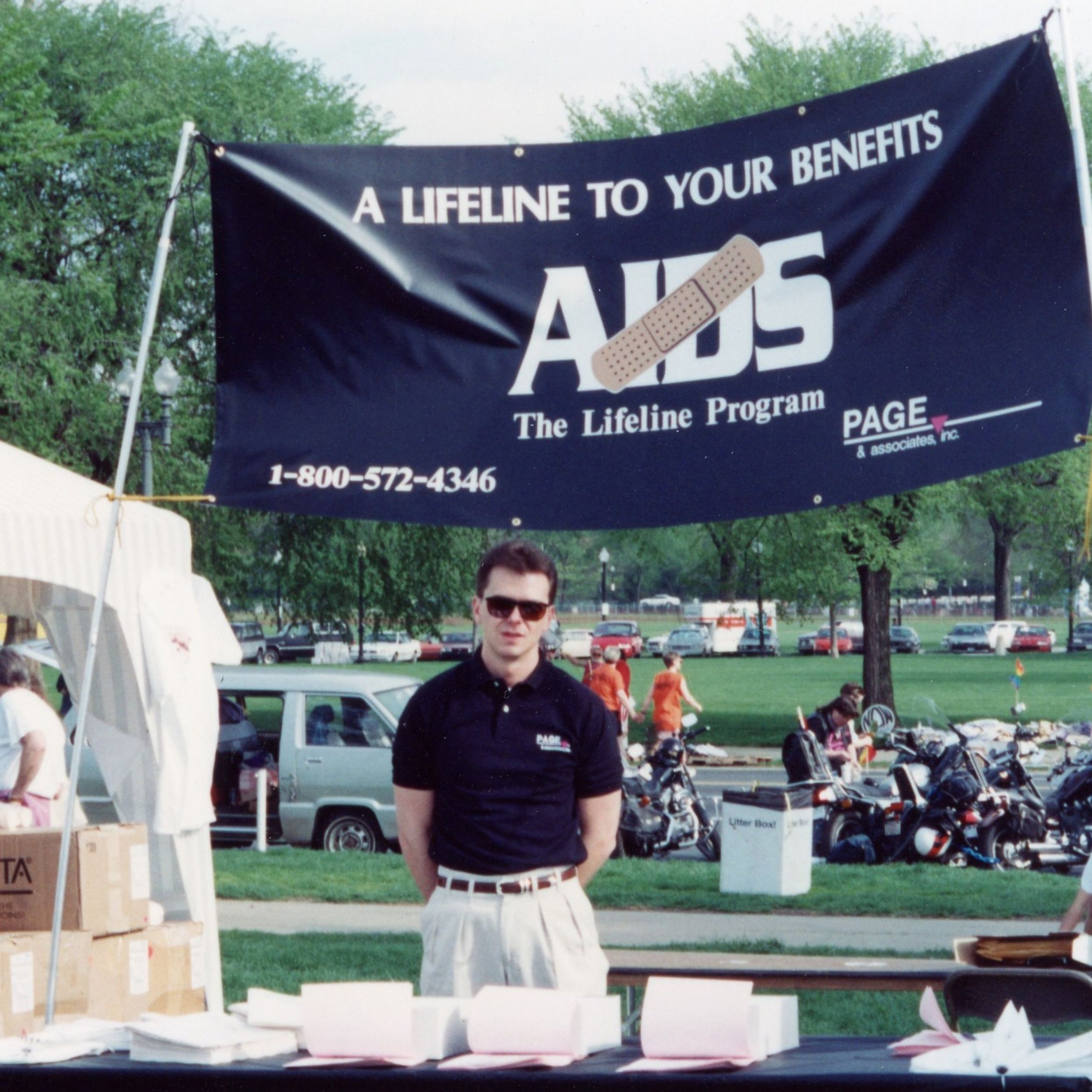
All Of It with Alison Stewart
Capturing the Complicated Emotions of Life Insurance for HIV-Positive People
00:19:13
Loading summary
Transcript41 lines
- [00:09]
A
You're listening to all of it on wnyc. I'm Alison Stewart. Today is World AIDS Day, a global day to raise awareness about HIV and AIDS and to push for progress in prevention, treatment and care. It's also a day to remember the lives lost and honor the people who survived before life saving treatments were available. During the worst years of the AIDS crisis, a controversial investment market emerged, one that turned life insurance policies into upfront cash for people who were terminally ill. In the documentary short Cashing out, director Matt Nadell explores viatical settlements, a practice that can bring much needed relief but also raises uncomfortable questions about profiting from death. The story is told through personal accounts like Scott Pages, who helped arrange some of the earliest deals, including for his then partner Greg. Scott went on to become the president of the National Viatical association, now known as the Life Insurance Settlement Association. Matt Nadell also examines a very personal relation. His father was on the investor side of those policies. That connection forces him to ask what it means to benefit even indirectly from other people's losses. Joining us now are Matt Nadell. Matt, I hope I'm saying your last name right.
- [01:29]
B
You're doing great.
- [01:30]
A
All right. And Scott Page. It's nice to meet you. Scott.
- [01:33]
C
Hello, it's nice to meet you and thank you for having us.
- [01:35]
A
Matt, what pulled you into the story?
- [01:38]
B
Well, I'd love to say that I'm just such a scholar of gay history that I found it myself, but it was a much more unlikely starting point, which was my straight dad. I was on a walk with him one day in the early days of our most recent pandemic.
- [01:55]
C
Covid.
- [01:56]
B
And this was when we were sort of on the verge of a vaccine. And I said to him, just sort of offhand, like, you know, obviously I really want for there to be a vaccine, but I can't help but feel weird that some pharmaceutical executives are going to make a lot of money off of this pandemic that has devastated so many people. And my dad shot me back this reaction. He was just like, what do you mean? And I was like, that's like totally not how he communicates.
- [02:25]
A
Like, whoa, wait, whoa, whoa, what's happening?
- [02:27]
B
Yeah, what's going on here? And he said, I think I need to tell you about something. And that's when the conversation began. I mean, I knew my AIDS history, but I did not know about this.
- [02:41]
A
Scott, will you take us back to those days in the 80s and 90s that we remember, unfortunately. So well, what's it look like for AIDS patients in those early Days.
- [02:55]
C
It was basically a death sentence.
- [02:58]
A
Yeah.
- [02:59]
C
You know, it's interesting when I look back and think about if I had five friends, three of them are dead today because of aids. And, you know, everyone knew when you got it, your friends knew when you had it. And then it just became a countdown. And it was a countdown on many levels. It was a countdown knowing that we were going to lose our friends and our friends were going to lose their lives. But it was also a countdown to figure out how much joy I have left that I can still find in my life.
- [03:36]
A
And, Matt, so we can get everybody on the same page, will you explain to our listeners what does the word viatical, where it comes from and why it was used in this instance?
- [03:49]
B
Yeah, absolutely. It's such a poetic word, actually. It's a Latin word, comes from the Latin word viaticum, which means money for a long journey, which I've always found so euphemistic. I mean, it's. It's the long journey toward death that I guess actually all of us are on. But in the case of, of the folks who sold their life insurance policies, it was perhaps a shorter journey. And yeah, like Scott mentioned, I mean, it was a countdown on many levels, including how much joy could you squeeze out of what little life you had left? And that's where these settlements sort of came in. For lots of folks, you know, it was a way to take back some agency, some dignity, some joy, when it looked like maybe there would be very little left.
- [04:34]
A
How did it work?
- [04:36]
B
So Scott can fill in my gaps here, because he's the real pro, but this is the, the best way I, I can put it is a lot of people have life insurance policies and they don't even really realize it. Like, maybe it's just a benefit from your job. When you lose your job, they stop paying into that life insurance policy. So you have to start paying into it yourself, or else it lapses and goes away. Or instead of paying into it, you can sell it. Say you have $100,000 life insurance policy and a year to live. Maybe an Investor gives me $70,000 today to use while I'm alive to pay my rent or buy medicine or go on a trip. And then when I die, they collect the full $100,000. So they would, in that instance, make a. Around a $30,000 profit. I say around because they do also pay your premiums for as long as you stay alive. So that's the basic mechanics.
- [05:33]
A
Scott, how did this come into your life?
- [05:37]
C
It came in through a determination to Survive. The first love of my life came to me after I fell in love and told me that he had aids. I knew at that point it was going to be very challenging, not only to be in love with someone who had aids, but back in those days, you know, homophobia was much more rampant, even though I think there's a, a swing of it coming back now, today. But back in those days, I knew that I would be dealing with someone who was dying of aids. I would be judged. I would also become quite aware that we were homosexuals. We fell in love, moved to Cleveland. Greg was a contractor and was unable to work. I just gotten out of the military and I had not yet started working and we couldn't pay our bills. And we were going through a stack of bills and Greg was throwing bills on the floor saying, I can't pay this, I can't pay that. And one of them happened to be the premium notice for his life insurance policy. And I picked it up and I looked at it and I thought, wait a minute, here's a hundred thousand dollar life insurance policy if we could just come up with. At the time, I think it was like a little less than $3,000. I knew that Greg wasn't going to live another year. Greg knew that he wasn't going to live another year. And I was like, we got to figure out how to get this money. And so we started on this path of looking for the money and then realizing, wait a minute, if we can find someone to lend us money, that would be better because we would then have the money. You could pursue your aggressive treatments, we wouldn't have to worry about paying rent. We, we could afford to enjoy our lives, we could add some happiness to it. And I went on a mission and wrote a letter to the Cleveland Plain Dealer. And on Monday I started getting contacted by someone who said that they wanted to help. And we put together this very loose transaction. And radicals are very much like real estate transactions. The life insurance is a piece of property. You have an owner and you have someone who wants to buy it and, and you transfer title and the new owner takes over the property, which in this case was a life insurance policy. And we did the transaction. Immediate relief was, was in both of our lives. You could see how transformative it was to Greg and Greg at the time. We would go to gay support groups, HIV support groups, and everyone, the community would share what they were doing to help get their lives better. And Greg just mentioned, oh, by the way, my boyfriend Scott took my life insurance policy. We got A loan on it. And now we have money, and I'm able to buy treatments, and actually I'm able to make a donation back to the community. And someone said, wait a minute, I have a life insurance policy. Then another person said, I have a life insurance policy. And the word of mouth started spreading it through the Cleveland area. And we started working to help as many people as we could. And it was shocking the amount of people that had life insurance that, as Matt said, didn't know they had life insurance. And at the time, I knew nothing about life insurance. I knew nothing about running a business. I didn't wake up one day and say that, you know, I want to make a career in helping people turn their life insurance policy into cash. But it was really determination to make sure that whatever time I had left with Greg and whatever time Greg had left on this earth, I wanted it to be the best possible it could. And it was also at a time where the government was ignoring us. There was no treatments on the horizon. There was nowhere to go for us to find support. We were finding it amongst ourselves and in our community. So it was a survival technique and a survival tool that turned into an industry that has helped thousands and thousands and thousands of people.
- [09:21]
A
It's amazing. It was a small workaround.
- [09:24]
C
Yes. Was that.
- [09:26]
A
It was a loop. That's interesting. My guests are Matt Nadell and Scott Page, whose story is featured in the documentary short Cashing Out. We're discussing the film and the history of radical settlements during the AIDS crisis. Matt, how were the settlements being discussed?
- [09:47]
B
So it's interesting. The media narrative around this was totally negative. And I have to admit, when I first learned about this industry from my dad, my reaction was pretty negative, too. I mean, it just sounds horrible. Like it's a. You're betting on when someone is going to die. It doesn't. You know, the word that these news anchors and all the television news shows love to use was ghoulish. There's a montage in the film where we just put all these ghoulish, ghoulish, ghoulish sound bites next to each other. And, you know, I think people felt uneasy that there were these transactions happening around people's deaths. And what I came to understand as I got further into the research, looking at the archive, speaking to people like Scott, Sean and Dede, who were the three stars of the documentary, was the picture was much more complicated. You know, like Scott said, the government was doing very, very little for people. The social safety net had been. I was going to Say, disintegrated, but it wasn't a passive thing. It had been deliberately destroyed and people were forced to fend for themselves. And this was a tool, like Scott said, and a lifeline for many people. But the media, I think, was content to sort of take the low hanging fruit of look how horrible this is without reporting on how horrible it was that the government was engaging in such incredible neglect, that this is what people had to do to make their lives livable.
- [11:23]
A
Scott, when you step away from it and look at it just on its own, what were the arguments for and what were the arguments against these settlements?
- [11:34]
C
Well, the majority of the arguments that I faced in the headwinds were against. It was taking advantage of these people. You are taking away their life insurance policy. Those policies are meant for their families. There's what's going to happen to their kids, you know, you know, why are you doing this? You're a fiend. I was called every name in the book. And everywhere I went to try to raise awareness that was outside of the gay community, it was constant barrage. I was attacked by the insurance industry. The insurance industry makes its money by collecting premiums and not paying death benefit. And almost 85% of every life insurance policy that's ever issued never pays a death claim because the consumer either no longer can pay the premiums or no longer needs the insurance. So it's really a bet the insurance company was losing. And I felt that what I was seeing, what I was experiencing and how I was, was helping my friends react and seeing the change in their life, that it gave me enough momentum to keep going. And the community embraced it again. It was, it was almost like a do it yourself way to hack around what insurance companies have been profiting for for years. And we knew that the more we could spread the word, the better it would be. But, but we also felt the more publicly we spread the word, the more headwinds we would get from the life insurance industry, regulators, and the government.
- [13:13]
A
Matt, when new treatments arrived and people started living longer, how did that change the industry?
- [13:21]
B
Oh, it totally turned the industry on its head. I mean, this is an industry built on the predictability of death. And all of a sudden these treatments came out that made somebody's six month, one year, two year prognosis totally invalid. And one of the people in our inner film, Sean Strub, who's the founder of a celebrated HIV AIDS magazine called Pause, he was one of those people. He sold his life insurance policy, his doctor told him he had two years to live and that was in 1985, and he's still around doing great. So is his magazine. And those investors lost that bet. So there were investors who were raging in the press, you know, angry that folks whose, whose deaths they had bet on were still alive. And there were people filing lawsuits against brokers claiming that they had misrepresented how sick someone was or misrepresented how close scientists were to finding effective treatments. And, you know, when I look back at those clips as somebody now in 2025, I can't help but laugh and say, you know, look, every investment carries a risk, and what side of history do you want to be on? Do you want to be on the side of history where you're angry in the press because somebody didn't die? Or do you want to accept that? Look, every investment carries a risk, and I happen to lose this bet. But thank God somebody didn't die. That is the more important thing here. I think there were some investors who got hip to that quickly, and they just sort of, you know, threw in the towel. They stopped paying the premiums. They let these policies lapse. They said, you know what, better they live, and I don't make any money and I help them out. But there are some investors who are still paying into those policies, still waiting for people to die and still hoping they'll eke out some, some profit on a, on a bad bet they made in the 90s.
- [15:11]
A
Scott, we got a listener, a question from a listener. You may be able to answer it. It said, did the insurers attempt to block these transfers?
- [15:20]
C
Yes. One of the things I, I needed to learn immediately was how life insurance works. So I went and became a life insurance agent that I could. And you did? I did. My agency was canceled shortly after that by the life insurance company. But what I learned was that life insurance is property, and once you purchase it, you're free to sell it. And there was a 1911 ruling, COD that allowed life insurance to be freely traded after it was issued. So the life insurance companies really couldn't stop the transactions, but they would slow them down when they knew that a, a, a BAL settlement broker such as myself was active. When we would submit changes, change of ownerships, the life insurance companies would lose them or they would go past for two or three months for them to take ownership of them. And, you know, one of my, my staff, Steve Terrell, I call him a bulldog, was on the phone every day just screaming and yelling at life insurance companies to accept a change of ownership so we could help these people. And on the other end were people that were dying. These people couldn't pay rent. They were on the verge of not being able to pay their power bills. They were losing their homes. They were dying. And the life insurance companies were doing nothing to help facilitate these transactions, which, by law, they had to. So it was a very frustrating and angry time. And the insurance agency still today, insurance companies hate me. And I'll wear that badge of honor, because you know what? For me to make a difference and for them to lose a bet or two, I don't think they're suffering much because I've never seen a life insurance company go out of business or put a lease sign on their building or not be able to pay their salaries to their executives.
- [17:13]
A
Matt, you've talked about the various characters in the film, Scott and Dede and Sean, but you became a character in the film yourself. When did you realize that was going to be necessary in Cashing Out?
- [17:27]
B
Well, it's the first time I've done it, and first of all, I'll just say it gave me so much admiration for the participants in my films. I mean, I've always respected them. But just understanding the level of trust that people give to you as a filmmaker when they're sort of submitting themselves to your camera. I mean, not just in how you'll represent their life story, but even in things as simple as, like, is he gonna use the shots where I look good? And I had control over how I looked at every frame, and I still felt insecure. So I have lots of admiration, even more than I did before, for the people who are vulnerable in that way. But as I said, the way I sort of came into this film was personal. You know, it was through my dad. And I didn't know immediately that I would be in the film. My. My. What I was trying to do in making the film was figure something out for myself. Yeah, what is my moral inheritance? As somebody whose childhood was, you know, partially funded by the deaths of gay men from aids, but also as a gay man myself, who was a beneficiary of the activism that people like Scott, Sean and Dede did in those days, and that I sort of made the film according to that process. You know, my first questions were like, just big. Sort of the question of what? And that is what led me to Scott. And it became clear to me that I had to be in the film as my realizations were becoming so central.
- [19:00]
A
The name of the film is Cashing Out. You can catch it on thenewyorker.com and on their YouTube page. Thank you to Matt Nadel and Scott Page for joining us. Thanks, y'. All.
- [19:11]
B
Thank you.
- [19:13]
D
Limu Emu and Doug. Here we have the Limu Emu in.
- [19:19]
C
Its natural habitat, helping people customize their car insurance and save hundreds with Liberty Mutual. Fascinating. It's accompanied by his natural ally, Doug.
- [19:31]
B
Uh, Limu is that guy with the binoculars watching us.
- [19:34]
C
Cut the camera.
- [19:35]
B
They see us. Only pay for what you need@liberty mutual.com Liberty Liberty Liberty Liberty Savings Very unwritten.
- [19:41]
C
By Liberty Mutual Insurance company and affiliates.
- [19:42]
D
Excludes Massachusetts Tis the season of gifting and holes to deck and the who's in who Louisville were in love with new tech. Where can we find Sonos and Samsung and Nintendo? They shouted. Would they find it in one place? This they questioned and doubted when suddenly a who yelled, walmart's the place to start. And each who added headphones, TVs and games to their carts. With Walmart, their shopping was done in a flurry. They cried out who knew? And ordered their gifts in a hurry shop the latest tech gifts in the Walmart applied.