← All Of It with Alison Stewart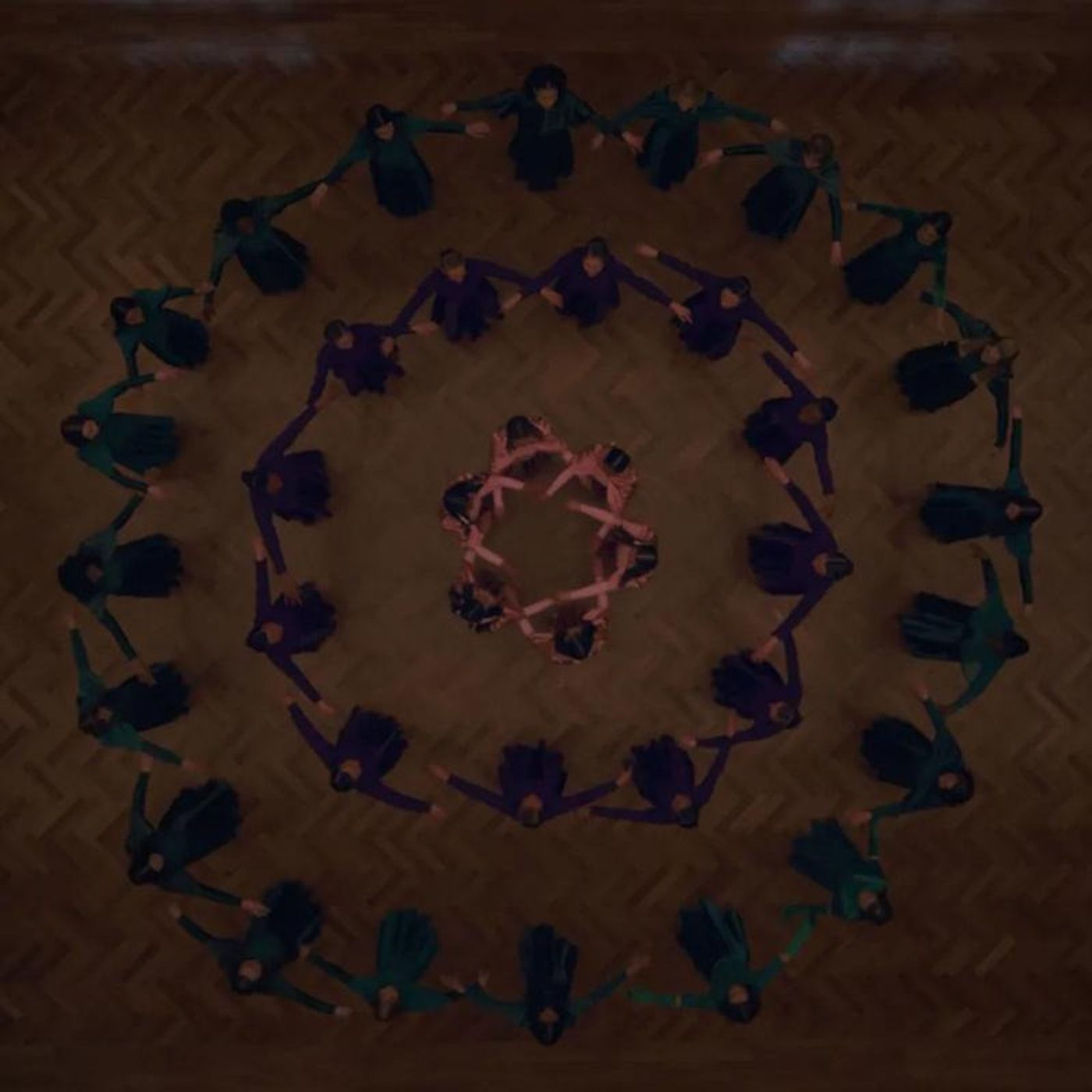
Loading summary
Transcript79 lines
- [00:00]
Chase Infinity
All of it is supported by Progressive Insurance. Do you ever think about switching insurance companies to see if you could save some cash?
- [00:08]
Alison Stewart
Progressive makes it easy to see if
- [00:09]
Chase Infinity
you could save when you bundle your home and auto policies. Try it@progressive.com Progressive Casualty Insurance Company and affiliates. Potential savings will vary. Not available in all states.
- [00:37]
Alison Stewart
This is all of it on wnyc. I'm Alison Stewart. The Hulu series the Testaments returns viewers to the dystopian state of Gilead 15 years after the events first chronicled in the Handmaid's Tale. Both series are based on novels by Margaret Atwood. The final episode of the season airs this coming Wednesday. The story follows a group of teenagers at a girls school. They aren't learning science or math or even how to read. Their education consists of classes that will make them useful and obedient wives. One of those students is Agnes, a beautiful and popular daughter from a high ranking family. When the Testaments begins, Agnes is enthusiastic about her place in Gilead and her future as a wife. But after she becomes close to a student who, unbeknownst to her, is working for the Resistance, she begins to see the world in a new light. She is played by actor Chase Infinity. The Testaments was adapted for Hulu by Bruce Miller, who is also the showrunner behind the Handmaid's Tale. The final episode of the season airs on Wednesday, and since it has just been renewed for a second season, we thought we'd revisit my conversation from earlier this year with Chase and Bruce. I began by asking Bruce when he knew he wanted to take on the Testaments.
- [01:56]
Bruce Miller
Well, Margaret started talking to us about it kind of in 2017. I mean, Handmaid's Tale has been on, had been on the air for a very short time and she was already thinking about writing a sequel. So really it came into my life very early, before she had even started writing. And she very kindly treats me like a or fellow writer. So she talked to me about it as it was kind of coming together. So I got kind of not just a preview, but kind of a, you know, a vision of how it's being built. And so that made it a lot easier to kind of decide that I wanted to be to be part of it because I was part of it from the beginning. I mean, she was building it in front of me. So that made it a lot easier to kind of see how it was built and how interesting it would be.
- [02:43]
Alison Stewart
When did this adaptation get on your radar? Chase?
- [02:46]
Chase Infinity
I feel like it got on my radar at the end of 2024. And I think that was when I sent in my first audition tape, and it was kind of, like, hidden under wraps. Like, I remember Agnes's name was Andrea, and I was like, okay, cool. Let's see what this is about. Read the first script. I was hooked immediately. And then luckily enough, Bruce and the team liked me enough to have me come in for a callback. This is also so weird, like, not being able to see Bruce. I know this person. Yeah, I went in for a callback, and then I think at the top of 2025, I found that I booked the role, and then I was in Toronto, like, less than a month later for fittings and whatnot, before we started shooting.
- [03:27]
Alison Stewart
I have to ask you about fittings. The clothing in this show is. It really signifies a lot to us, the viewer. What does it signify to you? You're dressed in these sort of gorgeous purples, but they're sort of like a malevolent student. I don't know how to fit any other way.
- [03:46]
Chase Infinity
It was sick because I remember when we first got there and we're doing our fittings for our costumes, and you kind of see how they're built from the ground up. It really informs the way also that you move in the world. And I remember, like, the first time putting on one of the costumes that they made. It was one of the dresses, and I was like, wow, it's made to fit me, but it's still very restrictive. And I think that, like, that at baseline, really helped me kind of figure out how I wanted to move in the world and how Agnes would move and the restrictedness of it. And. Yeah, so the costumes were so beautiful, and I. I was so excited to put them on every single day. But you definitely are, like, launched into Gilead pretty quickly in the morning.
- [04:28]
Alison Stewart
Bruce, you sort of laughed when I mentioned the costumes. Why did you laugh?
- [04:32]
Bruce Miller
Just because they are restrictive and, you know, it's built into the idea. But I think you forget that clothing can be so restrictive because we don't wear uniforms around generally. And I don't know if Chase wore a uniform to school, but it really is. And also, I think once you look around as a creator or when the actors look around and there's 60 other people in plum and pink, that really drops you into the world in a way. It's not just from the inside out. You're looking around, and everywhere you look is Gilead.
- [05:03]
Alison Stewart
Yeah. Your uniform is a.
- [05:05]
Chase Infinity
In school, I did. I did up until. I think I was, like, 12 or 13 maybe. But I had. I had the uniform, the polo, the khakis, like, same thing every day. And I was like, what can I wear to make this different? I mean, granted, you can't do that in Gilead, but try. Try.
- [05:20]
Alison Stewart
We didn't go over that well. Bruce, the events take place four years after the end of the Handmaid's Tale. What's happened in Gilead and the rest of the world in between the two series?
- [05:31]
Bruce Miller
Well, I think Gilead has been punched. And like a lot of people who get punched, they're very angry and punching back. So I think that what happened at the end of the Handmaid's Tale really brought Gilead down a notch. And they're hurting, although they're trying everything they can to make the world inside look unbruised. So as much as possible, it's life during wartime. But the women, the young women on our show don't see that and don't feel that. So I think where we are is that Gilead is desperately trying to keep things normal. And the rest of the world is starting to encroach. And Gilead is starting to weaken. But there's nothing more dangerous, I think, than Gilead kind of weakened and on their back. Back legs. I think it's very scary, especially what they'll do to this next generation of women.
- [06:18]
Alison Stewart
But also put your claws out.
- [06:19]
Chase Infinity
Yeah.
- [06:20]
Alison Stewart
Wearing your back foot. What is Agnes like when we meet her?
- [06:24]
Chase Infinity
When you meet Agnes, I will say my best descriptor for her is she like the Princess of Gilead. She has her whole life kind of figured out for her. And she's comfortable with where she is in the world. She understands the ins and outs of Gilead. The things that she can do that won't get her in trouble. But she can still, like, maintain her personality with her friends. So you see her in a state of being completely comfortable with who she is, where she is. She has love in her life. But, yeah, I would say that she's totally like the Princess of Gilead when you first meet her.
- [06:57]
Alison Stewart
It's interesting because in the Handmaid's Tale, you're dealing mostly with women. In this, you're dealing with teenage girls. Has that changed the perspective?
- [07:05]
Chase Infinity
Well, I think from the start, I mean, even getting to work with girls around my age, you feel that. That burst of energy and the burst of youth, I guess. And that carries through the screen, I would say. But I think, like, one of the things I was so excited to do, since you're talking about the youth. Was just talk about the things that is so universal, like having friends, the big emotions that you were saying earlier, having a crush, going through puberty, which makes everything even more crazy than it already is. But I, I loved, I loved that about our show. And I thought that that was also something that could be a strong connection point, too, with. With newer audiences, with younger audiences. Because even though Gilead is Gilead, there's things that are universal regardless of where you're from. And I would say that friendship, love, and I mean, puberty is a big one of them.
- [07:59]
Alison Stewart
Bruce, teenage girls are still teenage girls in many ways. They gossip, sometimes they bully each other. How did you think about what living in Gilead would change about the way the girls interact and what would remain the same away the way teenage girls interact? I think as a teenage girl, I think.
- [08:19]
Bruce Miller
Right. I mean, that's. That is the. The big issue right here is why am I doing this? But, you know, you have to ask me your question again. What would change and what would stay the same? I think almost everything stays the same. It just stays inside and the same. And I think that, you know, what, the force of kind of friendship and adolescence or puberty and also all the forces that make kind of push a teenage girl into womanhood, those are much, much, much stronger than. Than anything that Gilead can do. And you've seen it through history. There's no totalitarian state in the world that didn't have rebellious teenagers. Even in North Korea, they have rebellious teenagers. So I think that, you know, what Margaret was tapping into and what we've continued is you're really looking at an irresistible force hitting an immovable object, and Gilead is the immovable object. But teenage girls are definitely an irresistible force.
- [09:16]
Alison Stewart
I'm speaking to actor Chase Infinity and showrunner Bruce Miller about the Testaments, the new series adaptation of Margaret Atwood' to the Handmaid's Tale. The series premieres on Hulu on Wednesday. Chase, what was the most challenging part of getting. Getting Agnes right?
- [09:33]
Chase Infinity
Getting Agnes right? I think I wouldn't say challenging, but I knew how loved Hannah is and still is. And I think that that was something that I was super mindful of because she has so much love around her, both in the Handmaid's Tale and also in. In the Testaments. And I wouldn't say it was necessarily a challenge, but it was something that I really wanted to make sure that I kept true and I kept honest and I wanted to lead with her honesty and lead with her love. So I wouldn't say it was a challenge, but it Was definitely something that I was like, I have to make sure that I do. I do this right.
- [10:10]
Alison Stewart
Bruce, why did. Why was. We're gonna talk about you like you're not here, Chase.
- [10:13]
Chase Infinity
I know. I'm gonna turn away.
- [10:15]
Alison Stewart
Why was Chase the right choice for Agnes?
- [10:19]
Bruce Miller
Well, there's. There's a lot of reasons. I think, first of all, kind of and up front, her audition was excellent. I mean, she. She's, you know, she's a very gifted woman and a very gifted actress, but she works her ass off as well. So she was very, very ready. And her. And her audition was very fully baked as a person. You know, it's so. And knowing that she really didn't know quite what the script was about or what it was connected to is even more impressive. But then I think with Chase, it was a. That she felt like she owned the character, which is very hard in a character that's been played by seven other actresses over the time period. But also, I felt like she had a lot of range as an actor when I looked at the things that she had done. I had seen Presumed Innocent, and I knew that she had been in one battle after another, but I hadn't seen any footage. But, you know, you. You see the footage you have, and then you see the. The performance by the actor in the audition, but then you speak to the person a little bit. You know, talk to Chase a little bit, and then you kind of look around into her world. And one of the things we found in was looking at her. The things she had posted on social media and the range of human being between those things is what really? Because in tv, it's all about range. In film, it's fine. It's two hours. You don't need that much range sometimes. But in success, I need Chase to be able to do lots more than she's done. And so you have to look for range when you're casting a television actor.
- [11:57]
Alison Stewart
That's so interesting. I wrote a little note to myself. Ask Chase about scripted versus movie. You're this. You're in a. All episodes of this show.
- [12:08]
Chase Infinity
Yeah.
- [12:08]
Alison Stewart
Versus one battle after another. An amazing movie, by the way. Thank you so much. But it's a different. It's a different. I don't know, species than a TV show.
- [12:20]
Chase Infinity
Yeah.
- [12:20]
Alison Stewart
What's the difference for you as an actor having to sustain all of the episodes versus being in a movie?
- [12:27]
Chase Infinity
I think. Well, first of all, Bruce, you are so sweet, so thank you so much. But I think, like, the big difference for me is television has. You need to have stamina to be in a TV show. And it's not a bad thing. It's just something that it takes a second to get back into. And then I guess, like, with film, for me, the thing that, that I wasn't used to at the time when I did that is I wasn't used to how much time we had. Because with that one, we could spend days on a scene. Whereas in tv, you, you move at a much quicker pace and you're memorizing material at a quicker pace. So I think that like, like I, it's. They're just different muscles that I'm using in my mind and in my, my body. But I just remember, like, when we first started shooting, I was like, oh, I forgot what it was like to film a TV show, let alone, like, I've never, I guess, like, been the lead of one. So that was like a massive learning curve too. But I mean, I really leaned on our cast and crew and to Bruce and to all of our other producers. So a lot of, like, my 99% of my success in the show is because of them. I wouldn't have been able to do anything without them.
- [13:46]
Alison Stewart
What have you learned about being number one on the call sheet?
- [13:48]
Chase Infinity
Oh, God. I think the thing I've learned or the thing I've tried to do is be a voice of advocacy for everybody as much as I can. And if I can't be that, instill the confidence in my fellow actors and the people around me that they can. And I think that that's something that I felt very fortunate to learn very early on in my career with Presumed Innocent. And Ruth Nega, my co star, kind of taught me the importance of that. And I've taken it forward with me for, like, even on one battle. And it's something that I really wanted to make sure to be there for people, especially on this, since we have so many younger girls who, this could be their first TV show, this could be their seventh or eighth, but they're at a much higher, I guess, number on the call sheet, which is intimidating at times. But I really wanted to be a voice of advocacy for people as much as I could.
- [14:49]
Alison Stewart
That was Chase Infinity, who plays Agnes in the Hulu series the Testaments. When we return, we'll have more of my conversation with her and showrunner Bruce Miller. This is all of it on wnyc. I'm Alison Stewart. We continue my conversation with Chase Infinity, who plays Agnes in the the Testaments, and Bruce Miller, the series showrunner. When I was watching the first Few episodes of the Testaments, I wondered how much of Agnes is a little girl and how much she is a young woman. I put that question to Bruce.
- [15:39]
Bruce Miller
My sense is she's much more a young woman than a little girl. Gilead is keeping her a little girl. But I think that especially growing up in a place like Gilead, you become grown up much more quickly. So I think while they are constantly trying to infantilize all women, and especially the younger women, I think that the character of Agnes and all her friends are absolutely. They feel like young women, which is why it feels so weird. They're trying to make them little girls.
- [16:09]
Alison Stewart
What do you think, Chase?
- [16:10]
Chase Infinity
I would say the exact same. Because the girls of Gilead stop becoming little girls the second that they stop becoming pinks. And like Bruce said, like, you're, you're dressing in pink. The girl dressing in pink. Yes, dressing in pink for context, because the. Agnes is a plum, technically. And so the pinks are the little girls in, in Gilead. So the second.
- [16:30]
Alison Stewart
That's creepy. Let's start there.
- [16:31]
Chase Infinity
Yeah, yeah. So the second that you leave that you become a plum. And I think that like once you become a plum, these girls are forced even faster into to young adulthood. And I think that like in general in life, girls are forced to become more mature far beyond their other, their other male classmates. And so I think it's even quicker in Gilead. But you have the thing that Bruce was talking about where Gilead's also trying to keep them as little girls, but that's just not possible.
- [17:05]
Alison Stewart
How does Agnes fit in at school?
- [17:07]
Chase Infinity
Fit in at school? I think like she's. She has it figured out. She's really, like I was saying earlier, comfortable with the system. She knows the ins and outs. She has her friends, which also gives her a stronger sense of groundedness in her environment. And I think as the show progresses, that kind of starts to become a shaky thing. But definitely when you first meet her, you're like, this girl has it figured out. She knows exactly what school is, like what, what her after school system is going to be like.
- [17:40]
Alison Stewart
Let's hear a clip from this series, the Testament, which features Agnes and the other girls at school. And Daisy, who has recently come to the school as a pearl girl, someone from the outside who's coming into the fold. This is from the Testaments.
- [17:53]
Chase Infinity
Daisy, Pray, where do you hail from? Toronto, Canada. Ms. Tsunami. That's a beautiful name. It is. I imagine Kenneth is very different from Gilead.
- [18:12]
Alison Stewart
Toronto has been forsaken by God and
- [18:15]
Chase Infinity
defiled by Satan, it is suffocating in sin. So do you miss it? I pray it will be swallowed whole by the earth. May he hear your prayer.
- [18:37]
Alison Stewart
Oh, they're so creepy. Bruce. The relationship between Daisy and Agnes becomes increasingly important to the testaments. I don't want to give too much away, but how important was it to cast this group of young women?
- [18:56]
Bruce Miller
Well, I think, especially in this show, casting is everything. I mean, I think because you're digging around in the actor's ability for so long, but we don't do any. I didn't do any chemistry reads. There were so many great young actors who were submitted. But really, the kind of. The testament, excuse me, goes to the casting people who. They see a thousand people and I see 10. So they really make it so that the people I'm choosing from are all very, very, very suitable. And you're just looking for someone who's good. But I think the most important thing beyond talent and being able is personality. I mean, you want people who are good at working together because that's the only way we all. You know, if you have one person who's kind of sour, that person doesn't put in a bad performance. Everybody else does, because that person is spoiling for a fight. So TV is a lot about harmony, and harmony is about checking people's references. And I think so, you know, you do that a lot beforehand, but you do it quite deeply. And with Chase, fortunately, we had known. You know, I knew Otfag Benley from Handmaids, and he called, you know, when he knew we were looking at Chase, he called and let me know that he had worked with her and met her on Presumed Innocent and really thought she was not just a very talented actress, but kind of the right kind of person to have.
- [20:24]
Alison Stewart
She sounds like. Sound like a good. You sound like a good leader.
- [20:28]
Chase Infinity
Oh, thanks.
- [20:29]
Alison Stewart
Thank you. That's what I'm hearing him say. All right, so let's talk rage. Yes. In the first episode, they love rage. We see a guy, you know, who basically gets his arm cut off. And in that moment, your character kind of goes. It's like Lord of the Flies moment. In that moment. What do we learn about Agnes in that moment when they're just screaming for this man to have his arm cut off?
- [20:57]
Chase Infinity
Well, I think the thing you learn about Agnes is the thing that you learn with all of these girls is they're not allowed to show any sense of emotion about anything. And this is the one time that they can let it all out and not be for, like, lack of A better term, like, punished for it. Like, if there was any other circumstance where any of these girls would even raise their voice slightly at anybody, they would be punished for it. And so at that point, you really see, kind of like it's the first moment you see in Gilead where everything is not perfect and not everyone is, like, put together and. And has it all figured out. Like, that's the moment that you're like, oh, what is. What's going on underneath the surface? Are you okay? Like. And, like, granted, they aren't, but that's like, kind of the first time that you see how, I guess how strong the rage is inside of them, whether or not they know it.
- [21:49]
Alison Stewart
The novel the Testaments is separated into three different perspectives. Agnes, Daisy and Aunt Lydia. Bruce. What opportunities did that shifting structure present to you when you were adapting this?
- [22:03]
Bruce Miller
Well, point of view is everything in writing and point of view, especially in television. So if you look at the Handmaid's Tale, the restrictive point of view of June really makes the show scary. If it didn't have a restricted point of view, it wouldn't be scary. If you knew from 30,000ft what was going on and what was going to happen every day, then, you know, the only. The fact that she is, you know, in ignorance, Is it scary here? So here we get to see more different parts of Gilead through the three perspectives. And I think that's incredibly helpful. So you can open up your eyes and you can open up your show to more parts of Gilead. But I think the most important thing to me is that you really hear three different voices of three different women, you know, at different ages and with different perspectives. So I think for me, you know, Handmaids was Gilead through her eyes. And as terrible as it was, it was through her eyes. This is. There's more Gileads here to explore because there's more eyes looking at them.
- [23:04]
Alison Stewart
Chase Agnes is raised by two white parents, the Commander and her stepmother, who's a. You know, what do you think? Do you think race plays a part of her identity, Agnes's identity?
- [23:19]
Chase Infinity
I honestly think that it's unfortunately something she's not necessarily thought of in a way, because she has other black people around her. She has her Martha Zilla, who's really one of her closest companions, in a way. And she has other friends at school, like Jehoshapha. But I guess, like, from the sense of her being raised by two white parents, it's not really kind of been put at the forefront as much as I think it would which is kind of crazy to think about, especially because the world that Gilead is and kind of the things that they stand for and Agnes is not a lot of the things that they would like necessarily. But she also, again, comes from an incredibly privileged place to where it doesn't play a part in, well, not doesn't play a part in her life, but it doesn't play necessarily as large a part in her life because of who she's the daughter of and I guess her compared to her peers in that sense, and also just what she can offer the world in a way. So she's, she's privileged in the sense of, of where she grew up, but she's also very privileged in that way as well.
- [24:37]
Alison Stewart
Bruce, we get glimpses of the world before Gilead. One of Agnes's Marthas says to her, explains Tinder to her in the dialogue. How much did you think about the balance between sort of recognizable real world imagery versus the world of Gilead?
- [24:56]
Bruce Miller
Well, I think you want to be thoughtful about it and just make sure it makes sense. So, you know, although Agnes has never seen Bugs Bunn, her parents, you know, both Paula and Kyle have, and the parents of all her friends. So what seeps through, what in my language would seep through to my children, even if they didn't have it? So they say weirdo, for example, which is, you know, probably something from their parents. So I, I'm very fussy kind of with the, the very, very, very fussy with the dialogue because these girls are so careful in the way that they speak. I have to be very careful. So, you know, you know, literally you don't have that many words to speak in an episode of television, so you can be pretty fussy. So I, I, we do go down the rabbit hole quite a bit on what, what words would they use? Where would they have heard them? And you know, it's hard, you know, it's just, it's an interesting experiment to do mean girls in Gilead with a bunch of young women who've never seen mean girls. They're not doing an imitation of mean girls, they're doing themselves.
- [25:58]
Alison Stewart
Do you remember an example of that?
- [26:01]
Chase Infinity
I can't think of one specific one, but like, what Bruce was talking about, like, especially the things that the girls hear from their parents. Like, shunamite is a case in point, like the perfect person of she will listen and repeat to what she hears her Martha say, what she hears her parents say. And like, that's one of the things that I really love about Shunammite, specifically is that. And that part about her personality.
- [26:27]
Alison Stewart
The Handmaid's Tale premiered almost a decade ago, Bruce, and in some ways, where we live in the United States is very similar. It's very different. That was before Roe versus Wade was overturned. Same president with the same name. Have you thought about making the show for this moment?
- [26:45]
Bruce Miller
As little as possible. I think the best thing about Handmaid's Tale is I read it when I was in college and I reread it over the years, and every time I read it, it seemed like it was written for that moment.
- [26:56]
Alison Stewart
Oh, that's interest.
- [26:58]
Bruce Miller
It's kind of a testament to the prescience of Margaret and kind of the. She picks up on the friction points between, you know, between government and people, between men and women, and those friction points don't go away. So I think that, you know, it isn't written. She doesn't write for the current moment. I think she has a worldview that's much broader than that. And so, you know, and so I try not to. Right. For the moment, I try to adapt the book, you know, and really, if the books. And the book speaks to, you know, lots of moments, and I'm sure it will continue to speak to lots of moments. But, you know, honestly, the timing in TV is too slow. I mean, I couldn't, you know, I wrote all of the season of Handmaid still, the first season before the election in November. So there was. I had no idea what was going to happen. So it's, you know, it's no fun that we sit around Chase and I and all of us thinking of the worst things in the world that can happen to women and then they happen. It's no fun to be right in that way. Kind of awful.
- [28:00]
Alison Stewart
Well, I also believe creative people have a certain. They kind of pick up on stuff. I do believe that. Chase, you have an incredible voice.
- [28:09]
Chase Infinity
Thank you.
- [28:10]
Alison Stewart
And I know, like, musical theater is really important to you, and we have a lot of Broadway people who listen to this show. Hi.
- [28:17]
Bruce Miller
Hi.
- [28:18]
Alison Stewart
What's your dream role on Broadway?
- [28:19]
Chase Infinity
Oh, my gosh. I have so many. Theater is like that. Like, I went to school for musical theater. So, like, when I tell people I never could have imagined being in TV and film, like, I genuinely mean that. I never could have pictured it, but, I mean, I'm. I'm so happy to be here, but Broadway is like my dream. I. I'm trying to think of one Natasha. And Natasha Peer in the Great Comet of 1812 is like one of my dream roles. And it's been since I saw it in 2017. I've loved Danae Benton ever since then. I think that that show is absolutely incredible. If I could be anybody in Pippin, I think I would do a backflip. There's so many shows, and, like, I always forget some, and then I'm like, oh, man, I should have said that one instead. Or should have said that one, too. But there's so many. And a lot of the time, I'm like, whether or not it's a named character or I just want to be in the ensemble. Like, I would. I would die to tap in something. Granted, I'm not. Not probably as strong as I used to be, but I love to tap and I love to dance. And if I could just be in anything, like, I'll carry a prop across the stage. I don't care. I just want to be in the show. I literally just want to be in the room, and that will make me the most happy person on the planet.
- [29:40]
Alison Stewart
You heard her. Broadway producers. And one last question, and this is just me talking to you is like, curly hair. You've curly hair, I have curly hair. It's never the same the same day.
- [29:51]
Chase Infinity
Exactly.
- [29:51]
Alison Stewart
How did you do that on the set?
- [29:53]
Chase Infinity
Listen, I'm going to tell you my secret, okay? I'm going to tell you my secret and the. The tea. The truth is, we had an incredible hair department, but I would twist my hair every Sunday. Like, every single Sunday. I would sit myself down and I would give myself three hours to wash and twist my hair and set it for the week. It gave me also, like, I know it was difficult to do every Sunday, but it also was a great point of me being able to kind of reset. Like, I'm literally washing my hair completely, starting fresh, and I could force myself to sit down and watch something. I would watch a movie. I would watch a TV show. I would get on FaceTime with my friends because even though it was, like the weekend, I wouldn't necessarily give myself time off. And that was, like, I was a. That was a time I could give myself three hours to do nothing or recharge myself. And even though it was tough, like, I was so glad that I did that so I could have a forced break for myself, because otherwise, I would not let myself do that.
- [30:50]
Alison Stewart
That was my conversation with actor Chase Infinity, who plays Agnes and Bruce Miller. The final episode of the first season of the Testaments airs this Wednesday, May 27th. Hey, everybody. Have a great holiday weekend. Coming up on Monday show, It's Broadway on the Radio. We'll hear conversations and performances from the folks behind the Tony nominated music, Ragtime and Chess. And that is All Of It. All of it is produced by Kate Hines, Jordan Loft, Simon Close, Zach Goddard, Cohen, Elle, Malik Anderson, Luke Green and Sacha Cohen. Megan Ryan is the head of Live Radio. Our engineer is Juliana Fonda. Luscious Jackson does our music. If you missed any segments this week, catch up by listening to our podcast available on your podcast platform of choice. If you like what you hear, please leave us a great rating as it helps people find the show. I'm Alison Stewart. I appreciate you listening and I appreciate you. I will meet you back here next time.
- [31:55]
Chase Infinity
Having the right people in your corner for life's biggest milestones makes all the difference. Like a friend who's there when you're house hunting or checking out a new ride, State Farm is there too, helping you choose the coverage you need. With a State Farm agent, you know someone is there to help you along the way. And with so many coverage options, it's nice knowing you have help choosing a plan that fits your needs so you can continue celebrating all of life's milestones. Like a good neighbor, State Farm is there. Hi, I'm Maggie Smith, poet and host of the Slowdown. Each weekday I share a poem and a moment of reflection, helping you turn listening into a daily ritual. It's five minutes to slow down, pay attention, and begin the day with intention. Find it in your favorite podcast app and make the Slowdown your new daily poetry practice.