Loading summary
Transcript52 lines
- [00:00]
Odoo Sponsor
WNYC Studios is supported by Odoo. When you buy business software from lots of vendors, the costs add up and it gets complicated and confusing. Odoo solves this. It's a single company that sells a suite of enterprise apps that handles everything from accounting to inventory to sales. Odoo is all connected on a single platform in a simple and affordable way. You can save money without missing out on the features you need. Check out Odoo at o d o o.com that's o d o o.com there's
- [00:32]
Redfin Sponsor
a difference between liking a house and actually getting it. Redfin is built to close that gap. Redfin agents close twice as many deals as other agents, so when you find a home you love, you're not a step behind when it's time to make an offer. That means less watching great homes disappear and more zeroing in on the one you'll actually end up calling home. Redfin helps turn saved listings into real addresses. Get started@redfin.com own the dream for delicious meals.
- [01:02]
Marie Callender's / TaxAct Sponsor
You could go out to eat or you could just make a Marie Callender's meal. Marie Callender's classic Chicken Parmigiano bowl is so good. It has marinara sauce that's made from scratch and creamy mozzarella cheese over pasta. It's delicious with no artificial flavors, colors or preservatives and 30 grams of protein. You can find it in the frozen aisle. Marina Marie what having it all tastes like.
- [01:34]
Alison Stewart
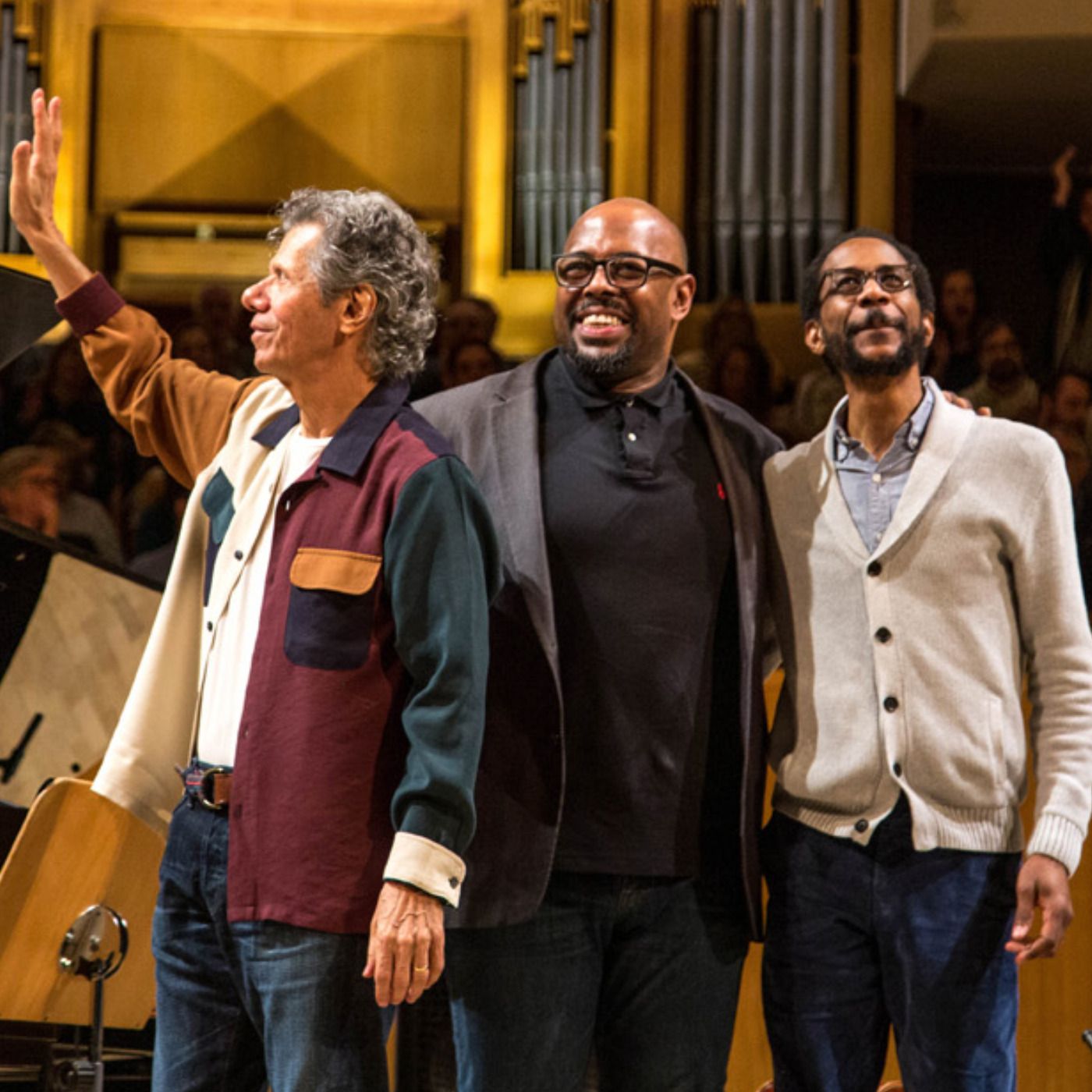
This is all of it on WNYC. I'm Alison Stewart. In February, my guest Christian McBride took home the Grammy for Best Jazz Performance for a song called Windows from the album Trilogy 3, the bass player's collaboration and co winners on that performance were drummer Brian Blade and legendary jazz pianist the late Chick Corea. Now another posthumous release is out in honor of Korea's legacy. The new CD set is titled Forever the Farewell Performance. It highlights two transcendent solo concerts from October of 2020, just four months before passing from a rare form of cancer. Here's a clip of the song Armando's Rumb. Forever Yours. The farewell performance is out now, as is Trilogy 3, his Grammy winning collaboration with Christian McBride. Christian is sitting at across from me. Hey, it's nice to see you.
- [02:59]
Christian McBride
Thanks for having me back. It's always great to see you.
- [03:02]
Alison Stewart
Also, when did you first become aware of Chick Corea as a musician?
- [03:06]
Christian McBride
Well, I think Chick is one of those people who he's been omnipresent for, you know, for certainly all of my life. He was one of those names where once I really discovered him, I realized that I'd been hearing his music all along. The first time I actually became aware of his music was through an album that actually wasn't his. And I don't even think he was on it. It was Al Jarou's version of Spain, because that was the version that kind of helped make that song even more of a big hit. And so learning Al Jarrel's version and finding my way to Chick Corea's legacy was like, wow, this is incredible.
- [03:53]
Interviewer
What struck you about the way that he played.
- [04:00]
Christian McBride
The lift? You know, the word that comes to mind when I think of chicks playing is alive. It's always bouncy. There's always a certain element of life force in it. You know, it's just. It picks you up, you know, even just the way he. He played inside of the beat, you know, it was always kind of on the top end of it, you know, it was always lively, you know, and he was so much fun to be around. You know, he was just a great guy and obviously a great player, but also one of the greatest composers in the history of American music.
- [04:42]
Interviewer
Ooh, tell me more.
- [04:44]
Christian McBride
You can't really play jazz and not, at some point, have to deal and learn about Chick Corea, the composer, along with, you know, he's very much in the same lineage as Duke Ellington, Thelonious Monk, Bud Powell, Wayne Shorter. You know, he was so prolific, you could make. You could study Chick Corea's music for a lifetime. That's how prolific he was.
- [05:13]
Interviewer
How did the two of you end up becoming acquainted later on in life?
- [05:17]
Christian McBride
I first met Chick in the early 90s at a jazz festival in Japan. And I was playing with my dear friend, the great pianist Benny Green. And Chick sat on the side of the stage during our set and listened intently. And it was really. We were all honored and shocked that he was that interested in what we were doing. And he sat there, you know, he had his arms folded, and he was kind of. You know, he was getting into it. At the end of the set. He said some really nice things to us, and he gave me his info and said, let's stay in touch. And three years later, he called me to tour with him for the first time.
- [05:58]
Interviewer
What did that mean to you in 1993? You were a young man. What did that mean to you to have Chick Korea that interested in what you were doing and how you were playing?
- [06:10]
Christian McBride
Yeah, first of all, I didn't believe him. You know, there was a part of me that Thought, he's just being nice.
- [06:16]
Interviewer
He wrote you a nice letter, right? Yeah, yeah, yeah.
- [06:18]
Christian McBride
You know, I was like, well, he's just being nice. He says this to everybody, which he did. He did do that to everybody, which I found was actually really beautiful because a lot of people say things and they don't follow up, but he followed up. He sent me a letter of a couple of maybe six or seven weeks later. And I just like, are you kidding me? He's serious about this. So that meant the world to me that somebody as legendary as Chick Corea was interested in what I was doing and wanted me to play with him.
- [06:52]
Interviewer
Two recent releases capture jazz pianist and composer Chick Corea's final performances before his passing. Grammy Award winning bassist Tristan McBride, who was a frequent collaborator with Chicks, is here to discuss his. His legacy after getting to know him a little bit more. Aside from him being a great guy, which you've described, what did you admire about him professionally as a musician?
- [07:15]
Christian McBride
His work ethic? Yeah, the man was working hard all the time. And I remember I was having some issues with just kind of my own career, trying to establish myself as a band leader. And I was going through some issues with my team and Chick said, what are you doing after the show tonight? I said, nothing. He said, I'm gonna come to your room, I have some ideas. And Chick came to my room and he opened up his laptop and he had like these. They weren't Google sheets, because this was before Google sheets. It was like a Microsoft Word or something like that. He had all these documents and he sat there with me. He says, ok, step one, this is how we're gonna think about your career. I went, wow, okay. He said, now this is how you get your team in place and here's what you tell the record company. And I almost didn't hear him because I was so shocked that he took such great care of my dilemma. You know, he sat there with me and walked me through his ideas, you know, so he was really invested.
- [08:32]
Interviewer
That's really interesting. He kind of taught you that old saying, like, be the CEO of your career. He sort of taught you that, like, this is what we gotta do.
- [08:39]
Christian McBride
He definitely was that.
- [08:41]
Interviewer
That's so interesting. What's something that you gained from him from working with him about how to arrange and compose music?
- [08:51]
Christian McBride
I wish I. Whatever. It's something that I still can't do, you know, I would always. It was intimidating being around Chick particularly. I mean, it's one thing watching him, you know, be the CEO of his career and Run his empire and be the great player that he was. But also to see how he managed it all and was able to write music with just. With such ease. In the middle of all of this, you know, we would be on the tour bus and he'd have sheet music out, and he's just writing, you know, didn't even really have the piano nearby. You know, he would write every now and then, and we'd get the sound check, and then we're supposed to be rehearsing the music that we're going to play, but then he'd be writing music for another project that was coming up.
- [09:42]
Alison Stewart
Oh, wow.
- [09:43]
Christian McBride
It's like. So he had these two brains working all of the time, and I'm like, man, how do you do that? You know? And he would always say, you know, something like, well, it's not that hard. You do it, too. I was like, as you can see, I'm not doing that. But, yeah, it's just he was so prolific and, you know, he always used to say, the way you do it. He said, you practice composition the same way you practice playing your bass. You know, you gotta write something every day, you know, even if you don't like it. Get in the habit of writing music.
- [10:18]
Alison Stewart
Do you still follow that rule?
- [10:19]
Christian McBride
I try my hardest, but I don't always come through.
- [10:23]
Alison Stewart
All right, let's talk about that.
- [10:25]
Christian McBride
I'm gonna get there, though.
- [10:26]
Alison Stewart
Let's talk about the trilogy albums. What do you remember about touring with Chickaria in those sort of final months of his life?
- [10:34]
Christian McBride
It was just that trio with Brian. With Brian Blade. I think once Brian and I. I don't know if we ever got over the. You know, Chick had become such a important part of our lives. You know, we did consider him a friend, but we did not lose sight of the fact that it was still Chick Corea, and he was considering us his main group by the end of his life, what turned out to be the end of his life. And we were honored by that, you know, and it was always so much joy to play these great standards with the man that wrote them. You know, every time we would play Spain, there was always a little part of me that thought, that's the guy that wrote it. Right? You know, we play 500 miles high. That's the guy who wrote it. Matrix. That's the guy who wrote it. You know, now he sings, now he sobs. Okay, we're not reading out of a book. That's the man that wrote it. You know? And Chick would always say, hey, guys, you know, I'M getting tired of playing all of my music. Let's play some of yours. Brian and I were like, no, no, man. Mozart, you're fine.
- [11:55]
Alison Stewart
Trilogy three earned a Grammy for best Jazz Performance for the track Windows. It was first recorded in 66ish, and it's a jazz standard. Why do you think that song has withstood time?
- [12:10]
Christian McBride
Strong melody, great chord changes, you know, And I think that's a real. Those are two real basic things in songs and pieces of music. Long form, mid range form, long form. It has great melody and great harmony, you know, and in the case of jazz, great rhythm, you know. So I feel that that song Windows and so many of other Chick's songs, they have great melodies. You can sing them. They're like. They're ear worms, you know, Even when you're busy doing something else, this little melody of his pops up in your head. Like, why am I hearing that? You know, because it's a great melody. So Chick was always one for a great melody.
- [13:00]
Alison Stewart
Let's listen to Windows.
- [13:27]
Christian McBride
Sam.
- [14:09]
Alison Stewart
Christian, when you think about him as a pianist, what do you think he is underrated for?
- [14:16]
Christian McBride
Chick. I remember one time, his guard, he got really vulnerable one time, and he said, you know, I wish I played the blues better. You know, I wish I swung harder. And so I didn't. I don't even think I even responded. I was like, hmm, okay. So a couple of days later, I found an old Blue Mitchell record. I pulled up an old Blue Mitchell record that he played on, and I swear, you think it's Winton Kelly or you think it was Oscar Peterson? So I didn't say anything. I just played it while we were on the bus. And the Chick kind of went, oh, man, that's swinging. And he goes, wait a minute. Ask me. I said, yeah. Remember you said you wish you swung harder and you played the blues? I mean, that sounds like you're a perfect two for two right there. You swinging hard, you playing the blues. You can still play. He said, oh, man, I don't know. I said, come on, let's play some blues tonight, you know? And he got in there, you know, so, Chick, look, you can't play with Miles Davis and Sarah Vaughan and Mango Santa Maria and all those people back in those days if you couldn't groove and play the blues.
- [15:37]
Alison Stewart
Let's talk a little bit about forever yours. The farewell performance is out now in a CD set, and the album features originals and nods to other composerslonius Monk, Duke Ellington, Mozart. See, what can we learn about Chick Corea? From the composers and the musicians that he admired.
- [15:59]
Christian McBride
Chick was so. He was eclectic. You know, he listened to. He loved Thelonious Monk, he loved Bud Powell, but he also loved Beethoven. He also loved Mozart. He was. He was very much into a lot of different styles of music. And the life force that I mentioned, you know, it's like he always sounded like he was up, you know, he always sounded positive. I don't think you ever listen to Chick Rea's music and feel down. You know, even his more beautiful introspective songs, there's still a certain hopefulness to it, you know, it'll never make you sad. And even listening to this farewell concert From October of 2020, I certainly didn't know he was suffering. You know, we played our last concert together in March of 2020, and he looked, sounded, felt just like Chick always did, you know? So when he passed away in February 2021, that came as a huge shock to all of us. We had no idea. And to think that he made this recording that close to his death and shows no signs of any sort of physical ailment. There's that life force I was talking about.
- [17:29]
Alison Stewart
Let's play a track from Forever Yours. Here's Chickaria playing Mozart's Piano Sonata in F. Christian, what do you hear when you listen to this?
- [18:03]
Christian McBride
He still sounds like Chick. Yeah, yeah. There's some Chick isms in there. You know, just a little tweak of the rhythm. Little. Little phrase right there. It's like, ah, that's Chick.
- [18:17]
Alison Stewart
Before we go, what do we hear from you in the future? What are we gonna hear from you?
- [18:21]
Christian McBride
Well, you know, you brought me some luck last time I was here when we talked about my big band record. So, you know that. That was volume One Without Further Ado. Volume One Without Further Ado. Volume two will be released sometime early next year.
- [18:37]
Alison Stewart
Oh, that's exciting.
- [18:38]
Christian McBride
Yeah.
- [18:39]
Alison Stewart
We're gonna go out on a series of songs from Chick. They were children's songs. They're based on children's songs. Why would he venture into the land of children's songs into simple songs?
- [18:51]
Christian McBride
Well, one of Chick's favorite characters, he used to deem himself. You know, he made an album called the Leprechaun back in the 70s. And, you know, on the album, like, he dresses like one, you know, like he's always had that child. Like, again, that positivity, that sort of hopefulness, that sort of. That almost. Almost a sweet naivete, you know? But, yeah, him writing and loving children's songs is on brand.
- [19:25]
Alison Stewart
I have been speaking with Grammy Award
- [19:26]
Interviewer
winning bassist Christian McBride about Chick Corea's Legacy Trilogy 3 and Forever Yours the Ferrell performance are both out now. Thank you for spending time with us.
- [19:35]
Christian McBride
Always wonderful to see you.
- [19:37]
Redfin Sponsor
There's a difference between liking a house and actually getting it. Redfin is built to close that gap. Redfin agents close twice as many deals as other agents, so when you find a home you love, you're not a step behind when it's time to make an offer. That means less watching great homes disappear and more zeroing in on the one you'll actually end up calling home. Redfin helps turn saved listings into real addresses. Get started@redfin.com own the Dream
- [20:07]
Marie Callender's / TaxAct Sponsor
TaxAct's filing software and live tax experts can help small businesses easily knock out their taxes. Actually, our experts can help you find deductions and credits for any sized business, Itty bitty businesses, medium sized, really big mid sized small businesses, companies with zero employees, and mom and pop conglomerates. Yep, our tax experts can help all of them. Taxact. Let's get them over with.