Loading summary
Transcript99 lines
- [00:00]
WNYC Announcer
WNYC Studios is supported by AT&T. Hearing a voice can change everything. So AT&T wants everyone to gift their voice to loved ones this holiday season because that convo is a chance to say something you'll hear forever. AT&T connecting changes everything and AI are.
- [00:17]
Caller
Helping to shape the future of computing.
- [00:27]
Alison Stewart
This is all of it. I'm Alison Stewart live from the WNYC studios in soho. Thank you for spending part of your day with us. I'm really grateful that you are here. It is the season of giving. And hey, thanks to everybody who contributed to WNYC during Giving Tuesday yesterday. Here's another way you can give back. WNYC is teaming up with the New York Blood center for a one day blood drive. It's taking place on Tuesday, December 9th from 9:30am to 2pm right here at the WNYC green space at 8 at the corner of Varick and Charlton Street. To sign up, head to nybc.org wnyc that's NYBC stands for New Yorkblood center.org wnyc. I hope to see you there. I'll be there at 10:30 for my appointment. That's happening in just about six days. Now let's get this hour started with a conversation about a different kind of census.
- [01:37]
It's the holiday season, which means family gatherings, parties, presents, caroling. And for people who love birding, it's time for another important seasonal event, the Christmas Bird Count. Now in its 126th year, the count takes place annually between December 14 and January 5. Last year, over 83,000 people participated, spotting over 44 million birds. Here now to talk about it and how it gets, how it works, and to give us some tips on how to get started birding is Jessica Wilson. She's the executive director of the New York City Bird Alliance. Jessica, welcome to all of it.
- [02:19]
Jessica Wilson
Thanks, Allison. Thanks for having me.
- [02:21]
Alison Stewart
We'd like to hear from our listeners as well. Have you ever participated in the Christmas Bird Count? What was the experience like? Are you, are you counting birds this year? Tell us where our phone number is. 212-433-9692. That's 212433, WNYC. You can also text us at that number. Again, tell us if you have Christmas Bird Count experience or experiences. Also, if you have a question about how it works, you should give us a call. 2124-3396-9221-2433 wnyc. So I understand that the Christmas Bird Count has a New York origin story.
- [03:01]
Jessica Wilson
What is it the Christmas bird count, which as you mentioned is now its 126th year, started right here in New York City in Central park. Actually. An ornithologist at the American Museum of Natural History, Frank Chapman, suggested that instead of hunting birds at Christmas, which was the tradition, we should go out and count them. And he rallied friends across the country to count the birds. That was in the year 1900.
- [03:29]
Alison Stewart
Was there an issue with the declining number of birds?
- [03:33]
Jessica Wilson
There was. Birds were in decline in the late 1800s, most notably water birds. Herons and egrets, beautiful birds with long plumage. Those were hunted for their feathers. They made gorgeous hats for women, high fashion. But the birds were in steep decline and scientists were seeing that. Zornithologists suggested that instead of hunting birds, we should count them. We now continue to count those birds and today that data is used to protect bird populations and keep the birds from declining.
- [04:05]
Alison Stewart
Yeah. How did people in 1900s, New York City or the United States view ecology and conservation?
- [04:13]
Jessica Wilson
Conservation was relatively new. There was a growing appreciation for nature. Certainly the creation of the National National Park System a few decades earlier had popularized nature in this country. But at, at that time, at the turn of the century, there wasn't a lot of thought for the need to protect and conserve wildlife.
- [04:34]
Alison Stewart
Yeah, there was this quote from Frank.
- [04:36]
Host/Producer
Chapman that said, I once wrote about.
- [04:38]
Alison Stewart
How he went on a walk in Manhattan and counted 542 people wearing hats adorned with plumage and even entire birds representing 42 different species.
- [04:49]
Jessica Wilson
The hats were pretty amazing, but sort of grotesque actually, to have an entire bird perched on top of your head.
- [04:56]
Alison Stewart
Okay, so I think it's important to take away from Frank Chapman's life is.
- [05:00]
Host/Producer
That he didn't start out as an ornithologist.
- [05:03]
Alison Stewart
How did he, where did he start his career?
- [05:07]
Jessica Wilson
I actually don't know that much about Frank Chapman.
- [05:09]
Host/Producer
Oh, well, our expert is telling me he was a banker.
- [05:13]
Jessica Wilson
Is that right?
- [05:15]
Alison Stewart
He started out as a banker.
- [05:16]
Host/Producer
Why do you think birding became a passion of his?
- [05:20]
Jessica Wilson
I think he saw the beauty in birds, but also the need to protect them.
- [05:26]
Host/Producer
Let's talk to Amy from Manhattan who has called in. Hi, Amy.
- [05:31]
Caller
Hi, Hudson. I was just wondering, with that many birds.
- [05:36]
Being counted and that many birds just being around in the area, how do they know the same bird isn't being counted multiple times?
- [05:45]
Alison Stewart
Very good question, Amy.
- [05:46]
Jessica Wilson
Thanks for calling. That's a great question. The Christmas bird count has been conducted for 126 years using a standard methodology. The count compilers, the leaders of volunteers across the country, use the same methodology. To make sure that we don't double count birds both at that moment for a particular count location, but also if the bird travels between locations. And because the same consistent methodology has been used for decades and decades, it allows us to track long term trends in bird populations.
- [06:23]
Host/Producer
We're talking about the Christmas Bird Count with Jessica Wilson, the executive director of the NYC Bird Alliance. If you have a question about how to get involved with the Christmas Bird count or you want to share your bird count story, or you have a question about getting started in birding, give us a call. 212-433-969-2212-4332 wnyc. Okay, so the count happens from December 14th through January 5th. What's the advantage and the disadvantage of counting local birds in the winter?
- [06:59]
Jessica Wilson
There are other bird counts that happen throughout the year. There's a breeding bird survey, there's studies of nesting and migratory birds. But you also want to see what bird populations are doing as resident birds. Wintering birds gives you a sense of how bird populations are doing over time. And so because volunteers have been counting birds in the winter for more than 100 years, it gives you a sense of how those populations are doing. Are they growing? Are they declining?
- [07:28]
Host/Producer
We got a great text here that says, hi, there are two birders in Stuyvesant Town who bird every single day. One of them, Ann, will lead a Christmas Bird Count. It's a lovely community event and we get a great number of bird species who live in Stuytown. Looking forward to joining again. Thanks for the tech. Let's talk about the business of the Christmas Bird Count.
- [07:53]
Jessica Wilson
Who's in charge across the country? The Christmas Bird Count is coordinated by the National Audubon Society and it's individual Audubon chapters and volunteer groups that are part of the network that make the Christmas Bird Count possible. Here in New York City, there are several groups involved. New York City Bird alliance coordinates the counts in Manhattan and northern New Jersey. And then there's organizations including the Queens Birding Club, Brooklyn Bird Club and others that coordinate counts for their burrows. New York City Bird Alliances count is happening Sunday, December 14th in across Manhattan and parts of New Jersey. And we welcome everyone to join us and count birds that day.
- [08:34]
Host/Producer
What data is being collected?
- [08:37]
Jessica Wilson
We're looking at the number of birds in a group or a flock of birds in that particular location. And we can track that bird population over time in that particular spot to see how the bird populations are faring.
- [08:54]
Alison Stewart
How does it get collected? Somebody just goes, look, it's a bird.
- [08:59]
Jessica Wilson
There's a standard methodology, as I mentioned, where you sort of look at a group of birds, either individuals or a large group, and count either the specific number or the estimated number. If it's a large group, all of that data is consolidated by New York City Bird alliance from Manhattan and then shared with the National Audubon Society, which consolidates that Data for nearly 3,000 locations across the Western Hemisphere.
- [09:27]
Alison Stewart
So they get the data after the count?
- [09:29]
Jessica Wilson
They do, yep. And there's those specific count dates, Dec. 14 to Jan. 5, to ensure everybody gets their data in on time, because it does take months for the National Audubon Society scientists to compile to compile and analyze it all.
- [09:45]
Alison Stewart
How do scientists use the data?
- [09:48]
Jessica Wilson
The bird population data collected at the Christmas Bird Pound is so important to guide conservation action. It tells us what birds are in decline, which birds are doing well, and gives a sense of what we might need to do to protect those birds, whether it's habitat protection or reducing threats to birds here in New York City, like collisions with buildings, other threats.
- [10:13]
Alison Stewart
We are talking about the Christmas Bird Count with Jessica Wilson, the executive director of the New York City Bird Alliance. If you've got a question about how to get involved with the Christmas Bird Count, or you want to share your bird count story or have a question about how to get started in birding, so talk to us. Our Phone number is 2124-3396-9221-2433. WNYC. You can call in and you can join us on air or you can text us at that number. You mentioned that there's a count here in New York City. Does each borough have its own count?
- [10:51]
Jessica Wilson
Each borough has its own count and more different organizations are responsible for coordinating the counts in those boroughs. New York City Bird alliance coordinates the counts in Manhattan and northern New Jersey. As I said, about 30 different locations across those areas. But it's all coordinated through New York City Bird Alliance. So you sign up and you can choose what location you want to join.
- [11:13]
Alison Stewart
I understand there are all kinds of different groups that are involved in birding. There's like Brooklyn Bird Club and Queens County Bird Club. Are they included as well?
- [11:21]
Jessica Wilson
They are. Everybody can join Bird Count and your local birding organization will help coordinate it. We have our partner organizations, Brooklyn Bird Club, Queens Birding Club and others, coordinate the counts in their home burrow. And you can find all of that information on our website, nycbirdalliance.org CBC. That's a sort of a one central place you can go to find information about Christmas Bird counts happening all over the city.
- [11:51]
Host/Producer
We have a question. I don't know if you'll know the.
- [11:52]
Alison Stewart
Answer, but we'll put it out there. This says mourning doves have taken over my feeder.
- [11:58]
Host/Producer
Any suggestions?
- [11:59]
Alison Stewart
Thanks so much.
- [12:01]
Jessica Wilson
I would say enjoy those mourning doves. They're beautiful birds.
- [12:05]
Alison Stewart
Where do you do the count?
- [12:07]
Host/Producer
Are you on the streets? Are you in the parks?
- [12:10]
Alison Stewart
Where does the count happen?
- [12:11]
Jessica Wilson
The counts happen where the birds are, which is mostly in green spaces around New York City. The city has a surprising amount of birds. In fact, nearly 350 species of birds come through New York City every year. And between 100 to 150 might be seen at the Christmas bird count. New York City Bird alliance has counts in Central park, in Madison Square park, on Governor's island, on Randall's island, and even in some newer green spaces like the High Line and the Javits Center. Green Roof.
- [12:48]
Host/Producer
Why is New York such a rich place to look for birds?
- [12:54]
Jessica Wilson
New York City lies right at the center of New York Harbor. That made it a really popular place for people to settle, a great spot for trade and commerce and also a terrific spot for birds and biodiversity. There is incredible biodiversity and wildlife here in New York, which lies right on the Atlantic Flyway. That's the migratory route that birds travel in the spring and fall. And we get hundreds of different bird species flying through here every year.
- [13:24]
Host/Producer
Let's talk to Heather from Brooklyn. Hi, Heather, thank you for taking the time to call, all of it.
- [13:31]
Heather
Hi, of course, thanks for having me.
- [13:33]
Host/Producer
You're on the air.
- [13:35]
Heather
Yes. So I was calling because you were talking about the history of how we got into conserving birds and instead of slaughtering them for fashion, and you were sort of rhapsodizing on the origins of that. And I just, I wanted to draw the listeners attention to a wonderful book from my childhood illustrated children's book called She's Wearing a Dead Bird on Her Head, which I don't know if you're familiar with that book or not, but it's speaks to two women, two cousins who were directly involved in that movement, Harriet Hemingway and Minna Hall. So that's more or less all. They sort of, they got some men to work with them since that was necessary at the time and they were instrumental in founding the Audubon Society and passing legislation to get that changed. Yeah, that's all basically. But I really enjoy listening to your program and I thought folks could benefit from knowing about that.
- [14:46]
Alison Stewart
We appreciate your call. Thank you so much. I'm talking to Jessica Wilson the executive director of the NYC Bird Alliance. We are talking about the Christmas Bird Count. If you have any questions about the bird count or how to get started birding, give us a call. 212-433-969-2212-4433 wnyc I said if you want to get started birding, is this the kind of event you can go to if you're a novice or do you need to have a little bit of experience?
- [15:15]
Jessica Wilson
The Christmas Bird Count is great for beginning birders. First of all, it's easy to see birds in the winter. There are no leaves on the trees, which makes it an easy time to spot birds. Christmas Bird Counts are also really welcoming and and accessible. Everyone there is super friendly. They want to share what they've seen and get new people into the hobby. And so the Christmas Bird Count is great for beginning birders, for families with kids, and for folks just curious about the nature right here in New York City.
- [15:46]
Alison Stewart
We got a text here that says I will join. Thanks. Please use this bird segment to remind people to keep their cats indoors or at least belled and to turn off lights at night and use bird protection on large windows. This sounds like it's a real problem, these large windows.
- [16:06]
Jessica Wilson
As I said, New York City has an incredible amount of bird life, but also a lot of threats facing birds. Besides outdoor cats, which the listener mentioned, collisions with buildings are one of the leading causes of bird deaths in New York City and across the country. In fact, New York City Bird alliance scientists estimate that more than a billion birds die every year colliding with windows across the country. More than a quarter million collisions in New York City alone. It's a huge problem, but they're really easy solutions. Listener mentioned two of them. One is turning off your lights at night. Artificial light at night draws birds in to the city, makes them more susceptible to collisions. And the other issue is glass. We know that a glass window is a barrier. We can't walk through it. Birds don't know that. They don't have those social cues that we do. Millions of birds collide with glass windows in the city every year and die either on contact or soon after. But all you need to do is make your windows visible to birds. You can do that by either using bird friendly glass that has a pattern in it or putting an adhesive film on the outside of the window has a little pattern. The birds can see from a distance. We cannot. Doesn't really obstruct your view, but it can save millions of birds lives.
- [17:29]
Alison Stewart
Let's take A call from Adrian on the Lower east side. Hi, Adrian. Thank you for making the time to call all of it.
- [17:36]
Caller
Hi, I just wondered, do you count pigeons as well?
- [17:40]
Jessica Wilson
We do count pigeons.
- [17:43]
We estimate the numbers since we see them by the thousands. But they're included in our Christmas bird count.
- [17:49]
Alison Stewart
Let's talk to Mike in Brooklyn. Hi, Mike. Thanks for calling all of it.
- [17:54]
Caller
Hi. Hi. So my mom, who had staff positions, started the Brooklyn Botanic Garden gift shop, Queens Botanic Garden moved to South Texas, the quietest, flattest place you could find. And because of all the bird watching, she became involved in organizing 10,000 people coming, and she coordinated the volunteers. And she's now in her 90s. And just last year did the Christmas count again as there's a lot of birders down there.
- [18:26]
Alison Stewart
Mike, thanks so much for calling in. We got a great text that says.
- [18:30]
Host/Producer
I am visually impaired.
- [18:32]
Alison Stewart
I live in northern New Jersey and I am new to birding, but I have been able to die, able to identify quite a few birds by their calls. Is there a way that people who are visually impaired can participate in the bird count?
- [18:47]
Jessica Wilson
There certainly is. New York City Bird alliance and other organizations make accessibility an important part of our bird counts. We want everyone to be able to participate. In Manhattan, we have two counts that could be great if you're willing to travel a little bit. We call them slow counts. They're bird sits and slow walks that are designed for a wide range of birders to appreciate and enjoy the nature all around.
- [19:16]
Host/Producer
This text said. The guest said there is a methodology to keep from counting the same birds more than once. What's the methodology?
- [19:24]
Jessica Wilson
It's so specific that I don't have all the details. Fortunately, New York City Bird alliance scientists train our volunteer leaders on exactly how to do it. When you sign up for a count, you'll be paired with a trained leader who will then teach the methodology at the count. If you do want more specifics, though, the National Audubon Society website has it all laid out.
- [19:47]
Host/Producer
We'll have more when we talk about the Christmas bird count after a quick break. This is all of it.
- [20:02]
Alison Stewart
You're listening to all of it on wnyc. I'm Alison Stewart. My guest is Jessica Wilson, executive director of NYC Bird alliance. And we are talking about the Christmas bird account. The bird count, I should say it goes from December 14 through January 5. We have got a call from, I guess it's Gray from Montclair. Hi, Gray. Thanks for calling, all of it.
- [20:27]
Caller
Hello, can you hear me?
- [20:28]
Alison Stewart
Yeah, I do hear you.
- [20:30]
Caller
Yes. So Jessica, can You tell us, what are the long term. Can you summarize the long term results of the bird count as far as populations and diversity? How's that changed over the past decades? Thank you.
- [20:47]
Jessica Wilson
Thanks. That's a great and very important question because that data is exactly why we conduct the Christmas Bird Count. Tracking bird populations for 126 years have revealed some really startling and scary declines in bird population. That data collected is paired up with other bird surveys like the breeding bird survey that I mentioned earlier, as well as crowdsourced data on a platform called EBIRD and used to track populations over time. And what we've seen, researchers at the National Audubon Society, Cornell Lab and American Bird Conservancy who pore through this data have seen that bird populations are in steep decline across this country and the rate of decline is accelerating. In fact, in the last 50 years, more than 3 billion birds have been lost due to climate change. More than a third of bird species across the country are at risk.
- [21:48]
Alison Stewart
Let's talk to Craig from Morganville. Hey Craig, thank you so much for calling all of it. You're on the air.
- [21:55]
Caller
Hey, how you doing? I was wondering, you guys listed very few parks in Manhattan and then Governors Island. I'm just assuming, is it because you didn't have a chance to name all of them? I mean, there's Riverside Park, Van Cortlandt, Pelham Park. I mean, these are huge places with lots of greenery. And just curious if you're not including them at all in your camp. Thank you.
- [22:22]
Jessica Wilson
New York City has incredible green spaces. You're right. There are hundreds of really amazing green spaces that are great for people and also great for birds. We do our best to cover them all. They are too many to list online. But if you go to the New York City Bird alliance website, you can see all of the different locations in which we conduct the Christmas Bird Count.
- [22:44]
Host/Producer
What are some of your favorite places to spot birds?
- [22:48]
Jessica Wilson
Central park and Prospect park are incredible green oases. But smaller parks like Madison Square Park, Carl Schurz park have also brought in some great birds. And then our islands, which lie right on the water, so it's great for winter birding. Governor's Island, Randall's Island, Roosevelt island, all terrific spots to watch birds.
- [23:10]
Host/Producer
So someone who's decided I'm going to go out and be part of the Christmas Bird count, what might they spot?
- [23:16]
Jessica Wilson
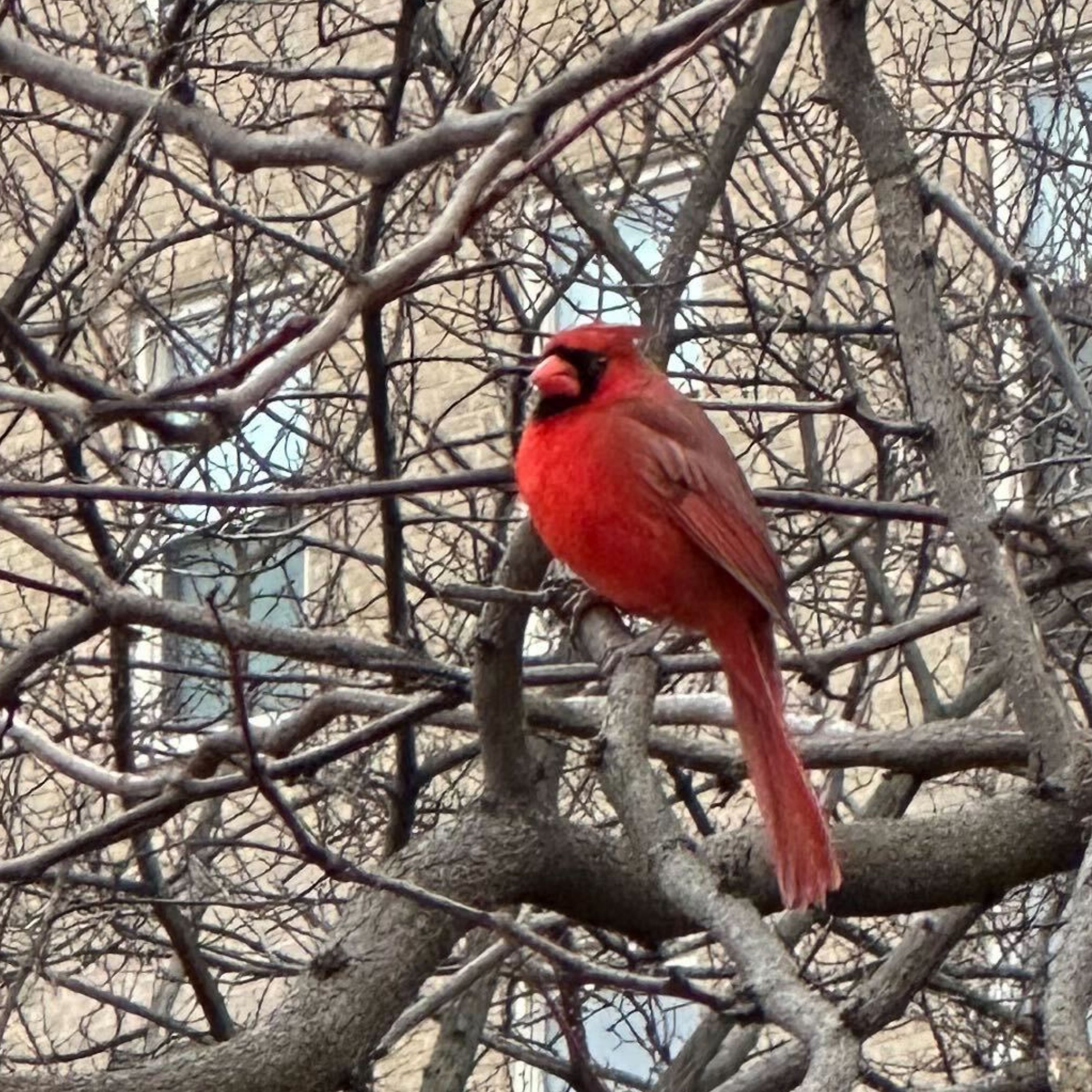
There's a surprisingly large variety of birds you can spot even in the winter. We get about 100 bird species a year on our Christmas Bird count. You'll see common birds like cardinals, blue jays, robins. You'll see woodpeckers and nuthatches, chickadees, titmice, and then some really cool charismatic birds like hawks, red tail hawks, which are quite common now in New York City. And if you're lucky, you might spot an owl.
- [23:46]
Host/Producer
What has the bird count told us about birds in New York? Are we a success story in New York?
- [23:53]
Jessica Wilson
We have bright spots and low spots.
- [23:57]
One of the bright spots is the bald eagle. Our accounts have shown that bald eagle populations have rebounded from nearly being wiped out in this country a few decades ago to now being seen fairly regularly across New York City. Bald eagles are an example of how conservation works to protect birds.
- [24:19]
Host/Producer
Let's talk to Ed, who is calling in from the Bronx. Hey Ed, you are on the radio.
- [24:26]
Caller
Hi, good afternoon. I just wanted to mention that the Bronx hasn't been mentioned at all and we have some amazing birding happening in the Bronx. You got Pelham Bay, you got places like the Bronx River Greenway, Cortona. And the Christmas Bird Count will be happening On Sunday the 28th, I believe the Sunday after Christmas.
- [24:46]
Host/Producer
Thanks for the information. We appreciate it. As we wrap up, is there anything that we haven't talked about that you.
- [24:52]
Jessica Wilson
Think is very important? I would encourage everybody to get outside and enjoy birds, whether that's for the Christmas Bird Count or anytime during the year. There are incredible variety of birds here in New York and all you need is to go outside and listen and look and enjoy nature.
- [25:11]
Host/Producer
My guest has been Jessica Wilson, Executive Director of the New York City Bird Alliance. We've been talking about the Christmas Bird Count. If you'd like to get more information, head to nycbirdalliance.org thanks for coming in, Jessica.
- [25:25]
Jessica Wilson
Thanks for having me.
- [25:26]
WNYC Announcer
Alison NYC now delivers breaking news, top headlines and in depth coverage from WNYC and Gothamist every morning, midday and evening. By sponsoring our programming, you'll reach a community of passionate listeners in an uncluttered audio experience. Visit sponsorship.wnyc.org to learn more.