← All Of It with Alison Stewart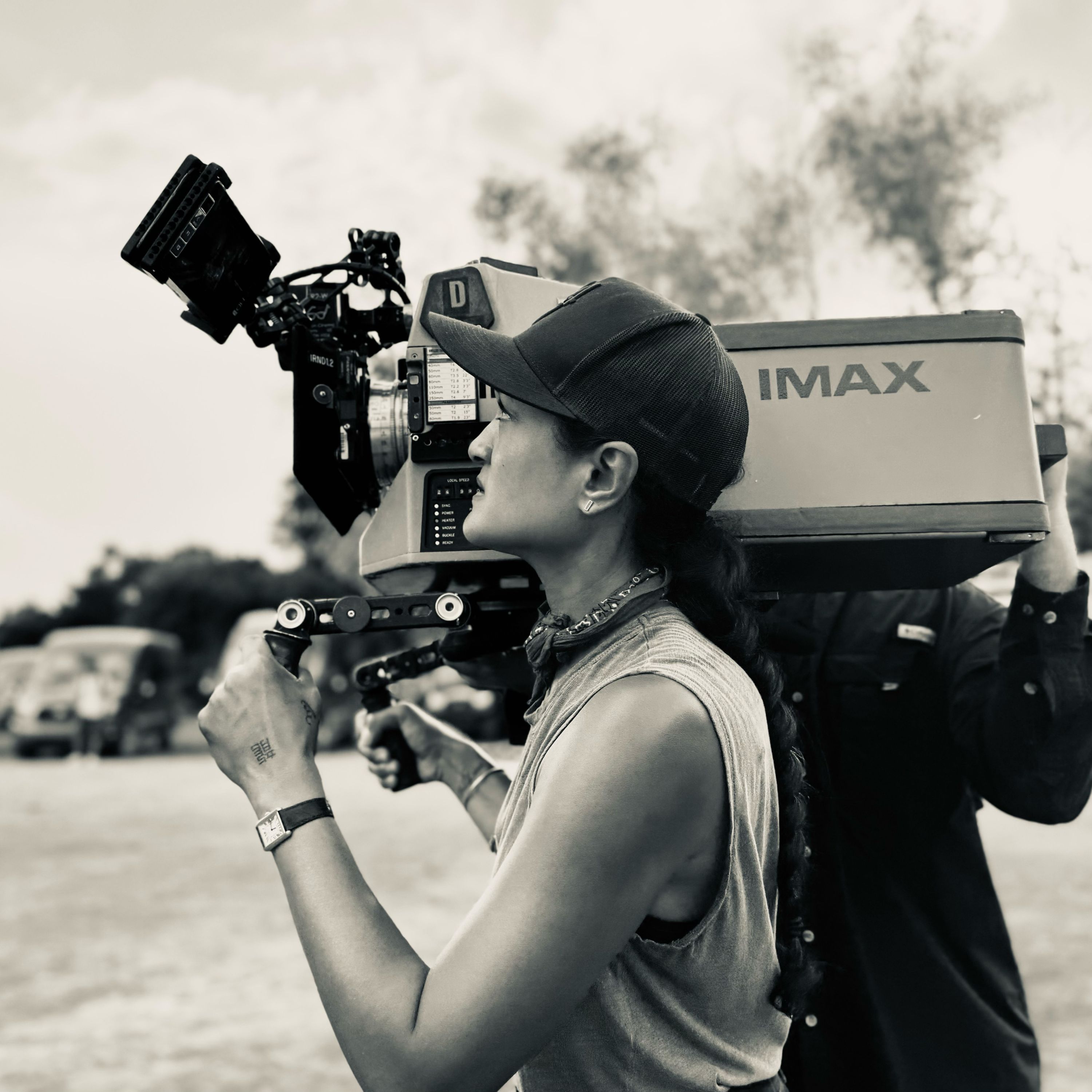
Loading summary
Transcript60 lines
- [00:07]
A
This is all of it on wnyc. I'm Alison Stewart. The film Sinners has broken records for many reasons. The movie received the most nominations for one film in Oscars history. 16 total. And then there's the film's cinematographer. Autumn Derald Arkhipa is the first woman of color to be nominated in the best cinematographer category and only the fourth woman ever. Her work shows range. She shot Ryan Coogler's Black Panther sequel Wakanda Forever capturing the spirit of a huge action movie. Her independent chops can be seen in the hauntingly beautiful film the Last Showgirl. Sinner stands out in the scope of Autumn's work because the movie was shot entirely on two large format lenses, IMAX and Ultra Panavision 70, which we'll find out what that actually means in practice. Please welcome Oscar nominated cinematographer Autumn Derald Arkapa. She is part of our big spotlighting Oscar nominated talent who work behind the camera, in this case with the camera. It's nice to meet you Autumn.
- [01:13]
B
Nice to meet you. Pleasure.
- [01:14]
A
So when Ryan first told you the idea for this film, how did he describe it to you and what was just your immediate reaction?
- [01:23]
B
Well, he actually. I didn't know what I was getting so he sent me the script and I knew it was gonna be a period piece and I knew that he wanted to shoot on film and so that's all I knew. So I, I got, he sent it to me the night before I went into principal photography on Last Showgirl and so I was in Vegas in my hotel room and he sent it to me and I read it and obviously you can imagine if you didn't know what you were about to read and you read something like that, your mind just, you know, my mind kind of blew up and I was like, damn, this is very good. Where did this come from? So since we don't live in the same town and I was about to start a movie, I wrote him a long email just with my thoughts. And then finally when that movie wrapped, we always have a phone call where he kind of goes over what it means to him and you know where the idea came from and gives me like a reference or two and we just talk about it like my most important thing is to really know what he's after and what his vision is. So he's my biggest inspiration. Really.
- [02:27]
A
That was interesting. You wrote a long email. I wondered what you would do with your thoughts initially. Do you, do you picture board them? Do you write notes to yourself? Do you refer to old movies? How do you go about sort of having a vision for what this could be. It may change, but initially.
- [02:43]
B
No, it's a good question. I think a few months ago, I went back and looked at that email. All right. Which was fun. And I might do it now after this, this talk, because I'm trying to remember what I wrote. I think it's just. It's a very honest, genuine reaction, to be honest, because this is my friend as well. Right. So, you know, ultimately, I'm just like, I'm proud of this friend, like, on you know, one side of it. And I'm like, damn, this is good. And where did this come from? And, you know, this is great writing. These are the things that popped out for me. So I'll kind of just say. And in the script, it started out with the farmhouse scene with Jack jumping into frame. That is not how the movie opened. Yes.
- [03:25]
A
That's my favorite scene. That's one of my favorite scenes in the whole thing.
- [03:28]
B
It is my second favorite scene. And so you can imagine, like, when you start reading it. And I remember I asked him later, I was like, why did you, like. What made you start out like that? And he's like, well, I wanted to grab the audience. And, you know, it's a very cinematic way to get someone involved into a world and a script. And it's. It did. It worked. And so that was. Obviously, my first comments on the email was about that scene. And by the way, that scene wasn't supposed to be shot in IMAX originally. It was supposed to be in the 5 perf Ultra Panavision 70, which is the wider aspect ratio. So he decided to turn it into IMAX later. And so it's nice to hear it's your favorite because it looks like that. Because he made that decision. So it was nice.
- [04:07]
A
It's amazing. He's dropping out of the sky at the worst possible moment for him. What's your favorite scene? If that's your second favorite scene, what's your favorite scene?
- [04:16]
B
Well, this sounds funny now because it's what opens the film. It sits. The church scene. Yeah. What they decided to open the film. Those are my two favorites. I would have to go with church first. Yeah, it's. It was just a very emotional scene. Emotional day. I like everything that went into that. Like the building of the set. That Hannah Beechler, you know, she made that from scratch. The costumes, the characters, Saul Williams, Miles Caton. Like, these performances in there are beautiful. I felt like I was at church. So special.
- [04:48]
A
We're focusing on the cinematography category today for Our Big Picture series spotlighting Oscar nominees who work behind the camera. My guest is Autumn Derald Arkapa, the Sinner's cinematographer. You said you knew Ryan Coogler before. When did you guys first meet?
- [05:06]
B
We met through. So Bradford Young is a good friend of mine. I met him really early on. I think after graduating afi. You know, one of my biggest inspirations as a dp, but also just like in life, to be honest. It just happens that he's a dp, so he's like a brother to me. He recommended me to Ryan early on when he needed a DP for Creed because Rachel Morrison, who's also a friend, was having a, a baby. And, you know, the schedule wasn't working out, so Bradford suggested me. It did not work out. I think the studio didn't think I had enough credits at the time, so we did not meet. And fast forward many years later when he was looking for a DP for Wakanda because Rachel decided to direct and schedules weren't aligning. She texted me and she said, ryan wants to talk to you. I think it would be a good fit. So she, she spoke to Ryan about me, and then we had a Zoom call. That was the first time we met on a Zoom, and the first time we met in person was in the production office.
- [06:07]
A
That's sort of wild. I like that idea of another person recommending you for a film and not just keeping it to themselves.
- [06:16]
B
Yeah, no, I, I, I've built a whole career that way. Like, I think my most important relationships are with people that were my friends that thought I would get along with someone else really well and work well with them. I think that makes for a great filmmaking team.
- [06:32]
A
All right, let's talk about the two large formats. I'm going to pretend like I kind of understand them. I sort of understand them. IMAX and Ultra Panavision 70. For those of us who aren't cinematographers, would you explain what each is and perhaps the challenges with each?
- [06:50]
B
Yeah. So at the base of it all, it's shot on 65 millimeter film, so it's all one stock. However, the stock is being put into two different camera systems. One system is the Ultra Panavision 70, which is a Panavision system, and that's using five perforations of the 65 millimeter film. It's going into a camera that's the movement is vertical and it's exposing five perforations at a time. And that's the widescreen image that you see. So most of the movie is shot with this format in a 276 aspect ratio, widescreen, anamorphic. The other system that we wrangled was the imax system. That's five perforations on 65. And that's going through the camera horizontally. Very loud camera, not a sync sound camera, gives you a taller image and you're exposing 15 perforations. So it's the first time any movies ever combined the two together. Which means, you know, we're shooting the film, we have both of those systems. We go through the script and we choose which scenes are going to be which. And it kind of goes back to what you were saying before is you can't really use it when you're doing dialogue because the camera's too loud. Right. It's a big machine that's loud. So Ryan made a decision to shoot some dialogue heavy scenes with imax. So you're doing ADR after the fact. So on set you have a guide track. It's too loud, but it makes for a better, beautiful scene.
- [08:17]
A
And.
- [08:17]
B
And now your favorite scene, because we were able to shoot this dialogue scene with this beautiful format. So that's in a nutshell, what the film is shot on.
- [08:26]
A
You said it's the first time that this has been done.
- [08:31]
B
Combine the two together.
- [08:32]
A
Yeah. Is it? Because it's so challenging.
- [08:35]
B
I mean, it's a big aspect ratio shift. And as you know, there are not many movies that choose to do that. Christopher Nolan is someone in the movies he's made where he has done that. And so that would be my biggest reference in kind of watching a movie like the Dark Knight and going to City Walk and seeing, you know, the bank scene and then it's switching to, you know, a smaller aspect ratio and. And I like that. So I think with Ryan, you know, he's taking a big leap to. To do that. And we tested it and we felt it was right for the movie. But, yeah, it's a brave choice. So, you know, when you work with a brave filmmaker, that's. That's what. Where it comes from is, is just believing in it and then it working out. Obviously it worked out.
- [09:21]
A
It makes me wonder how much of your job has to be prepped in advance if you're going to use that kind of.
- [09:27]
B
Yeah.
- [09:28]
A
That kind of planning.
- [09:30]
B
Yeah, no, there's a lot of prep. I have an amazing camera team. Amazing team in general, my whole crew. But it does. It takes a lot of logistics, exceptional craftspeople at their job. But then also, you know, in planning, Ryan and I, we, you know, we do storyboarding. For the whole film. More complex scenes. You have to previs. So, yeah, it doesn't mean that things can't change, but everybody has to be, you know, collaborating and collaborating at the highest level, but also needs to know what they're doing. And you have to be very good at your job because the format itself requires patience and respect, for sure.
- [10:07]
A
Does it leave much room for improvising?
- [10:10]
B
Yeah, it does. I think we. We come at it like that. Like, Ryan is someone who I think we always want to draw off of what's in front of us. You know, we have exceptional actors. Like, you know, if I see Michael and then, you know, he walks into a space that Hannah's built, you know, and. And I have an idea that, you know, we. We. We thought about Ryan and I in prep. But, you know, Michael wants to do something else on the day. Like, you want to capture that emotion and the light in the space, and you have to feel it. So I think we work off of that. We're very much a team that works off of, like, emotion, and, you know, that's paramount to anything. But planning is. Is what helps you organize the whole shoot. And filmmaking is difficult, so. Especially in the south in the summer.
- [10:54]
A
So I want to ask about the south in the summer because we get to see the cotton fields, and it's so bright and it's so wide, and you can almost feel the heat off the screen. When you were looking at that particular scene, could you tell me a little bit about what you wanted to accomplish with that scene?
- [11:18]
B
Oh, yeah. You mean the driving shots when they're going most of those things? Yeah. Well, unfortunately, like, in New Orleans, there is no cotton in the fields at the time. Right. So it's cane. It's a lot of cane. But the most important thing is that we're shooting in space on the roads. We have. We're doing it with a biscuit rig, which means, you know, there's. It's a kind of process trailer that has someone that drives the car is in a pod on this process trailer that's driving it. And then the actor is pretending to drive. Right. So it allows them to, like, not be on a stage pretending to drive. Like, they're pretending in a space under the sun, under that heat, as if they're looking out to cotton fields. So cotton was added later into the shot. So there's all these layers of, you know, making it what you see and making that feel like they're really driving through the cotton fields. But I think the most important thing is that we're doing it, you know, for real. Like the car is in under the sun, you know, in the actual space. But that was. That's important to me is to make sure that the driving stuff is for real. Because I hate driving stuff. When they're pretending to drive on a stage and you're seeing a. A comp of, you know, plates of stuff that doesn't match the actual lighting in the frame. But no, it was, you know, Michael's in a three piece suit, so he's very hot. Like all of them are. It's not a comfortable situation, but they're, you know, acting at the highest caliber and they're very good people. And, you know, they're kind as far as, like, when we're filmmaking, they want to make the best shot. So it was cool that everyone reacted like that and they felt like they were actually in that space.
- [12:59]
A
You know, a lot's been said about Hollywood that they don't do particularly a good job about lighting black actors. And you do. What would you like to share with other cinematographers out there about filming black actors?
- [13:17]
B
Yeah, I've talked about this a lot. I think for me, it's like, I don't just because. Well, first of all, if it's foreign to you, right, if you're not a black person or you're not a person of color, maybe your inclination is to over light something that is darker, right? Like you're afraid of underexposure. You're afraid of someone getting upset that they're not lit enough. So there's that stigma, right, for people. For me, because I am a person of color, I. And I understand different skin tones and I like the way they sit in a darker zone. I also appreciated. Bradford Young is someone who is. I'm very close with, and I appreciated the work that he did early on on film in general. And there's such a beauty to that. So I saw that, you know, that inspired me. And so, you know, moving forward, I think you have to be brave. You have to be brave with your exposures. You have to understand that people can look beautiful in the shadows and light it in a way that you're, you know, showcasing the reflective nature of something. You're not over lighting something because it's dark. Like within the darkness, there's beauty, there's different tones, there's different colors. So it's just an appreciation that I understand and, you know, I know deep down inside what that should look like. And Ryan supports me in that process because someone is gonna say something's too dark, obviously. But you have to be like, trust me, I got this. This is the way that it should look. This is where the beauty is in the darkness sometimes.
- [15:00]
A
My guest is Autumn Durrell, Arkapa the sinner cinematographer. She's nominated this year for an Academy Award. Okay, you got two Michael B. Jordans. Oh, couldn't the world have two Michael B. Jordans?
- [15:14]
B
He's the loveliest.
- [15:16]
A
Truly. I don't even know him. And I just say that I can tell from his spirit that he's a good soul.
- [15:21]
B
Exactly. His spirit. That's a great comment.
- [15:23]
A
But you do have to shoot him as two different characters. What was the most challenging part about shooting two Michael B's?
- [15:32]
B
I think for me, and I know this with Ryan as well, is like the actor's doing most of the work, right? It is not easy to. I mean, first of all, it's not easy to be in front of a camera in general. I've experienced this recently, so, you know, I feel for them. But to do that, to have one performance, to change your whole mindset, to get off, you know, to go off set, you know, maybe you have 30 minutes, obviously you're being rushed to come back as another person and perform again and do the same thing over again as a completely different person. There's so much beauty and power in that. And he did it exceptionally. So he's doing most of that. I don't want to mess that up. I want to make sure that I'm capturing that in the best way that is real. So he, you know, he's doing everything right. Like there's. He has to like the A side, the B side, and we're putting those together, we're matching lighting, we're making sure that camera movement feels of the space, it feels right. And then we're working with VFX because there is a simple way to shoot twinning, which is, you know, a locked off camera and you put the two shots together. Then there's a more complex way. I want to move the camera around or I want to put on Steadicam or now Michael's maybe fighting each other, so he's touching himself. Like there are different layers of how complex twinning can be. And it's our job to make sure that we're all on the same page. It's very tedious on set, but that at the end of the day, we're doing justice to his performance. Because at the core of all of this work, making it look real, making it look beautiful, is the performance. So I think Just really like, respecting him. And Ryan and him are very close and want to make sure that we do right by him and that it feels real to the audience because there's so many people now. They're like, oh, I thought he was two people. So we've done our job well.
- [17:23]
A
We spoke to Rafael Siddiq last week about his work on I Lied to youo. And the song is certainly featured in the film and certain aspects of the film, certain emotional aspects, supernatural aspects of the film. How did you think about your. Your positioning during that film? You're moving during that one sequence when the spirits and the skies open up.
- [17:47]
B
Yeah, I think Ryan wrote it as something that would be. You know, he wrote it as one paragraph. It was one, like, dense paragraph in the script. He put it in italics. He reminded us of that because I couldn't remember in italics. He put it like, pay attention to this. Yeah, exactly. He said it in a Q and A recently. He was like, I think that just meant, like, we need to figure this out. It was very cute. I was like, oh, yeah, it's true. But that's again with the thing. It's like, there's respect, right? Like, I read it. It's beautifully written. It was so imaginative. Like, it's a brave choice, right? You're reading a script and all of a sudden it takes a left turn, right. And it causes you to, you know, open up your mind. It's educating you. It's. It's. Making a statement is beautiful. So I like that. I like that kind of thing. I like someone being brave like that to be like, I'm going to interrupt this movie now and I'm going to go this direction and I want people to go with me and they're going to believe in me and I'm going to say something important. And so I like that. And, you know, I want to help execute that in a way that feels of the space and be, you know, collaborate with all departments. So logistically, you know, he wanted to be one fluid shot, but you can't really shoot that whole thing in one shot on the system that we're using because it can only shoot for 75 seconds. Generally you can shoot for two and a half minutes on the mag, but. But we had to cut it in half because it's too heavy for the operator to hold. So you can only hold it for 75 second loads.
- [19:14]
A
Wow.
- [19:14]
B
And so that means that you have to really plan to make sure that, like, where are the stitch points? You work with vfx. You work With Ludwig, you work with Raphael, you work with the choreographer. Sorry. And everybody has to be on board. And it's a very big team effort. So at the core of it is making sure it's. It's fluid, it feels elegant, it can work within the space. We have to work with lighting to make sure that we're, you know, lighting it in a way you can see 360. So it's a very logistical shot, but at the end of the day, you want to make sure it's a beautiful shot and it says something and means something, because he wrote it so well. You don't want to mess it up.
- [19:51]
A
Autumn, you're the first woman of color to ever be nominated for an Oscar in this category. If you win, that'll be another first. Either way, you're a first. How do you think about holding that? The first.
- [20:07]
B
I mean, I'm here, you know, I'm standing next to Ryan every day on set, and I'm just proud to be there with him telling these stories for our community, for people that look like us to go to the theater, to see themselves up there on the screen. You know, for the girls to message me and say, like, oh, now I can do this, because I see you're doing this. And that's. That's what makes that first important, right? It's not just that, you know, me as an individual, is the first to do this, but what is that first? And. And especially since it's for this film, like, it could be for a different film, but this film, most importantly. So I'm very proud of that. Whatever happens, you know, it means a lot just being able to talk to people, talk to you.
- [20:52]
A
Who was the first person who did that? Who made that impression on you?
- [20:58]
B
Well, I would say, and I've mentioned this before, Ellen Carross is a cinematographer that I admire deeply, that I'm now friends with. And I remember, like, it was yesterday, and I was looking up DPs because I had to do my homework because I didn't have anybody in the film business in my life. And I was like, okay, I like this job. What does this job mean? I was looking it up, and I started looking up who shot the movies that I appreciated the most or that I was watching that were inspiring me. I couldn't find a woman's name, so I was like, oh, damn. Like, there's not many women doing this. So, you know, slightly discouraging. And then I looked up blow, and I found her name, and I was so excited. I was like, yes, there's a woman doing it. Great. So I can do this now.
- [21:39]
A
She was amazing. I think she did the cinematography for Lee.
- [21:44]
B
Oh, of course. And directed.
- [21:46]
A
Yes. Right. Kate Winslick, who played.
- [21:48]
B
She had a cinematographer, but she is a director. She directs now and still shoots sometimes with her constant collaborators. But yeah, she directed that.
- [21:58]
A
And you're really big into photography.
- [22:01]
B
Yes.
- [22:02]
A
Who do you love?
- [22:04]
B
Gordon Parks. Yeah, I mean, it's like Helen Levitt. These are core, you know, people when I was studying art history at LMU that, you know, I think it was a lot of social documentary photography, to be honest, which is actually at the root of the reference Ryan gave me because he gave me something, you know, Eudora Welty was a reference and just humanity being captured in one image, you know, and having that person travel around and look at, you know, everything around them. I really enjoy that stuff because that's what we're doing. We're playing make believe. So I'm trying to create a real world based off of, you know, something that happened before my time. And that's why photography, I think is so beautiful, because it's my job to make the audience feel like they're back in the 30s with Michael and, you know,
- [22:51]
A
where were you when you found out that you'd won that you got an Oscar nomination?
- [22:55]
B
I was at home actually with my husband, my son. I mean, it came out, you know, we were on your time, right. Because it was 5am my time. So I had to get up early and watch it. I was just sitting there and I was watching the feed and. And then it kept happening. Right. I was like, oh, my friend, my friend. And then 16. So it was pretty cool.
- [23:14]
A
That is pretty cool. My guest has been Autumn Derald Arkapa. She is the cinematographer for Sinners, the Oscar nominated cinematographer. Thanks for being with us. We really appreciate it.
- [23:26]
B
Oh, thank you, Alison. You're lovely. No problem.
- [23:29]
C
Finding ways to be financially savvy is a smart move. And knowing you could be saving money for the things you really want, like that dream home or new ride is a great feeling. That's why the State Farm personal price plan can help you save when you choose to bundle home and auto bundling. Just another way to save with the personal price plan. Prices are based on rating plans that vary by state. Coverage options are selected by the customer. Availability, amount of discounts and savings and eligibility vary by state.
- [23:58]
D
Try angel stuff for your tushy. It's made by Angels, Soft and strong. Budget friendly. The choice is cheap sample. Pick up a pack today. Angel Soft, Soft and strong.