Loading summary
Transcript112 lines
- [00:00]
Progressive Insurance Announcer
All of it is supported by Progressive Insurance. Do you ever think about switching insurance companies to see if you could save some cash? Progressive makes it easy to see if you could save when you bundle your home and auto policies. Try it@progressive.com Progressive Casualty Insurance Company and affiliates. Potential savings will vary. Not available in all states.
- [00:21]
Instagram Teen Accounts Announcer
Instagram Teen Accounts have built in protections for who can contact teens and what they see. Learn more about teen accounts@instagram.com teenaccounts.
- [00:36]
Venmo Debit Card Announcer
Get in the game with the college branded Venmo debit card. Ref your team with every tap and earn up to 5% cash back with Venmo Stash, a new rewards program from Venmo. No monthly fee, no minimum balance, just school pride and spending power. Get in the game and sign up for the Venmo debit card@venmo.com collegecard the Venmo MasterCard is issued by the Bancorp Bank. NA Select Schools available Venmo Stash terms and exclusions apply at Venmo me stash terms max $100 cash back per month.
- [01:14]
Alison Stewart
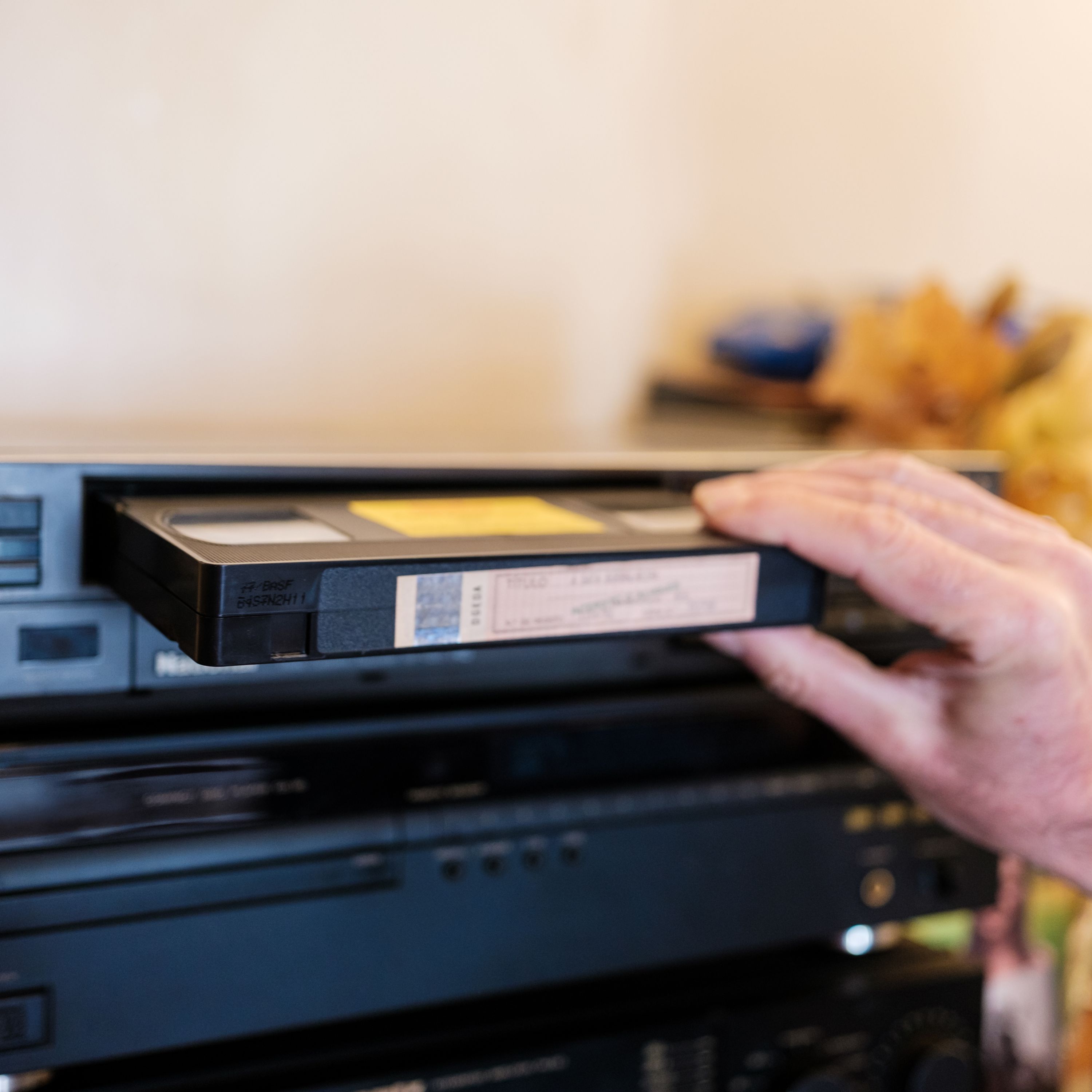
This is all of it on WNYC. I'm Alison Stewart. It's been 50 years since VHS was first introduced by the Japanese company jvc. Vhs, which stands for video home System, gave people the ability to watch movies on cassette tape at own abodes. It transformed the entertainment industry. People had more control over what they wanted to watch when they wanted to watch it. Video stars ruled our Friday nights. Kim's Anybody? Blockbuster Video, a new collection from the Criterion Channel called VHS Forever celebrates the history of this format. Which movies with movies that feature and responded to the VHS movement. Criterion curator Clyde Foley is back here with me. It's always good to see you, Clyde.
- [02:00]
Clyde Foley
It's great to see you, Allison. And I've never been more excited excited about VHS than from your wonderful intro. Let's go.
- [02:06]
Alison Stewart
I am so excited. Hey listeners, do you have fond memories of vhs? Can you think of any films with great VHS moments? Someone watching a VS8 tape, a VHS tape, or someone working at a video store? Call or text us now. 2124-3396-9221-2433. WNYC VHS. I can't believe it launched 50 years ago. How did it change the way movies were consumed?
- [02:34]
Clyde Foley
Well, you know, this was the beginning of movies as a commodity. This is the beginning of movies as like an object that you can hold, right? Because before people were seeing movies in movie theaters or on television, and this was kind of the first time that you could start collecting them or you can go into a store and choosing what you wanted to watch. So it was the beginning of just a whole new way of watching movies.
- [03:02]
Host/Interviewer
If you're talking about movies about vhs, you have to start with Clerks, featuring Kevin Smith's breakthrough comedy about two store clerks, one of whom works at a video store. Now, Kevin Smith's kind of a household name. But at the time, who was Kevin Smith and what was he trying to achieve with this film?
- [03:19]
Clyde Foley
Well, Kevin Smith was, at this point, I think he's 21 or 22. He was a clerk in a convenience store in Monmouth County, New Jersey. No, it's interesting. You bring up Kevin Smith as the sort of the brand. Right. We're very familiar with this Kevin Smith now. But Kevin Smith then was just a guy who, I believe the story is he had just watched Richard Linklater, Slacker at the Angelica and thought, this is a movie. I could do this. And so he did. And this is a movie that I really loved when I was a teenager. I think this is a very big movie for people of a certain age, especially if you're like a young man at this point, too, especially. And then I kind of stepped back and was less interested in the films of Kevin Smith. And then in recent years, while doing research for the series, doing research for a film that I had worked on, I came back around to Clerks, and I thought, you know what? No, I love this.
- [04:22]
Host/Interviewer
Again, let's listen to a clip from Clerks. Randall, who works at the video store, pretends to be a customer and gets into a conversation with an actual customer who's waiting for him to open the store. This is Clerks.
- [04:37]
Caller/Participant
Dye ain't here yet.
- [04:38]
Host/Interviewer
You're kidding.
- [04:39]
Caller/Participant
It's almost 11:30.
- [04:40]
Instagram Teen Accounts Announcer
I know.
- [04:40]
Caller/Participant
I've been here since 11.
- [04:42]
Man, I hate it when I can't rent videos.
- [04:45]
I would have went to Big Choice, but the tape I want is right there on that wall. Really?
- [04:48]
Clyde Foley
Which one?
- [04:49]
Caller/Participant
Dental School.
- [04:50]
You came for that, too? That's the movie I came for.
- [04:53]
I have first dibs.
- [04:54]
Says who?
- [04:55]
Says me. I've been here for half an hour. I call that first dibs.
- [04:58]
Ain't gonna happen, my friend. I'm getting that movie.
- [05:00]
Like hell you are.
- [05:02]
I bet you 20 bucks you don't get to rent that tape.
- [05:05]
20 bucks?
- [05:05]
20 bucks.
- [05:06]
All right, you're on.
- [05:11]
Host/Interviewer
What does Clerks get right about video store culture?
- [05:17]
Clyde Foley
Gee, good question. I don't know. A certain form of obnoxiousness? I don't know. Being an angry young? Being the lord of your own domain via all this Knowledge that you've accumulated that is effectively worthless and not applicable in the real world at all. But I don't. You know what it really gets right is Abel Ferrara, the director, who I believe he called Clerks a working class masterpiece. And I think that's correct. I think when I was rewatching it recently, I was kind of shocked at a movie that this sort of cheap and raw and grimy looking and abrasive like, became like a sensation. I think that's pretty co. Let's talk
- [05:57]
Host/Interviewer
to Steven, who's calling in from Montclair. Hey Stephen, thanks for making the time to call.
- [06:01]
Caller/Participant
All of it.
- [06:03]
Hey, thanks for having me on. So I told your screener I made a huge mistake about five years ago. I had boxes and boxes, probably 200 video cassettes that I had collected over 20 years. I mean, and really good stuff too. Foreign films, like classics, all kinds of stuff. And I just was toting it from place to place and I'm like, what am I doing? And I just chucked it all in the dumpster. And now I have a 14 year old son who is obsessed with retro technology. And he's like, why did you do that? I think it's like the Stranger Things phenomenon. He's obsessed with the 80s. He's like, I can't find a video, you know, a VCR that works. Where am I going to find it? It's like just, you know, sifting through ebay and stuff and I'm like, I had a treasure trove I could have given you. Anyway, I lost Legacy.
- [06:52]
Host/Interviewer
Ah, Daniel, so sorry to hear it. Let's talk to. Sorry, Stephen, let's talk to Daniel who's in Brooklyn. Hi Daniel, thanks for calling all of it.
- [07:01]
Caller/Participant
Hey, good afternoon guys. I, as I was telling the person there, I can remember being around 16 years old and when me and my friends who used to watch anime like Dragon Ball Z, but the only way to get our hands on it at that time was we had to travel about an hour into Manhattan, all the way to this special video store on 23rd street and 6th Avenue, which not only had that, but other, maybe other types of movies. But this is the only place we could find these videos. We purchased them. We didn't even know what episodes we were getting. It was always in subtitled and it was just a random thing, but this is the only way we can get it. And we love to travel out there and just that was a little weekly routine of hoping they had new episodes to watch.
- [07:46]
Host/Interviewer
Thanks for calling in. This says regarding vhs, when my Whole Family was banned from the video store on Montague street for repeatedly failing to rewind the tape.
- [07:57]
Clyde Foley
Brutal. Absolutely savage. I'm sorry.
- [08:00]
Host/Interviewer
I wanted to ask you, Clyde, by the way, we're speaking to Clyde Foley about a new collection at the Criterion channel, VHS Forever. If you want to call with your VHS Memories, our numbers 212-433-9692. I wanted to put the document Video Heaven, which was directed by Alex Ross Perry, and you edited it. You talked about this on the show in the only documentary featured in the collection. Why does it make sense with all of these films to have it be a part of it?
- [08:29]
Clyde Foley
Well, it made sense. I think there are two ways it makes sense. One is that it makes sense as this is a film that is about the history of video stores as told through their depictions in film and television. So in a way, this thing, it's, you know, it's not the whole story of video stores, but it's the story of their representations. And so it made sense to include it because it's commenting on the way all these films, all the video stories have been depicted. So there's the larger sense there. But the other way it makes sense is that I spent five years editing this movie. I was living in the world of video stores far longer than anyone really should. And a lot of the films in the collection are films that were featured in Video Heaven. And I think that they're some of the best films in Video Heaven. And so I thought that it would be nice to have a collection that showed the good films in this film, the Watermelon Woman. Tell us about this film, the Watermelon Woman, Cheryl Dunye's film from, I believe, 1996, that she wrote and directed. It is a film, you know, it's in the post clerk's vein. It is a low budget independent film that Cheryl Dunye wrote, directed and starred in, in which she is a clerk at a video store. And it is, you know, it's a fun comedy. It's a key text of queer filmmaking in the 90s. And so it is a movie that's a comedy about the video store, but it is also its own act of archiving work in that Cheryl Dunye plays a clerk who's obsessed with this actress from the early black film. And she's making a film about this actress, but this is a fictional actress that she made up. So in a way that she's making this history of women in black film and navigating through that.
- [10:42]
Host/Interviewer
Here's a clip from the Watermelon woman, Cheryl, the name of the character who works at the store, is talking to
- [10:48]
Progressive Insurance Announcer
one of her customers.
- [10:51]
Caller/Participant
You know, it's two for one Monday through Thursday.
- [10:54]
Really?
- [10:55]
Yeah.
- [10:57]
I'm having a hard time deciding.
- [10:58]
Host/Interviewer
What do you think?
- [10:58]
Caller/Participant
Cleopatra Jones, Jason's lyric or personal best?
- [11:03]
Hmm.
- [11:04]
Well, Cleopatra Jones is really fun. Why don't you do Cleopatra Jones and Carrie? I think the two go really well together.
- [11:13]
I know, but Carrie? I hate Sissy SpaceX. She's all weird and pale and thin and anorexic in this movie. I kind of like my girls with meat on their bones. You know what I mean? Anyway, I just saw it.
- [11:24]
Well, there's always some sci fi, like aliens. Or how about Repulsion with Catherine Deneuve? She goes nuts in her apartment one night.
- [11:35]
I just moved into a new apartment. I don't think I need that.
- [11:38]
Well, help yourself. It's two for one.
- [11:42]
Okay. Thanks for your suggestions.
- [11:43]
Instagram Teen Accounts Announcer
You're welcome.
- [11:45]
Host/Interviewer
You know, there are so many films that video stores show up a lot in these films.
- [11:51]
Alison Stewart
Why do you think so many filmmakers
- [11:53]
Host/Interviewer
were interested in depicting this on screen?
- [11:55]
Clyde Foley
I think it was just a part of our everyday life. It was one of those things where you go back to Seinfeld and how many scenes in Seinfeld are there of Jerry and George and Lena Kramer at the video store? This was just something that everyone did for decades, and then everyone stopped doing this. And so that these scenes sort of weren't applicable in movies anymore unless they were period pieces.
- [12:15]
Host/Interviewer
Let's talk to Tomas calling from lower Manhattan. Hi, Tomas, thanks for calling, all of it.
- [12:21]
Caller/Participant
Thank you.
- [12:22]
I just wanted to say that about 25 years ago, when I was doing my master's in Korea, I was working for LG Electronics, and they were one of the world's last manufacturer videotape. And I can remember translating and then helping them write letters defending and upholding the vibrancy of the videotape market in Europe, Middle east and Asia, Africa rather. And it was just. It was so sad to see because I remember then about a year and a half after that, all the video stores closing and they would sell the tapes each day. You'd walk by and each. Each day it would be like 2 for 10, and then like 3 for 10, and then 3 for 5. And so when I. When I moved back, I think I came back with about three or five big boxes of all these, you know, crazy different various videos.
- [13:34]
Clyde Foley
Anyway, thank you.
- [13:36]
Host/Interviewer
Thank you. This says, shout out to Allen's Alley, Chelsea's greatest video rental. That was on 9th Avenue. Between 22nd and 23rd. I remember that he carried both VHS and DVDs, sold Fiesta Wear and had a learned salty staff who could make recommendations based on directors, actors or subjects. And a snap. It was our own Kim's Long live. The earliest film in the Criterion Collection is 1983's Videodrome by David Cronenberg. Why does it make sense to start there?
- [14:07]
Clyde Foley
Well, it's funny. I mean, it's the earliest film in the collection, but it's also kind of the film that lays out almost every single applicable theme for movies about videotape going forward. You know, there's the fascination with this new technology. There's the way that the new technology is this agent of chaos, and it introduces danger and evil and sex into people's lives. But it's just really funny to me how, like 1983, or whenever it is, like, David Cronenberg just got it. He knew.
- [14:37]
Host/Interviewer
It's sort of interesting, in a lot of these films, VHS is depicted as sort of threatening.
- [14:43]
Clyde Foley
Yeah, it is, isn't it? Not just threatening, but it's something that people obsess over, too. And I think that's maybe also new to the technology, is that this is something where people could just watch stuff over and over again. But also, I think one thing worth pointing out about VHS is that it initially was sold as blank tapes. Like movies on tape didn't show up until a little later. The VCR was initially an object for recording television and being able to record things when you weren't home. So in addition to. It's something that it brings this sort of chaos in your life. It's something where you can record things, too.
- [15:28]
Host/Interviewer
Okay, let's take a listen to the Ring. This is one of these movies about the VHS being a little bit violent. Let's play a clip from that. Opens the film, and it sets up what it's about.
- [15:41]
Instagram Teen Accounts Announcer
Have you heard about this videotape that kills you when you watch it?
- [15:45]
Clyde Foley
What kind of tape?
- [15:46]
Instagram Teen Accounts Announcer
A tape. A regular tape. People run it. I don't know. You start to play it, and it's like somebody's nightmare. Then suddenly this woman comes on smiling at you, right? Seeing you through the screen. And as soon as it's over, your phone rings. Someone knows you've watched it, and what they say is, you will die in seven days. And exactly seven days later. Who told you that? Somebody from Rivera. Who told you, what's your problem? I've watched it.
- [16:30]
Host/Interviewer
Dun, dun, dun.
- [16:32]
Alison Stewart
What is the strength of this movie,
- [16:33]
Host/Interviewer
which is a remake, by the way?
- [16:35]
Clyde Foley
Yeah, it's a remake and it's a good remake. The strength is that, I don't know, I think the strength is Naomi Watts, actually. I think that this was maybe either the first or like the second major movie that she did right after Mulholland Drive. So I remember watching Mulholland Drive and then this came out. I was like, I gotta see this too. She's great in it.
- [16:52]
Caller/Participant
It.
- [16:53]
Clyde Foley
But it's, it set the tone for horror movies for about the next decade, I think, because this is a remake of a Japanese film. And the Japanese in the late 90s were doing something different than what Americans were doing at that time. And so it became this whole new model of a type of horror movie to make. And it paved the way for many other films of this type.
- [17:14]
Alison Stewart
This says my favorite VHS description in American Psycho. I need to return some videotapes. A classic and a repeated line. We lost David lynch just over a year ago and this collection includes his film Lost Highway. How does lynch use VHS smartly in this film?
- [17:32]
Clyde Foley
It's an object that creates nightmares. You know, the thing about Lost highway is for anyone who has not seen the film, it starts out with Bill Pullman and Patricia Arquette as a couple who start receiving these mysterious videotapes of someone filming, filming their home. And then it becomes even more intrusive. And I think that one thing that lynch utilizes really well is the texture of VHS and camcorder stuff because it's, you know, it's a more low res image than film. It's grimy. And the way it looks in the movie, like the lines are really apparent and it's like the images in that are sort of prototypical image to what he later does in Inland Empire, which he shoots in standard definition dv. And it's very smeared and videoy, but it's its own particular look.
- [18:25]
Alison Stewart
Let's try to get one more call in here. Judah from Manhattan. Judah, you're on the air.
- [18:30]
Caller/Participant
Hey, how's it going? How you doing? I. I want to say thanks for having this episode. And one thing I want to couple things I want to give a shout out to is I think the loss of the video store is a big deal because to me it's like a loss of a good bookstore or any bookstore. And because with the video store you were able to one get recommendations maybe from people who work there. And also it wasn't just new releases. It was, you know, films of all genres and all decades. And I think that's a big loss. And so many people, you know, they're. They're just seeing what's new that week, and then. And then it's over. And I think ultimately it even hurts the film business.
- [19:16]
Alison Stewart
Thank you so much for calling in. Is there anything else in the collection that you think we should know about? We've got about a minute. You can shout out your favorites.
- [19:23]
Clyde Foley
Oh, this is the Speed round here. I'm very partial to the 80s John Frankenheimer film 52 Pickup, which in a way almost has, like, the least to do with videotape of any of these films. I just think it's kind of an underseen movie that's pretty great where Roy Scheider starts being blackmailed with videotapes of this affair that he's having. And it's just an exceedingly nasty neo noir. And so, I don't know, I think if you're in the mood for that sort of thing, it's pretty great.
- [19:56]
Host/Interviewer
Is there anything else?
- [19:58]
Clyde Foley
Oh, gee. The Speed Round keeps going. The big hit starring Mark Wahlberg from Hong Kong director Kirk Wong. In the mid to late 90s, so much of the great filmmaking talent from Hong Kong was coming to America, like John Woo and Choi Hark. And this was a director who's had a pretty interesting career and made a movie that is just really funny and obnoxious and really, it has the most beautiful video store ever made for a film, and they destroy it. So check it out.
- [20:33]
Alison Stewart
You made it to a minute. Clyde Foley. He's a favorite of ours. You check out the Criterion Collection. It's titled VHS Forever. Thanks for being with us.
- [20:43]
Clyde Foley
Thanks for having me.
- [20:44]
Alison Stewart
I'm Alison Stewart. I appreciate you listening and I appreciate you.
- [20:51]
Instagram Teen Accounts Announcer
Instagram teen accounts come with automatic protections for who can contact teens and the content they can see. Learn more about teen accounts@instagram.com teenaccounts
- [21:06]
Venmo Debit Card Announcer
how
- [21:06]
Caller/Participant
do you cash back with Chase Freedom Unlimited?
- [21:09]
Instagram Teen Accounts Announcer
What do you want for dinner?
- [21:10]
Caller/Participant
Whatever.
- [21:10]
Clyde Foley
I'm easy.
- [21:11]
Caller/Participant
How about Greek?
- [21:13]
Clyde Foley
Had it for lunch. Mexican? Yes, but not tonight.
- [21:16]
Progressive Insurance Announcer
Chinese pass. Japanese?
- [21:18]
Clyde Foley
Nah.
- [21:18]
Instagram Teen Accounts Announcer
Italian?
- [21:19]
Clyde Foley
Eh.
- [21:20]
Progressive Insurance Announcer
Indian?
- [21:21]
Caller/Participant
Indian?
- [21:22]
Host/Interviewer
How about masala place?
- [21:23]
Caller/Participant
Um, Whatever.
- [21:25]
Clyde Foley
I'm easy.
- [21:26]
Host/Interviewer
Cash back on small victories.
- [21:27]
Clyde Foley
Earn 3% cash back on dining with Chase Freedom Unlimited.
- [21:30]
Caller/Participant
Chase.
- [21:31]
Clyde Foley
Make more of what's yours.
- [21:32]
Caller/Participant
Restrictions and limitations apply.
- [21:33]
Venmo Debit Card Announcer
Cards are issued by JP Morgan Chase Bank, NA Member ftic.