← All Of It with Alison Stewart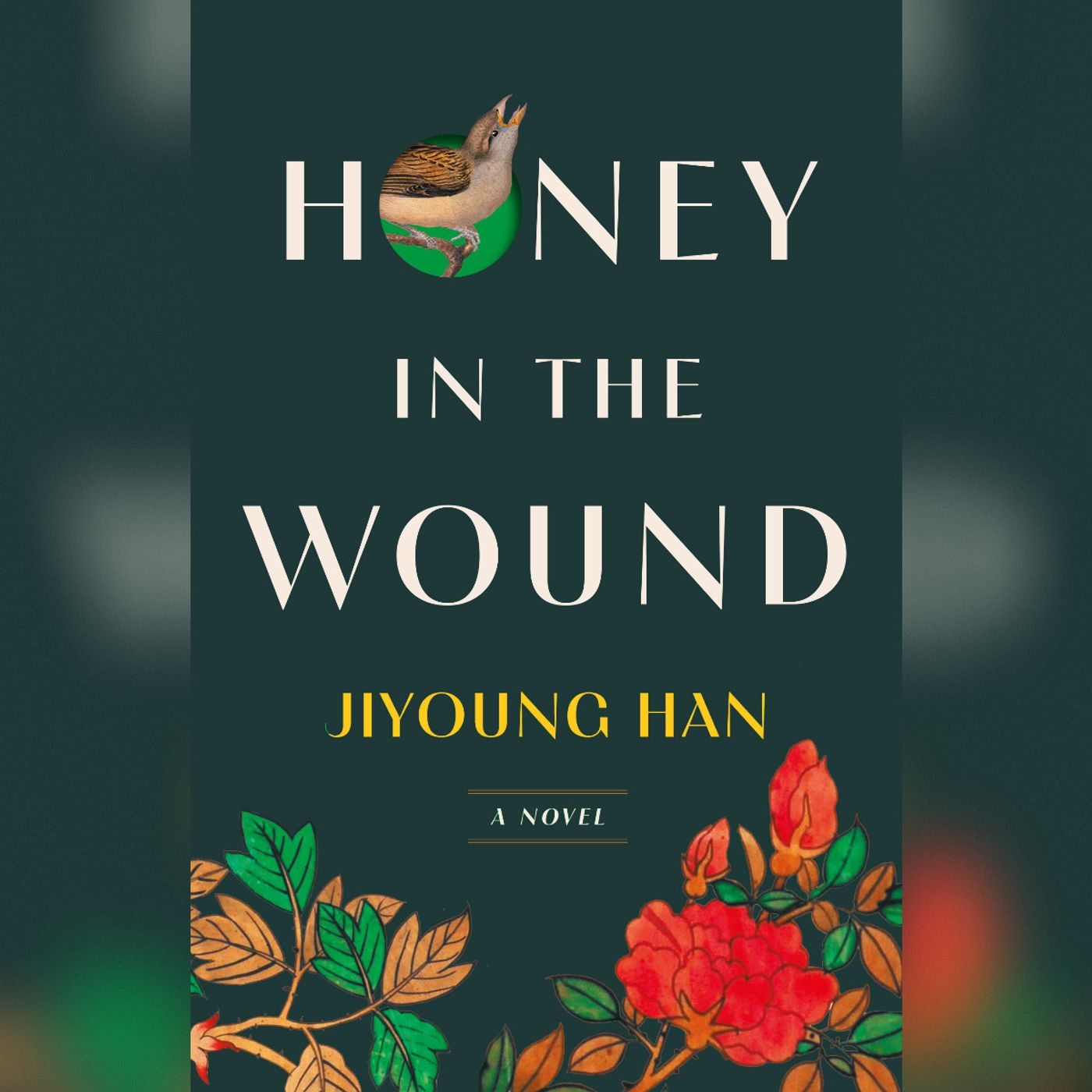
Loading summary
Transcript54 lines
- [00:00]
Doug
Neighborhood.
- [00:02]
Liberty Mutual Spokesperson
And Doug, there's nowhere I wouldn't go to help someone customize and save on car insurance with Liberty Mutual, even if it means sitting front row at a comedy show.
- [00:12]
Doug
Hey, everyone, check out this guy and his bird. What is this, your first date?
- [00:15]
Liberty Mutual Spokesperson
Oh, no. We help people customize and save on car insurance with Liberty Mutual together. We're married. Me to a human, him to a bird.
- [00:22]
Doug
Yeah, the bird looks out of your league.
- [00:24]
Liberty Mutual Spokesperson
Anyways, get a'@libertymutual.com or with your local agent.
- [00:27]
Jiang Han
Liberty. Liberty.
- [00:28]
Doug
Liberty. Liberty.
- [00:39]
Alison Stewart
This is all of it on wnyc. I'm Alison Stewart. This hour we're interviewing debut authors as part of our coverage for AIP Heritage Month. Aaipi, aapi. Got it. AAPI Heritage Month. We turn next to a story inspired by the present perseverance of Korean women. During the Japanese occupation in the 1930s and 40s, the Japanese military occupied Korea and forced thousands of women into sexual slavery. They were known as comfort women. As of April, there were only five survivors still alive in Korea. Arthur Jeong Han was born in Korea but raised in the Midwest. And in 2023, when she learned about the final survivors, Jung was inspired to write a generational story of Korean women resisting the occupation and finding joy amidst the suffering and despair. The book is called Honey in the Wound. It's out now. Author Jiang Han is here to talk more about her book. Welcome to wnyc.
- [01:38]
Jiang Han
Thank you so much for having me.
- [01:39]
Alison Stewart
Alison Jiang, what was your level of understanding of the Japanese occupation of Korea before you started this book?
- [01:46]
Jiang Han
Yes, so that's a great question. As you mentioned, I grew up in the Midwest. And while I am very grateful for the quality of education that I had in the Midwest going through the public education system, I think Asia was maybe mentioned three times and it was all in the context of American imperialism. So first was the the atomic bombs dropped on Japan and Pearl harbor, so World War II context. Second was Korean War. And third was the Vietnam War. So I don't think I actually knew that Korea was colonized by Japan until I was in my late teens and had entered college. And of course, as soon as I discovered this history, I dove into as much self education that I could. And by the time, of course, 2023 rolled around many, many years later, I had a pretty good understanding of this history. But as you mentioned, when I saw that there were only a handful, literally, I could count the number of survivors on the fingers in my hand. There were nine. At the time that I started writing this book, I was so Possessed with grief and rage. I wanted more people to know about this history and to fight for justice in the way that these grandmothers are
- [03:10]
Interviewer/Host Assistant
continuing to fight for justice.
- [03:12]
Alison Stewart
This story is told through multiple generations of Korean women. Why did you want to make this book a generational tale as opposed to just following one character?
- [03:22]
Jiang Han
Yeah, that is a very intentional choice in my part, in large part because history doesn't happen in a single moment or in a vacuum. So while the initial catalyst for this novel was the comfort woman issue, I knew I wouldn't be able to really explore and examine the comfort woman system without first understanding the colonial context from which such a system could even arise. The events itself during the World War II and the Second Sino Japanese War, and of course the political fallout and emotional trauma that occurred even into modern and contemporary society today.
- [04:10]
Interviewer/Host
The book, you open it up, it says chapter one, unnamed mountain in the empire of Korea, 1902.
- [04:17]
Alison Stewart
It begins with. With the birth of twins. First of all, how did you want readers to experience the birth?
- [04:25]
Jiang Han
I think that was just more me thinking about the genre of magical realism, which is one of my favorite traditions in storytelling. I know it started off in Latin America and has since inspired so many other authors all over the world to incorporate these sort of fantastical elements. And so much of it, it does start with birth and. Or death or the sort of zoomed out look at life. And in examining this birth in particular in this very rural sort of remote mountain, I wanted to evoke a sense of this almost untouched, pre annexed Korea.
- [05:14]
Interviewer/Host
The mountain is inhabited by your characters. They often go down to the village to sell their goods.
- [05:20]
Alison Stewart
What did you want to explore about
- [05:22]
Interviewer/Host
the dynamics between the mountain people and the village people?
- [05:26]
Jiang Han
Yeah, I wanted to showcase these very sort of almost hermit like family members that are deliberately removing themselves from society. So it takes a little bit longer for the effects of Japanese encroachment to reach reach them. They are a little bit closer to nature and the earth and almost tap into this magical folkloric relationship that humans had with, with nature when they were a little bit more one with nature compared to the many. The the chaos of modernization, of cities, of social pressures. And in starting with this palette, it enabled me to demonstrate just exactly sort
- [06:20]
Interviewer/Host Assistant
of the step by step process of
- [06:22]
Jiang Han
what it looked like to be tainted by this foreign encroachment, by this colonial violence.
- [06:29]
Interviewer/Host
My guest is Jiang Han. Her new novel is called Honey in the Womb. We're interviewing her as part of our debut author series as part of our AAPI Heritage Month coverage. Let's Talk about a little girl. Her name is Young Ja. Did I pronounce that correctly?
- [06:45]
Jiang Han
You did.
- [06:45]
Alison Stewart
Okay.
- [06:46]
Interviewer/Host
She goes on quite a journey and she experiences a lot of loss and grief. How would you describe the qualities you want Young Ja to have and how you wanted her to come across on the page?
- [06:58]
Interviewer/Host Assistant
Yeah. So there are multiple dimensions to Young Ja. So even starting with her name, Young
- [07:03]
Jiang Han
Ja is a very common Korean girl's name among women born in that era.
- [07:11]
Interviewer/Host Assistant
So in the 20s and 30s.
- [07:13]
Jiang Han
And in a sense, I wanted her to be the sort of every woman to point to the fact that these events could have happened to any Korean woman that was alive at this time. And she experiences all sorts of difficulties from, you know, obviously, sexual violence, which many women were vulnerable to at that time and continue to be today. But also she was trafficked for her labor. She was forced to go to places she didn't necessarily consent to go to. And she was forced to pull on a lot of deep, quiet strengths and powers within her in order to not just survive, but resist the constant flood of pressures or oppression that was forced on her. And so I really wanted this character to be someone she's not perfect. She's not, you know, a plucky, courageous, heroic type archetype. But there is still a lot of strength in her resilience, in her resourcefulness, in her ability to still connect with people and find belonging, even when it seems like all is lost.
- [08:38]
Interviewer/Host
You mentioned earlier that you like magical realism, and the story has magical details in it without giving too much away. It involves one character becoming sort of a tiger and watching over her family. Why did you choose a tiger?
- [08:55]
Jiang Han
Well, tigers are very deeply tied to the Korean national identity. So tigers actually used to roam free in the Korean peninsula, and it was in the 1920s that they were essentially hunted to extinction. They migrated pretty far north up into Russia, so also out of China and into Russia. And as a result of the tigers looming large in the Korean wilderness, they are a big component of our folklore, of our mythology, our Korea's founding mythology involves a tiger. And some even say that the peninsula of Korea is shaped like a tiger
- [09:41]
Interviewer/Host Assistant
if you squint and look closely.
- [09:44]
Jiang Han
And so I didn't feel like I could get away with writing this story that starts off in a pre colonial Korea without incorporating the imagery of a tiger.
- [09:55]
Interviewer/Host
We're talking about a novel called Honey in the Wound. It's by Jian Han. I'd love for you to read a little bit of your book. Could you set up what you're going to read? For us?
- [10:05]
Jiang Han
Yeah, sure. So this is going to be sort of the end of chapter six. On page 50, I'll read about a character who is a mother and a very concerned citizen who is organizing with other women in the town that she typically frequents.
- [10:29]
Interviewer/Host Assistant
Like so many across the country, worn down by the subjugation of foreign rule, these women did what they could to engage in their own acts of resistance. With Chongsun's help, they gave decoy tips to soldiers who were sniffing around too close to a dissident group. They reallocated food to families that had been forced to surrender their harvest. They sewed writings on Korean liberation into the lining of podegi baby wraps. The authorities would never suspect old ladies carrying their grandchildren to be distributors of anti Japanese literature. When it became too risky to conduct such affairs in town, Jeong soon led the women into our mountain forest for tea. For years, they schemed to help their neighbors and protect their families, evading the notice of the police. For years, they supported one another through a thousand such little acts, quashing the fears that would have paralyzed them in isolation. While they took very seriously their duties to their community, the women also looked forward to their congregation simply for the pleasure of one another's company. Their camaraderie brought out in them certain qualities that they had not always recognized within themselves. The women were delighted to discover their own daring. The oldest among them, the rice cake shop granny, once mixed dog droppings into her specialty red bean rice cakes and sent them to the Cheongju police chief as tribute. If I'm honest, I was so nervous at being caught, I shed a layer of skin just wringing my hands, she said. But then that son of a bitch came to my shop and demanded that I prepare the same rice cakes for him again. So I make sure to deliver the exact recipe every Monday morning to the station. Chungsun laughed so hard at this story that she tumbled back into a screen door and broke its thin wooden panes. Their capacity to experience joy, no matter how fleeting, was a sign of the inextinguishable spirit of their people, something they swore would never be taken from them.
- [12:26]
Interviewer/Host
That was Jiang Han reading from her new novel, Honey in the Wound. So we're not. We're going to leave the story there because we don't want to give away too much. But I just want to ask you a little bit about your writing now. Now that you've written a debut novel, what lessons have you learned that it takes to write a story complete from beginning to end?
- [12:47]
Jiang Han
Wow, that is hard And I don't always feel like the most qualified person to speak on this. And it's not, you know, humility or imposter syndrome or anything like that. It's literally that I had not written anything or anything like a story or fiction, or had no aspirations to be a writer whatsoever. I hadn't written a short story since maybe I was a teenager. Wow, 18. But because, as you mentioned earlier, I was possessed with this rage and this deep urgency to get the story out and get more people engaged with the issue of comfort women. I sat down and this just kind of poured out of me. And I think for me and my very unique personal experience, it was that
- [13:39]
Interviewer/Host Assistant
call to action that existed outside of myself.
- [13:42]
Jiang Han
This urgency and this need for more people to know about these things, that's really what kept me in the seat to, you know, isolate myself and hallucinate for many hours in front of my computer by myself, making things up so that these themes and this history could. Could come across in a way that was legible for other people.
- [14:07]
Alison Stewart
Do you think you have another book in you?
- [14:09]
Jiang Han
I like to think so. I don't know if it'll come out in the exact same expedited way that this one did, but I did find that writing was a very joyful, very satisfying experience. There's really something to having an idea just appear in your head out of nowhere. It's seems a little woo woo and magical, but sometimes I feel like I can't even take credit for these ideas because they just kind of pop up in your head without any warning. But then there's a real sort of puzzle solving quality to making sure that the sequence of words in a sentence really do match the vision and idea that you have in your head. That is half feeling as much as it is sort of concrete thoughts. And that experience of feeling like you finally crafted the perfect sentence is. It's such a high.
- [15:10]
Alison Stewart
The name of the book is Honey in the Wound. It is the debut novel from Jiang Han. Thank you so much for joining us.
- [15:19]
Jiang Han
Thank you very much for having me, Allison.
- [15:23]
Liberty Mutual Spokesperson
Then, Doug. There's nowhere I wouldn't go to help someone customize and save on car insurance with Liberty Mutual. Even if it means sitting front row at a comedy show.
- [15:33]
Doug
Hey, everyone, check out this guy and his bird. What is this, your first date?
- [15:36]
Liberty Mutual Spokesperson
Oh, no. We help people customize and save on car insurance with Liberty Mutual together. We're married. Me to a human, him to a bird.
- [15:43]
Doug
Yeah, the bird looks out of your league.
- [15:44]
Liberty Mutual Spokesperson
Anyways, get a quote@libertymutual.com or with your local agent.
- [15:48]
Jiang Han
Liberty Liberty Liberty Liberty.
- [15:51]
Interviewer/Host
Every day, WNYC Studios is working to get closer to New York and to New Yorkers. The underwriting we get from businesses helps power our independence. Learn how your organization can join in at sponsorship wnyc. Org.