Loading summary
Transcript86 lines
- [00:00]
MultiCare Announcer
For 140 years, MultiCare has been in Washington prioritizing long term solutions, partnering with local communities and expanding access to care. Together, we're building a healthier future. Learn more@mycare.org.
- [00:24]
Alison Stewart
This is all of it. I'm Alison Stewart live from the WNYC studios in soho. Thank you for spending part of your day with us. I'm really grateful that you're here on the show today. Oscar winning actor Brendan Fraser will be here in studio to talk about his new movie rental family. It's directed by Hikari and she joined us as well. New Orleans bounce legend Big Frida has a new album out. It's gospel with Frieda's flair and she'll join us for a listening party. And chef and cookbook author Samin Nusrat drops by to talk about her new one. It's called Good recipes and rituals to share with the people you love. That is our plan. So let's get this started with the Gas Station Attendant. We continue our coverage of the documentary film festival Doc nyc and all week you'll hear about conversations with documentarians about their films. And our selection today is the Gas Station attendant. Filmmaker Carla Murthy's dad had many jobs. He, he was an engineer, a restaurateur, a shop owner and finally towards the end of his life he became a gas station attendant. His struggle to achieve his piece of the American dream is the subject of Carla's documentary. Through home footage and recorded phone calls with her dad, she tracks his journey from a boy who slept in the streets of India to a loving father and husband trying to provide for his kids in Texas. The Gas Station Attendant is screening tomorrow night at 7:15 and on Thursday at 2pm as part of of the DOC NYC Film Festival. And I'm joined now by documentarian and my former colleague Karla Murthy. Carla, it is really good to see you.
- [02:12]
Carla Murthy
It is so nice to see you. It's been a while, so.
- [02:15]
Alison Stewart
Yeah, it has been a while. That's for another conversation. What was going on with you when you decided to make a documentary about your dad?
- [02:23]
Carla Murthy
Well, so the film grew out of these phone calls that I had recorded with him when he first started working at the gas station as a gas station attendant. And I had just moved to New York so this was over 20 years ago. And I would call him up at night to keep him company and he started telling me his memories of growing up in India and I thought, oh, we should record these stories. And just as kind of like a father daughter project you know, just to keep him company. And then I had these recordings for years and did nothing with them. I mean, I tried, but I just. It just. Yeah, nothing. I didn't. I couldn't really make them work. And it really wasn't until his passing. It was me also becoming a mom that. You know, and trying to make sense of his life after he passed and being in that state of grief that drew me back to those tapes and wanting to hear his voice again and wanting to make sense of his life. And so that's kind of what started the journey to making this film.
- [03:21]
Alison Stewart
What questions did you have for him when you were talking to him on the phone?
- [03:26]
Carla Murthy
When I was talking with him, it was more just like listening. These were stories that I had heard my entire life of how he came to the States and how he lived on the streets of India and ran away from home when he was 10. And when I was a kid, they all had this fairytale ending when he got here, and that was sort of the end of the story. But for the first time, when I was listening to him tell these stories as he was working, and then there would be, like, the sound of someone coming in to pay for cigarettes or for gas. It would kind of snap me into this reality that, like, oh, wait, is this. Was the American Dream achieved? Like, is this where my dad thought he would be? And, yeah, so it was more about just listening and taking that in. And that just left a really strong impression on me.
- [04:16]
Alison Stewart
What was something that you didn't expect to find? An answer to a question you had about your dad. And in listening to the tapes, you thought that explains it.
- [04:28]
Carla Murthy
You know, one of them was. You know, you mentioned that he had a lot of jobs. And when I was a kid, it was exciting, actually. Like, I thought this was kind of cool, that he would just go from job to job. But then as I got older, I kind of saw the toll that that took. And I wondered why, you know, he kept. He wouldn't stick with one thing. And I never asked about. I never asked him about it when he was alive. And that was one of the questions I had. And as I was going through, you know, his. And really making it come to life with footage, you know, I use a lot of archival that we found in India from that time period of the 40s when he was on the street. And then also my child had turned 10 years old, and that was the same age as my dad was when he ran away from home. It just hit so differently. And when he talks about living on the streets in India, he says, you know, I would just go from place to place as a matter of survival, like always trying to find the next job working in tea shops or, you know, a safer spot to sleep on the streets. And it occurred to me finally that that was sort of this thing that sort of defined him and his approach to life, that you just keep moving, you keep searching for the next better job and you never stay in one place. And it was, it was a matter of a survival. And that was something that never occurred to me before until I started working on this film.
- [05:52]
WNYC Host
And it must have felt so different.
- [05:53]
Alison Stewart
Looking at your own 10 year old and imagine your own 10 year old.
- [05:57]
WNYC Host
Living like that, right?
- [05:58]
Carla Murthy
Yeah. Like you hear these stories from your parents and you know, as a kid and you're just like, just kind of like go over your head. Oh, right, I've heard that one, you know, before. But then I think when you become a parent it's just. And you. Yeah, it just, it just hit so differently and just made it, you know, like the thought of my child living on the street, it just broke my heart.
- [06:20]
WNYC Host
My guest is director Karla Murthy. We're talking about her new documentary, the Gas Station Attendant, which tells the story of her father's immigration to America and the financial struggle he faced once he arrived here. It's screening tomorrow night at 7:15 and Wednesday afternoon at 2pm as part of DOC NYC. Is that right?
- [06:36]
Alison Stewart
Okay.
- [06:37]
WNYC Host
Your father, he came to America.
- [06:40]
Alison Stewart
The story's pretty remarkable.
- [06:41]
WNYC Host
Would you share that with us?
- [06:43]
Carla Murthy
Yeah. So you know, he was born in 1939 and in the beginning they were well off, you know, his father worked in a bank. He grew up in Bangalore, you know, in the city. But when India got its independence, a lot of things changed and partition happened and everyone was moving and changing jobs and my grandfather lost his job so they had to move to a village and they were very, very poor. I mean like hungry. And it was during that time when my dad decided to run away because he just couldn't take it anymore. And so he was living on the streets at 10 and traveling all over India. And eventually as a teenager found himself working at a hotel in Delhi. And it was the first hotel for diplomats that had been built. And one night, you know, his co worker didn't show up. So he had to work both wings of this hotel. And this couple from Houston, Texas arrived in the middle of the night and my dad waited on them. And I, you know, I wish I could have been there, you know, a fly on the wall to know what my dad told them, but. But the next day, they brought him to the embassy and wanted to bring him to the States to sponsor him. They had only met him for one night.
- [07:58]
Alison Stewart
Wow.
- [08:00]
Carla Murthy
And, yeah, they brought him to the States.
- [08:03]
WNYC Host
And how were they involved in his life when he was in the States?
- [08:06]
Carla Murthy
Yeah, he lived and worked in their home. They sent him to high school, to college. He worked in their family business for a while. They were really involved in his life. And I remember them as a kid, before they died.
- [08:20]
WNYC Host
Oh, you do remember them. What do you remember about them?
- [08:23]
Carla Murthy
Not a lot. I mean, they were well off. They were a Jewish couple, actually, in Houston. And I just remember going over to their house and swimming in their pool. And I used to call them my foster grandparents.
- [08:35]
WNYC Host
Your dad talked about the horrible experience he had before he met them in India as a child laborer and running away and having to live in place upon place upon place. How do you think that shaped his idea of hardship, his idea of poverty? How do you think that shaped him as a parent himself?
- [09:02]
Carla Murthy
I think when he became a parent, that was the low part of his life, and anything else was not comparable to that time. So, you know, in the film, I talk about my mother's passing. She died when I was 8 years old of cancer. And that was just devastating for our family. But I. You know, my dad tells me, you know, in one of our conversations, that it was one of the hardest things he ever went through. But it was nothing like living on the streets and not having a roof over my head and not knowing where I was going to sleep. I still have my four kids. I still have a roof over my head. And so I think it gave them, you know, anything was better than that, basically.
- [09:48]
Alison Stewart
My guest is Karla Murthy. Her film is called the Gas Station Attendant. I want people to understand. Your dad was a delight. Let's start there. How would you describe him to people?
- [09:59]
Carla Murthy
He was so friendly and funny, and, you know, he was the type of person that made friends everywhere he went, which, you know, I show some of that in the film and. Which also, you know, was another thing that I came to realize in making the film that that was also a survival tactic. Like, you have to make friends wherever you go. Those are the people that are gonna help you out. And so, yeah, he was just. And he loved music. He loved to sing. He had. He was a little tone deaf, but he just loved to sing. He sang in the church choir. He was like, yeah, he was. He was just the nicest and friendliest person, as you said.
- [10:39]
Alison Stewart
He had many, many jobs as a kid. That didn't really register for you, what that meant as an adult.
- [10:45]
WNYC Host
What did it mean that he worked.
- [10:47]
Alison Stewart
In a craft store.
- [10:49]
WNYC Host
He worked as an engineer at Boeing. He had his own shop that he would go to.
- [10:54]
Alison Stewart
He would drag you along.
- [10:55]
WNYC Host
What does that mean to you as an adult?
- [10:58]
Carla Murthy
I mean, you know, there were many phases of how I felt about that. And as a kid, you know, you're just. Or when I became in my 20s, I was like, why? I was very judgmental. Like, why was he doing that? Why couldn't he just stick with one thing? And as I get older, I see now that he was just trying to do the best he could with what he had. And I think one of the themes of the film is that we all make mistakes and we all screw up, but we need to give each other and ourselves some grace. And this film was sort of my attempt at kind of reconciling a lot of that frustration. I mean, my dad was not very good with money, and that affected my life a lot. So. Yeah, So I think a lot of the film is me trying to kind of come to terms with that.
- [11:50]
WNYC Host
Could you figure out why he wouldn't stay in one job for so long?
- [11:55]
Carla Murthy
No. I mean, it is one of the many unanswered questions. Except that I know that, you know, he was fine moving from one to one, a job to job.
- [12:04]
Alison Stewart
He was okay with it.
- [12:05]
Carla Murthy
Yeah, he was okay with it. And that because of, you know, his time on the streets, I think really informed his ability to be able to just move on. But, yeah, I don't know if it was, you know, for lack of trying, if things didn't work out, like. I don't know. Yeah, but it made for a very, you know, exciting childhood.
- [12:25]
WNYC Host
When you were on the phone with him when he was working at the gas. As the gas station attendant, what was your biggest fear for him?
- [12:32]
Carla Murthy
Safety. But I was also. I have to admit that I felt ashamed, too, you know, that he was gonna become, you know, the South Asian gas station attendant. You know, the cartoon we see on the Simpsons and all of that. And. Yeah, and I was worried for his safety, too, and just having to work, you know, he was working the night shift and then working at our dollar store in our gift store during the day. I mean, I was. I was really worried about him.
- [13:03]
WNYC Host
You said your dad wasn't great financially. How open was he with you about his financial struggles?
- [13:10]
Carla Murthy
Not at all. I mean, he wanted to protect us he wanted to provide for us, and I think that was a hard thing. You know, he wanted to. I think because he wanted to just pretend like everything was fine and that we were going to be okay. That, you know, some of that he hid from us. And I also, frankly, didn't want to know. I kind of didn't want to ask those questions either.
- [13:37]
Alison Stewart
Why didn't you want to ask them?
- [13:38]
Carla Murthy
I just was scared, you know, I didn't want to have to. Especially, you know, I was trying to start my own life in New York. And the film is a contrast too. It's his life and my life together, and so it kind of weaves back and forth. And as I'm trying to kind of find my way in New York City after college, I. I felt like it was like an albatross, you know, like I didn't want to be dragged back into our family problems. And I'm like, I want to start my own life and, you know, find my own way. And so some of it was being, you know, a bratty 20 year old.
- [14:12]
Alison Stewart
My guest is Carla Murthy. We're talking about her documentary, the Gas Station Attendant, which tells the story of her father's immigration to America. At one point in the film, I'm not giving Lion Green a little bit away, but you find out that you. He has taken out some debts in your name. What did it feel like the first time you realized my dad is taking out debts in my name? That happened to another friend of mine.
- [14:36]
Carla Murthy
Yeah. I mean, that is one of the things I've found out with this film is that it's very common that my story is not, you know, unique in any way. And it happens a lot with families. And I felt again, it was like that albatross, I was like. So I felt betrayed and I felt, like, caught and trapped and all of that. You know, it was devastating to be, you know, that young, like, just starting out and then just to be saddled with all this debt. And it was also, I was so, you know, careful. And I tried so hard to just take care of myself and never ask my parents for anything. And so then to have that was. Was an even bigger blow for me.
- [15:21]
Alison Stewart
How has that affected your finances now as an adult or how or how you think about finances, I should say.
- [15:28]
Carla Murthy
I mean, I worked really hard to pay off all of his debts and mine. I was also, like, not great with money when I started out too. And I also had a ton of student loans and was living in New York City. And, you know, I had Huge credit card debt and all of that. But I think, like, as I was able to work, New York was also a different place back then. Like, I could take on these, like, PA jobs and actually live still and pay my rent. It's not like it is today. And so I feel like, you know, it helps me. I slowly have become much more financially responsible.
- [16:06]
Alison Stewart
There's so much home footage in here. Somebody always had a camera going in your house. Do you remember that? The camera was always going.
- [16:14]
MultiCare Announcer
Yeah.
- [16:14]
Carla Murthy
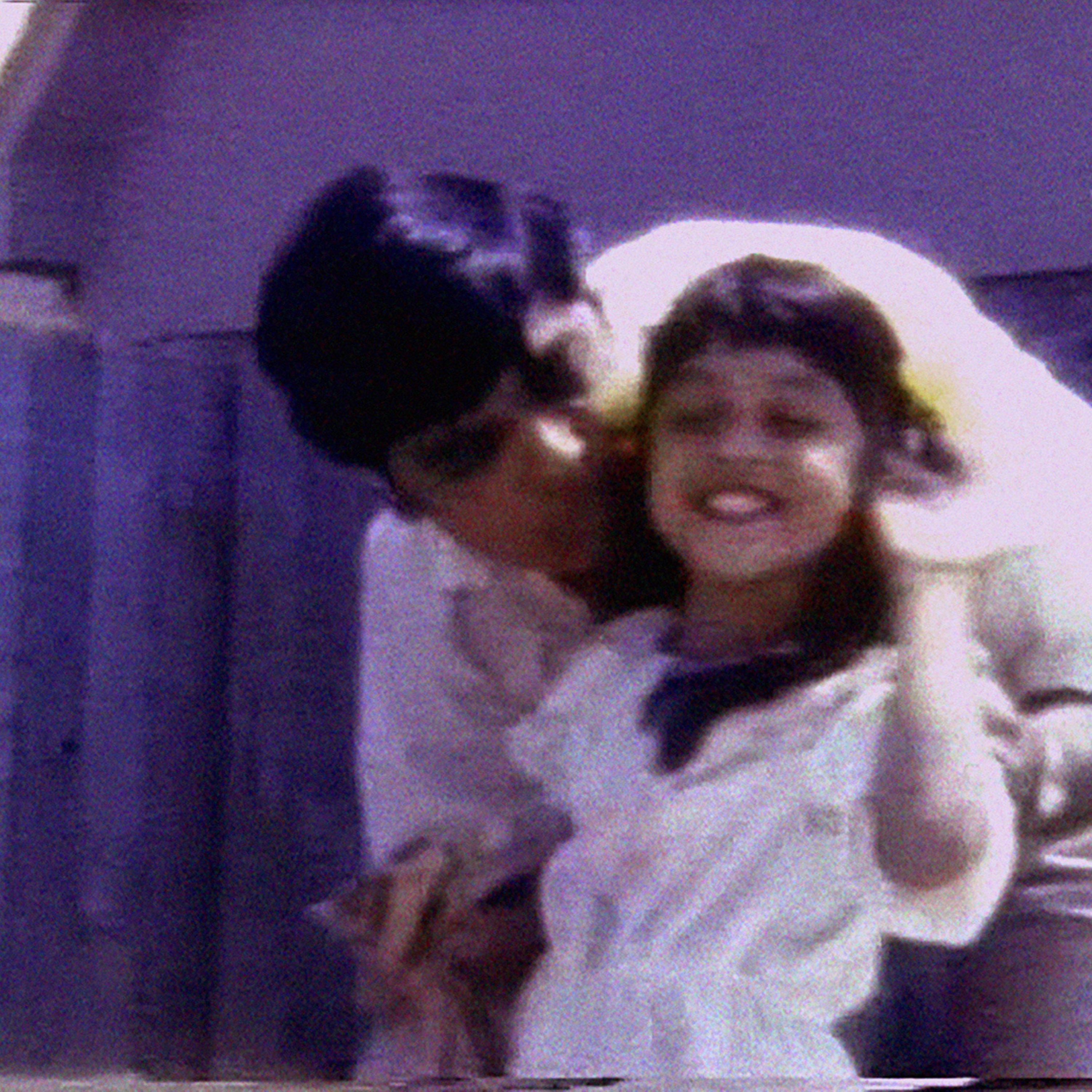
It's something that I wasn't even that aware of. But once I started looking for footage, I was like, oh, my God, we have so much footage. And I think that camera, because we have a Super 8 camera. When I was growing up, and we were always. Any trip we took, he would film us. And that was something that was really important, is even though we didn't have a lot of money, whatever money we did have, both my parents really believed in traveling. And so that's where the money met. And that's what we. You know, a lot of our home footage was of those trips.
- [16:48]
Alison Stewart
Where did you go?
- [16:49]
Carla Murthy
We went. I mean, we did a trip around the world. There was some, like, deal, I think, that Pan Am had back in the 80s or something where, like, you could get a discount if you did this trip around the world. And we went. You know, my mother's from the Philippines. My mom, she really wanted to go back. And so, yeah, we. And we had relatives in different places, so we went to Rome and Paris and India and Hong Kong and. Yeah. And then, you know, kind of circled the earth and came back to Houston.
- [17:18]
Alison Stewart
What did you notice about your family watching the footage about the four kids, about the parents, about the interactions?
- [17:26]
Carla Murthy
I think, you know, we talked about some of the money problems we had, and it was stressful, and, you know, there was never enough, and it was always a struggle. But we always came together as a family. I mean, seeing just the joy that we had with, like, you know, all the different Christmases that were filmed, it just reminded me how important a family was. And that. That, in a way, was like my dad's American dream achieved. Like, it wasn't about money and status necessarily. Of course he wanted those things, but it was really the dream of having a family of his own and us being together. That's what was important.
- [18:06]
Alison Stewart
You grew up in Texas, and as you said, there weren't a lot of people that looked like you. Your dad's Indian, your mom's Filipina.
- [18:14]
WNYC Host
You have a twin sister.
- [18:15]
Alison Stewart
I didn't know that.
- [18:16]
WNYC Host
Yeah.
- [18:17]
Alison Stewart
What was that experience like for you?
- [18:21]
Carla Murthy
You know, there weren't many people that maybe look like us, but we also lived in a very diverse neighborhood, so. And now the county that I grew up in, Fort Bend county, is, if not the, like, maybe the top three most diverse counties in the country.
- [18:38]
WNYC Host
People don't realize that about Texas.
- [18:40]
Carla Murthy
Yeah. And so during my childhood, like, so many immigrants were flooding in. There's the medical center in Houston, like, all these. I mean, it is so diverse. And, you know, in fact, when I moved to New York, it felt almost segregated to me compared to where I grew up, because it was a very strong, diverse middle class. But, yeah, I didn't have, like, a lot of South Asian friends. And it always made me feel kind of other. Like, I've never felt Indian enough. I never felt Filipino enough. I increasingly now don't feel American enough. But so there was always that, though, because I did not grow up with many South Asian friends.
- [19:17]
WNYC Host
Over the course of. Of making this film. Well, actually, before. Before you made the film, when you were talking to your father on the phone when he was a gas station attendant, there was a period when you kind of. You kind of fall out. You don't have a fight or anything, but you just kind of aren't there for one another. What was going through your head? What do you think about that now?
- [19:44]
Carla Murthy
I have a lot of guilt about that. And I think a lot of kids can probably relate to this about, you know, seeing their parent call on their phone and not answering it right away. You know, I'll deal with that later. And I was in that phase of my life, you know, I. In the film, it was during the time when I had just started having a family of my own. And I'm like, I'm trying to just focus on them. And I frankly, was just tired, you know, of hearing about and having to feel like, even though it may not have been real, but I felt like I had to. Was being called to fix it or to take care of them. And so, yeah, I stopped, like, really? Yeah, picking up the phone and calling him. And then he started calling me. You know, every time we would call or talk, he would call me stranger, and that would just, like. It was like a little, you know, knife to the heart a little bit. And that was sort of how we. The rest of his life, like, our relationship was like that, where I kept my distance. And it's something that I was trying to work through with making this film.
- [20:53]
Alison Stewart
How did the rest of your family deal with the idea of Your making a film about our father?
- [20:59]
Carla Murthy
Yeah, I mean, I have a lot of siblings, and it was something that I was really worried about. And I would not have made this film if I did not have their blessing. But also they would have made completely different films, too. You know, my oldest sister's eight years older. My youngest brother was born when I was in high school. We have different memories and experiences of my dad. And so I really wanted this film just to be from my point of view and to feel more like a sort of visual, personal journal or essay or diary. And that was something I had to kind of work through with them and tell them. And they saw, you know, a fine cut of the film, and I was very transparent through the whole process. But, yeah, I'm so just really eternally grateful to them for being so supportive of me.
- [21:47]
Alison Stewart
What did you want this film to say about the big American dream and then your father's American dream?
- [21:56]
Carla Murthy
I mean, I think it's. I don't know if I wanted to say anything except make people question what those terms mean. And, you know, at the end of the day, like, by the end of the film, I want people to remember, just, you know, to be kind to each other. Like, it was one act of kindness that completely changed the course of my father's life, this one couple. I mean, I would not exist if it weren't for that one action. And just to marvel at, like, how we are all here and alive together. And again, you know, as I said earlier, like, to show each other some kindness and grace and to also, you know, ask the questions, say the things you want to say to the people that you. You love around you while you still have the chance.
- [22:41]
Alison Stewart
What inspired you to become a filmmaker?
- [22:44]
Carla Murthy
Oh, my gosh. I don't. I mean, I. I love stories, and I had a very winding route to get to what I'm doing. I never thought I would be making films ever. I mean, I was a classical pianist. I studied math. I did all kinds of different things before I ended up doing. Doing this work. And I think it's just, you know, I love telling these kinds of stories visually, and I love editing. And I think it's a way to actually change how people think about the world around them. And I'm so grateful that I have that opportunity to do that, do this work.
- [23:21]
Alison Stewart
Of course, in this time, immigration is at the forefront of all of our political conversations.
- [23:27]
WNYC Host
Your family story is one of an immigrant story. How do you hope this film speaks to this moment?
- [23:33]
Carla Murthy
You know, it's come up with it's sort of related to why I wanted to call it the Gas Station Attendant. Some have said, oh, he's so much more than that. And one of the reasons why I really stuck with that title is because, you know, those are the people we see in our everyday lives. The intimate strangers, I call them the immigrants who are being defined by their work. And this is my invitation to get to know someone that you probably see every day and have never asked them where they're from. And, you know, I want people to see that we all have these stories and that we are more than our work and that we're not perfect either. This isn't a story about someone who is a saint. We have full human lives. And so I hope that it can spark that kind of empathy that can really just change how we think about immigrants.
- [24:26]
WNYC Host
Today my guest has been director Carla Murthy. Her film is called the Gas Station Attendant. It is part of DOC NYC. It's screening tomorrow night at 7:15pm we are really grateful for you to come in.
- [24:40]
Carla Murthy
Thank you so much for having me. This is really fun.
- [24:43]
MultiCare Announcer
Our state has changed a lot in the last 140 years. We know because MultiCare has been here guided by a single purpose. Making our communities healthier. That comes from making courageous decisions, partnering with local communities to grow programs and services, and expanding healthcare access to those who need it most. Together, we're building a healthier future. Learn more@mycare.org Since WNYC's first broadcast in.
- [25:17]
WNYC Host
1924, we've been dedicated to creating the.
- [25:20]
MultiCare Announcer
Kind of content we know the world needs.
- [25:22]
Carla Murthy
Since then, New York Public Radio's rigorous journalism has gone on to win a.
- [25:26]
MultiCare Announcer
Peabody Award and a Dupont Columbia Award, among others. In addition to this award winning reporting.
- [25:32]
WNYC Host
Your sponsorship also supports inspiring storytelling and.
- [25:35]
MultiCare Announcer
Extraordinary music that is free and accessible to all.
- [25:38]
WNYC Host
To get in touch and find out more, visit sponsorship.wnyc.org.