Loading summary
Transcript64 lines
- [00:00]
A
Foreign.
- [00:08]
B
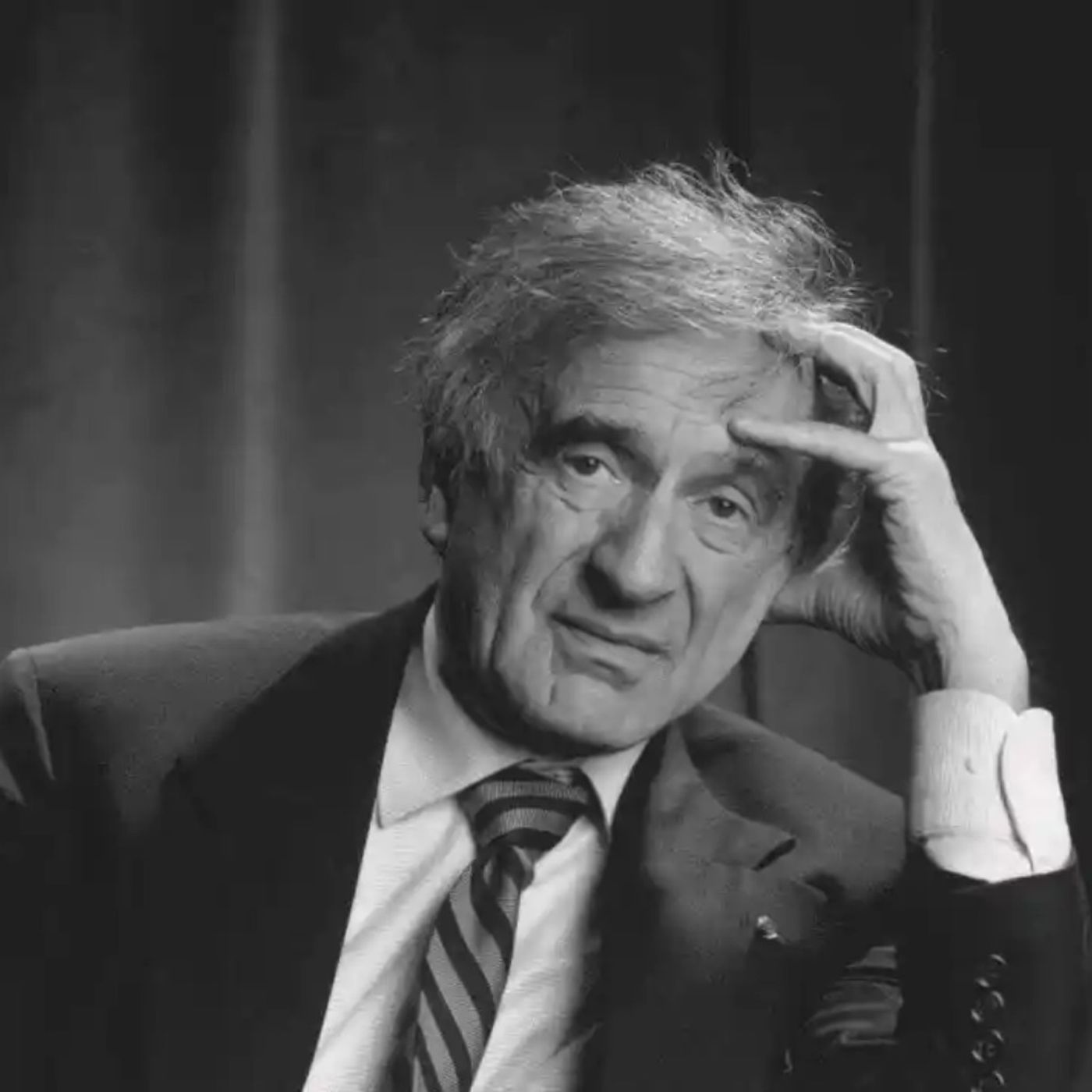
This is all of it. I'm Tiffany Hansen in for Alison Stewart. Thanks so much for spending part of your day with us. Coming up on today's show, local chef Natasha Pigowitz talks about her new cookbook, Everyone Hot Pot. Creating the ultimate meal for gathering and feasting. And in advance of an event tonight at the Schomburg, we will talk about the life and legacy of Prince. Joining us is Prince scholar and New York University provost, deangela Duff. That's the plan. So let's get started. On this day, 81 years ago, the Soviets liberated the Nazi concentration camp of Auschwitz. In commemoration of that event, today is Holocaust Remembrance Day. In the aftermath of the Holocaust, many survivors understood the importance of sharing their testimonies and recording their experiences as witnesses to one of history's most terrifying chapters. The more that's remembered, the thinking goes, the harder it is to forget and the harder it is to let such a thing happen again. One of the best known Holocaust testimonies comes from Elie Wiesel, who wrote the memoir Night, which has been part of Holocaust education in many parts of the country. For his writing and his human rights activism, Wiesel won the Nobel Peace Prize in 1986. He continued to be an outspoken voice until his death in 2016, urging us to never forget. Now, 10 years since his passing, a new documentary from PBS's American Masters series explores his life and his legacy. It's called Elie Wiesel Soul on Fire, and it premieres tonight. We're joined by documentary filmmaker Oren Radovsky. And we'll talk about it as well with Ellie's son, Elisha, who has continued to share his father's story. Welcome to both of you.
- [02:07]
C
Thanks so much.
- [02:08]
A
Thank you.
- [02:09]
B
O Ren. Let's just start with the beginning of the film. It opens with a dream sequence that is also being described by Ellie himself. We hear his voice. It's a sequence in which he rescued his father from a rising flood that destroyed the community. So why is this a good in to the story of Elie Wiesel?
- [02:32]
C
Well, first of all, the film is in effect, narrated by Elie Wiesel. And the theme of family is central, was central to Elie, the theme of community, his Jewish community in Sikhat, Romania, and the theme of the trauma that he went through and the desire, I believe, to have been able to save his father, which he was not able to do. Sadly, he died right at the end of the war in Buchenwald. So that theme of wanting to save his community and his family runs through the film.
- [03:11]
B
What does that sequence? I know you mentioned his connection with his father, and I'm wondering what that tells us about him as a man.
- [03:24]
C
Wow. Yes. It's central to understanding him. His ancestors, he was very close, and he lived in Siga till he was 15, when the entire community and much of Hungarian Jewry was sent to Auschwitz and murdered. But he had those 15 years of family of his grandparents, one side Hasidic, one side more traditional Jewish, very close to that family. And family meant everything to him and the continuity of family, and his mother and father and his beloved youngest sister who died also. So I think it's the center of his life and was for his whole life to be there for the larger Jewish community and then for the larger community at large.
- [04:17]
B
And we're so lucky to have some family here with us today. Alicia, thank you for coming.
- [04:21]
A
I'm glad to be here. Thank you, Tiffany.
- [04:23]
B
So right after this dream sequence, we see Elie on Television in 1967. He says at that point, it was still the era of the Holocaust, that the language and the fears and the perspectives of the Holocaust extended well past World War II. What did he mean by that?
- [04:43]
A
Well, you have to remember that my father was, with everything that he saw, also a passionate Zionist. So this was a time where Israel was very much under attack as well. And he was always cognizant of the thought that this Holocaust might be repeated, that so many Jews might have moved to the state of Israel to relocate, rebuild anew, only to see those dreams and their lives crushed by surrounding Arab armies. So that was very much on my father's mind at the time. But more broadly than that, he felt that the coming of the Holocaust had forever changed the way we could think about what human beings were capable of. There had been a complete rewriting both of the contract between man and God, the contract between man and man, and that we couldn't help but be changed by it.
- [05:29]
B
He died in 2016. Did he still feel at that point that we were living in the aftermath of the Holocaust and that it was still so present?
- [05:39]
A
I think by the time my father passed, we'd been through a period, potentially, of some quiet. But even in those periods of quiet, my father was always busy and always active. Really, up until the very last, he was. If you look at the Clinton administration, he was arguing with President Clinton to get involved with Bosnia. If you think even earlier, well, with President Carter, he was saying, no, you can't have a Holocaust memorial. You need to have an actual proper museum. You look at the Bitburg sequence with Reagan and you go all the way through. My father was engaged throughout. And whether it was specifically the threat of genocide, which of course is something that we still see today, whether it's Sudan or Myanmar or the Chinese Uyghurs oppression, or whether it was overtones of anti Semitism and racism and poor treatment of human beings by each other, that was a process that continued to unfold throughout my father's life. And he remained deeply engaged in fighting.
- [06:37]
B
Oh Ren. Elie considered himself a storyteller. So I'm curious how you bring together the story he told about himself and the Holocaust and the story that you wanted to tell about him.
- [06:51]
C
Well, we really took our lead from understanding Elie's life. It was a life of embrace of community at the beginning, of tragically being torn from his family and ending up in Auschwitz, surviving that. I think his life as a storyteller began very much in France, in Paris, where he became a journalist. And as Romana Strokhlet says, very presciently, I think becoming a journalist, telling other people's stories became a way for him then to be able to tell his own story. He swore that he wouldn't tell the story of his Holocaust experience for 10 years after that experience. But then by 1956, he had written both the Yiddish version of the book Night and the World Remained Silent, and then Night and La Nui, which then got translated into English. And I think he was certainly the kind of storyteller. He would have stories he would have heard in Sighet from Hasidic rebbes. And that tradition of storytelling stayed with him. And they're mystical stories. They're. They're powerful stories of humanity and often difficult to understand. But at the center of them was this quest for God and quest for meaning in life. And that quest for meaning is something that I think he was looking for. As he said, trauma doesn't give you any privileges in life. You have to make something from your life. And. And he did that through his storytelling.
- [08:48]
B
Elisha, how do you remember your father as a storyteller?
- [08:53]
A
He was so into stories. He always had a Jewish text open somewhere on his desk. A section of Talmud, a section of Hasidic stories. It infused the way he taught in the classroom. And I remember him telling me stories when I would go to bed at age 3, 4, 5 years old. We would say the Jewish prayer, the Shema Yisrael together. And then he would tell me what was. I can best describe it as a serial. We had an ongoing serial that must have lasted over a year where he had these four lions who would take me on all sorts of adventures. And the four lions were named Uriel, Gabriel, Raphael, Michael. And it was really only much later that I realized that he was expressing some of his Kabbalistic interest. These lions all represented different attributes of the divine power, and they were reflecting those attributes as they protected me in various different scenarios. So I really had a front row seat to some of my father's most awesome and unfortunately lost storytelling of that flavor.
- [09:52]
B
You know, I'm wondering how he also showed up for you as a father in terms of, like, here's someone who is deeply, deeply traumatized. Here's someone who's telling wonderful stories to his son. Here's someone who feels an immense obligation to the world to advocate. That's a very complicated human being. How is that? How was that for you? And how was that to live with?
- [10:21]
A
Both my parents made a very conscious effort to shelter me, I think, for the first decade of my life, at least, from everything that they had experienced. I remember sitting on my father's lap at age 6 or 7 and looking at the photograph of his home in Sziget that features in the film and asking him, did my grandparents live there? What happened to my grandparents? And all he would say was that something bad had happened to them. And when I was older, I would learn, of course, one figures these things out. I wasn't a complete idiot. And when all my friends were going to Palm beach, but I'm going to Polish death camps where the winter breaks, one starts to figure out something dark happened to our family. But they really made an incredible effort to shield me from as much of it, I think, as they could.
- [11:01]
B
Oren, tell us about Soul on Fire. Where did the title come from?
- [11:06]
C
Well, I grew up in the Boston area. My mother was a Polish, born in Poland, came to the United States in 1939, and we lived in Boston. And my mother took classes with Elie Wiesel, just when he got to Boston University. And my father was a rabbi in Boston. We had Elie Wiesel's books around the house, Jews of Silence, about Jews of the Soviet Union. We had, of course, Night, and we had Hasidic Tales. And one of those books is called Souls on Fire. And that sort of epitomized to me from the beginning. When I thought about the film, who Elie was, I thought of him as a. You know, the man was tireless. He went all over the world. He gave over 100 commencement addresses. Because what was most Important to him was being a teacher and reaching younger generations. And he wrote over 60 books. He woke up at four in the morning to write. That's the kind of man he was.
- [12:20]
B
Alicia, that sounds like a man on fire.
- [12:22]
A
Yes, he was driven for sure.
- [12:27]
B
Did you see that as a plus?
- [12:31]
A
I was miserable growing up. I wanted to be anybody other than me, you know, it was hard. I went to a modern Orthodox yeshiva, a Jewish school of learning. And however famous my father might have been outside of Jewish circles, he was especially famous within Jewish circles.
- [12:47]
B
Oh, I can imagine.
- [12:48]
A
And it was very difficult. People really saw my father's son. They didn't so much see me, or at least that's how my preteen brain imagined it. So, you know, if you see this footage that Orin shows in the film of the Nobel and me actually being invited up on stage, you'll see a pretty miserable looking 14 year old who kind of wanted to be anywhere else. So I'm happy to say that that perspective shifted, thank God, with maturity and adulthood. But it was a, it was a difficult run, I think, not only for me, but for my parents.
- [13:16]
B
Ah, teenagers, you know, we're all there at some point. In the documentary Alicia, we see your mother and your Aunt Hilda talking about Ellie's life before the war. How did he carry that part of his childhood forward?
- [13:33]
A
I want to answer the question correctly. You mean how did he carry his family's connection?
- [13:37]
B
How did he carry the lightness of that in the before times? Was there a lightness that he carried with him?
- [13:47]
A
It's funny, people often ask me, you know, did the Holocaust shape your father? But you're onto something with your question, because my father was shaped by those childhood experiences. His not only his love of learning, and as much as he was a teacher, we should remember, he was also a student, really until his final days, but also his love of people. His parents hosted a warm Shabbat dinner table. They were always bringing a guest in. They were always interested in what was going on in the community. My grandfather was very active. If a Jew was ever beaten up or put into the prison, he was the one figuring out how to get them out. So all of these attributes, communal engagement, learning, a joy of learning, these are things that he took from his childhood and carried them throughout his life.
- [14:31]
B
And passed on to you and passed.
- [14:34]
A
On to me, although it wasn't clear that there was going to be a me, because one of the things that happened with the war was, and this is so centrally featured in the film, my father had a moment where he had decided that the world did not deserve any more Jewish children. And the desire to actually overcome that, to overcome that cynicism, that very bleak view of the world, and invest in a next generation was a very conscious decision. You mentioned my mother. She played centrally in that. But it was very possibly one of the turning points of my father's life.
- [15:06]
B
An understandable cynicism.
- [15:09]
A
Yes, very much.
- [15:10]
B
Oh, Ren. There are a lot of archival photographs in the documentary, some old videos illustrating what it was like in Romania at the time. Where did they come from?
- [15:23]
C
Many different sources. There's animation and, you know, the harder thing to find, honestly, was all those recordings of Elie Wiesel from all over the globe. And I just want to put a shout out to all archivists all over the world who preserve things that nobody had virtually any interest in at various times.
- [15:46]
B
Well, and this wasn't the age of the cell phone where everybody had their cell phone up recording. Right?
- [15:51]
A
So. Yeah, right.
- [15:53]
C
Yes, yes, yes, totally. So, you know, there's a piece of footage right at the beginning which was shot by who knows whom of Jews who did not know, Hungarian Jews who did not know where they were going. And it's about an eight second clip where you see people with the stars smiling to the camera on their way to God knows where, likely Auschwitz. They had no idea or if they had heard anything about what was going to be happening. Nobody could quite believe what they heard. There's a famous story in the memoir Night, where somebody came back from the camps and nobody believed him.
- [16:38]
B
I want to talk a little bit, Alicia, about that disbelief because there were moments when, as your father would say, people were holding onto hope beyond logic, where it couldn't possibly be this way, these things couldn't possibly be happening. How did he address his relationship with that disbelief and reconcile it with what actually did happen?
- [17:08]
A
I don't know that he ever fully reconciled it. There's a Hebrew version of Night actually in the archives, which opens with a very different tone and color, which has my father really putting together scathing remarks of, amongst other things, the Jewish leadership, who he felt had been blind and hadn't seen the warnings and had just told the townsfolk that everything would be okay. He repeatedly expressed frustration in many different forums, including in the White House with President Roosevelt, who he felt could have bombed the tracks at Auschwitz. And why weren't there more broadcasts? It was 1944 when the Hungarian Jews had been gathered to Auschwitz. Why weren't there more broadcasts on Radio Freedom making clear Hungarian Jews do Not go to the trains. Those will be your deaths. So I don't know that my father ever fully reconciled the world's silence and the leadership's inability to comprehend what was happening.
- [18:04]
B
We've mentioned Night a couple of times here, so I think we should start talking about it finally. It's a book that. In which he really drew his experiences surviving Auschwitz, the death march, Buchenwald, before being liberated in 1945. As you mentioned, Oren, it took years before he was able to tell his stories. How, Alicia, do you remember him? I know you said he sort of kept you from it for a while. When he did finally open up, how did that happen?
- [18:39]
A
It really was much later than you might experience that I had direct conversations with my father. I heard him on stage many times or in different forums talking about his experiences. But this really came to a head for me when just after I'd graduated college, I went on a trip with him and my cousin, really my father's sister's son, who's more of a brother to me. And the three of us did a trip where we retraced my father's steps throughout Europe. We started in Sighet, we moved on to Auschwitz, we ended in France. And being in Sighet with my father, I think was the first time that I ever understood that there was still a 14 year old boy inside him who was extremely vulnerable, who, when he walked the streets of Sighet, it was like he had a radio set in his head and he could hear voices that Steve and I could not hear, but we could sense through him. And it really wasn't until that moment that I grasped the enormity that my father hadn't just lost a little sister, but I had lost an aunt that I had never gotten to meet.
- [19:42]
B
Oh, Ren. Ellie says that a person could read all the testimonies and all the accounts of everyone who lived through the Holocaust and still not understand what it was like. How did you attempt, how did you attempt at understanding with this film?
- [19:58]
C
Well, again, Ellie is the most eloquent spokesman for, for understanding that. And his life is a testament to, to. To that I think we. By telling his life story, by seeing that, that overcoming of that experience. Something I wanted to say earlier that I think is, is important. I. I spoke to many other survivors over the years, made many, many films about Holocaust and related topics. Ellie was 15 when he went to Auschwitz. Younger Jews who survived, who did not have that experience of home and of family or who forgot that experience, went through a much more devastating life afterwards. Elie was Lucky to have been embraced at home. And then by the French, who brought him to an orphanage. And then he was able to re. Meet his sister. He had loving people surrounding him. And then, of course, met Marian, which changed his life. And I don't think I've answered your question, but that's where my mind went.
- [21:20]
B
Well, that's right. I have another question already anyway, which is, you know, when you think about that loving home that he had prior to the war, I would think, Oren, you know, sort of a little bit contrary to what you're thinking and what you're telling me, that that would make the experience that much worse. And I guess what you're saying is the experience, it's the experience after being in the camps that was better for people like Ellie, who had a good, wonderful experience to draw on first. But I just see. I mean, I guess it's individuals, Alicia, I just wonder how you maintain. How he maintained that hope, that to have this good experience after. There are so many people who go through trauma, who just, you know, as Oren alluded to, shut down. Nothing happens. It's bad. Everything, you know, life. Life is not worth living. That's not him. And so it's just such a complicated mystery, your father.
- [22:39]
A
But it's not that much of a mystery. I mean, you know, we're talking about what the experience was, but I much more focused on the character who was my father. My father was raised to be a mensch, and surprise, surprise, he ended up a mensch.
- [22:53]
C
And I just want to say, you know, think of people who never got to know their father or mother. Those people seek parental figures their whole lives, constantly seeking.
- [23:07]
B
I said we were going to talk about Night. We have to do it. I keep getting us off topic here. There. The English translation is called Night. It began in Yiddish, correct me if I'm wrong, as. And the world remained silent. You spent some time, Owen, in the film, talking about the evolution of the book. So just briefly outline it.
- [23:29]
C
I think it's very important because that book in Yiddish, unde Welt out, I'm going to ruin it, but was 800 pages long. And it was printed in books that Jews put together of their experience. But then he had a famous encounter with Francois Mauriac, who was a Christian theologian and also a Nobel Literature Prize winner. And that experience really changed him. And he, instead of writing a book, Anger at the World, it became more of a questioning of God. It became a more universal book. In La Nuit and then in Night. And nevertheless, as Georges Bouchard his literary agent, said no publishers, wanted to publish it in English, including many who were Jews.
- [24:25]
B
I wanted to ask about George because he just passed away. He's in the film. And here's a man who believed wholeheartedly in this book. It was turned down by, I don't know, the obit in the Times, I think, had 15 different publishers. Alicia, did you know George?
- [24:48]
A
Yeah, George was lovely. Orin and I were just at his service the other day. Tremendous man.
- [24:55]
B
How did your father think about what Georges did there with Knight and, you know, really taking up the mantle of not only the book, but of him?
- [25:08]
A
My father was first of all, they were great friends. They used to go out to all sorts of lunches and chat about everything. Two men from very different backgrounds, but they had a lot to talk about. And my father was incredibly loyal to Georges for the rest of his career. You know, the Borchardt agency was our. Was our representative and continues to be to this day.
- [25:29]
C
I just do want to say about Georges, even though they came from very different backgrounds, Georges was Jewish, barely knew it, but then was forced to wear the star. His father died. His family fled to Nice, where the French collaborators picked up his mother, leaving him and his two siblings as orphans who were hid in a village in France. And she died in Auschwitz. So. So although they came, that's the irony of it all. The lengths to which Hitler would go to get the Jews and murder them.
- [26:04]
B
Oren, the film premieres tonight on pbs, correct?
- [26:08]
C
Yes.
- [26:10]
B
And, Alicia, I want to end on some music that the film also ends with, and ask this as our last question. He said, every person should strive to create messianic moments. What does that mean?
- [26:28]
A
The film ends, as you point out, with Anima Amin, which is a song about faith in the messianic redemption. My father defied the concept of particularism versus universalism. He believed that to be the best Jew he could be, he needed to embrace the whole world, and similarly, to be the best human he could to embrace his Judaism. That, for him, was an incredibly powerful theme that I think shows up in the movie. But I'll end with this comment, given particularly that today is International Holocaust Remembrance Day. One of our most famous sages asks in the Talmud, what does it mean, messianic times? Like, does it look any different? And he says, yeah, actually, it looks exactly the same as everything is today, except the world is no longer trying to kill its Jews.
- [27:12]
B
The film is called Soul on Fire. It premieres, as we said, tonight. We've been speaking with Elie Wiesel's son Alicia, and filmmaker Owen Radovsky. And I think we'll end with that music. Gentlemen, thank you so much for your time.
- [27:27]
C
Thank you so much.
- [28:09]
D
This is Ira Flato, host of Science Friday. For over 30 years, the science Friday team has been reporting high quality science and technology news, making science fun for curious people by covering everything from the outer reaches of space to the rapidly changing world of AI to the tiniest microbes in our bodies. Audiences trust our show because they know we're driven by a mission to inform and serve listeners first and foremost with important news they won't get anywhere else. And our sponsors benefit from that halo effect. For more information on becoming a sponsor, visit sponsorship.wnyc.org.