← All Of It with Alison Stewart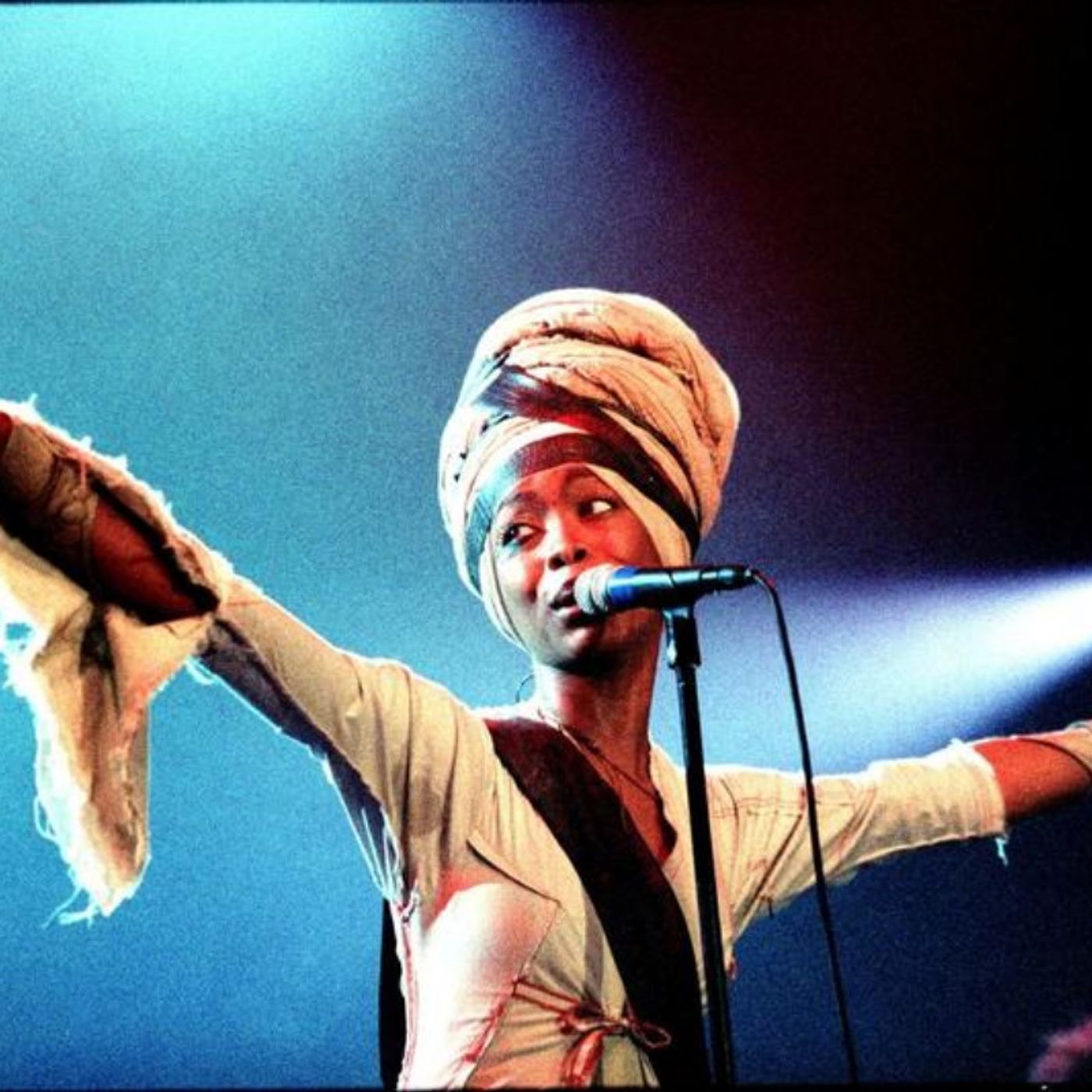
Loading summary
Transcript93 lines
- [00:00]
A
Our state has changed a lot in the last 140 years. We know because Multicare has been here guided by a single making our communities healthier. That comes from making courageous decisions, partnering with local communities to grow programs and services, and expanding healthcare access to those who need it most. Together, we're building a healthier future. Learn more@mycare.org.
- [00:40]
B
This is all of it on wnyc. I'm Alison Stewart Silver. Liner notes is our series where we celebrate the anniversary of well known albums. 25 years ago this month, Erykah Badu released Mama's Gun, her second album, which went platinum. Mama's Gun is one of the defining records of the neo soul movement that dominated the turn of the millennium. It was a new era of music, but it was steeped in history. Here's how the album opens with the song called Penitentiary Philosophy.
- [01:15]
C
Here's my philosophy. Living in the penitentiary Brothers all on the corner trying to make believe Turn around, ain't got no parts of me mad When I can't stand to see you hustle do but you can't win when your will is weak when you knock on the ground. Don't you test me evil, you won't win. This amazing so magic.
- [02:16]
B
Much of Mama's Gun was created right here in New York at Electric Lady Studios in the Village. Now, Erykah Badu has had a lot of collaborators, but perhaps none as important as Jane Poyser. James Poyser, who Badu affectionately calls her quote, studio husband, James Poyser has performed and produced for many greats and is now the keyboardist for the Roots. You can see him tonight on the Tonight Show. We are excited to say that he is in studio to reflect on the 25th anniversary of Mama's Gun. Hi, James.
- [02:45]
D
Hey, how you doing, Allison?
- [02:46]
B
I'm doing so well. And by the way, you can see Erykah Badu perform as part of her Mama's Gun 25th Anniversary Tour at King's Theatre on December 5 and 6. How often do you re listen to this record?
- [02:59]
D
Uh, every, I think I've listened to it like every year. Yeah, all the way through. But I catch a song here and there on the radio and I hear it and it just always brings back good memories.
- [03:12]
B
What memories does it bring back of that time? What was going on in 25 years ago in your life?
- [03:17]
D
Just, it was, it was a period where a bunch of friends were together and we were making music that we loved and we were just having fun, experimenting and taking our cues from each other and just having A good time again, creating sounds and sonics that we love.
- [03:36]
B
The actual title is Mama's Gun. How did Erica come up with the title for the album?
- [03:42]
D
Well, she had become a new mother, and I think this was her. Her words are, gun, I'm gonna protect my child. I'm gonna protect my peace. I'm gonna protect who I am. So I think that's the basis of that title.
- [03:58]
B
Listeners, we wanna hear from you. Are you a fan of Mama's Gun and Erykah Badu? What do you remember feeling when you first heard this album? Call or text us now at 2124-3396-9221-2433. WNYC. Maybe you have a favorite song from Mama's Gun. Why do you think so popular? Our number is 2124-3396-9221-2433. WNYC. Or maybe you have a question for James Poser about how the album was made or a story behind a song. Our phone number is 212-433-9692. What do you remember about the first time you heard Erykah Badu or her music?
- [04:44]
D
Well, the first time was the Roots manager Rich Nichols called me up and said, hey, the Roots are working with this lady from Texas, and we're not figuring this out. We need some help. Can you come in the studio? So this was in Philly, the Sigma Studios in Philly. I came in and literally an hour later, we had got the concept and wrote the concept for Other side of the Game. So it was like instant love, in a sense. She was like, ok, she's my girl. This is my sister. And it's just been a friendship that's just continued from then all the way to this day.
- [05:20]
B
What have you learned about her skills as a writer?
- [05:26]
D
She's gonna be herself, you know, you can't pigeonhole her or put into a box, you know. She's gonna be who Erica is. Erica is. Erica is Erica. That's the best way to describe it. That's the only way to describe it. She's gonna be true to herself, you know, again, she's not gonna follow any trends or anything. Whatever she wants to to happen, she's gonna make happen for herself.
- [05:48]
B
I believe you were on tour, the Voodoo Tour with Angela. Rest in peace. When you had to leave to go record with Erica, how difficult was it for you to leave such a famous tour to go work on this record?
- [06:03]
D
Well, I was working on Erica's album. We were writing a bunch of things before that. And the plan was that I'd go on tour for four months. Three, four months, just the US Leg of the tour. And then I'd go. It was in the works. But again, the tour was, oh, my gosh, it was so much fun, you know, rest in peace to my brother dlo. And just being on stage with, you know, these legends, Roy Hargrove, Questlove, Pino Palladino, Jeff Lee Johnson, Anthony Hamilton, Shelby, it was a whole lot of fun, a whole lot of musical fun, just being on the stage. But I had to get to work, you know.
- [06:41]
B
You said you had to get to work. What do you mean you had to get to work?
- [06:44]
D
Well, I was really help. I was, you know, helping Erica, my role. Erica is a doula. You know, she helps childbirth. And that was my role with her, in a sense, you know, helping her birth, her ideas. So I knew that was something I really wanted to continue. So I, you know, had to leave the tour and come back, come back to work.
- [07:08]
B
What did Erica express to you about her vision for Mama's Gun?
- [07:18]
D
Her worldview at the moment? You know, again, being a mother, dealing with what's going on with in the world with, you know, of course, situation like Amadou Diallo being, you know, his murder, her relationship status at the time, all of those things came to play, came into play. So, you know, it was just like, okay, what's the sonics behind all of that and what's the music and what do you want to hear musically? And it was just a whole lot of back and forth. Me giving her options, her screaming at me, that studio husband thing means, you know, we arguing.
- [07:56]
B
That's the studio husband.
- [07:57]
D
That's the studio husband. She gets to argue with me and I have to take that and just take it. You know, James, I said this pretty much.
- [08:08]
B
I'm speaking with Grammy award winning musician James Poyser. He's here to reflect on the 25th anniversary of Mama's Gun by Erykah Badu as part of our silver liner notes anniversary series. James produced the album with Erica. We're also hearing from you. Are you a fan of Mama's Gun and Erykah Badu? What you remember about the first time you heard the album? Do you have a favorite song? Our Phone number is 2124-3396-9221-2433. WNYC. Let's listen to another song from the album. We're Gon Kiss me on My Neck. What should we listen for in this song? What's interesting to you about this song.
- [08:47]
D
Just the vibe of the music with the flute line and the bass line and just the funkiness of the drums and the bass. Yeah.
- [08:57]
B
Let's listen.
- [08:59]
C
I want somebody to walk up behind me and kiss me on my neck and breathe on my neck Ow. Somebody woke up behind me and hit me on my neck and breath on my neck Babe, there such a long time I forgot that I was fine Just kiss me on my neck and breathe on my neck Ow. Some body to walk up behind me and hit me on my neck and breathe on my neck if you want to feel me enter Be divine yeah Bring me water Bring me water for my mind Water for my air.
- [10:01]
B
Breathe.
- [10:02]
C
Love in my air Don't I confuse me? Cause these herbs are rare if you want to fail me if you let her be divine Water, water for my mind.
- [10:22]
B
James, who are her influences here?
- [10:27]
D
Well, the song is. The part of the song is based off of a sample that we played that Jack DeJeanette, rest in peace to him also. So that. And J.D. who J. Dilla, you know, had. Had to be with that. That we played over Myself, Questlove and Pino Palladino. And, yeah, it was just funkiness.
- [10:50]
B
You know what's so interesting about her? Whenever I hear her sing, her diction is so clear.
- [10:57]
D
Yeah.
- [10:58]
B
And it's so very her.
- [11:00]
D
Yeah.
- [11:00]
B
And I don't really have a question, but, you know, it's Erykah Badu, and everything is so clear. Every lyric, she wants to make sure that you hear.
- [11:09]
D
Absolutely. And it's funny because she sings in the. With a mic inside of the studio room, not in the booth. So she records like she. I mean, she's recorded in the booth, but she prefers to sing outside. Really?
- [11:25]
B
What does that do?
- [11:27]
D
It's. It. You know, I mean, it obviously works for her. You know, it takes a, you know, maybe a little. Little studio manipulation. But that's just the way she.
- [11:39]
B
She.
- [11:39]
D
She feels the music that way.
- [11:40]
B
She wants to be with people.
- [11:42]
D
She wants to be. Right. No. Well, she's just in there.
- [11:44]
B
Her.
- [11:44]
D
In the engineer.
- [11:45]
B
Oh, so she doesn't want to be boxed in. She doesn't want to be in a studio.
- [11:48]
D
Maybe.
- [11:48]
B
So.
- [11:48]
D
Yeah. Yeah.
- [11:49]
B
That's interesting, huh?
- [11:51]
D
I've never really liked, inquired. I was just like, oh, that's just Erica being Erica. You know.
- [11:58]
B
I feel like you say that a lot. That's just Erica being Erica.
- [12:01]
D
Trust me, that's it.
- [12:04]
B
When did you realize Mama's Gun was gonna be as big a hit as it was going to be?
- [12:11]
D
I guess I just. I knew that the music was good, that the songwriting was great. I guess I didn't really put much emphasis on will it be a hit or be whatever. I just. But I. That she has a legion of fans that just love everything she does coming back from the first album by Doism until her live album. So I knew she had a legion of fans that were expecting some more music. So I knew it would be successful.
- [12:39]
B
Do you remember hearing it in some place that surprised you?
- [12:44]
D
Hearing it in restaurants and so forth? It's not really a surprise, but just hearing it is always a good feeling. Like, oh, yeah, I remember this. I remember what happened here. I remember, you know, those kind of things.
- [12:54]
B
That's me. That's me.
- [12:57]
D
You know, I ain't gonna say I almost died, but tell me the last few weeks where there's a lot of pressure by the label because there was a specific schedule to make the CDs. This is ancient times, so it was a lot of stress while we were working in literally four studios at the same time. We had three rooms at Electric lady and we had another room at Hit Factory. And it was just nonstop non stop work for the last month or so. And it was. And I had a stress attack.
- [13:33]
B
Really?
- [13:33]
D
Yeah. And like the top half of my body stopped working and I had to go to the hospital, get on an EKG and ba da yada.
- [13:42]
B
Oh, my God. So you were just working along and it just stopped?
- [13:45]
D
Yeah, it was just one of those things. It was just like. It was Erica being Eric.
- [13:50]
B
So you're in the doctors and what do the doctors say?
- [13:51]
D
Just like, yo, just slow down, calm down some.
- [13:54]
B
Just calm down.
- [13:55]
D
You're like, oh, well, I can't really do that right now. We've got to get this thing done. But it turned out okay. But I like the teaser. Like, you almost killed me, Erica.
- [14:04]
B
You almost killed me. I'm speaking with Grammy winning musician James Poyser. We're reflecting on the 25th anniversary of Mama's Gun by Erykah Badu. You've played with so many greats over the year. What specifically have you learned about music and creativity from Erica?
- [14:23]
D
Just let it flow. Don't be afraid. Don't. Don't put yourself in a box. And whatever you're feeling is right. You know what I'm saying? If you feel it. If you feel it and you love it, then it's right.
- [14:39]
B
Let's play another song. Don't you know this is produced by J. Dilla. Yeah. Okay. What was your first reaction when you.
- [14:48]
D
First heard it, I was like, oh, it needs Rhodes and it needs synths on it. Because I wanted to play on it. Oh, okay. No, it's such a great song. You know, something that she did with Dilla in Detroit. And it's just a beautiful sample. And, I mean, Dilla is just Dilla.
- [15:10]
B
Let's listen. Didn't you know.
- [15:20]
C
I'm trying to decide Where Way to go Think I made our own turn Back there somewhere O hey, I'm trying to decide we're way too Think I made a wrong turn Back there somewhere didn't you know didn't you know? Trying to move but I lost my way didn't you know didn't you know? It's time to watch my emotions sway didn't you know didn't you know? New to cold but I would not pay Thinking you know didn't you know that you never know where the cards may land to save the world where in the world is all the time so many things I still don't know so many times I changed my mind Guess I was born to make mistakes.
- [16:31]
B
But I ain't scared that's since you know. From Erykah Badu. We have a question here. It's a text. It says, one of my favorite albums of all time, start to finish, including the track order. The liner notes in the version I have list the songs in a different order than they appear on the cd. Can you have James talk about that further again?
- [16:53]
D
Like I said, we were on a deadline from the label that wanted us, you know, schedule the pressing of this. And everything was really pushed. And again, four studios. It was just a hectic time. So Erica wrote out a listing and then changed her mind, but it was already too late because the artwork and everything had gone in. And I think she put an apology letter inside of the CDs, too, that said, we'll get it right on the next pressing.
- [17:21]
B
I wanted to get serious and talk about AD 2000. It's a song inspired by the death of Amadou Diallo. It was shot 19 times by NYPD officers in 19. Why was Erica inspired to make this song?
- [17:38]
D
I mean, the feeling at the time, everybody was affected by that. You know, it was a horrible incident, and it really, you know, shook all of us. And, you know, you're not a human if it doesn't shake you. So, you know, she wrote that song along with Betty Wright. Rest in Peace, Betty Wright. And yes, it's. I think that song is my favorite on. On the album. Yeah.
- [18:03]
B
Let's listen. Hope you got it.
- [18:08]
C
No, you won't be naming no buildings after me to go down to la. No, you won't be naming no beautiful me My name will be my stated shortly this world unchanged so much yeah, yeah, yeah. This world unchanged Since I been just this world unchanged so. So what? This world unchained.
- [19:31]
B
You said the favorite of your on the album for you. Why was that?
- [19:35]
D
I remember how we recorded that. We were an electric lady, myself, Pino Questlove, and Erica. And it had to be like three, four in the morning. And Erica, I got the song I want to play on guitar, but I'm kind of nervous and it was like, no, come on, Erica, play. So the way Erica plays guitar, she sits an acoustic guitar on her lap and strum's. You can't really see this, but she moves her finger up and down.
- [20:01]
B
It's like it's horizontal.
- [20:03]
D
Yeah, exactly, exactly. And she was like, I got this song, but you know, I'm not really a musician to play. I said, come on, Erica, just play it. She starts playing it and we start coming in, playing along with her. Pino's playing, I'm playing. She's like, oh, this sounds great. Oh, cool. And we playing it for like five minutes and she says, james, drop out. Oh, this? Yeah, this sounds good. Pino, drop out. Oh, this sounds good. And plays and it's only questing her playing. And she said, may I drop out? She said, yeah, this sounds better.
- [20:38]
B
You got her where she needed to go, right? You supported her and then you pulled back.
- [20:43]
D
Exactly.
- [20:45]
B
Why do you think this album is one that people still want to listen to?
- [20:51]
D
Because it's. And I say this, I've said it. It's Erica. People love her. You know, there's something about her, you know, her honesty in who she is, her humor, you know, and that comes through in the music, you know, it's nothing fake about it. Something is innate in us that we go towards truthful things and honest things. And there's something about her. And musically she makes these great choices, you know. So, yeah, she's. That's my girl.
- [21:25]
B
This says, I was just watching Erica's anniversary show thing for this album on Spotify. It was great. I've always loved her use of jazz flute, especially in this album. Can you speak to the flute on this album? Favorite song is probably Green Eyes.
- [21:39]
D
Green Eyes. So Dwayne played flute on this and yeah, she uses flute a lot in her live shows. You know, just something about it, you know, something about her instrument just works well with her voice. And with the sonics of her music. Green Eyes is another favorite of mine also, you know, and if I remember correctly, the woodwinds movie where again, Dwayne and also the horns, I'm sorry, Roy Hargrove and Jacques Schwartzbart played on it, which was. It was. That was a really memorable session. Also recording that song, the concept of that song being three movements and what it went through and all that.
- [22:27]
B
My guest has been James Poyser. He was here to help us reflect on the 25th anniversary of Mama's Gun. It was a pleasure to meet you.
- [22:35]
D
Likewise. Thank you for having me.
- [22:37]
A
Our state has changed a lot in the last 140 years. We know because MultiCare has been here guided by a single purpose. Making our communities healthier. That comes from making courageous decisions, partnering with local communities to grow programs and services, and expanding health care access to those who need it most. Together, we're building a healthier future. Learn more@mycare.org.
- [23:08]
D
Suffering from dry, tired, irritated eyes? Don't let dry eyes win. Use Sustain Pro. It hydrates, restores and protects dry eyes for up to 12 hours. Sustain Pro Triple Action Dry Eye Relief.