← All Of It with Alison Stewart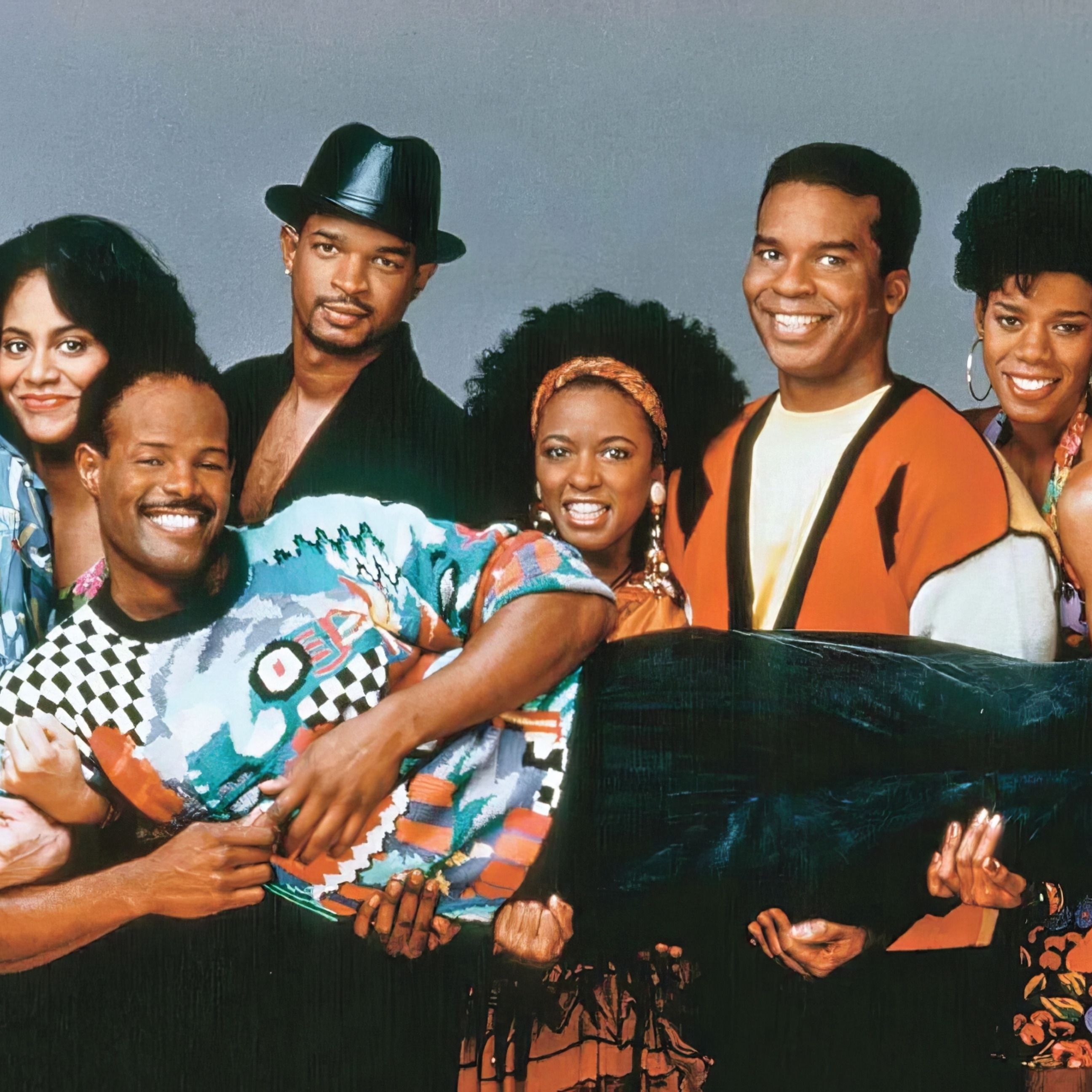
All Of It with Alison Stewart
Exploring the History of Black Comedy from Vaudeville to '90s Sitcoms
00:26:42
Loading summary
Transcript54 lines
- [00:00]
LinkedIn Hiring Pro Announcer
The new LinkedIn hiring pro can't undo your last hire, the lone wolf who you thought was a good collaborator because you didn't have the right candidate insights. But once you hired them, it was all hoarding info, declining meetings and howling at the full moon. But LinkedIn hiring pro can go deeper than just the resume to find you a perfect fit by using insights from the LinkedIn network to give you a short list of best fit candidates hire right the first time with LinkedIn Hiring Pro. Post a free job today@LinkedIn.com Pandora back
- [00:31]
MSI Gaming PC Announcer
to back reader's choice is good and the three peat award in 2026 is even better. MSI earned top rank in reliability, satisfaction and recommendations for premium gaming desktops and updated graphics. And that's not a surprise. You can start out with Codecs, advance with Aegis, Max out with Infinite and or Showboat with Vision. All are player approved hardware that deliver on performance and value. These award winning PCs await you today at MSI USA.
- [01:00]
Tiffany Hansen
Few things are as uplifting as the greatest moments in sports, and nothing brings us together quite like Team USA at the Olympic Winter Games. From NBCUniversal's iconic storytelling to the innovative technology across Xfinity and Peacock, Comcast brings the Olympic Games home to America, sharing every moment with millions. When Team USA steps onto the world stage, we're not just watching, we're cheering together. This winter, we're all on the same Team Comcast, proud partner of Team usa. This is all of it. I'm Tiffany Hansen in for Alison Stewart. Allison is getting ready for tonight's Get Lit Book Club event. That event starts at 6 o' clock at the New York Public Libraries Stavros Niarchos Foundation Library branch. You can head to wnyc.org for more information. And if you're interested in tickets, because apparently some tickets have just opened up. So you can also also find their ways to watch the live stream if you don't want to get there tonight. If you do have tickets, make sure you get there by 5:30 so you can get a good seat. All of that happening later, happening right now on today's show. We're going to spend the second hour talking about the experience of going to med school. Author and illustrator Grace Ferris joins us to talk about her new book, See One, Do One, Teach One the Art of Becoming a Doctor, A Graphic Memoir. And Dr. David Elkowitz will talk about how Hofstra Northwell is changing its approach to education. And we're going to talk about why Honky Tonk is sweeping the country. And yes, that does include New York. So that's the plan. Let's get started with the new book Black Out Loud, the revolutionary history of black comedy from vaudeville to 90s sitcoms. Whenever this light gets up, you gotta fight with standing to my left. That is the theme song from the 90s sitcom Living Single, which follows six black 20somethings in a Brooklyn brownstone. It's one of a handful of the prominent series discussed in the new book Black Out Loud, the revolutionary history of Black Comedy from vaudeville to 90s sitcoms going all the way back to the early 20th century. Author and journalist Jeff Bennett reflects on how black comedians came to shape American culture and entertainment with vaudeville performers such as Billy Cursance, singer and actress Hattie McDaniel, and stand up comedians like Richard Pryor, Eddie Murphy, Martin Lawrence, of course, who played the titular character in the sitcom Martin. The book also spotlights In Living Color, the Fresh Prince of Bel Air and A Different World for all of those people who and all of those people who brought those shows to life. Black Out Loud, the revolutionary history of black comedy from vaudeville to the 90s sitcoms is out today. Author Jeff Bennett is the co anchor and co managing editor of PBS NewsHour. He serves as a contributor to NBC News. He has an event coming up this Thursday in the green space. That's March 26th at 7P with comedians and writers Phoebe Robinson and Jordan Carlos. And he joins us now. Jeff, welcome back to all of it.
- [04:32]
Jeff Bennett
Tiffany, it's great to be here and thank you for that introduction.
- [04:35]
Tiffany Hansen
Yeah, of course. All right, so we'd also, Jeff and I would love to have you in the conversation with us here. What are some of your favorite black sitcoms? Talk to us about what show you like, what made it so fun to watch, what, you know, what performers, comedians, actors did you follow because of their experiences on a black sitcom? You can call us, you can text us 2122-4339-6922-1233 wnyc. We of course, are on all the social medias at all of it, wnyc. All right, so Jeff, this in the book's prologue, you really talk and reminisce a little bit about watching In Living Color with your brother. You know, paint the picture, right? You're 10 years old. What did you find so entertaining about that?
- [05:21]
Jeff Bennett
10 years old in the basement of our South Jersey home and In Living Color just bursts onto the TV screen. And I have to tell you, I could not believe I was 10, but I had enough sense to know then that I could not believe what they were getting away with on television. It was a cultural shockwave. And it was really what I later learned and of course, doing the research for this book, it was the DNA of black comedy. It was vaudeville, it was the chitlin circuit, it was standup, all fused with hip hop and the reach of television. And it had incredible talent, it had a point of view. And suddenly it felt like black culture wasn't on the margins. It was really setting the tone. And it proved ultimately something critical to the industry, that there was a massive audience for this, if you were willing to see it. And so with this book I really wrote, the book that I wanted to read. There had never been a book that looked at the totality of black sitcoms, how they all came to be, what they did when they were on the air, and then the business decisions that ultimately led to the unwinding of all of it. And the reason I focus on the
- [06:27]
Tiffany Hansen
context and the context for their, you know, for their existence. Right.
- [06:32]
Jeff Bennett
Yeah, that's right. But the reason I focus on the totality of them was because you had all of these different versions and visions of black life on the air at once. And it meant that there was no single show that had to bear the burden of projecting the entirety of the black experience. I say that in air quotes because of course, there is no single experience. So you had the affluent family like you saw on Fresh Prince. You had the four friends growing up from Brooklyn and living single. You had the chaotic madness, the comedic genius of Martin. You had an HBCU setting on a different world. And these were top rated shows, so they were specific and authentic. But there was a universality in that because all of America was really, really watching these shows and enjoying them.
- [07:13]
Tiffany Hansen
We've been talking about In Living Color, so let's listen to a little. Going to listen to a skit, part of a skit called the Wrath of Farrakhan. It's a. It's a Star Trek parody, but let. Let's take a listen.
- [07:26]
Jeff Bennett
We're being pulled towards a hostile planet. I'm hoping that Scotty will be able
- [07:31]
Tiffany Hansen
to activate the backup control system.
- [07:34]
Jeff Bennett
God, I feel so vulnerable.
- [07:37]
Tiffany Hansen
Captain, I'm picking up some strange signals. Something about intergalactic oppressors.
- [07:41]
Jeff Bennett
Sir, Captain, intruders are approaching the bridge. Sir, who are you?
- [07:50]
Tiffany Hansen
I am the Minister Louis Farrakhan.
- [07:56]
Jeff Bennett
Spock. Spock.
- [07:59]
Tiffany Hansen
Who is he?
- [08:00]
Jeff Bennett
A former calypso singer, Captain, who later became leader of a 20th century African American religious sect known as the Nation of Islamic love. You like to buy some incense? Being kind, my brother.
- [08:14]
MSI Gaming PC Announcer
No, thank you.
- [08:16]
Jeff Bennett
What do you want? I've come to warn your crew. Warn your crew of their enslavement. Enslavement? Aboard this vessel, that's pop. These people are perfectly free to do anything they want.
- [08:35]
Tiffany Hansen
That from In Living Color. I mean, I sense, even just listening to it now, that it was extremely experimental for its time. But when we say that, what do we mean?
- [08:48]
Jeff Bennett
Experimental, funny.
- [08:51]
Tiffany Hansen
Sure.
- [08:51]
Jeff Bennett
And you also had. Those were the voices of Jim Carrey, David Alan Greer, Damon Wayans. And remember, the talent pipeline for sketch comedy at that time was really oriented around snl. So Keenan Ivory Wayans had to create this talent pipeline and go out and find those folks who later became household names, later became legends, to include Rosie Perez, Carrie Annonaba and Jennifer Lopez, who started as Fly Girls. Rosie Perez was, of course, the choreographer. But to your question about this being experimental, the 90s, what we saw on television, it wasn't accidental. This was structural and it was a business decision. I interviewed Barry Dillard for this book, and Barry Diller told me that when he was co founding Fox Broadcasting Network, he wanted to be intentional about making it different because he believed that what abc, CBS and NBC were putting on the air in terms of primetime sitcoms were fairly indistinguishable. So he knew that the audience that he wanted was going to be younger, it was going to be more urban than anything else that existed on tv. And so the first pilot that he greenlit, that he got, that really sort of formed this idea for him was a show called not the Cosby show, that was the working title for the pilot. Because I guess word had gotten out in Hollywood that that's what he was looking for. And that show went on to become Married With Children. And when they found success with Married With Children and Simpsons and Cops, that is what opened the door creatively to a Keenan Ivory Wayans, who then was able to put all of the funny members of his family on television with those other folks that we mentioned, David Alan Grier, Jim Carrey, Tommy Davidson, later on, Jamie Foxx, the list goes on. But it was a business decision that was. Was aimed at finding voices who had otherwise been overlooked because Diller knew that that was the key to unlocking this different demographic. And then from there, that's how you also get Martin and Living Single and all these other shows. So there. I think there's a lesson there, too, for folks who are trying to figure out, you know, how to create content these days that will that will resonate. It's. It's about being specific and authentic, and that when those stories land, there is universality in that.
- [11:03]
Tiffany Hansen
We're talking about the book Black Out Loud, the Revolutionary History of Black Comedy from vaudeville to 90s sitcoms, with the author Jeff Bennett. Listeners, of course, we want your opinions. What are some of your favorite black sitcoms? What show did you love that made an impact on you? Did you follow performers, actors, comedians from those shows later into their careers? Call us, text us, 212-433-9692. And of course, on social media at all of it, wnyc. So, Jeff, the thing that I keep thinking about when we talk about these shows as being so experimental and so new and different is, you know, somebody of my age remembers Mr. Robinson's neighborhood, for example, on SNL or Sanford and Son. So are they really as experimental or are they part of a sort of linear evolution of black comedy on television?
- [12:06]
Jeff Bennett
So. And thanks for raising that, because, of course, there had been black folks on television well before the 90s. There was, you know, Good Times and Sanford and Son and of course, all the incredible work that Eddie Murphy did on SNL. But what's different about the 90s is that you had black showrunners. You had black and brown writers rooms, and that's what's different. So you had the writers and the creators really infusing their scripts and the comedy and the sketches with their own experiences, and that was what was fundamentally different. And so you have someone like Yvette Lee Bowser, who I interviewed for the book, who started as a writer on A Different World with Debbie Allen, who was then given the opportunity to launch a show because Queen Latifah and Kim Coles had development deals, development deals that never really amounted to much because they kept getting paired with writers who didn't understand them fully. And Yvette Lee Bazzar comes up with this idea for four friends who live in a Brooklyn brownstone, and that show, the success of that show and the ensemble blueprint later leads to the sitcom. We all know Friends. That's not me saying that. That's people connected to both shows, Friends and Living Single, who say that the model of Friends came from Living Single. So in the 90s, what you had was this rare moment when business incentives and cultural momentum aligned. And that is what unlocked the creative freedom that led to the explosion of the 90s black sitcoms.
- [13:34]
Tiffany Hansen
We got a couple of texts here, Jeff. Shout out to comedian Tommy Davidson, my favorite In Living Color cast member, as a 12 year old in the video store in suburban New Jersey, I'd grab a mo. Grab a movie. And often the Tommy Davidson's HBO Special Funniest comedy hour ever. Another texter says, I'd like to know why after the 90s, so many of these important black shows went away. I really do attribute our increasing othering intolerance and open racism to the disappearance of these shows and even the absence of the Oprah Winfrey Show. Jeff hmm.
- [14:09]
Jeff Bennett
So the business decision that led to the flourishing of those shows, there was a business decision that led to the unwinding of it. So whereas a Barry Diller says, I want to find new demographics and a new viewer base. And at the time, black and urban viewers were overrepresented in their TV watching. Toward the end of the 90s, what you get is the beginnings of reality TV. So it's much cheaper than scripted television. And you also have a decision by the networks and by advertisers to effectively pivot. So the thinking was this, we've built these networks, and this wasn't necessarily explicitly stated, but we've built these networks primarily on, you know, based on black viewers and urban viewership. But we believe that there is a more affluent, more loyal consumer base and we are going to basically shift our programming to reach those audiences. And that's how you see an unwinding. You see the combining of the WB and upn. You get a new network that really has shows that don't in some cases have any black characters. And those sitcoms that do have black performers in lead positions, their writers rooms are primarily white. That was the case with hanging with Mr. Curry, for instance, that show with Mark Curry that came on later in the late 90s and early 2000s. And so we saw a lot of that. But it was, as is so often the case with all of these decisions in Hollywood, because remember, sitcoms were designed at their formation to sell products. And so that has always been at the core of every decision around these shows is what's the business decision that undergirds it.
- [15:54]
Tiffany Hansen
I wonder how much streaming has not streaming. Let's go back. I wonder how much the disappearance of sort of the big four networks had to do with the demise of some of these shows. Because I can remember a day when you had four choices. Sometimes you only had three choices. And if the Jeffersons was on, to your point before, about everybody was watching these, everybody was watching. It was the only thing on. So how much of losing that contributed to the loss of their popularity and their ultimate demise?
- [16:35]
Jeff Bennett
It's A great point. And I would go a step further and say that in losing that, we have lost so much of our cultural cohesion. We don't have the same reference points anymore. There's no monoculture. There are a few tentpole moments. There's the super bowl, there's the Oscars, the Golden Globes. But remember, there was a time when 20 million people would sit down on a random Thursday or a random Friday and watch Must See TV on NBC or watch TGIF on ABC or watch In Living Color on a Sunday night and the very next day talk at the water cooler or talk at school about what they just saw. I remember the, the week that Kris Kross was on In Living Color and performed on that show and their whole thing was that they wore their clothes backwards. And I went to a diverse high school in South Jersey, Eastern Regional High School. And I'll never forget the number of kids who came in with their clothes on backwards because they had just watched Crisscross the previous night. So those kinds of moments, that's what we're missing. I have a 13 year old son who, like most kids, watches everything on his phone and they're short clips, it's YouTube shorts or TikTok or whatever. And I fear for him and his generation because I just feel like they won't have the same, you know, 20, 30 years from now. Will they be talking about what they watched? Will they be talking about some Drew ski skit? Maybe, maybe not. But they, but they don't have the sort of shared references that we did. And so, you know, those shows were important on two levels. For black viewers, there was a sense of finally being seen in ways that spelt that, ways that felt specific and true. And then for everybody else, it was these intimate windows into experiences and jokes and lives that they might not otherwise have encountered. So it was important on that level, but it was also important in the sense that we all were sort of in this together, laughing at the same thing.
- [18:26]
Tiffany Hansen
Couple of texts here, Jeff. My mother and her siblings used to crack up over Red Fox's antics on Sanford and Son. Back then I didn't know that Fox came to prominent prominence via the chitlin circuit, but my relatives did, and thus their appreciation for him. Also, a texter says, love the Jeffersons and what's Happening and Bernie Mac. What a great show. Jeff, we got a caller here. Boom. In Lakewood, New Jersey. Hi.
- [18:53]
Caller from Lakewood, New Jersey
Hi. Yeah, those are some great shows that were mentioned, but there was a very underrated show that came on during that same time. Frame as a living color. That show pretty much was called Rock, and Rock was created by Charles. He had pretty much a cast that was all in the Piano Lesson, which was a play that got converted to a movie. Pretty much think it might have been a Hallmark movie. But Rock dealt with the whole scenario of extended family. He took in his father, he took in his brother, who was in and out of jobs as a jazz musician. You know, dealt with gentrification at a point. But before that was the drug dealing that went on and how did neighborhoods got taken down and just how this one garbage man who would not quit and would fight everything that was negative in that community and tried to get people to organize. And that's where you saw people who were in the black community were supportive, but they were afraid of retaliation from drug dealers and was pretty much reflective of not just Baltimore, where that took place, but rest of the rest of black America, in which you have people who would not make that phone call to the police because of things where they were too afraid of getting shot or harm done to them, you know, and it pretty much was the thing that actually created gentrification because of people were afraid to move. And then eventually people moved out.
- [20:10]
Tiffany Hansen
Hey, Bill.
- [20:11]
Caller from Lakewood, New Jersey
Can't move back into those neighborhoods that they once lived in.
- [20:13]
Tiffany Hansen
Yeah. Hey, thanks. Thanks so much for the recollection, Jeff. I wonder, was that a comedy?
- [20:20]
Jeff Bennett
It had comedic elements. I mean, the thing about. And thanks so much for the. For the call and for the question, because Rock had depth. Unlike a lot of sitcoms at the time, Rock leaned into, as the caller said, working class struggle. And it wasn't aspirational wealth or glossy living or anything about like that. It was. It was about keeping the lights on, staying employed, all while maintaining some sense of dignity. And the other thing that Rock did, that sitcom did that was almost unheard of, was that it aired episodes live, I think, starting in its second or third season. And so that gave the show this real stage play energy because, as the caller mentioned, all of the actors had stage experience. And so this show was raw. It was immediate. It was occasionally imperfect in a way that made it feel alive. So thank you for the mention of that show because it was. It was really impactful.
- [21:15]
Tiffany Hansen
Yeah, we got another texter here that says, I remember the show Rock. It was only on for a couple years. Funny, had serious topics mixed in with some laughs. Also in Living Color is what got the super bowl halftime show big.
- [21:26]
Jeff Bennett
Oh, yeah.
- [21:27]
Tiffany Hansen
What?
- [21:28]
Jeff Bennett
Yeah. So here's the. This is a great story. So in the early 1990s and prior to that, the super bowl halftime show was a fairly run of the mill affair. It was marching bands. The network that carried the super bowl would use the halftime show to promote whatever else they had coming on. So I think it was 91. CBS had the super bowl and they had the Olympics that year. So it was marching bands, it was Brian Boitano, it was the Winter Olympic stars, and In Living Color saw an opening. And so what they did was they programmed a 20 minute counter program, live show, and you can go on YouTube and actually watch this. Jim Carrey opens it up and he says, we're going to put a ticker clock down at the bottom. It's going to be 20 minutes. If you're worried about going back to the game, don't worry. We're not going to take any longer than their halftime is going to take. And they siphoned away with this live version of In Living Color. They siphoned away More than 20 million viewers. And most of the viewers who flipped from CBS to Fox, Tiffany never went back to cbs. So the next year, CBS and the NFL said, well, we can't have that. So what they do is they book Michael Jackson for the halftime performance. And that's what gives you the super bowl superstar spectacle. It started that year. And the other part of the story that is so hilarious to me is that Michael Jackson, because he was who he was, didn't fully understand that he was the halftime entertainment. And he wanted to move the entire game to the evening because he wanted his lighting, he wanted his pyrotechnics to look better. And that would look better at night, not midday. And so they had to explain to him, no, this is not a Michael Jackson concert with football on the front end and back end.
- [23:06]
Tiffany Hansen
Although that is how I viewed it. That is how I viewed it.
- [23:10]
Jeff Bennett
That's how everybody. That's how everybody.
- [23:12]
Tiffany Hansen
It was the Bad Bunny of the day, right? Where everybody was like, I'm tuning in for Bad Bunny. I was tuning in for Michael Jackson.
- [23:18]
Jeff Bennett
Yeah. And every now and then I'll go back and watch that performance because there's been not. There's nothing like it. There's nothing like it.
- [23:24]
Tiffany Hansen
We have a texture here that says, I'm loving this segment. I'm 30 years old. I've been watching these shows since I was a kid. As a black woman, it's comforting to see myself in these shows, even if they're before my time. Very much of it is still relatable. A lot of it is still relatable.
- [23:39]
LinkedIn Hiring Pro Announcer
I wonder.
- [23:39]
Tiffany Hansen
I want to get back, though, Jeff, to this notion that. That the fracturing of media is somehow diluting the experience. Because, and I alluded to streaming before, but I think if you talk about streaming and we're seeing shows now that are, I think of. I'm thinking of like Medea, let's say that is exclusively, pretty much streamed. Right. There are, you know, some theatrical performances. But what has streaming done to fracture the audience in a way that we're not coming together, not just in a shared experience, but in an experience where, as you say, we're learning to understand an experience that isn't our own. Someone who has a life that is completely different than mine, who is still funny, and I'm able to laugh at it. And we're kind of losing that even more.
- [24:34]
Jeff Bennett
Yeah, I think we've traded cultural dominance for cultural depth. There are more voices now, which is good, but fewer shared touch points. And part of what made the 90s sitcom era so powerful is that it wasn't fragmented. These shows were niche in some ways, but they were also central. So it's like black sitcoms in the 90s didn't just reach black audiences, they reached everybody. And that kind of cross cultural exposure is harder in this splintered media environment where there are so many silos. There are, what, 8 billion people on the planet. There are probably as many cell phones. You could have as many stories on social media as there are cell phones. And you can watch any one of those. So, you know, back in the 90s, a show like Martin or Living Single could shape how millions of people saw the world all at once. That kind of collective impact is much, much harder to achieve now. And because of that, we've also seen the finances of the industry change as well, which is really disheartening. So streaming gives us choice, but it takes away the communal rhythm. And that's what I miss. I miss sitting down Thursday night, as I did with my family, everybody watching the same thing, everybody laughing. And sometimes you would talk about it the next day or later that night. Most of the times you would. Some. Most times you wouldn't. But it was always just the experience of sharing that same. That same laugh, that same show, whatever it was, we don't have it anymore. Everybody's watching different things at different times in different spaces.
- [26:04]
Tiffany Hansen
Okay, last question. We. We haven't even gotten to it here, but the. The context. I mentioned the context at the top here, but one of the things that you explore in the book and I mentioned this is vaudeville, minstrelsy, what is important for readers, for people who are looking at these sitcoms from the 90s, looking at what we're doing today with Abbott elementary, et cetera, et cetera, to know about that era and the line that we draw from that to today.
- [26:33]
Jeff Bennett
Minstrelsy is one of the hardest chapters to discuss, to research, to write about, as I did in this book, because it's both exploitative, it's both enraging to watch it, but it's also foundational. And so you had these black performers who were working within a system that limited them, but even there they found ways to insert humor and nuance and humanity. Billy Kersan's I mean, he really understood the audience that he was playing to, but he also understood how to play with his audience. And there's a sophistication there that often gets overlooked. But that line, that's where you get the DNA that connects that work to what Richard Pryor was doing, to what Dave Chappelle does, to what Chris Rock does. It is all connected by a thread of legacy. And if you look at what a Quinta Brunson has done with Abbott elementary, the fact that when she got her deal, she turned to Larry Wilmore, who got his start working in the writer's room of In Living Color, who worked with Richard Pryor and a number of amazing comedians and performers, you can see that there is this baton passing that happens in the culture, certainly within comedy circles. And you know that that really is is foundational and it's impactful.
- [27:50]
Tiffany Hansen
The book is Black Out Loud, the revolutionary history of Black Comedy from vaudeville to 90s sitcoms. The author is Jeff Bennett. He has an event at the Green Space this coming Thursday, March 26th plug plug plug 7pm with comedians and writers Phoebe Robinson and Jordan Carlos. Great book, Jeff. Really. Thanks for coming on. Appreciate it.
- [28:11]
Jeff Bennett
Thank you. Deeply appreciate it.
- [28:13]
LinkedIn Hiring Pro Announcer
The new LinkedIn Hiring Pro can't undo your last hire. The lone wolf who you thought was a good collaborator because you didn't have the right candidate insights. But once you hired them, it was all hoarding info, declining meetings and howling at the full moon. But LinkedIn hiring pro can go deeper than just the resume to find you a perfect fit by using insights from the LinkedIn network to give you a short list of best fit candidates. Hire right the first time with LinkedIn hiring pro post a free job today@LinkedIn.com
- [28:42]
MSI Gaming PC Announcer
Pandora back to back reader's choice is good and the three peat award in 2026 is even better. MSI earned top rank in Reliability, Satisfaction and recommendations for premium gaming desktops and updated graphics. And that's not a surprise. You can start out with Codecs, advance with Aegis, Max out with Infinite and or Showboat with Vision. All are player approved hardware that deliver on performance and value. You these award winning PCs await you today at MSI USA.