← All Of It with Alison Stewart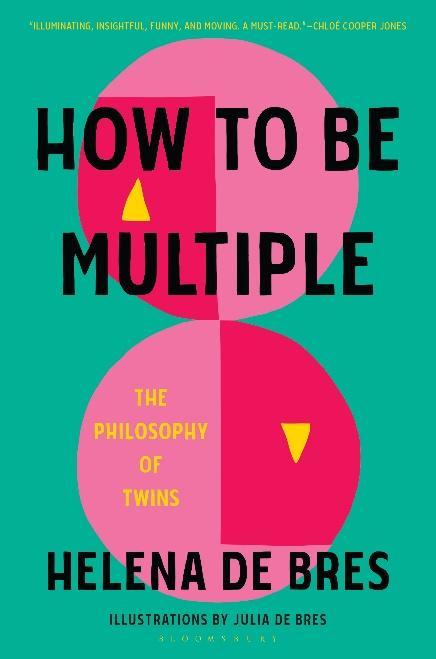
All Of It with Alison Stewart
Exploring the Unique Relationship Between Twins
00:29:53
What can twins tell us about identity, and the human experience?
Loading summary
Transcript83 lines
- [00:04]
Andrew
Listener Support WNYC Studios.
- [00:16]
Alison Stewart
This is all of it. I'm Alison Stewart live from the WNYC studios in soho. Thank you for sharing part of your day with us. Author and Wellesley philosophy professor Helena debrace is a twin and her new book how to Be Multiple the Philosophy of Twins, she writes in it, quote, twins vividly breach some of the central physical, cognitive and emotional boundaries we assume hold between individual people. Thinking about their case can help us think about the more general human case with far reaching implications. That is a much more thoughtful take than what we see in the media of twins as scams, switching places or Corbin copies of each other or being polo opposites. The old evil twin trope. The book has five chapters titled which One Are youe? How many of you are There? Are you Two in Love? How Free Are youe? And what Are youe For? It also features illustration by Helena's twin sister Julia. Helena debrace, welcome to all of it.
- [01:16]
Helena Debrais
Thanks Alison. It's great to be here.
- [01:18]
Alison Stewart
I love that your chapters are just questions. All the questions people ask listeners who are twins or parents of twins. We want to hear from you. How would you describe your relationship with your twin? What role does playing a twin in your identity? How has being a twin ever affected friendships or your dating life? We want to hear about what you love or what's challenging about being a twin or parents of twins. You can call in as well. What is something you'd like people to know about raising twins? Have you approached your twins as a unit or a separate folks raising twins? We'd like to hear from you as well. Our Phone number is 2124-3396-9221-2433 wnyc. You can call in and join us on air or you can text to us at that number. Our social media is available as well. Helena, why do you think the philosophy of why do you think philosophy is a good way to investigate the lives and the way people actually not the lives of twins, the way people respond to twins.
- [02:21]
Helena Debrais
Right. Yeah. Well, partly it's just my own biography. Right. I am an identical twin. I'm also a philosophy professor. So it's natural to bring those two things together for me, although I didn't. It didn't occur to me to do it until a few years ago and I'm 45 now, so. But it seems like a natural connection partly on the basis of those questions you just read out. Right. The chapter titles. Twins are always being asked questions when they wander around in the world. We just attract attention everywhere. From a very young age. And these philosophical questions are really on the surface. You don't have to dig too deep into twinhood to find some really perplexing issues to do with personal identity, the nature of love, free will. They kind of. They come up in, you know, just normal conversation when you're a twin. So I wanted to, yeah, do a bit more of a systematic answer to them than I've been doing since I was about three years old.
- [03:14]
Alison Stewart
So was it about three years old when you realized, wait a minute, my sibling situation is different than others?
- [03:22]
Helena Debrais
I'm not quite sure. It's, you know, identical twins started as the same thing. Right. We're an egg that splits, a fertilized egg that splits. So the twin is there from the very beginning. And I don't really know when it is that consciousness of being one of two develops. But it's gotta be super early on.
- [03:39]
Alison Stewart
And I do like very much how you make the distinction between identical and fraternal twins in your book. Would you share the language that you use? Cause I think it's actually, it's really helpful.
- [03:50]
Helena Debrais
Yeah, so I prefer the terminology single egg and different egg twins. That's the, you know, that's the biological way to approach it. So identical twins, as I just said, are the result of a fertilized egg that splits, whereas what we used to call fraternal twins or different egg twins come from two separate eggs, and they share the same DNA as your average pair of siblings. So they're not genetically identical. But, yeah, I like that better because I am an identical twin, but of course, I'm not completely identical to my sister. So people will often ask, are you identical? You'll say, yes. And then they'll look like they're being cheated. They're like. But you don't look exactly the same. So you can avoid that whole thing by just calling yourself a single egg twin.
- [04:34]
Alison Stewart
Were you and your twin close growing up?
- [04:37]
Helena Debrais
Yeah, we've always been very close where we work very well together. We had a bunch of kind of shared projects growing up. We're super. We know a lot about each other's minds and preferences. We. Yeah, we function very well as a unit and we love each other. So we're the happy version of twinhood. I know not all twinships are the same, and that's one of the points I like to make in the book. But we're the good story, I guess.
- [05:04]
Alison Stewart
Let's take some calls. Diane is calling in from South Orange, New Jersey. Hi, Diane. Thanks for calling all of it.
- [05:10]
Diane
Well, thank you for taking my call. I told the screener that I'm a senior citizen's twin and both my sister and I are widowed. We do not live near each other. I live in New Jersey, she lives in Arizona. We did have a double wedding. My mother made sure that I met my husband in college and we introduced her to her husband and we had a double wedding because our husbands were friends and we used to vacation together as couples. And now that we're both widowed, my sister and I take very nice vacations together.
- [05:49]
Alison Stewart
Diane, thank you for calling in. We appreciate you sharing your story. You would talk about relationships in your book, Helena, you write, when the time comes, the idea goes, twins will and should shove aside their sweet little bonds so that the serious business of marriage and parenthood can take center stage. That's a nice, tidy fix and no doubt many twins pull it off. Good for them. My own experience, once shared, I take it by many other twins, is off script. My husband was never a serious competition for Julia, and none of her romantic partners were ever serious competition for me. How is being a twin. How can being a twin be complicated when it comes to love?
- [06:28]
Helena Debrais
Yeah, I think that we have this. These opposing views of the twin relationship in the culture. You see them in popular culture and literature and film and just everyday life. On the one hand, we think of twinship as being the ideal relationship. It's a romantic vision. It's two halves of the same thing. Perfect equality, companionship, unconditional love. It's sort of a perfect version of romance in a way, even if it isn't romantic. And then the contrasting vision is of twinship as really a pathological union. There are a lot of stories of twins becoming pathologically jealous of each other, violent. They often end in one killing the other one or killing themselves. So there's a lot of drama built into that picture. And I think those two images are really. They don't reflect twinship itself, but singleton attitudes to twinship. There's something unusual, sort of deviant and alarming about our relationship at the same time as it being appealing.
- [07:26]
Alison Stewart
Let's talk to Andrew from Montvale, New Jersey. Hi, Andrew, thanks for calling all of it.
- [07:32]
Andrew
Hey, how are you guys? Thanks so much for having this segment. Yeah, we're in Bergen County, New Jersey. Go, Jersey. We have 10 year old identical twins and they're awesome. It's fun, it's funny. But one of the first things people ask is, you know, how do you tell them apart? Or how do you know that one's the other one. And usually we use humor at first and sometimes we'll tell people, you know, they're actually clones. And some people, believe it or not, will say, oh, wait, that technology exists or they can do that now. And I swear it's happened multiple times. But people always do want to know how you tell apart and are they different? And the answer is yeah, you know.
- [08:06]
Dee
They are two different people.
- [08:07]
Andrew
They are individuals, but having the same parents, the same upbringing, same schools, you know, same friends, they share a common experience. And I think with any siblings or people that are that close, there are many similarities. But we have to remind people a lot that they are two individuals and they do have, you know, different feelings, different emotions, do have different experiences in life as everybody does.
- [08:30]
Alison Stewart
Andrew, thank you so much for calling in. Yeah, Helena, why do people assume they're.
- [08:36]
Host/Interviewer (possibly Alison Stewart or another host)
Having the same experience? These two siblings are having the same experience?
- [08:41]
Helena Debrais
Yeah, it's, it's a, this, this question of similarity and difference is just absolutely integral to the experience of being an identical twin. You feel like you're fighting against both, both ends of a pole, I guess so. Twins are meant to be very similar. People sort of disappointed. We're sort of failed twins if we're not similar enough. But there's also a lot of pressure to, for us to differentiate. There's a discomfort with us being too alike. So I think that the business of being a twin is partly one of deflecting these added choose from singletons, that we need to be close but not too close, similar but not too similar. So it's a constant dance for us. I do think that many twins just are very alike. And part of what I talk about in the book is that we don't need to be so troubled by that. There's something a bit ideologically charged about this insistence that twins be individuals. I think there's something a bit suspect about that and it's worth questioning.
- [09:40]
Host/Interviewer (possibly Alison Stewart or another host)
Let's talk to Dee, calling in from Yonkers. Dee, thanks for calling, all of it.
- [09:46]
Dee
Thank you for having me. So my role is as a parent of nine year old fraternal twins and I made a very conscious decision to not raise them under the twin identity. So they know that they're twins and they do have a twin identity. But for instance, they don't know who's born first and who's born last because my twin cousins, of which I have several, I've always had a dominant submissive relationship based on who's oldest and who's youngest. So mine don't know. And as A result, they switch the roles, those inherent roles that come between who's older and who's younger just based on what day it is. And they switch between individual identity as well as twin them just as quickly. So, so far, so good with that. Let's see what happens when we get to teenage years. But it's been good raising them that way.
- [10:39]
Host/Interviewer (possibly Alison Stewart or another host)
So interesting. Dee, thank you for calling in.
- [10:42]
Helena Debrais
Yeah.
- [10:43]
Host/Interviewer (possibly Alison Stewart or another host)
You address birth order and what we assign to birth order.
- [10:47]
Helena Debrais
Yeah, it's really interesting. The first question you get as a twin is, are you identical? Everyone privileges the identicals. We're kind of the higher class of twins. So everyone wants to know if you're identical. And the second question is often who was born first? So we tend to invest this really strong significance into that. That fact. I've never really understood it. And it's actually the idea that the one who comes out first is dominant is not universally shared across cultures. So there's another take on it, which is that the dominant twin shoves out the first one as a kind of scout. Right. So the one who comes out first is really the one who's being used by the more dominant one. So there's different ways of understanding it. But, yeah, birth order is really privileged by parents of twins and people who run into twins. I think it's part of this general desire to somehow work out a way to stably differentiate these very similar beings when they're infants. We're all kind of desperate. It's sort of a panic move, right, to find some way of making them distinct enough to identify.
- [11:53]
Alison Stewart
My guest is Helena debrais, philosophy professor at Wellesley College. Her book is called how to Be the Philosophy of Twins. Our call out is for people who are twins and people who are the parents of twins for the twins. How would you describe your relationship with your twin? What role does being a twin play in your identity? Has being a twin ever affected your friendships or your dating life? Give us a call. 212-433-WNYC, 212-433-9692. You can call in and join us on air or you can text to us at that number. Also, parents of twins. How are you going about raising your twins? We'd love to hear your stories as well. 212-433-9692. You can text to us or join us on air. You write about conjoined twins, even though you know they share one body, they often see themselves. They are see themselves as two different. This challenge, what notions does this challenge?
- [12:52]
Helena Debrais
Well, I think we all tend to, at least in Western cultures, tend to go through life with this assumption that bodies line up one to one with people. Right. So if you have two bodies, you've got two people, or if you have one body, you have a single person. And one of the trippy things about conjoined twins is that they violate that assumption. They very much seem to themselves and to their parents and associates like two individuals. If they've got two heads, they have quite distinct personalities, but they're sharing a body. So that one to one correlation isn't there. And thinking about that case started getting me thinking about whether we could also say that a single person could be spread across two bodies. So one of the chapters in the book is about that question. Is it possible for twins in separate bodies to somehow share personhood or function as a single person at least part of the time?
- [13:46]
Alison Stewart
Someone who couldn't stay on the line but had a question, had a set of twin kids, boy and girl. Is that experience different from same sex twins? Do same sex twins have a closer bond? It seems so, yeah.
- [13:59]
Helena Debrais
I'm not sure of the, the research on that. I was always told as a twin that female identical twins were the closest in the, in the camp, but I don't know if that's true. One thing I want to emphasize in the book is that twinships are really individual. There's no one experience of being a twin. So I'm inclined to think that gender isn't going to be the most significant dividing line or at least there's going to be a diversity of experiences between different sex and same sex twins.
- [14:31]
Alison Stewart
It's interesting that you said that. Of course there's no one kind of twin hood experience yet the way singletons respond to twins tends to fall in certain sort of silos.
- [14:43]
Helena Debrais
Right.
- [14:44]
Alison Stewart
And why do you think that? Is that media? Is that exposure? Why do you think that is? I listed off a couple of the tropes, right?
- [14:54]
Helena Debrais
Yeah. I mean, part of it I think is that it's a general move, a kind of othering move that a majority group will pull on any kind of minority. Twins aren't a political minority. We're not oppressed. But we are a numerical minority. Right. We're rare in the human population. And I think in general there's a tendency for the larger group to homogenize the smaller group. They're different by contrast to the majority and so their difference seems the most dominant thing. And there's not that much attention to diversity within the group.
- [15:28]
Alison Stewart
Let's talk to Margaret from the Upper West Side. Hi, Margaret, thanks for calling, all of it.
- [15:35]
Margaret
Thank you for taking my call.
- [15:38]
Diane
As people always say, you're on the air. What do you, what would you like.
- [15:45]
Margaret
Me to speak about?
- [15:47]
Alison Stewart
You have an identical twin, is that right?
- [15:49]
Margaret
I have, yeah. I'm 81 years old. I have an identical twin sister. And then I had. My parents had eight children and there were two other sets of twins, both fraternal, and then two singles.
- [16:05]
Alison Stewart
How did your parents, did your parents treat you as twins differently than the other children?
- [16:12]
Margaret
Not that I remember. I think they were just overwhelmed. And so I don't remember that we were treated differently. And certainly the fact that my twin and I are identical and the others were. Other two sets were fraternal, I don't think made a difference. They, the fraternal twins, I think are more different in personality from one another than my twin sister and I were.
- [16:46]
Host/Interviewer (possibly Alison Stewart or another host)
Oh, that's interesting.
- [16:48]
Alison Stewart
That's interesting.
- [16:49]
Host/Interviewer (possibly Alison Stewart or another host)
Within that one family.
- [16:51]
Alison Stewart
Helena, did you want to respond before we get a break?
- [16:54]
Helena Debrais
Yeah, I sort of want to reach out to the fraternal or the different egg twins. Right. They often feel that they, as I said earlier, sort of substandard. The French actually call different egg twins faux jumos, as if they're somehow fakes. So I actually think that part of our obsessive focus on identicals is our tendency to really prioritize the superficial aspects of twin hood, which is the physical similarities and the kind of cute quirks. Whereas what's really essential to being a twin if you are a twin is the relationship between twins and non identical twins grow up next to each other in step, just like identical twins do. So in many ways it's actually a very similar experience, but I think maybe you need to feel it from the inside to recognize that.
- [17:42]
Alison Stewart
My guest is Helena debrais. The name of the book is how to Be Multiple the Philosophy of Twins. We'll take more of your calls. We have several parents of twins on the line. We have twins on the line. We'll have a conversation. We'll learn a little bit more about the Minnesota study of twins reared apart. And we'll talk about. Maybe we'll talk about Julia a little bit your twin after the break. You're listening to all of it on wnyc. I'm Alison Stewart. My guest is Helena debrais. She's a philosophy professor at Wellesley College. She's also a twin and she's written a book called how to Be Multiple the Philosophy of Twins. Let's take a few calls. It looks like Sheila from Cos Cobb, Connecticut. Hi, Sheila.
- [18:32]
Sheila
Hi.
- [18:33]
Diane
I love this subject.
- [18:34]
Sheila
It's fascinating to be the mother of twins. And I have the distinction of also being the grandmother of identical twin boys and twin sons. So I had a daughter first and when she was almost three, had premature sons. And it's been just a fabulous experience. And I would say that the way, you know, you're successful as a parent of twins is if they love each other when they're adults. And even though there are conflicts along the way, you've managed to eliminate a lot of the. A lot of the competitiveness. And they support each other and love each other. And my daughter is bringing up her twin son similarly. She dresses them in red and blue the way we did, so that they can have their own identity. People know, at least they have a hint of who's who and can call them by name. And when she was about three, when they were born, we went out and there was always such a fuss made over them that I asked her if it bothered her that people made such a fuss over the twins. And she went into the litany of every common question. Are they identical? What are their names? You know, how old are they, and do you dress them alike? All of the questions. And she just, you know, went through it at three the way an adult would have. It was really, really fascinating.
- [20:04]
Alison Stewart
Thank you so much for calling in, Helena. Do you get a sense of why people feel like they can ask those kind of questions of twins and their families? Seems rather intrusive to me.
- [20:17]
Helena Debrais
Yeah. My father said that for a while there, they were thinking of just printing something out and gluing it to the stroller with answers to the, you know, the top five questions. I. I talk in the book about how there's an interesting parallel between people's attitudes to twins in this way and their attitudes to women, especially attractive young women, right when they go down the street. They're often also accosted by questions and comments. So there's a similar kind of objectification of twins and women, an obsessive focus on their similarities, and a tendency to ask these invasive questions, kind of use twins or use women for the purposes of others. So it's an interesting parallel. There's something my twin likes to call twin to sectionality here, which is when you have twins who are themselves, you know, attractive young women, the tendency is magnified further. They really get so much attention, and a lot of it feels off, ethically off.
- [21:13]
Alison Stewart
Wow. Let's talk to Marilyn calling in from West Orange, New Jersey. Hi, Marilyn. Thanks for calling all of it.
- [21:19]
Diane
Hi. Hi.
- [21:20]
Sheila
Can you hear me?
- [21:21]
Alison Stewart
Yeah, you're on the air.
- [21:22]
Diane
Okay, thank you. I am an identical twin. We call each other Wombates. We were very close. My son married an identical twin, and her response when she found out he was the son of a twin was. He gets the twin thing. As a matter of fact, when he got married, my sister and I escorted him down the aisle because my husband is no longer here, and he requested that. So being the son of twins seems to be a special relationship now. My sister is now the great grandmother of identical twin boys, so. And we're both just thrilled with it. Just thrilled with it.
- [22:06]
Alison Stewart
Marilyn, thank you for calling in.
- [22:08]
Host/Interviewer (possibly Alison Stewart or another host)
What is the twin thing?
- [22:10]
Alison Stewart
From. From your position as a philosophy professor, what is the twin thing?
- [22:16]
Helena Debrais
You know, I don't know if I can exactly define it, but I'm feeling it at the moment with, you know, various events and interviews to do with the book. I'm running into so many twins. Twins will turn up and we'll have this connection. It's an unusual status to have. It is a kind of minority, but it's not a political minority. We don't get together. We're sometimes pen. Parents of twins will go to twin conventions. But as you're. When you're an adult twin, it's actually pretty rare to run into other twins, especially fellow identical twins. So I sort of feel like I've found my people and there's that kind of connection that you have when, say, you run into someone from your hometown or someone who shares some other really central part of your identity. So, yeah, I get it. And I think it's lovely Texas. Hi, Alison.
- [22:59]
Alison Stewart
Hi, Helena.
- [23:00]
Host/Interviewer (possibly Alison Stewart or another host)
I am the dad to boy girl twins. Both my daughter, my son state they remember being in their mother's womb together. I tend to believe them.
- [23:08]
Helena Debrais
Wow.
- [23:09]
Host/Interviewer (possibly Alison Stewart or another host)
This goes back to this and, you know, whether it's apocryphal or not, that twins have their own language, that twins communicate in a way the other siblings don't communicate. Did you find this in your own life? Did you find this in any of your research while you were working on the book?
- [23:25]
Helena Debrais
Yeah, I mean, I'm no scientist, so I can't really pronounce on when exactly it is that twins kind of recognize each other. I did read something from a twin specialist to that said it was very unlikely that in the womb, the fetuses can conceive of each other as, you know, distinct humans. But there is some evidence that they're very careful. They often will reach out and touch each other, and they're very careful not to touch each other sort of in the eye region. So they do seem to. Their movements suggest that they're recognizing someone who's sort of delicate and human right from that beginning moment. So that's very cool. I can't remember the first time that I sort of recognized Julia. She's just been there from the very beginning. We haven't had any experiences. I not had experience of telepathic communication with her that she claims she's had some in relation to me. So I'm sort of the flat footed, non metaphysically sophisticated twin, I guess.
- [24:20]
Host/Interviewer (possibly Alison Stewart or another host)
Although you tell a story about you both having an eye rash at the same time and you are kind of deciding like, is this, were we always predestined to have this eye rash at exactly the same time? Tell us a little bit why you included that story and what was the bigger picture issues you were trying to address with the ey rash story?
- [24:41]
Helena Debrais
Yeah, I mean, sort of the natural interpretation there is that we had some kind of shared virus that we could, one of us caught off the other. But neither of us had had this rash before, ever in our 40 something years. We had it develop, you know, on the same, the same day. So even if that case in particular maybe wasn't in the end that mysterious, it set off this train of thought which I think is common with twins and those who observe twins about the extent to which our experiences and our actions are just determined by biological features outside our control. Right. So the thought was, oh, maybe this eye rash was somehow programmed into us, you know, 42 years ago when our egg split. But more generally, there is this question about whether humans are able to kind of step outside their biological inheritance and truly act freely. And twins have been used for over 100 years now to investigate that question. Questions scientifically. Same genes, different outcomes. Same genes, same outcomes. If you do studies on twins, you can generate results that apply to humans in general.
- [25:44]
Alison Stewart
On that question, let's talk to Leah from Manhattan. Hi Leah, thanks for calling, all of it.
- [25:50]
Leah
Hi, thanks for taking my call. So I, well, first off, I wanted to sympathize with what you were talking about about the female twin objectification. I'm not a twin. But as soon as you said that, I mean, I can't tell you how many times I've gone out with friends of a similar stature with a similar haircut and guys will say, oh, hi, are you sisters? I mean, so that's, that's a thing that, you know, that happens even when you're not a twin. It's a weird idealization, but. So I have much younger brothers who are fraternal twins. So I've sort of witnessed them growing up from afar. And I know they're not single egg, but it's always seemed to me like they were just. They're two sides of one coin. Because they're different in every way. Physically, emotionally, their interests. One is tall, brown hair, brown eyes, musical, artistic, outgoing. Other one is short, blonde hair, blue eyes, scientific, mathematical, withdrawn. And I just thought it was so interesting. And I've always wondered how much of that is biological. And how much of it is their conscious decisions to, like, exert their own identities.
- [27:01]
Alison Stewart
You talk about free will in the book, Helena.
- [27:04]
Helena Debrais
I do, and I also talk about that. That habit of. Or that. That sense that many twins fall into suit. Two separate camps along some personality spectrum. Right. Often in stories of twins, they're binarized. There'll be a good twin, an evil twin, or a quiet twin and a loud twin, a sporty twin and a nerd. We have this tendency to either treat twins as exactly similar or to treat them as binary opposites. Which was something that certainly came up in my own twinship. I am an identical twin, but I was always characterized as the quiet one, the introvert, and my sister Julia as being the kind of loud, assertive extrovert. So part of what I do in the book is talk about why we do that, what the benefits of doing that are. And also ask the steeper question about how we should feel about our sense of self. Once we recognize that it's the result of the social process of. Of sorting us into a camp in relation to someone else.
- [27:59]
Alison Stewart
Someone wrote, my father's a fraternal twin. He has a twin sister. And as a policy, the public school he attended separated them starting in kindergarten. The way that he characterized it is that they were very close up until that point. I always thought it was an odd policy. In fact, to this day, they aren't very close. Now, I'm not sure if this contributed, but possibly no.
- [28:18]
Helena Debrais
I find that really sad. Maybe it did. There was certainly a period. I'm not quite. I'm not a parent, so I haven't sort of experienced it from the parent end. But there was a period in the 1980s and 70s where there was a huge emphasis on splitting twins up. Making sure that they individuated, as you might say, for their own good. My parents resisted that. So they really kind of let us take the lead there. So we weren't split up. We had distinct friend groups of our own accord, but we didn't feel that we were being forced to separate early. And I'm glad about that. I do think that there's kind of a lot of anxiety about whether twins can really function as non pathological humans if they're too close later on. And my own sense as a twin is that you can be very, very close to your twin and nonetheless be a perfectly functional individual. In fact, that's a lesson that singletons can learn from twins, that you can be deeply, intimately attached to someone else, define your identity partly in relation to them, and still be a fully fledged, functional, mentally healthy person. It's a lesson I think we need to lear.
- [29:24]
Host/Interviewer (possibly Alison Stewart or another host)
Let's finish out with Robbie from Queens.
- [29:27]
Alison Stewart
Hi, Robbie. You have the last word.
- [29:28]
Dee
Hello. Okay, well, I'm an identical twin. I'm an artist here on the east coast, and my identical twin brother is a rocket scientist working for NASA.
- [29:38]
Andrew
We chose not to compete.
- [29:42]
Host/Interviewer (possibly Alison Stewart or another host)
Ravi, thank you so much for calling in. Thanks to everybody who called in, those who got on the air and those who didn't, as well as folks who texted. The book is called how to Be Multiple the Philosophy of by Helena debrace. Thank you so much for taking calls with our listeners, Helena.
- [29:59]
Helena Debrais
Thank you, Allison. That was super fun.