Loading summary
Transcript48 lines
- [00:09]
A
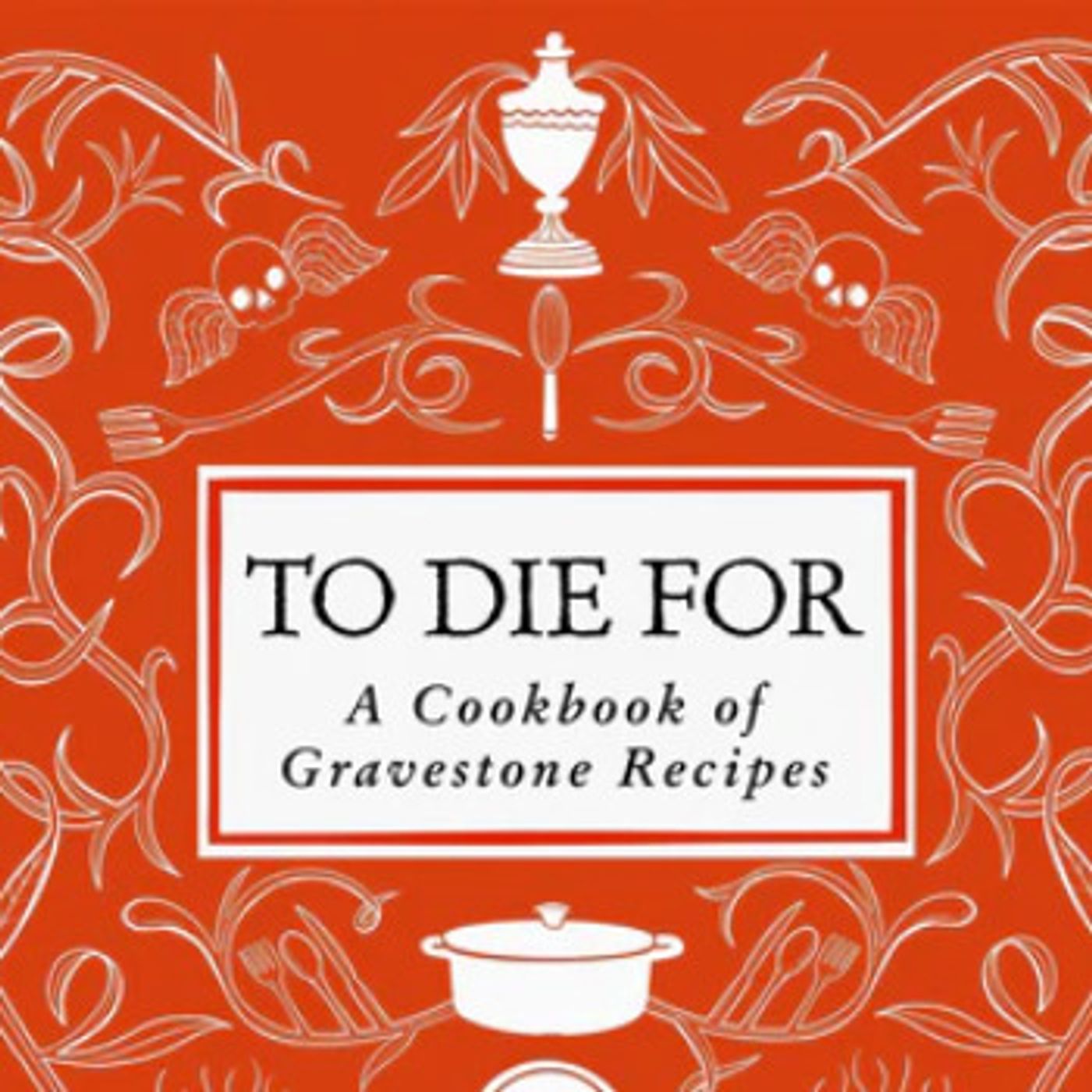
This is all of it on wnyc. I'm David Fuerst in for Alison Stewart. Family recipes can be a timeless way to connect with loved ones. And for some people, those recipes are so important, they follow them to their grave. Rosie Grant is the creator of ghostly archive on TikTok and Instagram, where for years she has been building an archive of recipes that she finds on gravestones. The project got its start in part from a gravestone in Greenwood Cemetery in Brooklyn. That was the first time Rosie saw a recipe etched on a headstone at the grave site of a former postal clerk named Naomi Otis Miller Dawson. The recipe was for Spritz cookies. And you can find Naomi's recipe and her story in Rosie Grant's new book, To Die for A Cookbook of Gravestone recipes, which features 40 recipes etched in stone and the stories of the people who made them. And joining us now to talk about it is Rosie Grant. Welcome to all of it. Are you there? Hello? Oh, hey. Welcome to all of it. So tell us about recipes on gravestones. Most of us have probably never heard or seen a recipe on a gravestone before, but this is obviously a thing. Can you tell us the history behind them? Oh, oh, let's see if we can get rid. Sounds like maybe we lost Rosie on the connection. We're going to see if we can get her back on the line right now as we're talking about the work of Rosie Grant. She is the creator of ghostly archive on TikTok and Instagram. She has been building this really incredible archive of recipes that she finds on gravestones and yet all started from a gravestone that she saw in Greenwood Cemetery in Brooklyn the first time she saw a recipe on a headstone. And we're going to be speaking with see if we could get Rosie Grant. Rosie, are you with us? Oh, we're still calling her right back. But you could check out her new book. It's called To Die, a cookbook of gravestone recipes. And it features 40 recipes that are etched in stone. We're going to ask her about some of those recipes in just a moment. And if we'd like to hear from you, if you have a recipe that you would like to share, you could call us at 212-433-WNYC. Maybe you even know of a tombstone that has a recipe on it. The number to call 212-433-WNYC. That's 212-433-9692. And I think we are here with Rosie Grant. Are you there?
- [03:00]
B
Hello? Yes, I am.
- [03:02]
A
Hey, thank you for joining us today here on all of it. And, you know, most of us have probably never seen a gravestone recipe before, but this, you know, this is obviously a thing. Can you. Can you tell us the history of behind them?
- [03:17]
B
Yeah, well, it's a pretty recent history as far as the history of American epitaphs and gravestone recipes. The first one that I learned about was actually in Brooklyn, New York. It's a grave of a woman named Naomi Odessa Miller Dawson, who has a spritz cookie recipe on her gravestone. And there's a few other women as well, who were, you know, buried in the late 90s, early 2000s, and they put these recipes that had belonged to them that they'd shared with loved ones. And then others were inspired, and some people, just on their own, decided it was a good idea for their loved ones.
- [03:51]
A
I mean, I'm sorry, how much of a recipe, by the way, can you fit on a gravestone?
- [03:58]
B
Great question. Not a very long one.
- [04:00]
A
Yeah.
- [04:01]
B
So you might notice as you look through the book, there are quite a few baked goods. I think they're a little bit more forgiving. You don't need as much instruction, you know, less of the, like, very lengthy lasagna recipes or anything like that. But some people got creative. A couple people just left out some instructions. And, you know, there's one person who even says, if it tastes like mine, it tastes right. And so that's kind of the guiding force.
- [04:27]
A
Now, these recipes, are they put there by request of the deceased or by their families? How does it work?
- [04:35]
B
Great question. A little bit of both. In some cases, it was the person themselves that requested it. There are actually three women who are still alive that have done preplanning. And so I actually got to ask them, why did you decide to do this? And in case of one woman whose name is Peggy, she has her gravestone up in Arkansas, but she's still alive and well. And she said she was really proud of this cookie recipe that she would share with her family. And her kids would go to school with these cookies, and the teachers would always ask for the recipe, and her friends and neighbors always asked for it. And then in the case of some other family members, the person had passed away and they were trying to think of, how do we sum up this person who hosted every holiday, and they were known for showing love through food. And so in that case, it was usually their kids or grandkids who had the idea to use their recipe.
- [05:24]
A
Well, we mentioned this earlier, but that first gravestone Recipe that you ever saw was here in New York City in Greenwood Cemetery. Can you tell us more about that recipe?
- [05:35]
B
Oh, my gosh, it's wonderful.
- [05:36]
A
Yes.
- [05:36]
B
So if you go to Greenwood Cemetery, which is such a beautiful cemetery, very welcoming to the public, they do a lot of programming and educational events. And if you walk up to Naomi's grave, it looks like an open cookbook, and there's no instructions. It's just the ingredients to her spritz cookie recipe. And Naomi was born and raised Brooklyn. She was a fantastic cook and worked for the post office. And the joke in her family was her son would bring her cookies to holiday parties, and everyone would ask for the recipe, and he would always say, like, you can ask for it, but she's not going to give it to you. So this was like a secret recipe that she took to the grave.
- [06:14]
A
Oh, my goodness. Literally.
- [06:17]
B
Literally, yeah. Of course, she gave her blessing at the very end. It was her son's idea, buying this sort of, like, open book pedestal where you might, you know, write some spiritual quote or something like that. And honestly, in some people's lives, what's more spiritual than food? So she did give her blessing, but there's a little bit of a nod to the secret because it didn't have the instructions for her cookies on it.
- [06:40]
A
That's an incredible story. And you can find that recipe in your book?
- [06:45]
B
Yes, it's the very first one. And then a little bit of. I met was her son Richard, who, again, this was his idea to do this. And a little bit of the story of cooking the recipe of hers with him.
- [06:58]
A
Rosie Grant, we're speaking with right now, and the author of the book I'm talking about. It's called To Die A Cookbook of Gravestone Recipes. When did you decide to start trying to make these recipes?
- [07:13]
B
Well, I was interning at a cemetery. Like you do.
- [07:17]
A
Like you do. This was at Greenwood Cemetery.
- [07:21]
B
This is at Congressional cemetery in Washington, D.C. i was working on a library science degree, so I needed an internship and an archive somewhere. And, you know, very height of quarantine during the pandemic. And so most archives were closed to new students, but cemeteries, unfortunately, were busier than ever. And so I interned in the archives of congressional cemetery in D.C. and I'd started a TikTok account about what's it like to intern at a cemetery. And I was learning about the stories and different memorials, and I was featuring different people that I just. For me, I had no idea how creative people were with their gravestones. I was used to the like, you know, memento mori or the like classic epitaph of like, mother, father, death dates, birthdays. And then when I learned about Naomi up in Greenwood of her recipe on a gravestone, I was so blown away about this idea.
- [08:14]
A
Hmm. I want to get back to some of the recipes that you found in just a moment, but if you do want to join this conversation, give us a call. 212-433-9692. You can tell us about your family recipes, your family. Is there a dish that your parents or your grandparents or your sibling, cousin, some distant relative or non family loved one used to make? Tell us about it and about them. You don't have to remember the whole recipe. Just call in or text us. 212-433-9692. That's 212-433-WNYC. And Rosie Grant, do you have a favorite recipe that you have discovered from gravestones?
- [08:57]
B
Oof. I mean, they're all my favorites. They're all so good and each story is so different. But definitely the ones that I make the most frequently I make Naomi Spritz cookies a lot. They're so good. They're very fun to press through a cookie press. Other ones that I make a lot are ones that I myself am nostalgic to. I, you know, grew up with snickerdoodle cookies that my mom would make for me. So there's a snickerdoodle cookie recipe of a woman named Annabelle who's buried in California, and she was a volunteer firefighter with her husband. And so her daughter talks about, you know, the volunteer firefighters gathering in the kitchen. They're in the redwoods area. And so like forest fires are definitely no joke. And they would feed these cookies, amongst other things, to the other volunteer firefighters. So I both love the story of that. But then also they're really good cookies.
- [09:46]
A
They're really good cookies. That's awesome. So the snickerdoodle cookie is another one. Are any of the recipes that you have discovered from a gravestone or any of them really, really bad?
- [09:58]
B
Honestly, all of them have been good. None of them are that complicated. You know, I know if anything, the biggest challenge was if I couldn't find like all of the instructions. And so with each recipe, the biggest sort of leg of the project was of course, connecting with the families, getting their permission, and then of course, getting their stories. And so with each one, there was in particular, the one that I struggled with the most, truly, just because I had never made it before, was a fudge recipe from a Woman named Kay in Utah. And it's a great recipe. Fudge is delicious. She was so prolific at making this, but the first time I made it, it was definitely not as good as Kay's.
- [10:39]
A
Well, hey, if you want to call in, you can and maybe tell us a recipe that you would put on your own. Gravestone 212-433-9692. When you started this project, how much baking experience did you have?
- [10:58]
B
I had a limited. I would say I was more of an eater than a cook myself. You know, very classic, one pot. But I will say I was an English major, and I went to James Madison University in Virginia, and I did creative writing as a minor, and my focus was food writing, so I loved food storytelling and food memoirs. And then, of course, when I was getting. So when you get a master's in library science, you can focus on public libraries, but my focus was on archives. And so I was very inspired by archiving projects and especially recipe archiving. Like, every family has their own recipes and things that you grew up with that, like, it's just a taste of home. And so I think all of those things together I was inspired by, and definitely I've learned a lot about cooking in the process. Like, I'd never made ice cream before. I'd never made fudge before. I now own four cookie presses to try to get closer to Naomi's cookies. So my kitchen has definitely exploded with objects for cooking since the project started.
- [11:58]
A
I love it. It's such a roundabout way, right, to get into cooking.
- [12:03]
B
Yeah.
- [12:04]
A
I want to also talk about how. How maybe what led you down this path. Your parents are ghost tour guides in Virginia, is that right?
- [12:14]
B
Mm, that's correct.
- [12:16]
A
How do you think they shaped your relationship with death and cemeteries?
- [12:22]
B
Yeah, I think, you know, growing up with them and we. Even before they became ghost tour guides and historical tour guides, we went to cemetery tours frequently. Even when I walked home from high school, I would walk through my local cemetery as, like, a shortcut. And it was very open to the public. And, you know, there are dog walkers and people just passing through, so I never found them. Very scary places. At least the cemeteries that I grew up near were very welcoming to people. And so, you know, I think we grew up in a sense of this cultural taboo around death. And, you know, even people, like, hold their breath when they drive past cemeteries and that sort of thing. I think it made me appreciate of, like, the life that exists in a cemetery and the historical importance. If anything, it's good to visit your local cemetery and of course, follow the rules, be respectful, but they are very much for the living to go and think about people we've lost.
- [13:16]
A
We're speaking with Rosie Grant, talking about your book To Die, a cookbook of gravestone recipes. And you write about something called the Death Positive Movement. Can you talk about what that is?
- [13:29]
B
Yeah, that was something I was unfamiliar with before the project started. It began with hospice nurses not even that long ago. But it's just this idea that talking about death with loved ones is not only healthy as individuals, it's healthier for society. And so that might look like something of, like, how do you want to be remembered? And talking about that with your partner or your siblings or your parents. Do you want to be buried in the cemetery? Do you want something else? Do you want to have your favorite song played at your funeral? Or, yes, of course. Do you want a recipe served? And that's how people remember you for. And it doesn't really matter what the answer is, but it is really healthy to talk about these things, even if it's kind of uncomfortable. So I think for the gravestone recipe project, for me, it's made death so much more accessible because, like, you know, it's really hard to be like, yeah, we'll all die someday. But if anything, it's good to be like, how do you want to be remembered and celebrated, whether through a meal or otherwise?
- [14:32]
A
Can we talk about one more New York recipe? This is from Roberta Jackson. Can you tell us about Roberta and this recipe?
- [14:41]
B
Oh, my gosh, I love this recipe so much. Well, her daughter Sharon is actually this wonderful food writer. And so we had gotten connected because she wrote this essay about her mother, who was a fabulous travel agent, loved traveling, loved food. And this particular recipe, or kasha varnishka. So she's buried. She lived in New York and was buried just outside of New York in a Jewish cemetery. And the kasha varnishkas in general, like, delicious. I'd never had them before. And it was based on an inscription that she had sent to her daughter the first time her daughter was living abroad. And it was her first time making them without her mom. And so her mom writes out the instructions and sends it to her kid. And the way that it ends with, like, does it taste like mine? It does. Good. Was such an impactful part of the recipe that she included that in the instructions on the gravestone itself.
- [15:34]
A
Well, Rosie Grant, you include your own gravestone recipe in this collection. To die for A cookbook of gravestone recipes. A little premature.
- [15:46]
B
Yeah, a little premature. But you know, no time like the present.
- [15:49]
A
All right. Well, tell us, tell us about your gravestone recipe and will you actually perhaps use it?
- [15:58]
B
Yeah. My husband and I have had this discussion and it's been a really healthy exercise. It's not like, you know, we won't die someday. So kind of, you know, this idea of like we often treat death as a failure rather than something that it's like, no, I'm excited to think about these things. And so I have been working with Congressional Cemetery where I first interned to be potentially interred. Two different words at one point. And so tell us the recipe.
- [16:27]
A
We're just about out of time.
- [16:29]
B
Oh, my gosh. Well, it's a clam linguini and it's just a nostalgic dish that I grew up with and he's from Maine. And it's just something that I grew up loving and still to this day love to serve to dinner guests.
- [16:41]
A
I love it. Well, thank you so much for sharing that clam linguine. The new cookbook celebrates family recipes taken to the grave. Rosie Grant, thank you so much for joining us today.
- [16:52]
B
Thank you so much for having me. This is such an honor.
- [16:55]
A
And again, it's called To Die A Cookbook of Gravestone Recipes. And that is all of it for today. Character actor Carol Kane lives with her 98 year old mother. On the other Upper west side, a new documentary spotlights a day in their lives. And coming up on the show tomorrow, director Nathan Silver. Carol and Joy Kane join us to discuss Carol and Joy that is coming up tomorrow on ALL of it. Thanks for listening. This is wnyc. Suffering from dry, tired, irritated eyes. Don't let dry eyes win. Use Sustain Pro. It hydrates, restores and protects dry eyes for up to 12 hours. Sustain Pro Triple Action Dry Eye Relief.
- [17:36]
B
NYC now delivers breaking news, top headlines and in depth coverage from WNYC and Gothamist every morning, midday and evening. By sponsoring our programming, you'll reach a community of passionate listeners in an uncluttered audio experience. Visit sponsorship.wnyc.org to learn more.