Loading summary
Transcript64 lines
- [00:00]
Odoo Sponsor
WNYC Studios is supported by Odoo. When you buy business software from lots of vendors, the costs add up and it gets complicated and confusing. Odoo solves this. It's a single company that sells a suite of enterprise apps that handles everything from accounting to inventory to sales. Odoo is all connected on a single platform in a simple and affordable way. You can save money without missing out on the features you need. Check out odoo@o d o o.com that's o d o o.com o o ozempic
- [00:34]
Chef Franklin Becker / Home Depot Pro / Marie Callender's Announcer
hi, I'm Chef Franklin Becker. You know the jingle now discover the facts about Ozempic, a GLP one. There's only one FDA approved Ozempic made by Novo Nordisk. Learn about the real thing.
- [00:44]
Ozempic Announcer / Vrbo Care Announcer
Talk to your healthcare professional today. Call 1-833-OZEMPIC or visit ozempic.com to view the medication guide and to learn more about ozempic.
- [00:51]
Melissa Auf der Maur
Semaglutide injection 0.5mg, 1mg and 2mg O.
- [01:01]
Chef Franklin Becker / Home Depot Pro / Marie Callender's Announcer
Big jobs don't need 10 different suppliers. It's time for one partner for every size, finish and bulk order delivered on your schedule. The Home Depot Pro. It's about time.
- [01:24]
Alison Stewart
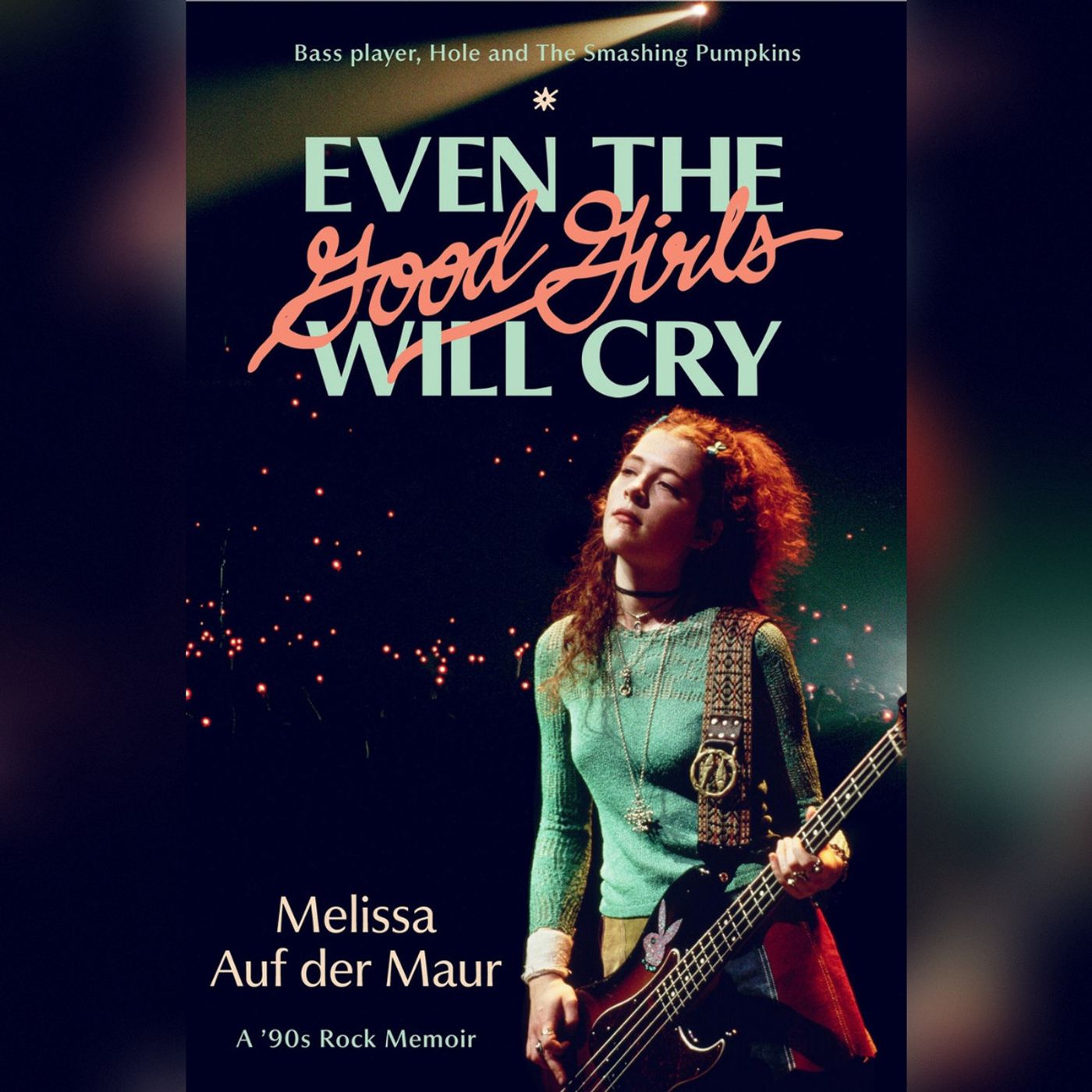
This is all of it. I'm Alison Stewart live from the WNYC Studios in soho. Thank you for sharing part of your day with us. I'm really grateful that you're here. On today's show I'll talk about the new film project Hail Mary with its co directors, the playwright and star of the new play, Cold War. Choir Practice. Join us in studio and we'll celebrate the centennial of the King of Zydeco. That's the plan. So let's get this started with Melissa Ofdemar. In 1994, the band Hole took the stage at the legendary Reading Festival in England. The band consisted of Courtney Love, Eric Erlanson, Patty Chamel, and it was my next guest, Melissa Ofdemar, who played the bass. It was her first performance with Hole and her seventh time ever on stage. Melissa writes about that moment and everything before and after in her new memoir, Even the Good Girls Will Cry. It covers her five years with Hole, her deep and complicated relationship with Courtney Love, and her time with the Smashing Pumpkins in the era defining alternative rock scene of the 90s. Melissa Aufmeier joins us now. And according to page 92 in your book, it's yous Birthday, correct?
- [02:52]
Melissa Auf der Maur
St. Patrick's Day.
- [02:53]
Alison Stewart
Happy birthday to you.
- [02:54]
Melissa Auf der Maur
Thank you.
- [02:55]
Alison Stewart
So why the bass?
- [02:57]
Melissa Auf der Maur
Oh, so many reasons, but the first the first time I ever eloquently conceived why the bass? It was on my way to receive my first ever bass Award in 98 or something. And I was in a car and I knew I had to give an acceptance speech. And the first thing that came out, pen to paper, was, the bass is the mother of all instruments. She is the one that you don't notice until she's gone, ooh, ooh. Yes. And I was obviously 26 year old. I hadn't been a mother. Now I am. I understand further.
- [03:28]
Alison Stewart
You understand what that means?
- [03:29]
Melissa Auf der Maur
Yes, but I really understood. I mean, I. Everyone knows. Everyone knows the bass is the glue. Everyone knows that the bass is the thing that you feel in the audience, but you don't recognize the feel. You don't watch it like you do the lead singer, the drum solo, the guitar solo. So it's, you know, it's the. I was a wallflower and I loved music, but I found my way through to the big stage by, you know, by way of bass.
- [03:54]
Alison Stewart
I was very interesting what your early thoughts about music were. Was it something that you just loved? Was it. Did you decide?
- [04:00]
Melissa Auf der Maur
Obsessed? I want to do this with my life or obsessed?
- [04:02]
Alison Stewart
Yes.
- [04:02]
Melissa Auf der Maur
I mean, obsessed. My mother, by the way, both parents were public broadcasters, so they were both. They each had their own radio shows. I grew up watching my mother slicing her radio shows on tape. Her record collection of the 60s and 70s. She interviewed everyone from Zappa to Cohen. My mother was my musical inspiration, that gateway. But what I felt so clearly as a young girl is who are my people? So I was seeking all the time, my generation and my moment to find my way in to what I saw. My mother, you know. You know, obsess over in a good way. As a journalist, she obsessed over the voices of her generation. So finding my moment in 1991, and I worked in the. In clubs and I just. It was always there. But I also went to a music school, an experimental, like the Equivalent of Fame, LaGuardia Public Music School for my entire education. So I was always singing, playing trumpet, xylophone, choir. So I always had music in my. In my body. But it was just finding my way to make purpose, big purpose with my life and finding my way into my generational movement. And I did.
- [05:12]
Alison Stewart
How did you find your people? Initially
- [05:17]
Melissa Auf der Maur
on a goth dance floor at 14 at a club Thunderdome with the Cure and the Sisters of Mercy playing. That's in my book of just like the. Wow. Hold on. On the floor of the Cure, on the Head, on the Door tour. So As a young teenager, I found it there. And then I just found. Once I was old enough to really be working in bars, I just started going to the clubs in Montreal where I grew up, had an amazing college radio stations, punk clubs. And I started working as a ticket girl at the. At the equivalent of CBGB's there. And I got underage. Oh, way underage. But. But Quebec, there is no age. There is a. It's a drinking age of 18, but you can go as of 14. So I was already there. But I got exciting job as a cassette DJ at the age of 19. And that changed everything when I realized that I could control the music, vibration and mood of an evening. I worked three to four nights a week as a cassette dj, put myself through college with that job. And that's when I found my people. Because it was this the equivalent of. Do you remember Max Fish here? It was the equivalent of that, called Le Bif Tech. And it's where all the bands that played would then go there till the wee hours. And that's where I met everybody.
- [06:30]
Alison Stewart
That's so interesting. Controlling the mood.
- [06:33]
Melissa Auf der Maur
I mean, that's what DJs do.
- [06:35]
Alison Stewart
Yeah. When did you realize that was happening?
- [06:38]
Melissa Auf der Maur
I don't know. I mean, consciously. I've realized everything now that I've written the book, now that I've reflected what drove me so hard to be a servant of music. But I think DJing was the first time that I realized that I could have some agency over what people. And I was quite bossy as a shy flower girl, like flower girl. Yeah, I guess I was a hippie wallflower and flower happy child, who basically never took requests, politely said, no, no, I know what I'm gonna do tonight, thank you. And I wouldn't take requests. It was all some Canadian, very politely refusing, politely refusing. The way of this nation.
- [07:21]
Alison Stewart
At the moment, we're speaking with artist and musician Melissa Afdemar, who played bass in the band Hole. Later in the smash, she just released a new memoir, Even the Good Girls Will Cry. All right. When you were initially asked to join
- [07:37]
Melissa Auf der Maur
Hole, you said no, of course. What else would a good girl do? Studying photography, had her own band already. I had my whole life planned out for me, you know, by a very young age, I knew that music, yes, but photography was my other passion. And I was studying and I was about to apply for my master's at risd. It was very clear to me that I'd be a fine art photographer with a passion project for music. And I would probably find a way to Weave photography and music together. And at that point, I already had a band. Billy Corgan had seen me play, recommended me when Courtney needed a bass player to replace her, rest in peace, deceased Kristen. And no. The answer was no. Clearly no. Which was. This was just weeks after Kristen's death, a few months after Kurt's death. So between drugs, fame, pain. No, that was, you know, not what. What I wanted. But then it was because I said no that I think the band took me quite seriously because I realized that I was not desperate to get into that game at any price. And then essentially I ended up accepting their invitation to come meet them. And then the moment I saw the women in need of a bass player, but also all women in need of sister support, I joined for women, not for music, not for my career. I had this like flash of, this is my way to participate in bringing new women, female stories to the male dominated landscape. And I also saw a woman widowed, challenged. You know, fundamentally, Courtney is a brilliant, tortured artist. You know, there's no. She's not an easy creature. Her holding her toddler's hand and amazing drummer Patty, who became my best friend in the band. I just looked at these women and I. And to be, you know, a lot of this is in the book of. No one was looking after this, this, this team that were in complete mourning and grieving and trauma upon trauma and expected to take the show on the road. So as a pretty grounded person, I arrived and I realized these people just need me. And you know what? We're doing this for everyone. We're doing this for all women that need support in a difficult moment. But mainly my obsession with Roc. My mother, who was a very strong independent feminist of the 60s and 70s, but she wasn't in the band. She was interviewing and kissing the men in the band. I morphed it in there of like, I'm gonna be the one in the band. And so I, you know, all of it. There was a combination of feminist music commitment and also just deep compassion for people who are misunderstood, in fact, and not taken care of with addictions and mental instability and loss, you know, but you're.
- [10:29]
Alison Stewart
You, just as you described yourself, you're grounded, but you're a fairly private person at that point in your life. How did you cope with suddenly being thrust on stage in whole a band that was under screen?
- [10:42]
Melissa Auf der Maur
Well, the, the introduction to my book starts at reading in front of 65,000 people. I'm 22, I just arrived in the band 10 days earlier, and the chapter is titled through the Looking glass. It was as simple as. I am entering a new dimension. A David lynch looking glass. I'm Alice in Wonderland. There is no logic here anymore. I have entered a.
- [11:05]
Alison Stewart
The.
- [11:06]
Melissa Auf der Maur
The underbelly of the world, which is fame, public, et cetera. And I had a little bit of practice. My father is a larger than life. He's long gone. He. But he. And his death figures prominently in this book, is that he was as charismatic, and I am not joking, as Courtney. When my father walked in the room, people noticed. So I grew up in the shadow of a large personality who went from broadcasting to running downtown Montreal, who had the largest funeral in Montreal history, who has a street named after him. I grew up in the shadow and I was very well primed to, you know, understand when eyes follow you down the street, how to shut them out. I just shut it out. I just was in the moment on the stage with the people who needed me. And that's a lot of the book is sort of this duality of the. And the outer world of what's happening actually in the giant world of fame and what's happening deep, deep, deep inside.
- [12:06]
Alison Stewart
I wanna read a part of the book where you describe your relationship with Courtney.
- [12:12]
Melissa Auf der Maur
Okay.
- [12:12]
Alison Stewart
It says. But there's no controlling or questioning Courtney's power dynamics. She has clearly set out to establish me as her wonder twin. The good girl to her bad girl, the virgin to her whore, the calm to her chaos. To this end, she has perfectly cast a Canadian head as a straight woman to her crazy bitch.
- [12:34]
Melissa Auf der Maur
Correct.
- [12:36]
Alison Stewart
Was the relationship, like, on stage the same as it was offstage?
- [12:40]
Melissa Auf der Maur
Absolutely. And it still is today. It's deeper and better and sweeter now. But, yeah, it just sort of. We just, like, locked into what we needed to be for. This is the big question. Is it for the world? Is it for the stage that we became this two archetypes, or is it for our own inner growth and learning? And it's probably both, so. Yes. Yes.
- [13:02]
Alison Stewart
For your inner learning.
- [13:04]
Melissa Auf der Maur
Yeah, of like, learning, like, you know, how every relationship is a mirror to you and every. So she was that mirror. I was her good girl mirror, you know, and what we brought out of each other and our extremes bred the extremes within each other. And we got to play it out on stage and also backstage and also on what I refer to often in the book, this rock mythology, you know, there's a reason why rock musicians, whether it's a David Bowie or a Marilyn Manson, these I. These. These archetypes are no different than Thor and Persephone. And you know, just re. We're just replaying mythology. And so I was finding my way through, yes, my own individual person and place and. And partner with Courtney, but also just the universal unfolding of. Of humans trying to find out, you know, a. The meaning of life, but also how. What your role is in this lifetime.
- [14:01]
Alison Stewart
I was reading through the book and I thought you might get to this part. A place where actually I was there when this happened. Okay, this is at.
- [14:10]
Melissa Auf der Maur
What is it? Lollapalooza?
- [14:11]
Alison Stewart
No, it's at the MTV Music Awards. Okay, so you write. It's that part where Courtney throws her compact on stage. Kurt Loder is interviewing Madonna. She writes. She bombs a live interview by tossing makeup items from her purse onto Madonna's awkward Last for All. As I move ahead, barely taking notice of it from over my shoulder. I was standing next to her when she was doing that, and I. Well, if your manager who it was. And I said, like, are you gonna do anything? And he went, like, just lifted his shoulder.
- [14:42]
Melissa Auf der Maur
What can you do?
- [14:44]
Alison Stewart
And you walked away from that moment. What made you decide I'm not gonna get involved?
- [14:48]
Melissa Auf der Maur
I mean, in that chapter is sort of the turning point. It's the end of live through this. We have gone like around the world a couple of times. And at that point, and I start to acknowledge that this is where I start really disass and separating myself. Because you can't actually control a tornado, but you can be conscious of it happening. But you have to choose your direction for self preservation. Yeah, yeah.
- [15:13]
Alison Stewart
I've been speaking with Melissa Auf de Meyer. Her book is called Even when the Good Girls Cry. Today is Pub Day, by the way. She delves into the coming of age story and the era defining rock scene of the 90s. You got to show your stuff. On the second whole album, Celebrity Skin, you were able to make creative contributions to the album. Let's listen to use once and destroy and we can talk about it on the other side.
- [15:38]
Melissa Auf der Maur
Great.
- [16:17]
Alison Stewart
I can hear the bass.
- [16:18]
Melissa Auf der Maur
Yes, yes, that's. Courtney used to call that in the set list. When we'd be making the set list at the beginning of night, she'd say, let's play Melissa's song. Because Melissa's song is what I always want to play. I always wanted to play that, that, you know, bass and drum heavy, primitive, primal. That's my thing. Yeah.
- [16:36]
Alison Stewart
How did it feel to finally contribute your own voice?
- [16:39]
Melissa Auf der Maur
The bass and my voice actually my vocals. Because actually side bars. Courtney's putting out a new record this year, and I went to sing on it in London. I'm very proud of her. It's like a very next step in her storytelling of herself and very. And in the booth I remembered flashbacks to Celebrity Skin of. Of my special siren song. Glassy 3, 4 part harmonies wrapped around her growl is really where we manifested the good girl, you know, bad girl into sound. So what I most. I love Celebrity Skin because it embodies that. The two girls becoming one and the bass. I'm very proud of that role. I mean it felt wild because I had been in the band for quite a few years. It took a long time. There's a lot in the book about the aftermath of Live through this and the excess. And by this point when we're making Celebrity Skin, hence the title, Courtney has also started to shift into Hollywood and people versus language cleaning up too actually and the most together she'd ever been. It was a very productive time, but we were also losing a lot of the visceral magic because our entire generation was watching the loss of our innocence and the co opting. We were like bought by the machine, you know. Yes, MTV helped, you know, kind of woven and all the big major labels and everything just became this like really too glossy, too corporate. And it was hard for me. I loved my, my musical contributions, but I was very, I was becoming very disengaged in terms of everyone from the 90s didn't want to sell out and we all sold out. And I left for that reason is I just felt like we all lost our way understandably because we were tempted with all these things and the power of music combined with the power of machine, it's hard to say no. I also lost Patty, our best friend. She disappeared to drugs. She's alive and safe now and we have since of course reconnected. But it was a lot of sad things with drugs happening all at the same time and my father was dying. It was hard to say I loved my bass and vocals in that. But it was a very rough time. And that's sort of where the book brings the reader to this moment where it's the 90s is coming to an end. So the listeners know. It's 91 to 2001 is the chunk I have focused on in my 90s rock memoir.
- [19:13]
Alison Stewart
What was your relationship to fame in that decade?
- [19:16]
Melissa Auf der Maur
I mean, just ridiculous. I was like too cool for school of course. And I also went running from it, you know, and that's I think what a quarter century later writing this book. I gave heads up to everybody, to Courtney, to Billy, to Dave, all The kind of big famous people in that book.
- [19:32]
Alison Stewart
Dave Grohl, Billy Corgan, I gave heads
- [19:35]
Melissa Auf der Maur
up to everyone and they're all like great, go for it. Because they all know I'm not hungry for fame or fortune. That's why I left all of that long ago. So coming back now is to try to offer myself my daughter who I want her to know that she had a self realized mother who unpacked her shit.
- [19:55]
Alison Stewart
This is all of it on wnyc. I'm Alison Stewart. My guest is Melissa Aftemyer. Her book is called Even the Good Girls will Cry. It is her coming of age story. During the era defining rock scene of the 90s, you went out on your own and you have your own album out. Can we play the single Fall the Waves from your album? Let's listen.
- [20:17]
Melissa Auf der Maur
Of course,
- [20:24]
Melissa Auf der Maur (singing)
Sam. I feel me sneaking around again Am I hanging around again? Can't you see that my heart lies My heart lies to you I fall away to you I gotta see everything.
- [21:32]
Alison Stewart
What could you do as a solo musician that you always wanted to do?
- [21:38]
Melissa Auf der Maur
Plan my own day, do everything my way, you know. And I made two solo records in the early 2000s and I self financed both of them. I refused to have a record label and then I got Capitol Records and Roadrunner. I put out records with real labels, but I did. When I left the 90s and left the team player that I was, Hole in the Pumpkins, I. Freedom. Freedom is all I've ever wanted since the 90s. And that's what I got with those solo records mainly, though of course, writing my own songs, stepping center stage. Being a singer, bass player is a unique thing. To front a band that was really cool musically in terms of achieving new heights, you know, it's a rare combo and anyone who plays bass knows it's hard to do. Bass is easy bass and singing is weird anyway, so I don't. I just. Yeah, I, you know, I stepped out of the shadows and it took me decades really, between my cool parents and my cool grunge parents that found me and made me and gave me this life in music. It's taken me quite a while to just step into my own light. And I feel like here I am quarter century later and really it's only now that I've arrived in my 50s and I feel like autonomously myself.
- [22:53]
Alison Stewart
What was your spiritual life like in the 90s?
- [22:56]
Melissa Auf der Maur
Profound. I mean, it's all over the book. I mean, I really did for people who, you know, I. When I was right, working with the editor, I Said, listen, you know, yes, we're going to cover Women in Rock, we're going to cover the 90s. We're going to cover all the obvious things. But the esoteric thread and the dreams that dictated and changed my life cannot be lost in here. But I do not want to alienate people who do not believe that your subconscious or forces from beyond or astrology have any impact on you. So I really wove my esoteric revelations I had at a very young age throughout the book to bring. I'm waiting for those who read the book who kind of pick up on that thread. I kind of feel like it's a parallel other thread of the book that for me is the most significant one, which is, I always felt that it was way beyond me and my tiny life that was at work with my being found by Billy and joining whole and riding that wave of my generation. That was a very strange and unique destiny that was not accidental. And yes, I can. You know, people who don't believe in this. I. In this book, I try to bring you into my story and. And kind of by the end of the book, I'm asking, like, can you deny that there was not a strange destiny or a higher force at work here? Like, I have no choice to believe that. My parents were academic, like intellectuals. They didn't raise me with religion, they were anti religion. I had no spirit spirituality guidelines, and I found them through music, but through dreams. As a teenager that kind of guided me. I had a dream that told me the only way I was gonna make maximum contact with humans in this lifetime was through music. And that's when I picked up the bass. And that's what the book starts with. It's true.
- [24:46]
Alison Stewart
My guest has been Melissa Aftemar. The name of the book is Even the Good Girls Will Cry. It is out today, which also happens to be her birthday. Very nice to have you in the studio.
- [24:56]
Melissa Auf der Maur
Thank you so much. New York City,
- [25:00]
Ozempic Announcer / Vrbo Care Announcer
day or night, Vrbo Care is here 247 to help make every part of your stay seamless. If anything comes up or you simply need a little guidance, support is ready whenever you reach out. From the moment you book to the moment you head home. We're here to help things run smoothly because a great trip starts with the right support. And hey, a good playlist doesn't hurt either.
- [25:30]
Chef Franklin Becker / Home Depot Pro / Marie Callender's Announcer
For delicious meals, you could go out to eat or you could just make a Marie Callender's meal. Marie Callender's classic chicken parmigiano bowl is so good. It has marinara sauce that's made from scratch and creamy mozzarella cheese over pasta. It's delicious with no artificial flavors, colors or preservatives and 30 grams of protein. You can find it in the frozen aisle. Marie Callender's what having It All Tastes Like.