Loading summary
Transcript52 lines
- [00:00]
Narrator/Performer
Foreign.
- [00:09]
Alison Stewart
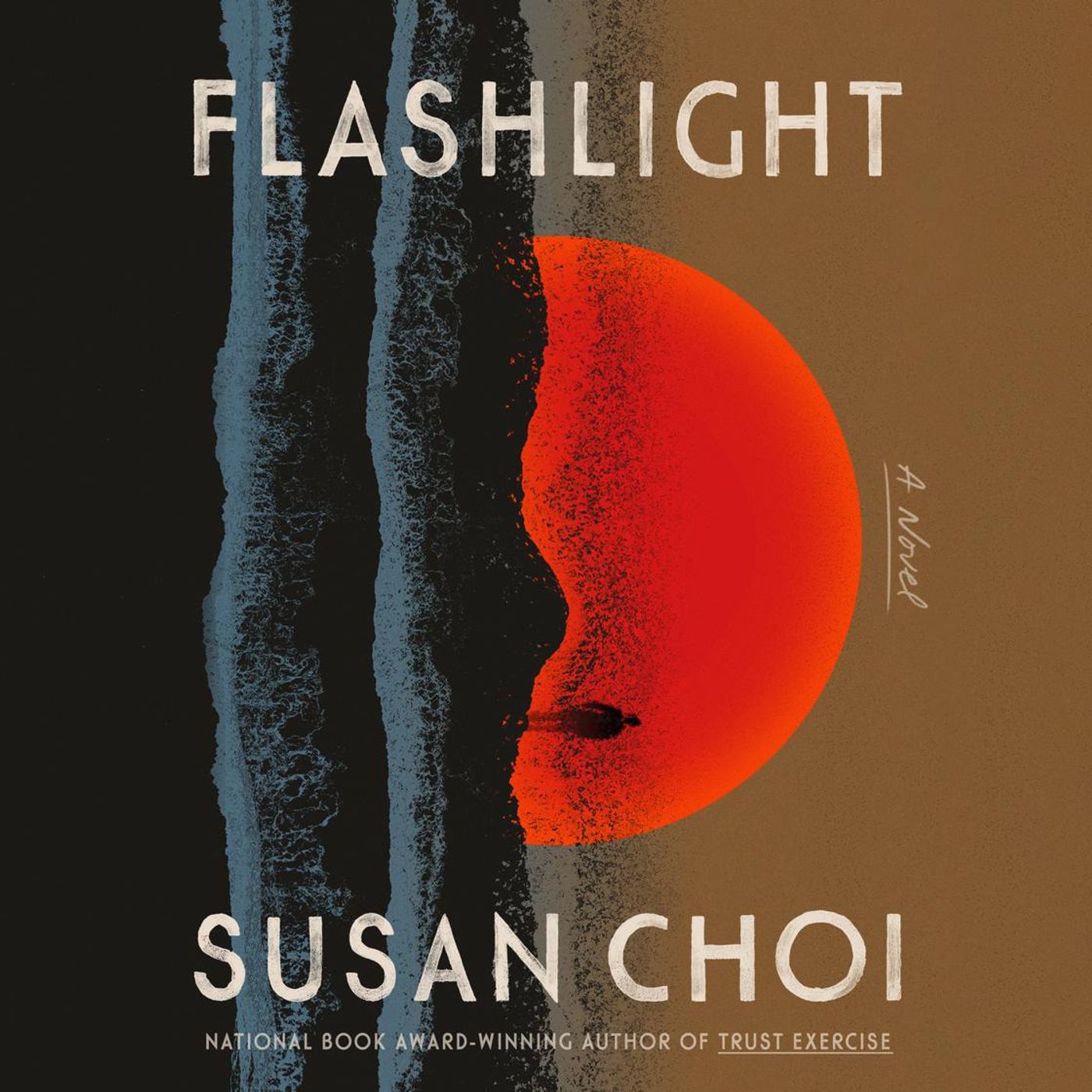
This is all of it on wnyc. I'm Alison Stewart. It's a new month, which means it's time for a new Get Lit with all of it book club selection, we are reading the acclaimed new novel Flashlight by Susan Choi. It's a finalist for the Booker Prize. Set in Japan, the story hinges on one mysterious night. A 10 year old girl named Louisa heads out for a walk along the rocky breakwater with her father, Cirque. The details are a bit murky, but somehow Cirque, who doesn't know how to swim, slips and falls. Later, Luisa is found on the beach alone. Her dad is nowhere to be found. The book tells the story of this family before and after that fateful night as Louisa and her mother try to figure out what happened. Susan Choi will be joining us for a Get lit event on Thursday, December 4th at the Stavros Niarchos Foundation Library. And today we can make a special announcement about our musical guest. We will be joined by singer, songwriter and indie pop artist Sarah Kinsley. Sarah is fresh off her hot debut album Escaper and will join us for a special live performance at our get lit event. This is her single Fleeting.
- [01:40]
Narrator/Performer
You want to feel something new. Anything to give your thoughts away from you. You want to breathe like you used to with no doubt your arms are what happened to you. You can cut your hair all you want. It won't stop the feeling. The answer is always the answer is.
- [02:27]
Alison Stewart
Tickets for the event are available online now.
- [02:30]
Interviewer
Head to wnyc.org getlit that is also where you can find the links to.
- [02:35]
Alison Stewart
Borrow your E copy.
- [02:36]
Interviewer
Head to wnyc.org getlit but now we'll hear a preview of Susan Choi's novel. Susan Choi joined me to discuss the book just after its release. Flashlight emerged from a short story she Was Pub that was published in the New Yorker in 2020 and of the same name. So I began our conversation by asking got the first idea for the original story?
- [03:00]
Susan Choi
Oh, the first idea came a long, long time ago, but I couldn't figure out how to make it into writing. I spent time in Japan when I was a kid and it was, it was very memorable. Strange, the things that happened to these characters did not happen to me, but it was still a memorable time. I always wanted to write about it later, much later, when I was an adult, I started to learn about a string of unexplained events that had taken place in Japan in the late 70s at the same time I had been there. You know, obviously they didn't thankfully, affect me directly. But that coincidence of those strange things happening when I had been there as a kid just sort of, I don't know, pricked my imagination. And I grew this book, eventually out of that.
- [03:45]
Interviewer
What's your process for fleshing out a story? Was a long story, but it was a story into a big old book.
- [03:53]
Susan Choi
Big. Oh, my. Oh, my God. It's a big old book. I didn't mean it to be so big.
- [03:57]
Interviewer
It's your longest book.
- [03:58]
Susan Choi
Yeah, it is. And it's so ironic because I. Once I realized I wanted to write about these themes, I also was aspiring to write a novella. Okay. I failed. There was a book. There is a book called Visitation by Jenny Erpenbeck that is just an incredible book. And it's. It looks at 20th century Germany through the lens of these very, very personal details. And I loved what she did. And I thought, God, I wonder if I could write about these themes that way. Her book is very lean, full of white space. And I thought, ooh, I'm gonna do that. And the result is, like, the longest book I've ever published. It's, like, four times longer than that book.
- [04:40]
Interviewer
So did it feel right for it to be this long?
- [04:44]
Susan Choi
I mean, it evolved and it evolved again. And eventually I came to understand sort of late in the game that one of the things that, you know, this inspirational text had that my topic didn't have was, like, strong familiarity. It was, you know, 20th century Germany. It's centered on the Holocaust. There was a lot that she could kind of leave in the margins because it would be implied for the readers. And I decided to dive into this period of East Asian history that, like, isn't that well known. There's a lot of aspects of this that just aren't known, especially to American readers. I mean, of course, they're known to, you know, residents of East Asia, to specialists of that history, but to the reading public that I'm writing for, not that well known. So that just didn't allow for this short book that I imagined.
- [05:34]
Interviewer
That's interesting because it did send me to Google a couple of times.
- [05:38]
Susan Choi
Okay.
- [05:39]
Interviewer
Which I thought was.
- [05:40]
Susan Choi
I hope not out of confusion, but.
- [05:41]
Alison Stewart
No, no, no.
- [05:41]
Interviewer
But I just wanted to know more.
- [05:42]
Susan Choi
Yeah, yeah, Good, good. But you wanted to know more. And my editor also wanted to know more as I was writing. So she brilliantly identified some big holes, you know, in this book while we were working on it, where she was like, I think you need to add. And then there was a list.
- [05:59]
Interviewer
How did you go about adding more?
- [06:02]
Susan Choi
I Mean, it was. I almost feel like this layering or collaging process where I had struggled with this book for so long and finally had written a draft that I thought, like, oh, this is, you know, I got it. Like, I understand the structure and then the draft, you know, the best draft, I think makes clear to you, like, what's wrong with it.
- [06:22]
Alison Stewart
Yeah, yeah.
- [06:24]
Susan Choi
And the draft was complete enough that it showed me all the incomplete places, you know what I mean? And so it was clear. One of the big holes was Sirk himself, his background. My editor said, you know, this guy comes out of a social context, being an ethnic Korean raised in Japan in the 30s and 40s that most of us American readers are not going to understand at all. You're going to have to go deeper. That was. It ended up being like the first chapter, actually. But one of the last things I wrote.
- [06:53]
Interviewer
One of the last things you wrote.
- [06:54]
Susan Choi
One of the last things you wrote. Because I just was like, you know, I was trying to be very lean and not go deep into backstory, but I realized the backstory is actually really. I hope it's really interesting. Once I was reconciled to how much I was going to need to add, I then got really excited about it. And it ended up being such a fun challenge, research wise.
- [07:20]
Interviewer
We meet Louisa at a doctor's office who's trying to get her to understand that she can talk. She's like, I'm not talking to you.
- [07:28]
Susan Choi
Yeah, yeah. He's a. Well, he's that kind of doctor. He's a talking doctor.
- [07:31]
Interviewer
He's a talking doctor.
- [07:32]
Susan Choi
You know, he's a, I can help you feel better doctor. But she's. She's like, not having it.
- [07:36]
Interviewer
Yeah. Why isn't she having it?
- [07:39]
Susan Choi
I think that she walks into that room, that doctor's office, full of mistrust for grownups. Grownups are just, you know, what is up with them? They're so pompous. What are they doing? They let you down. But even, even in the course of a pretty short scene, she opens up to this doctor. She starts goofing around a little, you know, starts talking to him about movies. And what I hoped that the reader understood even from that prologue scene is she so desperately, like, wants to connect with somebody. She really wants help. She doesn't know how to ask for it.
- [08:14]
Interviewer
When Louisa is in the office in those early scenes, we come across a flashlight, the title of the book, and Louisa steals it. She just straight up steals it.
- [08:25]
Susan Choi
Spoiler alert, Allison. That happens on page seven.
- [08:28]
Interviewer
All the way on page seven. Why is a flashlight important not only to the plot, but also metaphorically? It's the title of your book.
- [08:38]
Susan Choi
Yeah. You know, one of the weird and kind of amazing things that happens in writing, at least for me, is I don't tend to premeditate much. I usually. I'm interested in, like. Usually I have characters and I have a weird situation in mind. I'm like, what would happen to these people if this took place? But I don't. I don't plan, like. I don't know if any writer does. I don't plan, like, metaphors or themes or, like, symbols. No, No. I don't. You know, I don't know. Did F. Scott Fitzgerald, like, plan on that green light? Like, maybe he. But I don't know how to do that. And usually it's not until some point in the revision process where I start recognizing that things that I just stuck in there have a resonance that I hadn't expected. The flashlight is. Yeah. Big. A big example of that, where I don't really remember making the decision, like, oh, Louise and her dad are gonna have a flashlight on the beach, and then there's gonna be a flashlight shortly thereafter, you know, in this doctor's office after everything has changed for her. I don't remember thinking, like, oh, that'll be a good symbol, and perhaps even will serve metaphorically. And I can use it for the title. Like, none of that occurred to me.
- [09:46]
Alison Stewart
But do you think creative people, that kind of thing comes from the outside? It likes a place that you don't know where it comes from.
- [09:53]
Susan Choi
I think. I really think.
- [09:54]
Alison Stewart
I really believe creative people are more open.
- [09:56]
Interviewer
Yeah.
- [09:57]
Alison Stewart
And things just get in their psyche and comes out in the work.
- [10:00]
Susan Choi
I agree. I think that that's right. And I often try to actually think of metaphors for how these metaphors happen. Like, you know, like, I once wrote an essay describing, like, my own creative process as kind of like a murky pond full of, like, a bunch of stuff. And, like, writing kind of stirs it up and things rise to the surface. You don't really know why. But then often they turn out to be the right thing. And the flashlight was the right thing. But it wasn't until really late, even after the story ran, that the metaphor of that flashlight kind of occurred to me. Right. I called the story flashlight because I didn't have another idea. I was like, well, the story's pretty short. There's a flashlight in it. That sounds good. But I think on some deeper level, I do think, like, I have a writer's mind that is smarter than me, thank God. And I think it pulls things together that my conscious kind of analytical mind doesn't even recognize as working well until a lot later, if ever.
- [11:04]
Alison Stewart
I was listening to an interview you did and you said that your mom weighed in on Louisa.
- [11:09]
Susan Choi
My mom, my mom read the book and stuff like to say about Louisa. She was like, well, she's so obnoxious. And it was funny because I didn't want to say that. There are aspects of Louisa that I definitely was drawing on my own childhood self for. I thought, oh, does my mom like me better than Louisa? I'll take it. Okay, that's fine.
- [11:31]
Alison Stewart
Throughout the story, Cirque goes by different names. He chooses different names for himself. Why does he choose to call himself different things?
- [11:42]
Susan Choi
Yeah, well, the first choice isn't a choice and I think that's a little maybe impactful for him. So Sirk is a boy. He's been born to ethnic Korean parents in Japan during the period that Japan colonized Korea during the Japanese Empire. And so there was no Korea. In the opinion of the Japanese Empire, you were just a Japanese subject. But Sirk's parents are Koreans. They've gone to Japan to try to make a better life for themselves because they're very, very poor, but they have to play by the rules. And so even though they name him a Korean name, which I'm going to, you know, Korean speakers out there, I'm sorry, I wish I could speak the language, but the name would be pronounced by me, Sok. And it's, it consists of these, these three characters in Hangul. And I can write it more easily than I can say it. But he goes to school and at school he has to have a Japanese name. And in the way that, you know this, this family has to at least superficially accept Japanese bureaucracy and Japanese power. So his name is Hiroshi and he's little. He doesn't, you know, everybody calls him Hiroshi at school. And he doesn't really understand this distinction between his in public name and his at home name until he's slightly older and he realizes that his parents are Koreans, they're not Japanese people. Later, you know, after he's reverted to his Korean name but experienced systematic discrimination in Japan, he realizes that the future for him is going to lie in America. And then he changes the name to make it easier. It's not actually explained in the book. I sort of, I kind of loved leaving this off stage. It's just all of a sudden he's going by Cirque, which to me it was a little bit of a tribute to my own family's immigration story. My father explained to me once that his father, my grandfather, decided that our family name in English would be Choi because it's easy for people English speakers to say, but you would not say my family name Choi. In Korea.
- [13:50]
Interviewer
I've heard people describe this book as a family story. Is it?
- [13:54]
Susan Choi
I hope so. That's what I really wanted it to be. I wanted it to be a family story. I for a long time only knew that it was about a family, a small family that gets even smaller due to a catastrophe. And I wanted to explore how they make it through that. And so I'm happy to hear it described that way.
- [14:15]
Alison Stewart
That was a Preview of our December 4th get lit with all of it book Club event with Susan Choi. For more information on how to get your tickets or how to borrow an E copy of the book Flashlight, head to wnyc.org getlit For 140 years, MultiCare.
- [14:33]
Susan Choi
Has been in Washington prioritizing long term solutions, partnering with local communities and expanding access to care. Together, we're building a healthier future. Learn more@ multicare.org tis the season of.
- [14:48]
Commercial Narrator
Gifting and holes to Deck and the who's in who, Louisville were in love with new tech. Where can we find Sonos and Samsung and Nintendo? They shouted. Would they find it in one place? This they questioned and doubted when suddenly a who yelled, walmart's the place to start. And Dichu added headphones, TVs and games to their carts. With Walmart, their shopping was done in a flurry. They cried out, who knew? And ordered their gifts in a hurry. Shop the latest tech gifts in the Walmart app.