Loading summary
Transcript39 lines
- [00:08]
Alison Stewart
This is all of it on wnyc. I'm Alison Stewart. There is a good chance you've been running around preparing your Thanksgiving celebration. If you need some inspiration, we got you. Deb Pearlman joined us yesterday to talk about some great side dishes. Tomorrow, sommelier Aldousam joins us to talk about how to come up with inspired wine pairings for your big meal. And later, later this hour, we'll speak with Piet Despain. Her debut cookbook is called Rooted in A Celebration of Native American and Mexican Cooking. Now let's get this hour started with a conversation about the life of Bruce Lee. Full Bio is our book series where we spend a few days with the author of a deeply researched biography. To get a fuller understanding of the subject, we are speaking with Jeff Chang, the author of Water Mirror, Bruce Lee and the Making of Asian America. Bruce Lee was a martial artist, an actor and cultural icon. Yesterday we learned that Bruce was born in 1940 in San Francisco, but grew up in Hong Kong in a showbiz family. As a kid, he was in Chinese film. He wasn't great at school, but he grew to love martial arts. This was a good and a bad thing for Lee because he often got into fights. One confrontation was so bad that he was almost arrested. His family thought America would be a chance to start over. Lee also had to return to the States to exercise his American citizenship because of his father's ties to people on the West Coast. Bruce Lee left a life of privilege in Hong Kong and lived and worked in Seattle in a restaurant owned by a powerful woman named Ruby Chow, who laid down the law. Bruce would go to college at the University of Washington. He didn't finish, but he would meet his wife there. Get into the conversation with Jeff Chang, author of Water Mirror Echo. There are so many different styles of martial arts.
- [02:20]
Host/Interviewer
There's wing chun, gung fu.
- [02:23]
Alison Stewart
But at the beginning, what made Bruce Lee interested in the martial arts?
- [02:29]
Jeff Chang
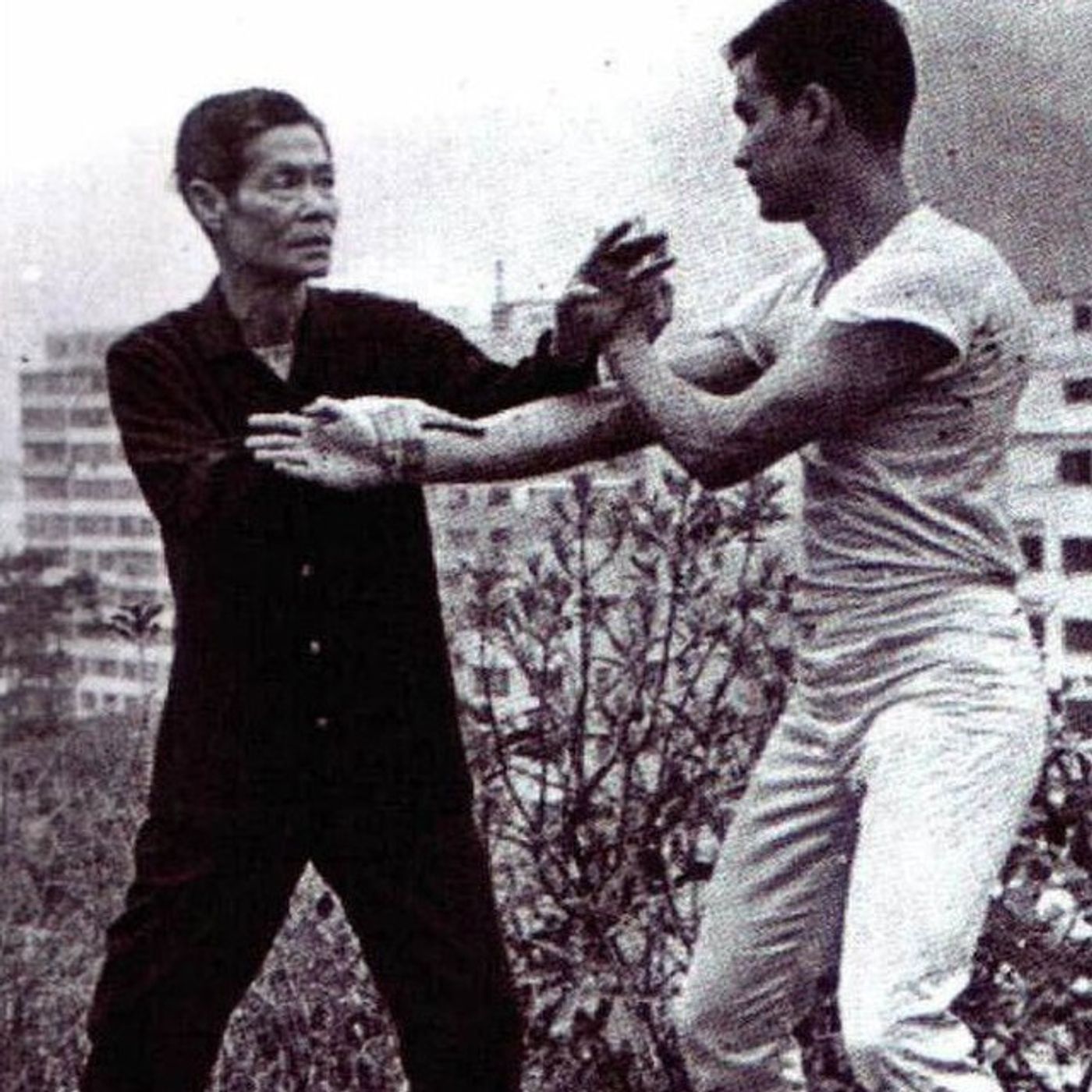
I think that he wanted to learn the martial arts from when he was even just a little kid. You know, he was somebody who was bullied. And he himself turned that back around and became something of a bully himself in some ways. So, you know, he was constantly on movie sets asking the elders to teach him kung fu moves. His father tries to get him to learn tai chi, which is, you know, you know, is a much slower type of art form. It's a martial art, but it's also a very slow type of thing. And Bruce moves too fast. He can't take it. It's too slow for him. Right and so, you know, he falls in with a group of folks that is going out merry making after classes and out in the streets. And he meets a guy on the street named William Chung who knows Wing Chun and is in very strong control of his body and is just, he's a legit martial artist and he's like, teach me what you know. And so William takes him to his sifu, an older gentleman named IP man who teaches Wing Chun. And Bruce begins to learn Wing Chun. At the age of 13.
- [03:49]
Alison Stewart
One person in the book said, you.
- [03:51]
Host/Interviewer
Don'T have to ask Bruce to fight twice.
- [03:56]
Jeff Chang
That was his brother.
- [03:57]
Alison Stewart
His brother, right. He had a huge fight.
- [04:01]
Host/Interviewer
His parents did not seem happy with.
- [04:04]
Alison Stewart
Him and they sort of decided his.
- [04:06]
Host/Interviewer
Future lies in America. Before he went to America, did he have a goal in mind for what he wanted to do?
- [04:13]
Jeff Chang
Yeah, I think that, you know, what happens is Bruce gets into one too many fights. He roughs up somebody who is connected, is gang affiliated, and his brother is concerned is sure really that Bruce is going to get himself killed. So his parents are like, that's it, no more. We are putting you on a slow boat to San Francisco. We're giving you $100 and you're gonna have to figure it out. But you can't do it anymore. You're not doing this anymore. And Bruce gets serious. At this point he actually. All those books that he's been neglecting, he starts picking up again. He realizes that he hasn't been paying attention in his English classes. So he's got to, you know, brush up on all of his English. He actually starts going to the library and reads martial arts manuals. And when he does that, he realizes that what his father and his sifus have been trying to instill in him, all these ideas in the martial arts that are rooted in Chinese philosophy and Asian philosophies, they're all there. And so this begins his lifelong love for philosophy. And I think he goes at that particular point with this idea, this far fetched notion of maybe going to the US and teaching folks in the US Kung fu. Now he drops this on his friends and his friends laugh at him. They're like, what do you know? What do you know? You haven't become an expert. You're no sigong, you're no sifu. You know, si bok. You don't have any kind of ranking in any of these things. How are you going to do that? And he's like, I'm going to do it. You just watch. I'm going to do that. I'M going to make it in America. That's something that he's telling all of his friends. I'm going to really make it in America. And so that's it. That's sort of his vague notion. But what we know of this particular period is he's got a lot of doubts about himself, but he's also fully committed. He's reading book after book after book. He's trying to learn as much Kung Fu as he can from whatever kinds of schools and styles he can learn from so that he can have all of that when he gets Back to.
- [06:27]
Host/Interviewer
The U.S. our guest is Jeff Chang. He wrote Water Mirror, Bruce Lee and the Making of Asian America. It's our choice for full bio. He comes to the States in 1959. Can you describe what life was like for Chinese immigrants in 1959?
- [06:48]
Jeff Chang
Sure. You know, Chinatown is still very segregated and Bruce is coming into a place where he quickly realizes if he goes a couple of blocks up the hill, he'll be in. He's in San Francisco Chinatown. If he goes a couple of blocks up the hill, he'll be in Nob Hill, which is a wealthy white community. Police aren't going to allow him to be there. If he goes down the block down the hill, he's in the financial district and the police aren't going to allow him to be there either. So he's living in San Francisco Chinatown. And really he's experiencing the US Through Chinatowns. San Francisco Chinatown, Oakland Chinatown. He's largely experiencing the US through the Asian American communities that he's in. You know, and so at this particular period, there is the beginnings of the transformation of these Chinatowns because there are, after Bruce arrives into the 60s, there are new waves of immigration that are coming in. And of course, in 1965, all the racist quotas against Asians are removed and there's intense immigration to the US but he's coming into places in which the traditions, the sort of institutions have been long established for a few generations. And that actually puts him afoul of the Kung Fu Kuns, the Kung Fu schools, because he thinks it's like Hong Kong where he can just be walking down the street, challenge somebody from another gongfusco. And they'll have this sort of formal way, this ritualized way of organizing a fight and they'll have the challenge fight and somebody will win and somebody will lose and, you know, it'll continue. But in San Francisco, he actually tries to do that with a long standing kung fu school and they run him out of there. Like he's a bad immigrant.
- [08:49]
Alison Stewart
Bruce learned racism at this point.
- [08:52]
Host/Interviewer
There are so many different examples.
- [08:54]
Alison Stewart
Would you share one that really stays with you?
- [08:58]
Jeff Chang
There's so many, you know, he moves to Seattle because he gets into trouble with this kung fu school and his parents are like, no, we're going to move you to a place where there's fewer Chinese, fewer distractions. And he moves to Seattle, which is 95% white. And all of the folks of color, all the folks of color are concentrated in this little area called the Central District. And so there's black folks there, there's Japanese Americans there, and the first two major students that he has. The first student is a black American, this guy named Jesse Glover, who comes to him because at the age of 12 he's been beat silly to a brutal kind of state by police for no reason at all other than him and his friends are trying to walk home one day. And so through his life, Jesse has been looking for a teacher who will teach him self defense and to, you know, understand how to basically conduct himself, how not to be afraid anymore really, you know. And so he asked Bruce to teach him. And I think that in that exchange, right, Bruce teaching Jesse gong fu and Jesse teaching Bruce about what it means to be a minority in the US like so many things happen, I think we see the beginnings of this privileged child now beginning to identify with the underdog. Jesse gives him the language to understand that he is maybe being exploited by his boss, Ruby Chow. In the restaurant, you know, he meets another guy named Taki Kimura, who when he was 18 was being put on a train to a concentration camp simply because he was Japanese American and he's lost all his confidence. And so as Bruce is teaching Taki and learning about Takis experiences, he too is learning about what it means to be Asian in America. And I think that these are indelible lessons. I think without him we don't have the Bruce that everybody identifies with. Now as somebody who's the hero of the down pressed and the people who feel stepped upon.
- [11:19]
Host/Interviewer
One of Bruce's friends said in the book that Bruce's main interests at this time were gung fu, cha cha girls, philosophy and Chinese history. Let's take each one.
- [11:36]
Alison Stewart
Gung fu in.
- [11:37]
Host/Interviewer
His life when he's 19, 20 years old, what's the role of gung fu?
- [11:42]
Jeff Chang
So Kung Fu is the currency that he has now to be able to interact with all of these young folks from across the Central District. Again, Jesse Glover, all of his friends who are, you know, poor whites Latinos, other Asian Americans, Japanese, Filipino, Chinese Americans. So Bruce is taking that and he's wanting to learn everything that they know as well, because his thing is he wants to go back to Hong Kong at some point and have all of these new tricks to be able to spring on his wing chun brothers, you know. But it becomes something else. They really start testing out what becomes sort of something else entirely. It's a hybrid kind of martial arts form. It's a mixed martial arts. It's the beginnings of mixed martial arts in many ways. So that's, I think, what he begins to see in this group of friends, this community that he's falling into in Seattle.
- [12:40]
Host/Interviewer
Cha cha. He loved dancing. He was good at dancing.
- [12:44]
Jeff Chang
He was great at it. He, his, one of his girlfriends called him a kinetic genius. He could watch somebody dance and, you know, within like a few beats, he could figure out the dance and imitate it, like move for move, you know, like gesture for gesture. And so this was his currency with the ladies. He was literally working his way through Chinatown, you know, taking all these young women out and going cha cha, dancing with them. That was the way that he could have kind of impressed him because really he was kind of awkward with the ladies. He didn't really have too much game. But when he got on the dance floor, they're like, okay, we got this, this is flowing now.
- [13:26]
Host/Interviewer
He met his wife, soon to be wife, Linda. How did they meet?
- [13:31]
Jeff Chang
They met through a mutual friend. They were both students at the University of Washington at that time, and Bruce's school had now flowered. He found sort of a new audience at the university. So Linda is one of the students that comes in just before they. They head up to uw. And then as they are working out together, Bruce kind of becomes really infatuated with her. Linda, from the beginning, when he. She first saw him in the halls of Garfield High School, was like, ooh, who's that? And so Bruce, when they asked her out to go to the Space Needle and they have a date and the rest is kind of history.
- [14:18]
Host/Interviewer
What was something that she understood about Bruce that other people didn't understand about him?
- [14:27]
Jeff Chang
She was non judgmental. She was there for the adventure. Bruce was attracted to another young woman before Linda, and she had high goals for herself. And she saw through Bruce that Bruce was improvising the whole thing, if you will. Right. These kung fu schools. Okay, yeah, sure. How are you going to get that together? That was Amy Sambo's, Bruce's first, you know, crush in love reaction to that. Linda Linda was like, okay, I'll help you. You know, Linda was also incredibly fierce. She was really, really smart and really, really athletic. And, and so the attraction I think was. Was very deep. But I think Linda understood that, you know, Bruce had this highly creative mind and she was willing to follow that and support where he wanted to go with that.
- [15:33]
Alison Stewart
And the final two things on that list were philosophy and Chinese history. What kind of philosophy was he interested in?
- [15:42]
Jeff Chang
He was interested in Asian philosophy primarily, but, you know, he, he sort of picked up some of the Western classics in his one class that he took in introductory philosophy. What he was looking for, I think was, was sort of how to Live. And he found that in the west coast kind of take on Asian philosophy. So he's reading people like Alan Watts, the same people that the beat poets are reading, the beatniks are reading. Right. He's reading DT Suzuki, he's reading books on Chinese philosophy. He's in a class on Asian studies at uw, where, The University of Washington, where he's one of two, you know, Chinese Americans in a class of like maybe 100. There's just a huge fascination with Asian philosophy. So that gives him a little currency as well. And he's actively trying to read philosophy and apply it again to his martial arts teachings, this martial arts school over there in the university district. But I think that he's looking for ways to live. And so he finds that in this strange combination of Taoism, Zen Buddhism and American self help books as well. He also discovers at this time, you know, the, the books that, that sort of are advancing this American self reliance kind of idea, right? This sort of idea that if you can dream it, you can be it. Right? And, and those are really interesting to him as well. So it's this contradictory kind of miss of, you know, like suppress the ego and go with the flow on the one hand, right? And the hey, you know, like you can do anything, you're American self help type of manuals.
- [17:49]
Host/Interviewer
That's interesting. I was wondering, at this point in his life, he's still pretty young. I wondered how he thought about China at this point. Was he a Chinese person living in America or was he turning into a Chinese American?
- [18:04]
Jeff Chang
I think he's becoming Chinese American even though there's no terminology yet for it. Right? Like there, you know, he, he, he is in Seattle, living in Chinatown for most of the time that he's there. And he is, he is seeing all of the structures of Chinese America from the inside because he's working for the most powerful Chinese American in the country. Ruby Chow, this restaurateur who has turned a restaurant into a gathering place for white elites and who is literally playing ball politically with them at that level. So he can understand, like, everything that's kind of happening. He's, it's, it's literally all there laid out in front of him. And I think as we were talking about earlier, you know, he's learning what it means to be a minority in the US and he's, he's, he's also somebody who has a lot more confidence in himself, a lot more pride, a lot more, you know, resistance in him, so to speak, than, than other Chinese Americans at this particular point. So he is getting into it with ROTC officers, He's in ROTC and rotc, and he's getting into it with ROTC officers, he's getting into it with cops on the streets. His friends are like, whoa, whoa, whoa, you're gonna get yourself killed. You know, but he's, he's, I think, learning what the limits are, and he's straining at them at the same time. And I think that that's what's really interesting about it because we're still about three or four years before there's a language for Asian America, and yet he's already in full blown, you know, rebellion mode, like the Asian Americans who come of age after 1968.
- [19:56]
Alison Stewart
You're listening to full bio. My guest is Jeff Chang. He wrote the book Water Mirror, Bruce Lee and the Making of Asian America. Before we finish up today, I have to ask you this. Linda and Bruce, they were always broke.
- [20:17]
Jeff Chang
Students. They're starving students. Yeah.
- [20:19]
Alison Stewart
How did they make money? What was their plan, especially when headed to California?
- [20:25]
Jeff Chang
I don't know if they had a plan. You know, I think that Bruce had this one school and his, his faithful friend Taki Kimura, you know, was collecting dues on his behalf. So that's what he's living off of, literally is this are the dudes from his school. And when he gets to California, he opens up a new school there with his friend James Yum Lee. And so, you know, James is really doing a lot of support for him as well, because James has a, he's a union worker, he's got a full time job. He's much older than Bruce and Bruce's. Bruce and Linda are living there rent free. And so, you know, they are all there because they believe that Bruce has something, that Bruce has something to teach, that Bruce is destined for something great. And, and, and they believe in him, you know, and so that's sort of how they get by.
- [21:25]
Host/Interviewer
I think that was Jeff Chang, the author of Water Mirror Echo, Bruce Lee and the Making of Asian America Tomorrow, Bruce Lee and Hollywood from the Green Hornet to Enter the Dragon. This is all of it.
- [21:40]
VRBO Advertiser
Did you know you can opt out of winter with VRBO? Save up to $1,500 for booking a month long stay. When thousands of sunny homes are waiting for you, why subject yourself to the cold? Put the snow shovel down, put the parka back in the closet, and don't you dare scrape another windshield. Slip into some flip flops, consider a sunless tan and use the monthly stays filter to save up to $1,500. Book your warm getaway at vrbo.com Diego.
- [22:10]
Alison Stewart
Black Friday at the Home Depot. En la tienda oper Internet Note Pierdas Black Friday and the Home Depot.